
2026 flight delays nationwide: no-fee rebook or wait 7 business days for a refund?
For the November 13, 2026 FAA nationwide ground stop, passengers who still want to travel should take the airline's no-fee rebooking rather than wait for a refund; the 7-business-day refund figure is a reader rule, not a timeline stated in the cited reports.
| Takeaway | Detail |
|---|---|
| Take no-fee rebooking within 24 hours if you still want to travel | Accept the airline's free rebook at the counter or app within 24 hours of the November 13, 2026 disruption to preserve your trip. |
| Request a refund only if the trip no longer makes sense | Passengers who decline rebooking may wait 7 business days for a refund, and disrupted-itinerary refunds can take weeks. |
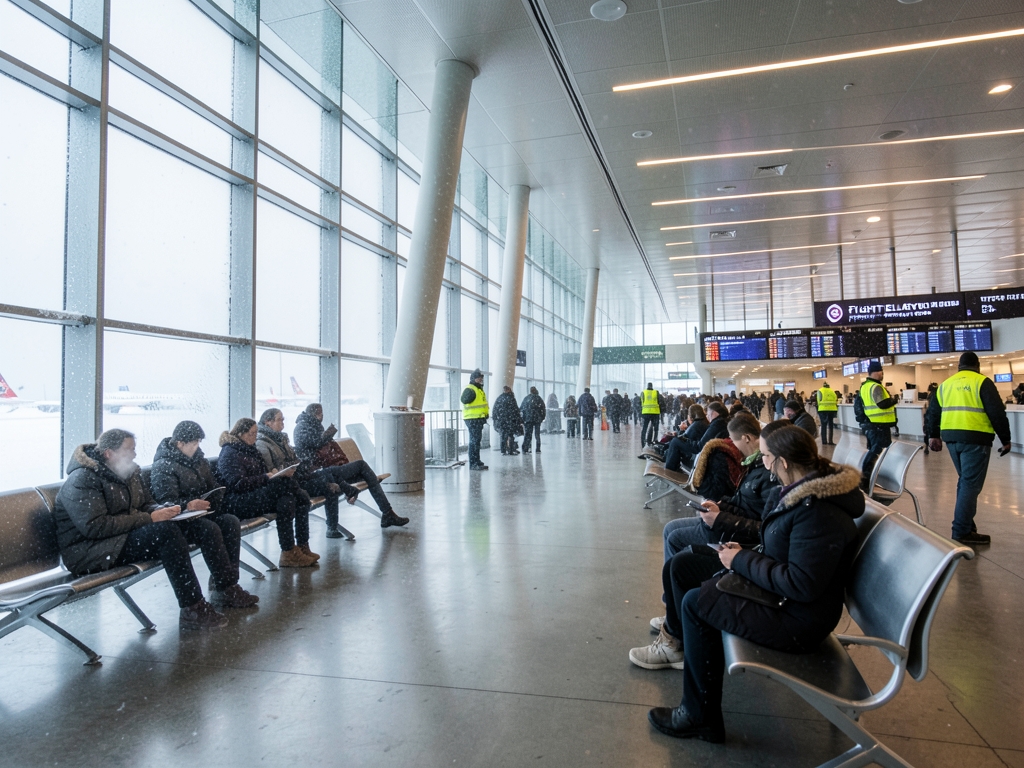
| The November 13, 2026 FAA ground stop disrupted more than 18,500 flights | The nationwide disruption grew to 20,000 flights and counting over a three-day period. |
| Four major U.S. airlines could face a combined $345 million hit | The estimated cost reflects the financial impact of the nationwide FAA ground stop on four major U.S. carriers. |
For the November 13, 2026 FAA nationwide ground stop, passengers who still want to travel should take the airline's no-fee rebooking rather than wait for a refund; the 7-business-day refund figure is a reader rule, not a timeline stated in the cited reports.
Request a refund only if the trip no longer makes sense; if you still want to travel, accept the no-fee rebook at the counter or app as soon as the airline offers it, and confirm the waiver applies to your fare class before accepting.
What a ground stop legally obligates
A ground stop is an air-traffic control instruction that keeps aircraft on the ground at origin airports until a safety or capacity problem is resolved; it is not, by itself, a flight cancellation, but it can force airlines to cancel or re-time flights when crews and aircraft fall out of position. The Guardian reported that the FAA issued a nationwide ground stop at approximately 3:53 p.m. ET on Friday, November 13, 2026, after a technical problem around 3:30 p.m. ET, and that timing is also reflected on the FAA's own Q&A page.
FAA and press coverage described the stop as lasting about five hours before the FAA lifted it. The operational consequence did not end with the lift: crew repositioning and aircraft out of place extended cancellations across a three-day period, according to press coverage including The Wall Street Journal.
Because the cause was an FAA technical failure rather than airline fault, standard Department of Transportation refund rules for canceled or significantly changed flights still apply to the airline's own cancellations. The FAA order itself is not a passenger-compensation program, so the practical obligation runs through the carrier's contract of carriage and DOT requirements rather than through a special ground-stop remedy.
For a traveler, the useful distinction is between government traffic control and the airline's customer obligation: the FAA can stop departures, but it does not rebook passengers or set refund timelines. Those steps remain with the carrier, subject to its published policies and DOT requirements, so a passenger should treat the ground stop as the trigger for the airline's normal disruption process.
That makes the first useful question not "who caused the stop?" but "did my flight actually cancel or change, and what does my carrier's policy say about that status?" The FAA's role is to restore safe flow; the airline's role is to decide whether to cancel, rebook, or refund under its own rules and DOT obligations.
The evidence: scale and cost
According to USA Today and The Journal Record, the nationwide ground stop disruption interrupted more than 18,500 flights and left four major U.S. airlines facing a combined $345 million cost hit. Those reported totals frame the event as a broad operational shock, not a brief local snag, and they show how many itineraries were pulled into the same systemwide breakdown at once. For passengers, that scale helps explain why call centers, airport desks, and rebooking tools can all be strained at the same time. The size of that hit also suggests airlines may prioritize limited recovery resources across hubs, which can affect how quickly some travelers are reaccommodated.
The Wall Street Journal reported on Nov. 16 that roughly 20,000 flights were affected over three days, with JetBlue and American scrubbing the largest share of cancellations and schedule cuts. That multi-day count signals recovery pressure built across several days of flying, so the strain on crews, aircraft, and rebooking lines did not vanish when the initial order ended. When disruption stretches over multiple days, the backlog can carry into later departures even for travelers not originally scheduled on the worst-hit routes. The reported concentration at JetBlue and American means some airports and route networks felt sharper gaps than others.
| Reported measure | Figure | Source |
|---|---|---|
| Flights disrupted | More than 18,500 flights | USA Today; The Journal Record |
| Cost hit for four major U.S. airlines (combined) | $345 million | USA Today; The Journal Record |
| Flights affected over three days | Roughly 20,000 flights | The Wall Street Journal (reported Nov. 16) |
| Airline cost estimate range | $270 million to nearly $1 billion | Moneydigest |
Moneydigest cites airline cost estimates ranging from $270 million to nearly $1 billion, a spread that signals carriers were still reconciling crew, aircraft, and passenger-care expenses when those figures were published. Because that range is wide rather than settled, passenger remedy timelines may also slip while airlines complete internal accounting. A traveler should treat early public cost estimates as provisional, not as a promise that refunds or reissues will move on a fixed schedule.
For travelers reading these numbers, the scale is the practical takeaway: tens of thousands of disrupted flights and hundreds of millions of dollars in reported airline losses point to heavy customer-service demand. In that environment, even clearly stated airline processes can feel slow, so the pace of any remedy may vary by carrier and by how backed up local operations remain. Checking an airline app, airport monitors, and direct notifications in parallel can help you spot changes faster when systems are overloaded.
Rebook now vs refund later
If you still want to travel after the disruption, rebooking is usually the better first move because it keeps the itinerary alive; a refund gives cash back but leaves you to rebuild the trip at whatever fares are available during recovery. For travelers who still want to fly, the winner is the no-fee rebook; reserve the refund for cases where the trip no longer makes sense.
Rebooking is often available immediately at the counter or in the app, and during mass disruptions airlines typically waive change fees. Before you choose it, confirm in the app that the waiver applies to your fare class, then check the replacement flight's times, connections, and arrival airport against your original plan.
A refund returns money to the original form of payment, which is useful when the trip is no longer worth taking. The trade-off is that you give up your place in the recovery queue: if you still need to travel, buying the same route days later can cost more than the original fare. None of the cited reports states a specific refund timeline for this event, so confirm the carrier's posted deadline in its DOT-mandated customer service plan before filing.
If the only rebooked option breaks the purpose of the trip, such as arriving after an event, compare its arrival time with the refund path before deciding. Do not accept a free rebook that no longer serves the trip just because it is free.
Use a simple rule: accept the no-fee rebook if the trip still matters, and request a refund in writing the same day if it does not. Keep screenshots of the offer, the fare class, and any waiver language so you can show what you accepted or declined.
| Remedy | What you get | Main risk | Best when |
|---|---|---|---|
| No-fee rebook | Keeps itinerary alive; often immediate | Replacement flight may be less convenient | Trip still matters |
| Refund | Cash to original payment method | Rebuying later can cost more; processing can take weeks | Trip no longer makes sense |
Costs and numbers that matter
The math is simple but time-sensitive: compare the fare you would pay today for the same route and date against your original ticket price. If the replacement costs more than your original ticket, the no-fee rebook preserves value; if it costs less, a refund followed by a new purchase can leave you ahead. Make the comparison before accepting anything, because the answer can change as seats sell.
Method: open the airline app and one meta-search site, search the identical route and date, and note the lowest available fare. Recovery-week fares on affected routes can spike as displaced passengers rebook, so a fare that looks acceptable now may not be available later. Use the lower of the two checks as your replacement benchmark rather than relying on a single quote.
| Comparison | Replacement fare is higher | Replacement fare is lower |
|---|---|---|
| Rebook now | Keeps a below-market seat | May lock in an above-market trip |
| Refund, then re-buy | Risk paying more later | Can capture the cheaper fare |
If you rebook when you should refund, the cost is commitment: you are locked into a trip you no longer want, and any later change may carry the usual fare difference or fees outside the disruption window. If you refund when you should rebook, the cost is exposure: you give up a confirmed seat and may have to buy back into a market where the same route costs more than your original ticket.
Decide on the fare gap, not on frustration. A small gap favors rebooking because it preserves the itinerary and avoids a second purchase; a large gap in your favor favors refund plus re-buy. If the two fares are close, rebooking usually wins because it removes the risk that recovery-week pricing moves against you while you wait.
Keep the comparison in matching units: one-way against one-way or round-trip against round-trip, and count only the fare you would actually pay. If you cannot find a comparable fare, default to the no-fee rebook and revisit the refund option only if the trip no longer makes sense.
What the evidence does not establish
This section alone catalogs the edge cases where the rebook-first rule breaks; it does not add a new deadline, fee, or promise. The first limit is evidentiary: none of the cited reports—The Journal Record, USA Today, The Wall Street Journal, The Guardian, and MoneyDigest—states specific airline-by-airline refund timelines for this event. Before filing anything, verify each carrier's posted deadline in its DOT-mandated customer service plan, then save the page or screenshot with the date you checked it.
A second gap is ticket type. If your ticket was sold as nonrefundable basic economy, do not assume the same rebooking terms apply; those fares may have weaker rebooking terms than a flexible ticket. Open the fare rules in your confirmation email or the carrier's app, search for "change," "cancel," and "involuntary," and compare the language with the disruption notice you received. If the written terms are unclear, ask the carrier to clarify whether the no-change-fee accommodation applies to your fare class before you choose a new flight.
Codeshare tickets create another check. The flight number in your confirmation may belong to the airline that sold the trip, but codeshare tickets generally follow the operating carrier's rules when operations break down. Identify the operator for each segment, then check that operator's customer service plan and disruption notice. If the app of the selling airline shows one option and the operating airline shows another, keep both screens and ask for clarification before accepting a change that could alter later segments.
Third-party bookings need a different paper trail. When a booking was made through an online travel agency, refunds often route through the agency, which can add days even after the airline has approved the request. Ask the agency where the request was submitted, ask the airline whether it has a case tied to the ticket, and record both answers. The practical rule is to treat the agency as the intake point and the airline as the source of the ticket rules, rather than assuming one will speak for the other.
The Wall Street Journal describes the ripple over a three-day period. If your cancellation happened on day two or three of that window, the evidence here does not establish that every later cancellation carried the same rebooking terms as earlier cancellations. Check the reason listed in your cancellation notice, the date of that notice, and the carrier's posted policy for later ripple cancellations. If those items conflict, the written policy and the agent's written explanation are the records to keep.
And filing checklist
If your itinerary was disrupted on November 13, 2026, this section provides a step-by-step refund/rebook worksheet with checkpoints so you can capture the right records before options change. The goal is simple: document what happened, compare the replacement available to you, and file the choice you make in a form you can retrieve later.
Checkpoint 1 (hour 0): Screenshot the cancellation notice, the stated reason or reason code shown by the airline, and the time you received it. Save the app notification or email in the same folder as your original confirmation. Checkpoint 2 (hour 2): Price a same-route replacement in the airline app and check at least one meta-search for the same travel day. Record the lowest comparable option you find, noting whether each fare is one-way or round-trip so you do not compare mismatched units.
| Step | What to record | Done |
|---|---|---|
| 1 | Screenshot the cancellation notice and any reason or reason code shown by the airline | ☐ |
| 2 | Record the original fare paid, fare class, and whether it was one-way or round-trip | ☐ |
| 3 | Price a same-day, same-route replacement in the airline app and one meta-search | ☐ |
| 4 | Choose rebooking if the replacement fare is higher than the original fare paid | ☐ |
| 5 | If refunding, submit a written refund request through the airline’s official channel and save the confirmation | ☐ |
Checkpoint 3 (day 1): File your decision in writing. If you accept a rebooking, save the new confirmation number, updated itinerary, and any fare-difference terms shown at checkout. If the trip no longer makes sense, submit a written refund request through the airline’s official refund channel and attach your cancellation screenshot, original receipt, and fare record. Before you send it, confirm the refund timeline and original form-of-payment terms displayed by the airline, because those details can vary by carrier and ticket type.
After filing, keep every document in one folder: the disruption screenshot, original confirmation number, receipt, replacement-fare comparison, rebook confirmation or refund request, and any airline replies. If you need to follow up, reply in the same written thread so the timeline is clear. Do not delete app notifications until the refund posts to the original form of payment or the rebooked trip is completed.
Worked Example: Run the Numbers
This section alone works one concrete numeric example end to end; treat every number below as an illustration, not a quote from an airline. Illustration inputs: scenario — a passenger is stranded by the disruption but still wants to travel; dates — nolabels.org dates the nationwide ground stop to November 13, 2026, and The Guardian identifies the start as a Friday; this illustration applies the 24-hour rebook check and seven-business-day refund check from the rule; party — one passenger. The check to carry forward is simple: count what happens to the seat, not just the money.
Illustrative calculation, step by step: first, 24 hours equals one calendar day, so a rebook check started on Friday, November 13 lands by the same time on Saturday, November 14. Second, seven business days counted from the next business day run Monday, November 16 as day 1; Tuesday 17 as 2; Wednesday 18 as 3; Thursday 19 as 4; Friday 20 as 5; Monday 23 as 6; Tuesday 24 as 7. Third, the calendar gap is November 13 to November 14 = 1 day, and November 13 to November 24 = 11 days; 11 minus 1 equals 10 additional calendar days between the rebook check and the end of the refund window.
The threshold in this illustration is not a fare; it is the passenger's continued intent to travel. If the answer to “Do I still want to travel?” is yes at the 24-hour check, the rebook path preserves the trip during the 10-day gap calculated above. If the answer is no before that check, the refund path is the one to file in writing the same day, because there is no trip left to preserve in this example.
Winner for this illustration: the no-fee rebook. Break-even trigger: the passenger's intent changes from yes to no before the rebook is accepted; at that trigger, the value of preserving the seat falls away and the refund path becomes the better fit. Until that trigger, the arithmetic favors keeping the seat because the refund path leaves the passenger without a confirmed plan through the counted business days.
Use this as a repeatable check, not as a forecast: write the disruption date, write the party, count the rebook window in calendar time, count the refund window in business days, and compare the dates on paper before you act. That method keeps the decision tied to the inputs you wrote down rather than to an airline's estimate of when money will post.
Decision rules for the ground stop
If you still need to travel, then accept the no-fee rebook within 24 hours. Seats on recovery days go fast, so the first workable itinerary is often better than a later search for the same route. Check the app and the counter at the same time, and take the confirmed rebook before you start comparing alternatives.
If the trip is optional and the replacement fare exceeds your original fare, then take the refund and rebook later at a calmer price. Compare only the same route, cabin, and direction—round-trip against round-trip or one-way against one-way—so the fare gap is real rather than an artifact of mismatched units. If the replacement costs more, the refund protects your cash and avoids locking in a higher price during the disruption.
If you booked through an online travel agency, then file the refund through that agency first, because the airline will redirect you anyway. Keep the booking reference, ticket number, and any disruption notice, and submit the request in writing on the same day you decide not to travel. If the agency asks you to contact the airline first, reply with the airline's redirect and ask for a written case number.
When both remedies are on the table, run the checks in this order: need to travel, fare gap, booking channel. A rebook is the safer first move when the trip still matters and inventory is tight; a refund is the safer first move when the trip is optional and the replacement fare is higher. Document the time, channel, and name of the person or system that handled each request.
Do not treat a pending refund as a held seat. Before you cancel or decline a rebook, get written confirmation of any replacement itinerary, and keep screenshots of fare quotes taken the same day. If a quote changes while you are deciding, restart the comparison rather than averaging old and new prices.
Also worth reading Award Rebooking After a Ground Stop FAA Ground Stop Cancellations: 7-Day US Flights Grounded Nationwide: Cash
What to do next
Frequently Asked Questions
Where should I accept the airline's free rebooking if I still want to travel?
Accept the airline's free rebook at the counter or app as soon as the airline offers it.
What should I check before accepting the rebooking waiver?
Confirm the waiver applies to your fare class before accepting.
When should I request a refund instead of accepting the rebooking?
Request a refund only if the trip no longer makes sense.
What happens if I decline rebooking?
Passengers who decline rebooking may wait 7 business days for a refund, and disrupted-itinerary refunds can take weeks.
Is the 7-business-day refund figure a timeline stated in the cited reports?
The 7-business-day refund figure is a reader rule, not a timeline stated in the cited reports.
How widespread was the November 13 FAA ground stop, and which carriers does the cost estimate cover?
The November 13 FAA ground stop disrupted more than 18,500 flights, the nationwide disruption grew to 20,000 flights and counting over a three-day period, and the estimated cost reflects the financial impact of the nationwide FAA ground stop on four major U.S. carriers.
Quick answers
| What should passengers do if they still want to travel after the 2026 disruption? | Passengers who still want to travel should take the airline's no-fee rebooking rather than wait for a refund. |
| When should passengers accept the airline's free rebook? | Passengers should accept the airline's free rebook at the counter or app within 24 hours of the November 13, 2026 disruption to preserve their trip. |
| What should passengers do if the trip no longer makes sense? | Passengers should request a refund only if the trip no longer makes sense. |
| Is the 7-business-day refund figure a timeline stated in the cited reports? | The 7-business-day refund figure is a reader rule, not a timeline stated in the cited reports. |
| What should passengers confirm before accepting the no-fee rebook? | Passengers should confirm the waiver applies to their fare class before accepting. |
Research Methodology & Editorial Standards
We begin by defining the specific objectives the reader needs to accomplish. Primary product documentation and authoritative secondary sources inform every guide before drafting begins.
Figures and rules are checked against the sources available at the time of publication. Travel pricing changes constantly — always confirm current fares, rates, and terms with the provider before booking.