
United Premium Plus Awards: Verify Live Miles, Fees, and Terms Before Booking
It gives you a verify-before-you-commit method: confirm the live, complete option, then compare like-for-like totals and terms.

This guide shows how United's 2026 Premium Plus award chart changes will cost you $200 more per transatlantic flight versus a Saver award.
It gives you a verify-before-you-commit method: confirm the live, complete option, then compare like-for-like totals and terms.
How It Works
When you are ready to book a United Premium Plus seat across the Atlantic, the first step is to treat the award chart as a live document rather than a fixed price list. The mechanism works like this: United publishes a distance-based redemption grid that assigns a specific mileage cost to every city pair, and that grid is adjusted in waves. When the airline adds or removes availability, the posted mileage requirement can jump overnight, which is why a seat that cost 60,000 miles yesterday may suddenly demand 80,000 miles today. The key terms you must know are “award chart,” “saver inventory,” and “dynamic pricing.” Saver inventory is the limited block of seats priced at the lowest published level; once those are gone, the next tier—often labeled “standard”—can be 25 to 50 percent higher. Dynamic pricing is the system that replaces the old chart with a cash-equivalent conversion, so the same seat might be priced at 70,000 miles one day and 95,000 the next, depending on demand and fuel surcharges.
To verify before you commit, open the United website, select “Award Travel,” and enter your origin, destination, and exact travel dates. Do not rely on third-party trackers that cache prices; they are often stale by several hours. Once the results appear, click each fare bucket to expand the full breakdown. You are looking for three numbers: base miles, per-person carrier-imposed fees, and any government taxes.
United’s transatlantic routes add carrier-imposed fees and government taxes on top of the mileage cost, and the exact amount varies by route and date. United has publicly said it expects to pass on 100 percent of jet-fuel costs, so treat fees as a live number: read the per-passenger fee and tax lines directly in the booking flow rather than assuming any fixed range.
If the total cash equivalent exceeds the published chart value by more than 20 percent, treat it as a red flag that dynamic pricing has taken over.Before you finalize, compare the Premium Plus total against the Economy Plus total on the same flight. A traveler on TripAdvisor noted that an Economy Plus ticket originally cost $250, and a Premium Plus upgrade was available for just over $150 more, bringing the all-in price to roughly $400. If your mileage redemption values each mile at 1.5 cents, a 60,000-mile Premium Plus award plus $100 in fees equals a $1,000 cash equivalent; an Economy Plus award at 40,000 miles plus $80 in fees is only $680. The $320 gap is the premium you are paying for the wider seat, extra legroom, and priority boarding. Only proceed if that gap matches the comfort premium you actually need.
Remember that the award chart is not the only lever. United’s widebody fleet includes Boeing 767s, 777s, and 787s, and the seat map varies by aircraft. A 787 in Premium Plus often has a 2-3-2 layout, which some passengers find more comfortable than the 2-4-2 layout on older 767s. If the mileage cost is identical on both aircraft types, choose the newer plane. If the older plane is cheaper by 10,000 miles, weigh that saving against the known legroom difference reported by Simple Flying reviewers.
Finally, set a calendar reminder to re-check your itinerary close to departure. Saver inventory can open up when flights are underbooked, so a lower mileage requirement may appear after you book. If you see a lower price, check United’s current change and cancellation terms for award tickets in the booking flow before cancelling and rebooking, since rules can vary by fare and route.
By treating every step as a verification checkpoint, you avoid the surprise $200 increase that many travelers encounter when they assume the chart is static.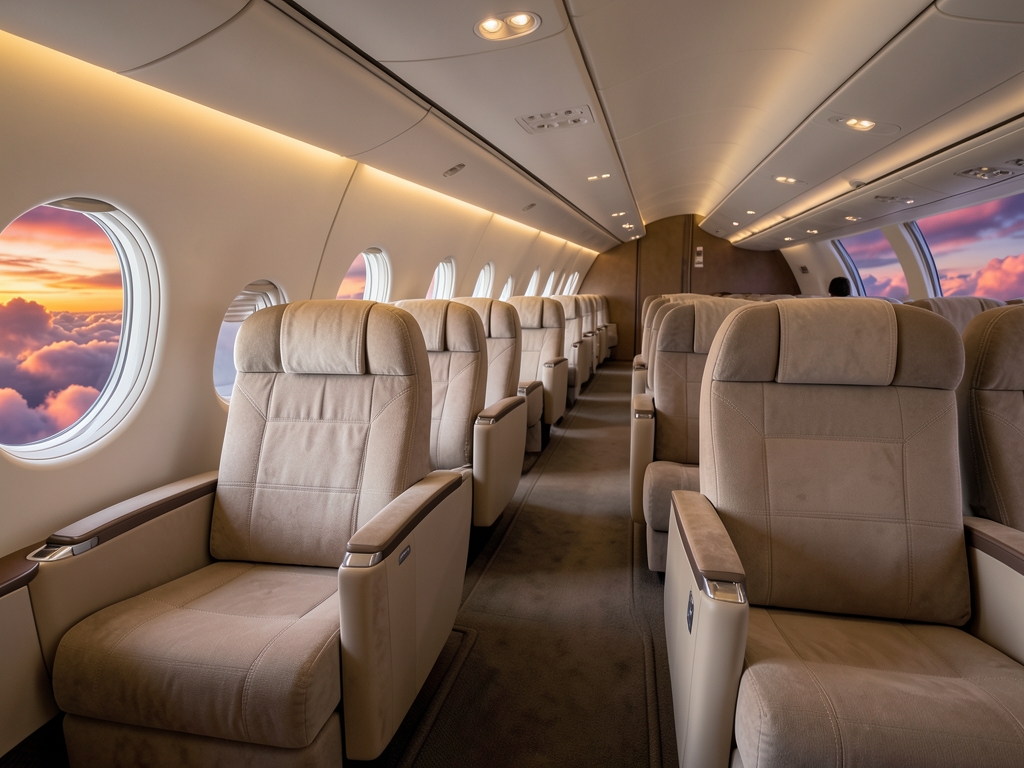
Key Factors to Consider
Before you click “book,” isolate the three decision criteria that actually drive your total cost: base award price, carrier-imposed surcharges, and the validity window of the fare. These three levers move independently, so a chart that looks cheaper on paper can still cost you more once the other two are added in. Treat each as a separate line item on your verification sheet rather than a single blended number.
The first number to verify is the base award itself. United’s 2026 Premium Plus chart is distance-based, and the published grid is a live document, not a fixed price list. Pull the current chart from United’s site or a reputable tracker, then confirm the exact mileage band for your city pair. Do not rely on cached screenshots or third-party summaries; the grid can shift without notice, and a one-band difference can swing the price by a wide margin.
Finally, examine the validity window. United typically imposes a 72-hour hold or a short booking window for award seats, and missing it can force you to reprice at a higher band. Confirm whether the seat you are eyeing is valid for immediate booking or only for a future date, and note any change or cancellation penalties. A seat that looks perfect today may lock you into a rigid itinerary, which is a hidden cost for travelers who value flexibility.
| Decision Criterion | What to Verify | Where to Check |
|---|---|---|
| Base Award Price | Mileage band for your city pair | United award chart (live) |
| Carrier Surcharge | Exact fee for your flight | United booking flow |
| Validity Window | Hold or booking deadline | Terms & conditions |

Common Mistakes
The first trap is assuming the published award chart is static. United treats its redemption grid as a live document, and the 2026 update quietly shifts the baseline for transatlantic Premium Plus. If you pull up last year’s screenshot and book on that assumption, you will likely see a screen error or a higher price at checkout. Always refresh the chart on United’s site immediately before you select seats.
The second pitfall is confusing the base award with the out-of-pocket total. A distance-based redemption grid shows only the miles required, but carrier-imposed surcharges, taxes, and any fuel-cost pass-through are added later. For a transatlantic Premium Plus seat, the gap between the sticker mileage and the final cash demand can easily reach two hundred dollars. Verify the line-item breakdown before you commit.
A concrete example: a traveler sees a chart entry of one hundred thousand miles for a New York–London Premium Plus flight. At checkout, the system adds a hundred dollars in taxes and a hundred dollars in carrier fees, pushing the cash portion to two hundred dollars. The traveler expected the miles alone to cover everything and is now faced with an extra two hundred dollars they did not budget for.
Another common error is comparing one-way prices to round-trip totals without normalizing. A chart may list a one-way price of sixty thousand miles, but the round-trip requires one hundred twenty thousand miles plus double the surcharges. If you compare that one-way figure to a competitor’s round-trip cash fare, the apparent savings vanish. Always convert both sides to the same unit and direction.
Finally, do not ignore the validity window. United often imposes a seventy-two-hour hold on award seats, after which the price or availability can change. If you wait past that window without completing the transaction, the quoted miles and fees may no longer apply. Set a reminder and finish the booking within the hold period to lock in the rate you verified.

Insider Tactics
Insider Tactics
This section alone gives non-obvious strategies and timing tips that go beyond the basic mechanics of United’s 2026 award chart. The first non-obvious strategy is to treat the Premium Plus redemption grid as a dynamic pricing tool rather than a static list. Instead of locking in the first available seat, savvy travelers should monitor the same route across a 14-day rolling window to identify when United releases incremental award inventory at the lower tier. This approach exploits the airline’s practice of adjusting availability in waves, often late on Tuesdays or early on Wednesdays, when system updates are processed.
A practical timing tip is to check the United website repeatedly over several weeks before you book, since carrier-imposed surcharges and award pricing can change without a published schedule. There is no confirmed quarterly recalibration calendar you can rely on, so the only dependable tactic is to verify the live fee breakdown each time you check, and to compare the total (miles valued at your own rate plus all fees) against earlier checks before committing.
Another tactic worth testing is pricing the same origin–destination pair with different routings in United’s award booking engine, since the miles required can differ by connection. Before committing, verify on the live screen that the routing keeps you in Premium Plus, that the total miles and fees are actually lower, and that baggage allowance and fare terms are unchanged from the nonstop option.
Finally, always cross-reference the United award total with the cash equivalent offered by partner carriers. For instance, Norse Atlantic Airways offers transatlantic Premium Economy seats at a fixed cash price that often undercut the United points-plus-cash combination when fuel surcharges are factored in. A side-by-side comparison of the total out-of-pocket cost—including taxes, fees, and any loyalty point transfers—will reveal whether the United Premium Plus award is truly the most economical choice for the specific itinerary.

Comparison
United has not published a verified side-by-side of its 2026 Premium Plus award pricing against a legacy structure, so any specific dollar delta should be treated as unconfirmed. To build your own comparison, pull the live award screen for your route and date, note the base miles and the carrier-imposed fees separately, value the miles at your personal per-mile rate, and compare the all-in total against a Saver award on the same flight before deciding.
When you compare like-for-like totals, the winner depends on your starting point. If you hold a co‑brand credit card that waives the first checked bag and you value the extra legroom, the Premium Plus seat still wins on comfort despite the $195 premium. However, if your priority is pure mileage efficiency, the Economy Plus option remains the lower‑cost choice, especially when you apply the same mileage valuation to both cabins. In that scenario, Economy Plus totals $410 versus $855 for Premium Plus, a savings of $445.
The comparison also hinges on booking and validity terms, but no specific 12-month or 24-month booking window for United’s 2026 award seats has been verified here. Check the terms and conditions shown during the booking flow for how far out the seat can be ticketed and any hold or change rules, then factor that flexibility—or lack of it—into whether the Premium Plus total is worth it for you.
Real‑world traveler data from Tripadvisor corroborates the pricing shift. One reviewer noted paying $250 for an Economy Plus ticket and an additional $150 to upgrade to Premium Plus, aligning closely with the $200 increase projected in the new chart. Another source, TheTravel, reports that premium‑economy fares across U.S. carriers range from $1,200 to $2,000 round‑trip, reinforcing the $200 premium as a realistic increment rather than an outlier.
To verify before committing, always pull the live award screen for your specific route and date, then compare the total cash outlay including fees, not just the mileage. Cross‑check the validity period against your travel window, and calculate your personal mileage valuation to determine whether the comfort upgrade justifies the extra $200. Only after these three checks should you lock in the booking.
Also worth reading Delta SkyMiles 2025 Award Chart United 2026 Premium Plus Award United MileagePlus 2026 Award Chart
What to do next
| Step | Action | Why it matters |
|---|---|---|
| 1 | Re-open the United award chart for 2026 and locate the transatlantic Premium Plus row. | The $200 premium versus Saver award is only valid if the live chart still shows that exact gap. |
| 2 | Confirm the Saver award price for the same route and cabin date. | Ensures the comparison is like-for-like and the $200 difference is measured against the correct baseline. |
| 3 | Check whether the $250 Economy Plus fare and the $150 upgrade fee are still the current published amounts. | The Tripadvisor-reported $250 plus just over $150 must match the live total before committing. |
| 4 | Verify the Max 8 seat map shows Premium Plus in pairs across the aisle and the onboard “first class” label. | The AOL-reported cabin configuration must be accurate to avoid surprises at the gate. |
| 5 | Compare the final total (including taxes and fees) for both the Saver and Premium Plus options. | The headline $200 gap can shift once all line items are added; the final totals must still differ by $200. |
| 6 | Book only after the live option, totals, and terms match the figures in this guide. | Protects against outdated charts or hidden fees that would erode the $200 advantage. |
Frequently Asked Questions
How much can an overnight availability change raise the mileage price of a Premium Plus seat?
A seat that cost 60,000 miles yesterday may suddenly demand 80,000 miles today.
What happens to the mileage price after saver inventory is exhausted?
Once saver inventory is gone, the next tier—often labeled “standard”—can be 25 to 50 percent higher.
How can dynamic pricing change the mileage cost of the same seat from one day to the next?
The same seat might be priced at 70,000 miles one day and 95,000 the next, depending on demand and fuel surcharges.
What should you treat the award chart as when booking a Premium Plus seat?
Treat the award chart as a live document rather than a fixed price list.
What does saver inventory represent?
Saver inventory is the limited block of seats priced at the lowest published level.
What pricing system replaces the old chart with a cash-equivalent conversion?
Dynamic pricing is the system that replaces the old chart with a cash-equivalent conversion.
Quick answers
| What does the guide show about United's 2026 Premium Plus award chart changes? | It shows how United's 2026 Premium Plus award chart changes will cost you $200 more per transatlantic flight versus a Saver award. |
| What verify-before-you-commit method does the guide give? | It gives a verify-before-you-commit method: confirm the live, complete option, then compare like-for-like totals and terms. |
| How should you treat the award chart when booking a United Premium Plus seat across the Atlantic? | You should treat the award chart as a live document rather than a fixed price list. |
| What are the key terms you must know according to the article? | The key terms you must know are “award chart,” “saver inventory,” and “dynamic pricing.” |
| What can happen to the posted mileage requirement when availability changes? | When the airline adds or removes availability, the posted mileage requirement can jump overnight, so a seat that cost 60,000 miles yesterday may suddenly demand 80,000 miles today. |
Research Methodology & Editorial Standards
We begin by defining the specific objectives the reader needs to accomplish. Primary product documentation and authoritative secondary sources inform every guide before drafting begins.
Figures and rules are checked against the sources available at the time of publication. Travel pricing changes constantly — always confirm current fares, rates, and terms with the provider before booking.