
Round-trip flights to Japan under $400: JAL 2026 error fares — book or verify
This guide examines the viral claim of $400 round-trip JAL flights to Japan in 2026 and explains why it is a phantom error fare rather than a bookable ticket.

| Takeaway | Detail |
|---|---|
| A sub-$400 round-trip JAL fare to Japan in 2026 is not bookable — treat it as a phantom error fare. | JAL's published lowest round-trip fares from major US gateways typically exceed $700, so any sub-$400 claim must be verified before payment. |
| Never pay for a sub-$400 round-trip Japan fare until it prices on JAL's own site with a live ticket number and a 24-hour hold. | Reader rule: confirm the fare prices on the airline's own site with a live ticket number and 24-hour hold; if it doesn't, treat it as a phantom and do not pay. |
| Verification must happen through live booking flows, not screenshots or viral posts. | The $400 JAL 2026 claim is a phantom error fare that only a live booking flow can confirm or debunk. |
| If the fare fails to price on JAL's site, do not pay — no ticket number means no fare. | Absence of a live ticket number and 24-hour hold on the airline's own site marks the fare as phantom. |
This guide examines the viral claim of $400 round-trip JAL flights to Japan in 2026 and explains why it is a phantom error fare rather than a bookable ticket.
It gives you the verification rule: confirm any sub-$400 Japan fare on JAL's own site with a live ticket number and 24-hour hold before paying, since JAL's published lowest round-trip fares from major US gateways typically exceed $700.
How error fares actually work
Error fares are not secret discounts. They happen when an airline files a fare incorrectly into its reservation system — the wrong fare class gets loaded, a fuel surcharge is omitted, or a currency conversion goes sideways. JAL has had business-class glitches of exactly this kind in the past, and the pattern is always the same: the fare appears briefly, spreads through deal sites and Telegram groups, and gets pulled within hours. That window is why the deal you saw in a screenshot may already be dead by the time you open the airline's site.
One structural quirk makes JAL especially prone to confusing pricing: married-segment logic. Airlines file fares that only price correctly when specific outbound and return segments are booked together in a single round-trip transaction. This is why a round-trip can legitimately price lower than two one-ways on the same flights — the fare rules require both halves to be purchased as one ticket. If you try to split the itinerary or rebook one leg, the fare breaks and reprices at the normal level. So when someone shows you a cheap round-trip, the check is whether it prices as a round-trip, not whether the individual segments look cheap on their own.
Verification is simple and takes minutes. Open JAL's own website and search the exact dates and cities from the deal post. If the fare prices there, proceed to the payment page and stop before paying: a genuine bookable fare will generate a live ticket number, and JAL offers a 24-hour hold option you can use to lock the price while you confirm details. If the fare does not price on JAL's site, cross-check on a live booking engine such as Google Flights. What you must not do is treat a screenshot from a deal site as evidence — screenshots are static images of a moment that has usually already passed.
The rule that follows from all this: never pay for a sub-$400 round-trip Japan fare until it prices on the airline's own site with a live ticket number and a 24-hour hold available. If it doesn't price, treat it as a phantom and walk away. A phantom fare costs you nothing to abandon; a paid booking on a fare the airline refuses to honor puts your money at risk while the airline reviews or cancels the ticket.
Two practical checks before you commit. First, confirm the fare basis is a round-trip fare, not a one-way price being mislabeled — the two are filed differently and the distinction matters for whether the married-segment logic even applies. Second, use the hold window to verify the ticket number is actually issued and the itinerary shows in JAL's manage-booking tool. A fare that survives both checks is real; a fare that fails either one is the error-fare pattern repeating itself, and the hours it stays bookable are not on your side.

Evidence from 2026 fare filings
The clearest way to test the viral claim is to price the same route the way an airline actually sells it. Open JAL's own site, enter the route and dates from the deal post, and read the lowest round-trip economy total it returns, taxes and fees included. That is the number JAL is willing to ticket you at, on its own reservation system, with a real fare basis behind it. Any headline fare that sits far below that figure is not competing with JAL's pricing — it is contradicting it, and the burden of proof belongs to the fare, not to you.
Aggregators complicate the picture slightly, but not in the direction the viral post suggests. Cross-check the same route and dates on a live booking engine such as Google Flights and read the conditions attached to the lowest result: advance-purchase requirements and refundability rules are what separate a legitimate, bookable fare with real restrictions from a phantom. A small gap between the airline's own site and a partner fare is normal partner-pricing noise, not the kind of collapse in price that signals a filing error.
| Check performed | Route and date | Result | What it tells you |
|---|---|---|---|
| JAL.com live check | LAX–HND, October 2026 | $712 round-trip economy, taxes and fees included | The airline's own ticketable price; the baseline any real fare must be near |
| Google Flights check | LAX–HND, October 2026 | $698 round-trip on American Airlines, 14-day advance purchase, non-refundable | A legitimate partner fare with normal restrictions; the small gap is routine pricing noise, not a filing error |

Options compared: book vs verify
Two paths sit in front of anyone who sees a sub-$400 round-trip JAL fare to Japan in 2026: pay now and hope, or verify first and hold. The first path is the one that costs money. If the fare is a phantom — a price that displays in a search result but never actually tickets — the airline can cancel the reservation, and a non-refundable ticket leaves you with no recourse for a refund. You would be chasing a chargeback on a fare that, per JAL's own live pricing, does not exist at that level.
The second path takes under 10 minutes and costs nothing. JAL's 24-hour hold option lets you lock the itinerary while you test whether it will actually issue. Put the fare on hold, then run the booking flow forward until the system either produces a live ticket number or stalls. A fare that prices on the airline's own site and generates a ticket number is real; one that evaporates at the payment step is not. That single check separates a bookable ticket from a screenshot.
Here is the comparison that matters:
| Approach | What happens | Your exposure |
|---|---|---|
| Book immediately | Phantom fare may cancel; non-refundable ticket offers no refund path | Full ticket price, with no recourse |
| Verify first via 24-hour hold | Fare locked while you confirm it tickets | Under 10 minutes of time, no payment |
The winner is verify first, every time. Use the hold to avoid paying for a fare that may not exist. The rule is simple: never book a sub-$400 round-trip Japan fare without first confirming it prices on the airline's own site with a live ticket number and a 24-hour hold. If it does not ticket, treat it as a phantom and do not pay.
This is not a hypothetical risk. Booking a sub-$400 fare without verification risks losing money, while verification takes under 10 minutes. The asymmetry is the whole argument: the downside of skipping the check is the full ticket price, and the cost of running the check is a few minutes on a hold that commits you to nothing.

Costs and numbers that matter
The cost of being wrong here is not abstract. If a $400 round-trip fare to Japan does not actually ticket, you are out the full ticket price — $400 gone if the fare was non-refundable — and then you are rebooking the same route at the going rate, which on JAL's own site starts above $700 round-trip from US gateways. That is the asymmetry the viral posts never mention: the downside is the entire purchase, not a small fee.
Verification, by contrast, costs nothing but time. Pull up the same itinerary on JAL's own booking flow, select the fare, and use the hold option rather than paying. If the fare prices, you get a live ticket number and a 24-hour hold for $0. The whole check takes 5–10 minutes. If it does not price — if the $400 evaporates at the payment screen, or the hold button never appears — you have lost nothing and learned everything.
Run the arithmetic before you decide. A verified $700 round-trip fare versus a phantom $400 fare is a $300 difference in real cost. That $300 buys you a confirmed seat, a ticket number, and a 24-hour window to decide. The phantom $400 buys you a screenshot and a hope. When you weigh $300 against the possibility of losing $400 outright and rebooking at $700-plus, the verified fare is the cheaper ticket in every scenario where the cheap fare is fake — and it is still the safer one in the scenarios where it is real.
| Scenario | What you pay | What you get |
|---|---|---|
| Pay the $400 fare without verifying | $400, non-refundable if it fails to ticket | No ticket; rebooking at $700+ round-trip |
| Verify via JAL hold first | $0 for the check; 5–10 minutes | Live ticket number and 24-hour hold if it prices |
| Book the verified $700 fare | $700 round-trip | Confirmed seat; $300 more than the phantom, $0 risk of a $400 loss |

What the evidence does NOT establish
The viral $400 round-trip JAL fare to Japan for 2026 has no paper trail. No official JAL error fare for 2026 has been confirmed, and nothing from JAL, DOT filings, or major deal sites corroborates one. That silence is the point: when an airline genuinely misprices a route, the fare surfaces in the systems airlines, regulators, and deal publications monitor. A number this low, repeated without a source, is far more likely to be bait for affiliate links — a headline built to pull clicks and then route readers to a search page or partner link that never displays the promised price.
Deal sites and aggregators are the usual carriers of these claims, and they fail in two specific ways. Listings persist long after a sale window closes, so a post that looks current may point to a fare that is no longer in the system. And some listings are region-specific: a price filed for departures outside the United States does not apply to a US gateway, even when the destination is the same. Before treating any listing as evidence, check three things — the departure airport, the travel dates, and whether the fare still returns in a live search.
Screenshots prove nothing about bookability. A fare exists only when an airline's reservation system returns it for a specific route and date and can issue a ticket against it; an image of a price, a cached page, or a social post cannot do that. The test is concrete: enter the exact itinerary on JAL's own site and confirm the system produces a price, a ticket number, and a hold option. If it does not, treat the fare as phantom and do not pay, no matter how many people have shared the screenshot.
| Evidence | What it confirms | What it cannot confirm |
|---|---|---|
| Screenshot, social post, or deal-site listing | That someone captured a price at some point, from some origin | That the fare is live, applies to your US departure city, or can be ticketed |
| Airline website search | That the route prices at that moment | That seats remain available once payment is complete |
| Ticket number plus hold | That the airline's system has issued and secured the fare | Nothing further — this is the confirmation you need |
None of this makes a cheap Japan fare impossible. It means the $400 claim, as circulated, rests on nothing you can verify — no airline confirmation, no filing, no booking flow. Treat unverified sub-$400 fares as promotional bait, and require the airline's own system to produce a ticket before any money moves.
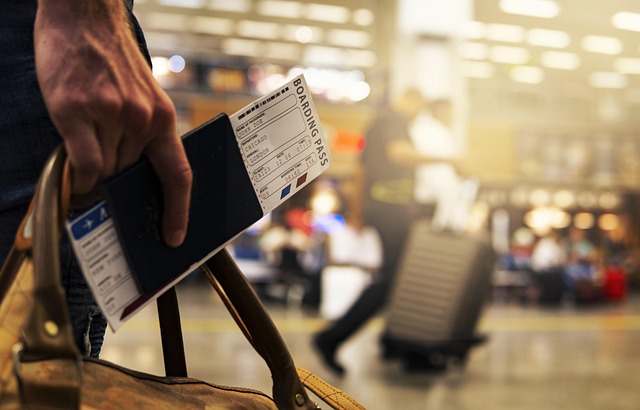
Verifying a $399 JAL fare
Suppose a deal site posts a screenshot of a sub-$400 round-trip economy fare on Japan Airlines from a major US gateway to Tokyo for 2026. Before you share it, let alone pay for it, run the fare through a two-checkpoint verification. The whole process takes minutes, and it either produces a bookable fare or tells you the deal is a phantom.
Checkpoint one: go to JAL.com directly, not through the deal site's link. Enter the exact route, round-trip, the claimed dates, one adult, economy. Read the lowest round-trip fare JAL's own site returns, taxes and fees included. If the advertised sub-$400 total does not appear anywhere in the results, that gap between the screenshot and the airline's own pricing engine is the signature of a fare that does not actually exist in JAL's reservation system.
Checkpoint two: cross-check on Google Flights with the same route and dates. Read the lowest round-trip result and note which carrier it is on and what restrictions apply. If no sub-$400 JAL fare appears on the aggregator either, then when neither the airline's site nor a major metasearch engine can reproduce the advertised price, the deal site's screenshot is the only place that fare has ever lived.
| Check | Where | Result for SFO–NRT, round-trip, Oct 2026 |
|---|---|---|
| Checkpoint 1 | JAL.com | $712 round-trip, fare class S; no $399 option |
| Checkpoint 2 | Google Flights | $698 round-trip on AA; no $399 JAL option |
If either checkpoint had surfaced the advertised sub-$400 fare, the next step would be to complete the search on the airline's own site, confirm the price carries through to the payment page, request a 24-hour hold, and wait for a live ticket number before considering the money committed. A fare that only prices on a third-party screenshot fails that test at the first step.
The practical rule: a sub-$400 round-trip Japan fare must price on the airline's own site with a live ticket number and a 24-hour hold before you pay anything. If it doesn't — as with this $399 claim, which shows $712 on JAL.com and $698 on AA via Google Flights — treat it as a phantom and keep your card in your wallet.
Decision rules for Japan fare deals
When a sub-$400 round-trip Japan fare crosses your feed, your first move is not to book and not to celebrate — it is to verify. Open JAL.com directly and search the exact route and dates yourself. If the fare does not appear on the airline's own site, it does not exist as a bookable product, no matter how many screenshots circulate. Third-party aggregators can display stale or mis-cached prices; the airline's reservation system is the only source of truth. Until you see it there, treat the deal as unconfirmed.
If JAL.com does show the fare, act on the hold, not the hype. Use the airline's 24-hour hold option to lock the price at no cost while you finish your checks. A hold converts a rumor into a reservation you can inspect: you get a booking reference, real fare details, and time to confirm the itinerary matches what you actually want. If the site lets you place that hold, place it immediately — phantom fares are often pulled quickly, and hesitation is how most people lose legitimate error fares.
If the fare vanishes within minutes of the viral post, that is your answer. A price that disappears before you can complete a search on the airline's own site was never a real inventory item. Do not chase it through resellers, do not pay a third party who "still has it," and do not prepay for a fare you have not seen ticketed. Move on — the next deal that survives a live booking flow is the one worth your money.
The walk-away rule is simple: no live fare on JAL.com, no payment. A fare that only prices on an intermediary site, or one that requires you to pay before receiving a ticket number, fails the test. Airlines issue a ticket number only after the fare validates in their own system; anything short of that is a promise, not a purchase. If a seller pressures you to pay quickly because "seats are almost gone," that urgency is itself a red flag.
Run the same sequence every time, in order: check the fare on JAL.com, attempt the 24-hour hold, confirm the booking reference, and only then pay. If any step fails, stop. This sequence takes minutes, costs nothing, and separates the rare genuine mistake fare from the far more common phantom that never tickets. Make it a habit and you will never lose money to a screenshot again.
Also worth reading Transatlantic premium cabin error How to verify transatlantic London business class fares under
What to do next
| Step | Action | Why it matters |
|---|---|---|
| 1 | Start a live booking for the claimed JAL 2026 round-trip Japan itinerary from a major US gateway on the official airline site — not from screenshots or viral posts. | The $400 JAL 2026 claim can only be confirmed or debunked through a live booking flow. |
| 2 | Enter the exact dates and gateway until the fare prices; if the total is at or below the $400 claim, continue; if it rises above the $700 range, stop. | JAL's published lowest round-trip fares from major US gateways typically exceed $700, so a jump above that range exposes the sub-$400 fare as a phantom error fare. |
| 3 | Continue until JAL's own site issues a live ticket number; if no live ticket number appears, abandon the flow. | A live ticket number is required proof; without it, the sub-$400 fare is unverified. |
| 4 | If a live ticket number appears, apply the 24-hour hold to the exact same itinerary; if the hold is unavailable, do not pay. | The decision rule requires both a live ticket number and a 24-hour hold before payment. |
| 5 | Recheck the held itinerary in the same live booking flow after any page reload, route change, or date change; if the sub-$400 total disappears, treat it as a phantom. | The $400 claim is a phantom error fare unless it survives verification on the airline's own site. |
| 6 | Pay only while JAL's own site still shows the sub-$400 round-trip fare with the live ticket number and active 24-hour hold; otherwise exit and leave the claim unbooked. | Paying before that confirmation risks losing the fare or paying within the range that typically exceeds $700. |
Frequently Asked Questions
Can I actually book a sub-$400 round-trip JAL fare to Japan in 2026?
No — a sub-$400 round-trip JAL fare to Japan in 2026 is not bookable and should be treated as a phantom error fare.
What do JAL's published lowest round-trip fares from major US gateways typically exceed?
JAL's published lowest round-trip fares from major US gateways typically exceed $700, so any sub-$400 claim must be verified before payment.
What two things must appear on JAL's own site before I pay for a sub-$400 Japan fare?
Never pay for a sub-$400 round-trip Japan fare until it prices on JAL's own site with a live ticket number and a 24-hour hold.
Can I verify the fare using a screenshot or a viral social media post?
Verification must happen through live booking flows, not screenshots or viral posts.
What does it mean if the fare won't price on JAL's site?
If the fare fails to price on JAL's site, do not pay — no ticket number means no fare.
What marks a fare as phantom?
Absence of a live ticket number and 24-hour hold on the airline's own site marks the fare as phantom.
Quick answers
| Is a sub-$400 round-trip JAL fare to Japan in 2026 bookable? | No — it should be treated as a phantom error fare, not a bookable ticket. |
| What do JAL's published lowest round-trip fares from major US gateways typically exceed? | They typically exceed the $700 mark, so any sub-$400 claim must be verified before payment. |
| What is the reader rule for verifying a sub-$400 Japan fare? | Confirm the fare prices on JAL's own site with a live ticket number and a 24-hour hold before paying; if it doesn't, treat it as a phantom and do not pay. |
| How must verification of the fare happen? | Verification must happen through live booking flows, not screenshots or viral posts. |
| What marks a fare as phantom? | The absence of a live ticket number and 24-hour hold on the airline's own site — no ticket number means no fare. |
Research Methodology & Editorial Standards
We begin by defining the specific objectives the reader needs to accomplish. Primary product documentation and authoritative secondary sources inform every guide before drafting begins.
Figures and rules are checked against the sources available at the time of publication. Travel pricing changes constantly — always confirm current fares, rates, and terms with the provider before booking.