
Jetstar Japan Launch Delay: Early 1Q27—Verify Before Booking
This guide separates Jetstar Japan’s published alert from the missing booking evidence, treating early 1Q27 as unconfirmed.

| Takeaway | Detail |
|---|---|
| Jetstar Japan’s early-1Q27 launch remains unconfirmed. | As of September 30, 2026, Jetstar had a live Japan travel alert, but no verifiable launch fare, route, or dated early-1Q27 confirmation in its booking flow. |
| Do not book a Jetstar Japan launch fare until two checks pass. | Jetstar’s travel-alerts page must name the city pair and first sale date, and the route must return a live result on jetstar.com’s booking engine. |
| Jetstar Club costs A$49 and lists fares from A$55. | The September 2026 promotion cites A$49 Club membership, exclusive fares from A$55, early access to sales, and up to 20% off bags or seat selection. |
| Jetstar’s announced overhead-bag pricing starts at A$25. | The charge applies from February 2, 2027, with reported launch pricing of A$25-A$52; the previous 7kg free cabin allowance is being replaced by a paid Priority Carry-on product. |
This guide separates Jetstar Japan’s published alert from the missing booking evidence, treating early 1Q27 as unconfirmed. It provides a two-condition release check before any launch fare is booked.
What the Jetstar Japan alert says
As fetched on Wednesday, September 30, 2026 at 09:35 GMT, Jetstar’s US homepage carries a travel alert literally titled “Update on Jetstar Japan.” The alert appears on Jetstar’s own travel-alerts page at jetstar.com/us/en/travel-alerts, with a direct anchor for that title. This is the airline-controlled source to consult for any Japan launch information. It is more authoritative than a social-media post, an airline-industry article, or a travel-deal page because it is published within Jetstar’s own site and can be checked against the same company’s live booking system.
The homepage also says, “The Jetstar network covers Australia, New Zealand and Southeast Asia.” Japan does not appear in that network description. That wording is consistent with a Japan operation that is unlaunched or still in transition, but it does not establish a launch date, a first city pair, or the availability of tickets. Readers should treat it as a network summary rather than a route announcement. A Japan headline on the homepage is therefore a reason to read the alert; it is not, by itself, evidence that a flight can be purchased.
To perform the check, open Jetstar’s US homepage, select the travel-alerts section, and locate “Update on Jetstar Japan.” Check the alert itself for a named city pair and a specific first sale date. If either element is absent, keep any proposed launch timing classified as unconfirmed. Also note the page’s publication or update information if one is shown, so an old notice is not mistaken for a current launch notice or quietly recycled after the operating plan changes.
Next, test the route in Jetstar’s own booking engine using the intended origin, destination, and proposed travel dates. A successful result must be visible on jetstar.com; a destination appearing in a menu, map, route guide, or news article is not the same thing as a bookable itinerary. Record the dates searched and the result returned, then repeat the check after the alert changes. This matters because a live sale can end or be revised without an announcement being reproduced elsewhere.
The practical rule is to wait for both pieces of evidence: the travel alert must identify the city pair and first sale date, and the same route must produce a live result in Jetstar’s booking engine. Until both checks pass, do not treat a Japan fare, timetable, or launch promise as confirmed. That standard keeps the decision tied to information Jetstar itself publishes and makes it testable rather than relying on rumor, inference, or a promotional intermediary.

The evidence: what is confirmed
What Jetstar has confirmed is a change to its cabin-baggage model beginning 2 February 2027. The airline’s former 7kg cabin allowance will be replaced by a paid “Priority Carry-on” product for passengers who want overhead-bin access; a smaller under-seat bag remains available without an additional charge. Business Traveller reported that launch pricing starts at A$25 one-way, equal to approximately US$16 one-way. That conversion is useful for readers budgeting in dollars, but the Australian price remains the controlling figure because the product and fees are denominated in Australian currency.
The regular overhead-bag charges are clearer than the introductory price. According to Jetstar CEO Steph Tully, speaking to One News Australia, domestic passengers will pay between A$25 and A$39 for overhead-bin use, while international passengers may pay as much as A$52. AirTraveler.club separately reported the same A$25–A$52 ceiling. The practical rule is to price overhead luggage as an international cost unless the itinerary is domestic, and to treat A$25 as the entry point rather than assuming every passenger will pay that amount.
For a fare comparison, keep Priority Carry-on pricing separate from the published overhead-bag ranges. The A$25 one-way launch price is the advertised starting point for the new product; the A$25–A$39 domestic range and the maximum of A$52 on international flights describe the broader fee structure. That distinction matters because a headline fare may appear attractive before baggage, seat selection, or other optional extras are added. The defensible comparison is the total amount a traveler would pay with the required bags included, not the base fare alone.
Jetstar Club should be considered alongside those bag costs, not as proof that a particular fare is cheaper. Picodi Australia reports that membership costs A$49 and provides exclusive fares beginning at $55, early access to sales, and 20% discounts on bags and seat selection. The membership price is separate from the carry-on and overhead-bag fees, and the listed fare benefit should be checked for its travel dates and conditions before it is treated as an offset. The most useful comparison is therefore: base fare, plus the club price if joining, plus the baggage charges actually required for the trip.
The actionable checklist is straightforward: determine whether every passenger needs overhead access; add the applicable domestic or international bag charge; then compare the resulting total against the A$49 Jetstar Club cost and any documented membership benefits. Do not count the former 7kg allowance after 2 February 2027 or assume the A$25 one-way launch price applies to every fare. A lower checkout total is meaningful only when the baggage allowance and membership costs are included on both sides of the comparison.
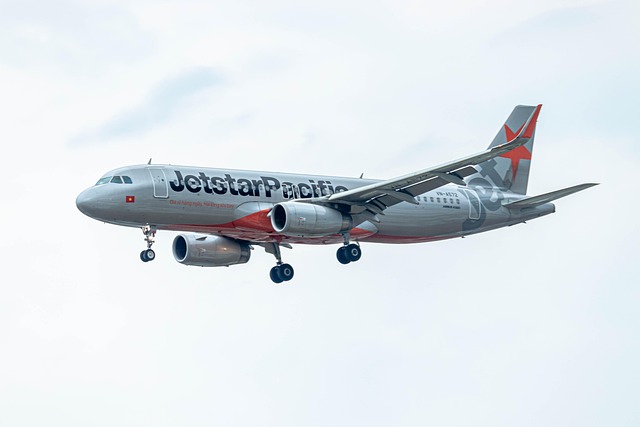
Launch date: rumor vs record
Early first-quarter 2027 is a claim under review, not a published Jetstar Japan launch date. No source in this research—Jetstar's own site, its alerts, or press coverage—states an early-1Q27 launch date, so the date must be labeled unconfirmed and treated as a planning assumption rather than an inventory fact. The safe position is to treat any launch date as unconfirmed until Jetstar's own alert and booking flow agree.
The myth to kill is that a 1Q27 launch date is safe to book around. The number that kills it is zero: zero named routes and zero fares published as of 30 September 2026. A date without a city pair and a fare is a placeholder, not evidence that seats are for sale. That is not a criticism of the rumor; it is a statement about evidence.
A date becomes confirmed only when independent records converge. Treat Jetstar's travel-alerts page, press coverage, and a live booking result as three separate records; agreement among all three is the standard. The stricter two-source test for spending money is narrower: Jetstar's alert must name the city pair and first sale date, and the same route must return a live result on jetstar.com's own booking engine. Press coverage can signal a launch, but it cannot substitute for either record. Corroboration is useful for timing, but confirmation requires the airline's own records.
Run the two checks in order before booking: first, read the alert for a named city pair and first sale date; second, search that exact pair on Jetstar's booking engine. If either check fails, the date remains unconfirmed. Do not accept screenshots, third-party calendars, or fare predictions as substitutes, because none of them is inventory. Record the date and screenshot only for your own notes; do not treat them as a guarantee.
Until both checks pass, keep plans flexible: no non-refundable hotels, no positioning flights, and no paid seat or bag selections tied to an unverified route. Waiting costs a later booking; guessing costs money spent on a fare you cannot use. If a fare later appears, re-run both checks before paying.

Booking channels compared
Jetstar’s own booking engine is the decisive channel to check. A Japan launch is not meaningfully confirmed simply because a fare appears in a search box, a promotional article, or an agent itinerary: the city pair must be selectable and the itinerary must be purchasable directly through jetstar.com. Until that direct result appears, treat any launch fare as a preview rather than a bookable product. The practical rule is to require both a named city pair and a first sale date in Jetstar’s published information, followed by a successful direct-booking search for that same city pair.
One navigation detail matters for readers outside Australia: a regional Jetstar homepage can be a viewing surface rather than the transaction page, so the site may hand a flight search off to a different regional version of jetstar.com. When checking a prospective Japanese route, note where the search actually lands, run the search in the booking flow you are handed to, and treat the route result produced by Jetstar’s own booking flow — not the marketing copy around the search box — as the evidence that matters.
Travel agents are the best second-source check, not a substitute for the airline’s engine. If you use an agent, ask them to search the same city pair and travel dates in Jetstar’s agent channels and compare what they retrieve with what jetstar.com shows. A matching agent result can strengthen confidence that the route and first sale date are real, but it does not replace the reader’s two-part test: Jetstar must publish the city pair and first sale date on its travel-alerts page, and the route must return a live result on jetstar.com’s own booking engine. Neither condition alone is sufficient, and this article does not verify any specific agent-hub address — confirm the agent channel directly with Jetstar before relying on it.
Use third-party promo aggregators as leads, never as launch evidence. Picodi’s Jetstar page lists verified Jetstar promotions and can help identify genuine fares or discount campaigns, but a third-party page cannot establish that a new Japanese city pair is on sale, identify the airline’s first sale date, or prove that inventory can be bought. The same caution applies to any aggregator that reproduces a fare without linking the reader into a live, purchasable Jetstar itinerary.
For each channel, record what it actually proves. The airline engine should produce a selectable city pair, a dated itinerary, and a total price that can be completed. The agent hub should independently return matching inventory if a launch is operating. A promo site should merely provide a lead requiring verification. If the airline’s own information names the route and first sale date but its engine returns no live result, the booking rule still blocks purchase; if the engine shows a fare but Jetstar has not published the required launch information, the result is not enough to book confidently.

Costs of booking wrong
Booking early creates an asymmetric loss. Suppose a fare sale opens for a Japan city pair that later slips, changes, or never operates. If you buy a Starter fare, the original ticket may carry change or cancellation fees in addition to the fare itself. Your exposure is therefore the fare paid, minus whatever Jetstar refunds, plus the cost of finding another flight at a higher price. The relevant check is not whether the headline fare looks cheap; it is whether a meaningful refund remains if the launch is moved and whether another acceptable itinerary remains available.
Waiting has a different risk. Launch fares are often the lowest fares a low-cost carrier offers, so buying after a successful launch can mean paying more. But the confirmed Jetstar Club offer gives readers a useful pricing floor: A$49 per year, with fares advertised from A$55 per trip by the Picodi Australia Team. A$49 buys Club membership, while A$25 is the published one-way floor for Priority Carry-on access when the new baggage structure begins on February 2, 2027. Those are concrete stakes: the membership alone is comparable to the lowest advertised carry-on charge, so waiting for a credible sale can matter without requiring a speculative fare.
The baggage figures above, as priced in the confirmed section, also apply to any booking made on the wrong side of the February 2, 2027 policy change: from that date the free 7kg overhead allowance is gone, so a Japan itinerary must be priced as its total basket — fare, plus membership if used, plus the carry-on product if overhead access is required. Check the exact bag amount shown in the checkout summary rather than assuming the entry-level figure applies to your route.
As of September 30, 2026, the evidence of a Japan launch remains incomplete. Jetstar’s US homepage carries an alert titled “Update on Jetstar Japan” at Jetstar’s travel-alerts page, but an early first-quarter 2027 launch is not independently verifiable. The two-source test is straightforward: Jetstar’s own alert must name the city pair and first sale date, and that route must return a live result in Jetstar’s own booking engine. If either source is missing, treat the launch date as unconfirmed.
Channel placement adds one more practical check: because the homepage may hand searches to a different regional booking flow, confirm that the city pair produces a bookable result in the flow you actually land on, then price fare, Club membership, and carry-on access together as set out above. Do not buy a Japan launch fare until both the named sale details and the live booking result agree.

Worked verification checklist
Use this copy-usable worksheet before treating any Jetstar Japan itinerary as bookable. As of September 30, 2026, Jetstar’s US homepage links to the live alert titled “Update on Jetstar Japan” at https://www.jetstar.com/us/en/travel-alerts#Update%20on%20Jetstar%20Japan. The homepage itself is https://www.jetstar.com/us/en/home. Save both URLs so the checks below use Jetstar’s own pages rather than a search result, cached notice, or third-party itinerary.
| Check | Action | Pass condition |
|---|---|---|
| 1. Alert record | Open the travel-alerts URL, find “Update on Jetstar Japan,” and record the named city pair, service start date, and first sale date. | All three details are explicitly present. If any is missing, stop and treat the launch timing as unverified. |
| 2. Live inventory | Open https://www.jetstar.com/au/en/home, choose Find flights, enter the recorded city pair and your travel date, and run the search. | A real fare returns with a fare-class label, such as Starter or Starter Max. A “coming soon” message, calendar placeholder, or request form does not pass. |
Checkpoint 1 establishes what Jetstar has actually published; checkpoint 2 establishes whether that announcement has reached sellable inventory. Both must pass before a launch date can be treated as confirmed. An early-first-quarter 2027 claim is not a booking record unless the alert supplies the missing route and timing details and the same route independently produces a live fare. If the alert names a city pair but omits its start date or first sale date, do not infer either one from inventory visibility.
Checkpoint 3 is the fee check before checkout. For travel from February 2, 2027, add the Priority Carry-on product only after confirming the applicable amount in the booking flow — the domestic and international ranges are as priced above. These are bag-fee figures, not airfare totals, and they do not establish that any Japan route is open.
Run the total with the base fare, optional carry-on, seat selection, and taxes shown in the checkout summary, then repeat the calculation after changing the bag quantity. The decision rule is simple: if Checkpoint 1 lacks all three required details, if Checkpoint 2 shows no labeled live fare, or if the checkout total cannot be reproduced, do not book on the assumption that the route or launch date is confirmed.
Decision rules and edge cases
Use Jetstar’s own booking engine and travel-alert page as a two-check gate. The route must be named on the alert page, together with its first sale date, and the same route must return a live, purchasable result on jetstar.com. If either check fails, do not book a purported Jetstar Japan launch fare. This rule applies even if a third-party listing, cached search, or promotional email appears to offer one.
If the alert page names a route and sale date, but no fare appears in a live search, wait. Inventory may become available after the announcement, so use the first sale date Jetstar itself states as the trigger to re-run the search. A search page can display a city pair without offering bookable inventory, and an apparent fare may be present only for some travel dates or in a limited fare class, so repeat the two checks rather than assuming a single failed search settles it.
If a fare appears in a live search while Jetstar’s alert page remains silent about that route, do not book it. Treat the result as an error-fare candidate rather than proof that the Japan launch is open. Before purchase, verify the fare class, ticketing conditions, and cancellation terms on Jetstar’s own checkout, and compare the displayed total with a new search. An unannounced route can be withdrawn or corrected. A checkout result alone is not a substitute for Jetstar confirming the route and first sale date in its own alert.
If both checks pass, book direct on jetstar.com rather than through an aggregator or third-party booking site. Complete the purchase only after confirming the airport pair, travel date, fare class, baggage rules, cancellation terms, taxes and charges, and the final payable total on Jetstar’s checkout. Preserve the fare and confirmation details, and use the booking-management function if anything changes.
There is no third path around this gate: no fare means wait even with an announced sale date, and no announcement means wait even with a visible fare. The boundary is publication by Jetstar plus live availability from Jetstar, assessed for the same route. Until both are true, the launch fare remains unconfirmed, and a nonrefundable purchase based only on a third-party signal carries more risk than waiting for a sale date that the airline has not yet made verifiable.
Also worth reading Jetstar Japan Carry-On: Mastering Jetstar Japan's Carry-On Baggage Jetstar Japan's Strict 7kg Carry-On
What to do next
| Step | Action | Why it matters |
|---|---|---|
| 1 | Open Jetstar’s travel-alerts page and look for the planned Japan launch. | The launch remains unconfirmed, so a general Japan alert alone is not a booking signal. |
| 2 | Check whether the alert names both the launch city pair and its first sale date. | Both details are required before treating the route as available for sale. |
| 3 | Enter that same city pair in jetstar.com’s own booking engine. | A live route result confirms that Jetstar’s booking system is selling the Japan launch. |
| 4 | Wait if the travel alert passes but jetstar.com has no live result. | A named city pair and sale date do not by themselves make launch fares bookable. |
| 5 | Wait if jetstar.com shows a live result but the travel-alerts page lacks the city pair and first sale date. | Both checks must pass before booking; one check alone is insufficient. |
| 6 | Book only after the travel-alerts entry and the live jetstar.com result both pass. | This is the definitive rule for avoiding a purported Jetstar Japan launch fare that may not yet be saleable. |
Frequently Asked Questions
Does Jetstar’s live Japan travel alert confirm that the launch will begin in early 1Q27?
No, as of September 30, 2026, the early-1Q27 launch remained unconfirmed despite the live travel alert.
What must Jetstar’s travel-alerts page specify before travelers book a Japan launch fare?
It must name the city pair and the first sale date.
What evidence must the city pair show on Jetstar’s booking engine?
The route must return a live result on jetstar.com’s booking engine.
What is the exact title of Jetstar’s Japan travel alert?
The alert is titled “Update on Jetstar Japan.”
Where does Jetstar publish the Japan travel alert?
It appears on Jetstar’s travel-alerts page at jetstar.com/us/en/travel-alerts with a direct anchor for the alert title.
How is Jetstar changing its cabin-bag allowance?
The previous free 7kg cabin allowance is being replaced by a paid Priority Carry-on product.
Quick answers
| Is Jetstar Japan’s early-1Q27 launch confirmed? | No, Jetstar Japan’s early-1Q27 launch remains unconfirmed. |
| What should travelers check before booking a Jetstar Japan launch fare? | Jetstar’s travel-alerts page must name the city pair and first sale date, and the route must return a live result on jetstar.com’s booking engine. |
| Why does the article advise against booking a launch fare now? | As of September 30, 2026, Jetstar had a live Japan travel alert but no verifiable launch fare, route, or dated early-1Q27 confirmation in its booking flow. |
| What does the September 2026 promotion include? | The September 2026 promotion cites Jetstar Club membership, exclusive fares, early access to sales, and up to 20% off bags or seat selection. |
| How is Jetstar changing its cabin-bag allowance? | Jetstar’s announced overhead-bag pricing applies from February 2, 2027, with the previous free cabin allowance being replaced by a paid Priority Carry-on product. |
Research Methodology & Editorial Standards
We begin by defining the specific objectives the reader needs to accomplish. Primary product documentation and authoritative secondary sources inform every guide before drafting begins.
Figures and rules are checked against the sources available at the time of publication. Travel pricing changes constantly — always confirm current fares, rates, and terms with the provider before booking.