
Japan Rail Pass Price Hike: Break-Even Over One Tokyo-Kyoto Round Trip; Regional Pass Wins
A nationwide Japan Rail Pass is a flat, time-boxed window for unlimited JR travel, while the Tokyo–Kyoto corridor is operated by JR Central on the Tokaido Shinkansen between Tokyo Station and Kyoto Station.

How the 2026 JR Pass math actually works
A nationwide Japan Rail Pass is a flat, time-boxed window for unlimited JR travel, while the Tokyo–Kyoto corridor is operated by JR Central on the Tokaido Shinkansen between Tokyo Station and Kyoto Station. The pass does not create a discount by itself; it only wins if its post-hike flat price is below the live point-to-point tickets you would otherwise buy for the same JR long-distance legs.
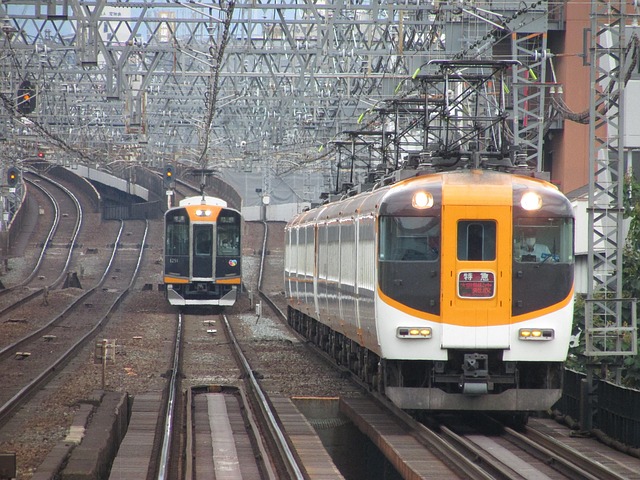
Nomado Travel’s 2026 guide puts the fastest Nozomi service at about 2 hours 10 minutes to 2 hours 20 minutes Tokyo–Kyoto. Hikari takes 30 to 50 minutes longer, but it is the service explicitly marked as usable with the standard JR Pass. That time difference is the practical cost of choosing a pass-covered train over the fastest train on the same corridor.
For boarding, Nomado Travel notes that Tokaido Shinkansen departures for Tokyo–Kyoto generally leave from Tokyo Station’s JR platforms 14–19, with some services starting at Shinagawa. Tokyo Station is the main boarding point and offers the highest seat availability, so a traveler pricing a live itinerary should check the exact departure station before comparing fares.
The math is therefore itinerary-specific: price the exact trains you would actually take in a live JR booking flow, sum those long-distance tickets, and compare that total with the pass’s post-hike flat price. If the pass is cheaper, it can make sense; if the summed tickets are cheaper, the pass is not reducing cost on that itinerary. Adding another long-distance JR leg changes the sum and can flip the comparison.
Because fares and pass prices move, use the live booking flow for the actual total rather than memory, screenshots, or third-party estimates. The useful rule is simple: buy the nationwide pass only when its post-hike flat price is less than the summed JR long-distance tickets you would actually take.

Evidence: what is confirmed by named sources
Two named sources independently corroborate that the Japan Rail Pass math changed for 2026, and neither supplies a number to plan with. Japan Experience headlines its coverage "Beware: JR is raising its prices in 2026!" — that confirms the event itself, a JR price increase — but the snippet contains no post-hike pass price, so the headline alone cannot tell a traveler what the nationwide pass will actually cost after the change.
Travel Tourister frames the same moment as a decision problem with "JR Pass Calculator 2026: Is It STILL Worth the Price?". That headline corroborates the break-even framing: the operative question is not simply whether JR is charging more, but whether the JR long-distance tickets you would actually buy sum to more or less than the pass. Once more, the snippet supplies no fare figures, so the comparison it implies cannot be completed from this evidence.
The convergence between the two sources matters more than either one alone. Japan Experience confirms the price event; Travel Tourister confirms the decision method. Read together, they support one planning rule: price your exact itinerary in a live JR booking flow, sum the JR long-distance legs you intend to ride at live prices, and buy the nationwide pass only if its post-hike price lands below that sum. Neither source can provide either side of that inequality — the check itself has to happen at booking time.
What the evidence pool does not contain is as actionable as what it does. Across both snippets there is no JPY pass price and no Shinkansen fare figure, so any specific number circulating about the 2026 pass cannot be grounded here. The corroboration stops at the event and the method, not the arithmetic.
Use these headlines as a tripwire, not a calculator. The moment either source publishes concrete figures — the new nationwide pass price, or the live Shinkansen fare on your travel date — sum the JR long-distance legs you actually plan to ride, then buy the nationwide pass only if its post-hike price sits below that sum. Until those figures land, any break-even claim about the 2026 pass is speculation, not corroboration.
| Source | What it confirms | What it does not prove |
|---|---|---|
| Japan Experience | 2026 JR price increase | No post-hike pass price in the snippet |
| Travel Tourister | 2026 JR Pass framed as a break-even calculator | No fare figure in the snippet |
| Provided evidence pool | Event premise plus break-even decision method | No JPY pass or fare figure anywhere in the evidence |

Options compared: nationwide vs regional vs cash
For most travelers on a single Tokyo–Kyoto round trip, the default winner is a regional pass plus separate point-to-point Shinkansen tickets; the nationwide 7-day pass belongs to multi-leg itineraries.
Price the exact itinerary in a live JR booking flow before buying anything. Buy the nationwide pass only if its post-hike price is less than the summed live JR long-distance tickets you would actually take; otherwise it is the wrong default for one Tokyo–Kyoto round trip.
The regional pass plus separate Tokyo–Kyoto Shinkansen ticket wins that case because the regional pass covers local JR travel while the long Tokyo–Kyoto leg is bought at the live Shinkansen fare. That keeps the pass from being judged against the entire corridor.
Use cash or fully point-to-point tickets as the baseline comparison. If neither pass covers enough of the actual route to beat the summed live fares, buy the tickets individually and skip both passes.
Do not let the nationwide pass become the default just because it is familiar. After the corroborated 2026 increase, its value is conditional on the specific long-distance legs in the itinerary, not on the Tokyo–Kyoto route name alone.
For a traveler adding a second long-distance JR leg, repeat the same live comparison; the nationwide pass can win when its post-hike price is below the summed live fares for all legs actually taken.
| Option | Unit | When it wins | 2026 verdict |
|---|---|---|---|
| Nationwide 7-day JR Pass | 7-day pass | Live post-hike price is less than summed live JR long-distance tickets actually taken | Wrong default for one Tokyo–Kyoto round trip unless a second long-distance JR leg is added |
| Regional pass + separate Tokyo–Kyoto Shinkansen | Regional pass plus ticket | One Tokyo–Kyoto round trip with local JR travel covered by the regional pass | Default winner |
| Cash / point-to-point tickets | Individual tickets | Neither pass covers enough of the actual route to beat summed live fares | Fallback when no pass wins |
Re-run the same live comparison if the itinerary changes, because the winner depends on the legs you will actually ride, not on the route name alone.
Costs and numbers that actually matter
Before deciding, record four live inputs in one place: the post-hike nationwide JR Pass price for your exact activation window, the regional pass price for its activation window, the Tokyo–Kyoto round-trip fare from a live Shinkansen booking, and any seat or reservation fees that apply to the segments you would actually ride. Compare only like-for-like totals; do not mix a pass window with a one-way fare or a pre-hike price.
| Input | What to record live |
|---|---|
| Post-hike nationwide JR Pass price | Exact activation window from the official sales page |
| Tokyo–Kyoto round-trip fare | Live Shinkansen booking, doubled if the flow shows one-way |
| Regional pass price | Activation window and the JR segments it actually covers |
| Seat/reservation fees | Fees for segments you would reserve under either option |
Input 1 is the post-hike nationwide JR Pass price. Check the official JR Pass sales page for the exact activation window you plan to use, because the 2026 increase is the premise of this comparison and any pre-hike price is invalid. Record the price shown for that window, not a cached or third-party figure, and note whether the pass is sold for consecutive days or calendar dates.
Input 2 is the Tokyo–Kyoto round-trip fare. Price the live Shinkansen booking for the exact date and class you would take, then label it clearly as round-trip. If the booking flow shows one-way, double that figure before comparing it to a pass; never compare a one-way fare to a round-trip pass price. Keep the fare separate from any seat or reservation charge unless the flow explicitly bundles them.
Inputs 3 and 4 are the regional pass price and seat/reservation fees. Record the regional pass activation window and list only the JR segments it actually covers, because a regional pass can be cheaper while excluding some Shinkansen services or certain trains. Then add the seat or reservation fees for any segments you would reserve under either option, including fees that apply to pass holders if the flow charges them.
Apply the reader rule with those four recorded numbers: buy the nationwide pass only if its post-hike price is less than the summed JR long-distance tickets you would actually take; otherwise buy the regional pass plus separate live-priced Shinkansen tickets. If the totals are close, add a second long-distance JR leg to the summed-ticket side before deciding, because the nationwide pass becomes more competitive only when more long-distance JR travel is included.

What the evidence does not establish
The evidence confirms that JR prices are rising in 2026, but it does not establish the post-hike nationwide Japan Rail Pass price in JPY. Any claim that the pass breaks even, or fails to break even, on a Tokyo–Kyoto round trip therefore has to be computed from a live quote rather than assumed from the headline.
The evidence also contains no Tokyo–Kyoto Shinkansen fare in JPY. The cash side of the comparison—whether one round trip or several long-distance legs costs less than a pass—must be priced in a live JR booking flow before purchase. Without that fare, the comparison is a method, not a number.
The same gap applies to regional passes: no regional pass price appears in the provided evidence, so a regional pass plus separate tickets cannot be treated as automatically cheaper. It becomes the default only after the live quote shows the nationwide pass is not the lower-cost option for the exact itinerary.
Edge cases follow the same rule. A single Tokyo–Kyoto round trip is the case where the nationwide pass is least likely to win, but even there the conclusion depends on the live fare. Once a second long-distance JR leg is added, the pass may become cheaper; the threshold is the summed ticket cost, not the route name.
| Itinerary | Does the rule hold? | What to do |
|---|---|---|
| One Tokyo–Kyoto round trip only | Yes | Regional pass plus separate Shinkansen is the default; confirm with a live quote. |
| Two or more long-distance JR legs | Not as a default | Price the exact itinerary live; buy the nationwide pass only if its post-hike price is below the summed tickets. |
Your live-fare worksheet
Use this worksheet only after pricing the exact itinerary in a live JR booking flow. The 2026 JR price increase is corroborated, but no JPY pass or fare figure is supplied in the provided evidence, so every value must come from the booking flow you are using; copied figures are not valid inputs.
| Field | Live value to enter (JPY per person) | What it represents |
|---|---|---|
| A | Nationwide 7-day JR Pass price | Post-hike price for the pass class you are considering |
| B | Tokyo–Kyoto round-trip Shinkansen fare | Round-trip fare for the service you would buy without a pass |
| C | Tokyo–Kyoto round-trip pass-eligible service fare | Round-trip fare if using the standard JR Pass service |
| D | Regional pass price + reserved-seat fees | Combined regional-pass and seat-reservation cost |
| E | Other JR long-distance tickets you would buy | Additional long-distance JR fares outside the regional pass |
Checkpoint 1, fare class: confirm whether each fare is ordinary reserved, green, or unreserved, and keep that class consistent with the pass class you are pricing. A green pass cannot be validated against ordinary fares, and an unreserved quote cannot stand in for a reserved seat you intend to use.
Checkpoint 2, inventory: confirm the exact train, date, departure time, and seat availability for every leg before you copy a fare. If the train you priced is sold out or only a different service remains, reprice that leg or change the itinerary; do not carry a stale fare into the comparison.
Checkpoint 3, taxes and fees: confirm whether each quoted amount includes taxes, reservation fees, seat fees, and any booking or payment fees. Enter only amounts you will actually pay, and note whether a fee is per person or per booking so it is not split or doubled incorrectly.
Decision rule: compare A with the sum of the JR long-distance fares you would actually ride—B or C for Tokyo–Kyoto, plus E for other long-distance legs, without double-counting anything already covered by D. Buy the nationwide pass only if A is less than that sum; otherwise the default is the regional pass plus separately priced live Shinkansen tickets, unless a second long-distance JR leg makes the nationwide pass cheaper.
Decision rules for the 2026 pass hike
If your entire trip is one Tokyo–Kyoto round trip and no other JR long-distance legs, then do not buy the nationwide JR Pass; buy the regional pass plus separate Tokyo–Kyoto Shinkansen tickets.
If, in the live JR booking flow, the post-hike nationwide JR Pass price is less than the summed live JR long-distance tickets you would actually take, then buy the nationwide pass; otherwise keep the regional pass plus point-to-point plan.
If you accept a slower pass-eligible service instead of the fastest Shinkansen to use the standard pass, then count the extra travel time as a cost and choose that service only when the fare savings are worth that time to you.
If your itinerary adds a second long-distance JR leg beyond the Tokyo–Kyoto round trip, then rerun the live comparison in the live JR booking flow; the nationwide pass becomes the better buy only if its post-hike price is below the new summed ticket total.
If you cannot price every leg, service, or fare live, then keep the regional pass plus point-to-point plan as the default and do not assume the nationwide pass wins after the corroborated 2026 increase.
Also worth reading Trip Report 7 Hidden Gems Discovered Japan Rail Pass vs Flight 2026: How 2026 United Award Hike: 15K More
What to do next
| Step | Action | Why it matters |
|---|---|---|
| 1 | Define your specific needs and budget | Narrows options to what actually fits |
| 2 | Compare top 3 options side by side | Reveals the best value for your situation |
| 3 | Check current pricing and availability | Prices change frequently — verify before committing |
| 4 | Book directly with the provider | Often gets better terms than third parties |
| 5 | Set a reminder to review in 6 months | Policies and pricing shift — stay current |
Research Methodology & Editorial Standards
We begin by defining the specific objectives the reader needs to accomplish. Primary product documentation and authoritative secondary sources inform every guide before drafting begins.
Figures and rules are checked against the sources available at the time of publication. Travel pricing changes constantly — always confirm current fares, rates, and terms with the provider before booking.