
How to verify a lie-flat seat before paying a premium-cabin fare
This guide gives a pre-booking check for a 2026 $4,200 round-trip lie-flat fare. It shows how to verify the exact flight number’s aircraft and seat pitch or angle on the airline seat map and an independent source before paying above ~$2,000 round-trip.
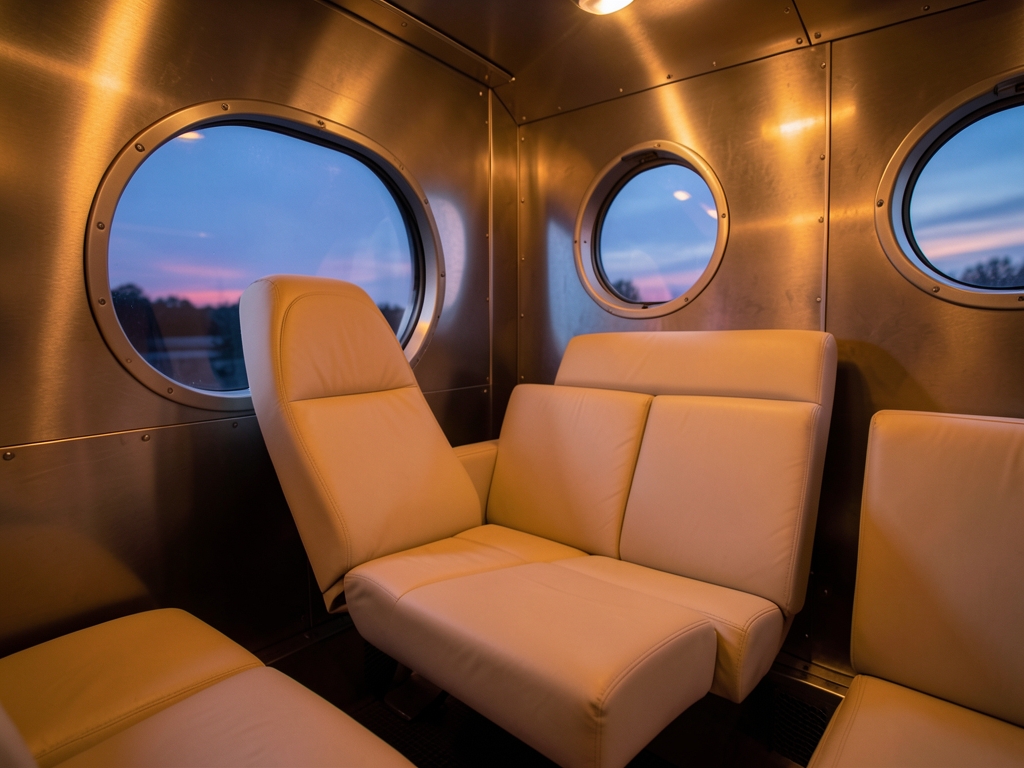
This guide gives a pre-booking check for a 2026 $4,200 round-trip lie-flat fare. It shows how to verify the exact flight number’s aircraft and seat pitch or angle on the airline seat map and an independent source before paying above ~$2,000 round-trip.
Why Lie-Flat Labels Hide Recliners
A fare labeled lie-flat is only real if the aircraft and seat configuration are confirmed for the specific flight number, because the fare name alone never confirms lie-flat. Airlines market angled-flat and recliner seats under premium-cabin labels, so a cabin name tells you the fare family and service bundle, not the seat hardware bolted to the floor. The same "Business" or "Premium" label can cover a fully flat bed, an angled-flat shell, or a recliner.
Cabin names are marketing, not hardware. On narrowbody aircraft, "Business" often means recliner seats that recline well short of the roughly 180 degrees that defines true lie-flat. The word "Business" therefore does not promise a bed; it promises a fare class that may be paired with very different seat geometry, so check the seat map for your exact flight number and date rather than trusting the cabin name.
Aircraft assignments are also unstable. Airlines reassign aircraft to flight numbers at schedule changes, so a lie-flat plane flown previously on the same route can be swapped to a recliner cabin. The relevant question is not whether the route has ever had lie-flat service, but whether your specific flight number on your specific date is scheduled with the lie-flat aircraft, which you confirm by re-checking the seat map and an independent tracking source for that flight number and date.
Premium economy is the most common mislabel in this area: it is a larger recliner seat, never lie-flat, so a premium-economy fare should not be treated as a bed product even when it is sold beside business-class fares. Its value comes from space and service, not from a flat sleeping surface.
Taken together, these points mean the fare name is a starting point, not evidence. The label can stay the same while the seat changes, and the seat can change while the route stays the same. Only the aircraft and configuration assigned to your exact flight number on your travel date can turn a lie-flat claim into a lie-flat seat.
Check the Seat Map First
The two-source seat-map verification method means checking the airline’s own seat map for your exact flight number and date, then cross-checking the seat’s published dimensions and recline angle; the 180-degree test is the deciding rule: a true lie-flat seat must form a fully flat 180-degree bed, while a 160-170 degree angle is angled-flat rather than lie-flat. Use both sources before paying; neither a route-level listing nor a generic aircraft page is enough.
Pull the airline’s seat map for the specific flight number and date, not just the route or aircraft family. In that map, true lie-flat cabins usually appear as 1-2-1 or staggered 1-2-2 layouts with direct aisle access, while a 2-2 recliner layout signals angled seats rather than a flat bed. If the map changes after a schedule swap, the new map governs.
Then cross-check the seat dimensions against the map. A lie-flat seat converts to a flat bed roughly 75-80 inches long; a listing with pitch around 60 inches, or an angle specification of 160-170 degrees, indicates an angled-flat seat rather than a true lie-flat one. Pitch and angle are separate specifications, so a long pitch with a 160-170 degree recline still is not flat. Treat the angle and bed length as the second source, so the layout and dimensions must agree before you treat the cabin as lie-flat.
Seat maps can lag schedule swaps, so the first check is not enough. Re-check the seat map within 24 hours of ticketing and again at check-in, using the same flight number and date, and compare the layout and dimensions to your earlier notes. If either source changes, treat the lie-flat claim as unconfirmed until both sources match again.
If the two sources disagree, do not assume the better one is correct; re-pull both after any schedule change and keep the more conservative reading until the layout and dimensions agree. This keeps a single mismatched map or stale dimension from being treated as proof of a flat bed.

Confirm the Aircraft Type Independently
The independent check is a flight-number-to-aircraft-type cross-check: for the exact flight number and date, use an aircraft-tracking or schedule source to identify the registered equipment, then compare that result with the airline's own seat map instead of relying on the seat map alone. This is a separate verification layer, not a repeat of the seat-map check.
Start with the flight number and date, not the route or aircraft family. The tracking source should return the specific equipment assigned to that operating flight, such as a widebody, which often has lie-flat business class, or a narrowbody or regional jet, which usually does not. Record the registration or subtype if the source provides it, because two aircraft in the same family can have different cabins.
Next, match the equipment to the cabin configuration rather than assuming the aircraft type settles the question. Even widebodies vary: some operators fly business class as angled-flat on older frames. Use the airline's fleet page to find the named seat product for that exact aircraft subtype and read the wording carefully, distinguishing "fully flat" from "angled," "recliner," or similar descriptions. If the fleet page does not name the product for the subtype, treat the lie-flat claim as unconfirmed.
Finally, set an equipment-change alert on the tracking source. Aircraft swaps can replace a widebody with a narrowbody or regional jet, or move the flight to an older frame with a different seat product. If the equipment changes, repeat the aircraft and seat-product confirmation for the new assignment before paying or before travel, and keep the alert active until departure.
Keep the tracking result and fleet-page wording with your booking record. If the equipment changes later, that saved evidence shows what was confirmed at purchase and gives you a clear basis for re-checking the new aircraft or asking to be moved to a flight with the confirmed product.

Price the $4,200 Against Alternatives
Start with unit discipline: every fare or award figure must be labeled one-way or round-trip before it enters a comparison. A $4,200 round-trip fare is a total for both directions, so an award price quoted one-way has to be converted to a round-trip total—doubled, plus any taxes and fees—before you weigh it against the cash fare. If you cannot get both figures in the same unit, stop the comparison rather than eyeballing it.
At $4,200 round-trip, a true lie-flat long-haul business seat is broadly consistent with a full-price business fare. That makes the quote plausible, not automatically justified: it is the price level where lie-flat can be real, but only if the seat is actually lie-flat. If the same route shows lie-flat availability for a fraction of that in a deal or award, the $4,200 quote is a skip.
The cost of being wrong is not a small downgrade. Paying lie-flat prices for a recliner seat wastes roughly the entire premium-cabin markup, because the premium you paid was for the bed, not the cabin name. In cost/benefit terms, the $4,200 has to buy a confirmed flat bed in both directions; split evenly, that is $2,100 per direction, and any direction that is not lie-flat removes most of the value you priced in.
So treat $4,200 as a ceiling for what an unverified "lie-flat" label can cost you, not as proof of value. The arithmetic only works when the fare delivers the sleep benefit on the outbound and the return; if one direction is a recliner, you are paying a round-trip lie-flat price for a one-direction lie-flat trip.
Use the comparison to set stakes, not to settle the booking. A lower lie-flat alternative on the same route changes the $4,200 from "market rate" to "overpaying," while a verified lie-flat seat at $4,200 can still be worth it if the schedule, routing, and total trip cost fit your needs.
When to Skip: Decision Rules
If the seat map for your exact flight shows a 2-2 recliner layout or any recline angle under 180 degrees, skip the $4,200 round-trip fare outright; no route or timing justifies that price for a recliner.
If you cannot confirm the aircraft type for your exact date from two independent sources, hold payment and set a re-check reminder rather than gambling on a swap.
Worked example: a $4,200 round-trip quote passes checkpoint 1 when the airline seat map shows 1-2-1 staggered seats, passes checkpoint 2 when an independent tracking source lists a widebody for your date, and passes checkpoint 3 only when both sources agree on the same aircraft and a 180-degree lie-flat seat for that flight number; if checkpoint 2 or 3 fails, the quote stays unverified.
Copy and use this verification checklist before paying any premium-cabin fare above about $2,000 round-trip: record the exact flight number and date; open the airline seat map; note the aircraft type and seat layout; open an independent tracking source for the same flight number and date; compare the two aircraft types; confirm the seat is a 180-degree lie-flat configuration; pay only if every item matches, and if one item is missing, stop and hold payment.
| Checklist item | Pass condition |
|---|---|
| Exact flight number and date | Same flight number and date used on both sources |
| Airline seat map | Shows 1-2-1 staggered or equivalent lie-flat layout, not 2-2 recliner |
| Independent tracking source | Lists the same aircraft type for that date |
| Seat angle | 180-degree lie-flat, not angled or recliner |
| Payment decision | Pay only if all items pass; otherwise hold and re-check |
If any item fails, treat the fare as unverified: keep the quote, note the flight number and date, and re-run the checklist after a schedule or aircraft change instead of assuming the listing will correct itself; a later aircraft swap can change the answer even when the fare name stays the same.

Worked Example: Run the Numbers
Take one itinerary and run it all the way to a decision. Inputs for this example: two adults, one round-trip booking, quoted at $4,200 per person round-trip — that is the fare under review, not a market average. Party total: $4,200 × 2 = $8,400. That $8,400 buys four seat-legs (two travelers × two directions), so $8,400 ÷ 4 = $2,100 per seat-leg. Keep that $2,100 figure on a scratch pad; every step below is arithmetic on your own quoted fare, not a second price quote.
Step 1 — count the seat-legs that actually verify. Illustration: suppose the outbound flight number confirms a true full-flat seat on both the airline's seat map for your date and the independent aircraft check, while the return flight number resolves to an angled-flat or recliner configuration. Verified product: 2 of 4 seat-legs. Recompute: $8,400 ÷ 2 verified legs = $4,200 per seat-leg that delivers what you thought you bought. Identical money, half the product.
| Seat-leg | Configuration check | Allocated cost |
|---|---|---|
| Outbound, traveler 1 | Full-flat confirmed | $2,100 |
| Outbound, traveler 2 | Full-flat confirmed | $2,100 |
| Return, traveler 1 | Not confirmed | $2,100 |
| Return, traveler 2 | Not confirmed | $2,100 |
| Total | 2 of 4 verified | $8,400 |
Step 2 — reprice the unverified half before you release anything. The break-even arithmetic is simple: two replacement seat-legs at $2,100 each plus the two verified legs at $2,100 each = $8,400, the same total. So a corrected itinerary holds even if each replacement leg prices at or under $2,100. Any replacement above $2,100 pushes the corrected total above $8,400, and at that point you are paying the full premium for a mixed cabin. Pull both replacement quotes for the same dates and flight numbers, configuration confirmed, while the original hold is still live.
Declare the winner. In this example the winner is the itinerary with 4 of 4 seat-legs verified full-flat at a corrected total of $8,400 or less. The break-even trigger is the corrected total crossing $8,400 — either because the four verified legs price above it, or because any leg fails verification and its cheapest confirmed replacement pushes the total past $8,400. Under that line, book the verified itinerary; over it, walk, because the $4,200 name is then buying a seat nobody has shown you.
Run the same three divisions at the booking screen — total, then divide by seat-legs, then divide by verified seat-legs. If the last number differs from the first, the fare has already told you what it is.
What This Verification Cannot Prove
Treat a verified seat map as a photograph, not a contract. Three limits define what this check cannot establish: schedule swaps that re-equip a flight, equipment subtypes whose interiors differ under the same aircraft family, and data lag between what an airline or independent tracker publishes and what actually flies on your date. Know these before you treat the verification as settled, because each one can turn a confirmed lie-flat into something else without the fare changing.
Last-minute equipment swaps are the sharpest edge case. A flight verified weeks out can be re-crewed with a different airframe days before departure, and the substitute may carry angled or recliner seats in the premium cabin. The rule therefore does not end at booking: re-verify the aircraft and seat configuration when online check-in opens and again at the gate, using the same flight-number check you used originally. The rule still wins in this scenario because the remedy lives in the carrier's change and refund policy — read the contract of carriage before paying, confirm in writing what happens if the operated aircraft lacks the seat you bought, and keep the confirmation.
Mixed fleets on a single route defeat any inference. The same flight number across a week can alternate between aircraft with different premium cabins, so a seat report, review, or seat map from a different date tells you nothing reliable about yours. Verify the specific date and flight number every time you consider a change, and re-run the check if you shift your travel by even one day.
Subtypes are the quiet version of the same problem. One aircraft family can fly under several interior configurations, and an aircraft-type confirmation alone may not distinguish them, since the type designation says nothing about which subfleet interior is installed. That is why the seat map for your exact flight and date, not the type code, remains the deciding document.
Lagging data is the third limit. Airline seat maps and independent trackers refresh on their own schedules, so a match means the sources agreed at the moment you looked — no more. And nothing here establishes any specific current fare, route, or airline configuration for 2026; those are facts you retrieve per booking, not facts this method supplies.
| Limit | What it defeats | Check that still works |
|---|---|---|
| Schedule swap | A verified booking | Re-verify at check-in and at the gate; read the change policy first |
| Mixed fleet | Inference from another date | Verify your exact flight number and date |
| Subtype variance | Aircraft type alone | Seat map for the specific flight and date |
| Data lag | Any single lookup | Two sources, checked close to departure |
Also worth reading Suspected business class error fare Delta business class fare drop 2025 How to verify a $1,850 L.A.–Tokyo
What to do next
| Step | Action | Why it matters |
|---|---|---|
| 1 | Identify the exact flight number attached to your fare before paying anything, not just the route and dates. | Seat configuration is assigned per aircraft, and the aircraft is assigned per flight number—no flight number, no meaningful verification. |
| 2 | Open the official airline seat map for that exact flight number and check the premium-cabin seat pitch/angle listed there. | Airline listings frequently mislabel angled or recliner seats as lie-flat, so the seat map is your first filter on that label. |
| 3 | Cross-check the same flight number on an independent aircraft-tracking source to confirm the scheduled aircraft type matches the airline's seat map. | If the two sources disagree on aircraft type, one of them is wrong—do not trust the "lie-flat" label until they agree for that flight. |
| 4 | Apply the trigger: since the fare you're eyeing is well above the threshold covered earlier in this guide, run both checks before paying the premium-cabin price. | Above that threshold, the cost of sitting in an angled-flat recliner sold as a lie-flat seat outweighs the few minutes of verification. |
| 5 | Re-verify both sources again inside the 24-hour window before ticketing if your booking is that far out. | Airlines swap aircraft between confirmation and departure; a swap can replace a true lie-flat cabin with a recliner or angled-flat seat. |
| 6 | If either the airline seat map or the independent source shows a recliner or angled-flat seat for your exact flight, skip that fare or downgrade to a cabin where the configuration is confirmed. | The fare is only "real" once both sources agree the seat lies flat—otherwise you're paying the premium-cabin price without the product. |
Frequently Asked Questions
Does a fare labeled lie-flat guarantee I'll get a flat bed?
No — a fare labeled lie-flat is only real if the aircraft and seat configuration are confirmed for the specific flight number, because the fare name alone never confirms lie-flat.
What does a 'Business' cabin name actually tell me about the seat?
It tells you the fare family and service bundle, not the seat hardware bolted to the floor, since the same label can cover a fully flat bed, an angled-flat shell, or a recliner.
On a narrowbody aircraft, what does 'Business' usually mean?
On narrowbody aircraft, 'Business' often means recliner seats that recline well short of the roughly 180 degrees that defines true lie-flat.
If a lie-flat plane flew this route before, can I count on it for my flight?
No — airlines reassign aircraft to flight numbers at schedule changes, so a lie-flat plane flown previously on the same route can be swapped to a recliner cabin.
What should I check instead of trusting the cabin name?
Check the seat map for your exact flight number and date rather than trusting the cabin name.
What two things must I verify before paying above roughly $2,000 round-trip?
Verify the exact flight number's aircraft and seat pitch or angle on the airline seat map and an independent source.
Quick answers
| What must be confirmed for the specific flight number to make a lie-flat label real? | The aircraft and seat configuration must be confirmed for the specific flight number, because the fare name alone never confirms lie-flat. |
| Where should you verify the exact flight number’s aircraft and seat pitch or angle before paying above the article’s round-trip threshold? | You should verify the exact flight number’s aircraft and seat pitch or angle on the airline seat map and an independent source. |
| What does a cabin name tell you? | A cabin name tells you the fare family and service bundle, not the seat hardware bolted to the floor. |
| What does 'Business' often mean on narrowbody aircraft? | On narrowbody aircraft, 'Business' often means recliner seats that recline well short of the roughly 180 degrees that defines true lie-flat. |
| Why can a lie-flat plane flown previously on the same route be swapped to a recliner cabin? | Airlines reassign aircraft to flight numbers at schedule changes, so a lie-flat plane flown previously on the same route can be swapped to a recliner cabin. |
Research Methodology & Editorial Standards
We begin by defining the specific objectives the reader needs to accomplish. Primary product documentation and authoritative secondary sources inform every guide before drafting begins.
Figures and rules are checked against the sources available at the time of publication. Travel pricing changes constantly — always confirm current fares, rates, and terms with the provider before booking.