
Flight Delay Rules 2026: 4 Cases Airlines Owe No Rebooking or Hotel
This guide explains when U.S. airlines owe only rebooking or a refund for 2026 flight delays. It gives a 30-minute cause check and the thresholds that determine your options.
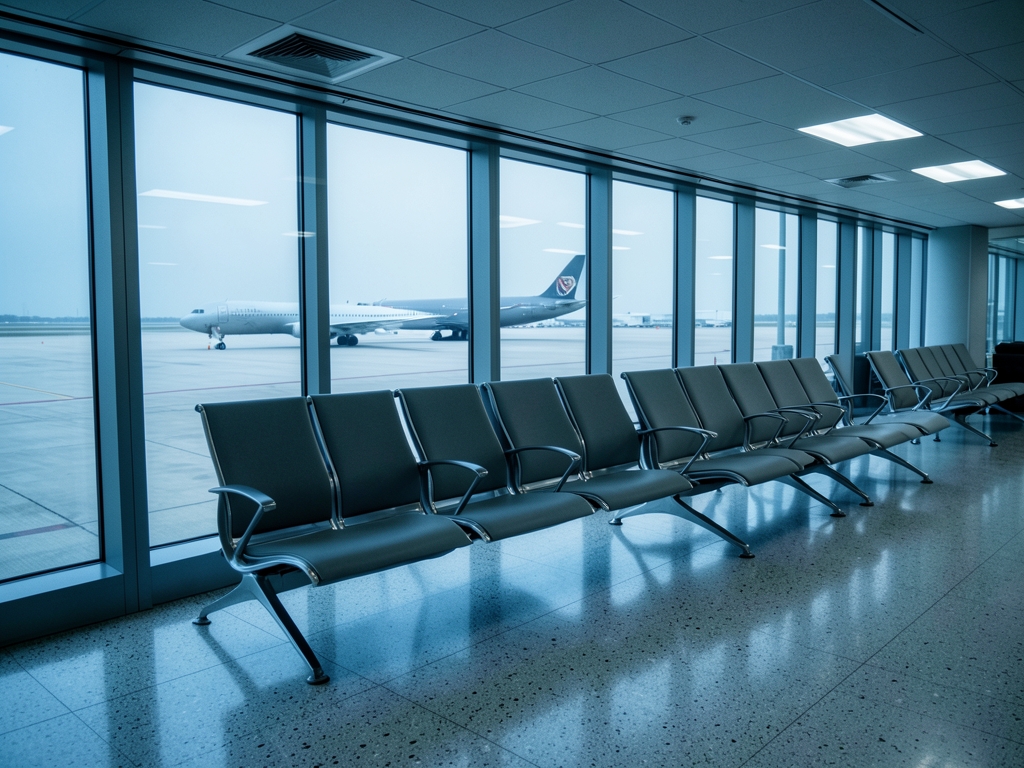
This guide explains when U.S. airlines owe only rebooking or a refund for 2026 flight delays.
It gives a 30-minute cause check and the thresholds that determine your options.
The 4 No-Obligation Cases, Named
Before you ask an airline for anything in 2026, you need to know which of four no-obligation cases you're standing in. US rules — unlike Europe's EU261 regime — carry no mandatory hotel or meal compensation for delays, so the airline's baseline duty in each of these cases is simply rebooking on the next available flight or a refund, as Kiwi.com's January 2026 delay guide lays out. Anything beyond that, like a hotel room or meal vouchers, depends on the region and the airline's own policy, not on a federal requirement.
The first case is weather. This is the classic uncontrollable cause, and it's the one where passenger expectations most often outrun the rules. The second is air traffic control — Wego's analysis of American Airlines delay compensation notes that weather and ATC are the two causes you will actually meet most often, and both sit outside the airline's control, which is why so many US delays produce nothing beyond a rebooking.
The third case is a broader bucket of other uncontrollable causes: security events, airport closures, and similar disruptions that ground flights without any fault on the carrier's side. Kiwi.com's guide draws the line this way — in a controllable overnight delay, most airlines must provide hotel accommodation, meals, and transport under regulation or internal policy, but in an uncontrollable overnight delay the airline's responsibility depends on the region. That controllable-versus-uncontrollable split is the regulatory backbone of the whole US system.
The fourth case is the one you cause yourself: arriving late to the airport, or misconnecting when you've booked two separate tickets on different airlines. No delay compensation framework applies here at all — the second carrier never promised to hold your connection, so your remedy is whatever change or rebooking options you can buy, not what the airline owes you.
What does the airline actually offer in these cases? Frontier's published policy is a useful benchmark: if your flight is delayed by two or more hours or canceled on the day of departure, you can instantly rebook on any airline, or take a 100% refund while keeping your options open — with no hotel promise attached. That's the shape of the obligation in all four no-obligation cases: rebooking or refund, fast, and nothing more guaranteed.
So your first thirty minutes should go to classification, not to a voucher queue. Ask yourself one question — was this weather, ATC, a security or airport issue, or my own miss? If the answer is any of the four, skip the customer service line and go straight to rebooking, ideally in the app, where Frontier-style instant rebooking and refund options are fastest to trigger.
Mechanism: Why the Desk Says No
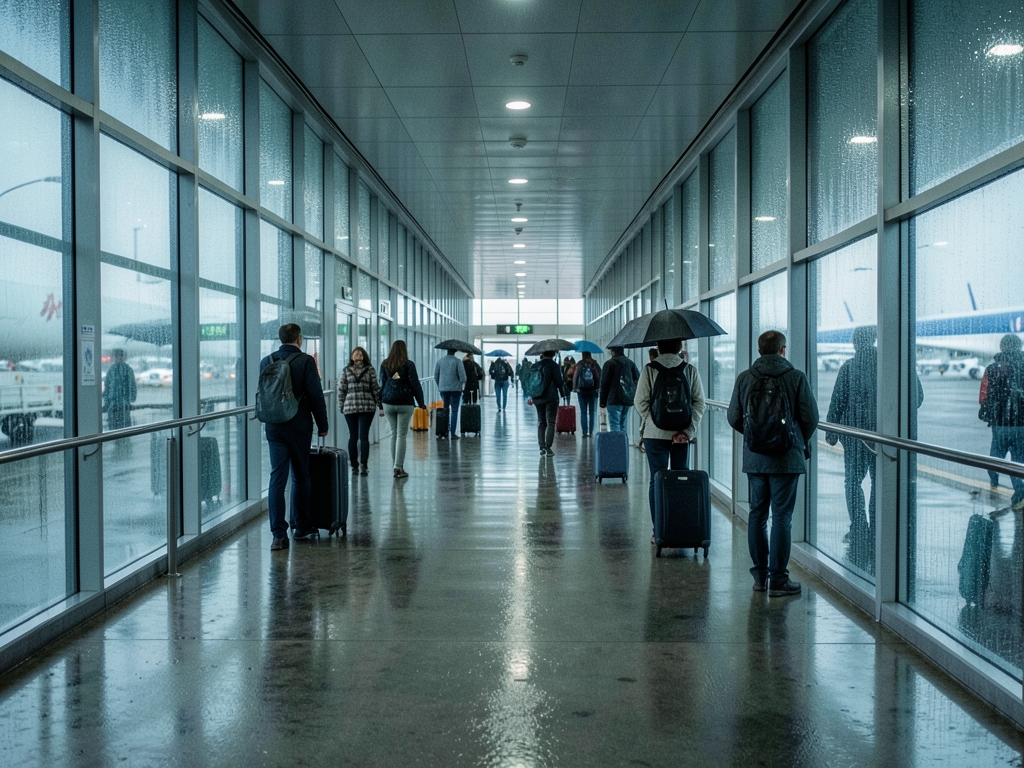
Airlines do not treat every delay the same way at the service desk; the first thing an agent checks is the delay code in the operations system. A mechanical problem or crew-availability issue is usually coded as controllable, while weather, air traffic control, and security or airport issues are coded as uncontrollable. That internal classification is the gate: it determines whether the airline's own recovery rules promise more than a new flight or refund.
Per Kiwi.com, a controllable overnight delay triggers required hotel accommodation, meals and refreshments, and ground transport to and from the hotel. So if the code points to maintenance or crew, you have a concrete basis to ask for those items before you leave the airport. The same source frames an uncontrollable overnight delay differently: the airline's responsibility depends on the region, and in the US that means essentially no obligation beyond rebooking, so the desk can decline a voucher even when the delay is long and inconvenient.
Weather delays also cascade in ways that are easy to misread. Your aircraft and crew are often stuck at another weather-affected airport, so your own departure city can look clear while the delay code still reads weather. Arguing about local conditions will not change the code or the recovery outcome; the classification follows the operational cause, not the view from your gate.
Use the first 30 minutes to get the code and the expected overnight status in writing or on screen, then match your request to it. If it is controllable, ask for hotel, meals, and transport. If it is weather, ATC, or a security or airport issue, do not spend that time in a voucher line; move straight to rebooking or refund options.
Evidence From Airline Policies
Frontier Airlines' own site, flyfrontier.com, commits to a specific remedy when a flight is delayed by 2+ hours or canceled on the day of departure: instant rebooking on any airline, or a 100% refund. That is Frontier's published term, not a regulator's rule, so treat it as a contract point to verify against your booking rather than a universal passenger right.
American Airlines' delayed-or-canceled flight support page at aa.com is framed as help, not a guarantee: it offers rebooking options, travel updates, and trip assistance. The page is useful evidence that rebooking and assistance are the services American highlights for disrupted trips; it does not promise hotel rooms or meals as an automatic outcome.
Kiwi.com Magazine, published 2026-01-23, states the split in one sentence: "In case of a controllable overnight delay, most airlines are required by regulation or internal policy to provide hotel accommodation, meals and refreshments and transport to and from the hotel. In case of an uncontrollable overnight delay, the airline’s responsibility to its passengers depends on the region." Read that as a published summary of how responsibility changes with the delay type, not as a promise that every carrier will handle your overnight delay the same way.
Use these three sources as checkpoints, not as scripts. Frontier's page gives a concrete 2+ hour or same-day cancellation trigger; American's page shows the assistance flow it offers; Kiwi's article shows why the controllable-versus-uncontrollable label matters. Before you accept or reject an offer, open the current page, match it to your flight's status, and ask the agent which published policy or delay code applies to your record.
If a source and an agent disagree, the practical check is simple: ask for the delay reason in writing or on the app, then compare it with the policy page you saved. A published page can change, and an agent may be applying an internal code you cannot see, so keep screenshots and note the time of the conversation. That documentation is what lets you escalate later without overstating what any single source guaranteed.

What Each Case Actually Costs You
In the four no-obligation delay cases, the airline's baseline is usually rebooking rather than cash compensation. The real cost to you is time, plus any self-funded essentials if you are stranded overnight. Compare the cases before you spend an hour in a service line.
| Case | Typical airline response | Your cost if you do nothing |
|---|---|---|
| Weather | Rebooking on a later flight | 4–24 hours of delay time; self-funded food or lodging if overnight |
| Air traffic control | Same as weather | 4–24 hours; during the 1,177+ delay day reported by lehighvalleylive in 2025, rebooking queues were the only compensation channel |
| Security or airport closure | Rebooking or refund | Time plus self-funded essentials; meals and hotels are goodwill, not obligation |
| Passenger-caused miss | No obligation | Cost floor: a replacement fare plus any unavoidable overnight costs |
Weather delays are the most common no-obligation case: expect rebooking only, and plan for an extra 4–24 hours until seats open on later flights. If the delay stretches overnight, any hotel or meal cost is yours unless the carrier voluntarily offers assistance.
Air traffic control delays are treated the same way. On the 2025 day when lehighvalleylive reported more than 1,177 flight delays, rebooking queues were the only compensation channel, so the practical move was to secure the next seat rather than wait for a voucher.
Security or airport closures also leave you with rebooking or a refund. Meals and hotels may be offered as goodwill, but they are not an obligation, so treat any voucher as a bonus and keep receipts for your own budgeting.
If you caused the miss—arriving late or misconnecting on separate tickets—the airline owes nothing. Your cost floor is at least a replacement fare plus any unavoidable overnight costs, which is why acting in the first 30 minutes matters more than arguing at the desk.
What This Guide Does Not Claim
This guide's rebook-fast advice has three hard limits, and each one can change what you are owed. The advice assumes a US-rule delay; it does not replace carrier-specific terms or foreign rules that may add duties.
| Limit | Why the fast-rebook rule can fail | Check first |
|---|---|---|
| EU departure | EU261 can apply by departure airport, not carrier nationality, and care duties may survive even ATC-heavy delays. | Confirm the departure airport and current thresholds on the EU transport site before accepting a US-style no-compensation answer. |
| Controllable-coded delay | If operations filed the delay as mechanical or crew, the same overnight can carry hotel and meal duties. | Ask the agent to read the filed code and whether it is controllable before self-booking anything. |
| Same-ticket connection | A missed connection on one ticket may be protected by rebooking rules that do not apply to separate tickets. | Ask whether the carrier will rebook the onward segment before buying a replacement. |
EU boundary: a flight departing from an EU airport falls under EU rules regardless of carrier. Even ATC-heavy cases can carry care duties there, so check before defaulting to US assumptions. Verify current EU261 thresholds and conditions at the EU transport site rather than relying on memory or a forum post.
Controllable surprise: delay codes can be wrong in your favor. If the filed code is mechanical or crew, you may be owed hotel and meals on an overnight delay, so do not self-book before asking. Ask the agent to state the code, whether it is controllable, and what that means for overnight costs.
Same-ticket connections: if all segments are on one ticket, a missed connection may be protected by rebooking rules that do not apply to separate tickets. Ask whether the carrier will rebook the onward segment, and on what terms, before buying a replacement.
Bottom line: classify the cause first, then test these three limits before you accept a no-compensation answer or spend your own money. The fastest rebook is not always the cheapest or the only protected one.
Delayed in Dallas
Picture an American Airlines round-trip ticket with an evening departure, a weather delay code, a connection, and both flights on one ticket. The first ten minutes are for classification, not for standing in a voucher line. Verify your own fare, route, and connection details at the time of travel.
Checkpoint 1, minute 10: open the app and read the delay code. If it says weather, treat the delay as outside the airline's control and do not spend the next hour arguing for a hotel voucher; if it says maintenance or crew, that is the controllable side of the ledger, so ask about hotel and meals if the delay becomes overnight. The code is what the desk uses to decide whether extras are even on the table.
Checkpoint 2, minute 20: because the itinerary is one ticket, the carrier rebooks you on its next available flight. Accept the seat first, then raise any extras later; with one ticket, the rebooking is the first fix, and downstream questions come after you have a seat. If the new arrival breaks downstream plans, that is the moment to ask about alternatives, not before you have a seat.
Checkpoint 3, minute 30: if the code is weather and the delay is not overnight, your practical ask is rebooking or refund, not compensation. If it is overnight and the code is maintenance or crew, ask specifically for hotel, meals, and ground transport, and get the answer in writing or in the app before you leave the gate area. If the agent's answer conflicts with the code you saw, ask them to read the operations reason back to you.
Wallet card: keep one line per checkpoint so you do not improvise under stress.
Worked example: at minute 10 the app shows a weather delay code, so you treat the delay as outside the airline's control; at minute 20 you accept the rebooked seat and note the new flight number and time; at minute 30, since the delay is not overnight and the code is weather, your practical ask is rebooking or refund, not compensation. If instead the code had been maintenance or crew and the delay were overnight, you would ask specifically for hotel, meals, and ground transport and get the answer in writing or in the app before leaving the gate area.
Use the card before you join any line: classify first, secure the seat second, and only then ask for extras that the code actually supports.
Decision Rules: Rebook Fast or Claim
These five rules operationalize the 30-minute classification: they tell you when to move immediately and when to stop and claim care. They assume you have already identified the delay cause and whether you will be overnight; they do not redefine the four no-obligation cases.
| If | Then |
|---|---|
| Delay code is weather, ATC, or security and you will not be overnight | Take the fastest rebooking or refund; spend no more than 15 minutes requesting a hotel |
| Delay is controllable (mechanical or crew) and you will be overnight | Insist on hotel, meals, and transport before rebooking anywhere |
| Delay is controllable but you will not be overnight | Ask what care is offered before you accept a rebook; do not assume overnight benefits apply |
| Your itinerary is on separate tickets | Pre-check the connection buffer before booking and allow a full self-buffer |
| You misconnect or arrive late on separate tickets | Check each carrier's own terms; protection is not automatic |
The overnight controllable case is the exception worth slowing down for. Kiwi.com notes that in a controllable overnight delay, most airlines are required by regulation or internal policy to provide hotel accommodation, meals and refreshments, and transport to and from the hotel. Settle that care before you accept any rebooking, because once you move the itinerary you lose leverage at the desk.
Separate tickets change the question from "what is owed" to "what did I build." Pre-check the connection buffer before booking and allow a full self-buffer; if the first flight slips, you are working ticket by ticket rather than under one protected itinerary, so the buffer is the protection you actually control.
If the app or kiosk will not complete the change, use only a number published by the airline. ABC7 Chicago warns that travelers calling to rebook can run into trouble, so verify the contact path before you give payment or personal details.
Also worth reading Delayed Flight? Your Guide Lost Luggage Compensation Guide What Hong Kong Airlines Schedule Changes
What to do next
| Step | Action | Why it matters |
|---|---|---|
| 1 | Classify the delay cause within the first 30 minutes before requesting help, separating weather, ATC, security/airport closures, self-inflicted misses, and controllable mechanical or crew issues. | The cause determines whether the airline's obligation stops at rebooking or refund or extends to hotel-and-meals on an overnight. |
| 2 | If the cause is weather, ATC, or a security/airport issue, skip the hotel-voucher line and immediately rebook yourself on any carrier or take the refund. | These uncontrollable scenarios trigger little beyond rebooking or refund. |
| 3 | If flying Frontier and the flight is delayed by 2+ hours or canceled on the day of departure, use its instant rebook on any airline or 100% refund option. | Frontier's threshold matches the delay or same-day cancellation trigger. |
| 4 | If the delay is controllable, such as mechanical or crew, and requires an overnight, then pursue hotel-and-meals entitlement. | Only a controllable delay triggers hotel-and-meals, and only on an overnight. |
| 5 | If you arrived late or misconnected on separate tickets, treat it as a self-inflicted miss and expect rebooking or refund rather than hotel coverage. | Self-inflicted misses are one of the four no-hotel scenarios. |
| 6 | Before accepting any voucher, confirm the delay cause and whether the airline's obligation is only rebooking or refund. | This prevents waiting in the wrong line for a hotel voucher. |
Frequently Asked Questions
What baseline remedy do U.S. airlines owe in the four no-obligation delay cases?
The airline's baseline duty in each case is simply rebooking on the next available flight or a refund.
Which two delay causes are described as the ones passengers will actually meet most often?
Weather and air traffic control are the two causes you will actually meet most often.
What kinds of disruptions fall into the broader bucket of other uncontrollable causes?
The broader bucket includes security events, airport closures, and similar disruptions that ground flights without any fault on the carrier's side.
Do U.S. rules require airlines to provide hotels or meals during delays?
US rules carry no mandatory hotel or meal compensation for delays.
What determines whether a passenger gets extras like a hotel room or meal vouchers?
Anything beyond rebooking or a refund depends on the region and the airline's own policy, not on a federal requirement.
What does the guide provide to help sort a delay?
It gives a 30-minute cause check and the thresholds that determine your options.
Quick answers
| How many no-obligation cases are there for 2026? | There are four no-obligation cases. |
| What is the airline's baseline duty in those no-obligation cases? | The airline's baseline duty is simply rebooking on the next available flight or a refund. |
| Which two causes are mentioned as the ones you will actually meet most often? | Weather and air traffic control are the two causes you will actually meet most often. |
| What examples are given for the broader bucket of uncontrollable causes? | Security events, airport closures, and similar disruptions are examples of that bucket. |
| Is there a federal requirement for hotel or meal compensation in the US? | US rules carry no mandatory hotel or meal compensation for delays. |
Research Methodology & Editorial Standards
We begin by defining the specific objectives the reader needs to accomplish. Primary product documentation and authoritative secondary sources inform every guide before drafting begins.
Figures and rules are checked against the sources available at the time of publication. Travel pricing changes constantly — always confirm current fares, rates, and terms with the provider before booking.