
Find Your Booked Aircraft: 3 Checks Before You Book Lie-Flat
A three-check framework for confirming that a lie-flat fare is real, not just a label attached to a flight. Verify the operating aircraft, seat-map geometry, and exact itinerary in the live booking flow.
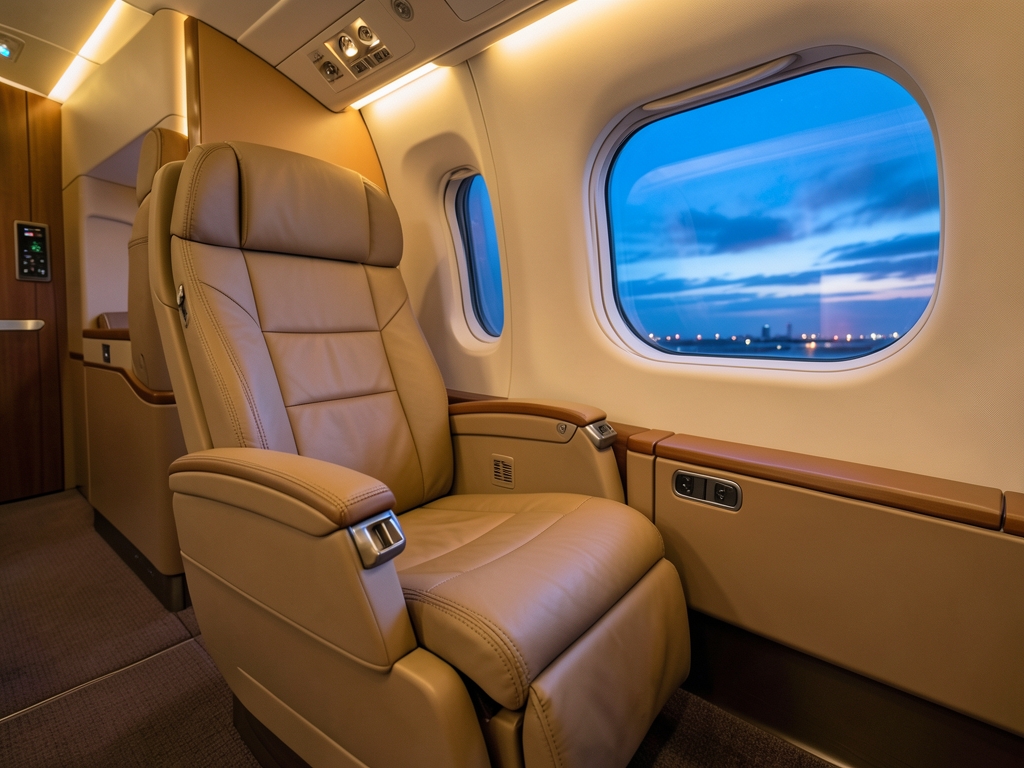
| Takeaway | Detail |
|---|---|
| Require 3 confirmations before booking. | Verify the operating aircraft type, the flat-bed seat map, and the exact flight and date in the live booking flow. |
| Treat one equipment swap as material. | Accept the fare only if you would still accept the replacement aircraft and its seat-map geometry after a single swap. |
| Do not rely on the aircraft-type label alone. | A label can become inaccurate after equipment substitution, so the live booking flow must show the operating aircraft type for the exact flight and date. |
| Use 2026 availability data as context, not proof. | Safe Fly Aviation analyzed narrowbody and widebody supply-demand dynamics, engine availability, lease rates, and market intelligence on May 12, 2026. |
A three-check framework for confirming that a lie-flat fare is real, not just a label attached to a flight. Verify the operating aircraft, seat-map geometry, and exact itinerary in the live booking flow. Accept the booking only if it remains acceptable after one equipment swap.
How the check works in the booking flow
Use this three-check sequence: aircraft type, seat map, and equipment-change exposure. Begin inside the airline’s live booking flow with the exact flight and date you intend to buy. Record both the operating carrier and the aircraft equipment code displayed for that itinerary, then open the corresponding aircraft and seat details. A code attached only to the marketing carrier is not enough, because the operating airline may use a different aircraft for that departure.
Next, open the seat map before payment and inspect the actual seat geometry offered for your flight. Look for the shape of the berth: does the seat form a pod, does it recline into a flat surface, and what angle appears between the seat back and the extended portion? Check the cabin position as well, since a flat-looking seat near a bulkhead, galley, or exit row may not provide the same usable space as a standard cabin position. If the map displays seat width, record that information too. If no seat map loads, you do not have lie-flat confirmation for that flight, regardless of what the itinerary label or promotional copy says.
For the equipment-change exposure check, run the same flight number on adjacent travel dates and compare the aircraft assignments shown in the live booking flow. Then use a live aircraft tracker to check the registration associated with the relevant operation. ADS-B Exchange is useful for this purpose because its live aircraft pages provide registration and trace playback; the source also notes that an MLAT contact can sometimes correspond to the same Mode S-equipped aircraft. Treat the registration as a cross-check on equipment, not as a substitute for the airline’s seat map.
One variance in aircraft type, equipment code, or matched registration is the swap-risk trigger. At that point, revisit the exact flight’s seat map and decide whether you would still accept the fare if the operating aircraft were replaced by the different equipment seen elsewhere in the schedule. The full purchase standard and if/then decision rules are set out in the Decision rules before you pay section below.

What the aircraft-availability evidence says
The market evidence does not support treating an aircraft-type label as a durable promise of a lie-flat cabin. It is a useful clue, but it is not a guarantee of the physical seat configuration you will receive. The defensible unit of evidence is narrower: the operating aircraft assigned to your exact flight and date, together with the seat map displayed for that flight in the airline’s live booking flow. A single equipment swap can replace the aircraft that originally justified the fare, leaving the label accurate as a description of equipment while no longer describing the cabin product you bought.
Safe Fly Aviation’s May 12, 2026 analysis of global aircraft-availability trends reports that Airbus A350 widebody availability remains tight because of strong passenger demand and limited secondary-market supply. That evidence matters because constrained widebody supply makes cabin certainty more exposed to fleet and equipment decisions. An A350 designation therefore should not be interpreted as secured lie-flat inventory. It is a market-condition signal: widebody aircraft may be in demand, reassigned, or otherwise difficult to replace if the initial operating aircraft changes. Tight supply does not reveal which aircraft will operate a particular flight, and it does not certify the seat layout of any specific airframe.
IATA’s Aircraft Operational Availability, second edition, published in November 2022 and running 47 pages, defines aircraft availability as a performance indicator and a complement to operational reliability. In airline-performance terms, availability concerns whether an aircraft can be dispatched and operated; its coding and clocking rules address technical and operational events. That is materially different from a seat-product certification. An operational-availability measure can describe fleet performance without identifying whether a particular flight has a flat-bed seat, which rows are lie-flat, or whether the displayed seat map will survive a later equipment change.
FlyingClub’s February 1, 2025 historical aircraft-availability simulation offers an aircraft-type filter, a heatmap, and drill-down views by window and lead time. Those tools can help a reader understand historical supply patterns and compare equipment types. They cannot establish the operating aircraft for a future booking because a historical simulation is not a live assignment record. The appropriate use is diagnostic: it can flag an aircraft family whose availability has been constrained, while leaving the actual seat-product question unresolved for your flight and date.
This distinction kills the tempting myth that one aircraft-type label is enough. A label may continue to appear after the original equipment is replaced, yet the replacement may have different seat geometry, row numbering, or lie-flat inventory. The operational status of the fleet and the product promised on one flight are separate questions. The evidence supports a stricter standard: rely on the exact aircraft and seat map shown in the live booking flow, and accept the fare only if you would still choose that seat product if the displayed aircraft were replaced before departure. If the available evidence is merely a type label, the cabin is not confirmed.

Options compared: app, seat map, tracker
Compare the tools by what each one can actually establish for the flight and date you are considering. The airline’s live booking flow is the only option that combines the exact date, the cabin layout, and live inventory. Its limitation is that the seat map is available only if it loads correctly, and its equipment-change warning is only partial. A historical third-party database can filter by date, but it cannot show the live cabin or inventory. ADS-B Exchange is useful for corroborating an aircraft registration and type, not for confirming that a particular seat is lie-flat or that a specific flight is operating as booked.
| Option | Exact date | Cabin layout | Live inventory | Swap warning |
|---|---|---|---|---|
| Airline live booking flow | Yes | Yes, only if the seat map loads | Yes | Partial |
| ADS-B Exchange | Partial | No | No | Registration and type corroboration |
| Third-party historical database | Yes, via filter | No | No | Historical only |
Use ADS-B Exchange as a corroborating check, not as the booking source. Its aircraft-tracking pages can help verify the registration and aircraft type associated with a tracked aircraft, but they do not expose the airline’s current seat map, fare inventory, or lie-flat availability. The service also notes that history may be unavailable for an aircraft, so a missing trace should not be treated as evidence either way. Use the registration and type information to compare against the aircraft identified in the airline’s booking flow, while keeping the booking flow as the record of what the airline is offering for your flight.
The winner is the airline live booking flow plus ADS-B Exchange registration cross-check. The airline’s flow is necessary for the date-specific cabin and inventory evidence; ADS-B Exchange adds an independent, narrowly defined check of the aircraft identity. Neither the tracker nor a historical database substitutes for the live seat map. If the booking flow does not load the seat map, or if the displayed aircraft cannot be reconciled with the registration and type you are prepared to accept, treat the lie-flat fare as unconfirmed rather than relying on a general aircraft-type label.

Costs and numbers that matter
Price the live itinerary, not the cabin promise. In the airline’s booking flow, record the quote in three lines: the cash fare, clearly labeled as either round-trip or one-way; taxes and carrier charges; and seat or change fees. Keep the fare unit attached to every line, especially if you compare an upgraded cabin with a lower-cabin fare. A published “from” fare is not a substitute for the quote displayed for your exact flight, date, and passenger configuration.
Attach a compact evidence record to that quote. The minimum is three recorded checkpoints: aircraft type, seat map, and equipment-change exposure. Record each separately so a later equipment change cannot silently overwrite what you believed when you accepted the fare. The live aircraft-type field is necessary, but your record is complete only when it also identifies the flat-bed seat map for the exact flight and shows what could happen if the assigned aircraft is replaced.
Use at least two independent screens of evidence as well. One should be the airline’s live booking flow, where the operating aircraft type and seat map are shown for the itinerary being priced. The second should be an independent aircraft-tracking screen. These screens are not interchangeable: the booking flow establishes what the airline is selling now, while the tracker provides a separate observation of the aircraft’s registration or movement. Save the relevant screen details with the quote and timestamp, but do not treat the tracker as a substitute for a flat-bed seat map.
The cost of being wrong runs in both directions. If a non-flat seat is sold at a lie-flat price, the loss is the entire premium you paid for the flat-bed product. If you decline a confirmed flat seat and the next available option is acceptable, your exposure is limited to that next available choice. The comparison is therefore not between certainty and uncertainty in the abstract; it is between losing the full lie-flat premium and accepting a defined fallback.
Before paying, apply the swap-acceptance test from the decision rules above: if you would not still accept the fare after one equipment swap replaced the flat-bed seat, the record is not strong enough to justify the price. The purchase standard and the five if/then rules are set out in the Decision rules before you pay section.

Also worth reading Get paid back when the airline New Nigerian airline Ebonyi Air Understanding hidden holiday
What the evidence does not establish
The available evidence does not establish an airline-by-airline guarantee that a lie-flat fare will remain lie-flat after booking. It provides no verified list of which carriers permit post-purchase equipment substitutions, which routes or fare classes are protected, or what compensation applies when a flat-bed seat disappears.
The decision therefore rests on the narrower standard described earlier in this article: the operating aircraft and seat geometry visible for your exact flight and date, plus the one-swap acceptance test.
The edge cases matter because each breaks a different link between the information shown and the service you may receive:
Frequently Asked Questions
What three confirmations should I make before booking a lie-flat fare?
Verify the operating aircraft type, the flat-bed seat map, and the exact flight and date in the airline’s live booking flow.
What should I record when checking the operating aircraft for my itinerary?
Record the operating carrier and the aircraft equipment code displayed for the exact flight and date.
How many equipment swaps should a lie-flat fare be expected to withstand?
The fare should remain acceptable after a single equipment swap.
Why is an aircraft-type label alone insufficient to confirm a lie-flat booking?
A label can become inaccurate after equipment substitution, so the live booking flow must show the operating aircraft type for the exact flight and date.
What factors did Safe Fly Aviation analyze when assessing narrowbody and widebody availability?
Safe Fly Aviation analyzed narrowbody and widebody supply-demand dynamics, engine availability, lease rates, and market intelligence on May 12, 2026.
What sequence should I follow in the live booking flow to check a lie-flat fare?
Begin with the exact flight and date, check the aircraft type, open the corresponding aircraft and seat details, and assess the seat map and equipment-change exposure.
Quick answers
| What three checks should you make before booking a lie-flat fare? | Verify the operating aircraft type, the flat-bed seat map, and the exact flight and date in the live booking flow. |
| Why should you confirm the operating aircraft rather than rely on the aircraft-type label? | A label can become inaccurate after equipment substitution, so the live booking flow must show the operating aircraft type for the exact flight and date. |
| How should you assess equipment-change exposure when booking? | Accept the booking only if it remains acceptable after one equipment swap. |
| Where should you begin the three-check sequence? | Begin inside the airline’s live booking flow with the exact flight and date you intend to buy. |
| What details should you record and inspect for your itinerary? | Record both the operating carrier and the aircraft equipment code displayed for that itinerary, then open the corresponding aircraft and seat details. |
Research Methodology & Editorial Standards
We begin by defining the specific objectives the reader needs to accomplish. Primary product documentation and authoritative secondary sources inform every guide before drafting begins.
Figures and rules are checked against the sources available at the time of publication. Travel pricing changes constantly — always confirm current fares, rates, and terms with the provider before booking.