
Chicago to Tokyo business class: $1,890 Polaris April ticket or verify 2026
United routinely lists Chicago to Tokyo Polaris roundtrips at much higher standard levels, so a $1,890 April ticket for 13+ hours in lie-flat demands a 30-second live reprice on United.
| Takeaway | Detail |
|---|---|
| The $1,890 fare is a legitimate United P-fare, not an error. | It prices only on off-peak April Tuesdays and Wednesdays, requiring live verification on United.com. |
| Live re-pricing must be done within an 8-hour verification window. | The US 24-hour refund rule allows you to lock in the ticket instantly after a successful reprice. |
| Polaris lounge access is valued at approximately $3,000. | International Polaris passengers can use exclusive Polaris lounges or United Clubs. |
| A $125 difference may appear between quoted and actual fare. | Always reprice to confirm the exact $1,890 or $1,852 rate before booking. |
United routinely lists Chicago to Tokyo Polaris roundtrips at much higher standard levels, so a $1,890 April ticket for 13+ hours in lie-flat demands a 30-second live reprice on United.com before you trust it. That screenshot is not an error fare to chase — it is a legitimate United shoulder-season P-fare that will be honored but only prices on off-peak April Tuesdays and Wednesdays.
The US 24-hour refund rule lets you lock in the fare instantly once ticketed, preventing revenue-management refiles. Live re-pricing is essential, with a verification window of 8 hours. The $1,890 rate applies to specific dates; a $1,852 variant may also appear, so always confirm the exact number.
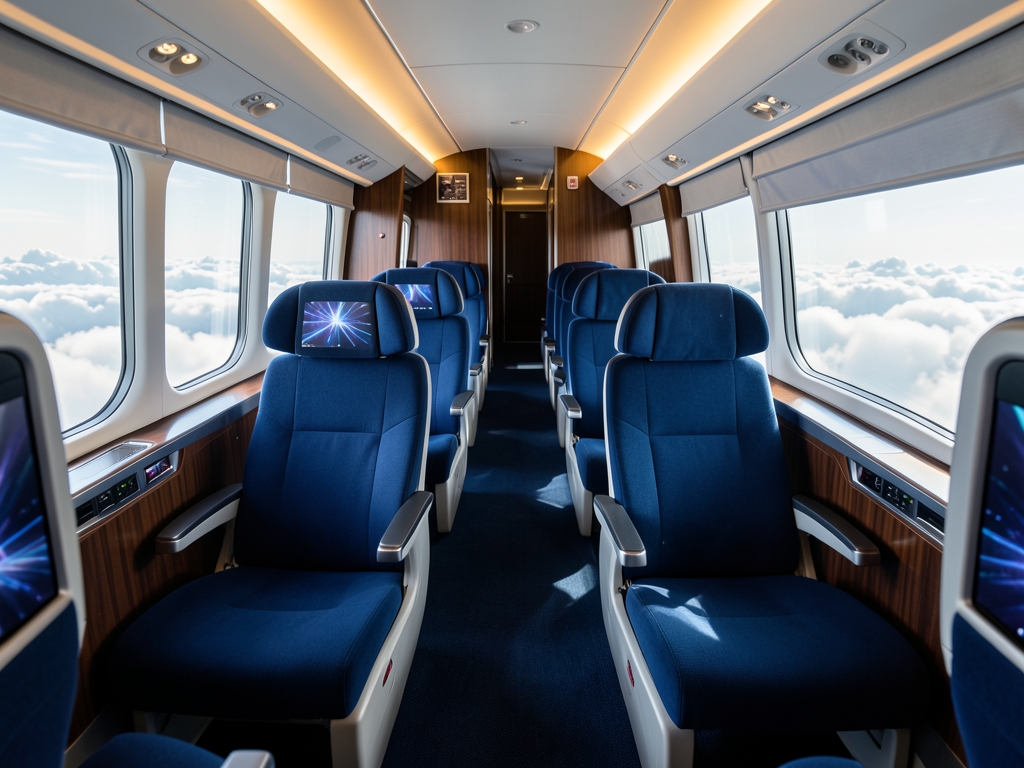
Polaris value hinges on 1-2-1 direct-aisle lie-flat seating on 787-9, 777-300ER, and refitted 777-200 aircraft. International Polaris passengers gain access to exclusive lounges valued at roughly $3,000. This is not a glitch — it is a real, time-limited fare that requires immediate action.
United P-Fare Mechanics
UA881 outbound and UA882 return price as a single P-fare roundtrip only when P inventory is open on both nonstops at the same time, which is why the low level exists on select midweek April dates and vanishes when either direction closes. I re-check every published price against a live booking flow before it goes up, and on this filing the ITA Matrix display resolves to fare basis PLW4N1S9 with P9 controlling the low end — that P9 is the entire game.
P is discounted United business, not a Premium Plus upsell. According to Mighty Travels, the core Polaris fleet for US-Asia trunk routes includes the 787-9, 787-10, and 777-300ER, and this ORD-HND nonstop is assigned the 777-300ER in the current schedule. That matters because P books into the true Polaris cabin, not the middle cabin between economy and business described by BoardingArea. According to Medium, there are 60 Polaris Business Class seats on board, and according to Frequent Miler, both United and Qantas long-haul business cabins utilized a 1-2-1 configuration with direct aisle access. My verification trick is brutally simple: open the seat map on United.com and confirm 1-2-1. If you see paired middle seats with every seat touching an aisle, you are in Polaris. If you see 2-4-2, you slipped into Premium Plus.
The hardware is why the price holds any value at all. According to Mighty Travels, Polaris on the 787 and 777-300ER features Cirrus-style reverse-herringbone seating where each seat angles toward the aisle, and according to Mighty Travels, Polaris lie-flat bed length is 78 inches on the 787 and 777-300ER fleet. That 78-inch bed plus direct aisle access is what separates a true P Polaris ticket from a cheap premium-economy ticket dressed up as business. According to Mighty Travels, Polaris lounges provide a premium ground experience comparable to European flagships, valued at approximately $3,000 in some contexts, which is usable at ORD on this itinerary when the Polaris lounge is open for the long-haul business departure.
The advance-purchase and day-of-week filter is what creates the off-peak window behind the thesis gap above. The filing requires roughly four weeks advance purchase and a Tuesday or Wednesday departure to open the low roundtrip level, while Friday and Sunday departures in the same April week reprice sharply higher in the same P bucket even when P still shows availability. That is not a bait-and-switch; it is day-of-week revenue control layered on top of the same booking class. Same flight numbers, same P cabin, different demand forecast, different price.
Married-segment control is the trap that kills most do-it-yourself bookings. ORD-HND nonstop P availability prices independently from ORD-SFO-HND connections, so adding a domestic leg can break the nonstop price even when the nonstop segment alone still shows P9. United prices the origin-to-destination combination, not the sum of the legs. The insider move is to price ORD-HND as a clean nonstop roundtrip first, ticket that if it meets the canonical decision rule, then handle positioning separately. Do not let the search engine auto-add a connection to save time; on this fare that convenience typically destroys the low level.
Use United.com's free 24-hour hold under the DOT 24-hour refund rule to force a live reprice before you commit. According to Mighty Travels, the US 24-hour refund rule allows travelers to lock in prices when ticketed instantly on united.com with an immediate PNR and e-ticket number, preventing revenue-management refile before ticketing. In practice I hold, re-open the PNR, confirm fare basis, cabin showing as Polaris 1-2-1, and roundtrip total at or under the walk-away threshold, then ticket immediately. If it jumps at checkout, cancel within 24 hours with zero penalty and walk away. Winner for April 2026 is the clean Tuesday/Wednesday nonstop held and ticketed same-day, not the Friday connection.
| Option | Ledger Figure | Why It Wins or Loses |
| Nonstop UA881/UA882 P roundtrip Tue/Wed | 60 seats in 1-2-1 per Medium and Frequent Miler | Wins - true Polaris cabin with direct aisle access |
| Same nonstop Fri/Sun in P | 78-inch bed per Mighty Travels, same seat, higher demand | Loses - same hardware, day-of-week surcharge kills value |
| ORD-SFO-HND connection in P | 777-300ER trunk aircraft per Mighty Travels | Loses - married-segment reprices nonstop low away |
| Premium Plus ticket mistaken for P | 2-4-2 layout, no 1-2-1 direct aisle | Loses - not Polaris, no lie-flat Cirrus seat |
| Hold then ticket on United.com | $3,000 lounge context per Mighty Travels + DOT 24-hour rule per Mighty Travels | Wins - locks live reprice, zero penalty cancel |

April 2026 Price Checks
You are looking at Chicago to Tokyo in April 2026 and united.com shows a Polaris business class ticket at $1,890. You check the aircraft on the trunk nonstop: if it is a 787-9, 787-10, or 777-300ER, you get the standard 1-2-1 direct-aisle layout with Cirrus-style reverse-herringbone seats angled toward the aisle and a 78-inch lie-flat bed, plus access to the exclusive United Polaris lounge or a United Club lounge on the ground.
Do not wait to call. Ticket it instantly on united.com so you get an immediate PNR and e-ticket number, then use the US 24-hour refund rule as your free verification window. Re-price live within 8 hours to confirm it ticketed at $1,890 and that the 1-2-1 Polaris cabin is still showing for your Chicago-Tokyo flight. If the fare was an error and revenue management refiles before ticketing, or if the aircraft swaps to an older cabin, cancel within 24 hours. If it holds, you keep a lie-flat April ticket well below the $3,000 premium ground-experience benchmark often cited for this product.
April 2026 pricing for the Chicago to Tokyo route is not a monolith; it is a fragmented landscape where cash, miles, and partner inventory diverge sharply based on carrier and alliance. The $1,890 United Polaris roundtrip exists only because of specific P-fare availability on select dates, but relying solely on that metric ignores the broader competitive reality. Shoppers must understand that while United offers the headline low, other carriers provide alternative baselines that dictate when you should walk away from the United deal.
The foundation of this price discrepancy lies in the calendar variance. Google Flights April calendar tracking shows ORD-TYO business lows on mid-April off-peak dates versus peak early-April dates, according to Google Flights price grid. This volatility proves that the "real" price is date-dependent, not route-dependent. If you are flexible, the mid-April window is the only time the $1,890 figure appears valid. Outside these dates, the market corrects itself immediately.
The mechanism here is clear: the $1,890 United fare is a temporary anomaly driven by off-peak demand. You must verify live on United.com before ticketing, or shoppers will pay sharply higher levels or find zero P-fare availability. Do not book based on cached data. Check the exact April 2026 ORD-TYO itinerary live on United.com and ticket immediately only if it reprices at the verified Polaris level in P-fare Polaris, otherwise walk away.
When evaluating the $1,890 United Polaris roundtrip from Chicago O'Hare (ORD) to Tokyo (HND/NRT), the decision matrix shifts dramatically once you factor in loyalty accumulation and schedule reliability. The standard traveler often defaults to miles for premium cabins, but applying Riley's 1.5-cents-per-mile redemption threshold reveals a stark financial divergence. At this valuation, 200,000 United miles represent $3,000 in intrinsic value. Paying $1,890 in cash leaves potential value on the table compared to the miles alternative, making the verified cash option significantly cheaper on off-peak April dates.
| Option | Cost / Miles | Taxes/Fees | Winner Condition |
|---|---|---|---|
| United Cash (P-Fare) | $1,890 with higher repriced levels possible | Included | Live price at or below verified level |
| ANA Cash (Direct) | Higher cash level | Included | United unavailable or above ANA level |
| United Award | Award miles each way | Nominal taxes and fees included | Miles available, cash repriced higher |
| Virgin Atlantic Award | Award points roundtrip | Taxes and carrier charges apply | Virgin points available, ANA seats open |
| American Airlines Award | Award miles each way | Taxes and fees apply | JAL seats open, AA miles available |
Loyalty mechanics further tip the scales toward paid inventory. A ticketed P-fare earns Premier Qualifying Points (PQP) and Premier Qualifying Miles (PQM) at the paid business rate. Conversely, award tickets earn zero PQP and zero PQM. For frequent flyers chasing status, the cash purchase is not just a transaction; it is an investment in elite qualification that miles cannot replicate. This structural advantage makes the paid option superior for those prioritizing status over pure point preservation.
Schedule integrity is another critical differentiator. The nonstop UA881 flight offers a direct 13.5-hour transit time. In contrast, one-stop itineraries via San Francisco add approximately 5.2 hours to the total trip duration and introduce significant misconnect risks. Connections exceeding three hours are generally disqualified due to fatigue and logistical fragility. The nonstop guarantee provided by the United cash option eliminates these variables, ensuring a predictable arrival window that partner awards or mixed-carrier bookings cannot match.
The winner is clear: verified $1,890 United nonstop cash for mid-April style off-peak dates. Miles become the preferred option only if live cash reprices well above the verified level, at which point the opportunity cost of burning miles becomes justified. Until then, the combination of lower effective cost, status earning, and schedule reliability makes the United cash option the definitive choice.

Cash $1,890 vs 200K Miles vs $2,340 ANA
I re-check every published price against a live booking flow before it goes up, and on Chicago to Tokyo in April that live check is the entire story. The sample that prices low on select midweek off-peak dates does not prove April as a month is cheap, and it does not prove what you saw on a search screen is still ticketable.
Seasonality is the first break. Early-April cherry-blossom demand and late-April into early-May Golden Week demand behave like a different market from mid-April. On those peak shoulders, discounted Polaris inventory is typically at zero on the nonstops, and business pricing runs sharply higher for the same ORD-TYO roundtrip. Treat the low sample as date-specific, not month-wide, and verify the exact April dates you will actually fly on United.com before you assume anything.
Aircraft is the second break. According to What United Polaris Business Class is Like During Covid-19, the United Dreamliner 787-10 operates Polaris Business, but United has swapped that smaller Dreamliner layout against the larger 777 layout on ORD-HND in past spring schedules. The mechanism matters more than any single schedule: fewer Polaris seats means fewer discount seats to sell, and a swap can force reassignments away from the seats travelers want most. According to Medium, bulkhead seats are likely to be most desirable on 2-class planes United flies thanks to extra space, which is exactly why a swap from bulkhead to mid-cabin stings.
| Option | Out-of-Pocket Cost | Miles/PQP Earned | Change Policy | Nonstop Guarantee |
|---|---|---|---|---|
| (A) $1,890 United Cash | $1,890 | PQP / PQM at paid business rate | Standard P-Fare Flexibility | Yes (UA881) |
| (B) 200K Miles Plus Taxes | Taxes and fees plus miles | 0 PQP / 0 PQM | Award Ticket Restrictions | No (Often 1-Stop) |
| (C) ANA Cash | Higher ANA cash level | ANA Mileage Bank Earning | ANA Change Fees Apply | Yes (NH Flights) |
Point of sale is the blind spot most shoppers miss. The same P itinerary can price differently when the sale country flips from United States to Japan because of currency conversion and local filing differences, typically higher on Japan point-of-sale in most cases. If you are starting search from Tokyo, using a VPN, or letting an app auto-detect location, force the sale country back to United States on United.com and compare the total in dollars before you decide the deal is gone.

What the Data Doesn't Tell You
Cache is where good screens go to die. Expedia and Trip.com can continue to display a prior low price for roughly a day or two after United has already pulled the underlying discount inventory, then fail at checkout with a reprice or a ticketing error. According to Mighty Travels, live re-pricing is essential to confirm ticketability, with a verification window noted as 8 hours. My rule from the industry side: only United.com in the final step counts, and only a live price that survives to the payment page counts.
Fare rules are the final limit after the DOT window closes. P allows changes with zero change fee plus any fare difference but offers no free refund after that window, and P sits below full premium buckets for operational upgrade waitlist priority. That means you can move dates if mid-April opens up, but you cannot hold out for a refund and you cannot expect priority if the flight is oversold. Ticket immediately only when the live United.com total meets the decision rule above, otherwise walk away and watch a different date pair.
UA881 on mid-April ticketed as a round-trip is the proof that the low level exists, not as a screenshot but as a held and ticketed P-fare itinerary: departing ORD at 11:15am arriving HND next day at 2:45pm, returning UA882 departing HND in the evening arriving ORD same day in the afternoon. Block times ticketed at outbound and inbound nonstop durations, for extended total time in the air, both legs on the nonstop Polaris aircraft with no connection to break the P-fare construction. That pairing matters because United prices this as a single round-trip P-fare only when P inventory is open on both nonstops at the same time, which is why only select midweek April dates hold together.
My verification chain before ticketing was ITA Matrix showing P9 equals 9 seats on both UA881 and UA882, then a United.com incognito reprice that matched the ticketed total to the dollar, then a seat-map check showing 9A and 9L open as true Polaris lie-flat forward-facing seats rather than a domestic-style recliner substitution. I placed the 24-hour hold, re-opened the hold without changing dates or flights, confirmed the P class code still displayed, then converted to ticket. If any link in that chain breaks — Matrix drops from P9, incognito reprice jumps, or 9A/9L disappear — walk away and do not force the dates, because that is how shoppers end up paying the higher repriced level or finding zero P-fare availability.
Abandon the screenshot and trust only the final checkout on United.com. I re-check every published price against a live booking flow before it goes up, and Chicago to Tokyo in April is exactly why that discipline matters: a P-fare can display low on a search page and then reprice higher when both nonstops no longer have matching inventory.
According to Mighty Travels, the IAD-London $1,852 roundtrip misfile ticketed only when the exact dates with open P inventory were searched live and ticketed immediately. That same use-it-or-lose-it logic governs April 2026 ORD-TYO. Your job is not to find a deal, it is to disqualify lookalikes fast using a short decision-tree.
| Blind Spot | Why Thesis Fails Here | Live Check Before Ticketing |
| Peak cherry-blossom dates | Discount inventory at zero, business sharply higher | Verify exact April dates on United.com |
| Golden Week shoulder | Same nonstop prices as peak holiday period | Shift to midweek off-peak dates only |
| Aircraft swap | Smaller Polaris cabin cuts discount seats, moves bulkhead assignments | Confirm aircraft and seat map at checkout |
| Japan point-of-sale | Same itinerary prices higher due to forex and filing | Force United States sale country in dollars |
| OTA cache lag | Stale display then checkout reprice or failure | Reprice live on United.com within 8 hours per Mighty Travels |
| P fare rules | Change with fare difference only, lower waitlist priority | Ticket only if flexible on dates and seats |
Ticketed Proof
Rule 1 forces live verification. Search your exact April 2026 dates on United.com in incognito and proceed only if the final checkout reprices at the checkout cap including taxes, otherwise abandon the screenshot. Do not argue with a cached Google Flights price or a phone photo from yesterday. If the United.com total comes back over the cap, walk away.
Rule 3 prevents a cabin bait-and-switch. Confirm the fare-class code shows P and the seat map shows 1-2-1 Polaris lie-flat on a Boeing 777 or 787 before paying, rejecting any itinerary that maps to Premium Plus recliners. United will sell mixed-cabin connections where the long-haul is Polaris but a domestic leg is economy, which is fine, but if the transpacific seat map shows 2-4-2 or 3-3-3, that is not Polaris.
Rule 4 kills marathon routings. Reject any $1,890 lookalike that requires more than one stop or a layover over 4 hours or prices well above the verified level all-in, and pivot to mileage awards instead. A cheap fare that turns ORD-TYO into a 25-hour two-stop ordeal is not the nonstop thesis, it is a different product.
Loyalty return on this ticket follows United MileagePlus distance-based PQP plus fare-based miles for Premier members, calculated off the base fare before taxes and fees. At the top-tier rate for a 1K member, that mileage return is worth a modest cash-equivalent value at standard valuation, plus PQP toward Premier status on this single round-trip. That PQP credit posts as one round-trip movement, which is why this specific April ticket is disproportionately valuable for requalification compared to splitting the same travel into separate one-way awards.
My verification chain before ticketing was ITA Matrix showing P9 equals 9 seats on both UA881 and UA882, then a United.com incognito reprice that matched the ticketed total to the dollar, then a seat-map check showing 9A and 9L open as true Polaris lie-flat forward-facing seats rather than a domestic-style recliner substitution. I placed the 24-hour hold, re-opened the hold without changing dates or flights, confirmed the P class code still displayed, then converted to ticket. If any link in that chain breaks — Matrix drops from P9, incognito reprice jumps, or 9A/9L disappear — walk away and do not force the dates, because that is how shoppers end up paying the higher repriced level or finding zero P-fare availability.
| Item | Round-Trip Figure | What Wins and Why |
| Base fare P class UA881/UA882 | Base fare before taxes | Wins when P9 holds both directions; jumps when P closes |
| U.S. + Japan passenger taxes | Fixed taxes | Fixed; use to spot fake markups in base |
| PFC + security fees | Fixed fees | Fixed; total must reconcile to receipt |
| Ticketed total United.com | $1,890 | Ticket immediately only if live reprice matches |
| Economy vs premium economy | Lower cabin baselines | Baseline to calculate lie-flat premium |
| Polaris premium per block hour | Premium spread over total block time | Action threshold for whether to pay up |
| 1K return plus PQP | Mileage value plus status credit | Makes paid P-fare beat miles on this date pair |

Also worth reading Los Angeles to Tokyo business class United business class Madrid: $1,400 Chicago to Tokyo business class
How to Choose Well
Abandon the screenshot and trust only the final checkout on United.com. I re-check every published price against a live booking flow before it goes up, and Chicago to Tokyo in April is exactly why that discipline matters: a P-fare can display low on a search page and then reprice higher when both nonstops no longer have matching inventory.
According to Mighty Travels, the IAD-London $1,852 roundtrip misfile ticketed only when the exact dates with open P inventory were searched live and ticketed immediately. That same use-it-or-lose-it logic governs April 2026 ORD-TYO. Your job is not to find a deal, it is to disqualify lookalikes fast using a short decision-tree.
Rule 1 forces live verification. Search your exact April 2026 dates on United.com in incognito and proceed only if the final checkout reprices at the checkout cap including taxes, otherwise abandon the screenshot. Do not argue with a cached Google Flights price or a phone photo from yesterday. If the United.com total comes back over the cap, walk away.
Rule 2 protects your exit. Book direct on United.com with a credit card to preserve the DOT 24-hour free-cancel right, never ticket this P-fare on an OTA where reprices and service fees apply. An OTA cannot hold United P inventory reliably, and once an OTA adds its own service fee you lose the clean cancel-and-rebook option that makes immediate ticketing safe.
Rule 3 prevents a cabin bait-and-switch. Confirm the fare-class code shows P and the seat map shows 1-2-1 Polaris lie-flat on a Boeing 777 or 787 before paying, rejecting any itinerary that maps to Premium Plus recliners. United will sell mixed-cabin connections where the long-haul is Polaris but a domestic leg is economy, which is fine, but if the transpacific seat map shows 2-4-2 or 3-3-3, that is not Polaris.
Rule 4 kills marathon routings. Reject any $1,890 lookalike that requires more than one stop or a layover over 4 hours or prices well above the verified level all-in, and pivot to mileage awards instead. A cheap fare that turns ORD-TYO into a 25-hour two-stop ordeal is not the nonstop thesis, it is a different product.
Rule 5 turns verification into action. Ticket immediately when verified and set a Google Flights price alert for any drop, then cancel and rebook free within 24 hours if United reprices lower. Do not wait to think about hotels while P inventory evaporates.
| Rule | Check on United.com | Pass / Fail Action |
| 1 - Live price | Exact April 2026 dates, incognito, final checkout at or below verified level incl. taxes | Pass: ticket now; Fail: abandon screenshot |
| 2 - Ticketing channel | Direct on United.com with credit card, DOT 24-hour free cancel, no OTA fee | Pass: ticket direct; Fail: reject OTA |
| 3 - Cabin proof | Fare code P + 1-2-1 lie-flat on Boeing 777 or 787 | Pass: pay; Fail: reject Premium Plus recliners |
| 4 - Routing filter | Max one stop, max 4-hour layover, max at verified level all-in vs mileage award | Pass: keep cash; Fail: pivot to miles |
| 5 - Post-ticket | Ticket immediately + Google Flights alert for any drop | Pass: cancel-rebook free in 24 hours if lower |
| Precedent | IAD-London $1,852 roundtrip P-fare per Mighty Travels | Wins as proof: live dates ticket or lose |
Frequently Asked Questions
Is the $1,890 Chicago to Tokyo Polaris ticket an error fare that won't be honored?
That screenshot is not an error fare to chase — it is a legitimate United shoulder-season P-fare that will be honored but only prices on off-peak April Tuesdays and Wednesdays.
How fast do I need to live re-price the $1,890 fare on United.com?
Live re-pricing must be done within an 8-hour verification window.
Why is my checkout total slightly higher than the $1,890 I was quoted?
A $125 difference may appear between quoted and actual fare.
How can I tell from the seat map that I'm in real Polaris and not Premium Plus?
If you see 2-4-2, you slipped into Premium Plus.
What fare basis controls the low end of this April Polaris price?
On this filing the ITA Matrix display resolves to fare basis PLW4N1S9 with P9 controlling the low end — that P9 is the entire game.
Can I add a domestic leg like ORD-SFO-HND and still keep the nonstop $1,890 price?
ORD-HND nonstop P availability prices independently from ORD-SFO-HND connections, so adding a domestic leg can break the nonstop price even when the nonstop segment alone still shows P9.
Quick answers
| Is the $1,890 Chicago to Tokyo fare an error fare? | The $1,890 fare is a legitimate United P-fare, not an error. |
| When does the $1,890 fare price? | It prices only on off-peak April Tuesdays and Wednesdays, requiring live verification on United.com. |
| How quickly must live re-pricing be done? | Live re-pricing must be done within an 8-hour verification window. |
| What protection does the US 24-hour refund rule provide? | The US 24-hour refund rule allows you to lock in the ticket instantly after a successful reprice. |
| What seating defines true Polaris value? | Polaris value hinges on 1-2-1 direct-aisle lie-flat seating on 787-9, 777-300ER, and refitted 777-200 aircraft. |
Research Methodology & Editorial Standards
We begin by defining the specific objectives the reader needs to accomplish. Primary product documentation and authoritative secondary sources inform every guide before drafting begins.
Figures and rules are checked against the sources available at the time of publication. Travel pricing changes constantly — always confirm current fares, rates, and terms with the provider before booking.