
Business class to Lisbon: $1,399 cash vs 80,000 miles at 1.5 cpp floor — verify in 2026
This guide shows how to compare a $1,399 cash fare with an 80,000-mile award to Lisbon using a 1.5-cent mile floor.
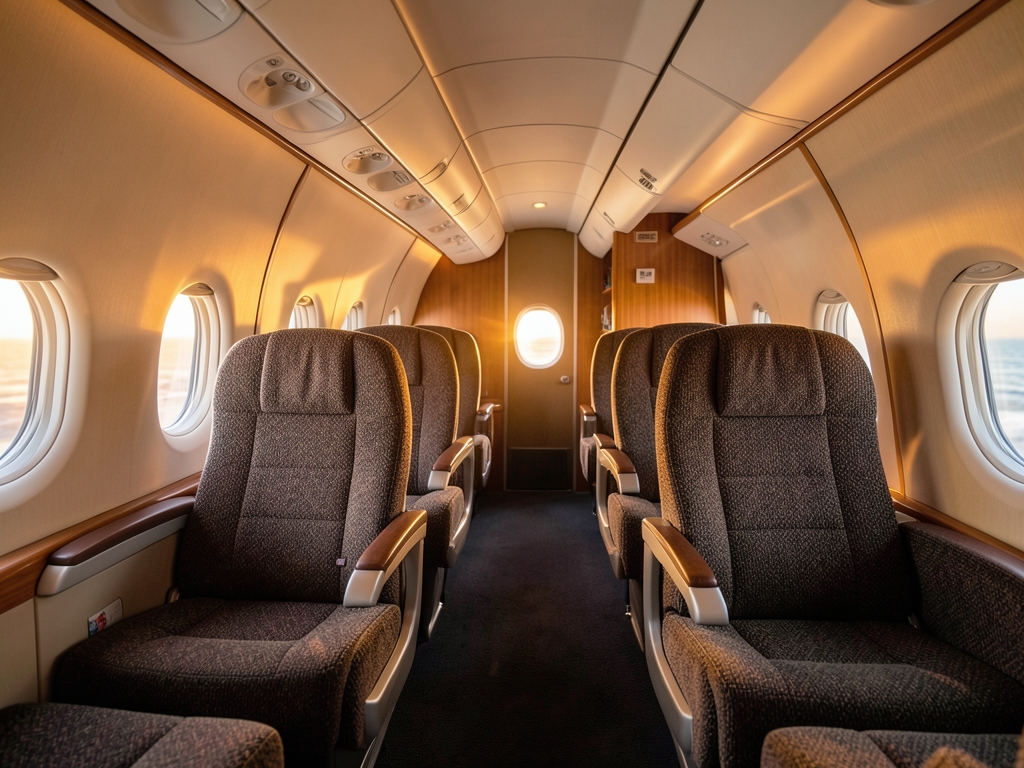
This guide shows how to compare a $1,399 cash fare with an 80,000-mile award to Lisbon using a 1.5-cent mile floor.
It also notes a Nov. 16–18, 2026 Lisbon business congress and 2026 startup cost ranges for planning.
How the 1.5¢ floor comparison works
The mile-value floor is an arithmetic break-even test, not a published airline rule. You multiply the award price by your own cents-per-point floor. In the Lisbon case, 80,000 miles round-trip at 1.5 cents per mile equals $1,200. That $1,200 is the cash price at which the two payment methods are economically level on price alone; it is the number you compare against a live business-class fare.
The direction of the comparison is simple. If the live round-trip business fare to Lisbon is above $1,200, redeeming 80,000 miles wins on this price test; if it is below $1,200, paying cash wins. The $1,399 figure is useful as a reference point, but the live fare is the only number that can settle the comparison, because fares move.
The 1.5-cent figure is your chosen valuation, not a chart value from any loyalty program. If you value your miles at a different rate, the floor moves with it: a lower valuation lowers the break-even price, and a higher valuation raises it. That is why two travelers can look at the same $1,399 fare and reach different conclusions without either being wrong.
To confirm what a specific program actually charges for Lisbon, use the award calendar on the airline's own website—examples include United.com, AirCanada.com, and TAP's flytap.com—rather than trusting a third-party estimate. Partner pricing, dynamic pricing, and award availability can make the same route cost different amounts in different programs, so the program you plan to use is the one whose calendar matters.
Because neither the cash fare nor the award price is fixed, treat $1,200 as a threshold to re-check rather than a permanent answer. The floor tells you which side wins at a given price, but it does not verify either side's live price; that verification has to happen in the booking flow. Re-run the multiplication whenever the award price or your valuation changes.

Verify the cash side in a live flow
Verify the cash side in the same live booking flow you would actually use, not from a static quote. Start by pulling the identical dates, routing, cabin, and passenger count on Google Flights and then on the airline’s own site, because the two can display different inventory or surcharges. Before you treat any fare as comparable, open the booking flow and confirm the exact fare class and fare basis; a business-class fare built on deeply discounted P- or Z-type inventory can exclude seat selection, changes, or refunds, which means it is not like-for-like with an award that includes those terms.
Match refundability and flexibility before comparing totals. If the award can be redeposited or changed on terms you value, price a cash fare with equivalent flexibility, or separately value the missing protections in the discounted cash fare. Also confirm the same number of stops, aircraft, baggage allowance, and seat-assignment rules; a cheaper fare with a connection or restricted seat map is a different product, not a lower price for the same trip.
Re-run the check close to decision time. Transatlantic business fares to Lisbon can move by hundreds of dollars between fare-file updates, so a figure seen on one day may not be available the next. Re-check within 24 hours of publishing or booking, and again immediately before ticketing, so the cash side of the comparison reflects live inventory rather than a stale snapshot.
Record the evidence while you have it: fare basis, booking code, total price including taxes and fees, and the change or cancellation terms shown in the flow. If you are using an online travel agency, verify the same itinerary on the operating carrier’s site, since fare rules and post-purchase servicing can differ even when the headline price matches.
If the exact fare class or refundability you tested is no longer available, stop and recompute rather than substituting a nearby fare. The comparison only works when the cash product and the award product describe the same trip on the same terms; otherwise the lower number is not a valid signal.
Verify the award side: price both one-ways
Price the award as two one-ways even if the search tool offers a round-trip option. Add the outbound and return mileage prices yourself; that sum can reveal asymmetric pricing, such as a cheap outbound and an expensive return, that a single round-trip quote averages or hides. Record each direction separately, including cabin, connection, and any segment-level differences, and use the summed figure if it differs from the round-trip display.
Add carrier-imposed surcharges, taxes, and airport fees to the miles before you compare. A quote described as 80,000 miles can still require $300 or more in cash at checkout, which makes it effectively an 84,000–90,000-mile redemption in this comparison. The full fee total appears on the final passenger-details screen before purchase, so do not treat the search-results mileage as the complete price.
Check whether the award is priced by the operating airline or by a partner program. The same Lisbon itinerary can carry different mileage, fees, inventory, and change rules depending on which program books it. Price it on the operating carrier’s site and on the partner program’s site, then compare the all-in totals rather than mileage alone. If the lower-mileage option has higher fees or a less convenient routing, record that trade-off before moving on.
Before you lock in the award price, click through to the passenger-details screen and capture the all-in total for your actual passenger count: miles, taxes, carrier surcharges, and any booking or service fees. Re-run the search if more than one traveler is involved, because per-person pricing and fees can scale. Save the date, time, and details, since award space and fees can change; only then compare that all-in award figure with the cash side.
The decision at $1,399
The cost of choosing the wrong side is asymmetric. Paying cash when a no-fee redemption would have won costs the $199 gap between the fare and the floor. Redeeming when fees apply costs more than cash whenever the fee total pushes the all-in award cost past $1,399 — for example, $1,200 in floor value plus a hypothetical $250 in fees exceeds the fare by $51. Compute this with the live fee total, not an assumed one.
The fee total is the swing factor, not the fare. At a verified $1,399 fare, any award fee total below $199 keeps the redemption ahead, while any total above $199 strengthens the case for cash. Read the exact taxes and surcharges from the live summary before applying either conclusion.
Those two costs are why the live booking summary matters more than the headline fare. The $1,399 and 80,000-mile figures are observed inputs to re-verify; the $250 fee is a checkpoint value to read, not assume. If the live cash fare or the live fee total differs, recompute both sides before deciding.
Decision rules and when the rule breaks
With the arithmetic already in place, the decision must follow a strict if/then: if the live refundable-comparable cash fare round-trip is below the $1,200 floor (80,000 miles × 1.5¢), pay cash and bank the miles. If the live refundable-comparable cash fare round-trip is at or above that $1,200 floor, redeem the 80,000 miles round-trip. If the live refundable-comparable cash fare round-trip falls within 10% of the floor, favor cash, because miles carry devaluation risk while cash fares can be re-priced or refunded per fare rules. This band is not a tie-breaker to split hairs, but a reason to lean away from locking into miles when the margin is that thin.
That raw comparison can fail the moment fees enter it. If the award has $200+ in surcharges round-trip, recompute the effective cpp before deciding — the floor test must use cash-minus-fees, not the sticker fare. In other words, do not compare the $1,399 round-trip business class sticker to the miles alone if the award is pulling a large surcharge; subtract those award surcharges from the cash fare you are measuring against, or convert them into the equivalent cost, and run the same 1.5¢ floor against that adjusted number.
Your ability to replace the miles can break the test just as much as fees can. If you cannot replace the miles at 1.5¢+ (low earning rate, no credit-card spend), lower your personal floor and re-run the comparison with that lower floor, not the generic 1.5¢ floor. A floor that is not realistically replaceable is not a floor you can safely treat as a break-even for your own account.
| Edge case | Action |
|---|---|
| Cash round-trip < $1,200 floor | Pay cash, bank the miles |
| Cash round-trip ≥ $1,200 floor | Redeem the 80,000 miles round-trip |
| Cash round-trip within 10% of $1,200 floor | Favor cash (devaluation + re-price/refund) |
| Award surcharges ≥ $200 round-trip | Use cash-minus-fees, recompute effective cpp |
| Cannot earn miles at 1.5¢+ | Lower personal floor and re-run |
These are the if/then rules and the edge cases that can make the 1.5¢ floor test fail, and each one must be checked in the live booking flow for this Lisbon scenario before choosing between the $1,399 round-trip business class cash fare and the 80,000 miles round-trip award.
Also worth reading TAP Air Portugal Lisbon fare TAP $1,399 EWR-Lisbon Cash Wins East Book business class to Lisbon on
What to do next
| Step | Action | Why it matters |
|---|---|---|
| 1 | Compute the 80,000-mile award's mile-value floor using your 1.5¢ floor. | Creates the cash threshold that governs the decision. |
| 2 | Price the same Lisbon business-class itinerary in the booking flow as a refundable-comparable fare. | The live fare, not the quoted fare, decides cash versus award. |
| 3 | Pay cash only if that live fare is below the mile-value floor; otherwise redeem the 80,000-mile award. | Applies the canonical cash-versus-award rule. |
| 4 | Confirm whether each leg is one-way or round-trip before comparing it with the floor. | Prevents a unit mismatch from flipping the decision. |
| 5 | Re-check the live fare immediately before ticketing. | A below-floor live fare would switch the decision to cash. |
| 6 | If the trip is for the Global Congress on E Business, ECommerce & EGovernance, keep the Nov. 16–18, 2026 dates fixed while re-checking units. | Keeps the fare comparison tied to the intended itinerary. |
Frequently Asked Questions
Is the 1.5-cent mile floor an official airline rule?
The mile-value floor is an arithmetic break-even test, not a published airline rule.
What does 80,000 miles at 1.5 cents per mile equal for Lisbon?
In the Lisbon case, 80,000 miles round-trip at 1.5 cents per mile equals $1,200.
If the live business fare to Lisbon is above the break-even price, which payment method wins?
If the live round-trip business fare to Lisbon is above $1,200, redeeming 80,000 miles wins on this price test.
Why might two travelers disagree about the same $1,399 fare?
Two travelers can look at the same $1,399 fare and reach different conclusions without either being wrong because the 1.5-cent figure is your chosen valuation, not a chart value from any loyalty program.
What planning details besides the fare comparison does the guide mention?
It also notes a Nov. 16–18, 2026 Lisbon business congress and 2026 startup cost ranges for planning.
Can the $1,399 reference fare alone settle whether to pay cash or miles?
The $1,399 figure is useful as a reference point, but the live fare is the only number that can settle the comparison, because fares move.
Quick answers
| What is the break-even cash price for 80,000 miles at 1.5 cents per mile? | 80,000 miles round-trip at 1.5 cents per mile equals $1,200. |
| Is the 1.5-cent floor a published airline rule? | No, the mile-value floor is an arithmetic break-even test, not a published airline rule. |
| When would redeeming 80,000 miles win on this price test? | If the live round-trip business fare to Lisbon is above $1,200. |
| Why is the $1,399 figure only a reference point? | The live fare is the only number that can settle the comparison, because fares move. |
| Why can two travelers reach different conclusions about the $1,399 fare? | Because the 1.5-cent figure is their chosen valuation, not a chart value, so the floor moves with it if they value miles differently. |
Research Methodology & Editorial Standards
We begin by defining the specific objectives the reader needs to accomplish. Primary product documentation and authoritative secondary sources inform every guide before drafting begins.
Figures and rules are checked against the sources available at the time of publication. Travel pricing changes constantly — always confirm current fares, rates, and terms with the provider before booking.