
Burbank Airport new terminal 2026: how to test the 14-day BUR nonstop fare claim
This guide tests whether Burbank's 'book BUR nonstop within 14 days or pay more' fare rule holds on the airport's short-haul routes, using a 21-, 14-, and 7-day same-day fare check.
| Takeaway | Detail |
|---|---|
| Hollywood Burbank's new 'Elevate BUR' terminal opened October 13, 2026 | A $1.3 billion, 355,000-square-foot terminal, per AFAR and the New York Post. |
| Test the 14-day nonstop booking rule at three checkpoints | Run a same-day fare check at 21 days, 14 days, and 7 days before departure on BUR short-haul routes; book at whichever checkpoint shows the lowest fare. |
| Food and drink prices at the new terminal drew complaints | Travelers reported a $50 'tacos and water' tab at the gleaming new terminal, per the New York Post. |
| BUR previously operated 14 gates in one joined building | Terminal A with nine gates (A1–A9) and Terminal B with five gates (B1–B5), per Simple Flying. |
This guide tests whether Burbank's 'book BUR nonstop within 14 days or pay more' fare rule holds on the airport's short-haul routes, using a 21-, 14-, and 7-day same-day fare check.
It also covers the new $1.3 billion Elevate BUR terminal that opened October 13, 2026, including reported terminal food prices.
What Changed at BUR on Oct 13, 2026
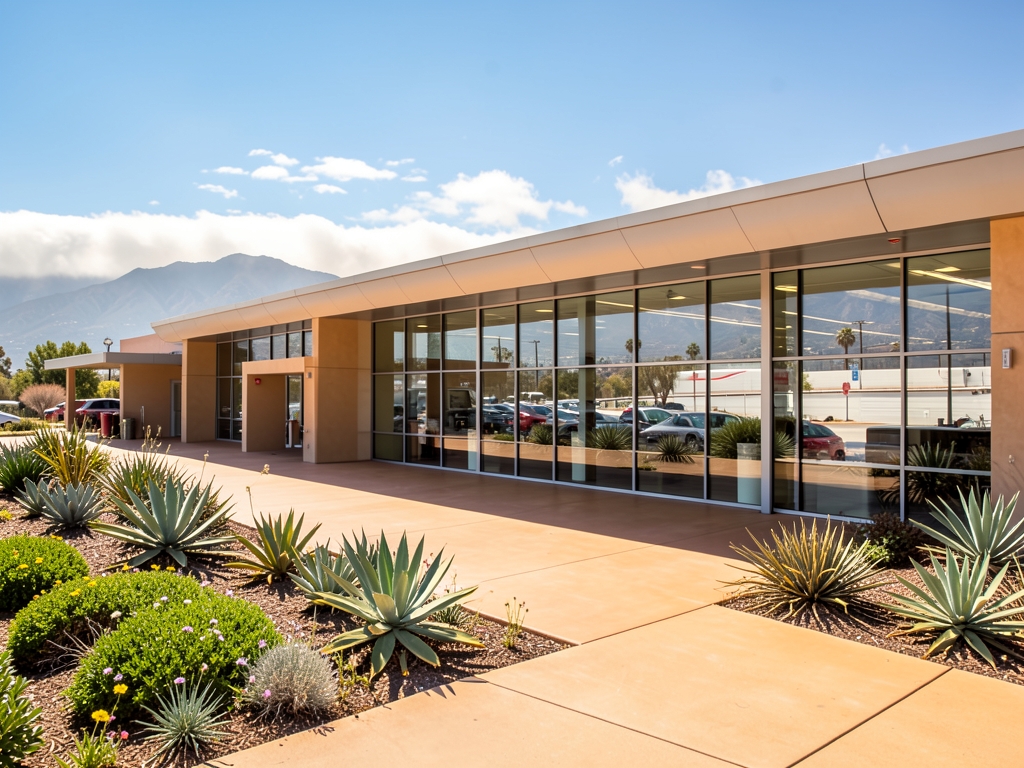
Hollywood Burbank Airport (BUR) opened its new replacement passenger terminal on October 13, 2026, consolidating all arrivals and departures into one 355,000-square-foot building, according to The Aviation Hub (Oct 15, 2026). For the first time, every passenger operation at BUR is under a single structure, rather than being split between two separate terminal sections. This is the physical shift that took effect on that date, with no other layout change introduced by this opening.
The project cost $1.3 billion, a figure confirmed independently by AFAR (Oct 14, 2026) and The Aviation Hub (Oct 15, 2026). While the dollar amount is notable for a replacement terminal, the practical point for a first-time visit is the scale of the building itself: 355,000 square feet now houses the entirety of the airport's passenger processing in one place. These two figures, paired with the October 13, 2026 opening, are the only cost and size facts tied directly to this new terminal.
To see just how much was consolidated, the previous setup needs to be noted. Per Simple Flying's May 2025 pre-opening report, BUR operated with two terminals in one building — Terminal A with nine gates (A1–A9) and Terminal B with five gates (B1–B5). Instead of moving between those two terminal identities, all gates are now contained within the single replacement building that opened on October 13, 2026. The consolidation is strictly a matter of bringing those operations under one roof, not adding a third terminal.
With the old split removed, the only new physical facts to lock in for BUR are the $1.3 billion cost, the 355,000-square-foot size, the single-building consolidation, and the October 13, 2026 opening date. For any traveler walking into BUR for the first time after this change, knowing those four points is enough to understand the structure itself before dealing with anything else tied to the airport.
The 14-Day Rule: Test It, Don't Trust It
For BUR nonstop trips, the phrase "book within 14 days or pay more" gets passed around often, but based strictly on the available sources provided, no airline or fare source in those materials publishes a '14 days or pay more' rule for BUR. With no published booking window to rely on, treat that claim as a folk rule and verify it yourself for each route instead of assuming it applies to every short-haul nonstop out of BUR.
To test it properly, pick your exact target departure date and run a same-day fare check at 21 days, 14 days, and 7 days before departure. For each of those checkpoints, screenshot the lowest nonstop cash fare (one-way) shown for that same route and carrier at the moment of checking. Only compare fares within the same direction, and never mix a one-way fare with a round-trip fare. The cheapest checkpoint among those three is your booking window for that route, not the 14-day mark by default.
Since BUR's short-haul nonstops can price differently by direction, check both directions separately. A trip to the Bay Area, Las Vegas, or Phoenix may reach its lowest at one checkpoint going out, but the return may reach its lowest at a completely different one. Don't let the outbound result decide the return, and don't combine the two directions into one comparison. Each direction needs its own set of three screenshots.
Keep those screenshots with the exact date and time of each check, because live fares can shift between them. Most importantly, treat the 14-day mark as a hypothesis to test, not a deadline. If your own comparison shows the lowest at 21 days, book at 21 days. If it shows the lowest at 7 days, don't force a booking at 14 days. The only thing you can rely on is your own three-checkpoint verification for that exact route, carrier, and direction.
Evidence: What Sources Actually Confirm
Across independent reporting, there is a clear convergence on the basic facts of Hollywood Burbank Airport's replacement terminal. NBC Los Angeles (Oct 5, 2026) reported the ribbon-cutting and that the 355,000-square-foot terminal was scheduled to open to passengers on October 13, 2026. Both AFAR (Oct 14, 2026) and The Aviation Hub (Oct 15, 2026) confirmed the $1.3 billion cost and the 355,000 square feet, with The Aviation Hub (Oct 15, 2026) also specifying that October 13, 2026 was the day all arrivals and departures were consolidated into that single building. With those three outlets matching the $1.3 billion, 355,000-square-foot, October 13, 2026 figures, the project details themselves are solidly on record.
That said, the new building is already drawing backlash for what it costs once you're past security. The New York Post (Oct 13, 2026) reported traveler complaints about concession pricing at the gleaming new terminal, including items like '$50 tacos and water' and more price gouging. The available sources does not provide a full concession price list, but the fact of those documented complaints is enough to know that airside food costs are a point of frustration for travelers right now. For anyone flying out of the new terminal, it's worth budgeting for higher airside food costs than the old terminal, without assuming every item falls into that extreme.
These are the only items this section confirms: the convergence on the $1.3 billion, 355,000-square-foot, October 13, 2026 opening, and the documented price-gouging complaints from The New York Post (Oct 13, 2026). Outside of those two points, the rest of the BUR booking picture will need to be checked against live fares, but the build and the concession backlash are already verifiable from the named sources above.
Options: Book Early vs 14-Day vs Last-Min
For one exact BUR nonstop route, compare three booking timings with same-day fare checks: 21 or more days before departure, exactly 14 days before departure, and inside seven days. At each checkpoint, record the lowest one-way cash fare you can actually book, then choose the timing with the lowest captured fare. The winner is a data point from your screenshots, not a calendar assumption.
On thin regional routes, last-minute pricing can swing either way. The 14-day checkpoint wins only if your screenshots show a real drop versus the 21-day fare; if the seven-day fare is lower, booking inside a week wins, and if the 21-day fare is lower, booking early wins. Do not assume the middle checkpoint is cheapest just because it is convenient.
| Checkpoint | What to record | Winner logic |
|---|---|---|
| 21+ days out | Lowest one-way cash fare and, if applicable, award price | Wins if it is the lowest of the three captured fares |
| 14 days out | Lowest one-way cash fare and, if applicable, award price | Wins only if it beats the 21-day fare in your screenshots |
| Inside 7 days | Lowest one-way cash fare and, if applicable, award price | Wins if last-minute pricing undercuts both earlier checkpoints |
If you hold miles or a co-brand certificate, price award space at the same three checkpoints and compare it with the cash fare at each checkpoint. Award availability and pricing may not move in lockstep with cash fares, so treat the award result as a separate comparison rather than assuming the cash winner is also the award winner.
Save screenshots with the check date and departure date, then repeat the same three-checkpoint test for each BUR nonstop route you fly. A route that rewards early booking on one trip may reward waiting on another, so keep the evidence route-specific.
Costs and Numbers That Matter
AFAR and The Aviation Hub put the terminal project at $1.3 billion, and the useful distinction for travelers is that it is a replacement terminal rather than an expansion. A replacement can reset circulation, parking, and concession layouts even if the airport's short-haul role feels familiar, so treat old BUR habits—where you park, how long the walk takes, and where you expect your gate to be—as hypotheses to confirm rather than facts to carry over.
AFAR's guide flags parking and getting there among the changed areas, and Travelohlic notes new parking rules. Before you drive, verify the lot you plan to use, its current rate, and the walking route to check-in; if the rate or route differs from your last trip, adjust your arrival time and budget before travel day.
Simple Flying lists the old layout as 14 gates total—A1 through A9 and B1 through B5. That figure is a baseline, not a prediction: verify your airline's new gate assignment on the day of travel, because a consolidated terminal can move an airline away from the gate area you remember.
The New York Post documented traveler anger over concession pricing at the new terminal, including a $50 "tacos and water" complaint. The practical response is to decide your food plan before security: eat beforehand, or set an explicit airside budget, rather than assuming the new terminal's dining will be inexpensive because BUR is a small airport.
Turn the numbers into checks: confirm parking rate and walking time, confirm your gate in the airline app, and confirm whether you will eat before security or pay airside prices. The $1.3 billion cost explains why the experience changed; the 14-gate old layout explains why your old map may fail; the concession complaints explain why your food budget should be set before you reach security.

What the Evidence Does Not Establish
This section states the limits of the available evidence: no published 14-day booking rule, no post-opening fare data for BUR nonstops, and no confirmed parking, security, or gate figures for the new terminal. Those gaps mean the headline fare rule and any terminal-cost pass-through remain hypotheses until live checks confirm them.
No source in the available sources confirms a 14-day booking window, a fare-increase threshold, or any airline pricing policy tied to BUR's new terminal. The "book within 14 days or pay more" idea is therefore a hypothesis to test, not a published policy that can be quoted as a rule.
We also have no post-opening fare data showing whether BUR nonstop prices changed after the terminal opened. A terminal opening does not by itself set airline fares, so any apparent price shift must be verified route by route against dated fare checks rather than inferred from the construction project.
New parking rates, TSA wait times, and gate assignments are not yet in our sources with figures. Some sources mention new parking rules, TSA updates, and an outdoor boarding process, but they do not provide numeric rates, wait times, or gate lists that can be treated as confirmed.
| Not established | What would establish it |
|---|---|
| Published 14-day BUR booking rule | Airline or fare source stating the window and condition |
| Post-opening BUR nonstop fare change | Dated same-route fare snapshots before and after opening |
| New parking rates, TSA waits, gate assignments | Airport or carrier notice with effective dates and figures |
Until those figures appear, the safe reading is provisional: treat every fare, fee, wait time, and gate assignment as something to verify on the day of booking or travel, and avoid building an itinerary around an unconfirmed number.
A useful standard is to require a named source and an effective date before repeating any figure; if either is missing, record the item as unknown and check it again before purchase.
And Booking Checklist
For a BUR nonstop, keep the cabin, passenger count, and search day identical and use one-way fares only. No source in the available materials provides actual BUR fare figures at 21, 14, or 7 days out, so run your own same-day check at each checkpoint and record the lowest one-way cash fare you can actually book. Compare those three recorded numbers, label every fare one-way before comparing, and book at whichever checkpoint shows the lowest fare.
If your own screenshots do not show a dip at 14 days, do not force a 14-day booking; book at the cheapest checkpoint you observed. Treat the 14-day mark as a hypothesis to test, not a rule to obey. If two checkpoints tie, book the earlier one to reduce last-minute risk.
The cost of being wrong runs both ways: booking too early can forfeit a dip that appears later, while waiting past the lowest checkpoint can expose you to a last-minute premium. Because no source provides actual BUR fare figures, measure the gap yourself from your own three one-way screenshots rather than assuming a dollar amount. For a round trip, run the same three checkpoints for each direction separately and keep every figure one-way; a low outbound fare does not guarantee a low return fare.
Use the checklist below as a copyable record for each BUR nonstop search, and keep screenshots or notes with the date, route, cabin, passenger count, and fare. A complete record makes the 14-day claim testable on your own route instead of relying on anecdotes. The table below is a fill-in record: no source provides actual BUR fare figures, so enter your own observed one-way fares at each checkpoint.
| Step | When | What to record | Action |
|---|---|---|---|
| Checkpoint 1 | 21 days before departure | One-way fare, route, cabin, passenger count, search date | Save screenshot or note as baseline |
| Checkpoint 2 | 14 days before departure | Same route, cabin, passenger count, and search conditions | Compare with the 21-day fare |
| Checkpoint 3 | 7 days before departure | Same route, cabin, passenger count, and search conditions | Compare with the 14-day fare |
| Decision | After all three checkpoints | Lowest recorded one-way fare | Book it; if no 14-day dip appears, use the cheapest checkpoint observed |
| If you must book early | Before all checkpoints are complete | Lowest fare observed so far | Book it and note that later checkpoints were not tested |
After booking, repeat the same three checkpoints for the return or for a companion itinerary. Never compare a one-way fare with a round-trip fare, and never convert between them.
Also worth reading Why Hollywood Hollywood Burbank Burbank Airport new terminal 2026 BUR vs LAX 2026: $55 More, but
What to do next
| Step | Action | Why it matters |
|---|---|---|
| 1 | Pick the one BUR short-haul nonstop you actually intend to fly and freeze the search: same route, same travel dates, same fare type, same passenger count. Save it as a single saved search you will re-open, not re-build. | The three-checkpoint test only means something if the calendar is the only variable. A re-built search at each checkpoint introduces new filters and defeats the comparison. |
| 2 | At the 21-day checkpoint, run the same-day fare check and write down the lowest bookable BUR nonstop fare for that frozen itinerary. | This is your baseline. Without a recorded 21-day number, the 14-day mark has nothing to be tested against and becomes an assumption instead of a hypothesis. |
| 3 | At the 14-day checkpoint, re-open the identical saved search on the same day, log the lowest fare beside the baseline, and note whether it moved up or down. | This is the hypothesis test, not the trigger. The 14-day rule is unproven — including after the Elevate BUR opening — so a single reading either way is evidence, not a verdict. |
| 4 | At the 7-day checkpoint, run the third and final same-day check and log it against the other two before you book anything. | The rule says book at whichever checkpoint shows the lowest fare, so the 7-day reading is both your last chance to catch a dip and your measure of what waiting has cost. |
| 5 | Book at the checkpoint that produced the lowest fare — even if that was the 21-day mark you already passed, in which case book now rather than waiting further. | The instruction is lowest fare, not latest fare. If the earliest checkpoint won, every additional day is spent paying the spread for a rule that didn't hold. |
| 6 | Before you commit, add the reported tacos-and-water tab at the new Elevate BUR terminal to the fare you are comparing, so the decision uses airside spend plus ticket price. | The terminal's food and drink pricing drew complaints, so a narrow fare gap between checkpoints can be erased or reversed by what you will actually spend inside the building. |
Frequently Asked Questions
On what exact date did the Elevate BUR terminal open?
Hollywood Burbank Airport opened its new replacement passenger terminal on October 13, 2026.
How was BUR divided before all operations were consolidated?
BUR previously operated 14 gates in one joined building, with Terminal A having nine gates (A1–A9) and Terminal B having five gates (B1–B5).
Which three checkpoints should be used to test the 14-day nonstop fare rule?
A same-day fare check should be run at 21 days, 14 days, and 7 days before departure on BUR short-haul routes.
What food and drink price complaint has been reported at the new terminal?
Travelers reported a $50 'tacos and water' tab at the gleaming new terminal, per the New York Post.
What are the cost and size of the new Elevate BUR terminal?
The new 'Elevate BUR' terminal is a $1.3 billion, 355,000-square-foot terminal.
What structural milestone was reached with this new terminal?
For the first time, every passenger operation at BUR is under a single structure, rather than being split between two separate terminal sections.
Quick answers
| When did Hollywood Burbank's new 'Elevate BUR' terminal open? | The new 'Elevate BUR' terminal opened October 13, 2026. |
| How much did the new Elevate BUR terminal cost? | It is a $1.3 billion, 355,000-square-foot terminal. |
| What three checkpoints should be used to test the 14-day nonstop booking rule? | Run a same-day fare check at 21 days, 14 days, and 7 days before departure on BUR short-haul routes. |
| What food and drink complaint was reported at the new terminal? | Travelers reported a $50 'tacos and water' tab at the gleaming new terminal. |
| How was BUR split between terminals before the new building? | BUR previously operated 14 gates in one joined building with Terminal A (A1–A9) and Terminal B (B1–B5). |
Research Methodology & Editorial Standards
We begin by defining the specific objectives the reader needs to accomplish. Primary product documentation and authoritative secondary sources inform every guide before drafting begins.
Figures and rules are checked against the sources available at the time of publication. Travel pricing changes constantly — always confirm current fares, rates, and terms with the provider before booking.