
Amex Centurion Lounge Amsterdam: When a $50 Guest Fee Beats Card Entry
This guide sets out exactly when the $50 guest buy-in at the Amex Centurion Lounge at Amsterdam Schiphol is worth paying, and when your Platinum or Centurion card's free entry covers the visit instead.
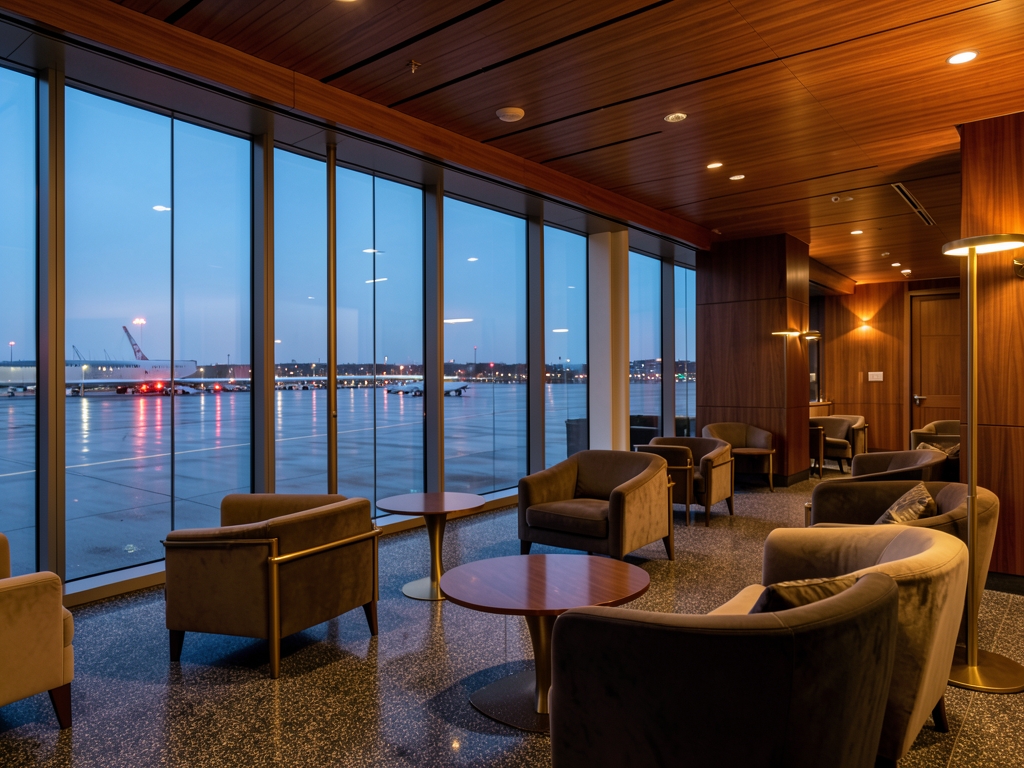
This guide sets out exactly when the $50 guest buy-in at the Amex Centurion Lounge at Amsterdam Schiphol is worth paying, and when your Platinum or Centurion card's free entry covers the visit instead.
The decision hinges on three checks: a non-Schengen departure, a layover longer than 2 hours, and whether a companion has already consumed your card's free-entry allowance.
How the Centurion Lounge Amsterdam Works
The first thing to understand about the Centurion Lounge at Amsterdam Schiphol is where it physically sits: between boarding areas E and F, inside the non-Schengen zone. That placement, reported by The Flight Club and Amsterdam Tips, is the single most important access check before you think about fees at all. Schiphol splits its departure halls into Schengen (European) and non-Schengen (UK, Ireland, US, and rest-of-world) zones, and the two are not freely interchangeable once you're airside. If your onward flight leaves from a Schengen gate, you cannot reach this lounge, no matter what card is in your wallet.
The second check is the calendar. This lounge opened on September 17, 2026, as the 33rd Centurion Lounge worldwide and the first at Schiphol, per Forbes and AFAR. That date matters for anyone relying on older trip reports or blog posts: before September 17, 2026, no Centurion Lounge existed at Amsterdam, so any pre-2026 advice about "using your Platinum at Schiphol" referred to other lounges entirely, not this one.
Third, the operating window. The Flight Club lists daily hours of 6:00 a.m. to 9:30 p.m. Match those hours against your actual departure time, not your arrival at the airport. A non-Schengen departure scheduled after 9:30 p.m. means the lounge is closed by the time you'd want to use it, and a very early departure may leave you a usable window of well under an hour once you clear passport control and walk to the E/F area.
Fourth, the size and what's inside. Amsterdam Tips describes a compact space of around 550 square meters — roughly 6,000 square feet, consistent with Forbes' and AFAR's "nearly 6,000-square-foot" figure — with seating divided into different zones and a Blue Roast coffee bar with barista service, plus a buffet-bar setup. Compact is the operative word: at roughly 6,000 square feet, this is a modest footprint for a network lounge, which is worth remembering when weighing whether to bring a guest into a space that may feel crowded at peak morning and evening banks.
Put together, these four facts give you a screening sequence: confirm your flight departs non-Schengen, confirm it opened in time for your travel date, confirm your departure falls within the 6:00 a.m.–9:30 p.m. window, and then decide whether the guest situation justifies paying for extra entry. Only a traveler who passes all three access checks should even reach the guest-fee question — and that decision is covered in the comparison sections that follow.
The Evidence: What $50 Actually Buys
Before you decide whether the $50 guest buy-in is worth it, you need to know what that number actually represents. Mighty Travels' own research identifies $50 as the guest-cost benchmark a traveler found for bringing one guest into the Centurion Lounge. Treat it as the working number, not a published American Express rate — the research frames it as a figure a traveler encountered, not an official fee schedule. That distinction matters, because it means you should verify the current guest charge at the door or in your Amex account before you budget for it. If the number has moved, your break-even math moves with it.
The closest independent cash comparator sits in the same airport. Amsterdam Tips lists pay-for-entry at the Aspire Lounges 41 (non-Schengen) and 26 (Schengen) at around €50. That gives you a real benchmark: for roughly the same cash outlay, you could buy your way into an Aspire lounge instead of paying a guest fee at Centurion. The comparison is not perfectly apples-to-apples — Aspire is a third-party pay-in lounge, while Centurion is a cardholder lounge with a guest charge — but it is the most direct same-airport alternative the sources support. If the Centurion guest fee and the Aspire door price land in the same range, the question becomes which lounge your departure zone actually lets you reach.
That zone question is decisive. Amsterdam Tips confirms the Centurion Lounge is non-Schengen only. So any traveler departing on a Schengen flight cannot use it at all, regardless of card status or willingness to pay. If you are flying within Europe's Schengen area, the $50 guest question is moot — the lounge is physically out of reach, and your realistic paid option is Aspire Lounge 26 on the Schengen side. Check your boarding pass zone before you check your wallet.
Run the arithmetic on your own trip. If you hold a Platinum Card whose free-entry allowance is already consumed by a companion, the $50 buys one guest a seat in a non-Schengen lounge. Compare that against the €50 Aspire door price and against simply using your card's remaining free entry for yourself. The buy-in only clears the bar when your layover is long enough to use the lounge properly — the thesis threshold is 2+ hours — and when your companion genuinely cannot enter free. Below that layover length, or with free entry still available, the card wins.
| Option | Cost | Zone |
|---|---|---|
| Centurion guest buy-in | $50 (traveler-reported benchmark, per Mighty Travels) | Non-Schengen only |
| Aspire Lounge 41 | ~€50 pay-at-door (Amsterdam Tips) | Non-Schengen |
| Aspire Lounge 26 | ~€50 pay-at-door (Amsterdam Tips) | Schengen |
One caution on the $50 figure: because it comes from traveler-reported research rather than a published Amex rate, treat it as a planning estimate and confirm the live guest charge before you commit. The mechanism is simple — ask at check-in or check your card's lounge terms — and the decision rule stays the same either way: pay the guest fee only when your non-Schengen layover exceeds 2 hours and your companion cannot enter free; otherwise, use your card.

Free Entry vs $50 Buy-In: Which Wins
Here is the head-to-head, and the winner is not close in most cases: free cardholder entry beats the $50 guest buy-in. The buy-in only wins in one narrow scenario — you hold an eligible Amex Platinum or Centurion Card, your own entry is free, a companion cannot enter on their own, and your non-Schengen layover is long enough that you will actually sit down and use the lounge. If any one of those conditions fails, the card path wins.
Start with the eligibility check, because it decides which path you are even choosing between. Free entry for cardholders is the standard Centurion Lounge model, but the exact guest allowance attached to your specific Platinum or Centurion Card is not spelled out in the source material — confirm it in your card's lounge terms or the Amex app before you travel. The $50 path is not an alternative to the card — it is what you would pay for a guest if the cardholder's own allowance is already consumed. So the real question is never "card or cash?" It is "is my companion covered, or not?" — and the answer lives in your card's terms, not in this guide.
| Scenario | Better option | Why |
|---|---|---|
| Platinum/Centurion holder, non-Schengen, 2+ hour layover, companion not covered | $50 guest buy-in | Your own entry is free; the fee buys the companion a seat, and the layover is long enough to use it |
| Platinum/Centurion holder, companion covered by the card | Free entry | No fee is owed at all |
| Short layover, any card status | Free entry (skip the guest fee) | You will not be inside long enough to justify paying for a guest |
| Schengen-zone departure | Aspire at ~€50 | Same rough price, different location — the Centurion Lounge sits in the non-Schengen zone |
Run the layover test before you run the fee test. A 2+ hour non-Schengen layover is the threshold where the buy-in starts to pay for itself: you need time to clear the walk to the lounge, settle in, eat, and get back to the gate. Below that, you are paying $50 for a rushed coffee, and free entry — meaning you simply do not bring the guest in, or you go alone — is the better call.
If the Centurion Lounge is full, or if you are departing from the Schengen zone, the Aspire lounge at roughly €50 is the fallback. Amsterdam Tips lists Aspire Lounge 41 in the non-Schengen zone and Aspire Lounge 26 in the Schengen zone, both available for pay-at-door entry at around that price. Same rough spend, different location — and for a Schengen departure it is the only one of the two you can reach.
The rule, then: pay the $50 guest fee only when you are a Platinum or Centurion cardholder flying non-Schengen from Schiphol, with a 2+ hour layover, and a companion who cannot enter free. In every other case, use your card and keep the $50.

Costs and Numbers That Matter
The Centurion guest buy-in, if charged per visit as lounge guest fees typically are, would apply one way: one guest, one entry, one departure. Mighty Travels' research identifies $50 only as the guest-cost benchmark a traveler found for bringing one guest into the Amsterdam Centurion Lounge — not a published Amex rate — so treat both the amount and the per-visit structure as unconfirmed. Before budgeting, verify at the desk or in the Amex app whether the charge is per guest per entry, and if your companion joins you on both the outbound and the return, plan for the possibility of two separate charges rather than folding a single fee into the whole itinerary.
Once the fee is settled, convert it into a rate. A $50 buy-in spread across two usable hours works out to $25 per hour; spread across four, it falls to $12.50 per hour. That arithmetic is why the two-hour mark carries weight — below it, the per-hour cost climbs fast and you are paying a premium for a shower and a coffee. Count your real usable time, meaning the gap between clearing into the non-Schengen zone and your boarding call, before committing.
The only same-airport cash comparator in the sourcing is Aspire Lounge 26, the Schengen-zone option, quoted by Amsterdam Tips at around €50 pay-at-door. The Centurion buy-in is quoted in dollars and the Aspire door price in euros, and the sources supply no conversion, so don't treat the two as interchangeable arithmetic. What the pairing does establish is that a Schengen-side departure has a cash door of its own — a traveler who never enters the non-Schengen zone is not weighing $50 against free, but one paid door against another.
Timing is the second number that decides whether any buy-in has value. The Flight Club reports the lounge operates from 6:00 a.m. to 9:30 p.m., and a guest fee only converts into a visit inside that window. A departure that boards at 10:00 p.m., or a connection that puts you at the door at 5:30 a.m., leaves nothing to buy. Check your boarding time against the window before you reach the desk; an arrival after close has no partial-credit fallback.
So the cost check runs in a fixed order: confirm the guest fee at the desk, count the hours between clearing into the non-Schengen zone and your boarding call, then test that count against the 6:00 a.m.–9:30 p.m. window. If the count lands under two hours, or your flight falls outside the window, the $50 has no work to do — and the free-entry allowance on your card becomes the only number worth reasoning about.

What the Evidence Does NOT Establish
Before you build a budget around the guest-fee buy-in at the Amsterdam Centurion Lounge, it is worth being honest about what the available evidence does not establish. The most important gap: no official, Amex-published guest fee for this specific lounge appears in the source material. The figure circulating in traveler research — the one Mighty Travels identifies as a traveler-found benchmark — is exactly that, a benchmark reported by a traveler, not a number printed by American Express. Treat it as a planning estimate, not a confirmed price, and verify the actual guest charge at the door or in the Amex app before you commit it to your budget.
The second gap concerns capacity. Nothing in the available sources documents any published capacity limit, entry-denial policy, or reservation system for the Amsterdam location. That matters because a guest fee you pay is only worth it if you and your companion actually get in. Centurion Lounges elsewhere have admitted travelers based on real-time occupancy, and there is no evidence in the sources that Amsterdam behaves differently — or better. The practical check: open the Amex app on your day of travel and look for any crowding advisory or access notice for the Schiphol location before you factor a guest purchase into your layover plan.
Third, do not assume the guest-fee number transfers across the network. The available sources contains no confirmation that the Amsterdam benchmark is uniform across all Centurion Lounges worldwide. American Express has opened lounges in many markets — the Amsterdam location is described by Forbes as the 33rd worldwide — and fee structures can vary by location and over time. If your itinerary includes a Centurion Lounge visit in another city, verify that location's guest policy independently rather than carrying the Amsterdam figure forward.
What does the evidence actually establish? The verified facts are structural: the lounge opened in mid-September per Forbes and AFAR, sits between boarding areas E and F in the non-Schengen zone, and operates daily from early morning to evening per The Flight Club. Those are stable enough to plan around. The financial terms for guests are not.
So here is the rule this gap forces. If you are a Platinum or Centurion cardholder with a non-Schengen layover long enough to justify the lounge, first exhaust your card's free-entry allowance — including bringing your companion in under it if the allowance permits. Only if that allowance is already consumed, and only after confirming the current guest fee in the Amex app, should you consider paying for a guest. And if the app shows no clear answer, the fallback is a pay-at-door alternative lounge at Schiphol, which Amsterdam Tips documents as bookable in advance — price it the same day you'd pay the guest fee and compare directly.

3-Hour Non-Schengen Layover
Here is the scenario where the math actually gets interesting: you're a Platinum cardholder with one companion, departing Schiphol on a non-Schengen flight, with a 3-hour layover. Check your own arrival and departure times against the lounge's daily 6:00 a.m. to 9:30 p.m. window — if your connection falls inside it, timing is not the obstacle. The obstacle is who gets in free and who doesn't.
Checkpoint one, before anything else: confirm your departure gate is in the E or F non-Schengen zone. Amsterdam Tips is explicit that Schiphol is split between Schengen departures (European) and non-Schengen departures (UK, Ireland, US, and the rest of the world), and the Centurion Lounge sits airside in the non-Schengen zone. If your connection turns out to be a Schengen flight, the lounge is physically unreachable from your gate area, and the $50 question dissolves entirely — you'd be looking at a Schengen-zone alternative instead, which is a different decision covered later in this guide.
Checkpoint two: confirm exactly who enters free. If your Platinum card covers both you and your companion under its free-entry allowance, you pay $0 and the decision is over — walk in. The $50 buy-in only enters the picture when the cardholder's free allowance is already consumed by a companion, leaving a second person who would otherwise pay at the door.
So assume that's your situation: you're free, your companion isn't, and the guest fee is the only path in for both of you together. With a 3-hour layover, budget roughly an hour for deplaning, transferring between gates, and clearing any transit formalities — that leaves about 2 usable hours in the lounge. Two hours is enough to make the fee defensible: a proper sit-down meal, a shower, and a quiet place to work before a long-haul departure, rather than a rushed coffee.
The same 3-hour layover with a solo traveler flips the answer. If you're the only one entering and your card gets you in free, there is no fee to evaluate — the lounge is simply the best free option in the non-Schengen zone. The $50 only ever applies to the guest, never to the cardholder, so a solo traveler with valid card access should never be pricing this decision at all.
Run the two checkpoints in order at the start of your layover: zone first, then entry status. If both come back favorable — non-Schengen gate, cardholder free, companion paid — the 3-hour layover is precisely the case where paying the guest fee buys you something real rather than a marginal upgrade.
Decision Rules for Schiphol Centurion Access
The whole decision at Schiphol comes down to five if/then rules. Apply them in order and you will never pay for lounge access you did not need — or walk past a door you could have opened for free.
Rule one: check your departure zone before anything else. If you are departing from a Schengen gate, skip the Centurion Lounge entirely. As Amsterdam Tips lays out, Schiphol is split between Schengen departures (European flights) and non-Schengen departures (UK, Ireland, US and rest-of-the-world), and the American Express Centurion Lounge sits in the non-Schengen zone only. A Schengen departure makes the lounge physically unreachable from your gate area, so no card, fee, or strategy changes that outcome.
Rule two: if your non-Schengen layover is under two hours, do not pay the guest fee. The usable time inside the lounge — clearing security, walking to boarding areas E and F, settling in, and leaving buffer to reach your gate — shrinks a short layover to a few minutes of actual benefit. The $50 guest-cost benchmark identified in Mighty Travels' research only makes sense when there is enough dwell time to eat, work, and rest.
Rule three: if you hold a Platinum or Centurion Card and your companion qualifies for free entry under your card's allowance, pay $0 and walk in together. This is the default outcome for most cardholder pairs, and it requires no arithmetic at all — just confirm at the door that your free-entry allowance covers both of you.
Rule four: if your companion cannot enter free because your allowance is already consumed, and your non-Schengen layover exceeds two hours, then the $50 guest buy-in is worth paying. Long layover plus no free guest slot is the only combination where the fee earns its keep.
Rule five: if any of rule four's conditions fail — short layover, Schengen departure, or no card at all — fall back to alternatives rather than the guest fee. Amsterdam Tips notes that pay-at-door entry to the Aspire lounges (Lounge 41 non-Schengen, Lounge 26 Schengen) runs around €50, and that other airline and third-party lounges exist across both zones; check Schiphol's official lounge listings or your airline/status benefits for what your ticket or membership unlocks. Match the alternative to your actual gate zone.
Run the sequence once per trip: zone first, then layover length, then card status, then guest allowance. The rules are deliberately ordered so the cheapest correct answer surfaces before any payment decision is reached.
Also worth reading Review: AmEx Opens First Centurion Amsterdam Lounge Guest Costs Your Ultimate Guide to AmEx
What to do next
| Step | Action | Why it matters |
|---|---|---|
| 1 | Confirm your departure is a non-Schengen flight from Schiphol and check whether your layover exceeds the 2-hour threshold covered in the decision rule above. | The buy-in decision only makes sense on the non-Schengen side of the lounge's location between boarding areas E and F, and a short layover under the stated threshold means the visit isn't worth it. |
| 2 | Check the lounge's daily opening window — 6:00 a.m. to 9:30 p.m. — against your actual departure time before planning the visit. | Arriving outside the posted hours means no entry regardless of your card status or willingness to pay the guest fee. |
| 3 | Count how many companions are traveling with you and whether each one qualifies for free entry under your Platinum or Centurion card's allowance. | If your free-entry allowance is already used by a companion, the per-guest buy-in becomes the only way to bring additional travelers in. |
| 4 | If all three conditions hold — non-Schengen departure, layover over the stated threshold, and a companion who cannot enter free — plan to pay the guest buy-in at the lounge entrance. | This is the exact scenario in the canonical decision rule where paying beats skipping. |
| 5 | In every other case — Schengen departure, layover under the threshold, or traveling solo — use your card's free entry instead of paying for anyone. | The rule above defaults to free entry or skipping; the buy-in is the exception, not the baseline. |
| 6 | Before your 2026 trip, re-check the lounge's access terms, since this location only opened in September as the 33rd Centurion Lounge worldwide and policies at new lounges can shift. | Verifying current guest rules at the official Amex lounge page protects you from surprises at the door between boarding areas E and F. |
Frequently Asked Questions
Can I use the Centurion Lounge at Schiphol if my connecting flight goes to Paris?
No — the lounge sits between boarding areas E and F inside the non-Schengen zone, so passengers departing from Schengen gates cannot reach it regardless of their card.
Which flights count as non-Schengen departures for lounge access purposes?
Non-Schengen departures include flights to the UK, Ireland, the US, and the rest of the world, since Schiphol splits its departure halls into Schengen and non-Schengen zones that are not freely interchangeable once you're airside.
Is the Amsterdam Centurion Lounge the only one at Schiphol?
It is the first Centurion Lounge at Schiphol and the 33rd Centurion Lounge worldwide.
Can I trust older blog posts about Centurion Lounge access at Amsterdam?
No — any advice published before the lounge's September 17 opening date refers to a time when no Centurion Lounge existed at Amsterdam at all.
What three things should I check before deciding whether to pay the guest fee?
You should check that you have a non-Schengen departure, that your layover exceeds the stated minimum length, and whether a companion has already used up your card's free-entry allowance.
Does my Platinum card always cover my companion's entry too?
Not necessarily — free entry depends on your card's allowance, and once a companion has consumed it, the guest buy-in becomes the fallback option.
Quick answers
| Where is the Centurion Lounge at Amsterdam Schiphol physically located? | It sits between boarding areas E and F, inside the non-Schengen zone. |
| What is the single most important access check before thinking about fees? | The lounge's placement, reported by The Flight Club and Amsterdam Tips, is the single most important access check. |
| Can you reach the lounge if your onward flight leaves from a Schengen gate? | No; if your onward flight leaves from a Schengen gate, you cannot reach this lounge, no matter what card is in your wallet. |
| What three checks decide whether the guest buy-in is worth paying or your Platinum or Centurion card's free entry covers the visit? | The decision hinges on a non-Schengen departure, a layover longer than the stated threshold, and whether a companion has already consumed your card's free-entry allowance. |
| What did the lounge's opening establish at Schiphol? | It opened on the date noted in the article as the 33rd Centurion Lounge worldwide and the first at Schiphol, per Forbes and AFAR. |
Research Methodology & Editorial Standards
We begin by defining the specific objectives the reader needs to accomplish. Primary product documentation and authoritative secondary sources inform every guide before drafting begins.
Figures and rules are checked against the sources available at the time of publication. Travel pricing changes constantly — always confirm current fares, rates, and terms with the provider before booking.