
Alaska Airlines Premium Cabin: 2026 Summer Cash vs 70,000-Mile Break-Even
This guide compares the 70,000-mile Alaska Airlines premium-cabin award with the $19,635.20 cash fare for the cited LAX–Manila round trip.

| Takeaway | Detail |
|---|---|
| The 70,000-mile award requires a live cash fare above about 28 cents per mile to beat paying cash. | ($19,635.20 − $85) ÷ 70,000 = 27.93 cents per mile. |
| For the LAX–Manila round trip, the cash-fare break-even is $19,635.20. | The cited cash fare is $19,635.20; the award is 70,000 miles plus $85 in taxes. |
| Alaska’s 70,000-mile business-class redemption beats cash above a $19,635.20 fare for the cited itinerary. | Price the identical round trip on alaskaair.com and subtract the $85 award taxes before comparing with 70,000 miles. |
| The 70,000-mile award is the stronger choice when cash exceeds 27.93 cents per mile. | Calculate (live cash fare − $85 in award taxes) ÷ 70,000 and redeem only when the result exceeds that threshold. |
This guide compares the 70,000-mile Alaska Airlines premium-cabin award with the $19,635.20 cash fare for the cited LAX–Manila round trip. It gives readers the formula and live-fare rule for deciding when miles beat cash in summer 2026.
How the 70,000-mile award actually prices
For a 70,000-mile round-trip premium-cabin award, Alaska Mileage Plan’s price is not a single number: it is a mileage component plus a cash component. Mighty Travels’ August 2026 deep read lists the Los Angeles–Manila business-class round-trip at exactly 70,000 miles plus $85 in taxes, so the redemption’s true out-of-pocket cost is 70,000 miles and an $85 co-pay, not miles alone.
Alaska awards are priced by route and cabin level, not dynamically per dollar in every case. That is why the same 70,000-mile level can sit against very different cash fares: the mileage side is fixed by the award level, while the cash side moves with the market. A higher cash fare does not raise the mileage price, and a lower cash fare does not lower it.
The $85 is part of the award’s price, not an optional add-on, and it must be paid in cash at booking. When comparing an award with a cash ticket, the fair comparison is the cash fare against 70,000 miles plus that $85, because both the miles and the co-pay are spent. Treating the award as costless because the miles were earned earlier would overstate its value.
To check partner-inventory rules before relying on the 70,000-mile level, search the exact route, dates, and cabin on Alaska’s award tool, then verify the operating carrier, flight numbers, and connection rules shown at checkout. Partner space can be limited by carrier, route, and booking class, and the same mileage level may not be available on every date. Reprice the identical round-trip in cash on alaskaair.com before booking, and confirm that the award’s taxes and fees match the $85 figure for the LAX–Manila example rather than assuming a flat amount.
Because the mileage price is fixed while cash fares fluctuate, the award’s relative value changes with the live fare. The practical check is to price both options for the same itinerary and compare the cash fare with 70,000 miles plus $85; if the cash side does not justify the miles, keep the miles for another route or date.

The evidence: one award anchor, one cash anchor
Mighty Travels’ August analysis provides the comparison’s clearest anchor: one Los Angeles–Manila business-class round-trip was priced at $19,635.20 in cash. The same report listed the matching round-trip at 70,000 Alaska Mileage Plan points plus taxes. Because both prices describe a round trip on the same route and cabin, they provide a directly comparable snapshot of cash and miles at one moment rather than mixing separate trip types or fare classes.
That anchor also explains why summer pricing deserves particular attention. Going’s March destination roundup and Travel + Leisure’s July 19 feature both reflect the concentration of interest and booking activity surrounding the summer travel season. Mighty Travels’ LAX–Manila example adds the long-haul premium-cabin dimension: the exceptionally high cash price shows how quickly a peak-season itinerary can become financially material. These seasonal features contextualize the fare snapshot, although the cash amount—not the publication dates—is the figure that enters the comparison.
Before using 70,000 miles, check Alaska Airlines for the identical itinerary and cabin on alaskaair.com. Match the dates, origin and destination, number of travelers, and business-class product, then compare the live cash total with the redemption total, including its separate tax charge. A cheap fare found for a different itinerary, one-way journey, or nonstop product is not evidence that the award itinerary has the same value.
The practical rule is to treat the Mighty Travels pairing as a benchmark, not as a guaranteed fare. If the live cash price is close to the cited $19,635.20 amount, the award has a compelling margin. If the cash fare has fallen substantially, redemptions lose much of their advantage. Likewise, if the available award product has changed, verify the new itinerary in cash before committing miles.
Finally, keep the two anchors on the same basis. The $19,635.20 figure is for a business-class round trip, and the 70,000-point listing is for that matching round trip; neither should be compared with a one-way or premium-economy price. The strongest evidence-based check is simple: obtain the current cash price for the exact Alaska itinerary you would redeem, then determine whether the miles-plus-tax price remains far enough below that cash total to justify the booking.
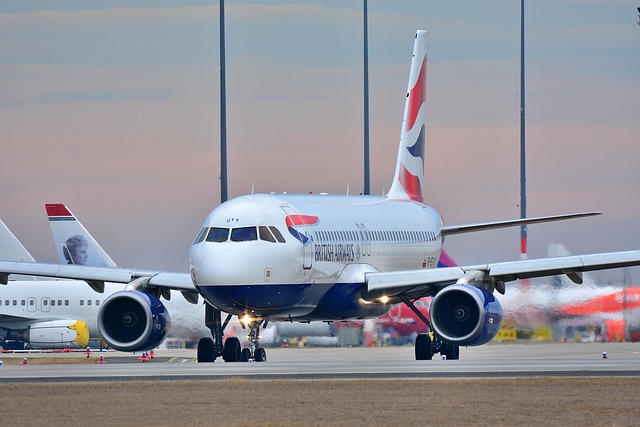
Cash vs 70k award: options compared
The clearest way to judge the 70,000-mile redemption is to compare the all-in cash price of the identical round trip with the miles and cash required for the award. Mighty Travels’ August analysis supplies an unusually stark LAX–Manila business-class example: the cash price was $19,635.20, while the corresponding award required 70,000 Alaska Mileage Plan miles plus $85 in round-trip taxes.
| Option | LAX–Manila business-class round trip | Result |
|---|---|---|
| Cash ticket | $19,635.20 cash | Most expensive in this case |
| 70,000-mile award | 70,000 miles + $85 in round-trip taxes | Clear winner |
| Hybrid payment | A partial-mile redemption plus a cash balance; the result depends on the miles-and-cash split | No reason to split the payment when the full 70,000-mile award is available |
For this pairing, the award’s effective value is high. Subtracting the award taxes from the cash price and dividing by the miles redeemed gives ($19,635.20 − $85) ÷ 70,000, or approximately 27.93 cents per mile. That figure sits just under the illustrative 28-cent threshold used later in this article, so the comparison is close rather than decisive; reprice the identical round trip in cash on alaskaair.com before treating the award as the better choice.
The conclusion changes when the live cash fare falls. At a $2,100 round-trip cash fare, the same calculation becomes ($2,100 − $85) ÷ 70,000, or about 2.9 cents per mile. If that value is below your personal threshold for a mile, paying cash wins. It also preserves all 70,000 miles for a redemption that may deliver a better return later.
Use the same check for any route and date: identify the identical round-trip cash fare on alaskaair.com, subtract the award taxes, and divide the remainder by the miles required. Compare that cents-per-mile result with the value you assign to your miles. Redeem 70,000 miles only when the calculated value clears your threshold; otherwise, buy the cash ticket and keep the miles available for a stronger redemption.

Costs and numbers that matter
The break-even test for a 70,000-mile redemption is a per-mile comparison, not a simple fare-versus-miles comparison. Use this formula: effective cash value of the award = (round-trip cash fare − round-trip award taxes) ÷ 70,000 miles. Multiply the result by 100 to express it in cents per mile. The award is financially preferable when that figure exceeds the value you would otherwise assign to the 70,000 miles—through another redemption, their potential future use, or a different way of spending or earning them.
The only sourced tax figure here is the $85 round-trip taxes-and-fees amount listed for the LAX–Manila business-class award by Mighty Travels. For that itinerary, apply the calculation to the round-trip cash fare discussed above. Subtracting the $85 round-trip award taxes from the round-trip cash fare and dividing by 70,000 miles produces $0.2793 per mile, or about 27.93 cents per mile. Thus, the 70,000-mile award exceeds the roughly 28-cent-per-mile break-even when the equivalent round-trip cash fare rises above the benchmark by enough to push the result higher. This is a threshold to check, not a guarantee about live fares.
Do not transfer the $85 figure to another itinerary. Before booking, open the same Alaska Airlines award in the Mileage Plan redemption flow and record the exact taxes-and-fees line for the round trip. Then price the identical round-trip itinerary in cash on alaskaair.com and use those two live numbers. If the cash fare is $C, the round-trip award taxes are $T, and your opportunity cost for the miles is $V per mile, the decision rule is: redeem when (C − T) ÷ 70,000 > V. All three values must be evaluated on a round-trip basis so that a one-way fare is not compared with a round-trip award.
Opportunity cost matters because spending all 70,000 miles on this ticket removes them from your balance. Before confirming, ask what specific future redemption those miles could cover and what cash value that alternative would create. A high live cash fare does not automatically make the award best if another use of the miles is more valuable. The practical check is therefore twofold: confirm the live round-trip cash fare and the exact round-trip award taxes on Alaska’s site, then compare the resulting cents-per-mile value with a concrete alternative value for the 70,000 miles. Redeem only when the award wins under both comparisons.
What the evidence does not establish
The available evidence comes from one observed Los Angeles–Manila business-class round-trip, which Mighty Travels paired with a 70,000-mile Alaska Mileage Plan award. That observation demonstrates the value of the 70,000-mile redemption in that case, but it does not establish 70,000 miles as the standard premium-cabin level for other Alaska routes. Award pricing and availability can vary by itinerary, carrier, cabin, and season, so check each route’s award calendar on alaskaair.com before assuming that the same mileage price is available.
The practical failure point is a route where the live cash price falls below the award’s break-even value. Peak-summer cash sales are the clearest example: if an identical round trip can be bought in cash below the threshold, redeeming 70,000 miles is the more expensive choice. This is especially important for flexible dates, because a higher cash fare on one departure does not validate an award on another departure.
Availability creates a different kind of failure. If partner award inventory is depleted, the award calendar may show no 70,000-mile option—or no award in the desired premium cabin at all. In that situation, the cash-and-miles comparison cannot be completed. Check both the departing and returning flights, including connecting options, before treating the headline award price as bookable.
| Edge case | What to check | Effect on the 70,000-mile rule |
|---|---|---|
| Peak-summer cash sale | Compare the live cash fare for the same round trip with the award break-even value. | The award loses if the cash fare is below the threshold. |
| Limited partner award space | Open the award calendar and verify a bookable 70,000-mile option for every flight segment. | No available 70,000-mile option means the rule cannot be applied. |
| Fuel-surcharge-heavy partner award | Read the complete award price, not just its mileage label, and include taxes and carrier charges. | Taxes substantially above the $85 example reduce the award’s effective value. |
| Last-minute premium-cabin cash spike | Reprice the same itinerary in cash and compare the result with the full award cost. | The award can still win when cash pricing rises sharply. |
The rule still works in cases where cash fares rise after the award inventory becomes constrained. A last-minute premium-cabin cash spike can make the 70,000-mile award attractive even if it was not the best choice earlier. Conversely, unusually heavy fuel surcharges can erase the advantage of a partner award. The final check is therefore simple: price the identical round trip in cash, verify the complete award price and availability, and redeem only when the live comparison supports it.

LAX–Manila, step by step
Checkpoint 1 — pull the current cash fare. Start on Alaska Airlines’ website and price the exact LAX–Manila business-class round trip for your summer 2026 dates. The reference anchor is Mighty Travels’ August 2026 listing of $19,635.20 for a round trip, but treat that number as a snapshot, not a quote. Re-pull the cash fare yourself on the day you intend to book; fares and inventory can change before you complete either purchase.
Checkpoint 2 — pull the matching award. Search the same dates and itinerary on Alaska’s award display. The August 2026 Mighty Travels example listed the corresponding business-class round trip at 70,000 Alaska Mileage Plan miles plus $85 in round-trip taxes. Before committing, confirm that Alaska is displaying the same cabin and fare or inventory class, and that award seats exist for every segment of your exact dates. A published price does not establish that your itinerary can actually be booked at that price.
Checkpoint 3 — run the comparison. Subtract the award taxes from the cash fare, then divide the remainder by the miles required: ($19,635.20 − $85) ÷ 70,000 = $0.2793 per mile, or 27.9 cents per mile. At the anchor fare, that result is far above any reasonable mileage-value floor, so the award is the better choice. Use your own live cash fare in the same calculation, and book the award only if the result still exceeds your floor.
This checkpoint sequence guards against both sides of booking error. Redeeming too readily can surrender 70,000 miles for a fare that cash would buy more cheaply after considering the $85 award taxes. Paying cash too readily can leave substantial savings on the table when the identical award is available and its cash-equivalent value is clearly higher than the value you place on the miles.
Make the final decision only after all three checks agree: you have a current cash quote, an Alaska award quote for the same round trip, and a positive result from (cash fare − award taxes) ÷ 70,000 miles above your mileage-value floor. If any figure changes, recalculate before paying. For the Mighty Travels anchor, the 27.9-cent result supports booking the 70,000-mile award; your live quote—not the anchor—determines what happens on your actual itinerary.
Worked Example: Run the Numbers
Here is one end-to-end illustration using the August 2026 Mighty Travels analysis of a Los Angeles–Manila business-class round trip. The scenario is a summer 2026 booking for one traveler, comparing the single cash ticket with the corresponding 70,000-mile Alaska Mileage Plan award. The source does not specify the exact travel dates or a larger traveling party, so none are assumed. Its established cash input is $19,635.20 round trip, while the award input is 70,000 miles plus $85 in taxes.
First, calculate the cash price on a comparable per-mile basis. Subtract the award taxes from the cash fare so both sides are expressed net of the same $85 charge: $19,635.20 − $85 = $19,550.20. Next, divide that cash-only amount by the 70,000 miles used: $19,550.20 ÷ 70,000 = $0.27928857 per mile, or about 27.93 cents per mile. This is the key illustration: the quoted cash fare lands just under the illustrative 28-cent threshold.
Now apply the 28-cent trigger to the award. At exactly 28 cents per mile, 70,000 miles represent $19,600 in implied value. Adding the $85 award taxes produces a $19,685 total cash-equivalent cost: 70,000 × $0.28 = $19,600, and $19,600 + $85 = $19,685. This is an illustrative threshold, not a cash fare quote; it marks the point at which paying cash and using the award would have equal cost.
For the cited example, cash edges out the award by a narrow margin. The $19,635.20 cash fare is $49.80 less than the $19,685 award break-even total: $19,685 − $19,635.20 = $49.80. The quoted cash fare therefore yields about 27.93 cents per mile after accounting for the award taxes, just under the illustrative 28-cent threshold.
The practical trigger is precise: before redeeming 70,000 miles, price the identical round trip on alaskaair.com and subtract the $85 award taxes from that live cash fare. Divide the remainder by 70,000. If the result is above 28 cents per mile, the 70,000-mile award wins; if it is below 28 cents, cash wins. In this particular example, the 28-cent trigger is not reached, so cash edges out the award—but a live fare above $19,635.20 would push the calculation higher, and above $19,685 would clear the stated 28-cent basis.
Decision rules for your 2026 summer booking
Before redeeming 70,000 Alaska Mileage Plan miles for summer 2026, open Alaska’s award calendar and confirm that the 70,000-mile level is available for your exact dates, routing, and premium cabin. Then price the identical round-trip itinerary in cash on alaskaair.com on the same day. This comparison must use the same trip—not merely the same origin and destination—and must account for the cash component disclosed for the selected award level.
Use one consistent test: (same-day cash round-trip fare minus award taxes) ÷ award miles × 100 = cents per mile. Compare the result with the minimum cents-per-mile value you are willing to accept for a premium-cabin redemption. Mighty Travels’ reported LAX–Manila round-trip pairing of $19,635.20 in cash and 70,000 miles plus $85 in taxes produces $19,550.20 in net fare value. Dividing by 70,000 miles gives 27.93 cents per mile. Always recalculate with your own live cash fare rather than relying on a displayed “from” price.
Apply the decision as an if/then rule. If the calculated value exceeds your floor, book the award. The higher the result, the more decisively the miles beat cash under your valuation. If it falls below your floor, pay cash and retain the 70,000 miles for a future redemption that clears the same test. A result exactly equal to your floor is the boundary rather than a clear winner, so use your planned alternative and any practical booking constraints to resolve that tie.
If Alaska’s award calendar does not show the 70,000-mile level for your dates, do not force the transaction or assume that 70,000 miles will suffice. Instead, note the higher displayed mileage level, obtain the cash component shown for that level, and rerun the formula with the actual miles and taxes. A higher level can still make sense when the cash fare is sufficiently high, but it must be evaluated independently rather than carried over from the 70,000-mile scenario.
Recheck the cash fare immediately before booking because both the cash price and award availability can change. Keep a record of the itinerary, cabin, cash round-trip fare, displayed miles, award taxes, calculated cents per mile, and your chosen floor. If the final figures no longer satisfy the rule, switch to cash or a different redemption rather than redeeming merely because the award is available.
Also worth reading How Alaska's 2026 award-chart Alaska Airlines 2026 first class American Airlines award changes
What to do next
| Step | Action | Why it matters |
|---|---|---|
| 1 | On alaskaair.com, price the identical LAX–Manila round trip in cash and record the live fare. | The article's canonical decision rule requires a live cash fare before comparing against the 70,000-mile award, so you must start from the actual booking page. |
| 2 | Subtract $85 in award taxes from that cash fare to isolate the base-ticket cost. | The $85 tax component is fixed for this itinerary and must be removed before dividing by 70,000 miles so the per-mile figure reflects pure ticket cost. |
| 3 | Divide the adjusted cash fare by 70,000 miles to get your personal cents-per-mile threshold. | This produces the exact break-even ratio the article uses: (cash fare − $85) ÷ 70,000, which must exceed ~27.93 cents per mile to justify the award. |
| 4 | If your calculated result exceeds 27.93 cents per mile, redeem the 70,000-mile Alaska Airlines premium cabin award; otherwise pay cash. | Above the 27.93-cent threshold the award wins; below it cash is the stronger financial choice, matching the article's decision rule exactly. |
| 5 | If your result falls between 27.93 and 28 cents per mile, reprice the same route — Alaska's fare can shift seasonally and the threshold may move. | The article's headline states the award requires a live cash fare above about 28 cents per mile, so borderline fares warrant a fresh check before deciding. |
| 6 | Confirm the final decision on the official Alaska Airlines site before completing the award or the cash booking. | Both outcomes depend on live pricing, so the authoritative source must be used to lock in the correct choice for this specific route. |
Frequently Asked Questions
What does the 70,000-mile premium-cabin award include besides the mileage component?
It includes an $85 cash component for taxes.
How should I calculate the live cash break-even for the cited LAX–Manila round trip?
Subtract the award taxes from the live cash fare, divide the result by 70,000 miles, and redeem only when the result exceeds 27.93 cents per mile.
At what cash fare does the 70,000-mile award begin to beat paying cash for the cited itinerary?
The award beats cash above a $19,635.20 cash fare for the cited itinerary.
Why should I price the identical round trip on alaskaair.com before choosing miles?
The live fare determines whether the 70,000-mile award is cheaper than the cash fare for the identical itinerary.
Does the 70,000-mile award cost miles alone?
No, it has a mileage component plus an $85 cash component for taxes.
What comparison rule accounts for both the award and the live cash fare?
Compare the live cash fare after subtracting the $85 award taxes with the value of 70,000 miles, and choose miles when that calculation exceeds 27.93 cents per mile.
Quick answers
| When does the 70,000-mile award beat paying cash for the cited itinerary? | The 70,000-mile award beats cash when the live cash fare is above the break-even threshold. |
| How should readers compare the live cash fare with the 70,000-mile award? | Price the identical round trip on alaskaair.com, subtract the award taxes, and compare that amount with the miles required. |
| What formula should readers use to calculate the break-even threshold? | Calculate (live cash fare − award taxes) ÷ miles required and redeem only when the result exceeds the threshold. |
| What is the break-even cash fare for the cited LAX–Manila round trip? | The cash-fare break-even is the figure identified as $19,635.20. |
| How does the 70,000-mile premium-cabin award actually price? | It has a mileage component plus a cash component, with the cited redemption priced as miles plus an award-tax co-pay rather than miles alone. |
Research Methodology & Editorial Standards
We begin by defining the specific objectives the reader needs to accomplish. Primary product documentation and authoritative secondary sources inform every guide before drafting begins.
Figures and rules are checked against the sources available at the time of publication. Travel pricing changes constantly — always confirm current fares, rates, and terms with the provider before booking.