
Airline seat pitch vs depth: Which transatlantic premium cabins offer 38 inches of legroom?
A practical guide to the difference between seat pitch and seat depth on transatlantic premium-cabin routes. It identifies layouts with at least 38 inches of usable legroom and explains what to verify before booking.
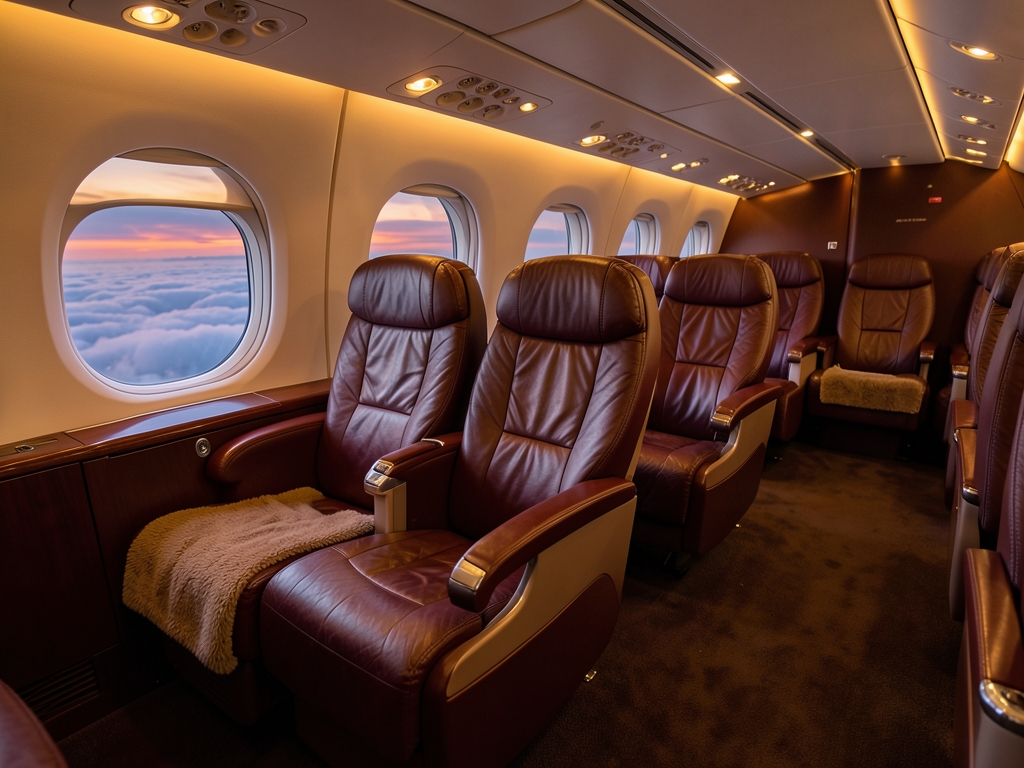
A practical guide to the difference between seat pitch and seat depth on transatlantic premium-cabin routes. It identifies layouts with at least 38 inches of usable legroom and explains what to verify before booking.
How It Works
Airline seat measurements describe two different dimensions. Seat pitch is the distance from one row of seats to the next, usually measured between equivalent points on adjacent seats. Seat depth describes the usable front-to-back space of the seat itself. Because an airline can use that phrase loosely, compare the definition behind each figure rather than treating “depth” and “pitch” as interchangeable. A seat may provide ample pitch but a shallow sitting area, or a deep cushion within a tightly spaced row.
Usable legroom is the clearance a passenger can actually use, which may be less than the advertised pitch when a seat in front reclines, a tray table is open, or structural and comfort components intrude into the space. This distinction is especially important for transatlantic premium economy, where a configuration may offer more pitch than standard economy but still fall short of a traveler’s required clearance. A 38-inch target should therefore be checked against the aircraft’s actual layout and the airline’s measurement basis, not inferred from the cabin name.
Sam Chui’s 2023 comparison illustrates why aircraft and configuration must be included in the check. It lists Japan Airlines Premium Economy with 42 inches of legroom on the Boeing 787 and 42 inches on the Boeing 777-300/ER, while the reported seat width is 19.3 inches on the 787 and 18.9 inches on the 777. The same report gives Norse Atlantic 43–46 inches of legroom and a 19-inch seat width on its Boeing 787. These are layout-specific measurements, not promises that every aircraft or premium-economy cabin in an airline’s network has the same dimensions.
Reclining design is another part of the mechanism. Sam Chui notes that Japan Airlines’ Premium Economy seats on the 787 use hard shells and cannot recline; instead, the seat slides forward. That arrangement can change the space available to the passenger behind during use. Consequently, a published legroom figure may describe the seat at rest, while the experience when the row ahead moves changes. Check whether the product reclines, slides, or has a fixed shell, and compare that mechanism with the clearance you need.
Before committing, open the airline’s live seat map for the exact flight and aircraft, then locate the fare’s seat and cabin rules. Confirm the stated pitch, whether any depth or width figure uses a different definition, the reclining or sliding mechanism, and whether a seat assignment is included in the fare. Compare complete, like-for-like layouts and retain the confirmation for the booking; if the airline only provides a general cabin figure, treat it as unverified until the specific aircraft configuration can be confirmed.

Key Factors to Consider
Use three criteria when evaluating a transatlantic premium-cabin seat: the stated legroom or seat-pitch figure, the usable seat depth, and the operating configuration for the exact itinerary. The first priority is a minimum 38 inches of usable legroom. Treat the airline’s published number as a starting point, not proof that every seat in the cabin meets it.
Next, verify which dimension the airline actually reports. A seat pitch and a seat depth are not interchangeable: require the product page, seat map, or cabin specification to identify the measurement explicitly. If either figure is missing, ask the airline for the complete seat specification before booking rather than assuming that “extra legroom” clears your threshold.
The third criterion is configuration. Check the aircraft type, premium-cabin row layout, and whether the itinerary is operated by the marketed airline or a partner. Also confirm that all nonstop and connecting segments offer the same qualifying product, because a strong layout on one flight does not establish the usable space available throughout the complete journey.
Published measurements can help define your shortlist, and the specific legroom and seat-width figures cited from Sam Chui’s comparison are consolidated in the comparison table below. Treat them as reference figures for particular aircraft layouts, not as guaranteed results for every transatlantic departure.
Before committing, compare like-for-like products and terms: keep the cabin class, aircraft, measurement type, and itinerary scope consistent. Record the quoted legroom, the stated seat depth if available, seat width, recline or slide-forward information, and the total journey covered. A seat that meets the 38-inch threshold only on selected flights is not equivalent to one that meets it throughout the itinerary. Save the airline’s live specification and the booking confirmation so the verified terms travel with your purchase.

Common Mistakes
One common mistake is treating a published seat specification as a guarantee for every flight. For example, the cited Norse Atlantic figure applies to its Boeing 787 Premium Economy configuration, not automatically to every aircraft or itinerary operated under the airline’s brand. A traveler booking a transatlantic connection may encounter a different aircraft on one segment. Before paying, check the aircraft and cabin configuration for the exact operating flight, then confirm that the seat map shows the same premium product rather than a generic cabin label.
Another mistake is comparing a premium-cabin listing with a standard-economy product because both appear in the same booking flow. A “Premium Economy” label can also represent different seat designs, service packages, and selection rules. The practical check is to compare the complete option: the named cabin, the aircraft, the seat’s stated measurements, and what is included. If the airline page does not identify the operating aircraft or the measurements are missing, treat the listing as incomplete and verify it with the airline before committing.
A further pitfall is assuming that a seat shown as extra legroom on one flight will remain so after an aircraft swap. This can happen even when the fare appears unchanged. The relevant check is not simply whether the itinerary is sold as premium economy, but whether the operating aircraft and seat layout match the verified configuration. For a multi-segment itinerary, check each segment separately, especially when the transatlantic portion is operated by a partner carrier.
The concrete example is Japan Airlines Premium Economy: the source reports that its seats use hard shells, so the seat slides forward instead of reclining. That distinction matters when you assess a seat, but it should not be used as a substitute for checking the actual aircraft. A hard-shell seat, a reclining seat, and a seat with a different surrounding layout can create very different space and comfort even when they are sold under the same cabin name.
Finally, do not rely on a travel article’s summary alone to establish what will be available on your booking. The source material is useful for identifying possible configurations, but the live airline booking record remains the item to verify. Look for the exact flight, operating carrier, aircraft, cabin, and seat terms, and save confirmation of the details you relied on. If any element is unclear, contact the airline before purchasing rather than assuming the marketing description will govern the onboard product.
Insider Tactics
Start with the aircraft, not the fare name. A transatlantic premium-cabin booking can show the same brand on two different planes, and the operating carrier's seat map is the only layout that matters on a codeshare. Before you pay, open the operating airline's seat map for the exact flight number and date, then compare the row you would actually sit in against the cabin's stated pitch and usable depth. The published figures cited above are useful benchmarks, but they describe a configuration, not a promise for your specific aircraft.
Use a two-pass verification: first at booking, then after any schedule or equipment change. If the aircraft changes, re-run the same check rather than assuming the original layout survived. The practical test is simple: does the seat you can select still offer at least 38 inches of usable legroom for your body and bag placement? If the new map no longer clears that threshold, act before check-in, when seat inventory and rebooking options are usually wider.
For non-obvious leverage, compare "usable" space rather than headline pitch. A seat with generous pitch but shallow usable depth can feel tighter than a slightly lower-pitch seat with deeper usable space, especially when the person ahead reclines. When two flights are close, choose the one whose seat map shows more unobstructed knee and foot space in your row, not merely the larger published number. This is a layout decision, not a fare decision.
Timing matters most around inventory, not just price. Premium-cabin seat maps often change as aircraft are swapped or cabins are reconfigured, so the best seat is not always available at the lowest fare moment. If your priority is space, verify the map first, then price-shop among flights that already clear your 38-inch usable-legroom floor. Booking the cheapest qualifying fare and hoping to fix the seat later is usually the weaker play.
Finally, keep a short verification log: flight number, aircraft, selected row, published pitch, and the date you checked. If the airline changes equipment, that log gives you a concrete before-and-after comparison and a stronger basis for a seat change or rebooking request. Treat every figure as a snapshot, and make the live seat map the final authority.
Comparison
For a like-for-like transatlantic comparison, separate the reported legroom from the seat-width figure rather than treating “premium” as a single standard. The following published specifications come from Sam Chui’s comparison of premium-economy seats. They provide a useful shortlist, but they do not disclose usable seat depth for every layout, so the final choice should still be checked against the operating configuration and cabin terms shown for the exact itinerary.
| Option | Reported legroom | Reported seat width | What the comparison favors |
|---|---|---|---|
| Japan Airlines, Boeing 787 | 42 inches | 19.3 inches | Balanced space and the widest listed seat |
| Japan Airlines, Boeing 777-300/ER | 42 inches | 18.9 inches | Consistent legroom across two aircraft types |
| Norse Atlantic Airways, Boeing 787 | 43–46 inches | 19 inches | Highest reported legroom |
| Air New Zealand, Boeing 787 | 41 inches | 19.3 inches | Maximum listed seat width with substantial legroom |
Based on these published figures, Norse Atlantic’s Boeing 787 layout is the overall legroom winner: its reported 43–46 inches exceeds Japan Airlines’ 42 inches and Air New Zealand’s 41 inches. It also clears the 38-inch benchmark on the source’s reported legroom measure. Before committing, verify that the selected transatlantic flight uses that layout and that the airline’s seat-map or cabin description defines the measurement consistently.
Japan Airlines wins when consistent 42-inch legroom across both listed aircraft types is the deciding rule, although the Boeing 777-300/ER version is 0.4 inches narrower than the Boeing 787 version. Air New Zealand and Japan Airlines’ 787 configuration each offer a reported 19.3-inch seat width, giving them the edge over Norse Atlantic’s 19 inches when width matters more than the extra legroom.
The critical verification is to compare the complete option, not just the headline measurement. Check the aircraft and operating carrier for the exact flight, then confirm the reported legroom, usable seat depth, seat width, recline or slide-back arrangement, and the location of the selected seat. Sam Chui notes that Japan Airlines’ hard-shell premium-economy seats cannot recline and instead slide forward, so two seats with similar numerical legroom can produce different usable space.
Use the table to choose the layout that best matches the priority—Norse Atlantic for maximum reported legroom, Japan Airlines for aircraft-to-aircraft consistency, or Air New Zealand for width combined with 41 inches of legroom—then verify that the live itinerary offers the intended configuration before paying. Published comparisons identify the strongest candidates; the aircraft and seat map attached to the actual flight determine what you receive.
Also worth reading Get paid back when the airline United MileagePlus 2026 devaluation October 2026 transatlantic business
What to do next
| Step | Action | Why it matters |
|---|---|---|
| 1 | Check the operating airline, aircraft, transatlantic route, and cabin layout on the live booking option before committing. | An airline’s advertised premium-cabin product can differ by aircraft and route, so the complete option must match what will actually be operated. |
| 2 | Separate seat pitch from usable legroom in the airline’s seat specifications. | Seat pitch measures the distance between rows; usable legroom is the space available to the passenger, so one cannot substitute for the other. |
| 3 | Verify whether the selected layout provides at least 38 inches of usable legroom. | This is the threshold used to determine whether the transatlantic premium cabin meets the guide’s legroom requirement. |
| 4 | For Norse Atlantic, inspect the cited Boeing 787 premium-economy layout and confirm its 43–46 inches of legroom, 19-inch seat width, and 56-seat cabin configuration. | Norse Atlantic exceeds the 38-inch threshold, but the complete layout and its stated terms should be confirmed for the live option. |
| 5 | For JetBlue, verify the ultra-premium transatlantic configuration’s full 138-seat breakdown: 24 business-class seats, 24 extra-legroom economy seats, and 90 economy seats. | Extra-legroom economy is only part of the cited cabin; confirming every included section prevents mistaking one subsection for the complete transatlantic product. |
| 6 | Compare the final like-for-like totals and legroom terms across the airline’s own option details, then select only if the complete layout satisfies the 38-inch requirement. | This applies the decision rule consistently: verify the live, complete option and compare the same measurements and terms before committing. |
Frequently Asked Questions
What is the difference between airline seat pitch and seat depth?
Seat pitch is the distance from one row to the next, while seat depth is the usable front-to-back space of the seat itself.
Can a premium-cabin label by itself confirm that a seat provides 38 inches of usable legroom?
No; the 38-inch target should be checked against the aircraft’s actual layout and the airline’s measurement basis, not inferred from the cabin name.
Why might usable legroom be less than the advertised seat pitch?
Usable legroom may be reduced when a seat in front reclines, a tray table is open, or structural and comfort components intrude into the space.
Does ample seat pitch guarantee a comfortable, deep sitting area?
No, because a seat may provide ample pitch but a shallow sitting area, or a deep cushion within a tightly spaced row.
Why should transatlantic premium-economy layouts be verified before booking?
A configuration may offer more pitch than standard economy but still fall short of a traveler’s required clearance.
What should be compared when an airline describes a seat as having 38 inches of “depth”?
The definition behind each figure should be compared because airlines can use the term “depth” loosely rather than treating depth and pitch as interchangeable.
Quick answers
| What is the difference between airline seat pitch and seat depth? | Seat pitch is the distance from one row of seats to the next, while seat depth describes the usable front-to-back space of the seat itself. |
| What should travelers verify when seeking at least 38 inches of usable legroom? | They should check the aircraft’s actual layout and the airline’s measurement basis rather than infer legroom from the cabin name. |
| Why might usable legroom be less than the advertised seat pitch? | Usable legroom may be reduced when a seat in front reclines, a tray table is open, or structural and comfort components intrude into the space. |
| Why can a premium-economy configuration still be unsuitable for some travelers? | It may offer more pitch than standard economy but still fall short of a traveler’s required usable clearance. |
| Which comparison illustrates why aircraft and configuration must be considered? | Sam Chui’s 2023 comparison illustrates why aircraft and configuration must be included. |
Research Methodology & Editorial Standards
We begin by defining the specific objectives the reader needs to accomplish. Primary product documentation and authoritative secondary sources inform every guide before drafting begins.
Figures and rules are checked against the sources available at the time of publication. Travel pricing changes constantly — always confirm current fares, rates, and terms with the provider before booking.