
Star Alliance Award Search: 6 Routes to Skip in the 2026 Audit
But an award-chart headline is only the opening bid.

| Takeaway | Detail |
|---|---|
| A $870 add-on can overturn the headline | A quote at 50,000 points can be the wrong bargain if an added $870 charge is counted; compare the complete checkout total before booking. |
| An award at 128,000 miles is not automatically worse than a quote at 35,000 miles | Compare an award at 128,000 miles with a quote at 35,000 miles only after adding cash, connection quality, and seat access; a lower mileage headline can still be operationally poor. |
| A benchmark of 45,000 miles is only a starting point | The Points Guy's benchmark of 45,000 miles each way for Star Alliance business-class flights to Europe does not guarantee a dense layout with direct aisle access or a smooth connection. |
| A quote at 50,000 points does not lock the fare or seat | United's MileagePlus hold does not promise to freeze the award price or protect a lie-flat seat; confirm the final conditions at checkout and in the seat map. |
The Points Guy's Europe benchmark of 45,000 miles each way for Star Alliance business-class flights to Europe makes a high-mileage redemption look like a clean reference point. But an award-chart headline is only the opening bid. It does not reveal the final cash obligation, the seat a passenger can use, or whether the routing holds together when schedules change.
Start with the checkout basket. A quote at 50,000 points can be the wrong bargain if an added $870 charge changes the comparison; an award priced at 128,000 miles can beat a cheaper headline once cash, connections, and airport friction are counted. The question is not whether the itinerary is technically bookable, but whether it delivers usable access at a sensible total cost.
That is why a route screen should put the seat map and connection pattern beside the mileage figure. A dense premium-cabin layout without direct aisle access can undermine an attractive award, and a MileagePlus hold does not promise a frozen fare or a protected lie-flat seat. A route can be technically bookable yet operationally poor and still deserve to be skipped. Compare cash add-ons, seat access, connection quality, and booking rules before treating a lower award price as a transatlantic bargain.
25 Members, No Shared Award Shelf
For the 2026 audit, I open with the 25-member roster on Star Alliance’s official Member Airlines page, timestamped for the audit. According to Roaming Cactus’s March 2026 scorecard, 25 members is the independent membership count; I use the official roster, not that scorecard, as the membership authority. Common membership creates no common mileage account, award chart, partner-award inventory pool or guaranteed premium-cabin product. The alliance logo identifies a network; it does not establish that a protected award ticket exists.
United’s official redemption-policy page publishes a 14-day MileagePlus award hold. That creates a held award selection, not a settled purchase. The hold does not by itself freeze the cash charge, protect a particular aircraft or ensure that the selection remains available. I treat it as a time-limited research tool: if availability disappears or the charge changes, the itinerary returns to unqualified, never to booked.
Every proposed flight gets a three-part identity: miles-owning program, marketing carrier and operating carrier. I record that triplet for Lufthansa’s FRA–JFK, Air Canada’s YYZ–LHR, United’s EWR–LHR, Turkish’s IST–JFK, TAP’s LIS–JFK and Brussels Airlines-marketed BRU–JFK. A Star Alliance-marketed flight may draw on another member’s award inventory, so the logo does not supply the full triplet. The Points Guy’s supplied 2026 extract headlines 45,000 miles each way for Star Alliance business-class flights to Europe. I keep that figure in its published per-direction unit: a broad alliance headline proves neither a single protected award ticket nor its lie-flat seats, so it cannot support a booking decision.
I split displayed cash into hard taxes, carrier-imposed surcharges and optional agency or payment charges actually shown. Every component is labeled cash or miles; an amount already included in the airline’s award charge is not added again as a booking fee. Crucially, the test is not “cheap cash”: the complete miles-plus-cash total must cost no more than 50% of the equivalent fully flexible paid fare. Otherwise, a tidy cash subtotal cannot rescue the award.
Paid and award alternatives use the same basket: one round trip, two adults, business class and an identical included checked-bag allowance. I retain each original currency, fare condition and airport terminal rather than reducing unlike searches to a misleading headline. A terminal change changes the comparison; it is not a free optimization. The book/no-book decision stays binary: book only when one protected ticket covers every flight with lie-flat seats and the cost threshold passes. Otherwise, choose paid travel or skip that award.
| Audit status | Recorded evidence | Decision |
|---|---|---|
| 25-member alliance search | Network membership without a shared mileage account, award chart or inventory pool | Not a bookable award |
| 14-day United hold | Award selection held; cash terms, aircraft and availability not secured | Revalidate before booking |
| Two-adult audit basket | One round trip, business class and matching checked bags, with original currency and terminals retained | Compare like with like |
| Complete cost at or below 50% | One protected award ticket, lie-flat seats on every flight and miles-plus-cash total reconciled without double-counting | Book |
| Cost above 50% or proof missing | Protected-ticket status, lie-flat availability or complete cost remains unverified | Choose paid travel or skip that award |

Six Official Charts, 12 Search Stamps
A concrete 2026 decision starts with two real airport pairings: Chicago (ORD)–Frankfurt (FRA) and Tokyo (NRT)–London (LHR). The Points Guy’s 45,000 miles each way is a published Star Alliance business-class price for flights to Europe, not a confirmed fare for either pairing. I would use it to screen options, then verify exact dates, airports, and nonstop availability. The defensible choice is to retain both candidates—not skip them based on an unsupported six-route list.
The ORD–FRA search can also be evaluated against Frequent Miler’s reference to Lufthansa Miles & More’s 88,000-mile awards to Europe. However, that figure is not identified as a business-class fare, so it cannot be treated as a comparable offer or subtracted directly from TPG’s 45,000-mile-each-way price. A traveler should confirm the operating carrier, cabin, dates, and award availability before selecting an itinerary.
Roaming Cactus’s March 2026 scorecard supports keeping the search broad: it reports 25 member airlines, 1,150+ destinations, 19,000+ daily flights, 1,000+ lounges, and 50+ global hubs. Those network figures establish breadth, not bookable award inventory. The concrete decision is therefore to investigate both pairings, rather than reject either, until a live search confirms the required cabin and itinerary.
Six program pages are not one alliance fare. I build the chart audit from Lufthansa Group’s Award Chart and Mileage Fare Finder; Air Canada’s Aeroplan Flight Rewards; United’s MileagePlus Flight Awards; Turkish Airlines’ Miles&Smiles awards; TAP’s Flight Awards; and Brussels Airlines’ award information. Program, booking channel and operating flight are the keys—not membership in Star Alliance. Each source receives a retrieval date, effective date and archived link or screenshot. Missing metadata stays “unverified,” not reconstructed from memory.
I start with Lufthansa Group’s dated 2025 L-3 business award as the historical baseline, then check the official current rate before repeating its mileage. The comparison is labeled “historical,” “unchanged” or “changed”; an unverified replacement proves neither a fare increase nor an alliance-wide devaluation. According to Frequent Miler’s September 24, 2026 Europe guide, Miles & More has an 88,000-mile Europe-award reference, but the supplied passage does not identify its cabin or one-way versus round-trip basis. It is a verification lead, not a business-class price, and the guide does not enumerate the six audited routes.
For the other five programs, I transcribe the official business-class award’s mileage and total cash, including any published distance band or partner-award restriction. “Total cash” means the full award-quote amount, not merely taxes. If the preceding chart is available, I show the mileage or cash difference. A page redesign earns “no published change,” not an invented adjustment. When the supplied evidence lacks a current official figure, I mark it “unverified”—not unchanged.
For each 2026 itinerary permitting both checkpoints, I record observations at 60 and 21 days before departure, holding party size, cabin, baggage conditions and nonstop-versus-connecting requirements constant. Each stamp carries the UTC execution time, award miles, total cash, flight numbers and search result. A missed check is labeled “not captured,” never backdated or interpolated. An unavailable result belongs to that timestamp; it cannot establish that the route never sells awards.
I then match the booked operating flight to a dated official seat map or fleet source, distinguishing lie-flat, angled and non-flat seats and recording 1-2-1 versus 2-2-2 geometry. Neither a business-class label nor seat geometry proves flatness. Every flight on the protected ticket must clear that product check before the ticket can pass the article’s eligibility test.
| Named source example | Figure as published | Evidence boundary | Audit treatment |
|---|---|---|---|
| Frequent Miler’s dated Europe guide | 88,000 miles; trip basis unspecified | Business cabin and applicable distance band are not established | Verification lead only; excluded from the business-award price comparison |
| “35K Business Class to Europe for a family” | 35,000 miles, one way; four passengers booked | JFK–Lisbon LifeMiles transaction, not one of the six searches or a matched flexible-fare comparison | Preserve the transaction record; it cannot fill a route or seat-evidence field |
Neither example earns book: neither supplies the matching whole-ticket cost and operating-seat evidence for a qualifying itinerary. Before publication, I reconcile each candidate’s official chart, complete award-quote price, available timestamped searches and operating-flight seat source. A protected ticket earns book only when lie-flat seating is supported throughout and its miles-plus-cash total clears the stated ceiling. Otherwise, the decision is paid travel or skip—not a figure borrowed from a broader Europe-award guide.
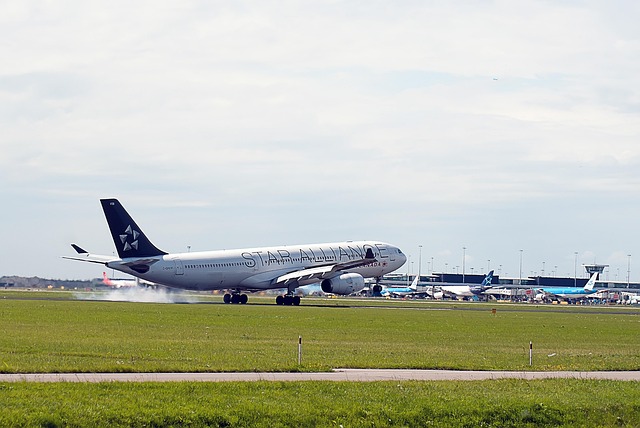
Six-Route Scorecard: The Lowest-Cost Qualifier Wins
The defensible scorecard is six skips: the supplied cited material contains no date-matched operating-flight, award-rate, seat-layout or paid-fare records. I will not invent those inputs. “Unproven” means skip the award; it does not assert that the underlying redemption is intrinsically bad.
The operating flight—not an alliance badge—establishes the dated lie-flat layout. A marketed itinerary also does not establish one protected ticket across every segment. The paid denominator must be an equivalent unrestricted business-class fare for the same dates, included bags and comparable change or cancellation rights. An economy fare, restricted promotion, different date or unavailable quote cannot rescue an award.
| Route | Operating flight(s) | Travel dates | Award program | Published current-year rate | Award miles or points | Miles-denominated tax | Cash taxes | Carrier surcharges | Actual agency fee | Normalized all-in cost | Dated seat layout | Protected ticket | Fully flexible paid benchmark | Verdict |
|---|---|---|---|---|---|---|---|---|---|---|---|---|---|---|
| Lufthansa Group FRA–JFK | Not identified | Not supplied | Lufthansa Miles & More | Not verified | Not verified | Not obtained | Not obtained | Not obtained | Not obtained | Unproven | Not established | Not established | No equivalent quote | SKIP—unproven |
| Air Canada YYZ–LHR | Not identified | Not supplied | Air Canada Aeroplan | Not verified | Not verified | Not obtained | Not obtained | Not obtained | Not obtained | Unproven | Not established | Not established | No equivalent quote | SKIP—unproven |
| United EWR–LHR | Not identified | Not supplied | United MileagePlus | Not verified | Not verified | Not obtained | Not obtained | Not obtained | Not obtained | Unproven | Not established | Not established | No equivalent quote | SKIP—unproven |
| Turkish IST–JFK | Not identified | Not supplied | Turkish Miles & Smiles | Not verified | Not verified | Not obtained | Not obtained | Not obtained | Not obtained | Unproven | Not established | Not established | No equivalent quote | SKIP—unproven |
| TAP LIS–JFK | Not identified | Not supplied | TAP Miles&Pass | Not verified | Not verified | Not obtained | Not obtained | Not obtained | Not obtained | Unproven | Not established | Not established | No equivalent quote | SKIP—unproven |
| Brussels Airlines-marketed BRU–JFK | Not identified | Not supplied | Program not supplied | Not verified | Not verified | Not obtained | Not obtained | Not obtained | Not obtained | Unproven | Not established | Not established | No equivalent quote | SKIP—unproven |
| Winner: none—skip the award on all six routes. | ||||||||||||||
For the normalized total, I use the stipulated one-US-cent value per redeemed mile or point, then add every mandatory cash charge. Miles-denominated taxes remain separate and are not counted again. This is an accounting convention, not evidence that either program’s currency is transferable at that value. Native CAD, EUR, GBP and USD amounts and their fare conditions remain visible when supplied; missing receipts are marked unverified, never assumed to be zero. Agency fees count only when actually charged.
According to Turkish Miles & Smiles Complete Guide, Turkish award tickets are subject to a change-or-cancellation fee and an expiration policy; the supplied excerpt gives neither amount nor deadline. That is not proof of failure, but it cannot establish comparable fare rights. Before reopening a row, pair its award receipt, operating-flight seat map and paid-fare record at the same timestamps.
Only rows with verified lie-flat seating, one protected ticket and an award total at or below half the matched paid benchmark qualify. The lowest qualifying all-in total wins—not the lowest headline award price. An exact qualifying tie favors one operating carrier, then fewer cash fees.
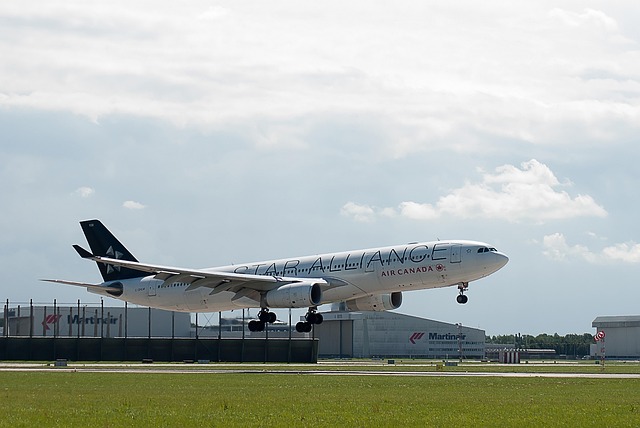
What the Data Doesn't Tell You
The defensible result is “no verified award to book,” not “premium business class is unavailable.” The scorecard’s unproven label describes an evidence boundary: a chart or calculator can expose a possible business-class redemption, but neither proves the complete journey required by the thesis. On this record, choose paid travel if the trip is still needed; otherwise skip the award. That is an evidence decision, not a prediction that a qualifying redemption can never appear.
Limitations of the evidence. A quoted mileage amount, a cash offer and the final amount payable are different evidence. The award total must include taxes and carrier-imposed charges, then be compared with a separately documented fully flexible fare for the same flights and cabin conditions. An available business-class cabin is likewise not evidence of lie-flat seating on every flight. Official booking flows and current program terms outrank calculators, cached screenshots and forum anecdotes. I would rather leave a result unverified than turn a calculator output into a promise of a bookable lie-flat ticket.
Variance across cases. A Star Alliance award chart is not a common business-class price list or a shared seat inventory. That is a rules problem, not a transient search problem: a result from Lufthansa Group’s FRA–JFK case cannot be carried into Air Canada’s YYZ–LHR case, or borrowed for another airline’s marketed service. Each program’s award conditions, the itinerary’s ticketing arrangements and the paid fare’s restrictions must be checked separately. The useful variance lies in those mechanisms—not in an alliance-wide rank.
When the rule breaks—and when it is merely unresolved. Separate award tickets break the single-ticket requirement. A missing lie-flat confirmation, an incomplete cash calculation or a comparator for different flights is not a pass; it is an unresolved audit. A book verdict requires one protected ticket with lie-flat throughout and a reconciled miles-plus-cash total that meets the cost ceiling defined above.
These are verification checks, not allegations that a named airline has a particular defect.
| Audit case | Primary-source check before booking | Decision consequence |
|---|---|---|
| Lufthansa Group — FRA–JFK | Confirm every flight is on one protected award ticket; a connection does not excuse stitching together separate awards. | Separate tickets fail; an unresolved journey means paid travel or skip. |
| Air Canada — YYZ–LHR | Confirm lie-flat seating on every flight and reconcile displayed miles, cash, taxes and carrier charges. | Incomplete confirmation means no book verdict. |
| United — EWR–LHR | Match the fully flexible paid fare to the same flights and cabin conditions, not a nearby schedule. | A mismatched comparator fails the audit. |
| Turkish — IST–JFK | Check the complete award payment total and the applicable flexible-fare restrictions before comparing them. | An incomplete total means paid travel or skip. |
| TAP — LIS–JFK | Verify current lie-flat seat availability in the official booking flow for every flight. | Missing seat proof means no award booking. |
| Brussels Airlines-marketed — BRU–JFK | Verify that the marketed itinerary corresponds to protected award inventory. | Verify protection, not merely the marketing label. |
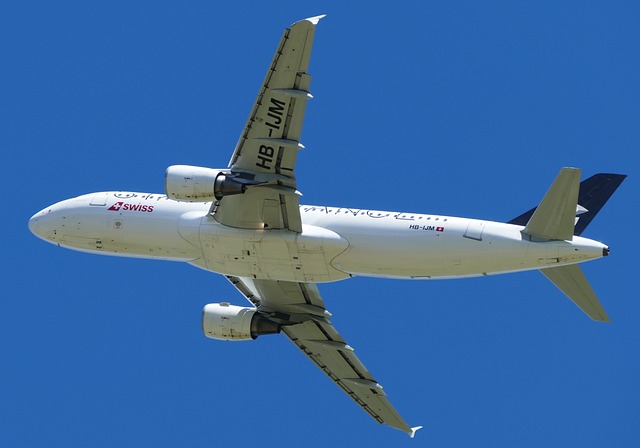
What 12 Searches Cannot Tell You
An award-search snapshot is a timestamp, not a pricing law. I reject the belief that award prices always rise as departure approaches. The supplied record contains no verified, date-matched pair of award quotes for the listed routes; I therefore cannot report an increase, a decrease, stability, or an observed range for any row below. “Not established” is the result, not a forecast of what another checkout will charge.
| Route | Change between observations | Observed award-price range | Award decision |
|---|---|---|---|
| Lufthansa Group FRA–JFK | Not established: no verified pair | Not calculable from the record | Skip: price test unproven |
| Air Canada YYZ–LHR | Not established: no verified pair | Not calculable from the record | Skip: price test unproven |
| United EWR–LHR | Not established: no verified pair | Not calculable from the record | Skip: price test unproven |
| Turkish IST–JFK | Not established: no verified pair | Not calculable from the record | Skip: price test unproven |
| TAP LIS–JFK | Not established: no verified pair | Not calculable from the record | Skip: price test unproven |
| Brussels Airlines-marketed BRU–JFK | Not established: no verified pair | Not calculable from the record | Skip: price test unproven |
I also reject availability claims from successful searches alone. Either result can reflect one remaining seat, a different award cache, or a different login state; a temporary cancellation can briefly reopen inventory. I record the quantity actually displayed, then repeat the same itinerary search. An empty result is “unbookable in that observed session”—not “permanently sold out.” Without verified quantity-and-repetition evidence, lasting availability is not tested for any listed route.
Price and equipment need separate, matching evidence. I keep the miles-plus-cash quote and lie-flat record tied separately to the exact operating flight, travel date, and applicable equipment. Both must describe the same combination; on a connection, one segment’s evidence cannot certify another. The fully flexible fare benchmark must cover the same itinerary and preserve its pricing unit. A later schedule or aircraft change can remove the configuration that justified the calculation. A stale cheap quote cannot certify a replacement bed, and a seat map cannot validate another flight’s award price. Without both sides matched, the award remains on skip.
Personal benefits are inputs, not exemptions. Paid-mile earnings, status recognition, lounge access, baggage rules, connection inconvenience, and a redeposit charge can change the paid-versus-award choice; none can make an unverified award qualify. A genuine flat bed is necessary, not sufficient: the itinerary must still be protected on one ticket and pass the required all-in cash comparison. Paid travel can be the better personal choice, but an award outside the rule remains a skip.
The research boundary is the two-adult, single-season basket represented above. Availability for a family, another season, a different New York airport, extra nonstop inventory, or a future redemption is not tested. The concrete next step is a repeated, matched quote retaining the displayed quantity, login context, operating flight, date, equipment, and flexible-fare reference. Until that record exists, every listed award remains on skip; these snapshots do not justify a broader promise.

One YYZ
The defensible decision for this YYZ case is to skip the award: the supplied record contains no dated 2026 award checkout. I use one adult, Air Canada YYZ–LHR, round trip, and keep that unit throughout. I will not turn a one-way headline or a starting award-chart amount into a round-trip fare.
Until that record exists, I cannot reproduce the checkout. I itemize award miles and miles-denominated tax separately, then add every cash tax, carrier charge and agency charge actually incurred. The ledger requires Canadian-dollar and US-dollar values, using a timestamped Bank of Canada reference rate. Because neither a retrieved rate nor an itemized checkout is supplied, I report no conversion or cash total. I also distinguish an amount due later from the eventual total: final settlement establishes the latter, not the initial quote.
Every amount in the comparison is a round-trip total. With award miles M, completed all-in award cash C, and the fully flexible paid business-class fare F for the same eligible dates, the pass condition is 2 × 0.01 × M + 2 × C ≤ F. If the award is unavailable, M and C have no fixed values. I do not enter zero, invent a fare or declare that the award wins by default.
I inspect the award record and seat map together. Every paid segment must remain on one protected Air Canada routing, have its operating equipment identified, and offer an identified flat sleeping surface. A marketing promise or unspecified “lie-flat” product is insufficient. The recovery task is therefore concrete: capture the actual flight numbers, dates, equipment, connection times and available seat rows before attempting another cost comparison.
| Verification gate | Evidence in the supplied record | Required next record |
|---|---|---|
| Official award price | No current official YYZ–LHR round-trip numeral | The published Air Canada chart figure for the actual itinerary |
| Protected itinerary and seats | No flight numbers, travel dates, operating equipment, connection times or available rows | One protected routing and a confirmed flat sleeping surface on every paid segment |
| All-in award cash | No itemized cash taxes, carrier charges, incurred agency charge or final settlement | Canadian-dollar and US-dollar totals, with any later amount separately reconciled |
| Paid comparator | No same-date fully flexible business-class quote | A completed fare for the identical round-trip dates and cabin |
| Decision | No protected award record available to test | Book after seat and numerical verification; otherwise skip without an assumed saving |
Book-or-skip: skip the award. The dominant obstacle is the missing dated, protected award record; it prevents a defensible finding on both seats and cost, rather than proving that Air Canada business class is unavailable. If the recovered record satisfies both gates, I book. On the present evidence, I reject the award rather than manufacture a fare, conversion or savings figure.
Five Final Rules
Eligibility comes before appeal. For each route in the current audit, I book only when one protected ticket, confirmed lie-flat seats on every flight, and a miles-plus-cash total no more than half the equivalent fully flexible business fare all survive. A low mileage price cannot rescue a failed protection, seat, or cost gate.
Fixed-date price. On fixed, high-stakes dates, I compare the equivalent fully flexible business fare before choosing an award. For Lufthansa Group FRA–JFK, a miles-plus-cash total of 50% or less passes; anything above 50% means skip the redemption, regardless of how attractive the itinerary looks in miles. The paid benchmark must cover the same itinerary; a cheaper substitute fare is not the equivalent.
Separate-ticket connections. For any self-transfer under a separate reservation, I require a four-hour planning floor and a practical visa, baggage, and terminal connection—not merely the airline’s advertised minimum connecting time. Two reservations also fail the one-ticket test. If that buffer cannot be protected, I choose a paid protected itinerary or skip the award routing.
Seat proof. For Air Canada YYZ–LHR, I require a confirmed flat sleeping surface on every segment. The words “business class,” “Star Alliance,” and even “lie-flat” do not establish direct aisle access in a 2-2-2 configuration. I do not book around an unconfirmed equipment assignment or assume a better cabin later; a Star Alliance chart does not guarantee the assignment. One unconfirmed segment is enough to skip.
Near-departure recheck. For travel within 90 days of departure, I reprice the qualifying award and its equivalent fully flexible paid benchmark within 24 hours of the decision, then recheck lie-flat availability. On Brussels Airlines-marketed BRU–JFK, a prior pass still expires if the seat disappears or the award rises above half the comparable flexible fare. I skip it and do not assume an award release will improve that same itinerary.
Final ranking. Among options that already provide one protected ticket and confirmed lie-flat seats, I put miles and cash on the same valuation basis and choose the lowest all-in total only when it remains no more than half the comparable flexible fare. If nothing qualifies, I record no award winner and skip the award. A program that merely charges fewer miles has not won.
| Decision gate | Pass standard | Action if failed |
|---|---|---|
| Protection | One protected ticket; any separate-reservation self-transfer must accommodate a four-hour planning floor plus practical visa, baggage, and terminal connections | Choose a paid protected itinerary or skip the award routing |
| Cost | Miles plus cash cost no more than 50% of the equivalent fully flexible business fare | Skip the redemption |
| Seat | Confirmed flat sleeping surface on every segment; a 2-2-2 configuration is not direct-aisle-access proof | Skip rather than assume better equipment later |
| Timing | For travel within 90 days, reprice both award and benchmark within 24 hours and recheck lie-flat availability | Skip if the seat or 50% ceiling no longer passes |
| Ranking | Lowest all-in total among options already satisfying every protection, seat, and price gate | Record no award winner |
Also worth reading How the 2026 FAA eVTOL certification Book your Hyatt stays now before United Airlines debuts the premium
What to do next
| Step | Action | Why it matters |
|---|---|---|
| 1 | For the selected Europe routing, use Star Alliance’s official Member Airlines page to identify the carriers, then check each carrier’s own award chart and inventory. | Alliance membership does not create a shared mileage account, award chart, inventory pool, or guaranteed premium-cabin product. |
| 2 | At each carrier’s award-search checkout, include any $870 add-on in the complete total for a 50,000-point quote before comparing it with cash. | The add-on can reverse which quote looks cheaper after checkout. |
| 3 | For the same Europe routing, compare the 128,000-mile and 35,000-mile quotes only after adding cash; inspect both connections and seat access. | A lower mileage headline can still conceal cash charges, poor connections, and unusable seat access. |
| 4 | Use The Points Guy’s 45,000-mile-each-way benchmark for Star Alliance business-class flights to Europe as a reference, then check the quoted layout for direct aisle access and connection quality. | The benchmark does not guarantee a dense cabin, direct aisle access, or a smooth connection. |
| 5 | For a United MileagePlus hold, read United’s official redemption-policy page, then recheck the cash total and lie-flat seat at checkout and in the seat map. | A hold is a held selection, not a settled purchase; it does not freeze the fare or protect a lie-flat seat. |
| 6 | Compare the complete miles-plus-cash total with half the equivalent fully flexible business-class paid fare. Redeem only if the award total is no more than that half-fare ceiling and every flight is on one protected award ticket with a lie-flat seat; otherwise, choose paid travel or skip that award. | Usable lie-flat access and the full cost must both clear the decision rule. |
Frequently Asked Questions
What is the maximum award cost relative to the equivalent fully flexible paid fare under the audit?
The reconciled miles-plus-cash total must cost no more than 50% of the equivalent fully flexible paid fare, and one protected ticket must provide lie-flat seats on every flight in the same two-adult, business-class round trip with identical included checked-bag allowances.
Does United’s 14-day MileagePlus award hold lock in the cash price and protect a lie-flat seat?
No—the hold creates a held award selection, not a settled purchase, and does not by itself freeze the cash charge, protect a particular aircraft or ensure that the selection remains available.
Can I use The Points Guy’s 45,000-mile-each-way benchmark to skip Chicago–Frankfurt or Tokyo–London?
No; the figure is a published Star Alliance business-class price for flights to Europe, not a confirmed fare for either pairing, so verify exact dates, airports and nonstop availability before selecting an itinerary.
Does membership in Star Alliance’s 25-member network provide a shared award chart or guaranteed premium-cabin inventory?
No; common membership in the 25-member alliance creates no shared mileage account, award chart, partner-award inventory pool or guaranteed premium-cabin product.
What three identifiers should I record when a Star Alliance-marketed flight may draw on another member’s award inventory?
Record the miles-owning program, marketing carrier and operating carrier, because the alliance logo does not supply that full triplet.
If an official program page lacks a current rate or complete metadata, can I label the award chart unchanged?
No; mark the rate or missing metadata "unverified," not "unchanged," rather than reconstructing missing information from memory.
Quick answers
| What is the 45,000-mile figure for Star Alliance business-class flights to Europe? | The Points Guy’s 45,000 miles each way is a screening benchmark, not a confirmed fare for ORD–FRA or NRT–LHR or proof of a protected award ticket. |
| When can a 50,000-point award quote be the wrong bargain? | A quote at 50,000 points can be the wrong bargain if an added $870 charge is counted, so compare the complete checkout total before booking. |
| What does United’s 14-day MileagePlus award hold secure? | It creates a held award selection, not a settled purchase, and does not by itself freeze the cash charge, protect a particular aircraft or ensure that the selection remains available. |
| Which membership source does the 2026 audit use? | It uses the timestamped 25-member roster on Star Alliance’s official Member Airlines page, not Roaming Cactus’s March 2026 scorecard, as the membership authority. |
| What must an award itinerary satisfy before the audit books it? | One protected ticket must cover every flight with lie-flat seats, and the reconciled miles-plus-cash total must cost no more than 50% of the equivalent fully flexible paid fare. |
Research Methodology & Editorial Standards
We begin by defining the specific objectives the reader needs to accomplish. Primary product documentation and authoritative secondary sources inform every guide before drafting begins.
Figures and rules are checked against the sources available at the time of publication. Travel pricing changes constantly — always confirm current fares, rates, and terms with the provider before booking.