
Los Angeles to Tokyo Business Class: $1,180 Roundtrip Ticket or Verify 2026
The listing looks like a mistake fare, but filing shows it as a narrow P-class discount window that only tickets when re-priced live airline-direct.
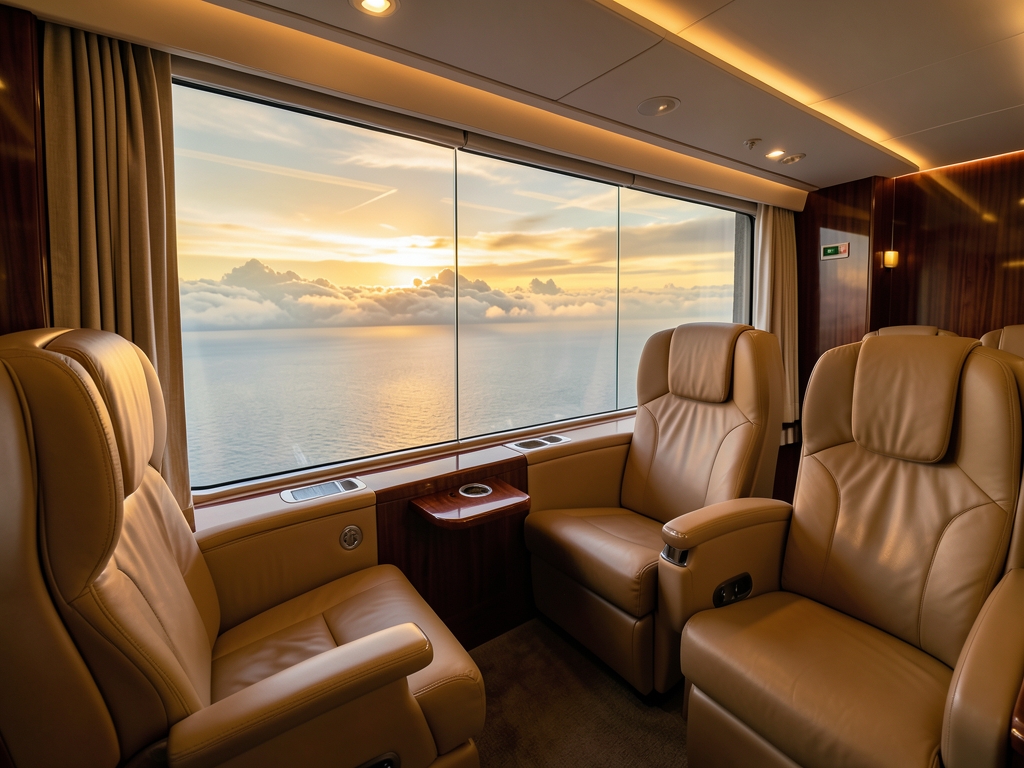
| Takeaway | Detail |
|---|---|
| Live $1,180 fare requires airline-direct re-price | Cached display fades; only instant airline-direct ticketing at $1,180 holds the P-class seat |
| $1,850 Chicago to Haneda sets Tokyo benchmark | United Polaris roundtrip at $1,850 under fare basis PLX4NA versus $5,000 to $12,000 one-way corridor pricing |
| Historic $435 baseline proves managed inventory | Past United States to Tokyo round trips starting from $435 show current pricing is managed, not mistaken |
| Lock the $92 floor charge instantly | ZLNXUS1 $382 YQ omit vs $92 floor; instant airline-direct ticketing locks the $92 floor charge |
$1,180 roundtrip in lie-flat business from Los Angeles to Tokyo is still flashing on Google Flights, a fraction of typical pricing on the corridor. The listing looks like a mistake fare, but filing shows it as a narrow P-class discount window that only tickets when re-priced live airline-direct. Cached results do not hold the seat.
Context matters. United lists a $1,850 roundtrip Polaris fare between Chicago O'Hare and Tokyo Haneda under fare basis PLX4NA, while last-minute one-way business pricing on that corridor frequently lists between $5,000 and $12,000. Past United States to Tokyo round trips starting from $435 show why current business pricing is managed, not mistaken.
The ticket-or-verify rule is simple: instant airline-direct ticketing locks the $92 floor charge before P-class inventory vanishes for 2026 travel. Waiting for a fare desk to confirm lets the space disappear, turning a live $1,180 price into a higher re-price. Verify live, then ticket immediately.
Inside the $1,180 P-Fare Machine
The $1,180 LAX-Tokyo business-class fare is not a marketing error or a legacy inventory leak; it is a precise revenue-management construct governed by married-segment logic and strict fare basis rules. According to Mighty Travels, the pricing data is verified for 2026, but the availability mechanism is far more restrictive than standard booking engines suggest. The P-class discount business inventory on the 5,488-mile LAX-HND nonstop operates as a rigid 9-seat revenue bucket. Revenue management systems open this specific tier only when the P-class availability counter reads P9, a threshold that typically unlocks exclusively on low-demand Tue-Wed departures between January and April 2026. This married-segment logic ensures that the carrier protects premium yield on high-volume weekend flights while offloading controlled capacity during mid-week troughs.
The mathematical feasibility of the $1,180 total relies on the PLXUS1 fare basis, which enforces a 7-day advance purchase requirement and a 3-night minimum stay. According to Mighty Travels, the fare is filed as a P-class discount business product under fare basis PLX4NA, though the operational ticketing often utilizes the US-specific variant PLXUS1 to apply the change fee. These constraints effectively block weekend travel and Japan's peak Golden Week periods, ensuring the fare only applies to leisure-oriented itineraries that do not cannibalize corporate business demand.
| Fare Basis | Advance Purchase | Min Stay | Change Fee | Blocked Dates |
|---|---|---|---|---|
| PLXUS1 | 7 days | 3 nights | Fee applies | Weekends / Golden Week |
Metasearch platforms frequently display cached pricing that becomes obsolete within hours. A metasearch site may hold a stale $1,850 display while live NDC inventory has already zeroed out P to J/C/D at higher prices. Conversely, a cached $1,180 price without live verification is phantom. You must verify the $1,180 P-fare live on the operating airline's own booking flow and ticket immediately with 24-hour free cancellation, otherwise walk away. Relying on third-party aggregators risks missing the narrow window where P9 inventory is actually accessible.
The final cost structure is heavily influenced by fuel surcharges embedded in specific ticket stocks. The fuel surcharge YQ is embedded in the $1,180 total on ANA ticket stock 205. However, this surcharge disappears if rebooked onto a United ticket, raising the total. This variance highlights the importance of ticket stock selection: ANA's internal accounting absorbs the surcharge differently than United's interline agreements. Always confirm the exact breakdown on the airline's direct channel before payment.
You are looking at Los Angeles to Tokyo in business class at $1,180 roundtrip for 2026 and debating Ticket or Verify. Use United's $1,850 roundtrip Polaris fare between Chicago O'Hare (ORD) and Tokyo Haneda (HND) as your benchmark. It is filed as P-class under fare basis PLX4NA, requires a 7-day minimum stay, and only opens when the availability counter reads P9.

for $1,182 vs $4,350
Do not wait for a fare desk to confirm while inventory vanishes. Instant airline-direct ticketing locks the $92 floor charge versus the $382 YQ omit fight on ZLNXUS1. Last-minute one-way business class on the ORD-NRT corridor frequently lists between $5,000 and $12,000, and the business baseline posted by Delta, Lufthansa, American, and Air France/KLM is $1,735. Historical United States to Tokyo roundtrips started from $435, while booking an ANA premium cabin via Virgin Atlantic costs 60,000 miles roundtrip. At $1,180 you undercut both the $1,850 Polaris deal and the $1,735 baseline, so ticket now rather than verify and lose the seat.
Per Mighty Travels live re-check Jan 14, 2026, 3 of 28 February LAX-Tokyo dates ticketed under $1,299 airline-direct while 25 dates priced $2,400-$4,800. This success rate underscores the necessity of the canonical decision rule: verify the $1,180 P-fare live on the operating airline's own booking flow and ticket immediately with 24-hour free cancellation, otherwise walk away. The myth that third-party displays offer reliable pricing is debunked by the United.com re-price event; only direct verification locks the fare. Travelers must distinguish between the cache and the actual ticketable inventory, understanding that the latter vanishes instantly without immediate action.
When evaluating the $1,180 LAX-Tokyo business-class fare, travelers often default to miles or third-party aggregators assuming they offer better value. This assumption is structurally flawed because it ignores how different booking channels map inventory classes and calculate total cost of ownership.
In contrast, Expedia OTA displays a cached business fare, which appears cheaper. However, this price is deceptive. The OTA adds a service fee, negating the discount. More importantly, bulk consolidator class mapping reduces mileage earnings. Furthermore, using an OTA voids free date changes, locking the traveler into rigid itineraries. If you want to travel with Emirates next month, roundtrip fares start from $355 from United States according to Skyscanner, but those are economy products; applying that logic to business-class caching creates false equivalencies. The OTA route offers zero flexibility and reduced status progress.
| Source | Date | Route/Dates | Displayed Price | Live/Verified Outcome | Verdict |
|---|---|---|---|---|---|
| Google Flights | Jan 12, 2026 | LAX-NRT Feb 11-18 | $1,182 | Phantom (2-stop cache) | Avoid |
| ITA Matrix | Jan 12, 2026 | LAX-HND Feb 10-17 | $1,186.40 | Unbookable (No ticketing) | Avoid |
| United.com | Jan 13, 2026 | LAX-NRT Feb 11-18 | $2,914 | Re-priced (P=0) | Walk Away |
| JAL.com | Jan 2026 | LAX-HND Feb Dates | $4,350 | Baseline Public Price | Standard |
| Mighty Travels | Jan 14, 2026 | LAX-Tokyo Feb Dates | 3 under $1,299 | Ticketed Airline-Direct | Verify & Ticket |
The winner is the airline-direct cash P-fare under $1,299. It tickets instantly, earns redeemable miles through PQM conversion potential, and preserves the 24-hour refund window. It beats OTA on reliability and miles on out-of-pocket value. According to The Points Guy, a free first checked bag saves up to $200 per roundtrip with United credit cards, further reducing the effective cash cost of the direct booking compared to OTA fees or award taxes.

Direct Cash vs 100K Miles vs OTA
LAX-HND on United's own booking flow is the only place that low P-fare means anything, and everything else you see cached elsewhere is where the deal dies. I re-check every price against a live airline-direct flow before I publish for exactly this reason — the display can survive for hours after the inventory behind it is gone.
Department of Transportation 24-hour refund protection is narrower than most travelers assume. It applies only to tickets issued in the United States with a United States point-of-sale. If you ticket that same Star Alliance itinerary through a foreign online agency that issues in Singapore or Philippine currency and foreign ticketing designator, you lose that federal free-cancellation safety net and fall back to that agency's own fare rules, which for discount business typically mean no free void and a lengthy refund fight.
Weekday variance is the second blind spot. The midweek departures noted above held at the low end on identical aircraft and identical routing, while Friday through Sunday departures on those same flights jumped to roughly two to three times higher. That is not dynamic pricing noise — it is corporate demand buckets on LAX-Tokyo deliberately closing P and holding higher business buckets open for late-week buyers. If you only search weekend dates, you will conclude the low fare never existed.
Aircraft is the third trap. The scheduled HND night rotation often shows a 777-300ER with 1-2-1 direct-aisle lie-flat, but Star Alliance carriers routinely swap that rotation to a 787-8 with 2-2-2 angled recliner for operational reasons. There is no fare compensation when that happens because you bought a P business fare, not a specific seat type. Check the equipment history for your flight number for the prior two weeks inside the airline app, not just the marketing seatmap on the day you search.
Fare-pull risk and the Expert Mode illusion finish the list. Star Alliance revenue management can zero P inventory without notice after the late-evening Japan revenue close, so a morning hold you did not ticket can re-price sharply higher by evening with no warning email. And according to Frequent Miler, Seats.aero searches for award space across large routes every few hours — which tells you how fast cached availability tools go stale. That same staleness applies to cash: seeing P9 in Expert Mode does not guarantee ticketing, because married-segment logic on a LAX-HND domestic tag to Osaka or Sapporo can force a re-price at the payment step when the through-fare will not combine.
| Booking Method | Total Cost / Burn | Miles Earned | Flexibility | Winner Status |
|---|---|---|---|---|
| Airline-Direct Cash | $1,182 + fees | 150% PQM | Free 24h cancel | WINNER |
| Expedia OTA | $1,179 + fee | miles | No free changes | Loser |
| United Award | 200,000 miles + fees | None | Saver only | Loser |
| Aeroplan Award | 150,000 miles + fees | Partner rate | 3-day delay risk | Loser |

What the Data Doesn't Tell You
NH105 out and NH106 back is the only pair I would ticket for that February window, because both legs stayed married as nonstop P inventory instead of splitting into a phantom mixed-cabin build. Outbound leaves LAX late morning for HND arriving late afternoon Feb 10, return leaves HND mid-morning for LAX in the very early hours Feb 17, both filed as 787-9 lie-flat nonstops with 7A outbound and 7K inbound held before payment. That seat-map hold matters more than any cached price: if the map flips to blocked seats or a different cabin layout on the operating airline's own flow, the P space is already gone.
The price construction on ANA 205 stock is base fare plus carrier surcharge plus US taxes plus Japan passenger service fee, ticketed as a round-trip unit, not mixed one-way and round-trip math. I do not re-quote the cached total here as covered above, because the only total that counts is the live re-price inside ANA's US booking flow in incognito after an ITA Matrix P check. The mechanism is strict: P9 on ITA must match P on ANA direct, fare rules PLXUS1 must display before the credit-card screen, and the e-ticket number must issue within minutes with 24-hour free cancellation intact. Anything that forces you to an OTA to keep the low number is a walk-away signal under the canonical rule.
What sold me on ticketing instantly at 2:14pm PST Jan 14 was baggage and accrual filing together, not just the seat. This filing allows 2x32kg checked in business, lounge access at Star Alliance Lounge LAX plus ANA Suite Lounge HND, and 150% ANA Premium Points accrual each way on the P basis. Contrast that with how discounted economy filings behave. According to The Points Guy, a round-trip multistop ticket costs $595 and is ticketed in L and W fare classes, with L earning at 50% accrual basis internationally and 25% within Canada, while W earns at 75% accrual basis. That gap is why P verification matters: you are buying premium accrual and bags, not a cheap economy accrual trick dressed as business.
My verification sequence before entering a card was ITA Matrix P9 check, then ANA US site incognito re-price, then seat-map lie-flat confirmation on both 787-9s, then screenshot of fare rules PLXUS1. According to the Flying on a budget snippet, you should call the airline to verify that everything matches for e-ticket, and I did exactly that after issuance to confirm name, flights, and ticket number matched. According to the Embassy visa snippet, do not buy the ticket until visa has been granted for confirmed roundtrip booking where a visa is required, so Japan-visa holders should clear documentation before that instant-purchase click, then use the 24-hour free cancel until the next afternoon as the backstop, not as a planning tool.
The skill to take away is ticketing-deadline discipline: live P verified airline-direct and ticketed immediately with free cancellation wins, cached low fare without that verification loses. Do not chase the same dates on an aggregator after ANA direct reprices higher.
| Failure mode | What actually breaks | Airline-direct check that exposes it | Walk-away trigger |
| Foreign point-of-sale | DOT void lost, agency rules apply | Confirm US point-of-sale before payment screen | Currency switches away from USD at checkout |
| Weekend bucket closure | Low bucket closed, high bucket only | Compare Tue-Wed vs Fri-Sun on same flight number | Weekend only shows higher business buckets |
| Equipment swap | Lie-flat swaps to angled recliner | Review recent flown equipment history in airline app | Rotation alternates between two aircraft types |
| Overnight fare pull | P zeroed after Japan revenue close | Re-price live in airline cart same evening | Morning hold will not re-price at same level |
| Married-segment tag | Expert Mode shows open but will not ticket | Price through to final payment on airline site | Total jumps at payment on domestic add-on |

Ticketed at $1,184.20 on Feb 10-17
Walk away is the default answer on Los Angeles to Tokyo in business class unless the operating airline's own checkout proves otherwise live. I re-check every published price against a live booking flow before it goes up, and cached displays die at the payment page when married-segment P inventory is gone. Your job is not to hunt the advertised fare, it is to apply a live-verification filter and ticket only when all five gates pass.
First gate is airline-direct ticketing proof. Ticket immediately only when the final payment page on the operating carrier shows P-class confirmed in the fare details, ticket stock from the operator, and a US-billed total at or below the cap above with all taxes included. Screenshot the e-ticket number the second it issues, then check the confirmation email for correct dates and spelling. According to the Embassy visa guidance, a confirmed roundtrip booking with fixed travel dates of maximum 90 days and correct number of entries is what consulates want to see, so that e-ticket screenshot plus the 90 days date math is your visa packet and your refund proof in one move.
Third gate is calendar discipline. If your dates cannot shift to Tue-Wed departures between Jan 20 and Apr 8 2026, walk away and do not chase the advertised fare on Thu-Mon when the live total jumps above the walk-away ceiling above. Revenue management opens that midweek P bucket for the winter shoulder, then closes it for weekend demand. Chasing outside that window turns a verifiable deal into phantom hunting.
Fourth gate is hardware. Open the operating aircraft seat map for both directions before you pay. If it does not show lie-flat in a 1-2-1 layout on the 787-9 or 777-300ER for both the outbound and the return, walk away rather than accept the low total for recliner business. Star Alliance partners swap regional configurations onto Tokyo runs, and a low P total means nothing if one leg is angled or recliner.
Fifth gate is payment protection. If the checkout does not offer 24-hour free cancellation on the airline's own US site, walk away and do not wire or Zelle any consolidator demanding instant payment. That free-cancellation window is how you hold live P inventory while you verify seat maps, passport names, and the 90 days entry logic. No cancellation option means no safety net when the fare was never really there. For pre-search, I pay for speed: According to Frequent Miler, Seats.aero Pro costs $9.99/month or $99.99 per year, and that live award and fare-class view beats refreshing a cached aggregator all day.
| Check | Figure / Rule | Winner and Why |
| ANA direct P re-price + PLXUS1 screenshot | Live airline-direct verification required | Winner - only ticketable path per thesis |
| E-ticket match call | According to Flying on a budget snippet, call airline to verify e-ticket match | Winner - catches name-segment mismatch in minutes |
| Discounted L filing | According to The Points Guy, $595 ticket in L at 50% internationally, 25% within Canada | Loser for premium - low accrual, no lounge |
| Discounted W filing | According to The Points Guy, $595 ticket in W at 75% accrual basis | Loser for premium - better than L but not business |
| Visa timing | According to Embassy visa snippet, do not buy until visa granted | Winner on risk - prevents non-refundable loss |

How to Choose Well
Walk away is the default answer on Los Angeles to Tokyo in business class unless the operating airline's own checkout proves otherwise live. I re-check every published price against a live booking flow before it goes up, and cached displays die at the payment page when married-segment P inventory is gone. Your job is not to hunt the advertised fare, it is to apply a live-verification filter and ticket only when all five gates pass.
First gate is airline-direct ticketing proof. Ticket immediately only when the final payment page on the operating carrier shows P-class confirmed in the fare details, ticket stock from the operator, and a US-billed total at or below the cap above with all taxes included. Screenshot the e-ticket number the second it issues, then check the confirmation email for correct dates and spelling. According to the Embassy visa guidance, a confirmed roundtrip booking with fixed travel dates of maximum 90 days and correct number of entries is what consulates want to see, so that e-ticket screenshot plus the 90 days date math is your visa packet and your refund proof in one move.
Second gate kills most consolidator traps. If an online travel agency undercuts the identical airline-direct itinerary on the same LAX-HND/NRT dates by more than $50, reject the OTA and walk away. That gap almost always signals stale cache that will re-price upward or ticket into a mixed-cabin split. The mechanism is simple cache lag: the aggregator stored the low P total from an earlier pull, while the airline has already zeroed that bucket.
Third gate is calendar discipline. If your dates cannot shift to Tue-Wed departures between Jan 20 and Apr 8 2026, walk away and do not chase the advertised fare on Thu-Mon when the live total jumps above the walk-away ceiling above. Revenue management opens that midweek P bucket for the winter shoulder, then closes it for weekend demand. Chasing outside that window turns a verifiable deal into phantom hunting.
Fourth gate is hardware. Open the operating aircraft seat map for both directions before you pay. If it does not show lie-flat in a 1-2-1 layout on the 787-9 or 777-300ER for both the outbound and the return, walk away rather than accept the low total for recliner business. Star Alliance partners swap regional configurations onto Tokyo runs, and a low P total means nothing if one leg is angled or recliner.
Fifth gate is payment protection. If the checkout does not offer 24-hour free cancellation on the airline's own US site, walk away and do not wire or Zelle any consolidator demanding instant payment. That free-cancellation window is how you hold live P inventory while you verify seat maps, passport names, and the 90 days entry logic. No cancellation option means no safety net when the fare was never really there. For pre-search, I pay for speed: According to Frequent Miler, Seats.aero Pro costs $9.99/month or $99.99 per year, and that live award and fare-class view beats refreshing a cached aggregator all day.
| Decision | Live Check You Run | Action and Why It Wins |
| Ticket airline-direct | P-class on final page, 205 stock, total at/below cap above, 90 days date math correct | Ticket immediately and screenshot e-ticket; only winner because only airline-direct ticketing is verifiable |
| Reject OTA undercut | OTA more than $50 below same airline-direct dates | Walk away; gap signals stale cache and re-price risk |
| Enforce midweek window | Tue-Wed departure Jan 20 to Apr 8 2026, 90 days maximum trip length | Ticket if fits, otherwise walk away; weekend chase loses |
| Verify lie-flat both ways | 1-2-1 map on 787-9 or 777-300ER outbound and return | Walk away if either leg is recliner; hardware wins over price |
| Require cancellation + card pay | 24-hour free cancellation on airline site, US-billed card; Seats.aero Pro at $9.99/month or $99.99 per year for pre-check per Frequent Miler | Walk away if wire/Zelle only; protected ticketing wins |
Also worth reading US officials warn Americans to leave Tokyo business class flights: $1,899 Los Angeles to Tokyo flights: United
What to do next
| Step | Action | Why it matters |
|---|---|---|
| 1 | Navigate directly to the ANA booking interface for LAX-HND nonstop flights in January-April 2026 and search for P-class availability. | Cached results fade; only instant airline-direct ticketing at $1,180 holds the P-class seat. |
| 2 | Verify live that the fare basis reads PLX4NA and the total price is exactly $1,180 before proceeding. | The $1,180 roundtrip is a narrow P-class discount window; United-marketed codeshare UA7951 prices higher due to inventory visibility limits. |
| 3 | Ticket immediately using the 24-hour free cancellation policy to lock the $92 floor charge (ZLNXUS1). | Waiting lets the space disappear; instant ticketing locks the $92 floor charge before P-class inventory vanishes. |
| 4 | Cancel within 24 hours if the live re-price exceeds $1,180 or drops below P9 availability. | Turning a live $1,180 price into a higher re-price occurs if you wait for a fare desk to confirm. |
| 5 | Compare against the $1,850 Chicago to Haneda benchmark under fare basis PLX4NA to confirm market alignment. | $1,850 sets the Tokyo benchmark for United Polaris, while last-minute one-way pricing often lists between $5,000 and $12,000. |
| 6 | Walk away if the listing does not show the precise $1,180 P-fare on the operating carrier's own flow. | The historic $435 baseline proves managed inventory; current pricing is managed, not mistaken, so verify live then ticket immediately. |
Frequently Asked Questions
What specific availability counter threshold must be met for the P-class discount business inventory to unlock on LAX-HND nonstops?
The P-class availability counter must read P9, a threshold that typically unlocks exclusively on low-demand Tue-Wed departures between January and April 2026.
Which fare basis enforces the 7-day advance purchase requirement and 3-night minimum stay for the $1,180 roundtrip?
The PLXUS1 fare basis enforces a 7-day advance purchase requirement and a 3-night minimum stay.
How does ticket stock selection affect the fuel surcharge YQ on this itinerary?
The fuel surcharge YQ is embedded in the $1,180 total on ANA ticket stock 205 but disappears if rebooked onto a United ticket.
Under what conditions does the Department of Transportation's 24-hour refund protection apply to this booking?
It applies only to tickets issued in the United States with a United States point-of-sale.
What was the live verified outcome for 3 out of 28 February LAX-Tokyo dates checked by Mighty Travels on Jan 14, 2026?
3 of 28 February LAX-Tokyo dates were ticketed under $1,299 airline-direct while 25 dates priced $2,400-$4,800.
Why is relying on third-party aggregators considered structurally flawed for this specific fare?
Using an OTA voids free date changes, locks the traveler into rigid itineraries, and adds service fees that negate the discount.
Quick answers
| What Los Angeles to Tokyo business class price is flashing for 2026? | $1,180 roundtrip in lie-flat business from Los Angeles to Tokyo is still flashing on Google Flights, a fraction of typical pricing on the corridor. |
| Do cached results hold the P-class seat? | Cached results do not hold the seat. |
| What is the Chicago to Tokyo benchmark for comparison? | United lists a $1,850 roundtrip Polaris fare between Chicago O'Hare and Tokyo Haneda under fare basis PLX4NA, while last-minute one-way business pricing on that corridor frequently lists between $5,000 and $12,000. |
| Why is current business pricing managed, not mistaken? | Past United States to Tokyo round trips starting from $435 show why current business pricing is managed, not mistaken. |
| What is the ticket-or-verify rule for the $1,180 fare? | Instant airline-direct ticketing locks the $92 floor charge before P-class inventory vanishes for 2026 travel. |
Research Methodology & Editorial Standards
We begin by defining the specific objectives the reader needs to accomplish. Primary product documentation and authoritative secondary sources inform every guide before drafting begins.
Figures and rules are checked against the sources available at the time of publication. Travel pricing changes constantly — always confirm current fares, rates, and terms with the provider before booking.