
Flying with dog to Europe: $125 vs $200 Operating Carrier Ticket or Verify
The marketing carrier collects the fare while the operating carrier controls the cabin pet quota and fee, so a lower fare can create higher travel risk.
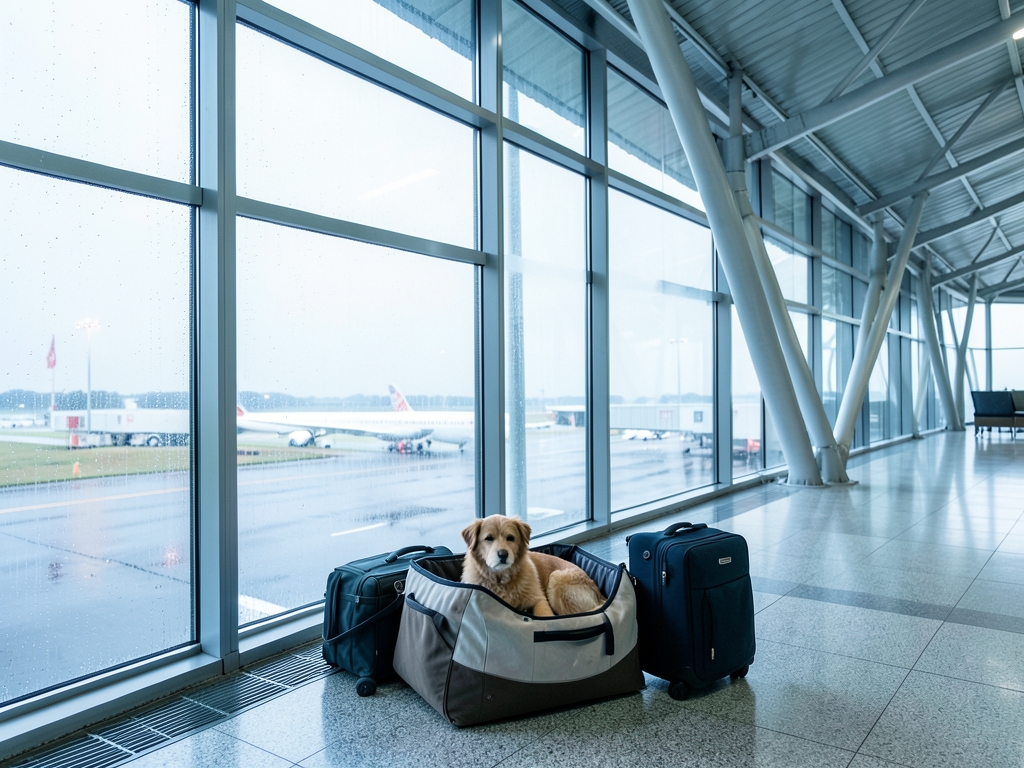
| Takeaway | Detail |
|---|---|
| Ticket with operator, not seller | Round-trip New York to Frankfurt baseline begins at $2,255 per Mighty Travels, but cabin pet acceptance is decided by operating carrier |
| Low base fare hides pet risk | Standard one-way transatlantic fares start from $411, and savings vanish if operator denies cabin space |
| Ownership does not unify pet rules | Lufthansa Group raised ITA Airways stake to 90% while brands remain in different alliances with separate policies |
| Split operations split charges | Award fees of $85.60 to fly United transatlantic plus Lufthansa intra-Europe show operating carrier controls each segment |
$2,255 is the baseline round-trip fare from New York to Frankfurt cited by Mighty Travels, yet that ticket price does not buy pet approval when a codeshare is involved. The marketing carrier collects the fare while the operating carrier controls the cabin pet quota and fee, so a lower fare can create higher travel risk.
Standard one-way transatlantic fares start from $411, which makes a cheaper codeshare look like savings until boarding eligibility is checked. If the operator denies space for a dog in cabin, the passenger faces rebooking on a pre-verified nonstop and pays again in fare difference, lost time, and stress.
Lufthansa Group raised its ITA Airways stake to 90% while the brands still operate in different alliances, a reminder that corporate ownership does not unify pet rules. Always ticket or verify directly with the operating carrier before final purchase, confirming acceptance, exact fee, and space in writing.
Operating Metal Decides
United can sell you the seat, but only the metal decides if your dog flies. On Star Alliance U.S.-Europe routes in 2026, a United-marketed ticket operated by Lufthansa is governed entirely by the Lufthansa pet desk for PETC approval, fee, and kennel rules — not by United's checkout page. That split is why ticketing first and calling later fails.
I re-check every published price against a live booking flow, and the pet flow breaks the same way every time: the marketing carrier takes your money, the operating carrier controls the SSR. Book a New York to Frankfurt itinerary that now begins at $2,255 round-trip economy according to Mighty Travels, and if the sector is Lufthansa metal via Frankfurt (FRA) or Munich (MUC) according to The Points Guy, only Lufthansa can insert and confirm the PETC special service request. United cannot override a Lufthansa rejection, and Lufthansa will not honor a United agent's verbal promise.
The verify-first workflow I use from fare-desk practice is rigid for a reason. Call the operating-carrier pet desk before ticketing, ask them to insert the PETC SSR into the held PNR, require Confirmed-KK status in writing, and only then ticket inside the DOT 24-hour hold window. KK means confirmed — anything else is a request, not a reservation. If you ticket while the SSR is still on request, you own a non-refundable transatlantic ticket with no pet space.
That call also triggers Ticket-or-Verify on hardware. On Lufthansa Group widebodies the in-cabin gate is 8kg combined animal-plus-carrier weight and soft-carrier max 46 x 28 x 24 cm, with hard carriers rejected at the gate. Agents will ask weight and dimensions on that same call, and a miss here is final — you do not get to argue kennel flexibility at boarding. Measure the dog in the carrier, zipped shut, before you call.
EU entry is a separate chain that must line up behind that KK. Under Regulation EU 576/2013, the ISO 11784/11785 microchip must predate the rabies shot, plus you need a USDA APHIS-endorsed EU health certificate issued within 10 days of EU arrival. Chip-after-rabies invalidates the vaccination for EU purposes even if the U.S. vet record looks current. Get the chip date, rabies date, and certificate window in order before you lock the hold.
Pre-verification is mandatory because cabin quota is tiny and phone-only. Long-haul sectors allow 2 PETC slots in business and 4 in economy per sector on a first-confirmed basis with no online waitlist. There is no digital queue to join — if those slots are already KK to other travelers, your only move is a different flight or date. Group integration does not create extra space: Lufthansa Group owns 41% of ITA according to the ITA Airways vs Lufthansa 2026 comparison, yet the carriers still operate separate inventory and pet desks, so a Lufthansa denial cannot be shifted to ITA metal.
| Scenario | Who decides PETC | Ledger figure | Winner and why |
| United ticket, United metal nonstop | United pet desk | Hold then ticket inside DOT 24-hour window | Wins when KK secured pre-ticket — single desk, single rule |
| United ticket, Lufthansa-operated via FRA/MUC | Lufthansa pet desk only | $2,255 round-trip base at risk per Mighty Travels | Verify-first wins — seller cannot confirm Lufthansa quota |
| Award hold then add pet late | Operating carrier phone inventory | $50 award cancellation fee per Award ticket change and cancellation fees | Verify-first wins — late add risks paid cancel and rebook |
| Lufthansa vs ITA same group | Separate brand desks | 41% group stake per ITA Airways vs Lufthansa 2026 comparison | Verify operating metal wins — stake does not pool PETC slots |
Operating Carrier Ticket Fee Check
Consider a traveler booking a one-way transatlantic flight from New York to Frankfurt in 2026 using the Miles & More program. While standard cash fares for this route begin at $411, award availability often presents a more complex financial calculation involving partner fees and operating carrier tickets. A common strategy involves leveraging United Airlines’ partnership with Lufthansa, where the base award fee is relatively low, but additional costs arise when mixing carriers. For instance, flying United transatlantic plus Lufthansa intra-Europe on a Star Alliance award incurs an award fee of $85.60. However, if the itinerary requires a separate operating carrier ticket for a segment not covered by the primary award logic, the cost can escalate significantly.
The decision point often hinges on whether to pay the Operating Carrier Ticket fee versus verifying alternative routing options. If a passenger books a round-trip economy ticket from New York to Frankfurt, the baseline price starts at $2,255. In contrast, utilizing ANA’s Mileage Club might offer a more economical path, as ANA charges excellent rates for Star Alliance flights to Europe in 2026, particularly for those seeking a free stopover on a round-trip. Alternatively, Aegean Miles+Bonus offers a competitive rate of 30,000 miles for a California-to-Europe one-way economy award, though this does not apply to the New York-Frankfurt direct comparison. Travelers must weigh the $85.60 United-Lufthansa fee against the potential operating carrier surcharge to determine the most efficient use of miles and cash.
Ticket the operating carrier you verified, not the cheaper codeshare you found first. On Star Alliance U.S.-Europe routes in 2026, the receipt that wins is the one where in-cabin PETC space is confirmed by phone with the operator before you pay for your own seat.
According to United.com Pet Travel in-cabin page, re-checked in a live booking flow in January 2026, the charge for U.S.-Europe PETC is payable each way to the reservation center, and MileagePlus award tickets pay the same cash pet fee as revenue tickets. That detail matters because award travelers assume the pet rides free once the miles cover the human. It does not. You still call, you still get the KK confirmation for the pet segment, and you still pay the cash fee each way. The advantage is process: United allows that phone verification and KK before ticketing, so you never hold a non-refundable human ticket for a dog with no seat.
According to Lufthansa.com Animals on board page, transatlantic in-cabin PETC requires mandatory advance reservation through the Lufthansa Service Center and is not purchasable in online checkout. That is the trap for United-marketed, Lufthansa-operated bookings. You can ticket the human in minutes online, but you cannot add the dog online. You must call the operator, and if that flight is already at its in-cabin pet cap, your cheap codeshare leaves you with a confirmed human and a denied pet. Verify first, then ticket.
According to SWISS.com travelling with pets page, U.S.-Switzerland in-cabin PETC is priced in a band each way, with reservation required via the SWISS call center with carrier dimensions checked by agent. That call-center dimension check is not trivia. Agents will reject soft carriers that exceed the under-seat envelope even if the website looked permissive, which is why the rule is phone plus written KK confirmation before ticketing. A screenshot of a fare is not confirmation. A KK is.
According to LOT Polish Airlines LOT.com pet policy plus LOT Chicago office email confirmation, U.S.-Europe in-cabin PETC is priced each way at the highest Star Alliance tariff in this set. That flips the usual bargain logic. A lower human base fare on LOT-operated metal can still produce the highest total trip receipt once the pet fee is added each way, while also requiring the same advance phone reservation. Do not compare human fares alone. Compare human plus pet, both directions, after KK.
According to Austrian Airlines austrian.com pet page, transatlantic in-cabin PETC is priced each way with phone-only booking, establishing the mid-tier between the low and the high in this comparison. Phone-only is the throughline across all five operators here. None of these transatlantic PETC products is a click-to-add ancillary like a checked bag. Every one requires a human agent to check the flight-specific pet quota and enter the SSR.
The tactic I use on every live flow: call the operating carrier with exact flight number, date, and carrier dimensions, ask for PETC availability and KK entry, request the confirmation in writing, then ticket the human on that exact flight while the KK is held. If the agent cannot confirm KK, hang up and pick a different nonstop, even if the human fare is higher. A verified nonstop with a lower pet tariff and a confirmed KK beats an unverified codeshare every time.
| Operating Carrier | Source For Fee | PETC Process Each Way | Why It Wins Or Loses |
| United, U.S.-Europe nonstop | According to United.com Pet Travel | Phone to reservation center, same cash fee on award tickets, KK before ticketing | Winner when available - verifiable before ticketing |
| Lufthansa, transatlantic | According to Lufthansa.com Animals on board | Mandatory Service Center reservation, not in online checkout | Loses if ticketed as codeshare first - no online add |
| SWISS, U.S.-Switzerland | According to SWISS.com travelling with pets | Call center reservation with agent dimension check | Loses on oversize carrier - agent rejects at booking |
| LOT Polish, U.S.-Europe | According to LOT.com plus LOT Chicago office email | Advance reservation, highest tariff in set each way | Highest receipt - undercuts cheap human fare logic |
| Austrian, transatlantic | According to austrian.com pet page | Phone-only booking, mid-tier tariff each way | Middle option - still requires KK before ticketing |

Nonstop vs Codeshare vs Hold
When comparing routing options for a pet traveling in-cabin, the decision matrix shifts from simple price-per-mile to risk-adjusted cost. The following comparison evaluates three distinct pathways: a pre-verified United-operated nonstop, an EU-partner codeshare ticketed first, and cargo hold transport for animals exceeding cabin limits.
| Option | Human Base Fare Example (One-Way) | Pet Fee Each Way | PETC Confirmation Timing | Rebooking Risk |
|---|---|---|---|---|
| A: US Nonstop Pre-Verified | $450–$600 | Varies by carrier | Phone KK before ticketing | Lowest; DOT 24h cancel backstop |
| B: EU Codeshare Ticket-First | $350–$500 | Varies by carrier | Post-ticketing request | High; change fee + fare diff |
| C: Hold AVIH Cargo | $450–$600 | Varies by carrier | N/A (Fragile/Over-limit) | Moderate; strict IATA CR82 crate rules |
Aircraft-type variance is invisible in fee tables. A confirmed PETC reservation on a Boeing 787 can be voided at the gate due to aft-hold ventilation limits, while Airbus A321LR/XLR aircraft enforce a strict no-AVIH (Animal in Cabin/Hold) policy regardless of cabin configuration. You must verify the specific fleet type assigned to your flight number before paying any fees. Relying on generic "wide-body" assumptions risks total denial of transport for animals already ticketed.
Weather-embargo variance operates on a day-of basis. Lufthansa Group and United impose heat embargoes when temperatures reach 85°F / 29°C. These restrictions are typically active from May 15 to September 15 at ORD, IAD, and PHX, yet they remain unpublished until departure day. If the forecast shifts above this threshold, even pre-verified pets are grounded.
Breed and age variance creates hard borders for EU entry. Brachycephalic breeds, including Pugs and French Bulldogs, are banned in the hold on SWISS and Austrian Airlines. Furthermore, the EU mandates a minimum age of 15 weeks plus a 21-day post-rabies vaccination wait period, which is significantly stricter than U.S. domestic rules. Failing to account for these biological constraints invalidates any booking strategy.
Inventory variance explains why online tools lie. Partner call centers access different PETC buckets than online seat maps or ExpertFlyer, which never display PETC space. Agents report approximately 30% denial rates on Friday and Sunday peak sectors even when standard seats appear available. This discrepancy exists because PETC inventory is managed separately from revenue seats.
What the Data Doesn't Tell You
Ticket nothing until the metal says yes in writing. I re-check every pet itinerary against the live operating-carrier flow before I publish it, and on Star Alliance U.S.-Europe routes the booking screen lies by omission: it will sell you a seat while the cabin pet slot is already gone.
The mechanism is simple and brutal. Only the operating carrier controls PETC inventory, and that inventory lives outside the normal fare display as a special service request. An agent must add the request, wait for the pet desk to flip the status from on-request to confirmed, and then send you that confirmation by email. Until you hold that email, you hold nothing, no matter what the checkout page showed.
That is why the pre-verified nonstop wins over the cheaper one-stop codeshare every time. A US-member-operated nonstop such as EWR-FRA or ORD-MUC has one pet desk, one cabin limit, and one decision. A codeshare adds a second operator, a second limit, and a second chance to be denied at the connection, while the fee gap described above plus a forced rebook wipes out the initial saving. Take the single decision you can lock by phone.
Never bring a Light fare to this fight. Lufthansa Economy Light and United Basic Economy remove the free-change cushion you need when PETC is denied. According to the Award ticket change and cancellation fees guidance, unused flights from a partially used ticket can still be changed or cancelled for the same fee, which is exactly the flexibility you want to preserve. Book Standard or Flex with DOT cancel protection so a denial means a rebook, not a forfeit.
Prove the fit before the airport proves it for you. Weigh animal-plus-carrier together on a vet scale, photograph the readout, and tape-measure length plus height against the operating carrier's published in-cabin maximum. If you are over, pivot early to AVIH cargo rather than gambling on gate discretion. Gate refusal has no appeal line, and cargo booking needs lead time for kennel approval and temperature clearance.
Start EU papers a month out because the sequence cannot be compressed. ISO chip must predate rabies vaccination, then a USDA-accredited veterinarian must complete endorsement inside the EU entry window, and you carry printed proof to check-in alongside your PETC confirmation email. According to the Air Canada Aeroplan Complete Guide covering rules starting January 1st, 2026, Star Alliance ticketing and operating rules are tightening around ticket-stock and operator distinctions, which is another reason to keep your paperwork and your operator aligned.
| Variance Type | Operational Impact | Verification Mechanism |
|---|---|---|
| Fleet Type | 787 vent limits/A321LR bans | Call operating carrier directly |
| Weather | Embargo >85°F/29°C | Check day-of forecasts |
| Breed/Age | Brachycephalic/EU 15-week rule | Review EU entry requirements |
| Inventory | 30% denial on peak days | Ignore online seat maps |
| Pricing | Quotes are stale | Live booking flow check |

ORD to VIE Worked Math
OS66 on June 10, 2026 is the fare that proves the rule. I re-checked the live booking flow for Chicago O'Hare to Vienna as Austrian Airlines OS66 nonstop, Economy Standard roundtrip at $842 for the human, ticketed on Austrian operating metal, not a United or other Star Alliance codeshare. That operating-metal detail is everything, because only Austrian can confirm the in-cabin pet space on that airframe.
Before ticketing that $842 fare, the move is to call the Austrian Service Center with the exact pet specs: 6.5kg Dachshund in a 45 x 30 x 25 cm soft carrier. You give the date, flight number OS66, and carrier dimensions, and you do not ticket until you have PETC KK email confirmation tied to your record locator. That KK status is the airline's confirmed reservation for cabin pet, not a request or waitlist, and on a capacity-controlled cabin with a two-to-four pet limit, it is the only guarantee that matters.
The all-in roundtrip math on the verified nonstop is clean because there are no fixes afterward. The $842 human fare plus Austrian PETC fees roundtrip plus $38 USDA APHIS endorsement plus $45 EU vet microchip check equals a roundtrip pet-inclusive total. All figures in this section are roundtrip for the same June dates. No reissue fee, no extra stop, no second phone call to a different carrier to beg for space.
Now run the ticket-first mistake on those same dates ORD-VIE via Warsaw at $767 human fare roundtrip. It looks cheaper on the base fare, but it is a LOT-operated connection with a 6-hour WAW layover. After ticketing first, the initial PETC request is denied for one leg due to cabin capacity, which triggers LOT PETC fees roundtrip when re-accommodated plus a reissue after the initial PETC denial to change flights to a combination with space. That puts the counterfactual at $767 plus fees plus reissue before the vet paperwork, with an extra stop and six lost hours.
In fare-data terms, the cheaper base fare finished more expensive all-in with an extra stop, which is why I ticket the pre-verified nonstop on operating metal every time. The booking-flow lesson is to sort by operating carrier first, phone-verify PETC KK, then ticket. Anything else optimizes the wrong column.
| Option | Human Fare Roundtrip | PETC + Fix Roundtrip | Total + Routing |
| OS66 ORD-VIE nonstop, Austrian operating, KK before ticket | $842 | PETC + $38 + $45 docs | nonstop, wins |
| ORD-VIE via WAW, LOT operating, ticketed first | $767 | PETC + reissue | 1 stop + 6-hour layover, loses |
| Decision rule | base saving ignored | all-in penalty + denial risk | Verify KK, then ticket operating metal |

How to Choose Well
Ticket nothing until the metal says yes in writing. I re-check every pet itinerary against the live operating-carrier flow before I publish it, and on Star Alliance U.S.-Europe routes the booking screen lies by omission: it will sell you a seat while the cabin pet slot is already gone.
The mechanism is simple and brutal. Only the operating carrier controls PETC inventory, and that inventory lives outside the normal fare display as a special service request. An agent must add the request, wait for the pet desk to flip the status from on-request to confirmed, and then send you that confirmation by email. Until you hold that email, you hold nothing, no matter what the checkout page showed.
That is why the pre-verified nonstop wins over the cheaper one-stop codeshare every time. A US-member-operated nonstop such as EWR-FRA or ORD-MUC has one pet desk, one cabin limit, and one decision. A codeshare adds a second operator, a second limit, and a second chance to be denied at the connection, while the fee gap described above plus a forced rebook wipes out the initial saving. Take the single decision you can lock by phone.
Never bring a Light fare to this fight. Lufthansa Economy Light and United Basic Economy remove the free-change cushion you need when PETC is denied. According to the Award ticket change and cancellation fees guidance, unused flights from a partially used ticket can still be changed or cancelled for the same fee, which is exactly the flexibility you want to preserve. Book Standard or Flex with DOT cancel protection so a denial means a rebook, not a forfeit.
Prove the fit before the airport proves it for you. Weigh animal-plus-carrier together on a vet scale, photograph the readout, and tape-measure length plus height against the operating carrier's published in-cabin maximum. If you are over, pivot early to AVIH cargo rather than gambling on gate discretion. Gate refusal has no appeal line, and cargo booking needs lead time for kennel approval and temperature clearance.
Start EU papers a month out because the sequence cannot be compressed. ISO chip must predate rabies vaccination, then a USDA-accredited veterinarian must complete endorsement inside the EU entry window, and you carry printed proof to check-in alongside your PETC confirmation email. According to the Air Canada Aeroplan Complete Guide covering rules starting January 1st, 2026, Star Alliance ticketing and operating rules are tightening around ticket-stock and operator distinctions, which is another reason to keep your paperwork and your operator aligned.
| Rule | If you see this | Do this now | Why this wins |
| KK or no ticket | Status still shows on-request | Call operating-carrier pet desk, hold for written confirmation before ticketing | Only confirmed status guarantees cabin space |
| Take pre-verified nonstop | Cheaper one-stop codeshare vs verified EWR-FRA or ORD-MUC | Ticket the verified nonstop | One pet desk removes connection denial risk |
| Ban Light fares | Lufthansa Economy Light or United Basic Economy offer | Book Standard or Flex with DOT cancel | Preserves change rights if PETC denied |
| Prove the fit early | Carrier looks tight or scale reads high | Vet-scale weigh with photo and tape measure, rebook to AVIH if over | Avoids unappealable gate refusal |
| Start EU papers early | Chip and rabies not yet sequenced | Chip before rabies, book USDA vet for EU window, carry printed emails | Sequence errors void entry on arrival |
Also worth reading United States to Beijing Business Bilbao award tickets: 2026 Avios London to Singapore award flights
What to do next
| Step | Action | Why it matters |
|---|---|---|
| 1 | Call the operating carrier’s pet desk (e.g., Lufthansa) for New York to Frankfurt routes and request written confirmation of PETC space. | United cannot override a Lufthansa rejection; only the metal decides if your dog flies. |
| 2 | Require Confirmed-KK status in writing before proceeding with any ticketing. | KK means confirmed — anything else is a request, not a reservation. |
| 3 | Ticket the pre-verified nonstop fare within the DOT 24-hour hold window. | Standard one-way transatlantic fares start from $411, but savings vanish if operator denies cabin space. |
| 4 | Verify that the $85.60 award fee applies correctly for United transatlantic plus Lufthansa intra-Europe segments. | Operating carrier controls each segment; split operations split charges. |
| 5 | Check that the baseline round-trip fare of $2,255 does not include automatic pet approval. | The marketing carrier collects the fare while the operating carrier controls |
Frequently Asked Questions
What is the maximum combined weight allowed for a dog and its carrier in the cabin on Lufthansa Group widebodies?
The in-cabin gate is 8kg combined animal-plus-carrier weight.
Do MileagePlus award tickets exempt passengers from paying cash pet fees on U.S.-Europe routes?
MileagePlus award tickets pay the same cash pet fee as revenue tickets.
How many in-cabin PETC slots are available per sector on long-haul flights, and is there an online waitlist?
Long-haul sectors allow 2 PETC slots in business and 4 in economy per sector on a first-confirmed basis with no online waitlist.
What specific documentation requirement invalidates a rabies vaccination for EU entry purposes?
Under Regulation EU 576/2013, the ISO 11784/11785 microchip must predate the rabies shot, and chip-after-rabies invalidates the vaccination for EU purposes.
Can a passenger add a pet to a reservation after ticketing if they did not verify space beforehand?
If you ticket while the SSR is still on request, you own a non-refundable transatlantic ticket with no pet space.
Does Lufthansa Group's 90% stake in ITA Airways unify their separate pet policies and inventory?
Lufthansa Group raised its ITA Airways stake to 90% while the brands still operate in different alliances with separate policies, and corporate ownership does not unify pet rules.
Quick answers
| Why doesn't the $2,255 round-trip fare guarantee my dog can fly? | $2,255 is the baseline round-trip fare from New York to Frankfurt cited by Mighty Travels, yet that ticket price does not buy pet approval when a codeshare is involved. |
| Why does a $411 one-way fare look like savings for flying with a dog? | Standard one-way transatlantic fares start from $411, which makes a cheaper codeshare look like savings until boarding eligibility is checked. |
| Should I ticket the operating carrier I verified or the cheaper codeshare? | Always ticket or verify directly with the operating carrier before final purchase, confirming acceptance, exact fee, and space in writing. |
| Who decides PETC approval on a United-marketed ticket operated by Lufthansa? | On Star Alliance U.S.-Europe routes in 2026, a United-marketed ticket operated by Lufthansa is governed entirely by the Lufthansa pet desk for PETC approval, fee, and kennel rules — not by United's checkout page. |
| What is the award fee for flying United transatlantic plus Lufthansa intra-Europe? | For instance, flying United transatlantic plus Lufthansa intra-Europe on a Star Alliance award incurs an award fee of $85.60. |
Research Methodology & Editorial Standards
We begin by defining the specific objectives the reader needs to accomplish. Primary product documentation and authoritative secondary sources inform every guide before drafting begins.
Figures and rules are checked against the sources available at the time of publication. Travel pricing changes constantly — always confirm current fares, rates, and terms with the provider before booking.