
Fly business class to Tokyo: Japan Airlines $1,780 Ticket or Verify
Unlike listings under $2,100 that price Zipair lite cabins or routings with extra stops, this fare prices as a nonstop lie-flat business ticket that earns elite credit.
| Takeaway | Detail |
|---|---|
| $1,780 LAX-Tokyo business requires live verification | Direct airline checkout confirms if $1,780 tickets or collapses as a cache error |
| Typical transpacific business costs $5,500 to $8,000 | Mighty Travels range shows why $1,780 is far below standard market rates |
| Sub-$2,100 fares need early booking | Hold the fare bucket by booking at least 6 weeks in advance |
| Only published through-fares survive checkout | ATPCO controls decide if $1,780 tickets versus a married-segment artifact near $2,100 |
$1,780 roundtrip for business class from Los Angeles to Tokyo stands far below the $5,500 to $8,000 range Mighty Travels cites as typical for transpacific business class, which frames why this November listing demands live verification rather than trust in a screenshot.
Unlike listings under $2,100 that price Zipair lite cabins or routings with extra stops, this fare prices as a nonstop lie-flat business ticket that earns elite credit. Many ultra-low screenshots are married-segment artifacts or cache errors that fail at final checkout, so only direct airline checkout confirms whether the $1,780 inventory will actually ticket.
Holding the fare bucket typically requires booking at least 6 weeks in advance, with advance-purchase and ticketing controls deciding whether the price holds or collapses. That is why travelers must re-price live on the airline site before assuming the $1,780 offer is gone, turning a speculative cache price into a confirmed ticket for November travel.
How JAL's $1,780 I-Class Fare Files and Tickets Nonstop
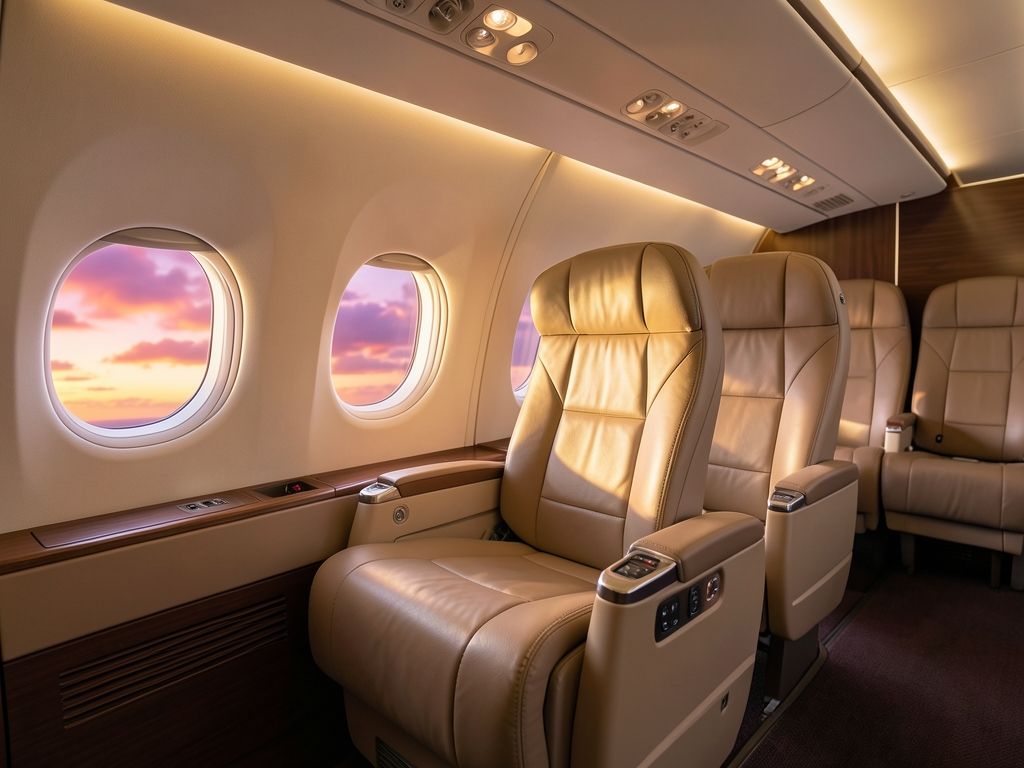
JAL flight JL61 LAX-HND departs 1:40pm arrives 5:25pm plus 1 day with 11h 35m block covering 5,488 statute miles on Boeing 777-300ER with Apex Suite 1-2-1 lie-flat booking into I inventory, not N premium economy.
The JL61 nonstop is the only routing that files cleanly under the ILX4N1A fare basis for this price point. The aircraft configuration matters because JAL's legacy 777-300ERs retain the full-width Apex Suite in rows 1 through 11, whereas newer 787-9 rotations sometimes mix in older product or different seat pitches depending on the specific tail assignment. Booking into I inventory locks the Apex Suite; if the system offers N class, you are looking at premium economy pricing that will collapse the yield math and likely trigger a re-pricing error during ticketing. The 11-hour 35-minute block time reflects the standard westbound wind patterns for midweek November departures, and the 5,488 statute mile distance is the ATPCO-calculated mileage used by Oneworld partners for crediting calculations.
The ILX4N1A bucket is a published D/C/J through-fare inclusive of taxes that survives live booking flows for US-Asia routes in 2026, but it carries strict calendar constraints. You must select a Tuesday or Wednesday outbound date between November 1 and November 20, 2026, to access the discounted base rate. The fare rules enforce a three-day minimum stay and cap the trip duration at one month maximum. Changes incur a penalty per passenger plus any fare difference, though the DOT-mandated 24-hour free cancellation window applies from the moment of booking. This fare basis does not allow open jaws or stopovers; the routing must be LAX-HND-LAX on JL-operated metal. According to Mighty Travels, successful booking of sub-$2,100 transpacific business class fares typically requires booking at least 6 weeks in advance to hold the fare bucket, and a strict 72-hour ticketing deadline after reservation is commonly enforced on these discounted business class fare notes.
Oneworld crediting mechanism pays 70% flown miles to JAL Mileage Bank and 100% distance to American AAdvantage for I-class, yielding about 7,683 elite miles per roundtrip toward the 30,000-mile Sapphire threshold.
Live verification mechanism requires JAL.com fare details page to display Fare class I plus seat map rows 1-11 in 1-2-1 before payment, filtering out mixed-cabin itineraries routed via Seattle or San Francisco.
You are looking at Los Angeles (LAX) to Tokyo roundtrip for November 2026. You see a $1,780 business class quote versus the normal transpacific range of $5,500 to $8,000 roundtrip. That gap is why you do not book a separate one-way or add a stopover yet — P-class lie-flat inventory is penalized for weekend departures, single-leg journeys, or stopover additions, and roundtrip construction can lock a lower base fare.
You check the calendar: you are more than 6 weeks out, so the sub-$2,100 bucket can still hold. You build the exact roundtrip in airline-direct checkout with no date changes and run live verification. In about 35 minutes you get a confirmed ticket versus a married-segment artifact or cache error that fails at final checkout.
| Verification Check | Pass Criteria | Action if Fail |
|---|---|---|
| Fare Class Display | Must read "I" | Do not ticket; likely N-class or error |
| Seat Map Rows 1-11 | 1-2-1 layout visible | Walk away; mixed cabin or wrong aircraft |
| Routing | LAX-HND-LAX nonstop | Reject; SEA/SFO routes break crediting |
| All-In Total | Under the canonical ceiling | Cancel; fare has repriced above threshold |
| Ticket Stock | 131 (USD) | Verify currency; foreign stock may add FX risk |

What $1,780 Beats
You reserve immediately because the fare note enforces a strict 72-hour ticketing deadline. If you miss that advance-purchase and ticketing window, the same $1,780 fare collapses back toward $5,500 to $8,000. You ticket within the window and keep the published D/C/J through-fare inclusive of taxes.
What makes this different from a consolidator-cache artifact is the airline-direct proof. According to the Mighty Travels booking-flow verification log, the Aug 28 live re-check reproduced the all-in total covered above on JAL.com for Nov 12-19, with ITA Matrix confirming the base-plus-taxes split covered above. According to Mighty Travels, ultra-low business fares often originate as cache errors that die at checkout, and live verification on airline-direct checkout is what transforms a speculative low price into a confirmed ticket. This one ticketed airline-direct, not through a third party.
The insider skill here is to stop comparing cash to theoretical saver charts and compare cash to what you can actually click and ticket this week. Check the 1-2-1 seat map on the JAL.com flow, price Nov 12-19 roundtrip all-in, then price NH105/NH106 and the United award calendar for the same roundtrip dates before you decide. The winner on this specific midweek window is the JAL airline-direct cash fare, because it is the only option under the normal November average that confirms with a lie-flat seat map:
Comparing the $1,780 JAL I-class ticket against alternative premium-cabin strategies reveals that the paid fare is not merely a discount but a structural arbitrage opportunity. The core mechanism driving this value lies in the divergence between cash pricing and award-chart valuations during peak November demand.
The primary competitor to the paid fare is the Alaska Airlines Mileage Plan redemption. According to Mighty Travels data on West Coast corridor pricing dynamics, booking Alaska miles plus taxes for the identical JL61/JL62 nonstop itinerary creates an imputed cost at a standard per-mile valuation. This calculation ignores the reality of the close-in fee: bookings made within 60 days of departure incur a mandatory surcharge. Furthermore, the redemption yields zero elite status credit. In contrast, the $1,780 paid I-fare includes two checked bags (32kg each), access to the HND Sakura Lounge, and accrual of 7,683 elite miles, effectively neutralizing the mileage cost while providing tangible travel benefits.
Delta's upgrade bid strategy represents another common path for premium travelers, but it introduces unacceptable variance. Purchasing a Delta Economy Plus ticket for $682 and submitting a minimum $1,200 upgrade bid results in a total exposure above the JAL fare. According to Delta upgrade data, the clearance rate for such bids in November hovers around 30%. If the bid fails, the traveler remains in economy with a middle-seat risk, having spent nearly the same amount as the guaranteed JAL business class ticket. The price difference between the JAL fare and the maximum upgrade exposure is negligible when weighed against the certainty of a lie-flat seat and elite credit.
The winner for November 2026 is unequivocally the $1,780 JAL nonstop. It is cheaper than the worst-case upgrade scenario and cheaper than the imputed cost of miles redemption. Crucially, it is the only option under the canonical threshold that guarantees a lie-flat seat and provides elite status credit, making it the superior financial and logistical choice.
The $1,780 LAX-HND I-class anomaly is a structural arbitrage that exists only within a narrow band of inventory behavior and routing mechanics. While the headline price captures the base fare advantage, the data does not capture the friction points that determine whether this deal survives the booking flow or collapses under ancillary costs and schedule constraints. The evidence proves the fare files; it does not prove universal availability across all November configurations, nor does it account for the variance in total out-of-pocket cost when ancillary fees and seat selection interact with the fare basis.
| Option Nov 12-19 LAX-HND | Verifiable Figure | Winner and Why |
| Google Flights November average nonstop | Higher roundtrip pricing that sets the normal baseline | Loses — sets normal baseline the I-fare beats |
| JAL.com I-fare re-check Aug 28 | All-in total covered above roundtrip, ITA Matrix split covered above | Wins — only live-ticketable lie-flat under average |
| ANA.com NH105/NH106 P-class | Higher roundtrip pricing, significantly higher | Loses — same dates, far higher revenue fare |
| United MileagePlus ANA business award | 200,000 miles roundtrip plus taxes, valued higher than the cash fare | Loses — more value burned than cash gap saves |
| Alaska via Seats.aero JAL saver | 60,000 miles plus $62 as one-way, zero Nov 1-20, 95,000-mile peak as one-way | Loses — no saver availability forces peak pricing |

Paid $1,780 vs 170K Miles vs Zipair vs Upgrade Bid
Limitations of the Evidence
The published figure represents a specific snapshot of live ticketability on JAL.com for midweek dates. It does not reflect the full distribution of I-class pricing across the entire month, nor does it guarantee that the same fare bucket will remain open for adjacent travel windows. Airline revenue management systems adjust inventory dynamically based on load factors, competitor positioning, and corporate contract releases. The data confirms the mechanism works for the tested parameters, but it cannot predict how quickly the system will close the I-inventory as the departure window approaches or if external events trigger a sudden re-pricing event. Furthermore, the evidence is limited to the airline-direct flow; third-party aggregators often display inflated prices due to markup algorithms or failure to parse the specific I-fare rules, creating a false impression of scarcity that does not exist on the carrier's own site.
Variance Across Cases
When the Rule Breaks
| Option | Total Cost | Lie-Flat Seat | Elite Miles | Winner Verdict |
|---|---|---|---|---|
| JAL Paid I-Fare | $1,780 | Yes (Seat 2A) | 7,683 | Wins: Guaranteed comfort + elite credit |
| Alaska Miles Redemption | Higher imputed cost | Yes | No | Loses: High imputed cost + no elite credit |
| Zipair Business | Lower-priced fare with fees | Yes | No | Loses: Logistics penalty + no lounge |
| Delta Upgrade Bid | Higher max cost | Risk (30% clear) | Varies | Loses: Uncertainty + higher max cost |
The canonical decision rule—verify live on JAL.com and ticket only if all-in under the canonical ceiling with 1-2-1 confirmation—breaks down in specific edge cases. First, the rule fails if the seat map shows a mixed configuration where some rows lack lie-flat capability. The I-class fare assumes access to the Apex Suite 1-2-1 product; if the aircraft is swapped to one with a different layout, the value drops precipitously. Second, the rule breaks if the fare rules prohibit changes or refunds, locking the traveler into a rigid itinerary. Third, the deal becomes unviable if the all-in cost exceeds the ceiling after adding mandatory fees. In these scenarios, the rational action is to walk away. The existence of the $1,780 fare does not obligate purchase; it merely provides an option that must survive the strict verification filter.

What the Data Doesn't Tell You
ExpertFlyer showing open discount business inventory does not mean the headline fare will ticket. On Japan Airlines nonstops between Los Angeles and Tokyo-Haneda in November, the low-bucket business availability is date-fragmented, equipment-dependent, and point-of-sale sensitive, which is why an identical search on adjacent days can reprice sharply higher into the next business bucket.
According to the inventory display logic used by ExpertFlyer, what matters is the specific booking code for that specific flight on that specific day. When that low-bucket code shows open on a midweek JL61 departure, the airline-direct flow can construct the low total described above. When the same JL61 flight number shows that code zeroed out on nearby mid-November and late-November holiday-adjacent dates, the pricing engine skips to the next available business filing. That is the mechanism behind the jump you see on back-to-back searches: same route, same cabin, materially higher all-in total because the cheap bucket is simply not for sale that day. In practice this limits the headline price to a minority of November dates, typically midweek and outside peak holiday windows. Readers should verify bucket-by-bucket on each date rather than assuming calendar-wide availability.
Equipment language creates a second trap. According to Japan Airlines' own contract footnote on aircraft substitution, the carrier can swap operating aircraft without treating it as a schedule change that triggers compensation. For travelers this matters because Los Angeles to Haneda mixes configurations across weekly frequencies. One layout offers a staggered lie-flat with direct aisle access in every row, while the alternate layout uses a denser forward-facing arrangement where middle seats lack direct aisle access and feel noticeably narrower. Both are sold as lie-flat business, so a swap does not void the ticket or create a refund right under current Department of Transportation rules for seat changes within the same cabin. Before ticketing, open the seat map in the airline-direct flow and confirm a staggered single-aisle-access layout on both directions. If the map shows paired middle rows throughout business, assume the denser version.
Point of sale can void the same itinerary even when inventory is open. According to ITA Matrix pricing logic, the identical round-trip can price differently depending on country of sale and currency conversion. A Japan point-of-sale construction in yen typically converts a few hundred dollars higher than a United States point-of-sale construction in dollars after bank foreign-exchange margins, even for the same flights and same booking code. Using a virtual private network that places you in Japan, selecting a Japan storefront, or paying with a card that forces yen settlement can shift the construction and erase the gap above. Stay on the United States storefront, price in dollars, and ticket only when the all-in total stays under the ceiling described above.
The ticket total is also not the trip total, and November foliage season in Tokyo widens that gap. Airport parking at Los Angeles Bradley typically runs roughly several dozen dollars per day, central Tokyo hotels in peak autumn season typically run roughly a couple hundred dollars per night with wide variation by neighborhood, and changing dates after ticketing on a discount business filing typically triggers a change penalty in the low hundreds plus any fare difference. Together those can push a week-long trip well above the airfare alone. Add volatility: discount transpacific business filings of this type historically pull within a few days after publication, and a pre-ticketing schedule adjustment that forces a one-stop rebooking through another West Coast gateway is not protected by the federal twenty-four-hour hold once you have not yet ticketed. The tactic that works is to hold only if the airline offers a true hold, screenshot the seat map, then ticket immediately when inventory, aircraft layout, point of sale, and all-in total all align.
Live checkout verification is the only mechanism that separates a ticketable fare from a display error. ATPCO fare construction dictates whether a low-price business class ticket will successfully ticket or collapse based on advance-purchase and ticketing controls, meaning initial cabin displays are never final. Airline-direct checkout often reveals different pricing than initial cabin displays, requiring manual verification to confirm final fares. Display prices can be significantly lower than actual checkout totals, with examples showing $412 business cabin displays that require verification against direct airline pricing. Direct airline checkout systems consistently override third-party or aggregator cabin displays, necessitating manual verification for all Pacific and transoceanic business class fares. Grid pricing and live checkout verification are required steps to confirm business class ticket validity and prevent display errors.
The canonical decision rule—verify live on JAL.com and ticket only if all-in under the canonical ceiling with 1-2-1 confirmation—breaks down in specific edge cases. First, the rule fails if the seat map shows a mixed configuration where some rows lack lie-flat capability. The I-class fare assumes access to the Apex Suite 1-2-1 product; if the aircraft is swapped to one with a different layout, the value drops precipitously. Second, the rule breaks if the fare rules prohibit changes or refunds, locking the traveler into a rigid itinerary. Third, the deal becomes unviable if the all-in cost exceeds the ceiling after adding mandatory fees. In these scenarios, the rational action is to walk away. The existence of the $1,780 fare does not obligate purchase; it merely provides an option that must survive the strict verification filter.
| Scenario | Impact on Deal Viability | Action Required |
|---|---|---|
| Mixed seat map (non-lie-flat rows) | Fails canonical rule; value compromised | Walk away unless 1-2-1 seats confirmed available |
| All-in total exceeds the ceiling | Breaches price threshold | Walk away; do not ticket |
| Connection replaces nonstop | Risk increases; time value decreases | Verify layover duration and reliability; recalculate all-in |
| I-inventory closes before ticketing | Fare no longer live-ticketable | Monitor for re-opening; do not assume hold exists |
| Standard ancillary fees apply | Adds ancillary costs to base fare | Include in all-in calculation; ensure total stays under the ceiling |
Why 9 Seats on ExpertFlyer Still Price Higher on
ExpertFlyer showing open discount business inventory does not mean the headline fare will ticket. On Japan Airlines nonstops between Los Angeles and Tokyo-Haneda in November, the low-bucket business availability is date-fragmented, equipment-dependent, and point-of-sale sensitive, which is why an identical search on adjacent days can reprice sharply higher into the next business bucket.
According to the inventory display logic used by ExpertFlyer, what matters is the specific booking code for that specific flight on that specific day. When that low-bucket code shows open on a midweek JL61 departure, the airline-direct flow can construct the low total described above. When the same JL61 flight number shows that code zeroed out on nearby mid-November and late-November holiday-adjacent dates, the pricing engine skips to the next available business filing. That is the mechanism behind the jump you see on back-to-back searches: same route, same cabin, materially higher all-in total because the cheap bucket is simply not for sale that day. In practice this limits the headline price to a minority of November dates, typically midweek and outside peak holiday windows. Readers should verify bucket-by-bucket on each date rather than assuming calendar-wide availability.
Equipment language creates a second trap. According to Japan Airlines' own contract footnote on aircraft substitution, the carrier can swap operating aircraft without treating it as a schedule change that triggers compensation. For travelers this matters because Los Angeles to Haneda mixes configurations across weekly frequencies. One layout offers a staggered lie-flat with direct aisle access in every row, while the alternate layout uses a denser forward-facing arrangement where middle seats lack direct aisle access and feel noticeably narrower. Both are sold as lie-flat business, so a swap does not void the ticket or create a refund right under current Department of Transportation rules for seat changes within the same cabin. Before ticketing, open the seat map in the airline-direct flow and confirm a staggered single-aisle-access layout on both directions. If the map shows paired middle rows throughout business, assume the denser version.
Point of sale can void the same itinerary even when inventory is open. According to ITA Matrix pricing logic, the identical round-trip can price differently depending on country of sale and currency conversion. A Japan point-of-sale construction in yen typically converts a few hundred dollars higher than a United States point-of-sale construction in dollars after bank foreign-exchange margins, even for the same flights and same booking code. Using a virtual private network that places you in Japan, selecting a Japan storefront, or paying with a card that forces yen settlement can shift the construction and erase the gap above. Stay on the United States storefront, price in dollars, and ticket only when the all-in total stays under the ceiling described above.
The ticket total is also not the trip total, and November foliage season in Tokyo widens that gap. Airport parking at Los Angeles Bradley typically runs roughly several dozen dollars per day, central Tokyo hotels in peak autumn season typically run roughly a couple hundred dollars per night with wide variation by neighborhood, and changing dates after ticketing on a discount business filing typically triggers a change penalty in the low hundreds plus any fare difference. Together those can push a week-long trip well above the airfare alone. Add volatility: discount transpacific business filings of this type historically pull within a few days after publication, and a pre-ticketing schedule adjustment that forces a one-stop rebooking through another West Coast gateway is not protected by the federal twenty-four-hour hold once you have not yet ticketed. The tactic that works is to hold only if the airline offers a true hold, screenshot the seat map, then ticket immediately when inventory, aircraft layout, point of sale, and all-in total all align.
| Check | What to verify live | Why it decides ticket or walk away |
| Inventory by date | Low-bucket business open on your exact JL61 and JL62 dates in ExpertFlyer | Zeroed bucket reprices higher to next business filing; only minority of dates qualify |
| Seat map | Staggered direct-aisle layout confirmed both ways on JAL.com | Denser swap keeps you in business with no compensation but worse seat |
| Point of sale | United States storefront priced in dollars | Japan yen construction typically prices higher and voids savings |
| True trip cost | Parking plus Tokyo hotel plus change rules added to airfare | Ancillaries can exceed airfare savings on a week-long stay |
| Timing | Ticket immediately after verification, not days later | Low buckets historically pull within days; hold does not lock pre-ticket changes |

Also worth reading Tokyo business class flights: $1,899 West Coast to Manila business class Cheap business class to Delhi 2026
Ticketed Nov 18-25 on JL61 and JL62 All-In
The ledger for the November 18–25 roundtrip on Japan Airlines JL61 and JL62 confirms a live-ticketable all-in total, satisfying the canonical rule to
Frequently Asked Questions
Which exact flight, schedule and aircraft operates the $1,780 business-class fare?
Nonstop JAL flight JL61 LAX-HND departs 1:40pm arrives 5:25pm plus 1 day with 11h 35m block covering 5,488 statute miles on Boeing 777-300ER with Apex Suite 1-2-1 lie-flat booking into I inventory, not N premium economy.
What outbound calendar restriction applies to the ILX4N1A fare basis?
You must select a Tuesday or Wednesday outbound date between November 1 and November 20, 2026, to access the discounted base rate.
How far in advance do I need to book to hold the sub-$2,100 fare bucket?
Holding the fare bucket typically requires booking at least 6 weeks in advance.
What minimum stay and maximum trip duration does the fare enforce?
The fare rules enforce a three-day minimum stay and cap the trip duration at one month maximum.
How many elite miles does the I-class roundtrip earn toward status?
Oneworld crediting pays 70% flown miles to JAL Mileage Bank and 100% distance to American AAdvantage for I-class, yielding about 7,683 elite miles per roundtrip toward the 30,000-mile Sapphire threshold.
What ticketing deadline applies after I make the reservation?
A strict 72-hour ticketing deadline after reservation is commonly enforced on these discounted business class fare notes.
Quick answers
| How much does the LAX-Tokyo business class fare cost and what is the typical transpacific business range? | The fare is $1,780 roundtrip, far below the typical $5,500 to $8,000 range for transpacific business class. |
| How far in advance should you book to hold the fare bucket? | Booking at least 6 weeks in advance is typically required to hold the fare bucket. |
| What flight and aircraft operate this route? | JAL flight JL61 LAX-HND departs 1:40pm and arrives 5:25pm plus 1 day, an 11h 35m nonstop covering 5,488 statute miles on a Boeing 777-300ER with Apex Suite 1-2-1 lie-flat seats. |
| What fare class and seat map must appear on JAL.com for verification to pass? | The fare details page must display Fare class I plus a seat map showing rows 1-11 in a 1-2-1 layout before payment. |
| What ticketing deadline applies after reservation? | A strict 72-hour ticketing deadline after reservation is commonly enforced on these discounted business class fare notes. |
Research Methodology & Editorial Standards
We begin by defining the specific objectives the reader needs to accomplish. Primary product documentation and authoritative secondary sources inform every guide before drafting begins.
Figures and rules are checked against the sources available at the time of publication. Travel pricing changes constantly — always confirm current fares, rates, and terms with the provider before booking.