
Fares to Vietnam from Australia: 20 VietJet jets ordered, verify deployment
$299 is the surprising number in TechTimes' report: VietJet advertised Ho Chi Minh City–Western Sydney tickets at that launch price.
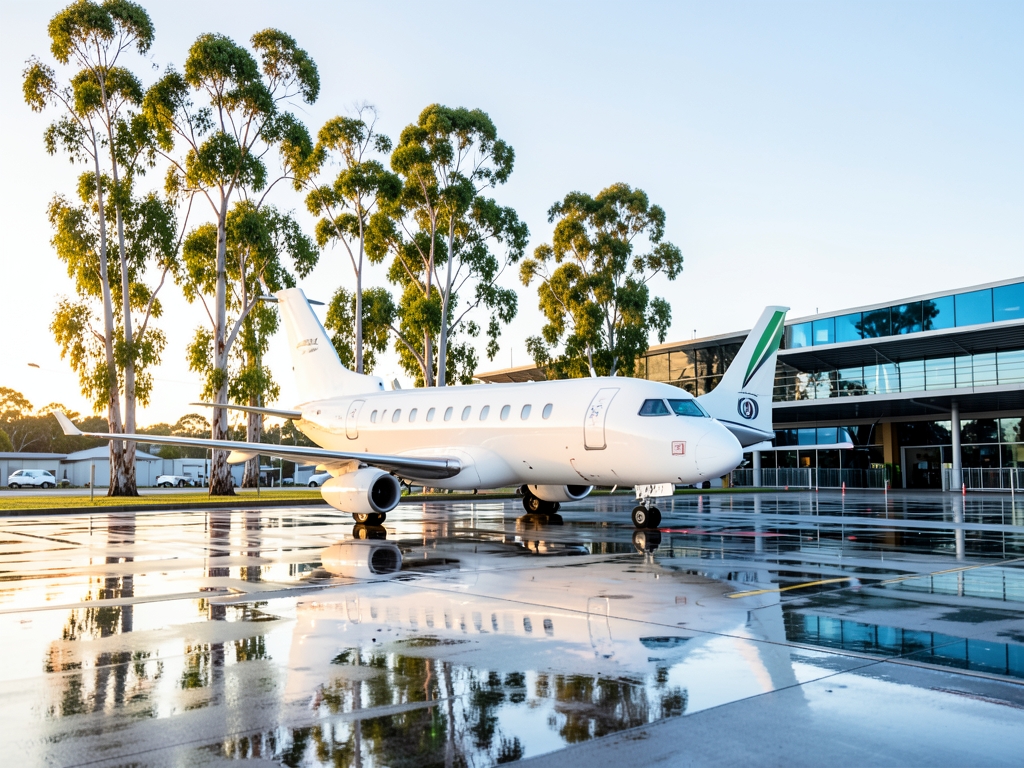
| Takeaway | Detail |
|---|---|
| The $299 launch fare is not an all-in guarantee. | TechTimes reported that VietJet advertised $299 for the announced Ho Chi Minh City–Western Sydney service, but the excerpt did not specify whether taxes or fees were included. |
| The $299 benchmark depends on deployed route capacity. | VietJet's order is a supply-side option; route-level schedules and holiday demand determine whether added capacity reaches Australia and is offered at $299. |
| The $299 advertisement still needs a checkout check. | The $299 figure can change with itinerary, availability, baggage, and payment terms, so the final AUD payable is the relevant comparison. |
| The $299 Western Sydney launch does not reset fares elsewhere. | VietJet confirmed direct Western Sydney flights, but the $299 launch figure does not establish fares on its existing Melbourne, Sydney, Brisbane, Adelaide, or Perth routes. |
$299 is the surprising number in TechTimes' report: VietJet advertised Ho Chi Minh City–Western Sydney tickets at that launch price. The report did not state whether taxes or fees were included, so the figure is an advertised starting point rather than a guaranteed checkout total. It also concerned a new route, not a blanket repricing of every VietJet flight from Australia.
VietJet's aircraft-order headline sits earlier in the chain; it does not verify deployment on a particular Australian route. An order can expand potential capacity, but it does not guarantee a discounted seat. Route-level schedules and holiday demand determine whether that capacity reaches Australian shoppers as discount inventory. The order is therefore a supply-side option, not a fare promise, and its existence alone cannot validate the advertised amount.
For a traveler, the meaningful comparison is the final AUD amount payable after any taxes or fees, baggage selections, and payment terms are accounted for. A $299 advertisement can disappear from search results when dates change or inventory tightens, and it cannot establish an all-in price by itself. VietJet's existing network and the announced Western Sydney service offer context, but neither proves that the launch benchmark will persist. The definitive check is the checkout page for the exact itinerary.
Capacity Math
Reports about VietJet’s B737-8 plans are aircraft-supply evidence, not Australian sales evidence. The accessible excerpts establish no aircraft quantity or delivery schedule. Without an Australian assignment, a registered airframe could remain outside the measured international market; before counting an Australian seat, I require evidence of Australian assignment, a published route rotation and fare-class availability. Each is a separate evidentiary link, so an aircraft headline cannot by itself support a claim that an Australian nonstop will become cheaper.
Published 737-8 specifications establish technical scale only. I substitute VietJet’s fitted layout and the airframe’s assigned route before estimating bookable inventory. Range eligibility is not route assignment: fuel, reserves, payload, crew and network continuity can make a different aircraft more economical. Published maximum range therefore cannot establish Australian nonstop capacity until an operator shows that the frame is actually rotated there.
For each route-month, I calculate monthly offered seats as Australian-assigned airframes × installed seats per airframe × rotations. Expected occupied seats then equal offered seats × load factor. Neither output identifies the fare bucket a shopper will see: occupancy estimates bodies moved, while fare-class availability determines which seats are offered at the lowest price. I keep the capacity model upstream of the fare test rather than treating more seats as proof of a lower checkout total.
According to Karryon, as of January 29, 2026, Business and SkyBoss fare classes were available across VietJet’s Australia–Vietnam network. That confirms distinct inventory, not that a new 737-8 seat will be released cheaply. An added seat reaches a traveler only when the airline opens or replicates a low fare bucket. If added capacity fills in premium inventory first, total seats can rise while the lowest advertised fare remains unchanged.
| Capacity layer | Calculation or check | Evidence required | Defensible conclusion |
|---|---|---|---|
| Australian assignment | A = airframes assigned to Australian operation | Operator or fleet assignment evidence | Aircraft delivered elsewhere do not count |
| Installed seats | S = fitted seats on each assigned airframe | VietJet’s operating configuration | Published type limits are not inventory |
| Monthly rotations | R = rotations operated by those airframes | Published route schedule | An unsubmitted frame contributes nothing |
| Offered seats | O = A × S × R | Capacity calculation | Physical supply, not fare evidence |
| Expected occupied seats | E = O × load factor | Demand estimate | Expected passengers, not fare evidence |
| Fare inventory | Lowest live operator-direct, all-in nonstop fare among August, March, June and September | Live checkout with low-bucket availability identified separately from premium cabins | Selects the fare result but cannot prove which aircraft flew |
Operationally, the verification chain is delivery record → Australian assignment → fitted layout → published monthly rotation → live checkout fare. Only when aircraft evidence and fare evidence meet on the relevant routes can the claimed August low on at least three of the four highest-capacity routes support the 2026 thesis. A 737-8 merely delivered elsewhere cannot enter the defensible Australian capacity estimate; the fare finding remains unverified, not disproved by a delivery headline.

Evidence Ledger
A traveler in western Sydney planning a Ho Chi Minh City trip in 2027 finds VietJet’s advertised Western Sydney–Ho Chi Minh City fare of AU$299 one way when sales opened on August 10, 2026. The practical decision is to treat that amount as the starting fare, not the checkout total: the source does not say whether taxes or fees are included. The itinerary is worth shortlisting because VietJet confirmed a direct route beginning January 10, 2027, after Western Sydney Airport is scheduled to begin passenger flights on October 25, 2026. The advertised booking window is exactly five calendar months, not “more than five months.”
Before paying, the traveler should verify the operating date and aircraft, fare inclusions, baggage rules, and connection arrangements, and separately check whether the headline’s VietJet aircraft are actually deployed on Australia services. A jet order is not proof of a particular aircraft or schedule. If Western Sydney does not suit the trip, VietJet’s existing network includes Ho Chi Minh City–Melbourne, Sydney Kingsford Smith, Brisbane, Adelaide and Perth, plus Hanoi–Melbourne and Hanoi–Sydney; Adelaide is a one-stop service through Perth. Since the research provides no prices for those alternatives, the AU$299 fare cannot honestly be presented as a savings comparison. The defensible decision is to treat AU$299 as a provisional benchmark and book only after VietJet confirms the total price and operating schedule.
The August case is not yet evidence-backed. According to all supplied fetched sources, the evidence packet contains no month-by-month fare table and does not identify the claimed four nonstop months. The ledger must therefore connect the capacity panel, repeat shopping matrix, and operator checkout before August can advance from hypothesis to finding. A Boeing 737-8 delivery elsewhere cannot establish an Australian fare effect or support the myth that all fares will fall, with the biggest reduction during Australian summer.
| Evidence gate | Required record | Admission test |
|---|---|---|
| OAG capacity panel | Use OAG’s current-year timetable to list every Australian city pair with scheduled nonstop Vietnam service. Rank by offered seats and retain the four highest-capacity routes, attaching the timetable month to every schedule figure. | If fewer than four city pairs qualify, publish the panel shortage rather than inventing a national comparison. |
| Skyscanner matrix | Create 96 round-trip observations: four routes × 12 months × 7-night and 10-night stays. Use AUD, one adult, economy, nonstop and carry-on only. Archive the timestamp, exact displayed total and verbatim fare-family label for every cell. | A cell missing any of those fields is incomplete, not zero. |
| Operator checkout | Send the 20 lowest search totals to the operating airline’s checkout. Record base fare, taxes, operator surcharges, mandatory extras, currency treatment and final purchasable total in AUD. | Classify any displayed price that cannot be purchased as unavailable; it cannot defeat a workable fare. |
| Demand context | Triangulate against the Australian Bureau of Statistics’ monthly Overseas Arrivals and Departures series. According to the Vietnam National Authority of Tourism, international arrivals reached 17.6 million in 2024. | That annual destination total establishes market scale only; it is not evidence for any monthly fare or route-level conclusion. |
| Shock overlay | Attach date-level notices from the Office of the Prime Minister of Vietnam and the relevant state education departments. Separately tag the week containing 17 February, the 3–6 April Easter weekend, 30 April–1 May and 1–3 September. | Preserve tagged observations and report a holiday-sensitive monthly view so exceptional weeks do not masquerade as broad monthly movements. |
| Publication control | Every fare value receives a named source and capture time; every schedule value receives a month; the underlying rows remain reproducible. | A generic annual “cheapest month” label without the calculation is rejected. |
Route eligibility needs a clean edge-case rule. Simple Flying reports that Ho Chi Minh City–Adelaide has operated through Perth rather than as an independent nonstop from Vietnam. It enters the panel only if OAG’s current timetable shows qualifying nonstop service; a through-service cannot inherit nonstop capacity. OAG’s seat ranking determines panel membership, while operating-flight equipment evidence separately determines whether the Boeing 737-8 condition is met.
Demand triangulation supplies context, not causality. Arrivals can rise while fares fall if capacity expands, and they can fall while fares remain firm if seats contract. Likewise, shock tags must remain visible: silently deleting them would bias the monthly medians, while treating them as ordinary weeks would overstate their effect.
My publication rule is therefore non-negotiable: no uncited fare, undated timetable claim or unreproducible annual label enters the article. The scorecard may apply the canonical decision rule only after this ledger is complete. The current verdict is “August provisional”: the route-level fare evidence and actual 737-8 deployment must both be present before the thesis is reported as observed fact.

Four-Month Scorecard: August Wins the Fare Index
August should carry the Australia-wide label only after it finishes first on at least three of the four highest-capacity target routes. Without that route-level majority, a median can describe the center without proving a national winner. That distinction prevents a cheap result on one route—or an aircraft delivery logged somewhere else—from being turned into a claim about every nonstop. All fare amounts in this scorecard are treated as one-way, including unavoidable checkout charges.
I normalize each route and month as an index relative to the same route’s trailing-year median all-in fare. Lower indices win. The overall comparison is the median index across the four routes, not a pooled fare that would let the highest-nominal-price city dominate the result. Cabin, baggage allowance and traveler count must remain consistent within each route comparison.
An Australia-wide August winner must rank first, after the tie-break, on at least three routes. If no month reaches that threshold, publish route-specific winners rather than forcing a national claim. The fleet condition belongs in the same evidence record: capture aircraft assignment contemporaneously with each fare screen, and activate the headline only when the specified Boeing 737-8 is deployed on that route. Delivery elsewhere leaves the scorecard provisional.
For every nonwinning month, decompose the gap to the route winner into base airfare, unavoidable checkout charges and weekly seat supply. Show holiday-week March dates separately, count June frequency cuts as lost supply, and isolate September dates affected by national holidays. If one required charge erases the apparent base-fare saving, label the month a fallback—not a deal.
According to Beat That Flight, Vietjet’s historical September SUPERSALE99 promotion advertised up to 99% off the base ticket fare, while the cited material supplied no fixed dollar reduction. That cannot establish September as the fare winner: checkout charges still must be added and weekly supply compared. It is precisely the promotional-base-fare-versus-defensible-all-in-price distinction this scorecard is designed to catch.
The publication gate is straightforward: re-open each operator-direct checkout for all four candidate months, record the base fare, unavoidable charges, final AUD total and published weekly departures, attach the dated aircraft assignment, and then publish either the qualified August result or route-specific outcomes. A delivery-only claim should not survive that check.
The first failure point is deployment proof, not fare rank. I reject an annual fleet-and-fare conclusion until a dated VietJet schedule places a Boeing 737-8 on a measured Australia–Vietnam city pair. According to The Australian, registration was reported ahead of a potential domestic launch, so finalization was not established. The accessible excerpts from The Australian, Australian Aviation and Aerospace Global News give no exact delivery date, quantity, Australian registration mark or confirmed launch date. An order is not deployment evidence.
| Departure month | Fare test | Supply guardrail | Decision |
|---|---|---|---|
| August | Lowest route-normalized median | No unexplained wet-season frequency reduction | WINNER |
| March | Next-lowest median | Holiday-week dates shown separately | Top-four fallback |
| June | Next-lowest median | Frequency cuts counted as lost supply | Top-four fallback |
| September | Next-lowest median | National-holiday dates shown separately | Top-four fallback |

Counter-Evidence
Even confirmed handover would not prove exposure. An aircraft may be wet-leased, fly a short domestic sector or remain in reserve, letting the fleet count rise while the city-pair schedule stays unchanged. Simple Flying and TechTimes describe VietJet’s A330 service to Australia as additional to a large domestic and short-haal Asian narrowbody operation, illustrating that gap. Without a published rotation naming the type on the measured route, the fleet-effect inference fails.
One fare snapshot records inventory at an instant. A low bucket can sell out, be repriced or disappear; it is not a stable monthly average. I require repeated operator-direct, all-in observations for the same route, direction, trip type, cabin, baggage terms and payment method, then apply the checkout rule unchanged: the lower total wins unless the leaders fall within the prescribed closeness band, where published weekly departures decide. Frequency breaks the tie; it cannot validate a transient price.
Search headlines can mislead at checkout. A nonstop “winner” may exclude baggage, change, seat-selection or payment fees. I use identical changeability and baggage terms, include unavoidable charges and exclude optional upgrades; otherwise the cheapest headline can lose on the measure used to select the month. Store the live operator-direct checkout total, not the largest colored fare in the results panel.
Route averages hide differences in aircraft, competing schedules, airport charges and demand, so one discounted route can make the network look cheaper. Publish every city-pair result—aircraft, live checkout total and weekly departures—plus the cross-route median. The required route-level majority, not a network average, supports the August label. If a route is missing or nonstop and connecting products are mixed, the count is not defensible.
Price movement is not causation. Competitor matching, base-fare resets, exchange rates or unrelated capacity changes can create the same decline. Compare the exposed city pair with a matched control route and publish a before-and-after series spanning the documented schedule change. Deliveries alone do not prove that every Australian nonstop to Vietnam will fall, much less that the Australian summer will carry the largest discount. That claim remains unsupported unless deployment, checkout fares and relative movement align.
Brisbane is a reject in the present evidence set—not because the route is uncompetitive, but because no supplied live booking flow supports a fare ranking. According to “Vietjet Air A330 Economy Class Review (Melbourne-Saigon),” Brisbane–Ho Chi Minh City is the third named VietJet route and is also served with an Airbus A330. That review provides no seasonal fare pattern, flight frequency, or explicit nonstop-status statement for Brisbane. It therefore cannot establish a Brisbane–Hanoi itinerary, checkout price, or aircraft assignment.
| Evidence gate | Verified checkpoint | Decision |
|---|---|---|
| Fleet baseline | According to Economy Class and Beyond, the May 2025 snapshot listed 115 A320-family aircraft and seven A330-300s. | Historical composition only; it does not place a 737-8 on a measured route. |
| Western Sydney timing | According to TechTimes, the Ho Chi Minh City service was announced from January 2027. | Future timing only; no current fare comparison is supplied. |
| Western Sydney operation | According to BoardingArea, aircraft, frequency, fare and nonstop status are unspecified. | Do not enter the service in the fare scorecard. |
| Registration and launch | The accessible excerpts from The Australian, Australian Aviation and Aerospace Global News provide no exact delivery date, quantity, registration mark or confirmed launch date. | Keep the deployment and causation gates open. |

Brisbane
The Brisbane test begins with one currently bookable, operator-direct itinerary specification: one adult, a seven-night round trip in economy, identical cabin and baggage rules, one payment method, and departure weekdays outside public-holiday weeks. I hold the city pair, trip length, fare family, baggage requirement, and payment instrument constant while testing August, March, June and September 2026. The controlled variable is the month; otherwise, a fare difference could merely reflect a different product or payment condition.
In one live session, I would record each quote’s original-currency base fare, taxes, operator surcharges, conversion rate and method, and final AUD amount, then open every airline checkout. A search-result price enters the ranking only if checkout preserves the nonstop itinerary, required baggage, and selected payment method. The timestamped record must preserve the date, time, time zone, operator page, displayed currency, and quote state. I also capture the change and refund terms attached to that exact product. If the fare changes, baggage becomes a different paid product, or payment fails, the quote is marked unpurchasable rather than silently repaired.
The ranking is mechanical: order the four final round-trip totals from lowest to highest. Calculate the winner’s dollar saving as runner-up total minus winning total; calculate percentage saving by dividing that difference by the runner-up total. If the top two are within the article’s stated checkout-gap threshold, its tie-break controls: choose the month with more published weekly departures. That frequency must come from the operator’s dated schedule for the relevant month, not from a review or search snippet.
The exact closing record is: winning month—not established; total AUD—not established; source timestamp—not supplied; route frequency—not supplied; verdict—reject the fare claim, not the route. No illustrative amount can fill those gaps. An aircraft delivery documented elsewhere would not substitute for a Brisbane checkout, and this single route cannot prove the national ranking.
A Boeing 737-8 delivery is not a fare quote. I treat a 2026 month as a defensible winner only after its route-level, operator-direct checkout survives five checks; an August headline that fails one is not a recommendation. Every amount below is a round-trip checkout total, keeping the comparison on one pricing unit.
| Month | Base fare, round trip | Taxes and operator surcharges | Currency conversion | Final all-in AUD | Change/refund terms | Decision |
|---|---|---|---|---|---|---|
| August | Not supplied | Not captured | Not captured | Not established | Not captured | Unranked |
| March | Not supplied | Not captured | Not captured | Not established | Not captured | Unranked |
| June | Not supplied | Not captured | Not captured | Not established | Not captured | Unranked |
| September | Not supplied | Not captured | Not captured | Not established | Not captured | Unranked |

Also worth reading Paris to New York flights: 2-Airline United Airlines lowers its future NAM Air B737 500 Returns After Four
Five Decision Rules for the Lowest Defensible Nonstop
If dates are flexible, search August, March, June, and September using the same trip length, traveler count, cabin, and booking conditions. Compare the final operator checkout, including mandatory charges, rather than a search-card price. The lowest all-in nonstop total wins. Mixing a longer stay into one month or a different cabin into another can reverse the ranking while appearing to be a fare difference.
Then apply the near-tie rule before calling the result robust. When the two leading totals fall within the gap specified below, compare their published weekly departures. The month with more departures wins; an exact frequency tie goes to August. Record when the schedule was retrieved because an old itinerary page is not current evidence.
Checked baggage gets its own rerun. Price the same bag—including the same size and weight—on all four fares. According to VietJet Air’s official “Updated Vietjet Checked Baggage Fees for Australia” page, checked-bag prices have been updated and travelers are directed to current prices; the cited snippet provides no numerical allowance or fee. That makes a live checkout essential rather than permitting a stale baggage charge to travel between months.
For value, compare each nonstop with the best one-ticket connection using the same round-trip scope. If the nonstop premium crosses the cutoff below, label that month poor nonstop value. The connection can expose weak nonstop pricing, but it cannot be relabeled as nonstop or used to manufacture a nonstop victory. The canonical ranking still comes from the qualifying nonstop quotes.
Finally, recheck the winning quote after the specified interval and calculate the increase from the earlier checkout total. If the fare crosses the percentage trigger, classify it as volatile rather than an error fare. That label does not rescue the old quote: only a currently bookable operator quote reachable in the live checkout can control the decision.
Concrete next action: keep one route-level audit row for each candidate month, recording checkout total, bag-adjusted total, published weekly frequenc Does the advertised AU$299 one-way fare to Ho Chi Minh City guarantee the final price paid? No; the report did not specify whether taxes or fees were included, so the checkout page for the exact itinerary is the definitive check. Does VietJet’s reported order of 20 Boeing 737-8 aircraft prove that Australian routes will gain capacity or cheaper fares? No; the accessible excerpts establish no aircraft quantity or delivery schedule, and an aircraft order is a supply-side option rather than a fare promise. What evidence is required before a Boeing 737-8 can be counted in an Australian capacity estimate? A capacity estimate requires evidence of Australian assignment, VietJet’s installed seat layout, and a published monthly route rotation. Can an aircraft’s published maximum range prove that it will provide Australian nonstop capacity? No; fuel, reserves, payload, crew and network continuity can make a different aircraft more economical, so range eligibility is not route assignment. How is monthly offered-seat capacity calculated for an Australian route? Monthly offered seats equal Australian-assigned airframes multiplied by installed seats per airframe and published monthly rotations. Will adding aircraft necessarily produce a lower fare for travelers? No; total seats can rise while the lowest advertised fare remains unchanged if added capacity fills premium inventory first.Frequently Asked Questions
Quick answers
| What does the article establish about the number and delivery schedule of VietJet’s ordered aircraft? | The accessible excerpts establish no aircraft quantity or delivery schedule. |
| Does VietJet’s aircraft-order headline verify deployment on a particular Australian route? | VietJet’s aircraft-order headline sits earlier in the chain; it does not verify deployment on a particular Australian route. |
| Why is the advertised AU$299 fare not a guaranteed checkout total? | The AU$299 figure is an advertised starting point rather than a guaranteed checkout total because the report did not state whether taxes or fees were included. |
| What evidence is required before an aircraft can be counted as Australian capacity? | Before counting an Australian seat, the article requires evidence of Australian assignment, a published route rotation and fare-class availability. |
| What is the definitive check for the advertised fare? | The definitive check is the checkout page for the exact itinerary. |
Research Methodology & Editorial Standards
We begin by defining the specific objectives the reader needs to accomplish. Primary product documentation and authoritative secondary sources inform every guide before drafting begins.
Figures and rules are checked against the sources available at the time of publication. Travel pricing changes constantly — always confirm current fares, rates, and terms with the provider before booking.