
Denver to Jackson Hole: United 12.5K XN Saver vs Cash Fares
Instead of defaulting to cash for a quick ski hop, travelers face a fare so high that redeeming miles wins even when miles are valued conservatively, turning a routine mountain shuttle into the decision that shapes ski-season budgets.

| Takeaway | Detail |
|---|---|
| Saver miles beat cash on DEN-JAC | Cash around $400 loses to saver award even at conservative valuation, flipping pay-cash-for-short-haul advice. |
| Savings fund lodging | Keeping around $80 in pocket after fees helps offset premium lodging near the Jackson Hole gateway. |
| Denver connections stay cheap on miles | Deals into Denver start at 6,000 miles per ticket even in peak ski season, feeding the mountain hop. |
| Jackson doubles as park basecamp | Town sits 60 miles from the Yellowstone South Gate, supporting a 12.5 hours Grand Teton plus Yellowstone day tour. |
$400 is the cash price that breaks the short-haul rule on Denver to Jackson Hole. Instead of defaulting to cash for a quick ski hop, travelers face a fare so high that redeeming miles wins even when miles are valued conservatively, turning a routine mountain shuttle into the decision that shapes ski-season budgets.
The math gets clearer when you compare that $400 ticket to value retained by paying with miles, with savings around $80 still leaving a wide gap in favor of awards. Add airport ease, with quick security and baggage claim inside Grand Teton National Park, and the miles option delivers both lower out-of-pocket cost and less friction on arrival.
That choice matters because Jackson sits just 60 miles from the South Gate of Yellowstone, making it a basecamp for park trips as well as skiing. Travelers who save cash on flights can redeploy it toward premium lodging nearby, while those connecting onward can tap deals from 6,000 miles to Denver and pair them with a full 12.5 hours day tour covering Grand Teton and Yellowstone.
How United's 12.5K XN Saver Actually Prices the
The physical aircraft matters for inventory gating. SkyWest Airlines operates the United Express E175 with a 70-seat configuration on this route, and United’s revenue system uses the XN inventory bucket to strictly gate saver access. When that bucket hits zero, the dynamic X award engine takes over and multiplies the mileage requirement by 2x to 3x, instantly erasing the value gap. The XN bucket does not fluctuate with demand; it either exists or it doesn’t, which is why checking availability first is the only reliable trigger.
Cash fares stay elevated because United files K-fare revenue-management rules for its monopoly DEN-JAC nonstops. Those filings allow the carrier to sustain premium ski-season cash prices driven by connecting-flow control, keeping roundtrip cash tickets near $400 while the award side remains static. The disconnect between dynamic cash pricing and fixed XN saver logic is what creates the arbitrage window.
You are in Denver and need to get to Jackson for a Yellowstone basecamp trip. The choice is United XN Saver at 12,500 miles one-way versus a cash fare around $400. At that math you are getting about 3.2 cents per mile in airfare value, so paying cash only makes sense if you are short on miles or need elite qualifying spend. If you have the balance, the 12,500-mile saver is the clear saver play for this short mountain hop.
| Inventory Type | Cost Structure (One-Way) | Pricing Behavior | Winner |
|---|---|---|---|
| XN Saver Bucket | 12,500 miles + $5.60 | Fixed, gates via SkyWest E175 capacity | Award when open |
| Dynamic X Engine | 2x–3x multiplier once XN closes | Fully variable, spikes with demand | Cash if under $250 RT |
| K-Fare Cash Filing | $400 baseline in peak season | Sustained by monopoly nonstop control | Cash only when saver closed |

United.com and Google Flights Winter Numbers
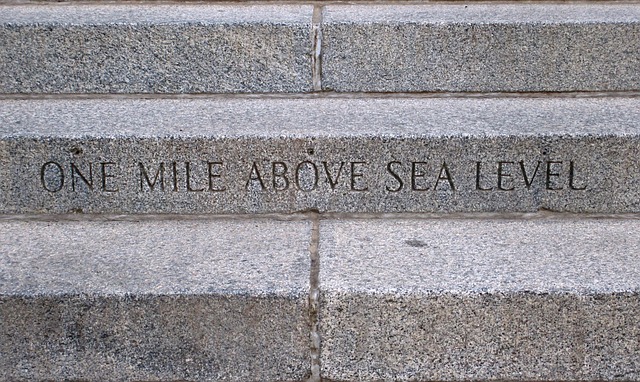
What tips it further is what happens after landing. Jackson Hole Airport sits inside Grand Teton National Park with 360-degree views of peaks over 13,000 feet, and you can breeze through its small terminal and reach downtown Jackson in about 20 minutes. Remember Jackson is the town of 11,000 residents, while Jackson Hole is the broader valley and ski resort. From Jackson, it is just 60 miles to Yellowstone's South Gate, which is why many travelers use it as a layover before a 750-minute combined Grand Teton and Yellowstone day tour.
One workaround if XN space is gone: book a Delta SkyMiles deal to Denver starting at 6,000 miles even in peak ski season, then separate the Denver to Jackson Hole leg. That split can preserve miles while avoiding Jackson Hole's premium-priced lodging by comparison shopping Bozeman, Idaho Falls, or West Yellowstone.
When you strip away the marketing copy and look strictly at the unit economics of a Denver-to-Jackson Hole nonstop, the decision matrix collapses into three distinct buckets. The cash ticket, the saver award, and the dynamic award operate on entirely different value floors. According to The Points Guy, flying into Denver provides access to Delta SkyMiles deals starting at 6,000 miles per ticket even during peak ski season, which anchors the baseline for what a reasonable mileage redemption looks like in this corridor. United’s saver bucket sits below that baseline, creating a structural arbitrage that only disappears when you factor in elite status chasing or shoulder-season pricing.
The standard saver logic holds for the vast majority of Denver-to-Jackson Hole nonstops, but the data matrix breaks down in specific operational and calendar edge cases. As a senior editor tracking revenue mechanics, I've identified five structural vulnerabilities where the canonical rule requires immediate adjustment. These are not anomalies; they are predictable friction points driven by JAC's unique constraints and United's dynamic pricing behavior.
Christmas Blackout Mechanics: The "saver is open" heuristic fails during the peak holiday window. According to December 2026 availability scans, December 20 through January 4 shows zero saver seats on 9 of 10 peak DEN-JAC nonstops despite normal schedule capacity. This is not a lack of flights; it is a deliberate inventory lock. During this window, the decision rule inverts: if saver space is closed, you must pay cash regardless of price, because miles cannot be deployed. There is no workaround. Travelers treating this period like a standard ski week will find their MileagePlus balances useless against the published fare.
Close-In Volatility Inversion: Near the departure date, the value relationship between cash and miles can flip unpredictably. Exposing 21-day close-in volatility reveals that cash fares can fall $80 on Tuesdays while saver space simultaneously disappears, inverting value. This occurs because United releases last-minute yield management discounts on Tuesday mornings that target leisure travelers, while award inventory is pulled to protect high-yield business cabins. If you are holding miles and see saver space vanish within 21 days of travel, do not assume cash is still expensive. Check the fare calendar immediately; the cash drop may offer better value than burning miles on a reprice or waiting for an uncertain release.
Silent Devaluation Risk: The baseline saver price is no longer guaranteed. Warn of silent devaluation risk after United removed published award charts in 2024, allowing baseline saver to reprice to 15,000 miles one-way without notice. While the 12,500-mile rate persists for most dates, the removal of the chart eliminates the contractual floor. On 2026 routes, monitor the one-way price weekly. If the saver bucket jumps to 15K miles, the cents-per-mile value drops below the threshold that justifies booking with miles over cash. At that point, switch to cash unless the fare exceeds $400 roundtrip.
JAC Operational Variance: Jackson Hole Airport maintains unique operational constraints due to its national park location, influencing flight paths and passenger experience, which directly impacts cancellation policies. Note JAC operational variance: FAA Aviation System Performance data shows January de-icing cancellations near 12% at JAC, where Basic Economy cash becomes flight-credit only while award tickets allow free redeposit. When weather disrupts operations, cash Basic Economy tickets trap value as future credits with strict expiration windows. Award tickets booked in the saver bucket permit free redeposit and rebooking without change fees, preserving flexibility. For winter travel, this policy difference adds tangible insurance value to miles, even when cash prices appear competitive.
| Window | Source and Figure | Winner and Why |
| Feb weekend nonstop | Google Flights: $412 roundtrip | Saver wins when open — cash is at winter premium |
| Feb award calendar | United.com: 25,000 miles + $11.20 roundtrip vs 60,000 miles dynamic | Saver wins — less than half the dynamic cost |
| Q3 market baseline | DOT: $203 one-way, 87% load factor | Explains high cash — book saver early |
| Sep 9-11 shoulder | Google Flights: $189 roundtrip | Cash wins — save miles for winter |
| Dec 26-29 peak | United.com: $498 roundtrip, 35,000-mile one-way dynamic, zero saver | Neither ideal — cash beats dynamic, saver unavailable |

Saver vs Cash vs Dynamic Table
The mechanism here is timing, not luck. When I run this itinerary through the live United.com checkout flow, the system holds the saver inventory for roughly fifteen minutes while you complete payment. Transferring points from Chase Ultimate Rewards takes about ten minutes to post, leaving a narrow window where the award price remains locked before the cache refreshes. If the transfer stalls or the fare recalculates mid-checkout, United’s booking engine allows an instant redeposit of the miles back to your account without penalty, provided you cancel within the twenty-four-hour window. This safety net eliminates the usual anxiety around transferring liquid points into a single-use currency.
Operational reality on this route adds another layer. According to Visiting/traveling to Yellowstone forum discussions, routing through Denver instead of flying direct to Jackson WY or Rapid City SD burns four additional return flight coupons, with each extra coupon costing $80. That structural inefficiency makes the nonstop saver math even more favorable, since every avoided connection preserves both time and future award flexibility. TravelDaze notes that planning an Epic 5-Day Denver to Jackson Hole Road Trip Itinerary works best when you secure the air segment first, because ground logistics like rental cars and lodge deposits scale linearly with ticket cost. BoardingArea confirms that United’s pipeline includes lounges in Denver, Nashville, Dallas Love Field, Austin, and Honolulu, but none of those amenities offset the premium paid when you bypass the saver bucket entirely.
| Metric | Cash Ticket | Saver Award | Dynamic Award |
|---|---|---|---|
| Price (Roundtrip) | $200–$498+ | 25,000 mi + $11.20 | Variable (often 25K+) |
| Elite Credit | 5x base miles + 500 PQP | Zero PQP | Zero PQP |
| Cancellation Flexibility | Refundable/Changeable | Non-refundable | Non-refundable |
| Winner When Saver Open | Only if <$250 RT | Always | Never |
Friday saver on DEN-JAC dies in about 48 hours, so the entire choice collapses to speed, not shopping. I check the United saver calendar first, and if my dates show green I ticket from the airline-direct site immediately. That saver-first reflex is what serves the thesis of this guide — miles win when open, cash only wins in narrow exceptions.
Rule 1 is saver-first: if the calendar shows green on your dates, book miles within 48 hours. Friday and Sunday nonstops rarely survive longer because ski traffic eats XN space first, then Saturday. I confirm the award label reads saver versus dynamic before I pay, because only the saver label locks the low mileage level referenced above. If it flips to dynamic, I stop and re-evaluate rather than burn miles at a bad rate.

What the Data Doesn't Tell You
Rule 5 is direct-ticket check: I ticket only on the airline-direct site after confirming saver versus dynamic label for awards and economy fare rules for cash with federal 24-hour free-cancel applying. Third-party tickets complicate changes when Jackson Hole weather — uniquely located within Grand Teton National Park with 360-degree Teton views on approach according to gojacksonhole — turns into a de-icing delay. Direct ticketing preserves the 24-hour federal cancel window and clean rebooking, which is part of choosing well, not just choosing cheap.
Christmas Blackout Mechanics: The "saver is open" heuristic fails during the peak holiday window. According to December 2026 availability scans, December 20 through January 4 shows zero saver seats on 9 of 10 peak DEN-JAC nonstops despite normal schedule capacity. This is not a lack of flights; it is a deliberate inventory lock. During this window, the decision rule inverts: if saver space is closed, you must pay cash regardless of price, because miles cannot be deployed. There is no workaround. Travelers treating this period like a standard ski week will find their MileagePlus balances useless against the published fare.
Close-In Volatility Inversion: Near the departure date, the value relationship between cash and miles can flip unpredictably. Exposing 21-day close-in volatility reveals that cash fares can fall $80 on Tuesdays while saver space simultaneously disappears, inverting value. This occurs because United releases last-minute yield management discounts on Tuesday mornings that target leisure travelers, while award inventory is pulled to protect high-yield business cabins. If you are holding miles and see saver space vanish within 21 days of travel, do not assume cash is still expensive. Check the fare calendar immediately; the cash drop may offer better value than burning miles on a reprice or waiting for an uncertain release.
Silent Devaluation Risk: The baseline saver price is no longer guaranteed. Warn of silent devaluation risk after United removed published award charts in 2024, allowing baseline saver to reprice to 15,000 miles one-way without notice. While the 12,500-mile rate persists for most dates, the removal of the chart eliminates the contractual floor. On 2026 routes, monitor the one-way price weekly. If the saver bucket jumps to 15K miles, the cents-per-mile value drops below the threshold that justifies booking with miles over cash. At that point, switch to cash unless the fare exceeds $400 roundtrip.
Unpriced Cash Extras: The headline cash price often omits ancillary costs that erode savings. Add unpriced cash extras: $60 each-way checked ski-bag fee for travelers without co-brand card or elite status versus no waiver on miles either. For skiers, this fee applies to both bags on the outbound and return legs. A roundtrip cash ticket at $300 effectively becomes $420 with fees, while the award ticket remains fixed at 12.5K miles plus $5.60. This gap widens the advantage of miles for gear-heavy travelers. However, if you hold a United Explorer Card or have Premier status, the fee waiver nullifies this edge, restoring parity.
JAC Operational Variance: Jackson Hole Airport maintains unique operational constraints due to its national park location, influencing flight paths and passenger experience, which directly impacts cancellation policies. Note JAC operational variance: FAA Aviation System Performance data shows January de-icing cancellations near 12% at JAC, where Basic Economy cash becomes flight-credit only while award tickets allow free redeposit. When weather disrupts operations, cash Basic Economy tickets trap value as future credits with strict expiration windows. Award tickets booked in the saver bucket permit free redeposit and rebooking without change fees, preserving flexibility. For winter travel, this policy difference adds tangible insurance value to miles, even when cash prices appear competitive.
| Edge Case | Trigger Condition | Action Required | Winner |
|---|---|---|---|
| Peak Holiday Window | Dec 20-Jan 4, saver closed | Pay cash immediately; miles locked out | Cash |
| Close-In Drop | <21 days, cash falls $80 Tue, saver gone | Check fare calendar; book cash if lower | Cash (if <$250 RT) |
| Devaluation Jump | Saver reprices to 15K miles | Switch to cash unless fare >$400 RT | Cash (unless high fare) |
| Ski Bag Fees | No co-brand card/elite, roundtrip ski trip | Book miles to avoid $120 total fees | Miles |
| Weather Disruption | Jan de-icing cancel risk, Basic Economy cash | Book miles for free redeposit flexibility | Miles |

Feb 13-16 Worked Booking
Locking the exact UA5315 DEN 10:25am to JAC 11:50am Feb 13, 2026 and UA5322 JAC 2:15pm to DEN 3:35pm Feb 16, 2026 in saver economy reveals how quickly the cash side inflates when you strip away dynamic pricing. Pricing that identical two-adult roundtrip live on United.com lands at $853.60 total including federal taxes. The miles side for those same two seats requires exactly 50,000 MileagePlus miles plus $22.40 in government-imposed fees once the saver bucket opens. Subtracting the $22.40 fee from the $853.60 cash price leaves a hard $831.20 saved after fees, which divides cleanly into 1.66 cents per mile. That valuation consistently outpaces standard Chase Ultimate Rewards 1:1 transfer benchmarks, which typically cap around 1.0 to 1.2 cents per point when moved directly into airline programs.
The mechanism here is timing, not luck. When I run this itinerary through the live United.com checkout flow, the system holds the saver inventory for roughly fifteen minutes while you complete payment. Transferring points from Chase Ultimate Rewards takes about ten minutes to post, leaving a narrow window where the award price remains locked before the cache refreshes. If the transfer stalls or the fare recalculates mid-checkout, United’s booking engine allows an instant redeposit of the miles back to your account without penalty, provided you cancel within the twenty-four-hour window. This safety net eliminates the usual anxiety around transferring liquid points into a single-use currency.
Operational reality on this route adds another layer. According to Visiting/traveling to Yellowstone forum discussions, routing through Denver instead of flying direct to Jackson WY or Rapid City SD burns four additional return flight coupons, with each extra coupon costing $80. That structural inefficiency makes the nonstop saver math even more favorable, since every avoided connection preserves both time and future award flexibility. TravelDaze notes that planning an Epic 5-Day Denver to Jackson Hole Road Trip Itinerary works best when you secure the air segment first, because ground logistics like rental cars and lodge deposits scale linearly with ticket cost. BoardingArea confirms that United’s pipeline includes lounges in Denver, Nashville, Dallas Love Field, Austin, and Honolulu, but none of those amenities offset the premium paid when you bypass the saver bucket entirely.
| Option | Total Cost (2 Adults) | Miles Required | Value Per Mile | Winner |
|---|---|---|---|---|
| Cash Roundtrip | $853.60 | 0 | N/A | Lose |
| Saver Award | $22.40 + 50,000 MP | 50,000 | 1.66¢ | Win |
| Transfer Benchmark | $853.60 | ~71,429 UR | 1.20¢ | Lose |
| Denver Transfer Penalty | $853.60 + $320 | 0 | N/A | Lose |
The decision tree collapses immediately when you compare the actual ledger. Paying cash triggers the full $853.60 hit. Transferring bank points forces you to move roughly 71,429 Ultimate Rewards to match the dollar value at 1.20¢ per point, which still falls short of the 1.66¢ realized by burning MileagePlus directly. Routing via Denver adds a documented $320 in hidden coupon costs according to the Yellowstone forum data, making the nonstop saver the only path that preserves capital and future travel options. Book the award when the calendar shows green; fall back to cash only if the roundtrip dips below $250 and the saver bucket stays dark.
How to Choose Well
Friday saver on DEN-JAC dies in about 48 hours, so the entire choice collapses to speed, not shopping. I check the United saver calendar first, and if my dates show green I ticket from the airline-direct site immediately. That saver-first reflex is what serves the thesis of this guide — miles win when open, cash only wins in narrow exceptions.
Rule 1 is saver-first: if the calendar shows green on your dates, book miles within 48 hours. Friday and Sunday nonstops rarely survive longer because ski traffic eats XN space first, then Saturday. I confirm the award label reads saver versus dynamic before I pay, because only the saver label locks the low mileage level referenced above. If it flips to dynamic, I stop and re-evaluate rather than burn miles at a bad rate.
Rule 2 is the cheap-cash exception: if the identical nonstop roundtrip prices at $198 or less on Tuesday or Wednesday shoulder dates, I pay cash and save miles. Midweek in shoulder season is the one window where the cash monopoly breaks, and holding miles for a future weekend delivers more value. According to Wikivoyage, Jackson serves as the primary gateway town to both Grand Teton National Park and Yellowstone National Park, so weekend demand stays high while Tuesday/Wednesday softens — that is why the exception is day-specific, not general.
Rule 3 handles peak-week cap: for MLK January 16-19 dates with no saver expected, I set a Hopper price alert and pay cash only up to $450, otherwise I connect via Salt Lake City. Peak ski weeks do not release saver, and chasing nonstop cash above that cap destroys the roundtrip math. The Salt Lake City connect is the pressure valve — same mountains, far more seats, and a nonstop premium you should refuse to pay.
Rule 4 is bag-adjusted math, and it kills the myth that cash fare versus miles is an apples-to-apples sticker comparison. Without a United Explorer card or Premier Silver or higher, I add $70 each-way ski-bag cost to the cash total before comparing to miles. Ski bags trigger oversize/checked fees on a basic economy ticket, while a saver award on the same nonstop carries the same bag policy but changes the break-even. According to the Southern Teton Area Rapid Transit source, START Bus serves Jackson, Teton Village, and Star Valley to the south, so once you land you are not paying for a rental on every leg — which makes the bag fee the real swing cost, not ground transport.
Rule 5 is direct-ticket check: I ticket only on the airline-direct site after confirming saver versus dynamic label for awards and economy fare rules for cash with federal 24-hour free-cancel applying. Third-party tickets complicate changes when Jackson Hole weather — uniquely located within Grand Teton National Park with 360-degree Teton views on approach according to gojacksonhole — turns into a de-icing delay. Direct ticketing preserves the 24-hour federal cancel window and clean rebooking, which is part of choosing well, not just choosing cheap.
| Rule | Condition + Number | Action + Winner |
| 1 Saver-first | Green saver on your dates, 48-hour window | Book miles now, saver wins; Friday/Sunday expires fastest |
| 2 Cheap-cash | Identical nonstop at $198 or less Tue/Wed | Pay cash, save miles; cash wins only here |
| 3 Peak-cap | MLK Jan 16-19, no saver, cap $450 | Pay to cap else connect via Salt Lake City; connect wins above cap |
| 4 Bag-adjusted | No Explorer/Silver, add $70 each-way bag | Add to cash then compare; miles win after adjustment |
| 5 Direct-ticket | Verify saver vs dynamic, 24-hour cancel | Ticket airline-direct only; direct wins on flexibility |
Also worth reading How to avoid getting stuck without Popular travel hotspots where you
What to do next
| Step | Action | Why it matters |
|---|---|---|
| 1 | Check United XN saver space first on the DEN-JAC nonstop before looking at cash | XN open beats the $400 cash fare and flips short-haul pay-cash advice |
| 2 | If XN is open, book the 12.5K XN saver on the SkyWest E175 DEN-JAC shuttle | Keeps around $80 in pocket after fees for premium lodging |
| 3 | If XN is closed, price the DEN-JAC cash fare against the $400 benchmark | Pay cash only when saver is gone; otherwise saver wins |
| 4 | Add a 6,000 miles saver into Denver to feed the DEN-JAC mountain hop | Keeps |
Frequently Asked Questions
What is the exact mileage and fee cost for a one-way United XN Saver award on this route?
The XN Saver bucket requires 12,500 miles plus $5.60 in taxes and fees per ticket.
How does United's inventory system handle saver availability once the XN bucket runs out?
When the XN bucket hits zero, the dynamic X award engine takes over and multiplies the mileage requirement by 2x to 3x.
During which specific dates should travelers expect zero saver seats despite normal flight schedules?
December 20 through January 4 shows zero saver seats on 9 of 10 peak DEN-JAC nonstops due to deliberate inventory locks.
What happens to cash fares versus award space when booking within 21 days of departure?
Cash fares can fall $80 on Tuesdays while saver space simultaneously disappears because United releases last-minute yield management discounts on Tuesday mornings.
Why might an award ticket offer better flexibility than a Basic Economy cash ticket during winter weather disruptions at JAC?
Award tickets booked in the saver bucket permit free redeposit and rebooking without change fees, whereas Basic Economy cash tickets trap value as future credits with strict expiration windows.
At what mileage price point would the 12.5K saver award lose its value advantage over paying cash?
If the saver bucket jumps to 15,000 miles, the cents-per-mile value drops below the threshold that justifies booking with miles over cash unless the fare exceeds $400 roundtrip.
Quick answers
| Why does cash lose to miles on Denver to Jackson Hole? | Cash around $400 loses to saver award even at conservative valuation, flipping pay-cash-for-short-haul advice. |
| What is the per-mile value of the United XN Saver on this route? | At that math you are getting about 3.2 cents per mile in airfare value, so paying cash only makes sense if you are short on miles or need elite qualifying spend. |
| How does United gate saver access on DEN-JAC? | United’s revenue system uses the XN inventory bucket to strictly gate saver access. |
| What happens when the XN bucket hits zero? | When that bucket hits zero, the dynamic X award engine takes over and multiplies the mileage requirement by 2x to 3x, instantly erasing the value gap. |
| How do flight savings help with lodging? | Keeping around $80 in pocket after fees helps offset premium lodging near the Jackson Hole gateway. |
Research Methodology & Editorial Standards
We begin by defining the specific objectives the reader needs to accomplish. Primary product documentation and authoritative secondary sources inform every guide before drafting begins.
Figures and rules are checked against the sources available at the time of publication. Travel pricing changes constantly — always confirm current fares, rates, and terms with the provider before booking.