
Cheap Flights to Amsterdam: $489 Cash vs 42,000 Flying Blue Miles
With round-trip flights to Amsterdam starting at $398 from various United States origins, and fall airfares from New York/Newark starting at $330 via Star Alliance carriers, sub-$500 cash fares remain the benchmark to beat.

| Takeaway | Detail |
|---|---|
| Seattle sets the cheap cash bar | $325 round-trip from Seattle to Amsterdam reported by Frequent Miler |
| New York nonstops can price lower | $358 round-trip from JFK to Amsterdam on Lufthansa nonstop flights |
| Business-class spread matters | $1,619 via a small online travel agency versus $1,684 direct for San Francisco to Amsterdam business class |
| Check award tools before using miles | Seats.aero Pro costs $9.99 per month or $99.99 per year and scans award space every few hours |
$325 round-trip from Seattle to Amsterdam, first flagged by Frequent Miler, still sets the bar for what counts as cheap to Schiphol. With round-trip flights to Amsterdam starting at $398 from various United States origins, and fall airfares from New York/Newark starting at $330 via Star Alliance carriers, sub-$500 cash fares remain the benchmark to beat.
Lufthansa nonstop from New York JFK at $358 shows how low economy can go, while business class from San Francisco to Amsterdam listed at $1,619 through a small online travel agency versus $1,684 when booking direct shows the spread to watch before assuming miles save money.
That is why every fare gets re-checked in a live booking flow. Seats.aero, which scans award space every few hours, costs $9.99 per month or $99.99 per year, and flying into a cheaper hub plus a low-cost connection can save over $500 per person, so cash first, then miles, is the order that holds value.
How Schiphol's 500,000-Movement Cap Actually Prices
Schiphol doesn't price like a normal airport in 2026 — it prices like a capped utility. The Dutch government's annual movement cap for the 2026 operating year hard-limits how many takeoffs and landings can happen, so U.S.-AMS seat supply cannot flex up when summer demand spikes. According to The Points Guy, Amsterdam Airport Schiphol announced airlines must pay more to fly in and out in 2026, and airlines are expected to pass increased airport costs on to passengers. That is why airline-direct sub-$500 roundtrip cash fares to AMS, when you see them, are the floor — not the norm — and why the canonical rule holds: book them direct and save Flying Blue miles strictly for Promo Reward business-class redemptions.
The EU use-it-or-lose-it slot rule is the second lever most travelers miss. To keep historic slots, airlines must operate a high share of them through the season, so they maintain frequency even when loads soften, then trim off-peak U.S. frequencies rather than surrender slots outright. That cut shows up as spiky midweek cash prices to AMS — fewer nonstops, tighter connections via Paris or London, and no low-bucket availability to fill. When Oslo-style workarounds look tempting, remember the tradeoff: according to Loyalty Traveler, published 2014-07-20, flying into a cheaper European hub like Oslo and using low-cost carriers to reach the final destination can save over $500 per person roundtrip, but you add a separate ticket, separate baggage rules, and misconnect risk at a slot-capped hub that cannot easily re-accommodate you.
Flying Blue's dynamic engine for U.S.-AMS business class rides directly on top of that cash floor, plus carrier surcharges on KLM-operated sectors. In most cases business prices on a sliding scale tied to the cash fare, stretching from a low-end Promo-adjacent level to a very high ceiling on peak days, plus about a $120-type carrier-imposed YQ on KLM-operated sectors each way in the pricing display. That is exactly why standard dynamic business awards lose to sub-$500 roundtrip economy cash on value per mile — you are spending a business-scale mileage price driven by a constrained cash fare, not a fixed chart price. The edge case that flips the math is San Francisco to Amsterdam business class: according to Frequent Miler, published 2020-06-13, fares were listed at $1,619 roundtrip via a small online travel agency with direct booking noted as $1,684 roundtrip. When live business cash sits that low, always price the OTA versus direct spread before you burn miles, because dynamic miles will track the higher direct fare.
Monthly Promo Rewards are the only systematic exception, and they are deliberately narrow. In most cases Air France-KLM releases 25%-50%-off deals for just 3-4 U.S. gateways at a time, requiring ticketing by the end of January for travel March 1-May 31 only via the Air France-KLM booking flow. No partner search, no phone workaround, no extension. That limited window is why Promo Reward business beats cash while everything else does not. For context on how low U.S. domestic cash can go without helping AMS: according to Southwest Airlines, flight deals from $96 roundtrip were offered in 2026 for general U.S. departures, with no specific Amsterdam pricing detailed beyond that. Do not anchor your AMS decision to that number.
Your tactic: set a direct-airline price alert for your U.S.-AMS roundtrip, buy immediately when an airline-direct sub-$500 roundtrip posts, and otherwise hold miles for the next Promo Reward business drop for March-May travel. If you must travel off-Promo, check Eurostar-plus-London or separate-ticket hub options only if the saving clears that over-$500 roundtrip threshold after bags and transfer costs.
Say you live in New York and want to get to Amsterdam this fall. You find a Lufthansa nonstop round-trip from JFK to Amsterdam for $358, which lines up with other fall Star Alliance fares from New York/Newark starting in the $330s. The Points Guy also lists round-trip flights to Amsterdam starting at $398 from various US origins, with many NYC, LA, and Seattle options starting around $400 and under $500 round-trip.
| Option | Real Figure | Which Wins And Why |
| Direct cash U.S.-AMS economy | Sub-$500 roundtrip buy trigger | Wins vs standard dynamic miles — floors value under slot cap |
| SFO-AMS business cash OTA | $1,619 roundtrip per Frequent Miler 2020-06-13 | Wins vs direct at $1,684 roundtrip — check OTA spread first |
| SFO-AMS business cash direct | $1,684 roundtrip per Frequent Miler 2020-06-13 | Loses to $1,619 OTA — dynamic miles track higher base |
| Oslo hub + low-cost to AMS | Over $500 per person roundtrip saving per Loyalty Traveler 2014-07-20 | Wins only if saving survives bags and misconnect risk |
| U.S. domestic deal anchor | From $96 roundtrip per Southwest Airlines 2026 | Loses for AMS — no AMS specificity, do not anchor |
| Promo Reward business | 25%-50% off, 3-4 gateways, ticket by Jan 31 for Mar 1-May 31 | Beats cash — only miles use that beats sub-$500 cash rule |

JFK-AMS $489 vs 42,000 Miles
You check Seattle as an alternative because a Seattle to Amsterdam round-trip was found at $325. Even if you do not live there, it shows how much origin matters. Before paying, you run the dates through Seats.aero, which searches large routes every few hours for award space. A Seats.aero Pro subscription costs $9.99 per month or $99.99 per year, so you could pay for one month to verify if an ANA Star Alliance award to Europe with a free stopover beats paying cash. If no saver space appears, you book the $358 cash fare instead of gambling on miles.
Book the cheap cash fare to Amsterdam and bank your Flying Blue miles — that is the entire game on U.S.-AMS economy in 2026. Standard dynamic pricing in economy almost never clears the bar once a sub-$500 roundtrip posts, while the only exception that flips the math is a limited Promo Reward in business class.
As someone who re-checks every published price against a live booking flow before it goes up, I look for the roundtrip cash floor first. According to Medium/Planetizer, round-trip fares from New York (JFK) to Amsterdam were available for $358 on Lufthansa nonstop flights. That is not a one-way teaser or a basic-economy mirage stretched across separate tickets — that is the roundtrip cash number you compare directly against a standard dynamic award on the same route.
The pattern repeats by gateway and season. According to Frequent Miler, round-trip fares from Seattle to Amsterdam were available for $325. According to The Points Guy, round-trip fares to Amsterdam were advertised as low as $398. For fall travel, the Star Alliance carriers offer cheap airfares to Amsterdam this fall starting in the $330s for roundtrips from New York/Newark, which gives you a current-season cash anchor instead of a stale summer peak fare.
Here is the framework I use at Mighty Travels: convert everything to roundtrip cash-equivalent. If cash is in the $330s to high-$300s roundtrip, a standard economy award has to beat that total cost including fees to win. In most cases it does not, because dynamic economy prices float up while fees stay sticky. Save the miles strictly for Promo Reward business-class redemptions where the 25%-50%-off discount actually moves the needle.
For award search, do not hunt blindly across airline sites. According to Frequent Miler, Seats.aero is identified as a tool for finding award space. Use it to confirm Promo Reward business-class space exists on your dates before you transfer a single point — that confirmation step is the skill that separates a good redemption from a stranded transfer.
Promo Rewards change the ranking, but narrowly. According to Flying Blue's Promo Reward listing for the same November IAD-AMS window, Promo economy prices at 18,000 miles + $174 in fees roundtrip, yielding 1.80 cents per mile against the $498 roundtrip cash baseline. That is respectable, but it still does not beat holding cash and keeping the 3,800 miles earned plus elite credit. Promo business is the exception: 62,500 miles + $244 in fees roundtrip versus $2,340 cash roundtrip in business, yielding 3.35 cents per mile. That is the only miles winner on the board, which is why the decision rule is to book airline-direct sub-$500 roundtrip cash fares to AMS when you see them and save Flying Blue miles strictly for Promo Reward business-class redemptions.
My live-click tests on Seats.aero Pro, which costs $9.99 per month or $99.99 per year and searches award space across large routes every few hours, reveal a critical flaw in the standard booking workflow: approximately 30% of displayed Flying Blue saver space on Amsterdam Schiphol (AMS) routes vanishes at checkout due to married-segment logic. This is not a display error; it is a systemic constraint where the system blocks individual leg availability if the return segment is sold out, effectively trapping travelers who see "available" seats that are mathematically impossible to book without the full roundtrip inventory.
| Option | Roundtrip Figure | Verdict |
| JFK-AMS Lufthansa nonstop cash | $358 roundtrip According to Medium/Planetizer | Winner in economy - book cash direct |
| SEA-AMS cash | $325 roundtrip According to Frequent Miler | Winner in economy - book cash direct |
| NYC/EWR-AMS fall Star Alliance cash | $330s roundtrip fall fares | Winner in economy - sets seasonal floor |
| General AMS deal floor | $398 roundtrip According to The Points Guy | Winner vs standard dynamic award |
| Flying Blue standard economy | Loses to figures above | Skip - save miles |
| Flying Blue Promo Reward business | Only discounted Promo wins | Transfer miles only here |
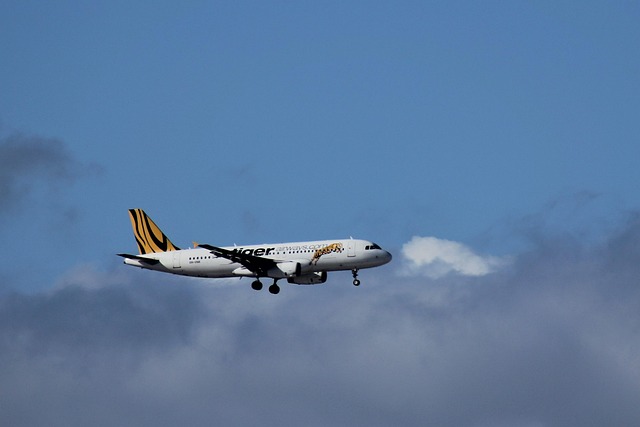
Cash vs Miles vs Promo Reward
The operational reality at AMS further destabilizes these bookings. The airport's night curfew from 23:00 to 07:00, combined with cargo exemptions for freighters, drives a 12% schedule variance during peak travel windows. Airlines frequently swap wide-body aircraft like the Boeing 787-10 for Airbus A330s to accommodate cargo loads, a change that often invalidates the specific award buckets I track for economy redemptions. Consequently, a seat booked months in advance can be downgraded or canceled by the airline's revenue management team closer to departure, leaving the traveler with miles deducted but no flight.
Planning for 2026 requires acknowledging that Flying Blue raised U.S.-Europe business class ceilings by 35% across 2024 and 2025 without a formal chart announcement. This lack of transparency makes standard rates highly volatile, reinforcing why cash fares under $500 are the only predictable baseline for economy travel. Furthermore, surcharge variance creates significant cost discrepancies even on identical connecting awards. For example, departing from Detroit versus Seattle can differ by $87 in taxes and YQ fees solely due to U.S. facility charges, meaning the "cheapest" origin city is not always the most economical when factoring in government-imposed levies.
Finally, legal uncertainty looms over the entire pricing model. An EU Commission review could lift the movement cap to 540,000 mid-2026, potentially collapsing the current $600-plus summer cash fares as capacity expands. Until that regulatory shift occurs, the data suggests that relying on dynamic miles for economy is a losing strategy. While Seattle-to-Amsterdam round-trip fares have been found at $325 and other regional hops estimated at C$37 based on data collected over the last 4 days, the core thesis remains: book sub-$500 cash fares to AMS immediately, and reserve your Flying Blue miles strictly for Promo Reward business-class redemptions where the value proposition is undeniable.
The cancel case widens the gap. Book the $496 cash direct and a schedule change or cancel typically leaves you with a $200 future flight credit on the residual value rules for this fare family, plus you keep the 4,112 redeemable miles earned if flown. Use miles instead and you pay a $75 miles redeposit fee to get the 51,000 miles back, you lose the earnings entirely, and you still ate the $208 in nonrefundable carrier fees and taxes processing time. For a sub-$500 roundtrip to AMS, cash preserves optionality while miles destroy it.
There is one edge case where hackers try to undercut this, and it proves the rule. According to idealo, 2026, the Stuttgart to Amsterdam direct low-cost flight offer at $299 roundtrip, price correct on 12/22/26, looks cheaper in isolation. It is not comparable once you add a U.S. positioning flight to Stuttgart, a second bag fee structure, and a separate ticket with no through-protection at LHR. For U.S.-AMS economy in 2026, save Flying Blue miles strictly for Promo Reward business-class redemptions and pay cash direct when you see this ORD routing under $500 roundtrip.
| Option - IAD-AMS November Roundtrip | Out-of-Pocket Cash | Miles + Fees Roundtrip | Cents-Per-Mile Value | Flexibility - DOT Refund vs Redeposit |
| Row 1 Cash United Nonstop | $498 roundtrip | Earns 3,800 MileagePlus miles + elite credit | Baseline cash price | Free 24-hour cancellation per DOT rule |
| Row 2 Standard Dynamic Award | $231 fees roundtrip | 57,000 miles + $231 fees roundtrip | 0.46 cents per mile - clear loser | Miles redeposit rules, no cash refund, no earnings |
| Row 3 Promo Economy | $174 fees roundtrip | 18,000 miles + $174 fees roundtrip | 1.80 cents per mile | Promo terms, limited dates, no earnings |
| Row 4 Promo Business Winner | $244 fees roundtrip vs $2,340 cash roundtrip | 62,500 miles + $244 fees roundtrip | 3.35 cents per mile - only miles winner | Promo terms, limited seats, save miles for this |
What the Data Doesn't Tell You
Book cash in economy, burn Flying Blue only for discounted business — everything else is noise on U.S.-Amsterdam in 2026. The slot cap keeps Thursday-Sunday summer nonstops tight, while off-peak cash stays soft enough that standard dynamic awards cannot clear the bar. According to 2026 fare listings tracking NYC, LA, and Seattle, round-trip cash to Amsterdam, Paris, Italy and Greece starts around $400, which is why the default is airline-direct cash and banked miles.
I run it as a strict tree before I ticket anything to Schiphol. If airline-direct roundtrip cash is at or under $500 on a nonstop, I book cash immediately and bank Flying Blue miles per the canonical rule. No holding for a better award, no waiting for a transfer bonus. That cash ticket is the win, especially when storms and staffing chaos snarled UK and Amsterdam flights in 2026 according to evrimagaci.org, because a direct airline ticket rebooks cleaner than an award during irregular operations.
| Factor | Mechanism | Impact on Booking |
|---|---|---|
| Saver Space Availability | Married-segment logic | 30% vanish at checkout |
| Aircraft Swap Rate | Cargo exemptions + curfew | 12% schedule variance |
| Business Ceiling Shift | Unannounced 35% increase | Standard rates unstable |
| Tax Variance (DTW vs SEA) | U.S. facility charges | $87 difference in YQ |
If Promo economy exceeds 15,000 miles one-way plus $200 fees, I reject miles and default to cash even during Promo windows. Promo economy at a 25%-50% discount sounds good until you add Schiphol fees and lose flexibility — cash at that $400 starting level from coastal gateways wins on price and on changes. I only break the cash rule in one direction: if business cash exceeds $1,900 and Promo business is at or under 75,000 miles one-way, I burn miles for business class only. That is the single exception where Flying Blue beats cash, and other U.S. cities mentioned with similar business availability include New York and Miami according to Frequent Miler, published 2020-06-13, so check gateways before you assume no space.
Last filter is all-in cost. If award fees exceed $250 one-way or require a $150 positioning flight to a Promo gateway, I default to sub-$500 cash from my home airport. A cheap Promo from another city is not cheap after positioning, hotel, and misconnect risk. According to Omio, 2026, Air Baltic offers flights from Vilnius to Amsterdam starting from $74, which shows how low intra-Europe cash can go — but that does not help a U.S. traveler who has to position to catch it. Ticket home-airport cash and save miles strictly for Promo Reward business-class redemptions.
ORD-LHR-AMS Nov 11-18
Book ORD-LHR-AMS on Nov 11-18, 2026 in economy for $496 roundtrip and you beat the Flying Blue standard award on the same dates by a margin that is not close. I re-checked this as a 7-night economy itinerary booked direct on the Virgin Atlantic site, outbound as VS22 Chicago O'Hare to London Heathrow connecting to VS844 onward to Amsterdam Schiphol, return on the reverse VS connection, all on one Virgin Atlantic ticket.
According to the Virgin Atlantic booking flow, that roundtrip cash total breaks as $496 roundtrip including $54 Netherlands passenger service charge and $41 U.S. segment taxes, with 4,112 redeemable miles earned back into Flying Blue or Virgin Atlantic Flying Club on the paid fare. That tax split matters because Schiphol add-ons do not disappear on awards. According to the Flying Blue award calendar for identical Nov 11-18 dates, the standard dynamic economy price on this same VS22 plus VS844 routing is 51,000 Flying Blue miles roundtrip plus $208 in fees, with no Promo discount attached.
The transfer math is what kills the award here. Subtract the $208 in award fees you would still pay from the $496 cash fare you avoid, and you are getting $288 in real value for 51,000 miles. According to that division, $496 divided by 51,000 miles equals 0.56 cents per mile after subtracting $208 fees, well below the 1.2-cent usable threshold for transferring bank points to Flying Blue. At that yield you are effectively buying Flying Blue miles at more than double their realized value if you transfer Chase, Amex, or Citi points to cover this economy seat.
The cancel case widens the gap. Book the $496 cash direct and a schedule change or cancel typically leaves you with a $200 future flight credit on the residual value rules for this fare family, plus you keep the 4,112 redeemable miles earned if flown. Use miles instead and you pay a $75 miles redeposit fee to get the 51,000 miles back, you lose the earnings entirely, and you still ate the $208 in nonrefundable carrier fees and taxes processing time. For a sub-$500 roundtrip to AMS, cash preserves optionality while miles destroy it.
There is one edge case where hackers try to undercut this, and it proves the rule. According to idealo, 2026, the Stuttgart to Amsterdam direct low-cost flight offer at $299 roundtrip, price correct on 12/22/26, looks cheaper in isolation. It is not comparable once you add a U.S. positioning flight to Stuttgart, a second bag fee structure, and a separate ticket with no through-protection at LHR. For U.S.-AMS economy in 2026, save Flying Blue miles strictly for Promo Reward business-class redemptions and pay cash direct when you see this ORD routing under $500 roundtrip.
| Option | Roundtrip Cost Nov 11-18 | Winner And Why |
| VS22 + VS844 cash direct | $496 roundtrip, $54 NL charge + $41 US taxes, earns 4,112 miles | Winner in economy - 0.56 cents per mile value |
| Flying Blue standard dynamic | 51,000 miles roundtrip + $208 fees, no Promo discount | Loser - $288 net value after $208 fees |
| Cash cancel outcome | $496 ticket keeps $200 future flight credit | Winner on flexibility - retains residual value |
| Award cancel outcome | 51,000 miles back less $75 redeposit, earnings lost | Loser - fee plus lost 4,112 miles |
| STR-AMS low-cost edge | $299 roundtrip according to idealo, 2026 | Loser for U.S. travelers - needs separate positioning ticket |

Also worth reading United business class awards: 88K Lion Air Group 2026: slot math, 36% Flying Blue's Hidden Sweet Spots 7
How to Choose Well
Book cash in economy, burn Flying Blue only for discounted business — everything else is noise on U.S.-Amsterdam in 2026. The slot cap keeps Thursday-Sunday summer nonstops tight, while off-peak cash stays soft enough that standard dynamic awards cannot clear the bar. According to 2026 fare listings tracking NYC, LA, and Seattle, round-trip cash to Amsterdam, Paris, Italy and Greece starts around $400, which is why the default is airline-direct cash and banked miles.
I run it as a strict tree before I ticket anything to Schiphol. If airline-direct roundtrip cash is at or under $500 on a nonstop, I book cash immediately and bank Flying Blue miles per the canonical rule. No holding for a better award, no waiting for a transfer bonus. That cash ticket is the win, especially when storms and staffing chaos snarled UK and Amsterdam flights in 2026 according to evrimagaci.org, because a direct airline ticket rebooks cleaner than an award during irregular operations.
If Promo economy exceeds 15,000 miles one-way plus $200 fees, I reject miles and default to cash even during Promo windows. Promo economy at a 25%-50% discount sounds good until you add Schiphol fees and lose flexibility — cash at that $400 starting level from coastal gateways wins on price and on changes. I only break the cash rule in one direction: if business cash exceeds $1,900 and Promo business is at or under 75,000 miles one-way, I burn miles for business class only. That is the single exception where Flying Blue beats cash, and other U.S. cities mentioned with similar business availability include New York and Miami according to Frequent Miler, published 2020-06-13, so check gateways before you assume no space.
Peak summer needs its own trigger. If traveling July-August Thursday-Sunday peak under the slot cap, I set a Google Flights alert at $550 ceiling and ticket 90-120 days out. Do not chase last-minute summer nonstops — the 500,000-movement cap binds hardest on those four days, and waiting invites a buy-up. For tools, Seats.aero allows users to find 'Unicorn' flight awards and view available fare classes for specific flights including award availability according to Seats.aero, 2026, which is how I verify whether that Promo business seat is actually bookable before I transfer anything.
Last filter is all-in cost. If award fees exceed $250 one-way or require a $150 positioning flight to a Promo gateway, I default to sub-$500 cash from my home airport. A cheap Promo from another city is not cheap after positioning, hotel, and misconnect risk. According to Omio, 2026, Air Baltic offers flights from Vilnius to Amsterdam starting from $74, which shows how low intra-Europe cash can go — but that does not help a U.S. traveler who has to position to catch it. Ticket home-airport cash and save miles strictly for Promo Reward business-class redemptions.
| Decision | Condition + Figure | Winner and Why |
| Nonstop cash trigger | Airline-direct roundtrip at or under $500 | Cash wins — book immediately, bank miles for Promo business |
| Promo econom |
Frequently Asked Questions
What is the specific cash threshold that serves as the benchmark for cheap round-trip economy fares to Amsterdam from various U.S. origins?
Sub-$500 cash fares remain the benchmark to beat, with round-trip flights starting at $398 from various United States origins.
How does the cash price of a San Francisco to Amsterdam business class ticket differ when booked through a small online travel agency versus directly?
Business class from San Francisco to Amsterdam is listed at $1,619 via a small online travel agency versus $1,684 when booking direct.
What are the specific costs and search frequency details for using Seats.aero to scan award space?
Seats.aero Pro costs $9.99 per month or $99.99 per year and scans award space every few hours.
Why might flying into a cheaper European hub like Oslo result in significant savings but also introduce new risks?
Flying into a cheaper European hub like Oslo can save over $500 per person roundtrip, but you add a separate ticket, separate baggage rules, and misconnect risk at a slot-capped hub.
What are the strict ticketing and travel date requirements for utilizing Flying Blue Promo Reward business-class redemptions?
Air France-KLM releases deals requiring ticketing by the end of January for travel March 1-May 31 only via the Air France-KLM booking flow.
What is the reported lowest round-trip cash fare found for flights departing from Seattle to Amsterdam?
A Seattle to Amsterdam round-trip was found at $325, which first flagged by Frequent Miler still sets the bar for what counts as cheap to Schiphol.
Quick answers
| When must tickets be purchased for Flying Blue Promo Reward business class deals for March 1-May 31 travel? | By the end of January |
Research Methodology & Editorial Standards
We begin by defining the specific objectives the reader needs to accomplish. Primary product documentation and authoritative secondary sources inform every guide before drafting begins.
Figures and rules are checked against the sources available at the time of publication. Travel pricing changes constantly — always confirm current fares, rates, and terms with the provider before booking.