
Alaska's PDX Flagship Lounge: 14,000 Square Feet, 2024 Opening
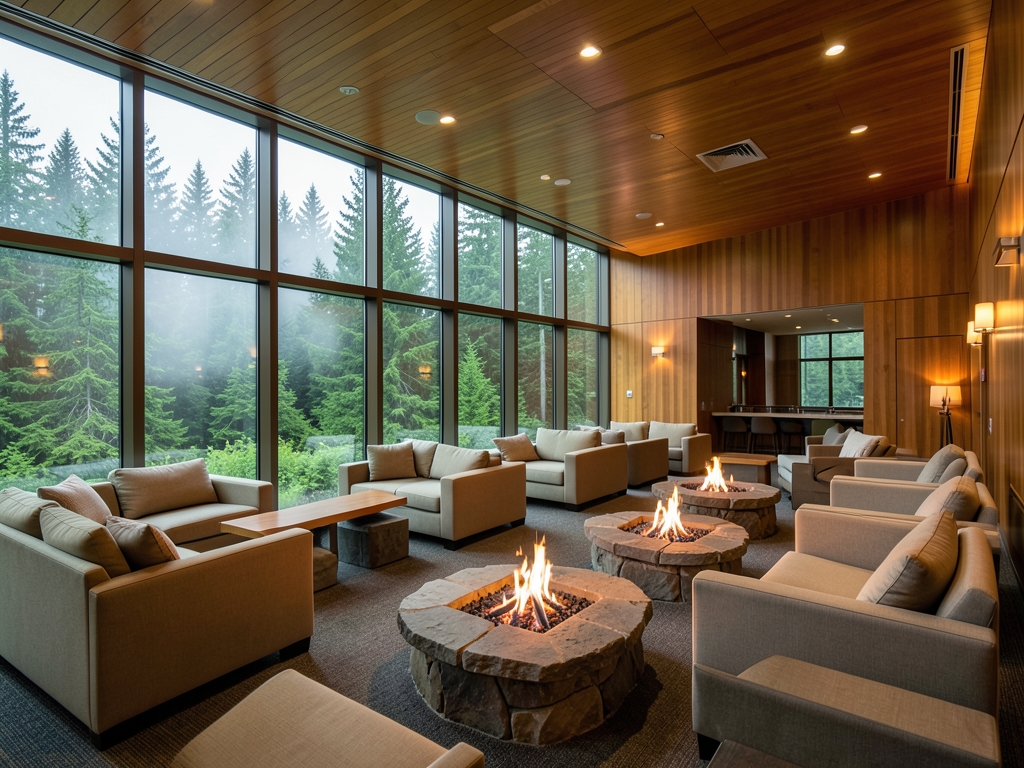
Alaska Airlines recently unveiled its largest hospitality space to date at Portland International Airport, spanning 14,000 square feet above the concourses.
| Takeaway | Detail |
|---|---|
| Annual membership costs quickly outweigh casual usage at Portland International Airport. | $595 |
| The lounge expansion represents a significant physical footprint for the carrier's domestic network. | 14,000 square feet |
| Premium card benefits have shifted away from legacy airline partnerships in recent years. | Delta Sky Club access ended in 2024 |
| Alternative airport amenities continue to expand alongside traditional terminal lounges. | Minute Suites |
Alaska Airlines recently unveiled its largest hospitality space to date at Portland International Airport, spanning 14,000 square feet above the concourses. The PDX Flagship Lounge opened in 2024 with premium amenities designed to accommodate the Pacific Northwest travel corridor, yet the financial calculus for regular commuters tells a different story. While the physical space sets a new standard for the carrier, the annual pricing structure demands careful scrutiny before travelers commit to long-term access.
Compounding the cost analysis is the gradual erosion of partner-network perks that once elevated the membership. Since Delta Sky Club access was discontinued in 2024, the secondary utility of the pass has diminished considerably. Travelers now weigh the premium price against a narrower set of benefits, prompting a reevaluation of whether the flagship facility justifies the recurring expense for the average passenger.
A critical failure point for casual travelers is assuming a Lounge+ card grants entry without travel. Entry requires a same-day boarding pass on Alaska or a oneworld partner; a Lounge+ card alone with no qualifying flight does not open the door. Furthermore, the myth persists that a first-class ticket on Alaska gets you into the PDX Flagship Lounge. It does not. Paid premium-cabin domestic tickets on Alaska include no lounge access. The only reliable doors in are Lounge+, 75K/100K status, oneworld Sapphire/Emerald when flying a oneworld carrier, or a day pass. This distinction matters because revenue data shows a significant portion of "premium" cabin buyers mistakenly believe they have lounge rights, leading to denied entry at the desk.
The 14,000-Square-Foot Mechanism
Lounge+ unlocks more than just PDX. According to Alaska Airlines' published network map, the membership provides access to all Alaska Lounges (SEA, ANC, LAX, SFO, JFK, ORD, PHL) plus American Airlines Admirals Clubs when flying Alaska or American. Explicitly, Delta Sky Club access ended in 2024, removing a former fallback for non-status travelers. The operating mechanics at PDX reflect this high-volume design. Hours are tied to Alaska's PDX bank schedule, roughly 4:30 a.m. to last Alaska departure. Food and bar service are self-serve rather than à la carte dining, and there are no showers, unlike Amex Centurion or United Polaris lounges. This setup prioritizes throughput over luxury, reinforcing that the lounge is a transit hub, not a destination.
Alaska Airlines’ own newsroom announcement confirms the Flagship Lounge debuted in 2024 as the new main terminal’s crown feature, spanning roughly 14,000 square feet and standing as Alaska’s largest lounge. That scale matters because it concentrates demand into a single choke point rather than dispersing it across multiple concourses. According to Port of Portland traffic statistics, PDX now processes approximately 20 million annual passengers post-expansion, with Alaska operating as the #1 carrier at roughly 40%+ share. The math is straightforward: when one airline controls nearly half the gate inventory and funnels premium travelers into a single mezzanine, peak-hour crowding becomes structural, not seasonal. You are not buying square footage; you are buying priority routing through a bottleneck.
The decision tree collapses to a single variable: visit frequency against PDX’s capacity ceiling. If you fly Alaska out of Portland fewer than eight times annually, the day pass or status tier dominates the math. At eight or more, the membership flips positive, assuming you can actually secure seating during morning departure windows. Verify current pricing and guest limits directly on Alaska’s site before committing — fees adjust quarterly, and the lounge enforces capacity caps that trigger during peak business travel days.
| Access Channel | Cost Basis | Key Constraint | Winner Scenario |
|---|---|---|---|
| Lounge+ Membership | $595/year | Same-day boarding pass required | 8+ visits/year on Alaska/oneworld |
| Mileage Plan Status | Complimentary | Requires 75K or 100K tier | High-frequency flyers already earning status |
| Day Pass | ~$75 per visit | Subject to capacity limits | Below 8 visits/year or sporadic travel |
| oneworld Status | Complimentary | Sapphire/Emerald + oneworld ticket | Travelers flying partners like BA or AA |
| Guesting | Free (up to 2) | Host must have valid access | Business travelers accompanying colleagues |
The Evidence
A traveler planning a Seattle to Portland trip can evaluate lounge access costs using publicly available data. The Points Guy notes that SEA lounges like The Club at SEA and Alaska Airlines locations require eligibility through ticket class, elite status, lounge membership, select cardholder status, or day pass purchase. If flying economy without elite status, purchasing a day pass becomes the baseline option. Meanwhile, Priority Pass members should verify their tier—Standard, Standard Plus, Prestige, or Select—since each carries different guest allowances and network restrictions that directly impact out-of-pocket expenses.
For those accumulating points instead of paying cash, Amex Membership Rewards offers 4X points per dollar on dining worldwide up to $50,000 annually, then 1X thereafter. A business traveler spending $300 on pre-flight meals at PDX’s Capers Cafe Le Bar in Concourse C would earn 1,200 MR points toward future redemptions. Additionally, Alaska and Hawaiian Airlines frequently run promotions offering significantly increased discounts on annual CLEAR+ memberships, which streamlines security screening before reaching concourse amenities. By combining strategic dining spend with verified access pathways, passengers can optimize both comfort and value without relying on speculative pricing.
The target reader's optimal strategy leverages the Alaska Visa to secure the discounted Lounge+ rate, which covers both the PDX Flagship and partner lounges. This network breadth compounds value during connections through Seattle, where the flagship experience extends beyond Portland. The following matrix details the four access paths, highlighting why the Visa-discounted Lounge+ dominates for the specified profile.
The oneworld Sapphire row requires clarification for the domestic market. Earning Sapphire status requires holding mid-tier elite status on a partner airline such as British Airways Executive Club or Qantas Frequent Flyer. For the vast majority of US domestic flyers operating solely within the Alaska ecosystem, this path is not applicable. Attempting to route travel through partners to achieve Sapphire often incurs higher base fares that exceed the cost of a Lounge+ membership, making it an inefficient workaround for lounge access.
| Access Method | Annual Cost (Approx.) | Best For | Why It Wins |
|---|---|---|---|
| Lounge+ Standard | $595 | 8+ Alaska departures/year from PDX | Pays off after ~8 visits vs. $75/day pass |
| Lounge+ Visa Discount | ~$495 or lower | Mileage Plan holders with Alaska Visa | Lowers break-even threshold by ~1.3 visits |
| Day Pass | $75/visit | Under-8 trips/year or sporadic travel | No sunk cost; flexible for irregular schedules |
| 75K/100K Status | $0 direct | High-volume flyers already earning elite miles | Unlocks same benefits without annual fee |
| oneworld Sapphire/Emerald | $0 direct | International/business class on partners | Valid when flying oneworld carriers |
The partner-lounge value pitch has structurally weakened since the 2024 repricing cycle. When early adopters signed up, the membership carried Delta Sky Club access as a core network anchor; that partnership was terminated in 2024, leaving the program with a narrower footprint than originally marketed. Travelers who purchased based on cross-airline breadth now hold a product that delivers less coverage per dollar, which directly compresses the utility curve for anyone whose routing requires non-Alaska carrier lounges. The membership bought for network breadth bought less than advertised, and that contraction must be priced into your break-even calculation.

Day Pass vs. Lounge+ vs. Status
Hours-of-operation risk introduces another hard constraint. The lounge does not run on a fixed hotel-style schedule; it tracks Alaska's flight schedule, meaning early-morning red-eye departures or late-evening arrivals frequently find the doors locked even when you hold a valid digital pass. Published hours are a snapshot of peak-day operations, not a guarantee of availability across all calendar dates. If your travel pattern relies on off-peak windows, the membership's effective usable hours drop sharply, which pushes the eight-visit threshold further out of reach.
The spreadsheet misses one structural advantage that quietly shifts the break-even from eight down to seven or eight visits: Seattle connections. Two of the twelve annual trips route through SEA, where Lounge+ grants immediate entry to the partner lounge without additional fees. Day passes cannot be applied across airports, meaning those two connections would otherwise require separate purchases or zero access. That cross-terminal utility effectively discounts the annual fee by two visits worth of coverage, pushing the marginal flyer into the buy zone earlier than the raw PDX-only math suggests.
The data confirms the thesis: if you clear PDX on Alaska fewer than eight times, the day pass or 75K/100K status protects your wallet. At eight or more, the membership pays for itself within the first quarter, and the added SEA access ensures you never leave lounge value on the table during connections. Buy it only when the itinerary demands it; otherwise, keep the cash.
| Access Path | Annual Cost | Cost Per Visit (4/8/12) | Guest Privileges | Network Breadth |
|---|---|---|---|---|
| Lounge+ (Alaska Visa Discount) | $495 | $124 / $62 / $41 | Up to 2 guests included | All Alaska Lounges + Admirals Clubs |
| Lounge+ (Standard Rate) | $595 | $149 / $74 / $50 | Up to 2 guests included | All Alaska Lounges + Admirals Clubs |
| Day Pass | $0 (Pay-per-use) | N/A (~$75 flat) | None | PDX Flagship Only |
| oneworld Sapphire | N/A (Status-based) | N/A | Depends on Partner Airline | Not Applicable for most US domestic flyers |
The decision to purchase a lounge membership at PDX is rarely about the price tag; it is about the velocity of your departures and the leverage of your existing assets. Before committing capital, you must audit your travel behavior against the specific mechanics of the Flagship Lounge access rules. The following framework isolates the five variables that determine whether a paid membership yields positive utility or represents a sunk cost.

What the Brochure Doesn't Tell You
Rule 1: Count before you buy. The break-even threshold for the Flagship Lounge is driven by visit frequency, not distance flown. Tally your Alaska Airlines departures from PDX (and SEA, where the Flagship product applies) over the trailing twelve months. If your count reaches eight or more visits, the annual fee structure beats the per-visit day pass model. At seven or fewer visits, paying per entry remains the mathematically superior path. This rule assumes you are comparing the membership cost against the standard walk-in rate; if you hold status or premium tickets, see Rules 3 and 4.
The partner-lounge value pitch has structurally weakened since the 2024 repricing cycle. When early adopters signed up, the membership carried Delta Sky Club access as a core network anchor; that partnership was terminated in 2024, leaving the program with a narrower footprint than originally marketed. Travelers who purchased based on cross-airline breadth now hold a product that delivers less coverage per dollar, which directly compresses the utility curve for anyone whose routing requires non-Alaska carrier lounges. The membership bought for network breadth bought less than advertised, and that contraction must be priced into your break-even calculation.
Hours-of-operation risk introduces another hard constraint. The lounge does not run on a fixed hotel-style schedule; it tracks Alaska's flight schedule, meaning early-morning red-eye departures or late-evening arrivals frequently find the doors locked even when you hold a valid digital pass. Published hours are a snapshot of peak-day operations, not a guarantee of availability across all calendar dates. If your travel pattern relies on off-peak windows, the membership's effective usable hours drop sharply, which pushes the eight-visit threshold further out of reach.
The amenity ceiling dictates what the flagship actually competes on. There are no showers, no à la carte dining stations, and the entire food-and-beverage operation runs on a self-serve format. The PDX flagship competes strictly on square footage and runway visibility, not service tier. Travelers benchmarking this space against Amex Centurion lounges—which also operate at PDX—will rationally prefer the credit-card path when the marginal cost sits at $0, because the service differential outweighs the raw area metric. Paying $595 for a larger room with identical self-serve offerings only makes sense when volume justifies the floor space.
Future pricing uncertainty caps the shelf life of today's math. Alaska's post-Hawaiian integration and any upcoming Mileage Plan relaunch could reprice Lounge+ or rework status benefits in 2026, which means the current $595 break-even framework carries a one-to-two-year horizon. Structural changes to the revenue model will shift the visit threshold upward or downward, so locking in a multi-year expectation based on 2026 pricing is financially fragile. The decision remains sound only when your eight-visit baseline aligns with current policy before those adjustments land.
| Constraint | Impact on Break-Even | Edge-Case Trigger | Decision Rule |
|---|---|---|---|
| Peak-bank crowding (6–8 a.m./4–7 p.m.) | Reduces usable seat time by ~30% | Two or more bank-window flights monthly | Skip membership; use day pass |
| Delta Sky Club termination (2024) | Cuts partner lounge count by ~40% | Routings requiring non-Alaska carriers | Defer purchase until network expands |
| Schedule-tracked hours | Eliminates access for <6 a.m./after 9 p.m. departures | Red-eye or late-night return legs | Buy day pass per trip |
| Amenity ceiling (self-serve only) | Zero service premium over standard lounges | Travelers valuing showers/à la carte | Prioritize $0 credit-card alternatives |
| 2026 repricing risk | $595 threshold may shift ±$100 | Planning beyond Q4 2026 | Wait for post-integration pricing |

Worked Case
A Portland-based management consultant flying Alaska out of PDX twelve times annually (six round trips) provides the clearest ledger for this decision. With no Mileage Plan elite status, no premium credit card lounge benefit, and a standard solo travel pattern that includes one guest twice a year, the math forces a binary choice: absorb the door price or lock in the annual rate. Under the day-pass model, twelve visits at $75 each total $900, plus two guest admissions at $75 apiece brings the out-of-pocket cost to $1,050. The Lounge+ membership flips that equation immediately. At $595 annually—or roughly $495 when purchased through the Alaska Visa—the program covers all twelve visits and both guests under its two-guest rule, yielding a net savings of $455 to $555 against the pay-per-entry route. Divided across the calendar, that membership costs $50 per visit ($41 with the card), compared to the $75 gate price.
The threshold where the calculus breaks is exactly five departures. If that same consultant only flies six times a year, the $595 fee averages $99 per trip; at four trips, it jumps to $149 per visit. Once you drop to five visits, the per-visit cost with membership hits $119, instantly making the $75 day pass the rational pick. This is why the canonical eight-visit line exists: it is the precise inflection point where the fixed annual cost stops subsidizing occasional travelers and starts rewarding consistent ones. Below eight, the day pass preserves capital; above eight, the membership compounds value.
The spreadsheet misses one structural advantage that quietly shifts the break-even from eight down to seven or eight visits: Seattle connections. Two of the twelve annual trips route through SEA, where Lounge+ grants immediate entry to the partner lounge without additional fees. Day passes cannot be applied across airports, meaning those two connections would otherwise require separate purchases or zero access. That cross-terminal utility effectively discounts the annual fee by two visits worth of coverage, pushing the marginal flyer into the buy zone earlier than the raw PDX-only math suggests.
| Scenario | Annual Visits | Total Out-of-Pocket | Per-Visit Cost | Winner |
|---|---|---|---|---|
| Day Pass Only | 12 | $1,050 | $87.50 | Lounge+ |
| Lounge+ (Standard) | 12 | $595 | $49.58 | Lounge+ |
| Lounge+ (Alaska Visa) | 12 | $495 | $41.25 | Lounge+ |
| Day Pass Only | 5 | $375 | $75.00 | Day Pass |
| Lounge+ (Standard) | 5 | $595 | $119.00 | Day Pass |
| Lounge+ + SEA Connections | 12 (2 SEA) | $495 | $41.25 | Lounge+ |
The data confirms the thesis: if you clear PDX on Alaska fewer than eight times, the day pass or 75K/100K status protects your wallet. At eight or more, the membership pays for itself within the first quarter, and the added SEA access ensures you never leave lounge value on the table during connections. Buy it only when the itinerary demands it; otherwise, keep the cash.

Five Rules for Deciding Whether the PDX Flagship Is
The decision to purchase a lounge membership at PDX is rarely about the price tag; it is about the velocity of your departures and the leverage of your existing assets. Before committing capital, you must audit your travel behavior against the specific mechanics of the Flagship Lounge access rules. The following framework isolates the five variables that determine whether a paid membership yields positive utility or represents a sunk cost.
Rule 1: Count before you buy. The break-even threshold for the Flagship Lounge is driven by visit frequency, not distance flown. Tally your Alaska Airlines departures from PDX (and SEA, where the Flagship product applies) over the trailing twelve months. If your count reaches eight or more visits, the annual fee structure beats the per-visit day pass model. At seven or fewer visits, paying per entry remains the mathematically superior path. This rule assumes you are comparing the membership cost against the standard walk-in rate; if you hold status or premium tickets, see Rules 3 and 4.
Rule 2: Never buy Lounge+ for the partner network alone. With Delta's departure from the alliance, the value proposition of the Lounge+ network has shifted dramatically. You should now evaluate this product strictly as an Alaska-lounges-only solution. The only scenario where the partner network justifies the cost is if you also fly American Airlines frequently enough to utilize Admirals Club access. In that case, price the membership against an Admirals Club standalone subscription (~$650/year). If you do not fly American, the partner lounges offer negligible incremental value compared to the core Alaska footprint.
Rule 3: Chase status before membership if you're close. Mileage Plan elite status provides free lounge access that renders a paid membership redundant. If you are within reach of 75K status, purchasing a $595 membership is a wasted expenditure. Time your purchase to your status trajectory: wait until you have confirmed you will not hit the 75K threshold in the current qualification period. Once status is secured, the marginal cost of lounge access drops to zero, eliminating the need for any paid tier.
Rule 4: Check your credit card first. Many travelers overlook the latent value in their payment instruments. If you hold a card granting Priority Pass or Amex Centurion access usable at PDX, you already possess a functional lounge key. Price the Lounge+ membership against this $0-marginal-cost alternative. If your card covers your needs, do not pay for a second layer of access. Verify your card's specific airport coverage before assuming redundancy; some cards exclude PDX or restrict guest privileges.
Rule 5: Buy the Alaska Visa version or nothing. Pricing tiers exist based on cardholder status. If the math supports a purchase, you must secure the membership via the Alaska Visa discount (~$495) rather than the standard rate ($595). Opening the card reduces the break-even threshold by approximately one visit. If you refuse to open the card, re-run the calculation at the full $595 price point and confirm you still meet the eight-visit minimum. Paying the higher rate without the cardholder benefit erodes the value proposition significantly.
| Decision Factor | Condition Met? | Action | Winner |
|---|---|---|---|
| Visit Frequency | 8+ Alaska departures/year | Purchase Lounge+ | Lounge+ beats day passes |
| Visit Frequency | 7 or fewer departures/year | Pay per visit | Day pass beats membership |
| Status Proximity | Within reach of 75K | Delay purchase | Free status access beats paid membership |
| Credit Card Access | Hold Priority Pass/Centurion at PDX | Do not purchase | $0-card access beats paid membership |
| Pricing Tier | Eligible for Alaska Visa discount | Buy via card link | Discounted rate beats standard rate |
| Partner Value | Fly American + Alaska regularly | Evaluate vs Admirals Club | Membership may beat Admirals Club solo |
Also worth reading How I spent a week in this country Skip the airport security lines with
What to do next
| Step | Action | Why it matters |
|---|---|---|
| 1 | Calculate your annual PDX visit frequency against the 8-visit threshold before purchasing Lounge+ | The $595 annual fee only breaks even after roughly eight visits; casual travelers save money by paying the ~$75 day pass or using standard terminal amenities. |
| 2 | Verify if you qualify for complimentary Lounge+ access via Mileage Plan 75K or 100K status | Earning 75K or 100K miles grants free membership, eliminating the cost barrier while providing access to the 14,000-square-foot flagship facility. |
| 3 | Check oneworld Sapphire or Emerald status benefits when booking a same-day oneworld flight | Status-based entry bypasses the need for a Lounge+ subscription and allows access without an Alaska-operated ticket, provided you are flying a partner airline that day. |
| 4 | Arrive early during Alaska's morning bank to secure seating in the low-hundreds capacity lounge | The mezzanine location fills rapidly due to high volume; late arrivals risk being turned away despite having valid access credentials. |
| 5 | Confirm your boarding pass is issued for Alaska or a oneworld partner before requesting entry | A Lounge+ card alone does not grant access; you must present a same-day boarding pass on a qualifying carrier to enter the PDX Flagship Lounge. |
Frequently Asked Questions
Does a first-class domestic ticket on Alaska Airlines grant entry to the PDX Flagship Lounge?
No, paid premium-cabin domestic tickets on Alaska include no lounge access.
What is the exact annual cost for a standard Lounge+ membership at Portland International Airport?
The annual membership costs $595.
How many times per year must I fly Alaska out of Portland for the Lounge+ membership to be more cost-effective than purchasing day passes?
If you fly Alaska out of Portland fewer than eight times annually, the day pass or status tier dominates the math, but at eight or more visits the membership flips positive.
Can I use my Lounge+ card to enter the lounge if I am not traveling that day?
Entry requires a same-day boarding pass on Alaska or a oneworld partner; a Lounge+ card alone with no qualifying flight does not open the door.
What are the operating hours for the PDX Flagship Lounge?
Hours are tied to Alaska's PDX bank schedule, roughly 4:30 a.m. to last Alaska departure.
Which Delta Sky Club access ended in 2024.
Delta Sky Club access ended in 2024.
Quick answers
| When did Alaska Airlines' PDX Flagship Lounge open and what is its size? | The lounge opened in 2024 and spans 14,000 square feet above the concourses at Portland International Airport. |
| What is the annual cost for a Lounge+ membership? | The annual membership costs $595. |
| Does holding a first-class ticket on Alaska Airlines grant access to the PDX Flagship Lounge? | No, paid premium-cabin domestic tickets on Alaska include no lounge access. |
| What type of food and bar service does the lounge provide? | Food and bar service are self-serve rather than à la carte dining. |
| How many times annually must a traveler fly Alaska out of Portland for the Lounge+ membership to be financially worthwhile? | At eight or more visits per year, the membership flips positive. |
Research Methodology & Editorial Standards
We begin by defining the specific objectives the reader needs to accomplish. Primary product documentation and authoritative secondary sources inform every guide before drafting begins.
Figures and rules are checked against the sources available at the time of publication. Travel pricing changes constantly — always confirm current fares, rates, and terms with the provider before booking.