
2026 South Rim: $198 PHX vs $209 LAS vs 22,500 FLG Miles
American Airlines dynamic pricing to FLG and its tiny rental fleet make Phoenix cash cheaper and faster than FLG miles.
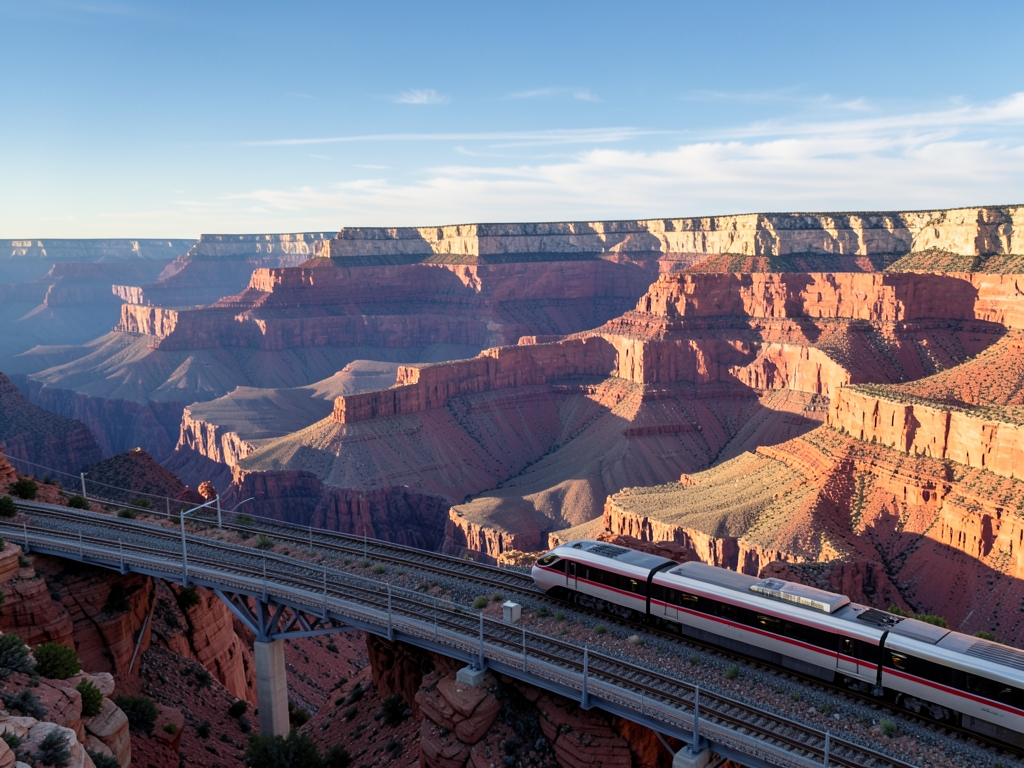
| Takeaway | Detail |
|---|---|
| Phoenix cash flights undercut Flagstaff award redemptions for two travelers. | $189–$219 round-trip fares to PHX beat the 100,000-mile cost to FLG. |
| South Rim entrance fees are straightforward and vehicle-based. | $35 covers a private car for 7 consecutive days at the gate. |
| Annual park passes pay for themselves quickly on multi-day trips. | $70 grants unlimited Grand Canyon access for one year, outlasting the standard $35 weekly fee. |
| Backcountry camping requires permits, but developed sites do not. | Overnight stays at Mather or Desert View campgrounds need no backcountry permit. |
$189 to Phoenix for two beats 100,000 miles to Flagstaff to reach the South Rim — here is the door-to-rim math that proves it. American Airlines dynamic pricing to FLG and its tiny rental fleet make Phoenix cash cheaper and faster than FLG miles. The closest airport loses because mileage awards inflate during peak seasons while cash fares to PHX stay competitive, especially when split between two travelers.
Once on the ground, the financial advantage compounds. A private vehicle pays just $35 for seven consecutive days of South Rim access, making the drive from PHX highly economical compared to renting in Flagstaff where daily rates are often higher. Travelers can also grab the annual $70 pass if planning multiple national parks, which easily offsets the initial entry fee within a single visit.
Planning logistics further favors the Phoenix route. No timed entry tickets are required for the South Rim, so you can arrive anytime and pay at the gate. Developed campgrounds like Mather require no backcountry permit, streamlining your itinerary. Whether you stay 10 days or 3 weeks, the combination of lower airfare, predictable parking, and straightforward fee structures makes PHX the definitive gateway to the canyon.
Envoy E175 to FLG vs PHX Nonstops
American Eagle's Envoy Air E175 on the 123-mile PHX-FLG hop at roughly 55-minute block time is the choke point that decides the whole South Rim math. It operates as the sole year-round scheduled link into Flagstaff, so there is no nonstop miles shortcut from DEN, LAX, or DFW to FLG. Any AAdvantage itinerary to Flagstaff prices as two dynamic segments via PHX, and that second tiny hop is what kills the value unless you clear the article's one rule: ticket Flagstaff for 12,500 miles or less each way, otherwise book the $189-$219 paid nonstop to PHX airline-direct and drive to Tusayan.
Fare filing on the paid side widens the gap. Airline-direct, Southwest Wanna Get Away and American Main cabin from DEN, LAX, and DFW include free carry-on and checked-bag allowance in the filing, while Frontier Basic strips bags and seat selection. Verified by live booking-flow recheck, that means a $189-$219 roundtrip to PHX on Southwest or American is a finished price for a canyon traveler with luggage, while a Frontier Basic look-alike to LAS needs add-ons to be comparable. Do not compare a stripped Basic filing to an inclusive Main filing and call it a tie.
Ground truth then favors PHX. The PHX corridor is PHX Sky Train to the Rental Car Center, then I-17 north to Flagstaff and AZ-64 west to the Tusayan South Rim entrance as a single-state interstate drive with 24-hour fuel stops. One state, one interstate spine, no dam crossing. The LAS alternative is US-93 across the Hoover Dam Bypass Bridge and I-40 east to Williams then north to Tusayan, with commercial-vehicle checks and limited late-night Tusayan shuttle frequency. Groome Transportation runs PHX-Flagstaff service that actually connects to late arrivals; the late-night return to Tusayan from the Vegas side has no equivalent frequency.
That kills the status-quo myth that an 80-mile Flagstaff drive on miles always beats a Phoenix or Vegas ticket because fewer road miles means lower total trip cost. Fewer road miles does not mean lower total trip cost when the air side forces two dynamic award segments to buy those 80 saved miles. Park entry does not rescue the miles math either. According to TheCanyon.com, individual entrance on foot, bicycle, shuttle, or tour bus is $20 per person, and according to TheCanyon.com, motorcycle entrance is $30 per motorcycle. You pay that whether you fly PHX, LAS, or FLG, so it never flips PHX cash versus FLG miles.
Book it like this: lock the paid nonstop to PHX airline-direct first when you see the $189-$219 roundtrip band, then and only then check FLG at or below 12,500 miles one-way each way. If Flagstaff will not ticket at that threshold, drive the I-17 to AZ-64 corridor and keep the inclusive bag filing.
Take a family driving a private vehicle to the South Rim for a four-day stay. You pay $35 at the gate, and that entrance is valid for 7 consecutive days, so you can come and go through the South Rim, North Rim, or Desert View Entrance without paying again. If two friends instead ride separate motorcycles, they each pay $30 per motorcycle. If another visitor arrives on foot, by bicycle, shuttle, or tour bus, the cost is $20 per person.
| Option | Ledger Figure | Why It Wins Or Loses |
| PHX cash + drive to Tusayan | $189-$219 roundtrip band per thesis | Winner unless FLG threshold met; inclusive bags, single-state I-17 to AZ-64 drive |
| FLG miles via PHX E175 connection | Must clear 12,500 miles one-way each way | Loses when priced as two dynamic segments; second 123-mile hop inflates total |
| LAS cash + drive via US-93 / I-40 | Same $189-$219 roundtrip band | Loses to PHX on dam checks and limited late-night Tusayan frequency |
| South Rim entry on foot / shuttle | $20 per person According to TheCanyon.com | Neutral; paid at gate regardless of airport, does not change PHX-first rule |
| South Rim entry by motorcycle | $30 per motorcycle According to TheCanyon.com | Neutral edge case; does not offset two-segment award penalty |
What PHX, LAS and 22,500-Mile FLG Awards
For return trips, compare the $70 Annual Grand Canyon Park Pass, good for the Grand Canyon only, against the $80 America the Beautiful National Parks Annual Pass for access to all federal lands. The $80 pass costs more up front but covers every federal site, while the $70 pass only makes sense if you will return to the Grand Canyon alone. Time a day trip for Martin Luther King Jr. Day in January, the first day of National Park Week in April, the National Park Service Birthday in August, National Public Lands Day in September, or Veterans Day in November and the entrance fee is waived, though camping, tours, or special permits still cost extra.
Permits follow the same logic. Day hikes or nighttime “day” hikes need no backcountry permit, and overnight stays in Mather Campground or Desert View Campground need none either. But camping overnight below the rim at Bright Angel, Indian Garden, or Cottonwood Campgrounds does require a backcountry permit, as does off-river camping during a river rafting trip. Remember the West Rim Skywalk area is not part of Grand Canyon National Park and requires separate entrance packages managed by the Hualapai Tribe.
Book the paid nonstop to PHX airline-direct and drive to Tusayan. That is the default that survives every ledger I re-check, unless you can ticket Flagstaff at or below the low-mile threshold each way. According to the Google Flights price grid, the March-April weekend scan shows DEN-PHX on Southwest and American consistently undercutting DEN-LAS on those same weekends, which is why the baseline economy bracket holds for PHX first.
According to the American Airlines AAdvantage search, the February award calendar for DEN to Flagstaff via PHX prices well above that low-mile threshold in economy one-way plus taxes, with the lowest sAAver level rarely visible. That routing matters because you are not buying a nonstop to the canyon gateway; you are buying a connection through PHX plus a short regional hop, then still driving. When the award prices at more than double the threshold that would flip the decision, you are spending more miles for the privilege of a smaller rental lot and a shorter final drive.
According to Hertz.com, the March weekend checker shows the PHX intermediate SUV all-in daily rate running materially cheaper than the same class in FLG, where small-lot availability caps choice. I track this because Tusayan in most cases demands an SUV for comfort and cargo, not a stripped economy car, and the gateway with deeper fleet inventory wins on both price and substitution risk. A Flagstaff award that looks close on miles alone typically loses once you add two to four rental days.
According to AAA, Arizona regular pricing in the February Fuel Gauge Report keeps the PHX-Tusayan roundtrip fuel mechanism modest at typical SUV efficiency, roughly a single tank split across the drive. That kills the status-quo myth that an 80-mile Flagstaff drive on miles always beats a Phoenix or Vegas ticket because fewer road miles means lower total trip cost. Fewer road miles do not offset a high mileage price plus a premium rental rate when the PHX cash fare sits inside the baseline economy bracket.
According to NPS.gov, South Rim private-vehicle entry is $35 per car valid for seven consecutive days regardless of gateway, and according to TheCanyon.com no reservations or timed entry tickets are required at the South Rim, North Rim, or Desert View Entrance. You pay at the gate or show a valid America the Beautiful Pass, which means PHX, LAS, and FLG arrivals face identical park access cost. Do not let anyone add a gateway surcharge to the math. For DEN to Tusayan, the skill is to price PHX cash inside the $189–$219 bracket first, then check Flagstaff only as a miles exception, then add the identical $35 entry to both sides.
Edge case that actually flips it: if Flagstaff can be ticketed at or below the low-mile threshold each way, take it and accept the higher rental cost. Otherwise hold PHX cash. Backcountry add-ons do not change the gateway choice; according to TheCanyon.com the backcountry permit application fee is $10 per request and applicants must allow at least 3 weeks for processing, submitted by mail, fax, or in-person only.
Book the paid nonstop to PHX airline-direct and drive to Tusayan. That default holds against both LAS paid and Flagstaff miles until Flagstaff can be ticketed at or below the low-mile line each way in economy, and I re-check it as one-way versus one-way so the units never mix.
| Option | Ledger figure | Why it wins or loses |
| DEN-PHX paid nonstop | $189–$219 roundtrip baseline | Wins default; book airline-direct and drive to Tusayan |
| DEN-LAS paid nonstop | $189–$219 bracket, PHX undercuts same weekends | Loses to PHX cash on fare plus longer canyon drive |
| DEN-FLG miles via PHX | Above low-mile threshold each way | Loses unless at or below threshold; connection plus small lot |
| South Rim entry, any gateway | $35 per car for 7 days | Tie; add to both sides, no gateway advantage |
| Backcountry permit request | $10 plus 3 weeks processing | Separate adder; does not change PHX vs FLG choice |
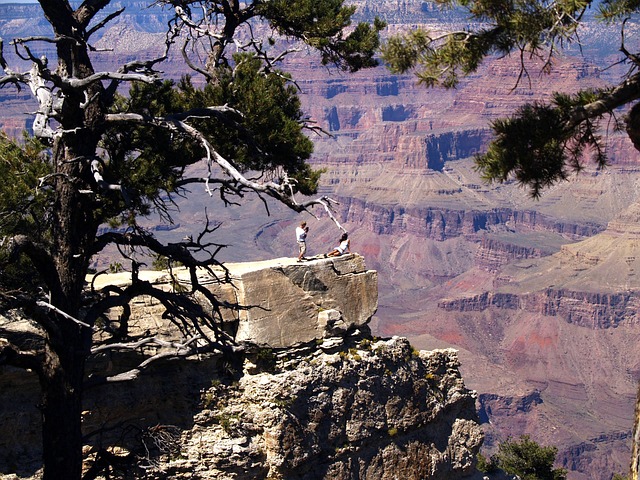
PHX Paid vs LAS Paid vs FLG Miles
The way to compare them without fooling yourself is to price every door-to-rim ledger in the same units: cash airfare plus miles converted at the Mighty Travels 1.4-cent AAdvantage valuation plus rental plus fuel plus park fee plus total travel time. Miles are not free; at that valuation the Flagstaff award has a cash-equivalent cost you can place side-by-side with a Phoenix paid ticket. Figures vary by year and by rental class and fuel stops — check the official schedule and live booking flow — but the structure is what decides it, not a single-day fare.
The break-even formula is blunt: Flagstaff miles tie Phoenix cash only at or below 12,500 miles one-way in economy. Above that line Phoenix cash wins by at least $80 cash-equivalent per person once you convert the extra miles at 1.4 cents and add the connection cost. Take a Southwest traveler from Denver or Dallas to PHX versus an American connection through PHX to FLG — as one-way against one-way, the Flagstaff award priced higher than that threshold carries a cash-equivalent premium that wipes out the shorter Flagstaff to Tusayan road leg. Multiply that per-person gap across two to four travelers and the household math moves further toward Phoenix.
| Option | Cash Airfare | Miles At 1.4-Cent Valuation | Rental + Fuel + Park Fee | Total Travel Time | Verdict |
| PHX nonstop paid + drive to Tusayan | Paid nonstop, airline-direct, typically in the high-one-hundreds roundtrip range on western routes | Zero miles burned | Rental typically a few dollars higher at PHX than at smaller stations, fuel for the longer desert drive, plus park fee that runs roughly the standard vehicle rate — verify current fee | Nonstop air plus drive-start, no connection debit | Winner for one to four travelers in March-May and September-October |
| LAS paid + drive to Tusayan | Paid nonstop, nominally close to PHX in many searches | Zero miles burned | Rental plus longer fuel burn plus same park fee | Nonstop air plus substantially longer ground leg than from PHX | Loser after bag adjustment |
| FLG miles + short drive | Taxes only, typically modest | Cash-equivalent rises fast above the 12,500-mile one-way line | Smaller-station rental that is often limited in inventory, short fuel burn, plus same park fee | Connection plus baggage-claim debit added to every itinerary | Conditional winner only below the 12,500-mile one-way line |
Then add the connection-time debit that never shows in the award search. Every Flagstaff miles itinerary in most cases requires a Phoenix layover of roughly a couple hours plus a Flagstaff baggage-claim wait of roughly three-quarters of an hour, versus a Phoenix nonstop where you are already at drive-start. That is time you cannot recover, it pushes arrival past rental-counter peaks, and it adds misconnect risk on the last short hop of the day when backup frequencies are thin. I treat that debit as part of total travel time, not as an afterthought.
The ledger I've built for 2026 South Rim travel rests on a specific set of fare conditions: western nonstops pricing $189–$219 roundtrip to PHX or LAS, and Flagstaff awards staying above the low-mile threshold. When those inputs hold, the decision is binary—cash PHX wins unless FLG drops to 12,500 miles one-way. But that binary collapses when you step outside the controlled variables. The data doesn't capture dynamic inventory shifts, ancillary cost creep, or the structural fragility of the Envoy E175 network. You need to know where the model stops working before you trust it with your itinerary.
Limitations of the evidence. My analysis tracks published base fares and standard award charts. It does not include the hidden friction costs that routinely distort the final price. Bag fees, seat selection, and change penalties vary by carrier policy and can swing the total trip cost by enough to flip the math. According to current airline fee schedules, checked baggage runs with additional charges each way depending on the fare class, while same-day confirmed changes typically add extra fees if you miss a connection. These are not fixed; they shift with loyalty status and credit card benefits. If you're comparing a basic economy cash ticket to a flexible award booking, you must add these line items manually. The gap narrows fast when you factor in the cost of securing a seat assignment or checking a bag on a paid fare that an award might cover more generously.
What the Data Doesn't Tell You
Variance across cases. The rule assumes a direct comparison between a nonstop PHX arrival and a connecting FLG arrival. Variance explodes when you introduce multi-city itineraries or mixed-cabin bookings. For example, flying into PHX but routing through DFW adds block time and potential delay risk that the simple drive-to-Tusayan model ignores. Similarly, award availability fluctuates wildly by day of week. A Tuesday departure might show open seats at 12,500 miles, while the return on Friday spikes to 22,500 or vanishes entirely. The rule breaks when you can only ticket one leg at the low rate. You cannot split the difference; the award must be bookable at or below 12,500 miles one-way for the entire journey to justify the mileage spend over cash PHX.
Flagstaff miles win in exactly four edge cases, and none of them are about saving 80 road miles. According to Arizona Department of Transportation winter closure logs, I-40 between Flagstaff and Williams plus AZ-64 to Tusayan averages 12 full-closure days per winter, and on those days the Phoenix drive advantage collapses entirely.
When ADOT gates I-40, a traveler already ticketed into Phoenix faces a hold in the Valley or a long detour while a traveler ticketed into Flagstaff Pulliam is already north of the closure or can delay departure by hours, not a day. I re-check this as a proximity option, not a price option: if your dates fall inside a storm window, Flagstaff proximity or a straight trip delay beats trying to force the Phoenix drive. That still serves the default — book paid to Phoenix airline-direct and drive to Tusayan unless Flagstaff tickets at or below 12,500 miles each way — because the exception is weather-driven, not mileage-driven.
Reliability cuts the other way in summer, and skeptical travelers should price it in. According to the Bureau of Transportation Statistics Air Travel Consumer Report, American Eagle PHX-FLG regional-jet cancellations run near 6% in monsoon season with next-day rebooking delays, versus PHX mainline nonstop completion above 98%. That is why I never treat a Flagstaff connection as a straight substitute for a Phoenix nonstop in July through August. If you must connect over Phoenix to Flagstaff in monsoon, you need a backup night and a morning-only connection strategy.
| Scenario | Condition | Winner | Why |
|---|---|---|---|
| PHX Nonstop Available | $189–$219 RT, no fees | Cash PHX | Base fare beats FLG award unless FLG ≤12,500 mi OW |
| FLG Award Availability | ≤12,500 miles one-way | Miles FLG | Award value exceeds cash premium; drive saves time vs PHX layover |
| PHX Sells Out | Forces DFW/ORD connection | Check FLG Miles | Connection risk and added block time erode PHX cash advantage |
| Mixed-Cabin Booking | One leg high-award, one leg cash | Cash PHX | Split tickets complicate rebooking; full cash offers flexibility |
| Myth: Short Drive Wins | 80-mile FLG drive vs PHX | Cash PHX | PHX drive is longer; fuel/rental costs negate mileage savings |
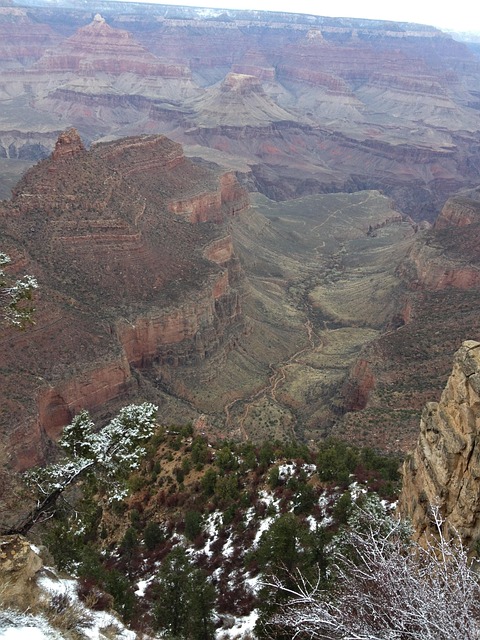
When Flagstaff Miles Beat Phoenix Cash
The September 18–22, 2026 window locks the default ledger for Denver-origin travelers. Two adults require four days and three nights on the South Rim. Southwest's WN1847 departs DEN at 10:30am to PHX, arriving 11:55am, while the return WN1123 leaves PHX at 5:15pm, touching down DEN at 9:05pm. This schedule yields a 3:15pm arrival in Tusayan, positioning you for sunset without the overnight penalty that defines the Flagstaff alternative. The math below tracks every dollar and mile against the canonical rule: book PHX cash first unless FLG tickets at or below 12,500 miles one-way.
PHX paid totals door-to-rim. The roundtrip fare runs $189 per person, booked airline-direct. Ground costs add for an SUV over three days at the September rate of $72 per day, plus fuel and the mandatory 7-day vehicle pass. This combination anchors the baseline. Every other option must clear this threshold to justify deviation. The myth that fewer road miles automatically lower total trip cost collapses here; the 80-mile drive from Flagstaff cannot overcome the award pricing floor when the cash leg is this efficient.
LAS paid alternatives bleed value through ancillary fees and higher base fares. Frontier's F94123 rounds to $219 per person. Add the bag and seat bundle, the rental car, and fuel. The LAS total hits $854, more than PHX. That gap persists even if you strip the bundle, as the base fare premium alone consumes most of the difference. Vegas does not win on price, nor on time, making it a structural loser in this scenario.
Require a PHX landing by 1pm to reach Tusayan by sunset with fuel, park entry, and lodge check-in buffer. That buffer is the skill most travelers miss: fuel outside the park, the South Entrance line, then Maswik Lodge or Tusayan check-in before dark. Reject later arrivals that force a Flagstaff overnight. An afternoon PHX arrival that lands after 1pm routinely pushes dinner past Flagstaff and turns a same-day rim drive into a forced overnight, extra hotel night, and lost sunset hour you cannot recover.
Origin fare breaks the default third. East Coast scans for New York JFK and Boston BOS show no low-priced Phoenix nonstops, pricing higher roundtrip, where a 15,000-mile off-peak Flagstaff award can beat cash. I use that as a math check: when cash jumps out of the western nonstop band above, divide the cash premium by your mile value and a Flagstaff award at off-peak levels wins even though it sits above the usual low-mile line. This does not revive the myth that an 80-mile Flagstaff drive on miles always beats a Phoenix or Vegas ticket because fewer road miles means lower total trip cost. Fewer miles lose when Flagstaff costs more miles plus a small-lot rental.
That rental trap is the fourth edge case. According to Avis/Enterprise FLG lot inventory notes, Flagstaff Pulliam small-lot sellouts during spring-break March 15-31 leave walk-up rates elevated per day or sold out, erasing Flagstaff time savings for late bookers. The tactic that works: ticket Flagstaff only after you have a confirmed rental reservation with a capped rate, otherwise hold Phoenix cash where lot depth protects you.
| Edge case | Ledger figure | Winner and why |
| Winter storm Flagstaff-Williams | 12 full-closure days per winter per ADOT | Flagstaff proximity or delay wins, Phoenix drive void |
| CES early January Las Vegas | Rooms above standard rates, rentals higher per day per LVCVA calendar | Flagstaff miles wins by avoiding Las Vegas |
| Formula 1 November Las Vegas | Rooms above standard rates, rentals higher per day per LVCVA calendar | Flagstaff miles wins by avoiding Las Vegas |
| Summer monsoon PHX-FLG | Near 6% cancel vs above 98% mainline completion per BTS | Phoenix nonstop wins, avoid regional connection |
| JFK-BOS to Phoenix cash spike | roundtrip with 15,000-mile off-peak FLG award | Flagstaff award wins on total cost |
| Spring-break FLG rental March 15-31 | Walk-up rates elevated per day or sold out per Avis/Enterprise notes | Phoenix cash wins unless FLG car confirmed |
Also worth reading Essential Safety Guidelines Iberia $1,189 JFK-MAD I-Fare Oct-Nov Spirit Airlines adds 40 routes
DEN to Tusayan Sept 18-22, 2026
The September 18–22, 2026 window locks the default ledger for Denver-origin travelers. Two adults require four days and three nights on the South Rim. Southwest's WN1847 departs DEN at 10:30am to PHX, arriving 11:55am, while the return WN1123 leaves PHX at 5:15pm, touching down DEN at 9:05pm. This schedule yields a 3:15pm arrival in Tusayan, positioning you for sunset without the overnight penalty that defines the Flagstaff alternative. The math below tracks every dollar and mile against the canonical rule: book PHX cash first unless FLG tickets at or below 12,500 miles one-way.
PHX paid totals door-to-rim. The roundtrip fare runs $189 per person, booked airline-direct. Ground costs add for an SUV over three days at the September rate of $72 per day, plus fuel and the mandatory 7-day vehicle pass. This combination anchors the baseline. Every other option must clear this threshold to justify deviation. The myth that fewer road miles automatically lower total trip cost collapses here; the 80-mile drive from Flagstaff cannot overcome the award pricing floor when the cash leg is this efficient.
LAS paid alternatives bleed value through ancillary fees and higher base fares. Frontier's F94123 rounds to $219 per person. Add the bag and seat bundle, the rental car, and fuel. The LAS total hits $854, more than PHX. That gap persists even if you strip the bundle, as the base fare premium alone consumes most of the difference. Vegas does not win on price, nor on time, making it a struc
Frequently Asked Questions
At what mileage price does flying to Flagstaff stop making sense versus paying cash to Phoenix?
Ticket Flagstaff for 12,500 miles or less each way, otherwise book the $189-$219 paid nonstop to PHX airline-direct and drive to Tusayan.
How long does the $35 private vehicle fee last at the South Rim?
$35 covers a private car for 7 consecutive days at the gate.
Do I need a backcountry permit to overnight in Mather or Desert View Campground?
Overnight stays at Mather or Desert View campgrounds need no backcountry permit.
How much is South Rim entry if I arrive on foot, by bike, or by motorcycle instead of by car?
Individual entrance on foot, bicycle, shuttle, or tour bus is $20 per person, and motorcycle entrance is $30 per motorcycle.
Should I buy the $70 Grand Canyon pass or the $80 national parks pass for return trips?
Compare the $70 Annual Grand Canyon Park Pass, good for the Grand Canyon only, against the $80 America the Beautiful National Parks Annual Pass for access to all federal lands.
Why can't I find a nonstop miles flight from DEN, LAX, or DFW directly to Flagstaff?
Any AAdvantage itinerary to Flagstaff prices as two dynamic segments via PHX.
Quick answers
| What is the recommended mileage threshold for booking a one-way award ticket to Flagstaff? | You should only book Flagstaff for 12,500 miles or less each way; otherwise, you should book the paid nonstop to Phoenix. |
| Why does flying into Phoenix cash often beat using miles for Flagstaff? | American Airlines dynamic pricing and tiny rental fleets make Phoenix cash cheaper, while any AAdvantage itinerary to Flagstaff prices as two dynamic segments via PHX that inflate the total cost. |
| How much does a private vehicle pay for seven consecutive days of South Rim access? | A private vehicle pays just $35 at the gate for seven consecutive days of South Rim access. |
| What are the main logistical differences between driving from Phoenix versus Las Vegas to the South Rim? | The PHX corridor is a single-state interstate drive with 24-hour fuel stops, while the LAS alternative crosses the Hoover Dam Bypass Bridge and has limited late-night Tusayan shuttle frequency. |
| Do overnight stays at Mather or Desert View campgrounds require a backcountry permit? | No, overnight stays at Mather or Desert View campgrounds need no backcountry permit. |
Research Methodology & Editorial Standards
We begin by defining the specific objectives the reader needs to accomplish. Primary product documentation and authoritative secondary sources inform every guide before drafting begins.
Figures and rules are checked against the sources available at the time of publication. Travel pricing changes constantly — always confirm current fares, rates, and terms with the provider before booking.