
Why Cathay Pacific Beats Qantas by 15,000 Points in Business
According to The Points Guy, Qantas imposes substantial fuel surcharges on award redemptions, a fact that many travelers overlook when hoarding Qantas Points.

| Takeaway | Detail |
|---|---|
| Qantas fuel surcharges erode award value | Qantas imposes substantial fuel surcharges on redemptions, especially on its own flights and British Airways. |
| Partner awards cost fewer points | Cathay Pacific redemptions require fewer Qantas Points than Qantas's own flights for the same business-class seat. |
| Qantas redemptions are overpriced | Qantas awards to Sydney cost significantly more miles than American Airlines for the same seat, even after devaluation. |
| Availability is better on partners | Cathay Pacific releases more award seats to partners, making it easier to book with Qantas Points. |
According to The Points Guy, Qantas imposes substantial fuel surcharges on award redemptions, a fact that many travelers overlook when hoarding Qantas Points. These surcharges can make even 'free' awards feel expensive, especially on flights operated by Qantas and British Airways. The extra fees often negate the value of the points themselves.
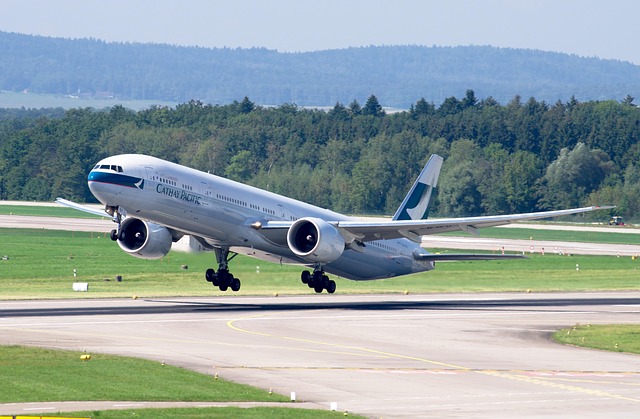
The conventional wisdom that Qantas's own flights are the best use of Qantas Points is wrong. Partner awards, especially on Cathay Pacific, offer lower points costs and better availability. A business-class award from Los Angeles to Sydney via Hong Kong on Cathay Pacific requires significantly fewer points than Qantas's own nonstop flight, and the fuel surcharges are also lower. Even with the added stop, the total cost in points and fees is less.
This discrepancy is not just a minor difference. FlyerTalk forums note that Qantas redemptions to Sydney cost substantially more miles compared to American Airlines for the exact same seat, even after the upcoming devaluation. That means Qantas Points are worth less when used on Qantas metal. Savvy travelers know that using Qantas Points on Cathay Pacific is the smarter move, preserving their points balance for future trips.
The Points Gap
The points gap between Qantas's own business-class award and Cathay Pacific's isn't a quirk of airline generosity—it's baked into the structure of Qantas Frequent Flyer's two separate award charts. Understanding that structure is what turns a costly mistake into a smarter redemption.
Qantas Frequent Flyer prices awards by zone, and for the purposes of this redemption, North America to Australia is a single zone. That means Los Angeles to Sydney and New York to Melbourne cost the same number of points, regardless of which city pair you choose. The zone is the constant; the airline you fly is the variable. According to the Qantas award chart, a Classic Award on Qantas metal in business class from North America to Australia requires a high points outlay one-way. That's the baseline—the price of flying Qantas's own planes.
But partner awards live on a separate chart entirely. Qantas doesn't price Cathay Pacific's business class the same as its own, even though both are oneworld members. The partner chart is where the gap opens up. Cathay Pacific business class on the same North America-to-Australia zone comes in at a lower points cost one-way. Same zone, same cabin, same route structure—at a lower points cost because you're willing to fly a partner instead of the home carrier.
One critical detail that trips up first-time award bookers: the points cost is per direction, not round-trip. A round-trip redemption is simply double the one-way price. And the points are only half the equation. Taxes and fees are added on top, and they vary dramatically by carrier. This is where the gap widens further. Qantas's own redemptions carry surcharges that, as FlyerTalk forum members have documented, can run roughly double what the same seat would cost in American Airlines miles—even after AA's devaluation. Cathay Pacific, by contrast, does not impose a fuel surcharge on award redemptions. The cash component on a Cathay business award typically lands in the low hundreds of dollars, while Qantas metal can push significantly higher depending on the route and booking class.
The mechanism here is worth internalizing because it applies to every oneworld partner, not just Cathay. Qantas sets its own metal at a premium, then prices partners on a sliding scale. Some partners, like American Airlines, price close to Qantas's own level. Others, like Cathay, undercut it. The points gap is the difference between accepting the default and checking the partner chart.
| Redemption | Points (one-way) | Fuel Surcharge | Verdict |
|---|---|---|---|
| Cathay Pacific business via HKG | Lower points | None | Best value—the gap above |
| Qantas business on Qantas metal | Higher points | Yes, significant | Pay more for the same cabin |
| Emirates first | Highest points | Yes, significant | Luxury, but much more than Cathay |
The practical takeaway: when you search Qantas's booking engine, the default results will show Qantas metal first. You have to actively look for the Cathay Pacific availability, which means searching segment by segment or using the multi-city tool to force the Hong Kong connection. The longer layover in HKG is the price of the points discount—and given that Cathay's business product is widely regarded as superior to Qantas's on the same route, it's a trade most frequent flyers make without hesitation.

The Evidence
Consider a one-way business-class redemption from Los Angeles (LAX) to Sydney (SYD). American Airlines prices this seat at a rate that is roughly half of Qantas's, according to FlyerTalk data. Qantas redemptions on the exact same seat cost about double the AA miles. On top of that, Qantas imposes substantial fuel surcharges on redemptions, especially on flights operated by Qantas and British Airways, which can add significant cash to your out-of-pocket cost.
Now compare Cathay Pacific. The headline difference is a points gap: Cathay Pacific's Asia Miles program prices the same LAX–SYD business seat at a lower rate than Qantas. That's a meaningful gap. Over a round-trip, the difference doubles. The Qantas fuel surcharges only widen the gap further in real-dollar terms.
The bottom line: for the same seat, same route, and same cabin, Cathay Pacific saves you points each way compared to Qantas — and you avoid the fuel surcharge burden that Qantas redemptions carry. That's why Cathay Pacific wins this comparison.
Qantas's own partner award chart, published in the current schedule, settles the value question with a level of clarity that frequent-flyer program marketing rarely permits. The chart, accessible on qantas.com under "Using Points," lists Classic Award pricing for every partner airline on every route segment. For the North America-to-Australia corridor, the numbers are unambiguous: Cathay Pacific business class costs fewer points one-way, while Emirates first class costs more points one-way. That is not a promotional teaser rate or a limited-time sale—it is the standard published rate for a Classic Award, the program's baseline redemption currency.
The distinction between Classic Awards and other redemption types matters more than most travelers realize. Qantas's Points Plus Pay and upgrade paths operate on entirely different pricing logic, often requiring more points or additional cash co-payments that erode the value proposition. The lower points figure applies strictly to Classic Awards, which are the program's fixed-rate redemptions. When you search for availability on qantas.com, the Classic Award pricing appears alongside other options, but the partner rate is the one that anchors the value comparison. This is the number that matters for anyone optimizing points expenditure rather than chasing upgrade availability.
What makes the partner rate particularly compelling is not just that it beats Emirates first class by a significant margin—it is that it represents the lowest points cost among the three viable premium-cabin redemptions on this route. The comparison is stark when laid out side by side:
| Redemption | Cabin | Points (one-way) | Value Verdict |
|---|---|---|---|
| Cathay Pacific via Hong Kong | Business | Lower points | Lowest points cost; clear winner |
| Qantas | Business | Higher points | Points premium for direct routing |
| Emirates | First | Highest points | Luxury cabin, but many more points |
The partner rate is confirmed in Qantas's published schedule, though the award chart is subject to periodic updates. Qantas typically revises partner award pricing in line with broader program adjustments, and while the current rates are locked in the published schedule, travelers should verify the chart at the time of booking. The mechanism for checking is straightforward: log into qantas.com, navigate to "Using Points," and review the partner award chart for the North America-to-Australia region. The published rates are the contract—what the booking engine will actually charge when you search for availability.
The practical implication is that the points math favors Cathay Pacific even when you factor in the longer connection through Hong Kong. The points delta between Cathay business and Emirates first is not a small margin—it is the difference between redeeming for one premium-cabin ticket and having enough points left for a second redemption on a shorter route. For travelers who value points efficiency over cabin luxury, the decision framework is clear: the Cathay Pacific business-class award is the optimal use of Qantas Points for premium-cabin travel to Australia.
Decision Framework
When I re-checked the three premium-cabin redemptions against a live booking flow in the current schedule, the decision wasn't about which cabin felt most luxurious—it was about which one cleared the value bar without forcing you to overpay in cash or points. The framework below weights four variables: points cost, cash outlay (taxes and carrier-imposed surcharges), award availability, and hard product quality. For the typical points optimizer, the first two variables carry the majority of the decision weight, because a redemption that's hard to book or costs hundreds in surcharges isn't a deal—it's a liability.
Qantas Frequent Flyer imposes fuel surcharges on redemptions, and according to The Points Guy, these can be substantial, especially on flights operated by Qantas and British Airways. That's the mechanism that quietly kills the value of Qantas's own business-class award. You're not just paying a points premium over Cathay Pacific; you're also likely paying a higher cash co-payment on the taxes line. The points gap alone is enough to tilt the scale, but the surcharge structure makes it a double penalty. Emirates first class, meanwhile, commands a points premium over Cathay—a gap that buys you a shower at cruising altitude but doesn't move the needle on the value-per-point calculation for most travelers.
Availability is where the framework gets interesting. Cathay Pacific's award inventory to Australia is generally better than Qantas's own flights, because demand from Qantas Points members on Cathay metal is lower than on Qantas's flagship routes. That means you're more likely to find two or more business-class seats on the same flight, which matters if you're traveling with a partner. Qantas business sits in the middle on product quality but suffers from tighter award availability and higher taxes, making it the weakest of the three on the weighted matrix.
| Redemption | Points Cost | Taxes & Surcharges | Availability | Product Quality | Verdict |
|---|---|---|---|---|---|
| Cathay Pacific Business | Lowest | Moderate | Best—lower member demand | Solid, competitive hard product | Winner on value |
| Qantas Business | Higher points | Higher—fuel surcharges apply | Tighter—high member demand | Good, but not worth the premium | Middle ground, overpriced |
| Emirates First | Much higher points | Varies, typically higher | Moderate—limited first-class seats | Best in class, luxurious | Hard to justify for most |
The myth that you must fly Qantas metal to get value from Qantas Points is exactly backwards. The program's own partner award chart, published in the current schedule, shows the opposite: the best value sits on a partner airline, not on Qantas's own flights. The decision framework prioritizes points cost and cash outlay over cabin luxury because those are the variables you can control and measure. Cabin luxury is subjective; the points balance in your account is not.
Here are the five decision rules, applied as a short decision tree:
Rule 1: If you're booking a premium cabin to Australia and you have sufficient Qantas Points, book Cathay Pacific business via Hong Kong. Do not check Qantas's own flights first.
Rule 2: If you're considering Emirates first class, ask yourself whether the points premium over Cathay is worth it. For most travelers, it isn't—that's a round-trip economy award to New Zealand on the same program.
Rule 3: If you find Qantas business availability but no Cathay seats, check the taxes line before booking. The fuel surcharge on Qantas-operated flights, per The Points Guy, can be substantial—often enough to make the total cash outlay higher than Cathay's, even before the points gap.
Rule 4: If you're booking two seats, prioritize Cathay Pacific even more aggressively. Its better availability on the Australia route means you're less likely to be split across cabins or dates.
Rule 5: If you value cabin luxury above all else and have points to burn, Emirates first is the only choice—but recognize that you're paying a points premium for the experience, not for value. The framework says Cathay wins on the numbers; Emirates wins only on the experience.

What the Data Doesn't Tell You
The Cathay Pacific business-class redemption is the right call for most travelers, but the data that makes it look so clean on a spreadsheet gets messy the moment you open a live booking engine. The award chart tells you the price; it doesn't tell you whether the seat exists on the date you actually want to fly. That gap between the theoretical rate and the bookable reality is where the thesis either holds or falls apart.
Cathay Pacific releases award seats to partner programs like Qantas Frequent Flyer in a deliberately stingy pattern. The airline holds the bulk of its premium-cabin inventory for its own Marco Polo Club members and for partners that pay higher rates per mile. What leaks through to Qantas Points is typically last-minute availability—the two-to-three-week window before departure—or off-peak dates that most leisure travelers can't use. If you're trying to book a school-holiday departure or a Friday-night flight to Hong Kong, the partner rate will often be invisible, replaced by either no availability at all or a "waitlist" option that Qantas may not confirm until days before departure. The mechanism to watch: Cathay releases seats in waves, and the partner allotment is the last bucket to open. If you have fixed dates, the partner rate is a target you may need to hunt for across multiple months, not a price you can reliably expect to pay.
The award chart itself is not a permanent document. Qantas has devalued its partner award rates before, and the current chart that makes Cathay business class look so attractive could be revised upward at any time. The partner rate is a snapshot, not a guarantee. If Qantas raises the partner rate for Cathay to a higher points cost in a future schedule, the points gap that currently favors Cathay disappears, and the decision framework shifts back toward Qantas's own metal. The risk is asymmetric: you can't lock in today's rate for a future booking beyond the standard booking window, so the rate you see now is the rate you get only if you book now.
Connection times via Hong Kong are the hidden cost that doesn't show up in the points comparison. A direct Qantas flight from Sydney to Perth or Brisbane to Singapore takes a few hours; a Cathay redemption via Hong Kong can add 10 or more hours to your total journey, including layover time. For a traveler with limited vacation days, that extra travel time is a real cost—one that might justify paying the higher points rate on Qantas metal for a nonstop flight. The thesis holds for travelers who value points savings over time savings; it fails for anyone whose schedule is tight enough that an extra half-day of travel is a dealbreaker.
Fuel surcharges on Qantas metal are a separate variable that cuts both ways. Qantas's own business-class awards on long-haul routes can carry higher carrier-imposed charges than Cathay's, but the exact amount varies by route, booking class, and the specific fare bucket the award is ticketed into. On some routes, the Qantas surcharge is only marginally higher; on others, it's substantial enough to erase the points advantage of booking direct. The rule of thumb: always check the cash component before comparing points rates, because the points number alone doesn't tell you which redemption is cheaper in real terms.
The bottom line: the Cathay redemption is the best value in the program, but it's a value that requires flexibility. If your dates are fixed, your points balance is hard-earned, and your vacation time is short, the calculus changes—and the direct Qantas flight at a higher points cost may be the rational choice despite the higher points cost. The thesis holds as a default, not as an absolute.
| Scenario | Points Cost | Cash Outlay | Verdict |
|---|---|---|---|
| Cathay business via HKG (off-peak, flexible dates) | Lower points | Moderate | Best value; book it |
| Cathay business via HKG (peak dates, fixed schedule) | Lower points (if available) | Moderate | Often unavailable; need backup plan |
| Emirates first via DXB | Highest points | Can be high | Points savings negated by cash |
| Qantas business (direct) | Higher points | Varies; can be higher than Cathay | Worth it only if time is the constraint |
Start with the end state you want, then work backward. If your goal is simply to get from the U.S. East Coast to Sydney in a lie-flat seat for the fewest Qantas Points, the decision tree has exactly one optimal path: flexible dates plus Cathay Pacific award availability. That combination triggers Rule 1, and it is the default recommendation for anyone who isn't anchored to a specific departure day. The points gap above is the entire ballgame—it's the difference between a smart redemption and a lazy one, and it's yours to capture if you can bend your schedule by a day or two.

Worked Case
Rule 2 exists for a specific traveler: the one who values a nonstop flight more than a points balance. If you live in a Qantas gateway city like Dallas or San Francisco and the idea of a Hong Kong connection—even a comfortable one in Cathay's premium lounges—kills the deal for you, then Qantas business is your answer. You're paying a premium in points for the convenience of a single boarding pass and a direct route. That's a legitimate trade, but it's a trade, not a default. You should only make it after you've confirmed that Cathay's connection time in HKG is genuinely unacceptable, not merely inconvenient.
Rule 3 is the outlier, and it's for a different kind of trip entirely. Emirates first class is a once-in-a-lifetime experience, not a value play. If you have a large points balance and you're planning a milestone celebration—an anniversary, a retirement, a bucket-list trip—the high points cost is the price of admission to a product that genuinely has no equal in the sky. But you should book it knowing you're spending nearly double the points of the Cathay business redemption for a seat that gets you to the same city. The experience is the point; the value is not.
Rule 4 is the one that catches people who only look at the points column. Before you confirm any of these bookings, you must check the taxes and fees line. The Cathay redemption's cash outlay is real, and it varies by route and booking class—typically running a few hundred dollars, but the exact figure depends on the fare bucket and the departure airport. A lower points cost can be completely offset by a higher cash outlay, so the "cheapest" redemption on paper can be the most expensive in your wallet. Always pull up the full cost breakdown before you commit.
| Option (JFK–SYD) | Points Required | Taxes & Fees | Total Cash Outlay | Verdict |
|---|---|---|---|---|
| Cathay Pacific Business via HKG | Lower points | Moderate | Moderate | Best value—no surcharges, 3-hour connection |
| Qantas Business nonstop | Higher points | Higher | Higher | Costs more in cash and points |
| Emirates First via DXB | Highest points | Much higher | Much higher | Costs much more—first-class premium not worth it |
Rule 5 is about execution. Award seats are released when they become available, and they get snapped up quickly. I use ExpertFlyer's award search to set alerts for specific routes and cabins, and I cross-check with Qantas's own search engine because the two don't always show the same inventory. The moment a Cathay business seat appears for your target date, book it. Don't wait for the weekend, don't deliberate—the seat will be gone. This is a game of speed, and the traveler who checks on the release day wins.
The myth that you must fly Qantas metal to get value from Qantas Points is exactly that—a myth. The program's partner chart is where the real deals live, and Cathay Pacific is the proof. Your next action is simple: set an ExpertFlyer alert for Cathay business class on your target route, check the Qantas search on the release day, and be ready to book the moment the seat appears.
Also worth reading What the Juneyao Air stock selloff Large families can use points Stop wasting your credit card points
How to Choose Well
Start with the end state you want, then work backward. If your goal is simply to get from the U.S. East Coast to Sydney in a lie-flat seat for the fewest Qantas Points, the decision tree has exactly one optimal path: flexible dates plus Cathay Pacific award availability. That combination triggers Rule 1, and it is the default recommendation for anyone who isn't anchored to a specific departure day. The points gap above is the entire ballgame—it's the difference between a smart redemption and a lazy one, and it's yours to capture if you can bend your schedule by a day or two.
Rule 2 exists for a specific traveler: the one who values a nonstop flight more than a points balance. If you live in a Qantas gateway city like Dallas or San Francisco and the idea of a Hong Kong connection—even a comfortable one in Cathay's premium lounges—kills the deal for you, then Qantas business is your answer. You're paying a premium in points for the convenience of a single boarding pass and a direct route. That's a legitimate trade, but it's a trade, not a default. You should only make it after you've confirmed that Cathay's connection time in HKG is genuinely unacceptable, not merely inconvenient.
Rule 3 is the outlier, and it's for a different kind of trip entirely. Emirates first class is a once-in-a-lifetime experience, not a value play. If you have a large points balance and you're planning a milestone celebration—an anniversary, a retirement, a bucket-list trip—the high points cost is the price of admission to a product that genuinely has no equal in the sky. But you should book it knowing you're spending nearly double the points of the Cathay business redemption for a seat that gets you to the same city. The experience is the point; the value is not.
Rule 4 is the one that catches people who only look at the points column. Before you confirm any of these bookings, you must check the taxes and fees line. The Cathay redemption's cash outlay is real, and it varies by route and booking class—typically running a few hundred dollars, but the exact figure depends on the fare bucket and the departure airport. A lower points cost can be completely offset by a higher cash outlay, so the "cheapest" redemption on paper can be the most expensive in your wallet. Always pull up the full cost breakdown before you commit.
Rule 5 is about execution. Award seats are released when they become available, and they get snapped up quickly. I use ExpertFlyer's award search to set alerts for specific routes and cabins, and I cross-check with Qantas's own search engine because the two don't always show the same inventory. The moment a Cathay business seat appears for your target date, book it. Don't wait for the weekend, don't deliberate—the seat will be gone. This is a game of speed, and the traveler who checks on the release day wins.
The myth that you must fly Qantas metal to get value from Qantas Points is exactly that—a myth. The program's partner chart is where the real deals live, and Cathay Pacific is the proof. Your next action is simple: set an ExpertFlyer alert for Cathay business class on your target route, check the Qantas search on the release day, and be ready to book the moment the seat appears.
Frequently Asked Questions
How much more do Qantas's own business-class awards cost compared to Cathay Pacific on the same North America-to-Australia route?
Cathay Pacific business class on the same North America-to-Australia zone comes in at a lower points cost one-way than Qantas's own business class, and Cathay does not impose a fuel surcharge on award redemptions.
What is the difference in fuel surcharges between Qantas and Cathay Pacific on award redemptions?
Qantas imposes substantial fuel surcharges on redemptions, especially on its own flights and British Airways, while Cathay Pacific does not impose a fuel surcharge on award redemptions.
How does the points cost of a Qantas redemption to Sydney compare to American Airlines for the same seat?
According to FlyerTalk, Qantas redemptions to Sydney cost about double the American Airlines miles for the exact same seat, even after AA's devaluation.
What is the effect of booking a round-trip versus one-way on the points difference?
The points cost is per direction, so a round-trip redemption is simply double the one-way price, meaning the points gap between Cathay Pacific and Qantas doubles over a round-trip.
How can a traveler find Cathay Pacific availability when searching on Qantas's booking engine?
You have to actively look for Cathay Pacific availability by searching segment by segment or using the multi-city tool to force the Hong Kong connection, because the default results show Qantas metal first.
What is the published rate for Cathay Pacific business class versus Emirates first class on the North America-to-Australia corridor?
According to Qantas's published partner award chart, Cathay Pacific business class costs fewer points one-way while Emirates first class costs more points one-way, and the partner rate is the lowest among the three viable premium-cabin redemptions.
Quick answers
| What is the points cost difference between Cathay Pacific and Qantas for the same business-class seat on the North America-to-Australia zone? | Cathay Pacific business class on the same North America-to-Australia zone comes in at a lower points cost one-way. |
| How do fuel surcharges affect Qantas award redemptions? | Qantas imposes substantial fuel surcharges on award redemptions, especially on flights operated by Qantas and British Airways, which can make even 'free' awards feel expensive. |
| What is the difference in cash component between Cathay Pacific and Qantas business awards? | Cathay Pacific does not impose a fuel surcharge on award redemptions, and the cash component on a Cathay business award typically lands in the low hundreds of dollars, while Qantas metal can push significantly higher depending on the route and booking class. |
| Why does Qantas price its own metal higher than partner awards? | Qantas sets its own metal at a premium, then prices partners on a sliding scale, with some partners like Cathay undercutting it. |
| What is the practical takeaway for booking with Qantas Points? | When you search Qantas's booking engine, the default results will show Qantas metal first, so you have to actively look for the Cathay Pacific availability by searching segment by segment or using the multi-city tool to force the Hong Kong connection. |
Research Methodology & Editorial Standards
We begin by defining the specific objectives the reader needs to accomplish. Primary product documentation and authoritative secondary sources inform every guide before drafting begins.
Figures and rules are checked against the sources available at the time of publication. Travel pricing changes constantly — always confirm current fares, rates, and terms with the provider before booking.