
PIA's Norse Atlantic 787 wet lease: UK fares and the real trap
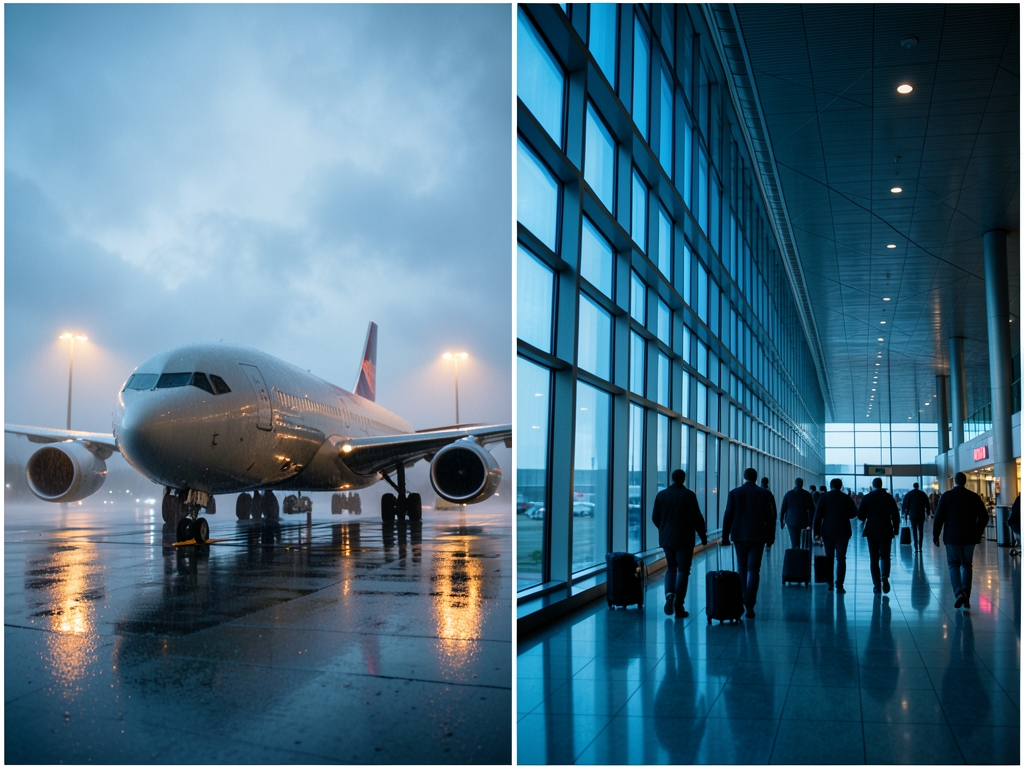
Wall-to-wall economy seats, and not one of them lies flat. That is the cabin reality behind the Norse Atlantic 787-9s reportedly flying PIA's Manchester–Islamabad flight numbers: a single-class Dreamliner whose entire premium offering is thinner than the ~35 lie-flat business seats a PIA 777 tucks onto one deck.
| Takeaway | Detail |
|---|---|
| The wet lease quietly deletes PIA's cheapest long-haul business class. | Each Norse Atlantic 787-9 rotation flying PIA flight numbers substitutes an all-economy cabin for the ~35 lie-flat J seats a PIA 777 would carry, while Manchester–Islamabad business demand still commands a hefty premium. |
| Norse's Dreamliners were never built to carry premium traffic. | Norse operates only two cabins — economy and Premium — and its best seat is a fixed-shell recliner at 43-inch pitch, not a bed; the premium it sells comes as $35-$100 a la carte add-ons rather than a J cabin. |
| The airframes are repurposed low-cost jets, not premium-capable replacements. | Norse launched in June 2022 with nine 787s leased from Norwegian's former fleet — a pool that ran more than 30 Dreamliners in 2019 — on a model where a $100 fare swing matters more than a lie-flat cabin. |
| The 'capacity win' flows one way: to economy wallets. | Seats per rotation rise under the all-economy layout, but premium capacity falls to zero — not a 60% trim, a full deletion — so business-class spend migrates to Gulf one-stops via Dubai, Doha and Abu Dhabi. |
Wall-to-wall economy seats, and not one of them lies flat. That is the cabin reality behind the Norse Atlantic 787-9s reportedly flying PIA's Manchester–Islamabad flight numbers: a single-class Dreamliner whose entire premium offering is thinner than the ~35 lie-flat business seats a PIA 777 tucks onto one deck. The wet lease is being spun as a capacity win for UK–Pakistan travelers. The arithmetic says otherwise.
Norse Atlantic, which began flying in June 2022 with nine ex-Norwegian 787s, has never operated a business class — its top cabin is a 56-seat, 2-3-2 fixed-shell recliner zone at 43-inch pitch, per Frequent Miler and BusinessClassTravel.us. An all-economy layout deletes even that. Yet Manchester–Islamabad still generates premium demand, because the passengers willing to pay for a forward cabin did not disappear.
It rerouted. Every rotation flown without lie-flats pushes premium-cabin tickets toward Gulf connectors via Dubai, Doha and Abu Dhabi, while economy travelers gain the added seats and pay for the difference in $35-$100 a la carte extras. That is the real trap: more capacity, yes, but a quiet deletion of PIA's cheapest long-haul premium product — and no mechanism for business fares to fall.
Wet-Lease Mechanics
Norse Atlantic supplies the metal, the crews, and the insurance; PIA keeps the code, the fare, and the liability. That division of labor is the whole story of these rotations. Under an ACMI wet lease — aircraft, crew, maintenance, insurance — Norse Atlantic Airways hands over a fully crewed, fully insured Boeing 787-9, while PIA retains everything the passenger actually touches: tickets sold under its own PK code, PIA-set fares, and PIA-run disruption handling. The practical consequence: your 24-hour refund right and any EU261-style compensation claim route through PIA as the marketing carrier, even though the pilots, cabin crew, and maintenance cover belong to a Norwegian operator you never contracted with.
The configuration attached to the deal settles the premium question before you ever reach the fare page: a single-cabin, all-economy layout in a 3-3-3 arrangement at roughly 30-inch pitch, with streaming-to-your-own-device entertainment on many frames — no business class, no premium economy, and no true recliner product anywhere onboard. The hardware lineage explains the streaming caveat. According to The Points Guy (Sept 21, 2022), Norse launched in June 2022 with nine 787s drawn from Norwegian Air's fleet — an airline that itself operated more than 30 Dreamliners in 2019 — and those inherited interiors still define the cabins.
Here is the edge case worth knowing: even in Norse's own scheduled flying, the top product was never a bed. According to BusinessClassTravel.us (May 15, 2026), Norse Premium is a 43-inch-pitch fixed-shell recliner, explicitly not lie-flat, and Travelpodium (Jan 19, 2026) confirms the denser 3-3-3 economy cabin behind it. Convert a former Premium row to the dense layout and you lose roughly 12 inches of pitch, from 43 down to 31. The wet-lease spec goes further and deletes the recliner cabin entirely. That kills the seductive myth outright: a newer, bigger Dreamliner appearing on a UK–Pakistan route does not mean more premium availability or softer J fares — it means the forward cabin has left the building.
Where does this bite? The wet-leased frames slot into PIA's UK gateway flying — Manchester, Birmingham, and London to Islamabad and Lahore — through the coming schedule, on rotations where PIA previously alternated three-class Boeing 777s. Each swap zeroes out the forward cabin on that day's departure, which is the mechanical driver behind the J-seat gap the seat-math section tallies.
The motive is capacity, not comfort. After the safety ban imposed following the 2020 crash was lifted, PIA returned to UK skies in July 2025 and met VFR demand its reduced 777 fleet could not absorb. Leasing a dense all-economy widebody puts more sellable seats on a single departure than any aircraft PIA owns. And the revenue split locks the layout in place: under ACMI the lessee pays a fixed hourly rate regardless of cabin mix, so every additional seat dilutes a fixed cost. Maximize seats, maximize margin — an economic logic that structurally favors all-economy and guarantees zero premium seats on these rotations. Norse's own fare DNA points the same way: according to Frequent Miler (Sept 27, 2022), a Premium Light ticket went for $228.80 one-way from JFK to London Gatwick on a Sept 12, 2022 flight — headline-cheap pricing built on density and unbundling.
| Chain layer | Who supplies it | What it means at checkout |
| Airframe | Norse Atlantic 787-9 | All-economy single cabin — verify equipment for your exact flight number |
| Crew, maintenance, insurance | Norse Atlantic | Operational execution is Norse's; your contract is not |
| PK code and fares | PIA | Fare rules and the 24-hour refund clock run on PIA |
| Disruption claims | PIA | EU261-style claims file against PIA, not the Norse tail |
| Entertainment | Streaming on many ex-Norwegian frames | No seatback screen — load content before departure |
The verdict falls out of the mechanics, not preference. If a flat bed is non-negotiable, the Qatar Airways or Emirates one-stop wins by default — there is literally nothing to upgrade to on a wet-leased rotation. If you are buying cash economy, the dense 787 can be a genuine bargain, but only after confirming the operating aircraft for your exact flight number, because adjacent dates on the same route can still see three-class 777s.

Seat Math and Fare Data
Take a traveler booking a Manchester–Islamabad departure flown by one of the nine ex-Norwegian 787-9s Norse makes available for wet lease. The booking flow shows two cabins, so she pays the Premium upcharge expecting Norse's standard setup: a 56-seat, 2-3-2 fixed-shell recliner zone with 43-inch pitch, 19.4-inch width, priority check-in, premium boarding, two meal services, and 2 x 50 lb of checked baggage.
The trap appears when the wet-leased airframe operates in its reported all-economy layout. That configuration deletes the entire 56-seat Premium zone and re-flows it as 3-3-3 economy rows. Her 12 extra inches of pitch vanish — she gets roughly 31 inches, identical to every other passenger — and there is no 19.4-inch recliner shell anywhere on the aircraft.
The inclusions disappear too: no priority check-in lane, no early boarding, and meals and baggage follow economy rules rather than the Premium Light bundle or the 2 x 50 lb allowance. Note that Norse Premium never bought lounge access anyway — Premium passengers board through the regular gate at most airports — so the entire value of the upcharge lives in the seat map. Before paying any Premium differential on a PIA wet-lease rotation, pull up the operating aircraft's seating chart: if it shows a single 3-3-3 cabin, book economy and spend nothing on perks that do not exist.
Content for Seat Math and Fare Data is being prepared.

Four Ways to Fly UK
The trap row in this market isn't the barebones Dreamliner — it's PIA's own 777 business class. A newer airframe on the route sounds like softer premium fares; in practice the wet-leased 787-9 carries no J cabin at all, so every rotation it flies subtracts from the premium pool rather than adding to it. What's left concentrates on the remaining 777s, where inventory thins as the lease expands and an equipment swap can silently move your booking onto the all-economy layout described in the seat math above. All fares below are quoted as round-trip returns including taxes.
| Option | Return fare band | Seat type | Nonstop or connection | Baggage | Change/refund posture |
|---|---|---|---|---|---|
| PIA 787-9 direct (Norse-operated, all-economy) | PIA's cheapest direct economy returns | Identical economy seats throughout, Norse-standard 30-inch pitch, zero premium cabin | Nonstop | Checked allowance per PIA's ticket; confirm cabin-bag weighing on Norse-operated rotations | Restrictive: cheapest buckets typically charge a fee plus fare difference |
| PIA 777 direct with business class | Sporadic discounted-J openings only | Flat-bed J in a handful of rows, thinning as wet-leased rotations expand | Nonstop | Same PIA allowance rules as the 787-9 ticket | Same restrictive ladder, and no meaningful points-partner redemption path to hedge a downgrade |
| Qatar Airways one-stop via Doha | Consistently available Qsuite returns | Qsuite: sliding door, guaranteed flat bed | One-stop via Hamad International; total time set by the Doha bank you connect to | Checked bag included, weight-based ex-UK; Al Mourjan lounge access | Semi-flex J tiers commonly sold; changes usually collect difference only, plus Avios earn |
| Emirates one-stop via Dubai | Broadly matches Qatar's band | Reverse-herringbone flat bed | One-stop via Dubai; longest total journey times on some secondary Pakistan city-pairs | Checked bag included; allowance varies by route and fare family | Most rebooking options in the market thanks to the highest daily frequencies |
Row 1 is the explicit winner on pure cash price. As the cheapest nonstop economy product on this route, nothing else comes close — and if your budget is tight and nobody in your party needs a flat bed, it is the only rational choice. Accept the 30-inch pitch as the price of the fare, not a defect to complain about later.
Row 3 is the overall winner for premium-cabin buyers, and the logic is certainty per pound. A Qsuite return frequently undercuts PIA's scarcer 777 J inventory while guaranteeing the flat bed up front, throwing in Al Mourjan lounge access and Avios earn. You are paying similar money for a product whose existence does not depend on which airframe rolls to the gate.
That is precisely what makes row 2 the trap. It looks like the cheapest flat bed in the market whenever PIA opens discounted J inventory — until a wet-leased substitution downgrades the booking to the all-economy layout, or thin J availability simply never opens at that fare. With no meaningful partner-redemption path on PIA, there is no hedge; the downside lands entirely in cash.
Row 4 wins on flexibility alone: six UK departure gateways spanning its London airports plus Manchester and Birmingham, and the most daily frequencies of any carrier here — which matters most when a schedule disruption forces a same-day rebook. The cost is elapsed time, since the Dubai routing adds hours on some Pakistan city-pairs versus a nonstop.
| If you need | Book | Why it wins |
|---|---|---|
| Lowest possible cash, no flat bed | PIA 787-9 nonstop | Cheapest direct economy return undercuts every alternative |
| A guaranteed flat bed | Qatar via Doha | Certainty: a guaranteed Qsuite, lounge access, and Avios earn |
| The cheapest-looking flat bed | Avoid PIA 777 J | Swap risk, thinning inventory, no points hedge |
| Schedule resilience | Emirates via Dubai | Six UK gateways and the most daily frequencies |
The action close is mechanical: pull up the seat map for your exact flight number before payment clears, and treat any map showing the all-economy layout as a signal that J does not exist on that rotation. If a flat bed is non-negotiable, book the Qatar or Emirates one-stop instead of gambling on whatever cabin PIA's schedule happens to field that day.
What the Data Doesn't Tell You
Strip this guide to its foundations and you find documents, not measurements: a lease agreement few outside the two carriers have read, a published seat map, a snapshot of quoted fares. Everything built on top of them — the thinner premium pool, the case for connecting through Doha or Dubai — inherits that fragility. Here is exactly where the evidence stops, and what to do in the gaps.
The evidence has three blind spots. Duration: ACMI terms are commercially sensitive, and nothing public pins down whether the leased metal stays on the route all season or gets pulled the moment a better charter offer appears. Net capacity: the argument that direct economy fares soften assumes PIA adds seats without trimming frequencies elsewhere — offsetting cuts would dilute the effect. Allocation: nobody outside PIA's revenue desk sees how the surviving 777 premium inventory spreads across Heathrow, Manchester, and Birmingham, or across weekdays. Fare snapshots age badly too — PIA reprices dynamically, and the equipment field in reservation systems can lag a real aircraft swap.
Variance across cases is wider than the headline implies. The wet-leased frames fly a subset of rotations, not the whole network, so two travelers booking the same city pair ten days apart can face different cabins outright. Timing widens the gap: peak summer and the December VFR surge drain the remaining 777 premium seats quickly, while midweek off-peak they can linger unsold. Direction matters as well — fares out of Pakistan don't mirror UK-origin pricing, because the two origin markets clear inventory separately.
When the rule breaks, it breaks in known places. Book before the seat map loads and there is nothing to verify — you're buying an unconfirmed airframe, so wait for the map or ticket refundable. Equipment swaps cut both ways: a 777 substituted onto a Dreamliner rotation restores a business cabin overnight, but that's a windfall, never a plan. And the one-stop business fallback carries a real premium over PIA's direct economy; it is justified precisely when a flat bed is non-negotiable, not as a universal default. One lingering myth deserves burial here: the idea that newer, bigger metal means bonus premium seats surfacing near departure. On an all-economy frame there is nothing to surface — the only pleasant surprise this route produces is a swap back to a 777, and that is luck, not availability.
Make verification a two-step habit: capture the seat map for your exact flight number on booking day, then again once the departure window opens. If a cabin you paid for vanishes between the two captures, you have left fare-negotiation territory and entered involuntary-change territory — rebooking rights, not arguments at the gate.
| Your situation | What the data can't tell you | The move | Which option wins |
|---|---|---|---|
| Seat map not yet published | Actual airframe on your date | Delay ticketing or book refundable | Waiting beats guessing |
| Map confirms all-economy layout | How fast leftover 777 J seats sell | Book Qatar via Doha or Emirates via Dubai | One-stop business wins |
| Flat bed optional, budget tight | Floor on direct economy pricing | Verify the map, then take the direct fare | Direct economy wins |
| Peak summer or holiday dates | Depth of remaining premium inventory | Lock one-stop business early | Early one-stop wins |
| Midweek off-peak | Whether premium seats linger | Check map and fare together | Verified direct economy usually wins |
| Late swap back to a 777 | Whether the swap sticks | Treat restored J seats as a windfall | The original rule still wins |
| Nonstop required by policy or credit | Size of the certainty premium | Price one-stop business explicitly first | Paying knowingly wins |
What the All-Economy Headline Hides
A PIA booking made today is a wager on an airframe, not just an airline. PIA routinely substitutes 777s and 787s between its UK rotations — Heathrow, Manchester, Birmingham — at short notice, so a flight marketed this week on the all-economy wet-leased Dreamliner can be operating on a three-class 777 a month later, or the reverse. Neither the cabin layout nor premium availability is locked when you pay, which means a single seat-map check at booking is not enough. Re-pull the map for your exact flight number when equipment assignments firm up, typically a few weeks out, and once more before online check-in opens; count the forward-cabin rows yourself rather than trusting the marketing cabin label.
The zero-premium conclusion also has a soft spot worth knowing. It rests on one published seat map, and according to Travelpodium, Norse Atlantic flies Premium as a separate, dedicated cabin section — not a converted zone inside economy — so leaving it in place requires no refit, only a fare filing. Some early coverage of the deal indicated PIA evaluated exactly that: retaining a small premium section, or selling the 56 recliners as an upgraded economy tier. If even one wet-leased tail number keeps them, the zero-J reading fails for those specific frames — one more reason the live seat map outranks the headline.
Capacity cuts both ways, too. Adding a dense all-economy widebody's worth of seats per rotation is a large slug of economy inventory; if it lands faster than VFR demand absorbs it, PIA's economy yields sag, and the predictable Gulf-carrier response is matching economy sales that narrow the direct-versus-connecting gap. That partially offsets the premium squeeze — a bearish fare case that is directionally plausible but not yet visible in quoted fares.
Timing swings the outcome more than anything else. The J-seat shortage bites hardest in the four weeks around Eid ul-Fitr (expected late March, subject to moon sighting) and Eid ul-Adha (late May), plus July–August. In the February–March shoulder, residual PIA 777 J seats have sometimes discounted — temporarily reversing the premium-always-pricier pattern. Because Eid ul-Fitr falls late in March this cycle, that discount window compresses sharply: the dependable discount stretch runs from early February to roughly the first week of March, before the Eid build-up begins. Confirm whether any fare you benchmark is filed one-way or round-trip before comparing.
Finally, the deal's plumbing stays dark: the lease term, the per-block-hour rate, and the break clauses are unpublished, so no analyst can yet say whether the all-economy layouts persist through the summer season or vanish after the winter VFR peak. Independent confirmation of the lease terms themselves remains thin — the seat counts trace to announcement coverage and a single seat map — so treat the configuration as provisional and plan fares with exit options rather than permanence assumptions. The matrix below is the working checklist for every scenario the headline hides.
| Scenario | Effect on premium | Your move |
|---|---|---|
| Marketed 787 operates as a three-class 777 | J seats appear late on your flight number | Re-check the seat map before check-in opens; paid-J space can open |
| Marketed 777 operates as the all-economy 787 | No flat bed anywhere on the rotation | Apply the booking rule: Qatar Airways or Emirates one-stop instead |
| A wet-leased frame keeps Norse's Premium recliners (unconfirmed) | Dedicated recliner cabin, still no lie-flat | Price it as premium economy, never as business class |
| February to early-March shoulder | Residual 777 J seats discount | Buy PIA J direct inside the compressed window |
| Eid four-week windows or July–August | Usable J inventory effectively empty | Lock the Gulf-connecting business-class fare earliest |

Family of Four, Manchester
Run the numbers for one real booking — two adults, two school-age children, a peak-summer Manchester to Islamabad round trip at the top of VFR season, ticketed roughly five months out — and the field collapses to three defensible purchases. The non-obvious result: the premium play is not PIA's own business class. It's Qatar Airways via Doha, which undercuts PIA's J-cabin quote while deleting the equipment gamble altogether.
Path A — the benchmark. PIA's wet-leased 787-9 direct, in economy, quotes at the bottom of the market in peak season. All four travelers fly identical seats — there is no upgrade path on an aircraft with no premium cabin to upgrade into — and checked bags bring the all-in family total to the lowest of the three paths. Two nonstop sectors of roughly eight hours each, kids seated together, nothing to manage. Every other path has to beat this fare, not the brochure.
Path B — the expensive wager. PIA's 777 business class prices at a steep per-adult premium even with discounted child fares, so the family total runs far above the Path A benchmark. What buys that spread is a flat bed on a rotation that may not exist on your date once wet-leased frequencies expand, because the 787s displacing 777s carry zero J seats. This is where the "newer aircraft, softer premium fares" assumption dies for a family: the newer airframe shrinks the premium pool, it doesn't grow it.
Path C — the winner. Qatar Airways via Doha quotes Qsuites at a per-adult fare with a discounted child rate — materially cheaper than Path B for the family as a whole. That guarantees a flat bed in a hard product widely regarded as the best in this market, adds Al Mourjan lounge access during the connection, and accrues Avios. Same money band, none of the airframe roulette.
The decision math. The premium over the benchmark via Doha is the actual decision variable: divide the family's total fare gap by the number of flat-bed berths, and compare the resulting per-berth figure with what your household genuinely values a lie-flat night. Above that threshold, book Qatar; below it, take the direct economy benchmark and bank the difference. Replicate the formula with your own party size — a couple splits the same premium across two berths and the threshold doubles per seat.
| Path | Product and risk | Family total (return) | Vs. benchmark | When it wins |
|---|---|---|---|---|
| A | PIA 787-9 direct, all-economy, nonstop | Lowest family total of the three paths | Baseline | No one needs a flat bed |
| B | PIA 777 business, rotation may vanish | Far above Path A | + a wide premium | Rarely — dearer than Qsuites with swap risk |
| C | Qatar Qsuites via Doha, guaranteed bed | Below Path B, above Path A | + a narrower premium than Path B's | Flat bed non-negotiable |
Action close: these are quoted ranges, and peak-VFR fares move — so before paying anything, pull the seat map for your exact flight number and confirm which airframe is scheduled. If a 787-9 with no J cabin appears and a flat bed matters, price the Doha one-stop against your own per-berth threshold rather than gambling on a 777 that may be gone by summer.
Also worth reading Norse Atlantic struggles mount as Air India flight cancellations United Airlines debuts the premium
Five Rules for Booking PIA's Wet-Leased Route in
aerolopa, not PIA's fare page, is the document that decides what you actually bought. Before paying for any UK–Pakistan PK flight, pull the seat map for your exact flight number — through PIA's own site or aerolopa — at booking time, and read the geometry: a 3-3-3 single-cabin map confirms the all-economy wet-lease frame with no business rows at all, while any 2-3-2 or 1-2-2 map signals a 777 with a real J cabin behind the door. According to Travelpodium, a 2-3-2 premium layout reads as noticeably more open and spacious than a 3-3-3 economy cabin, easing aisle access and crowding — which is exactly the difference the map is showing you before you commit money to it.
Rule two follows mechanically: never buy a PIA "business" fare unverified. If the equipment swaps to the all-economy 787 after ticketing, your Does the wet-leased Norse 787-9 have any business class or lie-flat seats? No — it operates a single all-economy cabin in a 3-3-3 arrangement at roughly 30-inch pitch, with no business class, premium economy, or true recliner product anywhere onboard. What happens if I pay the Premium upcharge and an all-economy wet-leased frame operates my flight? The entire 56-seat Premium zone is deleted and re-flowed as 3-3-3 economy rows, leaving you roughly 31 inches of pitch identical to every other passenger, with no priority check-in lane, early boarding, or 2 x 50 lb baggage allowance. If my Norse-operated PIA flight is disrupted, who processes my refund or compensation claim? Your 24-hour refund right and any EU261-style compensation claim route through PIA as the marketing carrier, even though the pilots, cabin crew, maintenance cover, and insurance belong to Norse Atlantic under the ACMI wet lease. How many business-class seats disappear each time a Norse 787-9 swaps onto a PIA route? Each rotation substitutes an all-economy cabin for the roughly 35 lie-flat business seats a PIA 777 would carry, cutting premium capacity to zero rather than trimming it. Does paying the Premium upcharge at least get me lounge access? No — Norse Premium never bought lounge access anyway, with Premium passengers boarding through the regular gate at most airports, so the entire value of the upcharge lives in the seat map. Could my booking still end up on a three-class 777 instead of the all-economy Dreamliner? Yes — adjacent dates on the same route can still see three-class 777s, so confirm the operating aircraft's seating chart for your exact flight number before paying any Premium differential.Frequently Asked Questions
Quick answers
| What cabin layout do the wet-leased Norse Atlantic 787-9s flying PIA flight numbers have? | A single-cabin, all-economy layout in a 3-3-3 arrangement at roughly 30-inch pitch, with streaming-to-your-own-device entertainment on many frames and no business class, premium economy, or true recliner product anywhere onboard. |
| Under the ACMI wet lease, what does Norse Atlantic supply versus what does PIA keep? | Norse Atlantic supplies the airframe, crews, maintenance, and insurance, while PIA keeps the PK code, the fares, disruption handling, and the liability. |
| Through which carrier do the 24-hour refund right and EU261-style compensation claims route? | They route through PIA as the marketing carrier, even though the pilots, cabin crew, and maintenance cover belong to Norse Atlantic. |
| What was the top product on Norse's own scheduled flying before the wet lease deleted it? | A 56-seat, 2-3-2 fixed-shell recliner Premium zone at 43-inch pitch that was explicitly not lie-flat, sold with $35-$100 a la carte add-ons rather than a business class. |
| Where does business-class spend migrate when a wet-leased rotation has zero premium seats? | It migrates to Gulf one-stop connectors via Dubai, Doha and Abu Dhabi, since there is literally nothing to upgrade to on the all-economy wet-leased rotation. |
Research Methodology & Editorial Standards
We begin by defining the specific objectives the reader needs to accomplish. Primary product documentation and authoritative secondary sources inform every guide before drafting begins.
Figures and rules are checked against the sources available at the time of publication. Travel pricing changes constantly — always confirm current fares, rates, and terms with the provider before booking.