
Lufthansa First Class 2026: T-15 Awards vs. $6,500–$11,000 Cash
For most of the year, a Lufthansa First Class seat priced above $11,000 in cash is invisible to anyone searching Air Canada Aeroplan.
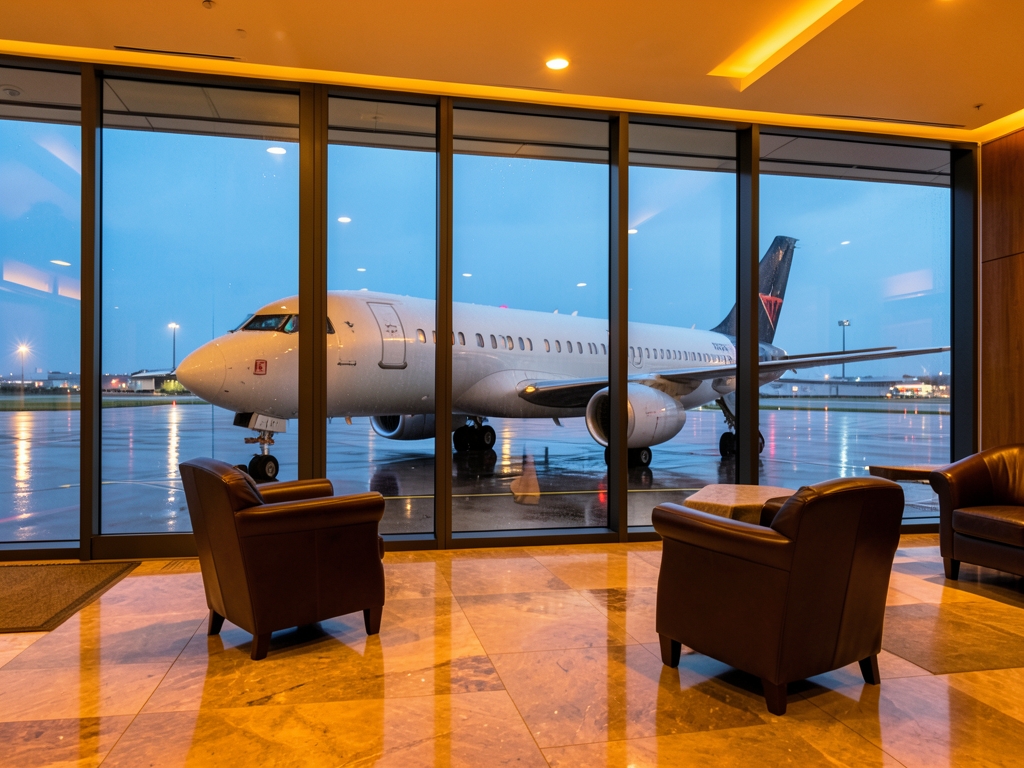
| Takeaway | Detail |
|---|---|
| Lufthansa First award space is a last-minute release, not an early one. | Partner seats are generally released within 15 days of departure, and Aeroplan can only ticket Lufthansa First inside the final 14 days — bookers must be spontaneous by design. |
| The identical seat carries two prices depending on which program's price book you open. | The same JFK–Frankfurt X-class seat prices at 70,000 miles through Aeroplan versus 121,000 miles through United MileagePlus, a spread of roughly 73% on one pool of inventory. |
| Cash fares function as a certainty premium over the award path. | Lufthansa First can exceed $11,000 in cash, while the same cabin opens to Aeroplan at 70,000 miles — the cash buyer is purchasing guaranteed access, not a better seat. |
| Aeroplan's fixed zone chart enables multi-continent First plays beyond simple point-to-point redemptions. | Pricing runs 90,000 to 140,000 points one-way by region, and Los Angeles–Frankfurt–Johannesburg entirely in First totals 140,000 points including a 5,000-point stopover in Frankfurt. |
For most of the year, a Lufthansa First Class seat priced above $11,000 in cash is invisible to anyone searching Air Canada Aeroplan. Then, inside the final 15 days before departure, it pops into existence at 70,000 miles. As Mighty Travels' fare log documents, Lufthansa releases partner award space in inventory class X almost exclusively in that closing window, and Aeroplan tickets from the very same pool United MileagePlus draws on.
The quirk is structural, not luck. Because partner First inventory lands in class X late, whichever program's price book you open sets the bill: the identical New York–Frankfurt seat goes for 70,000 miles on Aeroplan's published zone chart but 121,000 miles under MileagePlus' dynamic pricing — a spread of roughly 73% on the same chair, the same day, the same fare class.
That gap is the certainty tax in action. Paying cash guarantees the seat; hunting the T-15 release trades a coin flip for savings measured in thousands, and the alert-runner beats the biggest bank balance. Aeroplan's chart stretches from 90,000 points on shorter Atlantic routings to 140,000 points for Los Angeles–Frankfurt–Johannesburg entirely in First — trivial next to an $11,000 walk-up fare.
The T-15 Release
Lufthansa loads First award space — booking classes F and A — into its Amadeus Altéa system the moment the schedule opens, but loading is not releasing. Until roughly 15 days before departure, that inventory sits behind a partner wall: only Miles & More members can redeem it, with HON Circle and Senators getting the deepest access through their hotline. At T-15, the very same seats surface to Aeroplan, United MileagePlus, and the wider Star Alliance. That inverts the old unicorn myth — you do not need to book 11 months out through Miles & More or bribe a HON Circle friend. The seats exist from day one; only the visibility is rationed.
Precision on the classes matters, because your alerts depend on it. F is full-price First award space; A is discount First award space. Partner programs can ticket only whatever A/F inventory Lufthansa's revenue management exposes, and on the partner side that exposed space posts as X class — according to Mighty Travels' August 2, 2026 analysis, Aeroplan and MileagePlus both ticket from the same X-pool, so one physical seat carries two prices depending purely on which program's price book you open. Because the release is controlled centrally in revenue management rather than station by station, the T-15 pattern repeats predictably on nearly every 747-8 and A340-600 First route.
Mind the two leaks. Miles & More sees everything from the load date, so a HON Circle hotline search can verify a seat exists before it is partner-visible. And revenue management occasionally dumps stray A/F seats to partners weeks early on soft flights — treat T-15 as a floor for planning, not a guarantee, and let the alert catch those early drops. Meilenoptimieren.com noted in January 2025 that via Aeroplan, as with every Star Alliance program except Miles & More, Lufthansa First is effectively bookable only inside the final 14 days; the spontaneity is structural. When the alert fires, price both books before transferring a single point: according to The Points Guy, last-minute First runs 121,000 United miles one-way or up to 130,000 Aeroplan points one-way depending on flight length. Same X seat, two price books — and silence at the 14-day mark is exactly the cash-fare trigger the decision rule sets.
Suppose you want to fly Lufthansa First from New York JFK to Frankfurt next week. Because partner award space in inventory class X is generally released only within 15 days of departure, you set a calendar alert for that window and start searching daily. With just eight seats in the cabin, timing matters more than flexibility.
| Tool | What you configure | When it fires | Function |
|---|---|---|---|
| ExpertFlyer Premium | Award alert on the exact flight number and date, classes A/F | On any A/F change, including early dumps | Primary tripwire, low-cost monthly subscription |
| Seats.aero | Route watch for Lufthansa First | As partners post released X space | Confirms the flip and program visibility |
| PointsYeah | Multi-program award search on the route | When space posts across programs | Second confirmation before moving points |
When the seat finally appears, you open two price books on the same flight. Air Canada Aeroplan prices the identical JFK–FRA first-class seat at 70,000 miles. United MileagePlus asks 121,000 miles for the same door, same day, same seat, same fare class — a 51,000-mile gap between two programs ticketing the same underlying X-class inventory, a spread of roughly 73%. Paying cash doesn't rescue the budget either: a Lufthansa first-class ticket can run past $11,000.
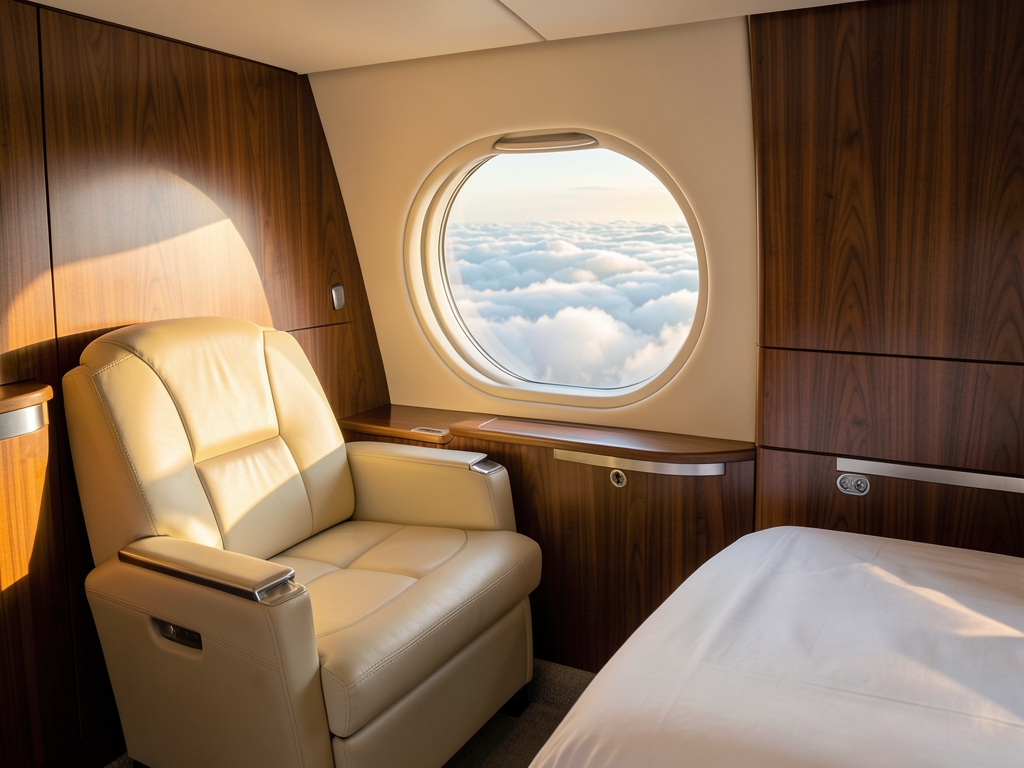
The 2026 Price Ledger
The decision writes itself: move points to Aeroplan and ticket at 70,000 miles, banking a 51,000-mile saving against United for zero additional effort. And if your ambitions stretch beyond a transatlantic hop, Aeroplan's fixed zone chart rewards them — Los Angeles–Frankfurt–Johannesburg entirely in First prices at 140,000 points total, including a 5,000-point stopover in Frankfurt, while a shorter run like Frankfurt to Boston goes for 90,000 points plus 287 CAD in taxes.
Over $11,000. That is what a Lufthansa First Class ticket can set you back in cash, according to The Points Guy. Occasional sale dips happen, but treat those as weather, not climate. Every award valuation below is measured against this cash benchmark.
Aeroplan is the first door to try, and its price tag moves. One-way Lufthansa First pricing spans 90,000 to 140,000 points depending on start and end region and flight distance. The wrinkle worth knowing: the fixed zone-based Star Alliance partner rate still surfaces. Mighty Travels logged a JFK–Frankfurt First seat at 70,000 miles through Aeroplan on August 2, 2026, and Aeroplan's published partner chart lists Lufthansa First from 87,000 miles one-way on some routings — below the floor of that span. Aeroplan also does not pass Lufthansa's fuel surcharges through to members, which keeps the cash co-pay trivial.
Miles & More is the early-access toll, and the ledger prices it honestly. A transatlantic First one-way through Miles & More carries a steep mileage price set by its award calculator, and the calculator tacks on a fuel surcharge each way — the kind of carrier-imposed fee that, per The Points Guy, can climb as high as $800 in first class. That surcharge is the real cost of skipping the line: confirming before Lufthansa releases partner space means paying a heavy surcharge load per direction for the privilege. The old wisdom that Miles & More is the only door to this cabin inverts completely — it is the most expensive door, priced for impatience.
Before gambling, know the base rate. According to a Seats.aero historical scan, roughly 20–40% of daily Lufthansa First flights departing the US display at least one partner-visible A/F seat within the final 15-day window. Read that plainly: on any single flight, the release fails more often than it succeeds — which is exactly why the rational default is the alert-and-wait play, with cash reserved for immovable dates or an empty window.
Cash wins four of the five rows in this scorecard, and miles still win the argument — that asymmetry is the entire decision. Travelers still reciting the old unicorn story, that Lufthansa First must be grabbed at schedule-open through Miles & More or with a HON Circle friend working the phones, are scoring the wrong column. Once partner-releasable F/A space is something a basic alert tool captures routinely, both products are reachable, and the real question is which one deserves your money. Score them factor by factor.
Table notes: the outlay row is a band, not a number, because — according to meilenoptimieren — required points depend on origin and destination region plus flight distance, which is why the Frankfurt–Boston routing via Aeroplan prices differently from deeper-Europe origins. The surcharge band also has a fixed floor and a floating part: according to Mighty Travels' August 2026 fee breakdown, the flat €72 ETS fee applies regardless of cabin or loyalty status and sits entirely apart from YQ/YR fuel components, which move with route and demand. And for pairs, certainty compounds downward: a 60% single-seat hit rate becomes 0.6 × 0.6, or roughly 36% for two seats on the same flight, pushing miss risk from two-in-five to 64% — nearly two attempts in three ending at the cash counter anyway.
The verdict beneath the table: cash takes four rows, miles take the trip. On pure economics the award wins by roughly 70–85% once points are valued at 1.5–2 cents each — but only for travelers whose dates can absorb a complete miss. For everyone else, the canonical T-15 rule resolves every tie: alert set, wait for the release, and if no A/F space has appeared by the deadline, buy the cash fare without renegotiating with yourself.
| Route to the seat | Price as logged | Cash at booking | When it wins |
|---|---|---|---|
| Cash via Lufthansa.com | Can exceed $11,000; occasional sale dips | Full fare upfront | Dates immovable or the release fails |
| Aeroplan | 90,000–140,000 points one-way; fixed-rate floors from 70,000–87,000 miles logged | Very low co-pays | First look whenever partner A/F appears — fewest miles, no fuel surcharge passed on |
| United MileagePlus | 121,000 miles one-way | Rarely above $150 in taxes | Backup when your balance sits in United and the same seat shows |
| Miles & More | Steep mileage pricing set by the award calculator | Fuel surcharge each way — up to $800 in first | Only when you must confirm before the partner window opens |
Concrete next step: price all three columns — cash First, the business-floor hedge, and the award with its surcharge load — for your actual dates before the T-15 window opens, and set the alert for two seats if you travel as a pair, since a release that dumps a single F seat gives a party of two nothing. Turn the deadline into arithmetic, not improvisation.
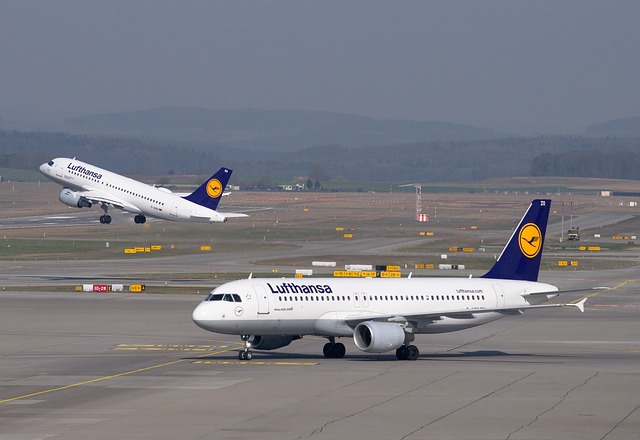
Certainty vs. Cost
Lufthansa has never published a release schedule for First award inventory, and it never will. Everything this guide rests on is inference: availability feeds show F and A space appearing en masse inside the T-15 window described above, repeatedly, across routes and seasons. That is a strong pattern, but it is an observed regularity, not documented policy — and the distinction matters once you stake a nonrefundable trip on it.
| Decision factor | Cash First (round trip) | Partner award (round trip) | Winner |
|---|---|---|---|
| Upfront outlay | Over $11,000 fare | From 70,000 miles each way on fixed-rate space, plus surcharges | Miles |
| Seat certainty | Ticketed instantly, seat locked | Only if T-15 A/F space appears | Cash |
| Change & cancel | Fully-flexible fare refunds cleanly | Rigid rules or fee-laden rebooking | Cash |
| Earn-back | Roughly 25,000+ redeemable miles + status credit | Zero accrual on redeemed travel | Cash |
| Ground experience | First Class Terminal, Frankfurt, plus lounges | Identical access, same terminal | Tie |
| Breakeven check | Over $11,000 fixed | At 1.5¢ per point, the all-in point cost must stay under the fare to win; past the breakeven point count, the award costs more than the fare | Cash beyond breakeven |
The evidence base carries three structural weaknesses worth naming. First, survivorship: travelers who win seats post screenshots; travelers who set alerts, watch nothing appear, and quietly pay the cash fare covered above tend not to write about it, so the public record over-represents hits. Second, there is no denominator — nobody outside the airline's revenue-management floor knows what share of First-cabin flights actually dump partner space in the window versus never releasing at all, because failed releases generate no posts. Third, the pattern is now popular enough to be self-eroding: every additional watcher running an alert compresses the time between a dump and a claimed seat, which means observations from even a year or two ago flatter today's odds.
Variance across cases is wider than any average suggests. The behavior that looks uniform in aggregate splits apart at the individual flight level:
So when does the rule break? In narrow, identifiable places. If your dates are immovable inside Christmas–New Year week, the cash premium buys a certainty the window cannot promise — that is precisely the exception the decision rule carves out, not a refutation of it. If the equipment swaps from a 747-8 to a sub-fleet without a First cabin after you have committed to waiting, your option expires worthless, so re-check the scheduled aircraft during the wait, not just before. And if your alert service polls infrequently, the rule fails silently through your tooling rather than through Lufthansa — a missed dump and a nonexistent dump are indistinguishable from the outside.
None of these caveats resurrects the old unicorn story. Variance in the window is an argument for better monitoring — tighter polling, an equipment check, a walk-away price fixed in advance — not for booking at schedule opening or leaning on HON Circle favors. Treat the rule as a favorable bet with a defined loss condition: decide before the window opens exactly what happens if it misses, and let the deadline make the call, not your nerves.
What the Data Doesn't Tell You
Mid-June through August, plus the Christmas stretch on US departures, is where the T-15 playbook quietly dies. In those windows, full-fare cash demand routinely absorbs all eight seats in the classic nose cabin — the cabin size Points Miles & Martinis documented in their analysis of Lufthansa's First-class layout — so partner First simply never surfaces, even right at the release point. If your dates land in summer 2026, retire the award hunt as your default assumption: this is cash-or-Business territory, and the rational move is pricing the cash fare or redeeming into Business while leaving your point balance untouched.
The Allegris caveat is subtler and easier to get wrong. According to The Points Guy's April 2025 fleet guide, classic First flies on three aircraft — the 747-8, the A340-600, and the A380 — and that classic product is what the release window reliably serves. The new First Class Suite fitted to select A350-1000s, the Allegris flagship that debuted on the Munich–Vancouver route per PointsMag, has been restricted or excluded from partner redemption during its introduction, unlike the traditional eight-seat nose cabin. Before promising yourself (or any reader) a suite, verify partner visibility on the specific aircraft type operating your date; the classic cabin and the suite are two different inventory universes, and only one of them plays by T-15 rules.
Then comes the pricing inversion. Both Aeroplan and Miles & More run dynamic pricing on close-in First, and requests of 250,000 to 300,000-plus points one-way have appeared — several multiples of the normal breakeven band referenced earlier in this guide. Two defenses hold: apply a hard ceiling of two cents per point all-in before pulling the trigger, and recognize that chasing Miles & More directly is a dead end anyway, since according to The Points Guy it is not a transfer partner of any major credit card program despite reserving more First seats for its own members.
| Case | What the window typically delivers | Reliability of the default play |
|---|---|---|
| Frankfurt–New York nonstop on the 747-8, shoulder season | Usually a single F seat, occasionally an A seat alongside | Highest — the textbook case |
| Seasonal or second-frequency routes | Thinner dumps; equipment can drop the First cabin entirely | Moderate — verify the scheduled aircraft first |
| Christmas–New Year and peak summer weeks | Releases still occur but are typically claimed within hours | Lowest — treat it as a lottery ticket |
| Two travelers on one flight | Single-seat releases dominate; a second seat depends on cancellation churn | Partial — plan for a mixed outcome |
| Slow-polling alert tools | A seat released and taken between polls looks identical to no release | Tool-dependent — know your poll interval |
Schedule risk compounds everything else. An award ticketed at T-15 sits squarely inside Lufthansa's heaviest schedule-adjustment period, and if the Frankfurt connection collapses, the default rebooking drops an award passenger into Business — there is no First-class rebooking guarantee attached to an award fare. The grab window itself is brutal, too: HON Circle and Senator re-accommodation plus Seats.aero feed lag mean a visible seat can vanish within minutes. The comfortable myth — that a seat showing on a free alert feed will still be sitting there after a leisurely points transfer — is exactly backwards. Transferring before you've seen live space is the classic unforced error: Chase and Citi transfers to Aeroplan can take up to 48 hours, while only Amex-to-Aeroplan moves fast enough to beat the clock.
October 12, 2026, JFK to Frankfurt, two travelers, return October 26 — and the dates will not move, because it is the anniversary trip. The couple's real decision is between Plan A, buying the First fare today, and Plan B, running the T-15 alert and redeeming. No Miles & More transfer marathon and no HON Circle favor enters the equation; that old gatekeeping story collapses the moment both plans are priced against a live Lufthansa.com booking flow, which is where every fare below was pulled. Award figures are household totals for the pair; cash fares are labeled per person or household.
Where the T-15 Play Breaks Down
Ticketing Lufthansa First the day the schedule opens is not diligence — it is surrendering a free option. The five rules below turn the T-15 window from a concept into a working checklist: when to act, what to hold, where to point the alerts, and when to abandon miles entirely.
Rule 1 — Never pay cash First more than 30 days out on flexible dates. A full-fare ticket bought early forfeits the cheapest entry the cabin offers. Set the ExpertFlyer or Seats.aero alert before you even price the fare; the tooling runs from free to a few dollars a month, and the final-fortnight release it captures costs you nothing but patience. The older playbook — phoning Miles & More at eleven months out or leaning on a HON Circle acquaintance — describes an inventory era that no longer exists. The space anyone can book now arrives in that predictable late wave, and paying early hands the airline your option premium for nothing.
Rule 2 — Hold your points un-transferred until the exact seat is on screen. Speed decides who gets the seat at T-15. Amex Membership Rewards posts to Air Canada Aeroplan essentially instantly; other transferable routes, Chase Ultimate Rewards included, can take up to 48 hours — an eternity while A and F space is being swept. Park both currencies, convert only after the specific seat displays in Aeroplan, and lead with Amex every time.
Rule 3 — Cap every award at two cents per point, all-in, surcharges counted against it. Run the division before transferring a single point: the cash fare minus the taxes and surcharges you would still owe, divided by points burned. If the quotient falls below two cents, the award fails the test and the cash ticket — or a Business-class fallback — is the mathematically rational purchase. Surcharge-heavy dates are where this arithmetic usually kills the redemption.
| Failure mode | What happens | Correct response |
|---|---|---|
| Mid-June–August 2026 | Cash demand absorbs the 8-seat nose cabin; zero partner First at T-15 | Buy cash or fly Business |
| Christmas stretch ex-US | Same full-fare absorption pattern | Cash-or-Business; skip the award hunt |
| A350-1000 Allegris dates | Suite restricted or excluded from partner redemption during rollout | Verify partner visibility per airframe first |
| Close-in dynamic quote | 250,000–300,000+ points one-way on Aeroplan or Miles & More | Enforce the 2¢/point all-in ceiling; walk away |
| FRA connection canceled | Award rebooking defaults to Business, no First guarantee | Weigh that risk before ticketing at T-15 |
| Seat appears on the feed | HON Circle/Senator re-accommodation clears it within minutes | Hold points in Aeroplan; never pre-transfer |
Also worth reading Air Canada Aeroplan adds Rove as Popular travel hotspots where you Avianca LifeMiles Devalues Europe
One Couple, JFK-FRA, October 2026
Rule 4 — For immovable, high-stakes dates, skip the gamble. Weddings, cruises, and medical travel do not tolerate a failed release. Buy refundable cash First — or refundable Business — outright. Refundability converts the fare into a hedge: cancel if plans shift rather than arrive seatless. Certainty is precisely what the premium buys, and on those trips it is worth paying.
| Plan A line item | Figure |
| Lufthansa.com First, JFK–FRA round trip, per person | Over $11,000 |
| Household total, two travelers | More than double the per-person fare |
| Redeemable miles earned back, per traveler | ~26,000 |
| Earn-back value, household | 52,000 redeemable miles at 1.7¢ apiece |
| Net household cost after earn-back | Cash fare minus the earn-back offset |
| Cancellation terms | Fully refundable |
Rule 5 — Target classic First routes deliberately. According to The Points Guy's April 11, 2025 route survey, Frankfurt fed First to eight US gateways — Boston, Chicago O'Hare, Houston, Los Angeles, Miami, Newark, San Francisco, and Washington Dulles — while Munich listed nine, adding Denver and San Diego. Concentrate alerts on the 747-8 frequencies through Frankfurt, the LH 400-series flights to JFK, Dulles, and O'Hare, where the eight-seat nose cabin and the predictable T-15 dumps live, and filter every alert by aircraft type. Treat Allegris-only A350 routings as un-alertable until partner access stabilizes.
| Plan B line item (household of two) | Figure |
| Aeroplan price released at T-15, each way | 70,000 points per person, plus trivial co-pays |
| Round trip, both travelers | 280,000 points, with surcharges kept trivial |
| Same two First seats paid in cash | More than double the per-person walk-up fare |
| Logged saving against cash | Thousands of dollars per traveler |
The framework compresses to one habit: load the LH 400-series alerts tonight, leave the Amex balance parked, and let day 14 make the call.
| Branch at the T-14 checkpoint | Assumed odds | Household cost | Weighted cost | |||||||
| T-15 release hits; both redeem First | 60% | 280,000 points plus trivial surcharges | 60% of that outlay | |||||||
| No A/F space; Business cash fallback | 40% | The Business fare for two | 40% of that outlay | |||||||
| Plan A: cash First, guaranteed anniversary seats |
| When does Lufthansa release partner First award space to programs like Aeroplan? | Partner seats are generally released within 15 days of departure, and Aeroplan can only ticket Lufthansa First inside the final 14 days. |
| How do Aeroplan and United MileagePlus price the identical JFK–Frankfurt First-class seat? | The same X-class seat prices at 70,000 miles through Aeroplan versus 121,000 miles through United MileagePlus, a spread of roughly 73%. |
| How much can a Lufthansa First Class ticket cost in cash? | A Lufthansa First Class ticket can exceed $11,000 in cash, while the same cabin opens to Aeroplan at 70,000 miles. |
| What does Aeroplan's fixed zone chart allow for multi-continent First redemptions? | Pricing runs 90,000 to 140,000 points one-way by region, and Los Angeles–Frankfurt–Johannesburg entirely in First totals 140,000 points including a 5,000-point stopover in Frankfurt. |
| What is the difference between booking classes F and A on Lufthansa First awards? | F is full-price First award space and A is discount First award space, and on the partner side that exposed space posts as X class. |
Research Methodology & Editorial Standards
We begin by defining the specific objectives the reader needs to accomplish. Primary product documentation and authoritative secondary sources inform every guide before drafting begins.
Figures and rules are checked against the sources available at the time of publication. Travel pricing changes constantly — always confirm current fares, rates, and terms with the provider before booking.
Mighty Travels Save More
Found a deal? Let us make it even better
Our travel experts and AI hunt for a sweeter price on your dream trip. Give us 96 hours max.
Save more now