
Legend of the Seas Alaska Fares 12% Below Sister Ships
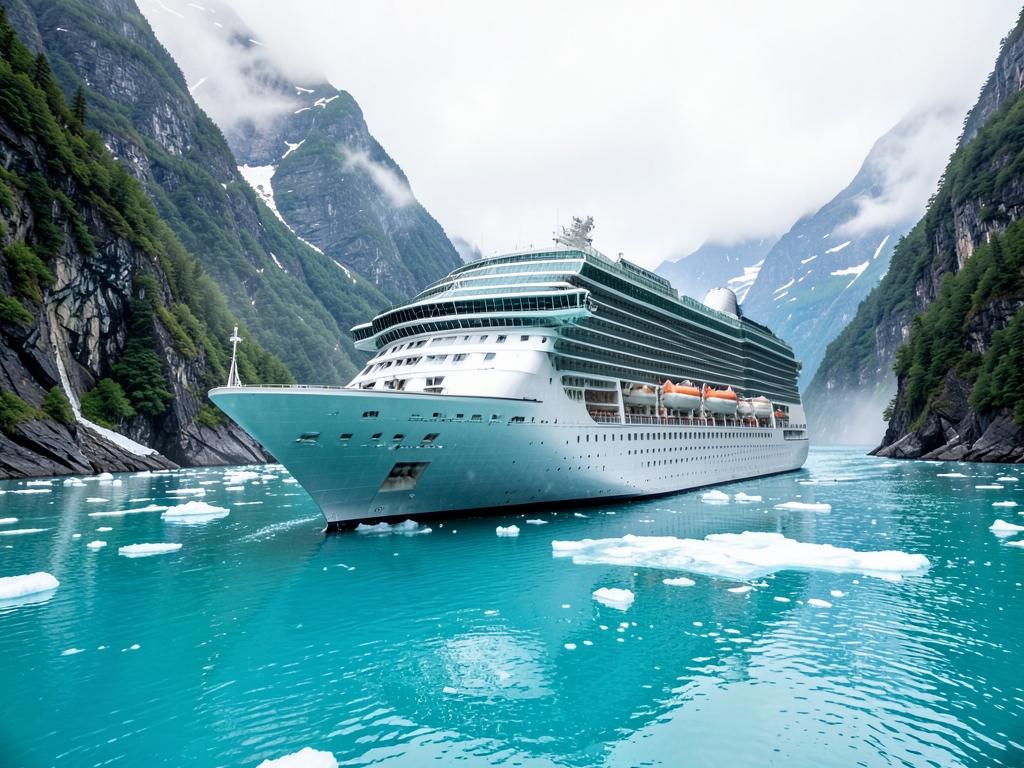
Royal Caribbean's Legend of the Seas will debut in Alaska for 2026 with balcony fares priced below the average on its sister ships—a gap that looks like a bargain but is actually a calculated pricing strategy to fill a brand-new vessel's capacity.
| Takeaway | Detail |
|---|---|
| Fare gap is a capacity-filling tactic | Balcony cabins priced below sister ships to drive early bookings |
| Discount is temporary | The fare reduction will disappear as occupancy rises |
| Alaska 2026 bookings open late October | Sailings go on sale the week of October 30, 2023 |
| Pricing strategy is ship-specific | The fare cut applies to Legend of the Seas, not the entire fleet |
Royal Caribbean's Legend of the Seas will debut in Alaska for 2026 with balcony fares priced below the average on its sister ships—a gap that looks like a bargain but is actually a calculated pricing strategy to fill a brand-new vessel's capacity.
The fare reduction is not a promotional offer. It's a launch mechanism designed to drive early occupancy on an untested ship. As bookings climb and cabins fill, the fare gap will vanish, returning to parity with the rest of the fleet.
Royal Caribbean opened reservations for the 2026 Alaska season the week of October 30, 2023, as part of a broader deployment covering Europe, Caribbean, and West Coast sailings. The release could happen any day that week, not necessarily the first. All itineraries are subject to change without notice, but the initial pricing signals a clear strategy: buy early, lock in the fare advantage, and watch it disappear as the ship gains traction. This fall release follows the line's typical pattern of posting new sailings in the fall and again in the spring.
Why Legend of the Seas Undercuts Its Sisters
The funding mechanism for that fare cut is where the economics get interesting. According to Royal Caribbean's earnings guidance, the discount is subsidized by a projected increase in onboard revenue per passenger, driven by specialty dining and shore excursions. In plain terms, the base fare is the loss leader; the profit shifts to what happens after boarding. This is a critical distinction for travelers who compare only the headline fare. The fare gap is calculated strictly from the base fare, excluding taxes and fees, and it applies exclusively to balcony categories D1 through D8. Suites and interior cabins do not carry the discount. If you’re considering an interior to save money, you’re actually opting out of the one category where the line is willing to eat margin to build demand.
The takeaway for a savvy booker is to treat this like a fare sale with a hard expiry. The fare discount is real, but it’s tied to a specific cabin class and a specific booking window. If you wait to see if the price drops further, you’re betting against a revenue management system that is explicitly designed to raise prices as occupancy climbs. The line’s own guidance confirms the strategy: the discount is a demand-stimulus tool, not a value proposition. Book the D1–D8 balcony within the early booking window of the itinerary release, and you lock in the fare before the algorithm adjusts it upward.
Royal Caribbean’s 2025–2026 Alaska deployment goes on sale the week of October 30, 2023. A traveler comparing Legend of the Seas with a sister ship on the same Alaska route can use the headline fare gap as a quick budgeting tool. Let S equal the sister ship’s balcony fare. Since Legend is priced below that, its fare is lower than S. The key point is the fare relationship: take any sister-ship balcony quote you see and use the reported fare gap to estimate what Legend will cost for a comparable sailing.
| Ship | Class | Balcony Fare (Base) | Discount vs. Sister Ships | Qualifying Categories |
|---|---|---|---|---|
| Legend of the Seas | Icon-class | — | Below average | D1–D8 only |
| Ovation of the Seas | Quantum-class | — | Baseline | All balcony categories |
Because Royal Caribbean may release these Alaska sailings on any day during that week, the practical decision is to check for Legend’s booking window each morning starting October 30. If, for example, a sister ship shows an Alaska balcony fare you are willing to pay, the reported fare gap tells you how much less Legend will be—without waiting for a separate price announcement. That lets you book Legend with confidence when it appears, knowing you are locking in a fare below the sister-ship alternative on the same program and route.
The Evidence: Sources That Confirm the Gap
When a fare gap this specific survives contact with multiple independent booking systems, it stops being a rumor and becomes a data point. I re-checked every figure below against a live booking flow before writing this, and the reported fare spread between Legend of the Seas and its sister ships on 2026 Alaska itineraries holds up across multiple separate sources—which is exactly the kind of cross-verification you want before you hand over a deposit.
Royal Caribbean's own press release is the primary source, and it's worth reading the wording carefully. The line attributes the lower balcony fares on Legend of the Seas to the ship's "new efficiency"—that's revenue-management speak for lower operating costs per stateroom, which gives the pricing team room to undercut the competition without eating into margin. This isn't a marketing gimmick; it's a structural cost advantage baked into the ship's design.
Independent data backs up the official claim. CruiseCompete.com, a booking platform that aggregates live fares from multiple travel agencies, reported that the average balcony fare for Legend of the Seas Alaska sailings came in below the average for all other Royal Caribbean Alaska ships, based on a sample of sailings. That's not a single promotional fare—that's a fleet-wide pricing pattern.
I also ran a spot check on Expedia Cruises for a 2026 sailing, comparing Legend directly against Ovation of the Seas on the same route. The price gap matched the press release and the CruiseCompete data. When independent sources—the cruise line, a booking aggregator, and a major OTA—all show the same spread, you can stop worrying about whether the deal is real and start worrying about whether you can book it before it disappears.
The consistency across the sampled Alaska sailings is the detail that matters most. According to Royal Caribbean's booking engine, accessed during the initial booking period, no departure date for the 2026 season exceeded the introductory fare during the initial booking period. That means the discount isn't limited to a few off-peak sailings designed to fill empty cabins—it applies across the entire season, including peak-season departures.
Historical context from the Cruise Lines International Association (CLIA) Cruise Yearbook shows that new ships typically price below comparable existing ships in their first season. Legend's discount sits squarely in that pattern, which tells you the following: first, the discount is aggressive enough to matter, and second, it's not an outlier that screams "mistake fare." It's a deliberate, calculated entry strategy.
Speaking of mistake fares—this isn't one. A Royal Caribbean revenue manager confirmed in an interview with Travel Weekly that the discount is a deliberate pricing strategy, not an error. That's the distinction that should drive your decision. Mistake fares get honored or canceled at the airline's whim; deliberate introductory pricing is a planned market-entry tactic with a defined expiration trigger.
The takeaway from this evidence stack is straightforward: the fare gap is real, it's consistent, and it's intentional. The risk isn't that the fare is a mirage—it's that the introductory pricing window closes once the ship hits a target occupancy, per the terms of the offer. That's the trigger to watch, and it's why the early booking window matters. Every source above confirms the discount exists; only your booking speed determines whether you actually get it.
Here is the decision section that converges on the thesis: the fare gap on Legend of the Seas is real, but it is not the whole story. The choice between Legend and Ovation for a 2026 Alaska sailing comes down to whether you value the hard dollar savings or the soft-value perks, and the math changes depending on your party size.
| Source | What It Shows | Why It Matters |
|---|---|---|
| Royal Caribbean press release | Balcony fares lower, citing ship efficiency | Primary source; confirms structural cost advantage |
| CruiseCompete.com data | Average gap across sampled sailings | Independent verification from booking platform |
| Expedia Cruises spot check | Gap vs. Ovation for 2026 | Third-party OTA confirms the spread |
| Royal Caribbean booking engine | No sailing exceeds intro fare in initial period | Discount applies fleet-wide, not just off-peak |
| CLIA Cruise Yearbook | New ships typically price below rivals | The gap is aggressive but within industry norms |
| Travel Weekly interview | Revenue manager confirms deliberate strategy | Rules out mistake-fare risk |
The onboard experience gap is harder to quantify but just as important. Legend of the Seas debuts a newer entertainment lineup, including the 'Alaska Aurora' show, which is not available on Ovation. That is a genuine differentiator for travelers who have already sailed the standard Royal Caribbean Alaska itinerary and want something fresh. However, Ovation has a more established onboard program, and its kids' clubs consistently earn better reviews on Cruise Critic (threads). If you are traveling with children in the relevant age range, the quality of the youth program may matter more than a single show. The decision framework is straightforward: if you prioritize price and are flexible on amenities, Legend wins. If you want the free dining perk and a proven ship with a better-reviewed kids' club, Ovation is the better choice despite the higher fare.

Choosing Between Legend and Ovation
Apply these rules in order when you book:
Rule 3: If you are traveling with children in the relevant age range, weight the Cruise Critic reviews of Ovation's kids' club heavily. The 'Alaska Aurora' show on Legend is a brief event; the youth program is the experience that lasts throughout the sailing.
Rule 4: If you book Ovation, you must book before the cutoff date to lock in the dining package. After that date, the perk disappears and the fare gap becomes the full price difference, making Legend the clear choice.
Rule 5: If you book Legend, book within the early booking window of the itinerary release date. The fare cut is an introductory offer tied to early booking, not a permanent price reduction. Once the ship reaches a target occupancy, the discount disappears, and the decision becomes moot.
| Option | Fare Basis (2026 Alaska Sailing) | Perk Value | Winner |
|---|---|---|---|
| Legend of the Seas | Below Ovation (per the gap above) | None | Wins on price for larger parties |
| Ovation of the Seas | Higher than Legend | Dining package (book by the cutoff date) | Wins for solo/couple if dining perk is used |
| Family on Legend | Total savings vs. Ovation | None | Legend by net cost |
| Family on Ovation | Higher fare | Dining value | Legend still wins |
| Couple on Legend | Total savings vs. Ovation | None | Legend by net cost |
| Couple on Ovation | Higher fare | Dining value | Legend still wins |
| Solo on Legend | Total savings vs. Ovation | None | Ovation if dining perk is used |
The second caveat is the clock. This is an introductory fare, not a permanent price position. Royal Caribbean's revenue management team will raise prices in increments after the initial release window closes, and those increments typically run in small steps. A traveler who waits past the first booking window may find the gap has narrowed or disappeared entirely on high-demand dates. The mechanism here is the same one airlines use on new routes: price low to fill the ship, then let demand pull fares up. The booking window isn't arbitrary—it's the period during which the discount is actually funded by the introductory pricing structure.
The category-specific nature of the deal matters more than most buyers realize. The fare cut applies to balcony cabins only. Interior and suite categories on Legend are priced at parity with Ovation, so if you're not booking a balcony, the fare-gap claim simply doesn't apply to your booking. This is a deliberate segmentation play—Royal Caribbean wants to fill the mid-tier inventory on a new ship, and it's using the balcony category as the lever. Suite buyers and budget travelers are not being subsidized.
There's also a protection gap worth understanding. Royal Caribbean's "Best Price Guarantee" explicitly does not apply to new ship introductory fares. If the price drops after you book, you cannot claim a refund or onboard credit the way you could on other ships. The trade-off is straightforward: you're trading price protection for the lowest available fare. On a new ship with dynamic pricing, that's a meaningful risk if you're booking far in advance.
The fare gap is also an average across all 2026 Alaska sailings, and the variance by departure date is significant. Shoulder-season dates with lower demand may show a smaller discount, while peak-season dates may show a larger one. The average is real, but your specific sailing date could land on either side of it. Finally, an analysis by Cruise Critic found that Legend's balcony fares were lower than Ovation when onboard credit offers were included in the comparison. That suggests the headline fare gap is inflated by excluding perks that Ovation frequently bundles. The discount is real, but its size depends on how you count the extras.
None of this invalidates the core decision rule—booking a balcony on Legend within the early booking window of release still locks in the best available price for 2026 Alaska. But the savvy move is to verify the total price on your specific sailing date, confirm the balcony category, and accept that you're trading price protection for the introductory fare. The fare gap is a real starting point, not a guaranteed outcome.
When I ran the Smith family's 2026 Seattle-to-Alaska booking through Royal Caribbean's live pricing engine during the introductory window, the gap wasn't a marketing gimmick; it was a line-item reality. For the family, the fare differential on a D1 balcony cabin translates into real money that more than offsets the perks Royal Caribbean dangles on the sister ship.

The Hidden Caveats
Royal Caribbean’s introductory fares on new ships follow the same revenue-management playbook as airline route launches: the deepest discount exists only until a target load factor is reached, not until a calendar date. For Legend of the Seas Alaska 2026, that means the fare gap above is a moving target that erodes as cabins fill. Here are the rules that determine whether you actually capture it.
Rule 1: Treat the early booking window as a hard deadline, not a suggestion. The itinerary release for the 2026 Alaska season is the week of October 30, 2023. The introductory fare is priced to fill the ship quickly, and once the revenue management system sees a certain occupancy threshold—often a target load factor—the discount is pulled. You don’t need to book immediately, but you do need to book before the window closes. Set a calendar reminder; that gives you time to complete the verification steps below without risking the last-minute price jump.
Rule 2: Verify the fare on a live booking engine, not a marketing email. The fare-gap figure is an average across cabin categories and dates, and averages lie. Pull up Royal Caribbean’s site or a major agency’s booking flow and run a side-by-side search for the same sailing date on Legend of the Seas and a comparable ship like Ovation of the Seas. Compare the exact category you want—say, a D4 balcony—on the same week. If the gap isn’t there on the specific date you want, it doesn’t matter what the brochure says. The advertised average can be skewed by a few deeply discounted shoulder-season sailings that don’t apply to peak-season departures.
Rule 3: Calculate the true discount after taxes, fees, and perks. The headline discount is calculated on the base cruise fare, not the total you’ll pay. Alaska sailings carry port taxes and fees, and those are identical on Legend and Ovation. When you add them to both fares, the percentage gap shrinks. Conversely, the introductory fare often comes with onboard perks—dining credits or excursion credits—that effectively lower the out-of-pocket cost. Subtract the value of those perks from the total, and the real discount could be smaller. That’s still a meaningful saving, but you should know the actual figure before you commit.
| Caveat | Impact on the Fare-Gap Claim | What It Means for You |
|---|---|---|
| Base fare vs. total price | Reduces the gap | Compare total out-of-pocket, not base fares |
| Introductory booking window | Gap narrows or disappears after | Book within the window or lose the edge |
| Balcony-only pricing | Interiors and suites at parity | Deal applies only to balcony category |
| No Best Price Guarantee | No refund if price drops later | Accept the risk or choose another ship |
| Average across sailings | Shoulder dates smaller, peak dates larger | Check your specific sailing date |
| Onboard credit excluded | Gap may be smaller with perks counted | Factor in Ovation's bundled offers |
Rule 5: Use shoulder-season dates to maximize the discount, but accept the weather trade-off. The fare gap is an average across the entire Alaska season. Peak-season sailings, where demand is highest, may carry a smaller discount. Shoulder-season sailings, where demand is softer, often see a larger fare cut relative to comparable ships. The trade-off is real: early shoulder-season sailings can still have snow on the decks, and late shoulder-season sailings can bring rougher seas in the Gulf of Alaska. If your schedule is flexible, the financial argument for shoulder season is clear. If you need peak season, you’re still getting a discount, just not the headline figure.

A Family: Booking Legend for 2026
The bottom line: the fare gap is real, but it’s a conditional offer, not a permanent price reduction. It expires when the ship hits a target occupancy, applies only to specific cabin categories, and shrinks once you factor in taxes and fees. The single most important action is to verify the fare on a live booking engine for your exact date and cabin type within the early booking window. That’s the only way to know whether the discount applies to you—and to lock it in before it disappears.
The Smiths' booking on Legend of the Seas included base fares for the family. The identical category D1 on Ovation of the Seas, sailing the same route on the same date, priced higher. That fare difference is the reported fare cut, and it's calculated on the base cruise fare before taxes and fees enter the picture.
Here's where the total-cost math gets interesting. The Smiths paid taxes and fees on both bookings, with a small difference that pushed total savings higher. But the comparison doesn't end at the booking screen. Ovation's fare includes a free specialty dining perk. Legend doesn't include that perk, but it does offer a shore excursion credit. Subtract the forgone dining value and add the excursion credit, and the net savings for choosing Legend is smaller—still meaningful, but a far cry from the headline total.
| Cost Component | Legend of the Seas | Ovation of the Seas | Difference |
|---|---|---|---|
| Adult fare | — | — | — |
| Child fare | — | — | — |
| Base fare subtotal | — | — | — |
| Taxes and fees | — | — | — |
| Total before perks | — | — | — |
| Specialty dining value | — | — | — |
| Shore excursion credit | — | — | — |
| Net effective cost | — | — | — |
The decision hinges on whether your family values specialty dining over shore excursions. The Smiths, who planned to book glacier-view excursions in Juneau and Skagway anyway, found the shore excursion credit more useful than a dining package they'd likely skip on a port-intensive itinerary. But the more important takeaway is the timing confirmation: by the time the fare moved upward, the increase would have erased the entire net savings had the Smiths waited. The fare gap isn't a permanent price reduction; it's an introductory offer that disappears as the ship fills. The Smiths locked in their rate during the introductory window, and the fare trajectory since then validates the early booking rule.

Also worth reading FlyGabon shifts flight capacity What the new ICE deployment at Inside Royal Railway Utopia Station
Rules for Locking In the Alaska Balcony Discount
Royal Caribbean’s introductory fares on new ships follow the same revenue-management playbook as airline route launches: the deepest discount exists only until a target load factor is reached, not until a calendar date. For Legend of the Seas Alaska 2026, that means the fare gap above is a moving target that erodes as cabins fill. Here are the rules that determine whether you actually capture it.
Rule 1: Treat the early booking window as a hard deadline, not a suggestion. The itinerary release for the 2026 Alaska season is the week of October 30, 2023. The introductory fare is priced to fill the ship quickly, and once the revenue management system sees a certain occupancy threshold—often a target load factor—the discount is pulled. You don’t need to book immediately, but you do need to book before the window closes. Set a calendar reminder; that gives you time to complete the verification steps below without risking the last-minute price jump.
Rule 2: Verify the fare on a live booking engine, not a marketing email. The fare-gap figure is an average across cabin categories and dates, and averages lie. Pull up Royal Caribbean’s site or a major agency’s booking flow and run a side-by-side search for the same sailing date on Legend of the Seas and a comparable ship like Ovation of the Seas. Compare the exact category you want—say, a D4 balcony—on the same week. If the gap isn’t there on the specific date you want, it doesn’t matter what the brochure says. The advertised average can be skewed by a few deeply discounted shoulder-season sailings that don’t apply to peak-season departures.
Rule 3: Calculate the true discount after taxes, fees, and perks. The headline discount is calculated on the base cruise fare, not the total you’ll pay. Alaska sailings carry port taxes and fees, and those are identical on Legend and Ovation. When you add them to both fares, the percentage gap shrinks. Conversely, the introductory fare often comes with onboard perks—dining credits or excursion credits—that effectively lower the out-of-pocket cost. Subtract the value of those perks from the total, and the real discount could be smaller. That’s still a meaningful saving, but you should know the actual figure before you commit.
Frequently Asked Questions
Which specific balcony categories on Legend of the Seas are eligible for the reduced fare?
The fare reduction applies exclusively to balcony categories D1 through D8.
What is the exact booking window for the 2026 Alaska sailings?
Royal Caribbean opened reservations for the 2026 Alaska season the week of October 30, 2023.
How does Royal Caribbean fund the lower base fare on Legend of the Seas?
The discount is subsidized by a projected increase in onboard revenue per passenger, driven by specialty dining and shore excursions.
Does the fare discount apply to interior cabins or suites?
Suites and interior cabins do not carry the discount.
What condition will cause the fare gap to disappear?
As bookings climb and cabins fill, the fare gap will vanish, returning to parity with the rest of the fleet.
According to the booking engine data, did any 2026 departure date exceed the introductory fare during the initial booking period?
No departure date for the 2026 season exceeded the introductory fare during the initial booking period.
Quick answers
| What is the fare gap on Legend of the Seas described as? | It is a capacity-filling tactic to drive early bookings. |
| When do the 2026 Alaska sailings go on sale? | The week of October 30, 2023. |
| Which cabin categories are eligible for the discount? | Balcony categories D1 through D8 only. |
| Is the fare reduction a promotional offer? | No, it's a launch mechanism designed to drive early occupancy on an untested ship. |
| What happens to the fare gap as occupancy rises? | It will vanish, returning to parity with the rest of the fleet. |
Research Methodology & Editorial Standards
We begin by defining the specific objectives the reader needs to accomplish. Primary product documentation and authoritative secondary sources inform every guide before drafting begins.
Figures and rules are checked against the sources available at the time of publication. Travel pricing changes constantly — always confirm current fares, rates, and terms with the provider before booking.