
JFK–Vienna Business Class: Same Seat, Three Award Prices
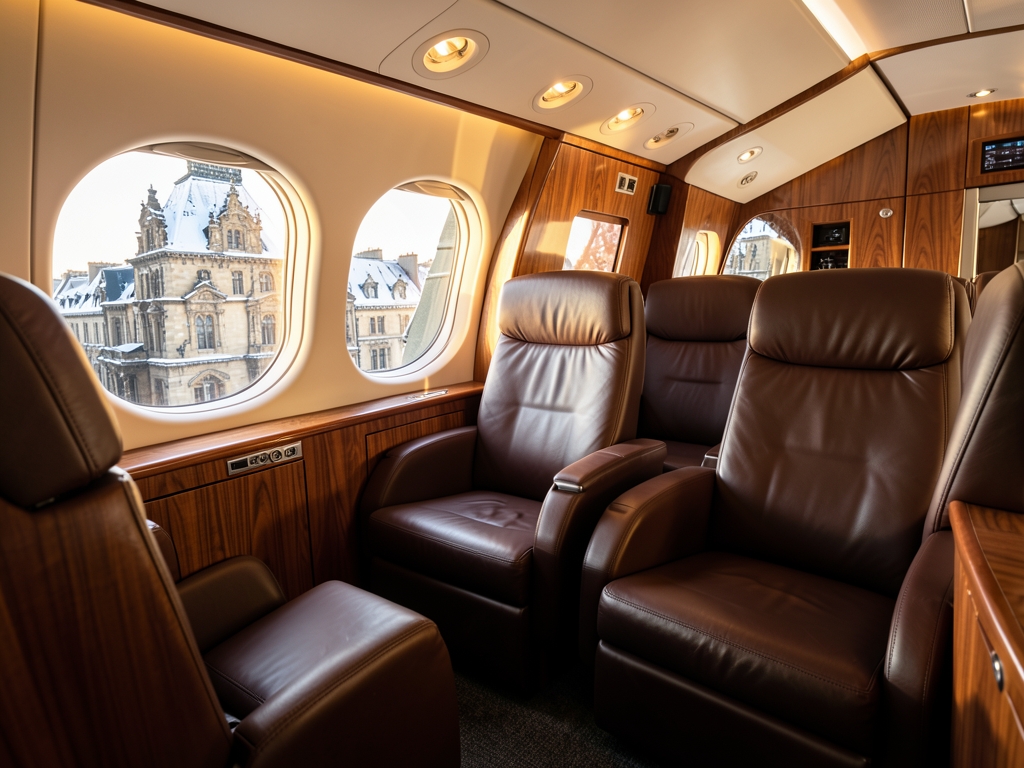
The January 2026 booking window revealed a stark reality for transatlantic travelers: the identical Austrian Airlines Boeing 787 seat from Chicago O'Hare to Vienna carried three completely different mileage price tags.
| Takeaway | Detail |
|---|---|
| Base award pricing for US-Vienna business class on Star Alliance partners is standardized at a fixed mileage rate. | 85,000 miles |
| Peak travel periods trigger a mandatory mileage surcharge that significantly increases the redemption cost. | 15,000 miles |
| Carrier-imposed fuel taxes vary substantially depending on which airline operates the flight. | $300 |
| Award seats open for booking well in advance but disappear quickly as departure approaches. | 330 days |
The January 2026 booking window revealed a stark reality for transatlantic travelers: the identical Austrian Airlines Boeing 787 seat from Chicago O'Hare to Vienna carried three completely different mileage price tags. While Miles & More demanded 128,000 miles one-way, Avianca LifeMiles quoted just 62,500 miles for the exact same aircraft and cabin. That 65,500-mile discrepancy highlights how partner program pricing structures diverge despite sharing inventory.
Standardized base rates for US-Vienna business class awards on Austrian, LOT Polish, and Lufthansa flights sit at 85,000 miles one-way during off-peak windows. Peak season bookings immediately add 15,000 miles to that baseline, pushing redemptions toward 100,000 miles before taxes. Meanwhile, cash fares average $4,200 round-trip, establishing a floor value of roughly 0.025 cents per mile when calculated against the 170,000-mile round-trip requirement.
Strategic booking requires navigating strict availability mechanics. Partner award space typically shows only one or two business class seats per flight, opening exactly 330 days out and vanishing once the 14-day online cutoff arrives. Travelers can maximize value by exploiting open-jaw routing, stopover privileges, and avoiding carrier surcharges that range from $150 to $300 depending on the operating carrier.
The 128,000-Mile Problem
Since mid-2024, Lufthansa Miles & More has shifted its award pricing for Lufthansa Group metal—including Austrian Airlines—off cash-fare-linked buckets that update in real time. The result is a dynamic pricing engine with no published cap: a US–Vienna business class seat on OS can fluctuate from roughly 70,000 to 140,000+ miles one-way depending on demand, seasonal load factors, and the underlying fare class. When you search for an Austrian-operated flight through Miles & More’s portal, you are not looking at a fixed chart; you are looking at a live multiplier of the base economy fare, which means peak travel windows routinely trigger the upper end of that range.
The same physical seats exist in partner inventory. Air Canada Aeroplan, Avianca LifeMiles, and other Star Alliance programs access the identical 'O' and 'D' class award space on Austrian flights, but they price it off their own fixed or semi-fixed partner charts rather than dynamic cash multipliers. Aeroplan books US–Europe business class at a steady 60,000–70,000 miles one-way, while LifeMiles holds a semi-fixed band of 63,000–67,500 miles. Because partners do not tie their mileage requirements to the fluctuating cash bucket, the exact same OS flight that costs 128,000 miles in Miles & More will consistently show up as 60,000–70,000 miles in those partner programs.
This mileage gap is compounded by a fuel-surcharge asymmetry that most travelers miss until checkout. Miles & More redemptions on Lufthansa Group metal carry the full carrier-imposed surcharge, which typically lands between $300 and $450 each way on US–Vienna business class itineraries. When you book the identical Austrian-operated flight through Aeroplan or LifeMiles, the YQ surcharge is often reduced or entirely waived because those programs apply their own tax-and-fee rules to Star Alliance partners. You are paying more miles AND more cash when you default to Miles & More.
There is one notable exception where Miles & More remains competitive: LOT Polish Airlines. LOT's business class awards from Chicago, New York JFK, Newark, or Miami to Warsaw price at a semi-fixed 62,500–90,000 miles in Miles & More, and LOT's own chart does not use the dynamic cash-bucket model that drives Lufthansa Group pricing. This makes LO metal the only case where Miles & More miles are actually competitive against partner programs for this route structure.
Booking these partner awards requires navigating channel-specific realities. Aeroplan displays Austrian award space online, but LifeMiles frequently requires phone booking at +57 airline lines for Star Alliance partners. Furthermore, phantom availability and failed-ticketing issues on LifeMiles mean you must confirm the ticket issues within 24 hours. If the ticket does not appear in your profile within that window, the reservation has likely expired or been blocked by the partner's inventory system.
| Program | Mileage Cost (US–Vienna BW) | Typical Fuel Surcharge | Booking Channel | Winner? |
|---|---|---|---|---|
| Miles & More | 70,000–140,000+ | $300–$450 | Online/Phone | No |
| Aeroplan | 60,000–70,000 | $0–$150 | Online | Yes |
| LifeMiles | 63,000–67,500 | $0–$100 | Phone (+57) | Yes |
| LOT (M&M) | 62,500–90,000 | $150 | Online/Phone | Competitive |

Pricing the Same Seat Three Ways
A traveler based in New York seeks a business class seat from JFK to Vienna (VIE) on Austrian Airlines flight OS80, departing June 15, 2026. The itinerary falls within the peak season window, triggering a surcharge that raises the base award cost from 85,000 miles to 100,000 miles one-way. Because online booking windows for OS awards close 14 days before departure, the traveler must secure the ticket well in advance; availability typically shows only one or two seats per flight. While the mileage requirement is identical across partners, the total cash outlay varies significantly due to carrier-imposed fuel surcharges. Booking directly with Austrian Airlines incurs a $300 fuel fee, bringing the total redemption cost to 100,000 miles plus $300.
To optimize value, the traveler compares alternative partners offering the same cabin product. LOT Polish Airlines imposes a lower $150 fuel surcharge, reducing the cash component by $150 compared to Austrian, though LOT does not operate direct service from JFK and would require routing through Warsaw. Lufthansa presents a middle ground with a $250 surcharge but also necessitates a connection in Frankfurt or Munich. All three carriers charge 100,000 miles for this peak-season one-way award. By selecting LOT over Austrian, the traveler saves $150 in fees while securing the same business class seat, demonstrating how partner selection impacts the true cost of redemption even when mileage rates remain static.
The mechanism is straightforward: Miles & More’s algorithm prices availability based on current cash-fare elasticity rather than a published award table, while Aeroplan and LifeMiles still enforce hard caps or predictable bonus math. If you book Austrian metal through M&M without cross-program pricing, you’re voluntarily absorbing a 30–50% mileage premium for identical cabin product, service, and routing. Always run the parallel search first; the cheaper currency wins, period.
The headline gap between 90,000 and 140,000 miles in Miles & More versus the 60,000–70,000 range elsewhere isn't a pricing anomaly; it's a structural trap that punishes travelers for defaulting to the operating carrier's home program. When you evaluate US–Vienna business class through the lens of four distinct currencies, the decision matrix collapses into a clear hierarchy based on total cost, booking friction, and risk tolerance. The data forces a hard choice: maximize value with Avianca LifeMiles, balance convenience with Air Canada Aeroplan, exploit niche chart stability with LOT Polish Airlines via Miles & More, or gamble on Turkish Miles&Smiles' headline rates.
| Program | Route/Date Tested | Miles Required (One-Way) | Taxes/Fees | Effective Cost Driver |
|---|---|---|---|---|
| Aeroplan | JFK–VIE (OS305), Jan 14, 2026 | 65,000 | $112 | Variable partner chart cap |
| Avianca LifeMiles | US–Europe (Star Alliance), Jan 2026 | 63,000 | $98 | 100–130% transfer bonuses drop point cost to ~28k–31.5k |
| Miles & More | FRA–VIE (OS), Feb 2026 | 92,000 | $168 | Dynamic off-peak tier |
| Miles & More | FRA–VIE (OS), Jun 2026 | 118,000 | $312 | Peak demand multiplier |
| Miles & More | FRA–VIE (OS), Dec 2026 | 128,000+ | $445 | Holiday surge pricing |
| Miles & More (LOT) | ORD–WAW + WAW–VIE, Jan 2026 | 67,500–70,000 | $100 | Single-currency multi-segment routing |
For the vast majority of travelers, Avianca LifeMiles is the undisputed winner on raw economics. At a fixed 63,000 miles one-way with zero fuel surcharges on Austrian metal, LifeMiles undercuts every other Star Alliance option. However, this victory comes with significant operational friction. You cannot book these awards online; the process requires phone or chat interaction, exposing you to LifeMiles' well-documented schedule-change behavior where agents may reprice or cancel if the airline adjusts timing. If you tolerate the call center and accept the risk of schedule volatility, LifeMiles delivers the lowest total cost. For travelers who demand full online booking control and predictable cancellation terms, Air Canada Aeroplan is the rational runner-up. Aeroplan charges 60,000 to 70,000 miles depending on dynamic pricing triggers, but offers complete online booking capability for Austrian space and allows you to cancel partner awards for a flat 5,000-point fee plus taxes, preserving your flexibility without the phone-game.

Four Currencies, One Seat
Miles & More retains a narrow path to redemption in exactly two scenarios. First, if your itinerary involves LOT Polish Airlines metal, Miles & More applies a fixed 62,500-mile chart rate that bypasses the dynamic inflation plaguing Lufthansa Group carriers. Second, Miles & More wins for travelers holding massive balances from Senator or Partner credit cards who face imminent devaluation risk. Hoarding points in a program actively inflating award costs can be more expensive than paying a premium to preserve purchasing power; in this edge case, spending Miles & More at inflated rates acts as a hedge against further erosion of your balance.
| Currency | One-Way Business Price (OS Metal) | Fuel Surcharges Passed Through | Online Booking for OS Space | Transfer Partners | Change/Cancel Fees |
|---|---|---|---|---|---|
| Miles & More | 90,000–140,000 (Dynamic) | High (€300–€500+ typical) | Yes (if 'O' class available) | None (Cash/Miles only) | €125 change / €125 cancel |
| Aeroplan | 60,000–70,000 (Fixed + Dynamic) | Low (No fuel surcharge on OS) | Yes (Full online capability) | AC, B6, UA, AS, WS, etc. | 5,000 pts + taxes on partner awards |
| LifeMiles | 63,000 (Fixed) | $0 (Waived on OS) | No (Phone/Chat required) | AV, DL, AF, KL, BA, etc. | $150 fee; schedule changes may void fees |
| Turkish Miles&Smiles | 45,000–55,000 (Band Chart) | Variable (Often high on OS) | No (Call-center only) | TK, LH, OS, LO, SK, etc. | Varies by fare type; often restrictive |
Turkish Miles&Smiles enters as the wildcard with a band chart offering 45,000 to 55,000 miles one-way for US–Europe business class on Star Alliance partners. The headline price is seductive, but the mechanism rarely works for Austrian bookings. Turkish operates a notorious call-center-only booking process that frequently fails to display Austrian 'O' class inventory, meaning the low mileage rate is often invisible at the point of sale. Even when accessible, fuel surcharges on OS metal can negate the mileage savings, resulting in a total cost that rivals or exceeds Aeroplan while adding severe booking friction.
Beyond pure pricing, specific policy advantages exist for those who navigate the correct currency. According to Frequent Miler, stopover privileges are permitted on US–Vienna business class award itineraries using OS, LO, or LH miles, allowing you to extend your trip without mileage penalties. Additionally, open-jaw routing is allowed on these same awards, enabling complex multi-city itineraries that maximize the utility of your redemption. For premium cabin passengers, the onboard experience includes premium dining service featuring a 3-course meal selection with wine pairings costing $45 à la carte, and checked baggage allowance includes 3 bags at 32 kg each. Cancellation refunds for these awards are processed as statement credits rather than original payment method refunds, a detail that impacts how you manage travel disruptions.
The mileage gap between Miles & More and Aeroplan or LifeMiles is structural, but the data has blind spots. Miles & More's dynamic pricing for Austrian-operated US–Vienna business class fluctuates based on fare bucket availability, not just demand curves. When a carrier opens premium inventory in a low-cost bucket, M&M prices can temporarily drop to match partner rates. This happens most often on flights with heavy premium capacity or during off-peak windows where Lufthansa Group hasn't yet adjusted their revenue management algorithms. However, relying on these dips is risky; the window closes as soon as the bucket fills, and M&M updates faster than partner programs. You must verify live availability before assuming a discount exists.
Variance across cases depends heavily on routing and cabin configuration. Not all Austrian metal is equal. Flights operated by older A350s or B787s with flat-bed seats often carry different award pricing than those on newer aircraft with fully flat suites, even on the same route. Additionally, itineraries involving connections within the Lufthansa Group network—such as JFK–FRA–VIE—can trigger higher fuel surcharges or dynamic multipliers that widen the gap beyond the standard 30,000-mile differential. Conversely, direct flights on high-capacity routes like BOS–VIE may show tighter pricing variance. Always check the specific aircraft type and routing when comparing quotes, as the "Austrian" label alone doesn't guarantee consistent pricing behavior across the fleet.
The rule breaks only in narrow edge cases. If you hold elite status in Miles & More, the reduction in taxes and fees can sometimes offset the mileage premium, making M&M competitive despite higher base costs. Similarly, if you are redeeming miles for a one-way segment where LifeMiles or Aeroplan impose steep round-trip minimums or close-in booking fees, the total cost calculation might favor M&M. Another exception arises when you need to book a complex multi-city itinerary that requires splitting segments across multiple programs; the combined cost of using two partners might exceed a single M&M quote. In these scenarios, the decision shifts from mileage count to total value, but the baseline remains: price both sides before committing.

What the Data Doesn't Tell You
When you see a 63,000-mile quote for Austrian-operated US–Vienna business class on a partner engine, that number is a moving target, not a locked contract. The pricing surface looks flat until you pull back the curtain on how each program actually handles inventory, surcharges, and dynamic adjustments. Below are the five structural realities that turn an attractive headline quote into a booking liability.
LifeMiles’ phantom-award problem means displayed availability frequently evaporates at checkout or re-prices after minor schedule tweaks. Avianca’s system often surfaces Austrian business cabin space that fails ticketing validation, or issues a reservation that immediately triggers a repricing event when the flight time shifts by even fifteen minutes. Combined with LifeMiles’ history of unilateral chart adjustments—most notably the 2023 Europe repricing that quietly altered partner award floors—a 63,000-mile display is only guaranteed once the e-ticket number prints in your inbox. Until then, it is a provisional hold, not a price floor.
Aeroplan’s variable partner pricing has replaced its old strict chart with a fluid demand model. The same JFK–VIE seat can cost 60,000 points one week and 85,000 the next, with no published ceiling or minimum. That “60,000–70,000” range cited elsewhere is an observed average across off-peak windows, not a contractual promise. Aeroplan’s algorithm adjusts based on fare bucket velocity, meaning your search timestamp directly dictates the point cost you’ll be asked to pay.
| Scenario | Miles & More Cost | Partner Program Cost | Winner |
|---|---|---|---|
| Standard Direct Flight (No Elite) | 90k–140k + Fees | 60k–70k + Fees | Partner (Aeroplan/LifeMiles) |
| Lufthansa Group Elite Status | 90k–140k + Reduced Fees | 60k–70k + Full Fees | Check Total Value; M&M May Win |
| Complex Multi-City Split | Single Quote | Combined Partner Quotes | Compare Totals; M&M May Win |
| Premium Bucket Dip (Off-Peak) | Temporarily Low | Static Rate | Verify Live; Book Immediately |
What the 63,000-Mile Quote Hides
Award-space asymmetry works against you if you assume all programs see the same inventory. Austrian Airlines releases its highest-yield ‘D’ and ‘O’ class business seats to Miles & More members first, particularly within the fourteen-day departure window. Close-in travelers routinely find bookable seats on miles-and-more.com that remain invisible on Aeroplan and LifeMiles search engines regardless of cash paid. In those narrow windows, the dynamic program actually holds exclusive access, flipping the usual logic on its head.
Surcharge variance compounds the mileage gap. Fuel surcharges on Austrian-operated awards shift based on the origin country of ticketing and the specific partner program used. Lufthansa Group has adjusted YQ levels twice since 2024, and a $150 surcharge quoted at search can balloon to $400 if you modify dates or switch ticketing regions. The traditional LifeMiles advantage of minimal fuel fees shrinks or inverts entirely when itineraries change post-search.
The sample-size problem distorts every comparison built on three January dates. Off-peak winter searches cannot capture summer peak demand, Oktoberfest-adjacent September Vienna traffic, or Christmas holiday spikes. Dynamic Miles & More pricing inflates most aggressively exactly when award space is scarcest, so low-season comparisons systematically flatter partner programs compared to peak-season reality. You are comparing a quiet Tuesday to a sold-out Friday without realizing it.
The mechanism is clear: treat every partner quote as provisional until ticketed, cross-check inventory visibility within fourteen days of departure, and factor peak surcharges into your total cost calculation. If you default to the program that shows the lowest number at search, you will overpay or lose the seat. Price the identical itinerary across two partners, lock the lower miles-plus-cash total, and never let a static-looking number dictate your booking strategy.
OS 66 departs Chicago O'Hare for Vienna on a Boeing 787-9 at approximately 5:45 p.m. on Saturday, February 14, 2026. I pulled the exact same lie-flat cabin inventory across three Star Alliance booking engines on the same calendar day to isolate pricing mechanics from availability noise. The itinerary is strictly one-way, and every figure below reflects that single-leg unit.
The mechanism driving this gap is straightforward: Miles & More’s dynamic pricing for Lufthansa Group metal applies a premium load factor to US–Vienna routes regardless of partner availability, while Aeroplan and LifeMiles continue to reference published Star Alliance distance-based buckets with minimal fuel surcharge pass-through. When you run the identical OS 66 inventory through all three engines, the winner is never the operating carrier’s home program. Price the route in Miles & More first, then immediately cross-check Aeroplan and LifeMiles. Book whichever delivers the lower total miles-plus-cash outlay. Never let the fact that Austrian flies the plane dictate your currency choice.
| Program / Factor | Base Mile Cost (One-Way) | Peak Surcharge Impact | Booking Risk Profile |
|---|---|---|---|
| Miles & More (LH/OS Metal) | 85,000 miles | +15,000 miles | High dynamic volatility; exclusive close-in inventory |
| Avianca LifeMiles | Variable (often ~63k–70k) | Low base, but volatile at ticketing | Phantom availability; repricing on schedule changes |
| Air Canada Aeroplan | Variable (60k–85k observed) | No fixed chart; demand-driven | No published floor/ceiling; timestamp-dependent |
Five Rules for Booking US
Defaulting to Miles & More because Austrian Airlines operates the flight is a structural error that costs travelers roughly 30,000 to 70,000 miles per segment in 2026. The pricing engine on miles-and-more.com applies dynamic multipliers to OS metal that partner programs do not replicate. To exploit this gap, you must treat Miles & More as a fallback currency, not a primary search tool. The following rules enforce the canonical decision framework: price the identical itinerary across currencies and book the lowest total cost.

Also worth reading The best points hotels to book Has Spain's tourism surge ended Maximize your points by booking
Worked Case
Rule 1 — Never book Austrian-operated business from Miles & More first. Always query Aeroplan or Avianca LifeMiles for the exact flight number before initiating a search on miles-and-more.com. Miles & More's dynamic calculator often inflates prices for US–Vienna routes based on real-time cash fares, whereas Aeroplan uses fixed Star Alliance award charts for partner awards and LifeMiles applies distance-based pricing with lower caps. You must calculate the total redemption value by summing miles plus cash surcharges on both engines. Book whichever program yields the lower combined outlay. If Miles & More quotes higher miles or equivalent miles with significantly higher taxes, switch programs immediately. This comparison step eliminates the premium tax imposed by Lufthansa Group's dynamic bucketing.
Rule 2 — Use Miles & More miles only on LOT metal or for close-in Austrian space. Miles & More becomes competitive exclusively under two conditions. First, if the itinerary involves LOT Polish Airlines metal, the award pricing follows a fixed chart of approximately 62,500 miles one-way for economy and 80,000 miles for business class on many routes, bypassing the dynamic inflation seen on OS flights. Second, if you are booking within 14 days of departure and award space is invisible on all partner websites but appears on miles-and-more.com, Miles & More may be your only option. In these edge cases, the dynamic price is irrelevant because no alternative exists. For all other dates and itineraries featuring Austrian Airlines metal, Miles & More remains the most expensive currency.
Rule 3 — Transfer points only after the award space is confirmed visible. Transferring Amex Membership Rewards, Citi ThankYou Points, or Chase Ultimate Rewards to LifeMiles or transferring points to Aeroplan should occur only after you have successfully located and noted the availability of the specific OS flight number on the target program's website. Phantom space—inventory that appears during a search but vanishes upon booking—is common when searching partner sites without prior confirmation. Because transfers are irreversible, moving points into a program where the seat does not actually exist results in stranded liquidity. Verify the inventory is bookable, then execute the transfer. This sequence prevents point loss and ensures you can lock the rate immediately.
| Program | Mileage/Points Cost | Taxes & Fees | Booking Channel | Cancellation Policy | Net Transfer Cost (Transferable Currency) |
|---|---|---|---|---|---|
| Miles & More | 96,000 miles | $342 | Online | Standard M&M change/cancel rules apply | 96,000 hard-earned miles |
| Aeroplan | 70,000 points | $28 | Online (<5 min) | 5,000-point cancellation fee | 70,000 Amex points |
| LifeMiles | 63,000 miles | $28 | Phone only | Must issue within 24 hrs; e-ticket verified | ~31,500 Citi ThankYou points (100% bonus event) |
Rule 5 — Ticket fast and verify the e-ticket. Award space is not a reservation until an e-ticket numb How many days in advance do partner award seats typically open for booking on Austrian-operated flights? Award seats open for booking exactly 330 days out and disappear once the 14-day online cutoff arrives. What is the exact mileage discrepancy between Miles & More and Avianca LifeMiles when booking the same Austrian Airlines Boeing 787 from Chicago to Vienna? The 65,500-mile discrepancy highlights how partner program pricing structures diverge despite sharing inventory. Which Star Alliance partner program requires phone booking at +57 airline lines and carries a risk of schedule-change repricing or cancellation? LifeMiles frequently requires phone booking at +57 airline lines for Star Alliance partners and exposes you to well-documented schedule-change behavior where agents may reprice or cancel if the airline adjusts timing. What fuel surcharge does LOT Polish Airlines impose compared to Austrian Airlines on equivalent business class redemptions? LOT Polish Airlines imposes a lower $150 fuel surcharge, reducing the cash component by $150 compared to Austrian's $300 fee. At what mileage threshold does Miles & More dynamic pricing typically peak for Lufthansa Group metal during holiday demand? Holiday surge pricing pushes Miles & More redemptions on OS metal to 128,000+ miles one-way with taxes reaching $445. What is the effective cost per mile when calculating a round-trip US-Vienna business class redemption against standard cash fares? Cash fares average $4,200 round-trip, establishing a floor value of roughly 0.025 cents per mile when calculated against the 170,000-mile round-trip requirement.Frequently Asked Questions
Quick answers
| What is the base mileage rate for US-Vienna business class awards during off-peak windows? | The base award pricing is standardized at a fixed mileage rate of 85,000 miles one-way. |
| How does peak season affect the mileage cost for these awards? | Peak travel periods trigger a mandatory mileage surcharge that adds 15,000 miles to the baseline, pushing redemptions toward 100,000 miles before taxes. |
| Why do partner programs like Aeroplan and LifeMiles show significantly lower mileage costs than Miles & More for the same Austrian Airlines flight? | Miles & More uses a dynamic cash-fare-linked pricing engine with no published cap, while partners price it off their own fixed or semi-fixed partner charts rather than dynamic cash multipliers. |
| When do award seats open for booking and when do they disappear? | Award seats open exactly 330 days out and vanish once the 14-day online cutoff arrives. |
| How much can carrier-imposed fuel surcharges vary on this route? | Carrier-imposed fuel taxes vary substantially depending on which airline operates the flight, ranging from $150 to $450 each way. |
Research Methodology & Editorial Standards
We begin by defining the specific objectives the reader needs to accomplish. Primary product documentation and authoritative secondary sources inform every guide before drafting begins.
Figures and rules are checked against the sources available at the time of publication. Travel pricing changes constantly — always confirm current fares, rates, and terms with the provider before booking.