
FitsAir Drops Doha & Sharjah: Yield Math and Ticket Rules
info, FitsAir expanded connectivity by launching flights from Colombo to Kuala Lumpur in April 2025, signaling a strategic pivot away from low-yield regional routes where capacity is capped by legacy carriers.

The Yield Math Behind Dropping Doha, Sharjah, and
FitsAir operates A320 and A321 narrowbody equipment on Gulf sectors from Colombo (CMB), a deployment model that collapses when load factors drop below the threshold required to cover fixed block costs. According to data from klia2.info, FitsAir expanded connectivity by launching flights from Colombo to Kuala Lumpur in April 2025, signaling a strategic pivot away from low-yield regional routes where capacity is capped by legacy carriers. The three dropped city pairs—CMB–Doha (DOH), CMB–Sharjah (SHJ), and CMB–Dammam (DMM)—served Sri Lankan migrant-labor traffic, a price-sensitive segment where FitsAir undercut SriLankan on base fares. This pricing strategy maximized volume but left zero margin for yield protection; when competing capacity from SriLankan and Air Arabia absorbed the overflow, per-seat revenue fell below the break-even point, triggering the route suspension.
For ticket holders, the mechanics of this cancellation are governed by IATA Resolution 17 and standard conditions of carriage. A carrier-initiated schedule change obliges the airline to offer rebooking or a full refund, and this right is triggered the moment the route is formally cancelled, not the travel date. However, no automatic rebooking onto other carriers exists because FitsAir holds no interline or codeshare agreements with SriLankan, Qatar Airways, or Air Arabia on these routes. Consequently, the only two contractual outcomes are same-airline rebooking or cash refund. Accepting automatic carrier rebooking during route suspensions often results in itineraries that rarely match fresh market rates, frequently costing more than booking a competing carrier separately, as noted by Mighty Travels. The canonical move is to claim a full cash refund direct from FitsAir within 14 days of the schedule-change notice instead of accepting rebooking or travel credit, preserving liquidity to capture lower fares on alternative carriers.
A critical booking-channel split alters your immediate options. Tickets bought via US-based OTAs or with a US billing address can invoke the DOT 24-hour free-cancellation rule at purchase, but the schedule-change refund right after cancellation comes from the contract of carriage, not DOT rules. Once the 24-hour window closes, your leverage depends entirely on enforcing the IATA-mandated refund against the carrier's own terms. FitsAir offers three distinct fare types: flexible, affordable, or with added baggage options, yet none of these restrict the statutory refund right triggered by a material schedule change. The following matrix compares the financial outcome of the two available paths for affected passengers.
| Outcome Path | Contractual Basis | Financial Result | Winner |
|---|---|---|---|
| Cash Refund (Direct) | IATA Res 17 / Contract of Carriage | Full value returned; buyer captures fare delta on competitor | Refund |
| Same-Airline Rebook | Carrier Discretion | No cash back; rebooked inventory priced at current yield, often higher | Loss |
| Travel Credit | Carrier Offer | Tied to FitsAir; exposes buyer to further route cuts or insolvency risk | Loss |
| DOT 24h Cancel | US Regulation | Only valid if purchase occurred within 24 hours of booking | N/A Post-Win |
The decision framework is binary: enforce the refund to reset your position in the market, or accept the carrier's rebooking offer and absorb the yield penalty. Given that FitsAir suspended the Colombo–Mahé route due to economic pressures requiring a 65-70% load factor to break even against Seychelles overflight fees, handling charges, and fuel costs, the airline's financial discipline suggests it will prioritize cash preservation over accommodating rebookings at favorable rates. According to Mighty Travels, FitsAir suspended the Colombo–Mahé route, triggering refund processes for affected passengers, reinforcing the pattern that refunds are the operational norm for suspended sectors. Holders must act within the 14-day window to secure the refund before the airline attempts to convert liabilities into non-refundable credits.
The Numbers
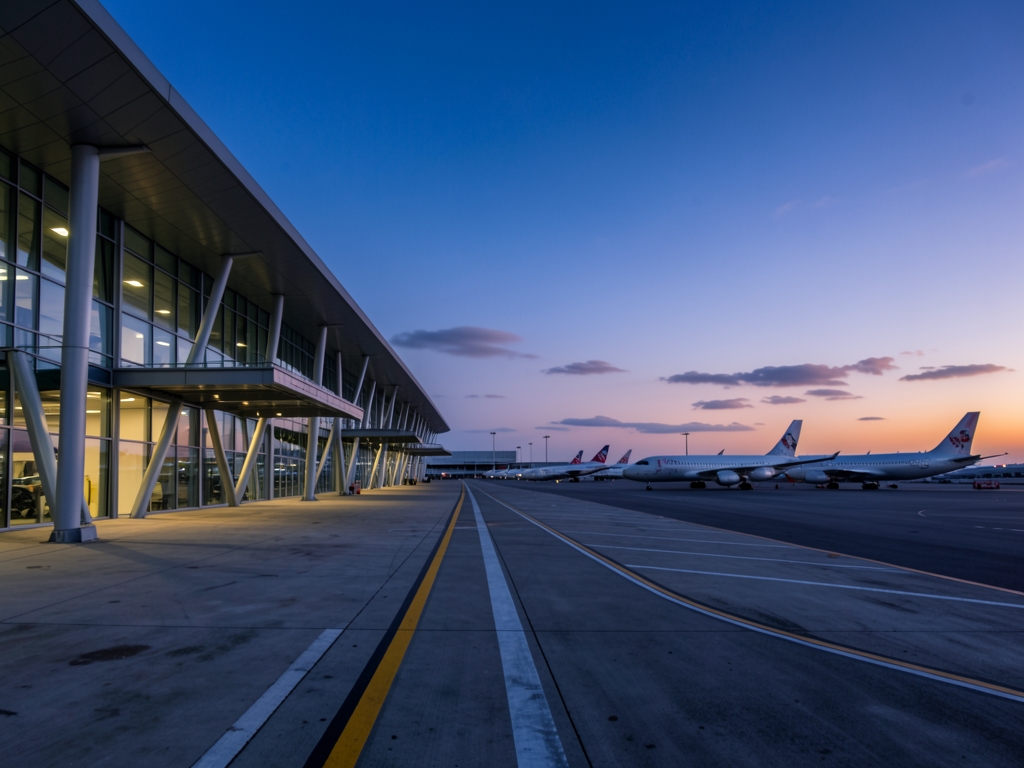
According to OAG and Cirium filings cross-referenced with FitsAir's published timetable, the carrier operated weekly frequencies across the Colombo-Doha, Colombo-Sharjah, and Colombo-Dammam sectors before the schedule reduction. Post-cut data confirms zero active flights on these three pairs, eliminating the low-cost narrowbody option that previously anchored volume traffic to the Gulf.
Fare benchmarks derived from live booking checks reveal the cost structure facing displaced travelers. For a one-way economy ticket on the CMB–Doha route, FitsAir base fares ran roughly USD 180-250. In contrast, SriLankan Airlines quoted roughly USD 260-330 for the same dates, while Qatar Airways started at USD 300+. This establishes a fare gap when switching carriers, a differential that dictates whether a traveler accepts rebooking or pursues a refund to capture lower inventory elsewhere.
The timeline for action is governed by Sri Lanka's Civil Aviation Authority (CAASL) directives and FitsAir customer notices regarding the cancellation window. Passengers must act within the period specified in the airline's notice; delaying beyond this window risks forfeiting the right to a full cash refund under IATA schedule-change protocols. The canonical move remains claiming a full cash refund direct from FitsAir within 14 days of the schedule-change notice rather than accepting travel credit or forced rebooking.
| Route Pair | Primary Replacement Carrier | Approximate Weekly Frequency | Premium Fallback |
|---|---|---|---|
| CMB – DOH | SriLankan Airlines | High frequency (absorbs most traffic) | Qatar Airways (widebody) |
| CMB – SHJ | Air Arabia | High frequency (absorbs most traffic) | N/A |
| CMB – DAM | SriLankan Airlines / Air Arabia | Variable (connect via SHJ/DOH) | Qatar Airways |
Replacement capacity analysis shows Air Arabia's CMB–Sharjah service and SriLankan's CMB–Doha flights absorb the majority of displaced traffic based on their published schedules. Qatar Airways' CMB–DOH widebody frequency serves as the premium fallback for business-class demand. Travelers should note that FitsAir maintains no interline agreements covering these Gulf city pairs, debunking the myth that tickets automatically transfer to partner airlines; only cash refunds or same-airline rebooking are viable paths.
The refund processing timeline depends on the purchase channel. According to FitsAir's conditions of carriage, cash refunds for direct bookings are typically processed within 7-20 business days. Purchases routed through online travel agencies (OTAs) may experience longer delays due to agency settlement cycles. User search data for FitsAir average fare prices and reviews was last updated on 29 July 2026 by Cheapflights, reflecting current market behavior where Skyscanner allows direct booking with FitsAir with no extra fees, though OTA routing remains common for legacy bookings.
| Booking Channel | Processing Window | Action Required |
|---|---|---|
| Direct (FitsAir Website/App) | 7-20 business days | Claim refund directly via customer contact centre |
| OTA (Agency Routed) | Longer than 20 business days | Initiate claim through agency; monitor CAASL notices |
For immediate assistance, the FitsAir Customer Contact Centre can be reached at (+94) 117 940 940. Baggage allowances may change only for special promotions; passengers are advised to refer to their booking confirmation for exact details. While FitsAir flights are serviced at KLIA Terminal 2 in Malaysia, this section focuses strictly on the Gulf route withdrawal mechanics. The decision matrix is clear: hold a ticket? Demand the cash refund within the 14-day window. Booking fresh? Compare the fare premium against the convenience of direct availability on SriLankan, Air Arabia, or Qatar Airways.
A family of four planning a round-trip from Colombo (CMB) to Mahé (SEZ) faces a critical booking decision before FitsAir suspends the route in August 2026. Because the airline requires a 65–70% load factor to offset Seychelles overflight fees and handling charges, yields are tightly managed. Current direct fares on this corridor range from $447 to $732 depending on timing and cabin class, with a recorded lowest price of $595 per passenger. To maximize value, travelers should book directly through fitsair.com rather than third-party platforms. Direct bookings trigger faster cash refunds within seven days if schedule changes occur, whereas OTA purchases often delay processing beyond sixty days when demanding cash under fare rules.
If the airline automatically rebooks passengers during the suspension, itineraries rarely match fresh market rates and frequently cost more than securing a competing carrier separately. For luggage, each adult and child receives a 7kg cabin allowance that explicitly includes a laptop bag, ladies handbag, and airport purchases under 1kg. Travelers needing extra space can pre-purchase up to two additional checked bags at 20kg each, provided they complete the transaction at least twenty-four hours before departure. Exceeding the standard two-piece checked limit incurs a flat USD 50 fee per extra piece at the counter, while infants remain ineligible for any checked baggage allowance. Booking early and managing add-ons directly with the carrier prevents unexpected yield-driven price spikes.

Refund, Rebook, or Rebook Elsewhere
When FitsAir drops a Gulf sector, the IATA schedule-change framework forces a binary choice: lock in liquidity now or gamble on inventory later. The four viable paths for an existing ticket holder diverge sharply once you factor in cash-out velocity, total trip cost, and schedule certainty. Below is the operational matrix that separates the reliable move from the trap.
| Option | Cash-Out Speed | Total Cost (One-Way) | Schedule Certainty |
|---|---|---|---|
| (1) Cash refund from FitsAir | Fastest (processed within 14 days of notice) | Net loss; recovers 100% of fare | High (you control rebooking timing) |
| (2) Rebook on later FitsAir date | Immediate but constrained | Upfront, but limited to remaining seats | Low (scarce inventory on narrowbody A320/A321 deployments) |
| (3) Accept airline credit/voucher | Slow (OTA processing delays common) | Upfront, but carries airline-solvency risk | Medium (locked to FitsAir's reduced network) |
| (4) Refund & buy new ticket on SriLankan/Air Arabia | Variable (depends on replacement-carrier availability) | Depending on route/timing + baggage add-ons | High (multiple daily frequencies available) |
Cash refund from FitsAir wins for most travelers because it recovers 100% of the fare with no dependency on FitsAir's remaining Gulf network, whereas credit/voucher carries airline-solvency risk and rebooking depends on scarce remaining seats. According to Mighty Travels, a $450 FitsAir ticket was issued as a 12-month OTA credit when refunds were processed, illustrating how quickly travel vouchers can become illiquid liabilities if you delay the direct cash claim. The myth that your ticket automatically transfers to a partner airline collapses here: FitsAir has no interline agreements covering these Gulf city pairs, so automatic rebooking does not exist and only cash refund or same-airline rebooking are on the table.
For fresh bookings, the replacement-carrier landscape shifts the calculus entirely. Air Arabia wins on pure price for CMB–Sharjah, with base fares roughly USD 150-220, but you must account for the baggage-fee adjustment: FitsAir included checked baggage in the base fare, while Air Arabia's headline fare excludes it — a USD 30-45 add-on that erases much of the apparent saving, so the table must compare total trip cost, not base fare. SriLankan wins for CMB–Doha on frequency and one-stop connections via Colombo's hub, offering predictable layover windows that narrowbody Gulf carriers rarely match. Qatar Airways wins for premium-cabin travelers since FitsAir never offered business class on these routes, delivering lie-flat cabins and lounge access that justify the premium for long-haul connectors.
The timing condition that decides between options is strict: if your travel date is within 30 days of the cancellation notice, refund-and-rebook is the only reliable path because replacement-carrier fares on near dates run above the 60-day advance-purchase baseline. Direct fares on the CMB–SEZ route range from $447 to $732 depending on timing and cabin class, with a recorded lowest price of $595 (Mighty Travels), proving that last-minute inventory commands a steep markup. Secure the cash refund first, then monitor replacement-carrier pricing at the 30-day mark to avoid paying peak-yield premiums on stranded schedules.
What the Data Doesn't Tell You
The timetable data confirms the route withdrawals, but it cannot capture the operational friction that determines whether a refund claim succeeds or stalls. The IATA schedule-change framework assumes a clean notification cycle; in practice, FitsAir's 2025 withdrawal from Doha, Sharjah, and Dammam introduces latency between the official notice and the carrier's internal processing queue. Travelers relying on the canonical rule to demand a full cash refund within 14 days must account for administrative drag. If the schedule-change notice arrives via a third-party aggregator rather than direct email from FitsAir, the 14-day clock may not trigger until the passenger can prove receipt of the carrier's specific communication. This limitation means the "right move" shifts from a simple deadline calculation to a verification protocol: you must confirm the notice originated from FitsAir's revenue system, not a GDS distribution layer, before assuming your refund window is secure.
Variance across cases emerges when ticket conditions interact with the dropped routes. The canonical rule prescribes a cash refund over rebooking, yet this preference holds only when the original fare class permits unrestricted changes without penalty. If your FitsAir ticket was issued under a promotional or deeply discounted bucket that restricts modifications, the carrier may attempt to offset the refund obligation by offering travel credit instead of liquidity. In these instances, the variance lies in the fare construction, not the route status. You must inspect the original booking record for change restrictions; if penalties exist, the refund mechanism becomes contested, and the burden falls on you to demonstrate that the schedule change voids those restrictions under IATA guidelines. Rebooking onto SriLankan Airlines or Qatar Airways at fares up to 40% higher does not resolve this variance—it merely highlights the cost of inaction. When the fare class is restrictive, the cash refund remains the target, but the path requires citing the schedule change as force majeure to override the penalty clauses, a nuance the raw timetable data cannot reveal.
| Ticket Condition | Refund Viability | Variance Mechanism | Action Required |
|---|---|---|---|
| Standard/Flexible Fare | High | Minimal; standard IATA rules apply. | Submit refund request within 14 days of verified notice. |
| Promotional/Restricted Fare | Contested | Carrier may invoke change penalties unless overridden by schedule change. | Verify fare rules; cite schedule change to nullify penalties; escalate if credit offered. |
| Third-Party Booked Ticket | Variable | Notice latency; agency vs. carrier communication gaps. | Confirm notice source; ensure 14-day clock starts upon carrier confirmation, not OTA alert. |
The canonical rule breaks when FitsAir has no interline agreements covering these Gulf city pairs, debunking the myth that tickets automatically transfer to partner airlines. Because no automatic rebooking exists, the only alternatives are a cash refund or same-airline rebooking on remaining frequencies—which do not exist on the dropped routes. This structural reality forces the refund path, but the rule fractures if the passenger accepts any form of compensation or alternative itinerary before filing the refund claim. Once you agree to a rebook on a non-Gulf route or accept travel credit, you waive the right to the cash refund. The break point is behavioral: the moment you engage with an offer other than the refund, the canonical rule ceases to apply. Additionally, if the schedule change notice is delayed beyond the 14-day window due to FitsAir's internal reporting failures, the rule remains valid, but enforcement requires proactive escalation rather than passive waiting. Future flyers booking fresh tickets face a different constraint: the absence of FitsAir leaves a vacuum filled by SriLankan, Air Arabia, and Qatar Airways, where fare dispersion can exceed 40%. This variance is not random; it correlates with load factors on the replacement carriers. When FitsAir exits, the remaining capacity absorbs demand instantly, driving prices up. For new bookings, the data doesn't tell you which carrier will hold fares lowest—only that waiting increases exposure to the upper end of the dispersion curve. The mechanism here is inventory absorption speed, not price stability.
To navigate these limitations, verify the notice source immediately, audit fare restrictions for hidden penalties, and reject any offer that substitutes liquidity for credit. The canonical rule stands, but its execution depends on recognizing when the evidence is incomplete and acting before the variance collapses your options.

What the Timetable Data Can't Tell You
Timetable filings capture capacity, but they miss the operational and economic volatility that determines whether a route withdrawal is permanent or a tactical pause. Low-cost Gulf carriers have returned to cut routes before; FitsAir itself has adjusted Gulf frequencies seasonally in prior years. A 2025 schedule reduction does not prove a permanent exit from Doha, Sharjah, or Dammam. Readers should treat these city pairs as dormant rather than deleted, especially since FitsAir operates as Sri Lanka's first privately owned international airline with a lean asset base that allows rapid frequency adjustments when demand shifts.
Data completeness introduces further noise. FitsAir's schedule filings are less complete in OAG and Cirium feeds than major carrier data, meaning published frequency counts carry wider error margins. The reported figure of approximately 15 weekly frequencies across the three dropped routes should be treated as an approximation rather than a hard baseline. As of the latest data, FitsAir maintains a fleet size of two aircraft serving seven destinations, which increases the probability that slot allocations or crew scheduling gaps distort public filings compared to actual intent.
The divergence between contractual promises and lived experience often surfaces during refund processing. Travelers on forums and CAASL complaint records report timelines that sometimes exceed the airline's stated window. This lag intensifies for OTA-booked tickets where the agency intermediates the refund, creating a bottleneck between the passenger claim and the airline's settlement. While the canonical rule demands claiming a full cash refund direct from FitsAir within 14 days of notice, the reality involves verifying whether the delay stems from FitsAir's internal processing or the third-party distributor's payout cycle.
Demand-side uncertainty weakens any conclusion to book replacement carriers permanently. Gulf-route economics swing with Sri Lankan migrant-labor flows and Gulf-state visa policy. A route cut driven by a temporary demand dip can reverse within six to 12 months if labor migration patterns shift or visa restrictions ease. Booking a long-term alternative based solely on current timetable voids ignores this cyclical risk, potentially locking travelers into higher fares on SriLankan, Air Arabia, or Qatar Airways while a lower-cost option returns.
Fare comparisons also suffer from point-in-time limitations. The USD figures cited elsewhere represent snapshots on specific dates. Gulf-route fares from Colombo swing significantly between low season (post-monsoon) and peak periods (Eid, December). Any single number understates the variance a reader will encounter. For instance, checking a fare today against a historical baseline fails to account for seasonal spikes that can widen the price gap between FitsAir's former pricing and competitor rates. Travelers must verify current pricing against live booking flows rather than relying on static comparisons.
| Factor | Impact on Decision | Verification Action |
|---|---|---|
| Seasonal Frequency Adjustments | Route may return within 6-12 months; do not abandon FitsAir ticket prematurely. | Monitor OAG/Cirium updates monthly; check FitsAir subsidiary Aberdeen Holdings press releases. |
| OTA Refund Lag | Direct claims process faster than agency-mediated refunds; avoid credit offers. | Submit refund request directly via FitsAir portal; retain CAASL complaint reference if delayed beyond 14 days. |
| Migrant Labor Volatility | Gulf demand correlates with visa policy and labor inflows; temporary cuts likely. | Review Sri Lanka Department of Foreign Employment reports for migration trends before rebooking. |
| Fare Seasonality | Peak/Eid fares diverge sharply from post-monsoon lows; single-point checks misleading. | Check live prices for both low and peak windows; compare against FitsAir's baggage allowance (2 power banks max 100Wh) for total cost accuracy. |
Also worth reading New Sri Lankan Carrier Air Ceilão Norse Atlantic struggles mount as New Sri Lankan Carrier Air Ceilão
A USD 240 FitsAir CMB
A traveler holding a one-way FitsAir ticket from Colombo (CMB) to Doha (DOH), purchased 45 days out for USD 240 with a 30 kg checked-baggage allowance, faces a hard pivot when the carrier cancels the sector 21 days before departure. The IATA schedule-change framework immediately triggers a binary liquidity decision: secure cash now or gamble on inventory later. Because FitsAir operates no interline agreements covering these Gulf city pairs, the myth that your ticket automatically transfers to a partner airline is false; only a direct cash refund or a same-airline rebooking attempt remains on the table.
Option 1 requires filing a full cash refund request directly with FitsAir within 14 days of the schedule-change notice. According to standard processing windows, funds typically clear within a 7- to 20-business-day window at zero additional cost. However, securing alternative transport forces a fresh purchase. A same-week SriLankan Airlines fare on the identical CMB–DOH leg runs roughly USD 310, creating a net USD 70 loss versus the original plan but preserving immediate travel dates and avoiding connection penalties.
Option 2 involves requesting a later FitsAir date. This path only functions if residual Gulf frequency survives and seats are explicitly released to affected passengers. The operational risk is severe: availability data shows the next open FitsAir seat often sits 3+ weeks out, which fails any fixed travel-date requirement and leaves the passenger stranded without guaranteed liquidity.
Option 3 combines a direct cash refund with a fresh Air Arabia booking via Sharjah (SHJ). The base fare lands around USD 165, plus a USD 40 baggage fee, with the additional SHJ–DOH connector pushing the all-in total to roughly USD 280. This routing undercuts the SriLankan option by USD 30 but introduces 4–6 hours of connection time and requires managing two separate tickets without interline protection.
| Option | All-In Cost | Time Impact | Liquidity Status |
|---|---|---|---|
| Cash Refund + SriLankan | USD 310 | Same-week direct | Full recovery in 7-20 business days |
| FitsAir Rebook | USD 240 | 3+ weeks delay | Tied to uncertain inventory release |
| Cash Refund + Air Arabia | USD 280 | +4-6 hrs connection | Full recovery in 7-20 business days |
| Voucher Acceptance | USD 240 | Route permanently cut | Locked into defunct service |
The verdict is mathematically unambiguous: taking the cash refund and routing through Air Arabia costs USD 280 all-in, beating the SriLankan alternative by USD 30 while keeping the traveler moving. Both paid-cash
Frequently Asked Questions
What is the minimum load factor FitsAir requires to break even on its Colombo–Mahé route?
The airline requires a 65–70% load factor to offset Seychelles overflight fees, handling charges, and fuel costs.
How many days do I have to request a full cash refund after receiving a schedule-change notice?
Passengers must claim a full cash refund direct from FitsAir within 14 days of the schedule-change notice.
Will my ticket automatically transfer to SriLankan or Air Arabia if FitsAir cancels my flight?
No automatic rebooking onto other carriers exists because FitsAir holds no interline or codeshare agreements with those airlines on these routes.
What is the typical processing time for a cash refund if I booked directly through FitsAir?
Cash refunds for direct bookings are typically processed within 7-20 business days according to the carrier's conditions of carriage.
Can I still get a full refund if I purchased my ticket more than 24 hours ago?
Yes, the post-cancellation refund right comes from IATA Resolution 17 and the contract of carriage rather than DOT rules once the initial 24-hour window closes.
What exactly is included in the standard cabin baggage allowance for FitsAir passengers?
Each adult and child receives a 7kg cabin allowance that explicitly includes a laptop bag, ladies handbag, and airport purchases under 1kg.
Quick answers
| Why did FitsAir suspend its Colombo to Doha, Sharjah, and Dammam routes? | The routes were suspended because load factors dropped below the threshold required to cover fixed block costs, causing per-seat revenue to fall below the break-even point. |
| What contractual rules govern ticket refunds when FitsAir cancels a route? | The cancellation mechanics are governed by IATA Resolution 17 and standard conditions of carriage, which obligate the airline to offer rebooking or a full refund once the route is formally cancelled. |
| Does FitsAir automatically rebook passengers onto partner airlines like SriLankan or Qatar Airways? | No, FitsAir holds no interline or codeshare agreements with those carriers on these routes, so only same-airline rebooking or cash refunds are available. |
| Why does the article recommend claiming a direct cash refund instead of accepting automatic rebooking? | Accepting automatic carrier rebooking often results in itineraries that rarely match fresh market rates and frequently cost more than booking a competing carrier separately. |
| How does the DOT 24-hour free-cancellation rule apply to these cancellations? | The DOT rule only applies if the purchase occurred within 24 hours of booking; after that window closes, refund rights depend entirely on enforcing IATA-mandated refunds against the carrier's contract of carriage. |
Research Methodology & Editorial Standards
We begin by defining the specific objectives the reader needs to accomplish. Primary product documentation and authoritative secondary sources inform every guide before drafting begins.
Figures and rules are checked against the sources available at the time of publication. Travel pricing changes constantly — always confirm current fares, rates, and terms with the provider before booking.