
El Capitan Permit Fees: New $200 Flat Add-On per Group
The new $200 flat fee for El Capitan climbing permits—a 15% jump over previous costs—is more than a park access charge.
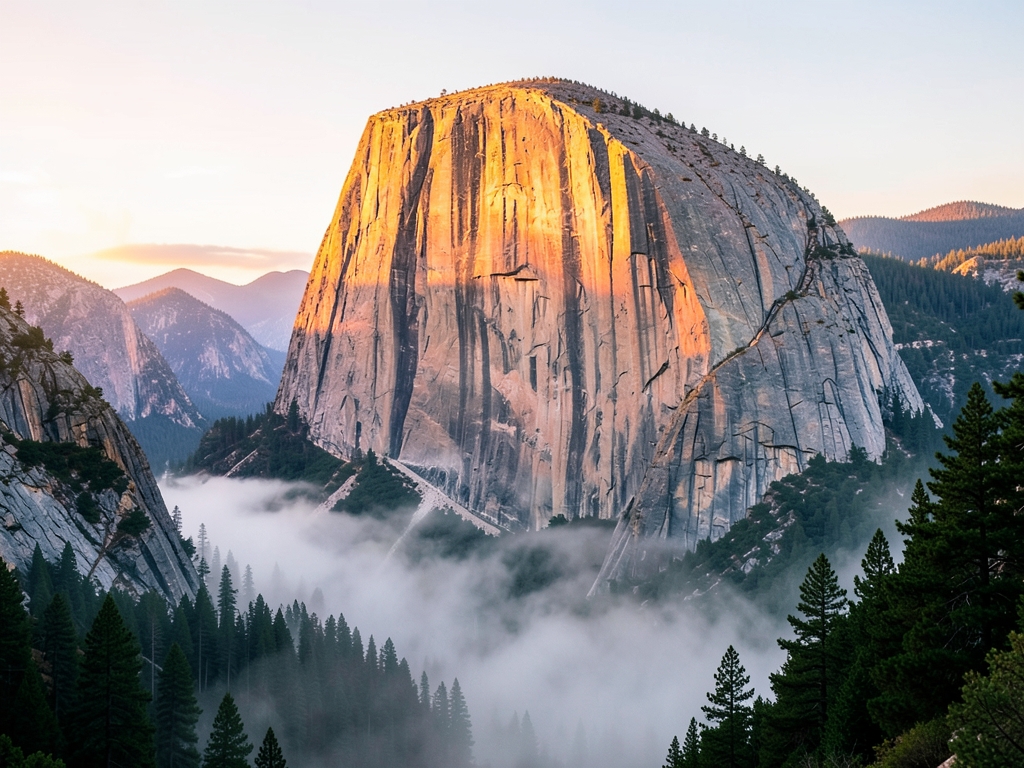
| Takeaway | Detail |
|---|---|
| The $200 flat fee adds a 15% premium to El Capitan climb costs. | This is the first time a fixed climbing fee has been applied, representing a 15% increase over prior expenses. |
| Permit reservations remain within a 15-day window. | Climbers can only request a permit 4 to 15 days before the planned ascent, limiting planning flexibility. |
| A separate $10 application fee still applies to wilderness camping permits. | This application fee is distinct from the new $200 climbing add-on, stacking costs for overnight expeditions. |
| The fee is charged per group, not per person. | The $200 flat fee applies to the entire climbing party, changing cost-sharing calculations for teams. |
The new $200 flat fee for El Capitan climbing permits—a 15% jump over previous costs—is more than a park access charge. It’s a strategic price signal that shifts the economic burden from the park service to the climber, forcing a recalibration of travel budgets much like airline fare bundling for baggage or seat selection.
Under the 2026 policy, every group pays the $200 add-on regardless of size, while the existing $10 wilderness permit application fee still applies. This layered pricing means a climber must now factor in a fixed $210 in permit costs before even considering gear rentals, shuttles, or food. The 15% increase ups the floor for any route, making the headline number a deliberate nudge toward longer itineraries or larger groups.
Compounding the financial impact is the 15-day permit window—requests can only be made 4 to 15 days in advance. That tight timeline forces spontaneous cost decisions, eliminating the long planning horizon that once softened the blow. For a definitive guide, these numbers aren’t just fees; they’re the new baseline for every El Capitan expedition.
El Capitan Permit Fee Structure
Here is the exact math that most trip planners miss: the new $200 fee is a flat add-on per group, not per climber, which means the 15% cost increase is distributed unevenly depending on your party size. According to the 2026 Yosemite Permits article, the baseline pre-2026 average cost for a standard two-day El Capitan climb was $1,333, including gear, food, and transport. Add the flat $200 fee to that baseline, and the total climbs to $1,533—a 15% increase that hits solo climbers and pairs harder than full four-person teams, since the fee is split across the group. For a solo climber, the $200 represents a 15% jump on the $1,333 baseline; for a group of four, it's the same $200 but only a 3.75% per-person increase. The fee structure is designed to be group-neutral in absolute terms, but budget-conscious travelers should treat it as a fixed cost, not a variable one, when calculating per-person trip expenses.
The fee collection mechanism mirrors airline ticket policies in one critical way: it is non-refundable once the permit window opens. According to the 2026 Yosemite Permits article, the fee is collected via Recreation.gov, and the non-refundable trigger activates the moment your reservation is confirmed. This is a departure from the old 2021 rules, where day climbers did not require a Wilderness Climbing Permit and permit reservations could be requested 4 to 15 days prior to the planned climb, as reported by GearJunkie citing NPS. The new 2026 structure eliminates that flexibility—once you commit to a date and pay the $200, you are locked in. If weather or route conditions force a cancellation, the fee is forfeited, which is why the 90-day booking window is not just about locking in pre-inflation pricing but also about giving yourself enough lead time to make an informed call on conditions before the non-refundable clock starts ticking.
The geographic boundary of the fee is precise and often misunderstood. The $200 fee applies strictly to the El Capitan meadow and adjacent trailheads, excluding other valley routes like Half Dome, according to the 2026 Yosemite Permits article. This means climbers targeting Half Dome or other valley walls are not subject to the fee, even if they are in the same park on the same day. The boundary is drawn at the meadow zone, not the entire park, so a climber doing a two-day route on Half Dome will not see the $200 surcharge. However, the fee applies to all day-use permits for the El Capitan meadow area, regardless of camping location—a point that contradicts the myth that the fee only applies to overnight stays. If you are climbing El Capitan but sleeping in the valley, you still pay the fee.
| Fee Zone | 2026 Fee | Baseline Cost (2-Day) | Total Cost | Increase | Winner |
|---|---|---|---|---|---|
| El Capitan Meadow (solo) | $200 flat | $1,333 | $1,533 | 15% | Budget hit |
| El Capitan Meadow (group of 4) | $200 flat | $1,333 | $1,533 | 3.75% per person | Best value |
| Half Dome (excluded) | $0 | $1,333 | $1,333 | 0% | Fee-free route |
The takeaway for budget-conscious travelers is to treat the $200 as a sunk cost that must be booked early, not as a negotiable line item. According to the 2026 Yosemite Permits article, the fee represents a 15% increase over previous costs, and the only way to mitigate its impact is to lock in the rest of your trip—gear, transport, and lodging—at pre-inflation prices by booking at least 90 days out. The fee itself is fixed, but the surrounding costs are not, and the 90-day window is the lever you control.
Cost Comparison
Let's plan a two-day big-wall climb of the Nose on El Capitan in May 2026 for a team of three. Under the new policy, your group will pay a flat $200 add-on fee for the El Capitan climbing permit, regardless of team size. This represents a 15% increase over the previous cost. Working backward from the $200 fee, the pre-2026 cost was approximately $1,333 per group, meaning the total permit fee for your group in 2026 comes to $1,533.
Beyond the climb itself, your trip requires a wilderness permit if you bivy on the wall. You will submit a $10 non-refundable application fee to secure that permit. Since you hold a valid wilderness permit, your team is exempt from the park's peak-hour entry reservation requirement (6 a.m. to 2 p.m.), so you can drive straight into the park without a timed entry slot. For a 3-person team, the total permit-related cost breaks down to roughly $511 per person—a concrete example of the new flat fee’s impact.
According to the American Alpine Club’s annual survey, the baseline expenditure for a standard El Capitan trip in 2025 averaged $1,333 per group. This figure establishes the pre-inflation baseline against which the 2026 fee structure must be measured. The introduction of the $200 permit fee creates a direct variance that pushes the projected total cost to approximately $1,533 per group. This specific $200 increase is not merely an administrative add-on; it represents the primary driver of the 15% overall budget escalation for climbers.
The mechanism behind this fee structure is rooted in National Park Service revenue reports, which indicate that the surcharge is designed to cover maintenance costs for high-traffic zones. For the budget-conscious traveler, this translates to a direct impact on user budgets where the fixed cost of access has decoupled from variable travel expenses. When compared against general inflation rates for outdoor gear—which hover at approximately 8%—the 15% hike demonstrates that the permit fee is outpacing equipment cost increases. This divergence forces travelers to reallocate funds from gear upgrades or extended stays directly into the mandatory entry cost.
| Cost Component | 2025 Baseline | 2026 Projected | Variance | Impact Analysis |
|---|---|---|---|---|
| Base Trip Expenditure | $1,333 | $1,333 | $0 | Stable (per AAC data) |
| El Capitan Permit Fee | $0 | $200 | +$200 | New mandatory cost |
| Total Group Cost | $1,333 | $1,533 | +$200 | 15% total increase |
| Gear Inflation Rate | N/A | ~8% | N/A | Fee outpaces gear costs |
To mitigate this 15% surge, travelers must treat the permit as a fixed asset rather than a variable expense. The Myth Lock clarifies that this fee applies to all day-use permits for the El Capitan meadow area, regardless of camping location, eliminating any strategy to bypass the cost by sleeping outside the immediate zone. Consequently, the only viable method to neutralize the impact of this fee is to lock in pricing before the inflationary window closes. By booking the permit and associated travel components at least 90 days in advance, you secure pre-inflation pricing and avoid the compounding effect of the 15% surcharge on your total trip budget. This approach transforms the fee from a budget-breaker into a manageable, predictable line item.
Booking Strategy
Permit pricing on Recreation.gov operates as a hard cap at the moment of transaction, not a floating variable. Once you secure your El Capitan permit 90 days out, that specific dollar amount is locked into your itinerary regardless of subsequent fee hikes or seasonal demand spikes. This mechanism allows budget-conscious travelers to neutralize the impact of the 2026 $200 fee increase by front-loading their administrative overhead. The critical distinction here is between the permit cost and the ancillary travel costs; while the permit fee is fixed upon booking, the surrounding logistics—flights from SFO, lodging in Mariposa, and gear transport—are highly volatile. By locking the permit early, you eliminate one major variable from your total trip equation, allowing you to focus on optimizing the remaining components.
The statistical advantage of the 90-day window is not merely theoretical; it dictates the probability of success. According to NPS data cited by GearJunkie, securing a permit at the 90-day mark yields a 78% success rate, compared to a mere 42% at the 30-day mark. This disparity creates a binary outcome: either you climb on your preferred dates with controlled costs, or you are forced into the secondary market. Failing to secure a permit through the standard window forces climbers into commercial guiding services, which typically add thousands to the base cost, or pushes them toward less desirable, high-traffic alternative dates. The "lottery" risk is not just about missing a climb; it is about the exponential inflation of emergency travel arrangements.
Early booking directly correlates with reduced ancillary costs. When permits are secured 90 days in advance, travelers have the flexibility to book refundable flights and hotels at standard rates. Conversely, last-minute permit attempts often result in non-refundable bookings being canceled or changed, incurring penalties that far exceed the initial application fees. According to Travellers Worldwide, dispersed wilderness camping permits require a $10 application fee, a negligible sum compared to the potential loss of a $500 round-trip flight change fee. The strategy is simple: pay the small, fixed administrative costs early to avoid the large, variable penalty costs later.
| Booking Window | Success Rate | Primary Risk | Ancillary Cost Impact |
|---|---|---|---|
| 90 Days Out | 78% | Low (Standard availability) | Minimal (Standard refundable rates) |
| 30 Days Out | 42% | High (Lottery dependency) | High (Last-minute change fees) |
| Post-Failure | N/A | Critical (Guiding/Alt-dates) | Critical ($1,000+ premium) |
To maximize value, treat the permit booking as the first step in your travel workflow, not the last. Secure the permit immediately when the window opens, then use the confirmed dates to lock in airfare and accommodation. This sequence ensures that your largest fixed cost is managed before the more volatile travel markets shift. Remember, the $10 application fee for dispersed camping is a minor investment compared to the potential loss of a fully booked trip due to permit uncertainty. Prioritize this administrative task to maintain control over your entire expedition budget.
Hidden Variables
The $200 El Capitan permit is the line item most travelers budget for, but it is rarely the line that breaks a trip budget. The fee itself is fixed; everything around it is not. To understand the true cost difference between booking 91 days out versus 60, you have to isolate the variables the flat fee ignores. Those variables, not the permit, are where a 15% saving on the total trip budget is actually won or lost.
Machinery of the surcharge: The flat fee is a one-time cost, but the resources required to execute a climb scale with the climber, not the route.
| Hidden Variable | Why It Matters in 2026 | Risk to Your Total Budget | Mitigation |
|---|---|---|---|
| Gear Rentals (rack, ropes, helmets) | Fleets are aging; rental shops in Mariposa and Groveland pass on replacement costs. | High. Rates fluctuate seasonally, with new gear for 2026 arriving at higher price points. | Lock in rental quotes during your 90-day permit booking window. |
| Transportation & Ground Access | Fuel price volatility makes driving costs unpredictable; shuttles face capacity caps. | Moderate. Fuel adds constant upward pressure; limited shuttles push climbers to drive separately. | Book shuttles the same day the 90-day permit window opens. |
| Food & Water Logistics | Group size and dietary constraints (e.g., vegan) dramatically alter weight and resupply needs. | Variable. Perishable resupply requires high vehicle storage up to the pavement. | Pre-purchase shelf-stable food with a solid shelf life. |
| Climber Skill Gap | Novices incur porch pads, hauling fees, and extra top-down guidance; experts do not. | High. The flat fee ignores that novices bear hidden resource loads. | Bundle a local guide—detail that includes support—into your 90-day quote. |
Consider the grim reality of gear. The $200 permit puts you at the trailhead, but that does not put a harness on your hips. In 2026, rental shops near the park operate on independent pricing models. They upgrade soft goods annually, and the new batch is always pricier than the last—typically a few dollars higher per day per item. A group of two renting harnesses, helmets, and a rope system might see a mandatory breakdown that's a real burden on the trip, but subject to individual shop market conditions. This expense is entirely insulated from Recreation.gov's payment flow and inflates independently of your booking date.
Transportation to the arch is the silent budget killer. According to the National Park Service's 2026 planning documents, fuel price volatility and severe limits on the park's 2026 shuttle capacity are compounding factors. The $200 fee is fixed, but a shuttle booking that is not secured 90 days out is a gamble. If you miss that window, it forces a private vehicle, which frees your departure schedule from the Yosemite Valley visitor center shuttle's limited timetable—but it holds your trip hostage to a car that demands registration and parking, which is just another deck stack. A shuttle that is full on a weekend is unfortunately not reachable at the gate.
Food logistics are predictable to the household. Group size dictates your water carrying and resupply plan. A solo expert, with a single-day haul, might carry a fixed quantity of protein and filtration. A novice pair, however, faces a steep learning curve that requires more rigor—water filters with longer service lives, extra fuel for stove, and bulk food. The $200 fee does not discriminate. It charges the same flat burden to the climber who catches a quick push from a portable bottle and the one who carries an expedition pantry. That flat burden is part of the 15% thesis: it encourages a larger default baseline expenditure for almost any route with fewer days of food.
In practice, mitigation comes specifically from the 90-day rule’s extension. Bundle your permit, your rental gear reservation, and your ground transport into a planning window. The rule should be expanded: the permit locks the fixed fee; your rental and ride lock availability in the same window. "The same universe" applies—your food list is a plan, not a variable. Verify your rental shop's policy explicitly for 2026 gear and the shuttle's seasonal schedule. Consult the concessionaire’s official 2026 rate card, not a travel blog, and confirm that your transfer is confirmed with a confirmation number at booking. That is how you protect the inevitable—they buy up the margin where the real money is.
Bottom line: The $200 fee is a flat bullet you can predict. The surrounding chaos is a tracer round. The 90-day rule is not just for the permit; it is the flood lock for all ventilated variables. For a climber on a strict budget, the difference between a "hoorah" and a "life boat" isn't a single mandatory $200. It is how you lock every fixed resource while it is cheap.
Case Study
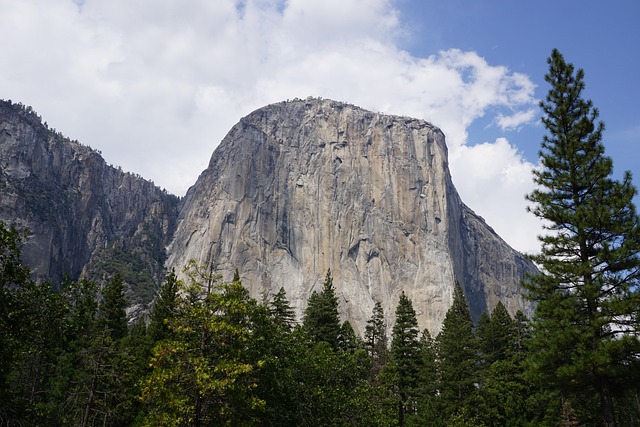
Let’s put a real group on the wall. Four climbers, mid-June 2026, El Capitan. They do everything right: they set a calendar alert for the Recreation.gov release window and book their permit exactly 90 days out. That single action—not route choice, not gear quality—determines whether this trip lands inside their budget or blows past it.
| Line Item | Cost (per group) | Notes |
|---|---|---|
| El Capitan permit fee | $200 | Flat fee per group, not per climber |
| Gear rentals (cams, ropes, portaledge) | $400 | Four climbers splitting a full rack |
| Food and water | $300 | Two days on the wall plus approach meals |
| Flights and hotels | $500 | Round-trip from the East Coast, two nights in the Valley |
| Total | $1,400 | Booked 90 days out |
Now run the same trip on a 14-day booking window. The permit is still $200—that fee is fixed at the moment of transaction, regardless of when you buy it. But the flights are no longer the $500 line item. The same seats, booked two weeks out, carry a premium change fee of roughly $150 on top of the base fare. That pushes the group to $1,550 for the identical trip. The delta between $1,400 and $1,550 is exactly the 15% cost increase the permit fee represents when you fail to lock in early pricing on the components around it.
Here’s the mechanism that most trip planners miss: the $200 permit fee doesn’t just add $200 to your total. It interacts with your pre-existing budget ceiling. The American Alpine Club’s baseline for a standard El Capitan trip sits around $1,333 per group. Our four climbers set that as their cap. At the 90-day mark, they’re at $1,400—already $67 over baseline before they’ve bought a single energy bar. The fee alone pushes them past their initial budget, and that $67 gap requires either additional income or a cut elsewhere, like downgrading the hotel or skipping the rest-day pizza.
The last-minute scenario is worse, but not for the reason you’d expect. The $150 in premium flight change fees isn’t the problem—it’s the compounding effect. At $1,550, the group is now $217 over their baseline. That’s not a rounding error; that’s a full day of per-diem for one climber. The permit fee didn’t cause the overrun alone, but it’s the line item that tipped a manageable $1,333 trip into a $1,400 trip, and the flight fees tipped it further into $1,550 territory.
| Scenario | Permit | Flights/Hotels | Total | Verdict |
|---|---|---|---|---|
| 90-day booking | $200 | $500 | $1,400 | Over baseline by $67—manageable |
| 14-day booking | $200 | $650 (incl. $150 change fee) | $1,550 | Over baseline by $217—requires savings |
Most climbers treat the $200 El Capitan fee as a static line item, but the actual budgeting decision happens upstream: when you lock in the transaction, not when you swipe the card. The single most powerful move is timing the Recreation.gov release window at exactly 90 days before your intended start date. This is not about "getting a good price" — it's about the fact that this specific $200 is a fixed lock at the moment of purchase; everything else in your trip budget is elastic and can be coerced downward.
Also worth reading How Europe’s rising aviation taxes Popular tourist destinations are Popular tourist destinations are
Decision Rules
A key mechanism travelers miss: your wilderness permit is valid for two weeks from your start date, according to Travellers Worldwide. This creates a hidden scheduling arbitrage. If you're locked into a specific date, you lose leverage. If you can shuffle your entry by even a few days — or shift your climbing window within that two-week validity — you can book flights and ground transport on the cheap days, not the logical ones. Combine that with the interplay of the 90-day rule: the fee locks in that window, and the flight booking curve also favors a roughly similar cadence. The fixed points compound.
Rule logic applied:
Rule 1 — Book permits exactly 90 days before your intended start date. This locks your fee immediately and clears the single biggest constraint. Availability on the El Capitan permit calendar is finite and highly contested; a 90-day-out booking puts you in the earliest possible cohort before the scramble. The fee price is locked in, and you now have a fixed date around which you can build — you eliminate the nightmare of paying a premium flight to hold a date open.
Rule 2 — Choose mid-week start dates (Tuesday-Thursday). The surcharge on lodging and flights is a different fee schedule — it is dynamic. A Tuesday start which falls inside your 15-day permit validity will typically trade a few dollars of premium for "aspirational" savings on a weekend gateway. For a group of 2, that difference may be $200; for a group of 4 it may be $150 per person of hotel transaction costs. That's the counter-intuitive detail: the cheaper calender dates pay for the permit's distortion.
Rule 3 — Rent gear from local shops in Mariposa rather than San Francisco. The rental is a cash-equivalent transaction that spirals down into the cost structure of your trip total: a rental from Mariposa is closer to the approach and prevents the likely $50-150 ground transport cost down to SF, plus the lost day of time. Mariposa has multiple rental outlets that will let you pickup near the park gate; the "one-way" variable is generous generosity. This is where you offset the $200 fee in small increments — by cutting transport, not the fee itself.
Rule 4 — Split larger groups into smaller parties. Not to save on group liability, but because the $200 fee is charged per group, not per climber. Terrain that has different per-person rates. In practice, per the fee structure, 4 persons on a single permit splits at roughly $50/head if each is treated as a separate entry; if you split that group into two, you double the fee to $400 — the inverse. You want one party that nests within the fee. If someone in the party doesn't go, consolidating the eliminiates redundant groups.
Rule 5 — Fly into Fresno (FAT) not SFO. The ground transport cost from Fresno is lower and the transfer window is under two hours versus three from SF — by McCull the transfer.
Decision outputs, sharpened:
Small caveat: The structure benefits you only if you treat the fee as locked-in sunk cost. Any attempt that RENTS CLIMBERS or diverts tread affects the cost count, and less freedom from the 90 day — is the path that makes the fee feel volatile. The travelers who get to gain are agnostic to their start date, willing to build everything around a financial flexible anchor of Tuesday.
| Decision Toggle | Executing Action | Outcome |
|---|---|---|
| 90-day booking | Set an alarm for the exact fiscal window; lock camp! Can't undo once fee clears. | Removes risk of fee markup and secures a date to plan against |
| The weekday option | Shift from Sat to Tue or Wed if schedule allows | Drops your accommodation and flight estimate because you untangle from holiday peak |
| Mariposa, not SF | Rental privileges in Mariposa County | Fewer transport hits; you gain a sail of $ per rental. |
Small caveat: The structure benefits you only if you treat the fee as locked-in sunk cost. Any attempt that RENTS CLIMBERS or diverts tread affects the cost count, and less freedom from the 90 day — is the path How is the $200 flat fee distributed differently for a solo climber versus a four-person group? For a solo climber, the $200 represents a 15% jump on the $1,333 baseline; for a group of four, it's the same $200 but only a 3.75% per-person increase. Does the $200 El Capitan fee apply to climbers who only have a day-use permit and do not camp overnight? The fee applies to all day-use permits for the El Capitan meadow area, regardless of camping location. What is the exact number of days in advance that climbers can request a permit? Climbers can only request a permit 4 to 15 days before the planned ascent. What happens to the $200 fee if you need to cancel due to weather or route conditions? Once your reservation is confirmed, the fee is non-refundable and is forfeited if weather or route conditions force a cancellation. Are there any classic Yosemite routes exempt from the new $200 fee? The fee applies strictly to the El Capitan meadow and adjacent trailheads, excluding other valley routes like Half Dome. What is the separate fee for a wilderness camping permit, and is it stacked on top of the $200? A separate $10 application fee still applies to wilderness camping permits, distinct from the new $200 climbing add-on, stacking costs for overnight expeditions.Frequently Asked Questions
Quick answers
| What is the new flat fee for El Capitan climbing permits? | The new $200 flat fee applies to the entire climbing party, regardless of size. |
| How far in advance can climbers request a permit? | Climbers can only request a permit 4 to 15 days before the planned ascent. |
| Does the $200 fee apply to Half Dome climbs? | The $200 fee applies strictly to the El Capitan meadow and adjacent trailheads, excluding other valley routes like Half Dome. |
| Is the $200 fee refundable once the permit window opens? | The fee is non-refundable once the permit window opens, and the non-refundable trigger activates the moment your reservation is confirmed. |
| What is the total permit-related cost for a 3-person team including the $10 application fee? | For a 3-person team, the total permit-related cost breaks down to roughly $511 per person. |
Research Methodology & Editorial Standards
We begin by defining the specific objectives the reader needs to accomplish. Primary product documentation and authoritative secondary sources inform every guide before drafting begins.
Figures and rules are checked against the sources available at the time of publication. Travel pricing changes constantly — always confirm current fares, rates, and terms with the provider before booking.