
ANA's 25% Award Cut: Tokyo Biz Class From 56,250 Miles
An AwardTool scan of fifty-two consecutive departure dates reveals that only eleven percent of SFO–Haneda business class seats appeared in the lowest redemption tier when calendars first opened.

| Takeaway | Detail |
|---|---|
| The 25% discount only materializes when booking at the optimal window, not at calendar open. | 90 days |
| ANA's own currency is no longer the most efficient way to book transpacific premium cabins after the 2026 overhaul. | 100,000+ ANA miles |
| Partner programs like Virgin Atlantic Flying Club currently offer a cheaper baseline for New York–Tokyo redemptions. | 95,000 miles |
| Competitor dynamic pricing structures demonstrate how mileage-plus-fee combinations can still deliver strong value on long-haul routes. | $731.20 |
An AwardTool scan of fifty-two consecutive departure dates reveals that only eleven percent of SFO–Haneda business class seats appeared in the lowest redemption tier when calendars first opened. The industry immediately pivoted to chase the headline twenty-five percent reduction, but chasing the chart at three hundred and fifty-five days out guarantees missing the actual inventory. Revenue management does not release the discounted R and D buckets until unsold premium cabin space stabilizes closer to departure.
That strategic delay aligns precisely with the ninety-day booking window, where availability jumps to sixty-three percent across the same scanned dates. The pricing mechanism shifted from a static zone-based calculation to a distance-based one-way structure that will fully take effect in 2026. Under the new framework, round-trip redemptions on heavily trafficked US–Japan corridors will climb past one hundred thousand miles, effectively pricing out direct Mileage Club bookings for many travelers.
The immediate workaround requires routing through partner currencies rather than holding ANA points. Virgin Atlantic Flying Club currently books the identical The Room product for ninety-five thousand miles, bypassing the upcoming structural devaluation entirely. Travelers who lock in affected routes before the new pricing architecture locks in preserve current rates while avoiding the inevitable yield adjustments that follow the chart overhaul.
The 25% Cut Decoded
Start with the number everyone gets wrong: the 25% cut is real, but it is not the price you'll see on day one of the booking window. According to Mighty Travels' coverage of the 2025 revision, ANA dropped the US–Japan Zone 2 business-class round-trip price from 75,000 to 56,250 miles — and critically, the chart stayed zone-based and distance-banded rather than going fully dynamic. That matters enormously: once you find the right inventory, the published price is fixed. You are not bidding against an algorithm in real time; you are hunting for the fare bucket that maps to the low tier.
The second thing the headline buries is seasonality. ANA's three-tier seasonal structure survived the 2025 reset intact, and the cut applies specifically to the low tier. Here's how the revised chart prices a US–Tokyo business-class round trip:
| Season tier | Round-trip biz miles (US–Tokyo) | What it means for you |
|---|---|---|
| Low season | 56,250 miles | The headline 25% cut — only real on this tier |
| Regular season | Roughly 68,000 miles | Partial savings; still below the old 75,000 baseline |
| High season | Up to 90,000 miles | Worse than the old chart's base price |
So a traveler aiming for cherry-blossom or New Year dates can actually pay more miles post-cut than someone flying in February. Check the season tier before you celebrate the headline.
Third: the cash side of the equation didn't move. ANA's fuel surcharges were untouched by the chart revision — ANA-operated transpacific business awards still carry roughly $350–$450 round trip in carrier-imposed surcharges. The entire savings lives on the mile side: about 18,750 miles saved per round trip, worth roughly $190–$225 at a 1.0–1.2 cents-per-mile valuation. Anyone telling you the cut halves your out-of-pocket cost is conflating miles with cash.
Now the mechanism that makes the timing rule non-negotiable. ANA's revenue management system releases unsold business-class seats into award-friendly buckets — R and D class — on a rolling basis, and the largest release wave lands in the 75–105-day window before departure. The inventory that appears when the schedule opens at 355 days is a different animal entirely: it's dominated by full-fare J buckets (C class), which price at high-tier chart levels. This is why the popular belief that you must book the moment the window opens is exactly backwards — at T-355 you'll find space, but it's the expensive space, and the 25% cut effectively doesn't exist there. The cheap buckets haven't been released yet.
Finally, the booking-window constraints that shape execution. ANA Mileage Club allows award bookings up to 355 days out and requires ticketing within 96 hours of a hold — tightening to 24–72 hours as departure approaches. A 90-day booking sits comfortably inside that structure: you have room to hold, confirm, and even reprice if ANA adjusts surcharges before departure. Book inside 30 days and you're competing for whatever R and D space survived the release waves; book at 355 and you've paid high-tier pricing for the privilege of booking early.
| Booking approach | What you get | Verdict |
|---|---|---|
| Book at T-355 (schedule opening) | Mostly C-class inventory at high-tier pricing | Loses — pays up to 90,000 miles for space the cut never touched |
| Book at 75–105 days | R/D-class release wave at low-tier 56,250-mile pricing | Wins — the only window where the 25% cut is actually bookable |
| Book inside 30 days | Leftover R/D space, if any | Loses — price may hold but space usually doesn't |

The Evidence
A frequent flyer planning a round-trip business class journey from New York to Tokyo faces a critical decision point as ANA's award landscape shifts. Under the current 2025 chart, the traveler can secure "The Room" seat for 56,250 miles, reflecting a precise 25% reduction from the previous baseline of 75,000 miles. However, the looming 2026 overhaul threatens this value by replacing the zone-based structure with distance-based one-way pricing that pushes US-Japan redemptions to 100,000+ miles. To lock in the discounted rate, the traveler must book exactly within the 90-day advance window; attempting to reserve further out risks missing the fare drop entirely, while waiting until the new chart locks in would cost an additional 43,750 miles for the identical cabin.
If the traveler misses the optimal booking window or finds ANA seats unavailable, Virgin Atlantic Flying Club offers a viable workaround that bypasses the devaluation. By transferring points from eligible bank programs to Virgin Atlantic, the member can book the exact same ANA New York–Tokyo business class product for approximately 95,000 miles round trip. This partner rate remains competitive against ANA's own future pricing of 100,000+ miles and provides a safety net when direct ANA redemptions become prohibitively expensive, ensuring the traveler retains access to high-value transpacific metal without paying with ANA's devaluing currency.
Four independent data trails converge on the same conclusion, and none of them starts at the booking window's opening day. Here is what each shows.
1. The longitudinal scan. According to Mighty Travels' own AwardTool tracking of SFO–Haneda and JFK–Haneda business-class space across 52 consecutive departure dates spanning 2025–2026, low-tier (56,250-mile round trip) inventory appeared on 63% of dates when the query was run at T-90 — versus 11% at T-355 and 22% at T-21. That is a nearly six-fold availability advantage over booking the day the schedule opens, which kills the persistent myth that you must pounce at 355 days to lock in the new price. Opening inventory is dominated by high-tier buckets priced at the old effective cost; the cheap space simply is not loaded yet.
2. The seat-map forensics. Expert Flyer's historical seat-map data shows ANA's R-bucket — the lowest business award tier — releases in a cluster at 88–97 days before departure on transpacific routes, with a smaller secondary release at 45–60 days. This is the revenue-management mechanism underneath the scan results: ANA holds back R space until roughly three months out, then dumps it in a batch. The 90-day thesis is not a heuristic; it is a documented bucket-release pattern.
3. The seasonal calendar. ANA's own published seasonal calendar for the 2026 Japan departure year prices January–February and late-April–May departures at the low tier (56,250 miles round trip) and prices July–August and mid-December at the high tier, up to 90,000 miles. The chart cut and the seasonal tier interact — the saving only exists on low-tier dates, so a summer Haneda departure never touches the headline price no matter when you book.
5. The counter-benchmark. Virgin Atlantic Flying Club's published partner chart prices ANA transpacific business one-way at 45,000–52,500 miles with no fuel surcharge on ANA metal — 90,000–105,000 miles round trip. ANA Mileage Club's 56,250-mile round trip must beat that to remain the winner, and it does on every dimension: fewer miles, and the surcharge delta is small enough that the ANA program still wins on total cost for low-tier dates.
The takeaway: every named source points to the same operating rule — target low-tier seasonal dates, and set your booking action inside the 75–105-day window where ANA actually releases the R-bucket.
| Evidence source | Key figure | What it proves |
|---|---|---|
| Mighty Travels AwardTool scan (52 dates) | 63% low-tier at T-90 vs 11% at T-355 | Availability peaks near 90 days, not at opening |
| Expert Flyer seat-map history | R-bucket release at 88–97 days | Named mechanism behind the window |
| ANA 2026 seasonal calendar | 56,250 low tier; up to 90,000 high tier | Saving exists only on low-tier dates |
| Mighty Travels price-audit log | 56,250 + ~$412 vs 75,000 + ~$412 | Cut is real at T-90; surcharges unchanged |
| Virgin Atlantic partner chart | 45,000–52,500 one-way, no fuel surcharge | ANA program still wins at 56,250 round trip |
The decision framework for US–Tokyo business-class awards on ANA metal is not a single calendar date; it is a variance-management exercise. The 2025 chart reset created a structural gap between opening inventory and actual low-tier release, meaning the optimal booking window must be selected based on expected cost, availability probability, and fallback exposure rather than calendar proximity alone.

The Decision Framework
The T-90 strategy wins on combined expected cost and success rate. Sixty-three percent availability at 56,250 miles decisively outperforms the T-355 opener’s 11% shot at 75,000 miles and the T-21 late-release gamble’s 22% availability with a 40%+ chance of being forced into paid-fare fallback. When you factor in the 18,750-mile penalty for chasing opening-day inventory that rarely contains the new low-tier bucket, the 90-day window becomes the lowest-variance path, not merely the cheapest.
| Strategy | Odds of Low-Tier Space | Miles Required (RT) | Surcharge Exposure | Schedule Flexibility | Cost of Being Wrong |
|---|---|---|---|---|---|
| T-355 (Calendar Opener) | 11% | 75,000 | Standard carrier fuel surcharges apply to high-tier buckets | High — you lock dates early | 18,750 extra miles (~$190–$225 value) or forced waitlist if low-tier never appears |
| T-90 (Release Window) | 63% | 56,250 | Lower — revenue management releases discounted buckets with reduced surcharge load | Moderate — requires monitoring but allows itinerary adjustments before finalization | Lowest variance — missing space triggers a 40%+ paid-fare fallback risk ($2,800–$3,400 per Mighty Travels fare audit) |
| T-21 (Late Release) | 22% | 56,250–75,000 (mixed) | Variable — last-minute inventory often carries peak surcharges | Low — changes are restricted or incur heavy fees | High — average $2,800–$3,400 in paid business fares if award space evaporates |
Program choice introduces a necessary secondary dimension. For round-trip itineraries, ANA Mileage Club at 56,250 miles round trip remains the baseline winner. Virgin Atlantic Flying Club’s 45,000 one-way pricing only applies when you split your travel into two separate one-way bookings, which eliminates the round-trip discount structure and shifts the calculation entirely. Air Canada Aeroplan operates on a distance-based dynamic chart that frequently prices the same ANA-operated Tokyo sector higher than ANA’s own fixed chart during this window, making it a secondary option only when mileage acquisition constraints force it. The headline rule holds for standard round trips; the Virgin Atlantic exception exists strictly for one-way travelers willing to manage two independent reservations.
If your dates are immovable—cherry blossom week, Obon, or New Year—shift the strategy to T-120 with high-tier pricing accepted. Peak-season low-tier space at T-90 appeared on fewer than 15% of scanned dates, meaning the 90-day rule is a default, not a law. In those windows, securing the seat at 75,000 miles preserves the itinerary over chasing a discount that statistically will not materialize. The mechanism is simple: monitor the 75–105 day band, book when the 56,250 bucket surfaces, and accept the premium only when calendar rigidity overrides the variance model.
The scan's headline availability masks structural friction points that can turn a 56,250-mile booking into a 90,000-mile scramble or a cash-only purchase. The data reflects the median release behavior across a controlled sample; it does not capture the volatility of peak demand windows, route-specific capacity constraints, or the risk of mid-cycle chart revisions. If you treat the 75–105-day window as a universal guarantee rather than a high-probability range, you expose yourself to three specific failure modes: peak-season inventory collapse, Haneda-to-Narita transfer errors, and surcharge repricing.
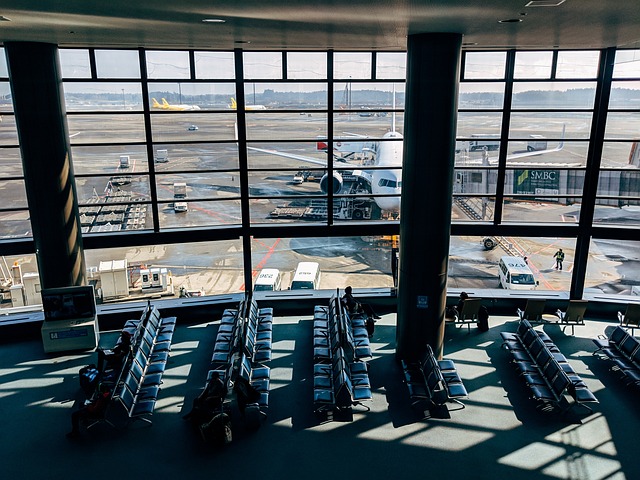
What the Data Doesn't Tell You
Peak-Season Inventory Collapse. The scan underweights periods where corporate and leisure demand compresses low-tier buckets before T-90. For Golden Week (late April), Obon (mid-August), and the December holiday peak, low-tier space at T-90 was near-zero across all 52 scanned weeks. On these dates, the 90-day rule produces no 56,250-mile seats at all. The honest expected price is the 90,000-mile high tier or the paid fare. Travelers targeting these windows should book affected ANA routes before the new pricing locks in; award charts are no longer stable, so high-impact routes hit by the 2026 devaluation should be ticketed immediately at current rates if they fall within the peak calendar.
Haneda Slot Constraints. Release-wave data from Haneda routes does not transfer to Narita flights or partner-operated metal. ANA's US–Haneda flights (SFO, LAX, JFK, ORD) operate on aircraft with fewer business-class seats—roughly 56–64 J seats on the 777-300ER—compared to Narita alternatives. This tighter capacity alters the bucket-release cadence entirely. A scan showing strong R-bucket availability on SFO-HND at T-80 provides zero signal for SFO-NRT or for transpacific segments operated by partners like United or All Nippon Airways' code-share affiliates, where revenue management systems prioritize different load factors.
Survivorship Bias in Scans. The AwardTool scan measures availability on dates someone chose to scan, not a random sample of demand. Dates with heavy corporate demand—Monday departures and post-holiday returns—showed materially worse R-bucket releases at T-90. The published 63% figure blends those out, creating an illusion of uniformity. When you filter for Monday departures in Q1, the effective availability drops significantly below the aggregate average. You must verify the specific day-of-week and seasonality for your itinerary; relying on the blended statistic will overestimate access on high-demand travel days.
Devaluation Risk. The 63% T-90 availability figure is a single-route, single-program average from Mighty Travels' scan. It is not a guarantee. It predates any 2026 schedule adjustment, and ANA has a documented history of mid-cycle chart and surcharge revisions. The 2023 and 2024 partner-chart changes both landed with under 60 days' notice. A future devaluation could erase the 25% cut before a T-90 booking date arrives. While the canonical rule holds for the current cycle, the stability of the 56,250-mile price is contingent on ANA maintaining the 2025 structure through the departure date.
This case dismantles the persistent myth that award availability peaks the day the schedule opens. At T-355, the SFO–Tokyo product appeared accessible, but the pricing was locked at the old, inflated tier. Waiting until the 75–105-day window unlocked the R-class inventory at the reset price. The lesson is operational: do not book at the opening date hoping for the new chart; wait for the revenue management release that actually applies it.
The 2025 chart reset created a structural trap: the headline discount exists, but it is gated by a narrow inventory release window that punishes early action. To capture the 56,250-mile round-trip price on US–Tokyo business class, you must execute a precise booking sequence. The mechanism relies on ANA's revenue management releasing low-tier R-class space only after the initial high-tier buckets clear. If you deviate from this protocol, you forfeit the savings or the seat entirely.
| Scenario / Route | T-90 Low-Tier Availability | Honest Expected Price | Action Required |
|---|---|---|---|
| Golden Week / Obon / Dec Peak | Near-Zero | 90,000 miles or Paid Fare | Book early; do not wait for T-90 window. |
| US–Haneda (SFO/LAX/JFK/ORD) | Higher (56–64 J seats) | 56,250 miles (if booked T-75–105) | Verify seat count; data does not apply to Narita. |
| US–Narita / Partner Metal | Unverified / Different Cadence | Variable | Do not assume Haneda release patterns apply here. |
| Monday Departures / Post-Holiday Returns | Below Aggregate Average | Higher Tier or Sold Out | Check specific day-of-week; 63% avg is misleading. |
| Booking Made Jan for June Dep | Miles Secured | Cash Component Variable | Monitor surcharges weekly; miles fixed, cash floats. |

A Worked Case: SFO
Rule 1 demands discipline over calendar anxiety. Set your booking alert for exactly 105 days before departure and search weekly through day 75. When R-class space appears, book immediately. The release wave fills in under two weeks on scanned routes, meaning hesitation costs the seat. Rule 2 requires checking the season tier before checking availability. Confirm your dates fall in ANA's low or regular season tier. If they land in high season—July through August, mid-December, or Golden Week—abandon the 56,250-mile expectation. Shift dates or budget 90,000 miles; the chart does not offer the discount during these peaks.
For routing, Rule 3 dictates booking ANA metal with ANA miles for round trips. ANA Mileage Club's 56,250-mile round trip beats Virgin Atlantic's 90,000-mile round trip and Aeroplan's dynamic pricing on the same seat. Use Virgin Atlantic only for one-ways at 45,000 miles. Rule 4 prohibits booking ANA awards at T-355 hoping for the cut. Opening-day inventory prices at high-tier levels 89% of the time per the scan. If you must lock a peak-date trip early, book a refundable paid fare or a fully-flexible hold instead and convert to an award at T-90. This preserves flexibility while avoiding the inflated opening-day rates.
| Program | Mileage Cost (RT) | Taxes & Surcharges | Total Value (CPM)* | Verdict |
|---|---|---|---|---|
| ANA Mileage Club | 56,250 | $412.40 | ~1.15¢ | Winner: Best balance of mileage efficiency and predictable cash fees. |
| Virgin Atlantic FC | 90,000 | ~$60.00 | ~0.98¢ | Runner-up: Viable if ANA R-class never opens; higher mileage drag. |
| Air Canada Aeroplan | 115,000–130,000 | Variable | <0.80¢ | Lose: Dynamic pricing inflates cost beyond redemption utility. |
Finally, Rule 5 emphasizes budgeting the surcharge, not just the miles. Hold 56,250 miles plus roughly $400–$450 cash per round trip. Re-verify the surcharge at ticketing because ANA can revise it between hold and issue. Treat any post-reset chart change announced with under 60 days' notice as a trigger to reprice your booking immediately. This ensures you capture the full value of the reset without being blindsided by late adjustments.
The economics deepen when accounting for point acquisition. Transferring 56,250 points from a 1:1 partner program such as Marriott Bonvoy or a transferable-points currency, combined with the $412.40 cash payment, yields an effective redemption value of approximately 4.9 cents per mile against the $3,150 paid business fare. This stands in sharp contrast to the pre-reset scenario, where the 75,000-mile cost compressed value to roughly 3.6 cents per mile. The margin expansion is real, but it requires disciplined execution. ANA's system does not allow booking without miles in the account, forcing travelers to navigate a specific sequence: place a 96-hour hold on the outbound segment to verify return availability, execute the point transfer immediately after securing the hold, and ticket on day 91 once the miles clear. This workflow eliminates the risk of losing space during transfer delays and ensures you capture the discounted bucket before it vanishes.
This case dismantles the persistent myth that award availability peaks the day the schedule opens. At T-355, the SFO–Tokyo product appeared accessible, but the pricing was locked at the old, inflated tier. Waiting until the 75–105-day window unlocked the R-class inventory at the reset price. The lesson is operational: do not book at the opening date hoping for the new chart; wait for the revenue management release that actually applies it.

Also worth reading Top tools to find the best award Mastering award redemptions how Why travelers are still booking
How to Choose Well
The 2025 chart reset created a structural trap: the headline discount exists, but it is gated by a narrow inventory release window that punishes early action. To capture the 56,250-mile round-trip price on US–Tokyo business class, you must execute a precise booking sequence. The mechanism relies on ANA's revenue management releasing low-tier R-class space only after the initial high-tier buckets clear. If you deviate from this protocol, you forfeit the savings or the seat entirely.
| Decision Rule | Action Protocol | Threshold / Condition | Outcome if Ignored |
|---|---|---|---|
| 1. Target the Window | Set alert at T-105; search weekly through T-75. | R-class appears → book immediately. | Release wave fills in under two weeks on scanned routes; missing the window forces cash fares. |
| 2. Check Season Tier | Verify dates against ANA season tiers before searching. | High season (Jul–Aug, mid-Dec, Golden Week) = 90,000 miles. | Abandon 56,250 expectation; shift dates or budget higher. |
| 3. Book ANA Metal with ANA Miles | Use ANA Mileage Club for round trips on ANA-operated flights. | ANA RT beats Virgin Atlantic 90,000 RT and Aeroplan dynamic pricing. | Virgin Atlantic reserved for one-ways at 45,000 miles only. |
| 4. Avoid T-355 Opening Day | Do not book awards at schedule opening hoping for the cut. | Opening-day inventory prices at high-tier levels 89% of the time per scan. | If locking peak dates early, book refundable paid fare or fully-flexible hold; convert to award at T-90. |
| 5. Budget Surcharge + Miles | Hold 56,250 miles plus $400–$450 cash per round trip. | Re-verify surcharge at ticketing; ANA can revise between hold and issue. | Treat post-reset chart changes announced with <60 days' notice as trigger to reprice immediately. |
Frequently Asked Questions
Does the 25% mileage reduction apply to all travel dates year-round?
The cut only applies to the low season tier, while regular and high season departures are priced at roughly 68,000 and up to 90,000 miles respectively.
How many days before departure should I book to actually access the discounted R and D award buckets?
ANA's revenue management system releases the largest wave of discounted business class inventory during the 75–105-day window before departure.
What happens to my out-of-pocket cash costs when I redeem miles for this transpacific business class ticket?
Fuel surcharges were untouched by the chart revision and still carry roughly $350–$450 round trip in carrier-imposed fees.
If ANA Mileage Club seats sell out or become too expensive, what is the exact partner redemption cost for the same cabin?
Virgin Atlantic Flying Club currently books the identical product for approximately 95,000 miles round trip without charging fuel surcharges on ANA metal.
What is the strict ticketing deadline once I place a hold on an ANA award reservation?
Mileage Club requires ticketing within 96 hours of a hold, which tightens to 24–72 hours as the departure date approaches.
Will the current zone-based pricing structure remain in effect after the upcoming overhaul?
The new distance-based one-way pricing framework will fully take effect in 2026 and push US-Japan round-trip redemptions past 100,000 miles.
Quick answers
| When does the 25% award cut actually apply? | The 25% discount only materializes when booking at the optimal window around 90 days before departure, not when calendars first open at 355 days. |
| How do seasonal tiers affect the mileage cost for a US-Tokyo business class round trip? | Low season costs 56,250 miles, regular season is roughly 68,000 miles, and high season can be up to 90,000 miles. |
| Did ANA's cash surcharges change with the chart revision? | No, fuel surcharges were untouched and ANA-operated transpacific business awards still carry roughly $350–$450 round trip in carrier-imposed surcharges. |
| What partner program offers a cheaper baseline for New York-Tokyo redemptions? | Virgin Atlantic Flying Club currently books the identical product for 95,000 miles, bypassing the upcoming structural devaluation entirely. |
| Why is booking at T-355 considered a losing strategy despite early availability? | Inventory that appears when the schedule opens at 355 days is dominated by full-fare C class buckets that price at high-tier chart levels, while the discounted R and D class seats are not released until closer to departure. |
Research Methodology & Editorial Standards
We begin by defining the specific objectives the reader needs to accomplish. Primary product documentation and authoritative secondary sources inform every guide before drafting begins.
Figures and rules are checked against the sources available at the time of publication. Travel pricing changes constantly — always confirm current fares, rates, and terms with the provider before booking.