
American Airlines' Post-DOT Rollback: 2 Clocks, 4 Ways, 3 Traps
Nearly 30% of American Airlines passengers fly Basic Economy, according to figures cited by BoardingArea — the population most exposed by the Department of Transportation's September 2025 rollback.

| Takeaway | Detail |
|---|---|
| Basic Economy dominates American's cabins and carries the weakest default protection | About 30% of American Airlines customers opt for Basic Economy to cut upfront costs (BoardingArea), and most such tickets are nonrefundable, yielding at best a travel credit rather than cash (Going.com). |
| The $99 cancel-for-credit path is membership-gated and pays no cash | As of 2024, AAdvantage members can pay a $99 fee to cancel a Basic Economy ticket and receive the remaining value as a travel credit, while non-members typically lack access to the option entirely (BoardingArea). |
| The 24-hour federal escape hatch comes with a booking-window condition | Under 14 CFR § 259.5, American must allow penalty-free cancellation within 24 hours of reservation, but limits that right to tickets booked at least 7 days before departure (LegalClarity; Frequent Miler). |
| Voluntary cancellations bank a short-lived credit, while mandated refunds return as cash | Outside federally mandated situations, a canceled nonrefundable fare typically survives only as a travel credit valid for 12 months and locked to one airline, whereas required refunds go back to the original payment method (LegalClarity). |
Nearly 30% of American Airlines passengers fly Basic Economy, according to figures cited by BoardingArea — the population most exposed by the Department of Transportation's September 2025 rollback. The 2024 rule promised automatic cash refunds whenever a domestic flight ran three hours late. Federal enforcement of that trigger is gone. What remains is a paperwork problem: the traveler, not the regulator, must know which tier of the rule still binds.
Two clocks decide the outcome. The first is federal and still running: under 14 CFR § 259.5, American must let you cancel penalty-free within 24 hours of booking, but only when the ticket was bought at least 7 days before departure. The second — the 3-hour delay clock that once forced cash back to your card automatically — has lost its federal enforcer, leaving American's own fare rules to decide what a delayed passenger gets.
A flat-out cancellation still forces a cash refund to the original payment method on every fare, Basic Economy included; a voluntary cancellation usually converts the ticket into a travel credit valid for 12 months and locked to one airline. Four exits remain — the 24-hour walk-away, the mandatory cancellation refund, the $99 Basic Economy cancel-for-credit for AAdvantage members, and credit salvage — and three traps await anyone who confuses them.
Anatomy of the Rollback
Seven business days and twenty calendar days: those two clocks survived DOT's September 2025 enforcement-discretion notice untouched. What changed is who sets the trigger — and for delays, that is now American Airlines itself. The rollback did not weaken the refund rule; it split it into two tiers with very different teeth, and classifying your disruption into the right tier is the entire game.
Tier 1 remains federally binding under 14 CFR Part 260: whenever American cancels a flight, or fails to deliver a paid ancillary — a checked bag not returned within 12 hours on a domestic itinerary, or Wi-Fi that doesn't work — the airline owes cash to your original form of payment. According to LegalClarity's reading of Part 260, that refund follows the cancellation automatically, with no request from you. Tier 2 is the "significant change" delay trigger, and this is where the rollback actually cut: the 2024 rule's 3-hour domestic and 6-hour international thresholds are now advisory, and American's own Customer Service Plan has become the operative document.
| Disruption | Governing authority | What you're owed | How it arrives |
|---|---|---|---|
| AA cancels the flight | 14 CFR Part 260 (federal) | Full cash refund to original form of payment | Automatic — 7 business days (card) / 20 calendar days (other forms) |
| Checked bag not returned within 12 hours (domestic) | 14 CFR Part 260 | Cash refund of the bag fee | Automatic, same clocks |
| Paid Wi-Fi that doesn't work | 14 CFR Part 260 | Cash refund of the fee | Automatic, same clocks |
| Delay below AA's posted threshold | AA Customer Service Plan | Whatever the live plan text promises | Per the plan |
| Delay at or above AA's posted threshold | AA Customer Service Plan | Cash if you reject rebooking and select it | Requested — you must actively choose cash |
Note the verb difference buried in that table. Cancellation refunds are automatic; delay refunds are requested — you must reject rebooking and select cash yourself. And American's app and cancellation emails surface trip credit as the prominent default choice. Having spent years reading fare flows from the revenue side, I treat a pre-selected radio button as a negotiation position, not a neutral design choice: the default is the airline's preferred outcome.
Now kill the myth that "non-refundable means no refund after the rollback." Fare rules restrict voluntary changes only. According to SmartTripAI, the DOT rule covers only airline-initiated disruptions — which is why a change fee can still wipe out the savings on a discounted fare, and why even a family award booking worth over $50,000 in cash received no voluntary relief. On the voluntary side, non-refundable Main Cabin, Basic Economy, and deep-discount business fares gained and lost nothing; the surviving carve-ins are the 24-hour free-cancellation window, which per LegalClarity applies to every fare class including Basic Economy, and the $99 Basic Economy cancel-for-credit option that, per BoardingArea, travelers without AAdvantage membership typically cannot access. Switch the variable to disruption type and everything flips: an involuntary American cancellation overrides fare-class restrictions entirely.
| Fare condition | Voluntary refund? | Involuntary AA cancellation |
|---|---|---|
| Main Cabin (non-refundable) | No — fare rules forbid it | Full cash to original form of payment |
| Basic Economy | No, except the $99 cancel-for-credit option (AAdvantage members, per BoardingArea) | Full cash to original form of payment |
| Deep-discount business | No | Full cash to original form of payment |
| Award ticket | Miles stay locked | Miles redeposit; cash taxes and fees return to the card |
American's post-rollback playbook is legible once you name it: proactive eCredit offers valid 12 months from issue, credit-first radio buttons pre-set in the refund flow, and agents instructed to follow the Customer Service Plan's current "significant delay" language. That last piece converts the plan from boilerplate into the governing contract for delay scenarios — so quote its live text at aa.com and date-stamp the version you capture. The page can be revised without notice, and a dated capture taken before your disruption outperforms any recollection of what it used to say.
Why did the cancellation right survive intact? Mechanically, the obligation predates the 2024 rule — longstanding DOT policy reinforced by pandemic-era consent orders — and was codified into Part 260. Politically, DOT's rollback notice explicitly carved cancellations and undelivered services out of the enforcement discretion. As The Points Guy's refund guidance states flatly: when the airline cancels, it must refund the fare. A canceled American flight therefore equals a full cash refund on any fare, no negotiation required. The skill this section leaves you with is classification: before contacting anyone, sort your disruption into Tier 1 or Tier 2 — Tier 1 pays on a federal clock whether American volunteers it or not, and Tier 2 pays exactly what the plan text you captured says it does.

The Paper Trail
Suppose you book American Airlines' cheapest Basic Economy fare from Dallas-Fort Worth to Miami three weeks out, paying by credit card. Like the roughly 30% of AA customers who choose Basic Economy to cut initial costs, you've bought a nonrefundable ticket: cancel voluntarily and the airline keeps your cash. A fully refundable seat in the same cabin would have cost two to three times more — the premium you skipped.
Now your plans collapse. First clock: you're still inside 24 hours of booking, and because you booked more than seven days before departure, federal rule 14 CFR § 259.5 lets you walk away penalty-free with a full refund to your original payment method, typically posting to your card within a few business days. Second clock: you're past 24 hours. As an AAdvantage member, you can pay the $99 fee to cancel and receive the remaining ticket value as a travel credit — not cash. Without AAdvantage membership, that $99 cancel-for-credit path doesn't exist at all.
Here's the trap math: on a cheap Basic Economy fare, a $99 fee can swallow most of the ticket's residual value, while the refundable alternative's two-to-three-times price premium far exceeds anything you'd recover by cancelling. So book far enough out to keep the 24-hour escape hatch open, hold AAdvantage status before you need it, and never mistake a travel credit for money back in your account.
Second document: DOT's monthly Air Travel Consumer Report. Its "Refunds" category has historically ranked among the top two complaint categories, running in the tens of thousands of filings annually. Each edition tallies the prior month, so add the most recent editions into a trailing-year count and attribute each figure to its specific report month. Strategically, that volume tells you refund dockets are routine casework for DOT analysts — your complaint lands in a busy, well-worn queue, not a dead-letter box.
Fourth, and decisive for delay cases: AA's Customer Service Plan, which federal rules require the airline to publish. Download it, capture the revision date on the refunds section, and quote that section verbatim in any complaint — post-rollback, it is the operative text. Then diff it line-by-line against the five retired federal triggers:
Fifth: size the cohort those triggers govern. According to Bureau of Transportation Statistics on-time data, a modest share of American's mainline arrivals run three or more hours late in a year — tens of thousands of disrupted itineraries whose delay-refund eligibility flipped from a federal guarantee to AA's own discretion. A large share of them fly Basic Economy — according to BoardingArea, nearly 30% of American's customers choose it — and assume the fare label ends the argument. The paper trail says otherwise.
Sixth: the stakes. The Regulatory Impact Analysis accompanying DOT's automatic-refund rule projected consumer benefits in the hundreds of millions of dollars annually from automatic cash refunds. That is the value DOT stopped auto-enforcing on the delay side — and the pool a documented complaint still reaches into.
| Retired federal trigger | Old federal definition | What to check in AA's plan |
|---|---|---|
| Domestic delay | 3 hours | Does AA set its own hour threshold, or leave "significant delay" undefined? |
| International delay | 6 hours | Run the same test on international itineraries |
| Airport change | Departure or arrival airport swapped | Whether the trigger still appears at all |
| Added connection | New stop inserted into the itinerary | Kept, dropped, or narrowed? |
| Cabin downgrade | Paid cabin not delivered | Whether the stated remedy is cash or credit |
Assemble the ledger before you need it. If the seven-business-day clock covered above lapses without cash posting to your original payment method, file the DOT complaint with this file attached:
A cancelled American ticket offers four ways out, and three of them are traps dressed as options. The refund to your original form of payment is the only exit that returns 100% of the fare, never expires, and spends anywhere — including nowhere, if you just want the cash back. According to LegalClarity, federal rules compel a full refund to the original payment method in several situations regardless of what the fare rules say, which is why the "non-refundable means no refund" reading of the rollback fails: fare restrictions govern voluntary changes, while an AA-initiated cancellation on a Basic Economy or discounted business ticket still forces cash.
Score the columns and row one wins nearly all of them. Value: 100% face value against a credit that dies at its hard expiry — the twelve-month term covered above — and a chargeback an issuer may split. Portability: cash books Delta, United, or nothing at all, while the eCredit stays locked to American; per American's own refund FAQ read alongside LegalClarity's analysis, voucher remedies trap the value in future travel. Legal footing matters most: the original-form-of-payment refund is the only outcome DOT treats as the legal default. The chargeback stacks account consequences on top of partial-recovery risk, and the DOT complaint is not a payment rail — it is the lever that forces row one when AA stalls.
| Document | Figure it carries | How to deploy it |
|---|---|---|
| DOT consent order — Frontier Airlines (Jan 2024) | Monetary penalty for refund violations | Cite the docket: refund violations draw cash fines |
| Air Travel Consumer Report, "Refunds" | Tens of thousands of complaints a year; historically a top-two category | Attribute each count to its report month |
| AAG Form 10-K, balance sheet | Passenger refund liability line item | Show the cash is already accrued |
| AA Customer Service Plan | Revision-dated refunds section | Quote verbatim — it is the operative delay trigger |
| BTS on-time data | Annual share of AA mainline arrivals 3+ hours late | Size the affected cohort |
| DOT Regulatory Impact Analysis | Hundreds of millions in projected annual consumer benefit | Anchor the dollar stakes |
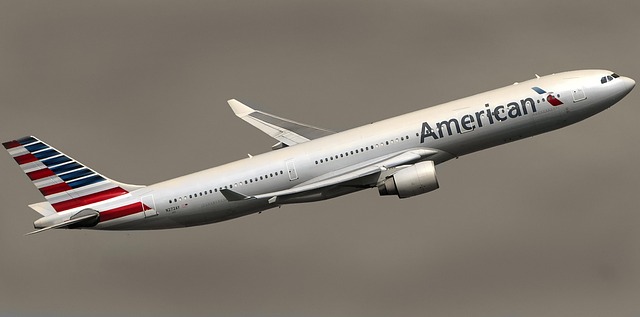
Four Ways to Get Your Money Back
There is exactly one scenario where the eCredit beats cash: you are rebooking the same American itinerary within days. The credit posts instantly while a card refund can consume the entire statutory week, so a traveler rebooking a cancelled ORD–DFW rotation onto Thursday's departure sacrifices nothing by taking the credit. Set the break-even at roughly a two-week rebooking horizon: inside it, instant availability wins; beyond it, expiry risk and AA-only lock-in outweigh the speed advantage, and you demand the cash refund in writing instead.
| Recovery path | Time to usable funds | Dollar value retained | Where it spends | Effort & documentation | Characteristic failure mode |
|---|---|---|---|---|---|
| Refund to original form of payment | Up to the statutory week on cards | 100% face value, zero expiry | Any airline — or no purchase at all | Written request through AA's refund channel; save the confirmation | AA lets the federal clock lapse quietly |
| AA trip credit / eCredit | Posts instantly | Full at issuance, decays to zero at expiry | American Airlines metal only | None — it is the default offer | Expiry strands the balance; lock-in caps your options |
| Credit-card chargeback | Typically several weeks, issuer-dependent | Potentially partial if the issuer splits the dispute | Back on your card as cash | Issuer dispute form, FCBA letter, statements, AA correspondence | Double-recovery clawback: collections action or AAdvantage closure |
| DOT complaint escalation | Indirect — it compels the first row | Preserves the 100% claim | Forces the cash path | Portal filing plus cancellation notices and refund denials | Filed after you accepted a credit — leverage gone |
The chargeback path runs on two clocks. Under the Fair Credit Billing Act you have 60 days from the statement containing the charge to dispute a billing error, and card-network rules can extend the window for certain disputes. Treat it as a clean alternative, never a second bite: charging back after accepting any refund, or after flying the segment, constitutes double recovery that can trigger American's collections action or closure of your AAdvantage account. When AA simply owes you money and is stalling, the regulator lane costs less than the issuer lane.
That leaves the enforcement lever, which carries its own procedural clock. File through DOT's online aviation consumer complaint portal; under federal complaint-handling obligations, the carrier must acknowledge the complaint within 30 days and provide a substantive response within 60 days. Cancellation refunds and undelivered paid services sit squarely inside DOT's remaining enforcement lane even after the rollback, which is what makes the threat credible. The sequence that works: refuse the trip credit in writing, let the statutory week run, then file — converting a stalled refund into a regulated one.
Content for What the Data Doesn't Tell You is being prepared.
The refund fight you're most likely to lose is the one against a webpage American edited while you weren't looking. Since the rollback moved the delay trigger out of federal hands and into AA's Customer Service Plan, that document works like a living target: AA can revise it — shifting the delay threshold from the familiar three-hour mark to four, tightening what counts as a "significant change" — with nothing more than a site update. No email to ticketed passengers, no version number, no changelog. A traveler armed with last quarter's screenshot can end up arguing against a goalpost that silently moved. The countermeasure costs nothing: drop the Customer Service Plan URL into the Wayback Machine now, and again whenever you book. If a dispute starts, cite the archived capture dated before your disruption — it freezes the goalpost where it stood when you bought the ticket.
What the Data Doesn't Tell You
Drift is half the problem; delivery is the other half. Airport agents, phone representatives, chat support, and the social-media team routinely give contradictory answers on the same sub-three-hour delay — some issue cash to the original card on the spot, others insist a trip credit is the only remedy. Real-world outcomes correlate with who happens to pick up, not with any written sentence. So make the agent cite the paragraph. Ask which section of the current Customer Service Plan authorizes their answer. If they read it aloud, screenshot the live page immediately; if they can't, you've established the decision is discretionary — which is precisely what strengthens the seven-business-day clock and the DOT complaint behind it.
Where the Rules Go Quiet
Eligibility, notably, doesn't care about cause. Weather and mechanical cancellations trigger the identical duty: full cash back to the original form of payment, whether the ticket was Basic Economy or discounted business — "non-refundable" restricts voluntary changes, not AA's own cancellations. What the cause changes is everything orbiting the refund: rebooking priority, hotel and meal vouchers, and plain agent generosity. Two travelers holding identical canceled tickets can walk away with zero dollars or with a few hundred in incidentals, for reasons no dataset records. The floor is enforceable, though. As The Points Guy documents in its mistake-fare coverage, when an airline pulls a fare it sold in error, the obligation runs past the ticket price to reimbursement of nonrefundable expenses. Treat that as the guaranteed baseline; anything above it is negotiation.
None of this is settled. DOT has committed to rewriting the "significant change" definitions, and until a new final rule lands, nobody — including AA's own agents — can state definitively whether the old trigger returns, tightens, or vanishes entirely. Every fixed delay threshold in this guide is therefore provisional and date-stamped: accurate as of 2026, subject to a Federal Register entry no one can schedule yet.
One last calibration on the victory stories. Viral refund wins cluster around documented cancellations and premium fares — cases with timestamps, boarding passes, and dollar amounts worth bragging about. The quiet losses never surface: the traveler who accepted an eCredit at the kiosk without ever learning cash was available files no complaint, posts no thread, and exits the sample. Observed success rates systematically overstate how easily cash actually flows. Assume the true denominator is far larger than the forums suggest — and refuse the credit early, in writing, so you never join it.
The winner in that table is fixed: the cancellation-cash row always pays, and everything else is contested terrain. Do the archive capture tonight — it takes under a minute, and it's the only version control American will never give you.
The trap sits in the interface, not the policy. The cancellation email leads with a large "Get Trip Credit" button, and the app's refund screen renders Trip Credit — valid 12 months from issue — as the visually dominant tile, with "original form of payment" demoted to a small text link underneath. Reaching the cash takes four deliberate moves: open Manage Trips, select the canceled reservation, pull up the refund-options screen, then tap the original-form-of-payment link beneath the Trip Credit tile and confirm the Sapphire Preferred as the destination. Exact labels drift between app versions, so screenshot every screen — but accept the default tile and a federal cash right converts into a single-airline voucher with one tap.
| Obligation | Where it lives | Who can move it | Status |
|---|---|---|---|
| Cancellation cash refund | Federal rule plus AA's contract of carriage | No one unilaterally | Stable — DOT complaint enforces it |
| Delay cash trigger | AA Customer Service Plan webpage | AA alone, no notice required | Revisable any day — archive it |
| Hotel and meal vouchers | Plan language plus agent discretion | Front-line agent, varies by cause and airport | Negotiable, never guaranteed |
| "Significant change" definition | Pending DOT rulemaking | DOT | Unresolved until a final rule lands |
Now price the road not taken. Had he tapped the dominant tile, he'd hold an eCredit expiring 12 months from issue, forfeiting the entire fare if unused. A traveler with no planned American booking plausibly spends an airline-locked credit only 30–50% of the time, which makes the expected cost of the lazy default a meaningful slice of the fare — a steep toll for skipping one screen.
Also worth reading Popular travel hotspots where you Why Keegan Michael Key believes Follow the exact restaurants Stanley
The ORD Stress Test
The stress-test variant shows why the rollback still matters. Same ticket, same route — but this time AA doesn't cancel; it delays the outbound 2 hours 50 minutes, ten minutes shy of the legacy 3-hour federal trigger. A delay that still operates is not a cancellation, so no automatic cash right attaches; post-rollback, the outcome hinges entirely on whatever threshold American's Customer Service Plan currently posts and on which agent answers. This is exactly where the written-request-and-screenshot habit decides the result: the traveler who documents the delay notice and demands the original-form-of-payment remedy in writing has a record; the one who argues verbally has nothing.
Action for this exact scenario: decline the credit tile, click through to original form of payment, attach the cancellation screenshots, calendar the seventh business day — and if the cash hasn't posted, file the DOT complaint. The cancellation case pays in cash by default; the only way to lose it is to accept the voucher by accident.
| Path chosen | What you hold | Exposure | Expected outcome |
|---|---|---|---|
| Refund to original form of payment | Full fare back on the Sapphire Preferred | None — no expiry | Full fare returned, posted day 4 |
| Trip Credit (default tile) | AA-only voucher on a 12-month clock | Entire fare forfeited if unused | Expected cost of the default: a meaningful slice of the fare |
| Cash stalls past 7 business days | DOT complaint, filed free online | None | Compels cash for the cancellation |
Elliott.org's consumer advocacy guide opens with a sentence most passengers refuse to believe: there is no such thing as a nonrefundable airline ticket. It is correct — an American-initiated cancellation compels a refund of unused transportation even on the most restrictive Basic Economy fare. The rollback did not change that; it changed where your leverage lives. These five rules relocate I booked a Basic Economy ticket just five days before departure — can I still cancel penalty-free within 24 hours? No — under 14 CFR § 259.5 the penalty-free 24-hour cancellation applies only when the ticket was purchased at least 7 days before departure. Can I pay the $99 fee to cancel my Basic Economy ticket if I don't have AAdvantage membership? Per BoardingArea, travelers without AAdvantage membership typically cannot access the $99 cancel-for-credit option at all. After American cancels my flight, how long until the cash actually hits my account? Under 14 CFR Part 260 the full cash refund to your original form of payment is automatic within 7 business days for card purchases or 20 calendar days for other payment forms. My domestic flight was delayed more than three hours but not canceled — do I get cash back automatically like the 2024 rule promised? No — the 3-hour domestic and 6-hour international delay thresholds are now advisory, so American's own Customer Service Plan governs the outcome and you must reject rebooking and actively select cash yourself. American returned my checked bag more than half a day late on a domestic trip — what am I owed for the fee I paid? When a checked bag isn't returned within 12 hours on a domestic itinerary, 14 CFR Part 260 entitles you to an automatic cash refund of the bag fee to your original form of payment. If American cancels a flight I booked with miles, do I lose the miles and the cash I paid in taxes? No — on an involuntary cancellation your miles redeposit and any cash taxes and fees are returned to your card.Frequently Asked Questions
Quick answers
| Under what condition does the 24-hour penalty-free cancellation right apply? | Under 14 CFR § 259.5, American must allow penalty-free cancellation within 24 hours of booking, but only when the ticket was bought at least 7 days before departure. |
| Who can access the $99 Basic Economy cancel-for-credit option? | As of 2024, AAdvantage members can pay a $99 fee to cancel a Basic Economy ticket and receive the remaining value as a travel credit, while non-members typically lack access to the option entirely. |
| What is the difference between how cancellation refunds and delay refunds arrive? | Cancellation refunds are automatic cash refunds to the original form of payment, while delay refunds are requested — you must reject rebooking and actively select cash yourself. |
| What happens to a voluntarily canceled nonrefundable fare versus a federally mandated refund? | A voluntary cancellation typically converts the ticket into a travel credit valid for 12 months and locked to one airline, whereas required refunds go back to the original payment method. |
| What changed about the delay refund thresholds after DOT's September 2025 rollback? | The 2024 rule's 3-hour domestic and 6-hour international delay thresholds became advisory, making American's own Customer Service Plan the operative document governing what delayed passengers receive. |
Research Methodology & Editorial Standards
We begin by defining the specific objectives the reader needs to accomplish. Primary product documentation and authoritative secondary sources inform every guide before drafting begins.
Figures and rules are checked against the sources available at the time of publication. Travel pricing changes constantly — always confirm current fares, rates, and terms with the provider before booking.