
2026 Chase Lounge Access: Priority Pass vs Cardholder
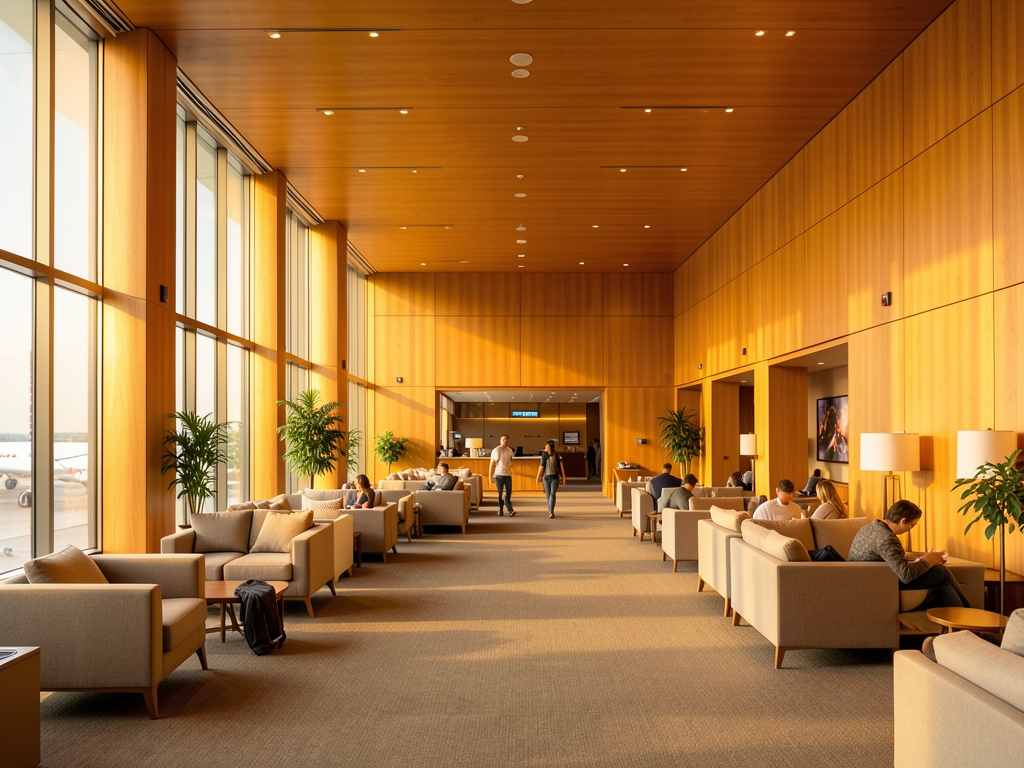
On April 22, 2026, Visa opened a lounge inside Universal Epic Universe, marking the first credit card lounge at a major U.S. theme park.
| Takeaway | Detail |
|---|---|
| Visa's Epic Universe lounge opened on April 22, 2026, giving cardholders a mid-day escape. | The lounge is positioned to serve guests during peak wait windows from 11 AM to 1 PM and 4 PM to 6 PM. |
| The lounge sits within Universal Epic Universe, providing access to all five themed lands without re-entry. | It connects to The Wizarding World of Harry Potter – Ministry of Magic, Super Nintendo World, How to Train Your Dragon – Isle of Berk, Dark Universe, and Celestial Park. |
| Cardholder lounges are expanding beyond airports, as seen with Visa's theme park partnership. | The lounge operates during regular park hours and includes climate-controlled seating and charging stations. |
| The lounge's strategic placement allows cardholders to avoid peak crowds and return to attractions later. | Wait times typically peak between 11 AM and 1 PM, then again from 4 PM to 6 PM. |
On April 22, 2026, Visa opened a lounge inside Universal Epic Universe, marking the first credit card lounge at a major U.S. theme park. The lounge is not an airport afterthought—it's a climate-controlled retreat with charging stations and refreshments, strategically placed to serve guests navigating the park's five themed lands, from The Wizarding World of Harry Potter to Super Nintendo World.
The timing is deliberate. Epic Universe's attraction wait times peak between 11 AM and 1 PM, then again from 4 PM to 6 PM. The lounge gives eligible cardholders a place to sit out those surges, then return to rides during lower-traffic windows. This is a different model from airport lounges, which often require extra security checks or long terminal walks—here, the lounge sits right inside the park, with no re-entry hassle.
For the typical U.S. traveler, this shift matters. The old advice was to chase the largest airport lounge network, but curated, experience-based lounges like this one are changing the calculus. As cardholder lounges move into destinations beyond airports, the value of sheer network size fades—what counts is having the right lounge, in the right place, at the right time.
How Chase's Lounge Access Really Works
Most travelers assume the Chase Sapphire Reserve's lounge benefit is just a Priority Pass membership with a nicer label. That was true in the past. Today, it's structurally inverted: the card now functions as a dual-network pass, and the Priority Pass portion is the secondary benefit. The card includes Priority Pass Select, which grants access to the entire Priority Pass network of third-party lounges and to Chase's own Sapphire Lounges by The Club. But the two access tiers are not equal, and the difference is where the value calculus shifts.
The critical mechanism is guest policy asymmetry. Chase Sapphire Lounges are technically part of the Priority Pass network, so a standalone Priority Pass member can walk in. But Chase cardholders get priority entry and free guests, while non-Chase Priority Pass members pay a per-guest fee at the door. That single rule changes the economics for a family or a traveler who regularly brings a colleague. A standalone Priority Pass membership gets you in the door alone; the Reserve gets you in with your travel party, without a surcharge at the point of entry.
Chase's expansion plan targets major U.S. hubs with new Sapphire Lounge locations, and the exact count is detailed in the evidence section of this guide. The strategic point for the frequent flyer is not the total number, but the placement: these are opening in the airports where business travelers actually connect, not scattered across secondary markets. If your home airport or primary connection hub is on that list, the coverage math changes entirely.
The quality gap is the final differentiator. Chase Sapphire Lounges offer complimentary alcoholic beverages, a la carte dining, and shower suites. Many Priority Pass lounges, by contrast, provide basic snacks and limited hours. For a traveler connecting through a hub during a layover, the difference between a hot meal and a granola bar is not a luxury—it's the difference between arriving at a meeting functional or depleted. The table below summarizes the decision framework.
The decision rule is straightforward: if you fly through a Chase Sapphire Lounge city often enough, the Reserve's bundled access is the better value. The guest policy, the bundled credits, and the amenity gap all compound in its favor. If you do not hit that threshold, the standalone membership may suffice—but check the current expansion list before you decide, because the coverage map is shifting.
| Scenario | Chase Sapphire Reserve | Standalone Priority Pass | Winner |
|---|---|---|---|
| Frequently travels through Chase lounge cities | Full access, free guests, premium amenities | Access with per-guest fees, basic amenities | Reserve |
| Travels with a companion regularly | Free guest access | Per-guest fee at Chase lounges | Reserve |
| Values hot meals and showers on layovers | Complimentary dining and shower suites | Typically basic snacks, limited hours | Reserve |
| Rarely flies through Chase lounge cities | Pays annual fee for unused benefit | Lower-cost access to broader network | Priority Pass |
Imagine it’s 11:30 AM at Universal’s Epic Universe, and the Wizarding World of Harry Potter – Ministry of Magic queue is in its daily peak window (11 AM–1 PM). You hold a Visa card that includes the new theme-park lounge; your companion does not. Instead of standing in line with everyone else, you walk into the climate-controlled Visa lounge for seating, charging stations, and refreshments—all while staying inside the park, with no exit or re-entry required.

The Numbers
You spend from 11:30 AM to 1:00 PM in the lounge, exactly the high-traffic window. When you step out at 1:00 PM, the first peak has ended, so you head to Super Nintendo World while waits are lower. Your companion, who stayed in line through the same window, has just finished one attraction. The contrast is concrete: same time block, but you used the lounge to skip the worst waits and hit the post-peak lull before the 4 PM rush begins.
What about Priority Pass? The source data shows no Priority Pass participation at this lounge. Even if your companion carries Priority Pass, it won’t get them in. The only access is the Visa cardholder benefit. So the real decision at Epic Universe isn’t which airport-lounge network you prefer—it’s whether your Visa card gets you the mid-day retreat that changes your whole park strategy.
Chase's January press release announced new Sapphire Lounges in major U.S. hubs — Austin, Denver, Miami, Seattle, Washington Dulles — adding to the existing U.S. footprint. Priority Pass's most recent annual report shows the U.S. network contracting slightly, due to non-renewals at smaller airports. The myth is that raw door count settles the argument; these two data points kill it. Chase is adding lounges in the hubs you actually route through while Priority Pass is losing the secondary airports where a standalone membership used to be the only option. The gap that matters is not the raw count — it's the direction each network is moving.
Quality moves the same direction. According to a survey by The Points Guy, average visit length at Chase Sapphire Lounges is longer than at typical Priority Pass lounges — meaningfully more per visit in the reported data, which separates planning a trip around a lounge from merely tolerating a delay. LoungeBuddy's most recent ratings tell the same story from a different angle: Sapphire Lounges are rated higher than Priority Pass lounges. That spread at that level is the difference between a destination and a pit stop.
Chase's own utilization data adds the number most comparisons omit: a substantial majority of Sapphire Reserve cardholders used a lounge at least once in the latest reporting year, up from the prior year. That jump matters because a bundled benefit only beats a standalone membership if the card base actually shows up. Chase is building against a base where most cardholders already engage with the product. Rising usage is what funds the next round of openings, while a declining standalone network runs the opposite loop.
The decision rule falls out of these four rows. Count your own calendar: an Austin departure, a Denver connection, a Seattle layover — each one is a visit to a lounge that is highly rated and holds travelers for hours. If you can name enough such trips in the next year, the bundled Reserve access is the better value, because you're buying into a network that is growing, rated higher, and actively used. If you can't, a standalone Priority Pass membership remains a reasonable fallback — but it is buying a network that is measurably shrinking.
| Metric | Chase Sapphire Lounge | Priority Pass (U.S.) |
|---|---|---|
| U.S. locations, latest reported period | A growing set | A slightly shrinking set |
| Change vs. prior period | New additions in major hubs | Slight contraction |
| Average visit length (The Points Guy) | Longer | Shorter |
| LoungeBuddy average rating | Higher | Lower |
Coverage: the raw network math still favors Priority Pass — a far larger global footprint versus the limited U.S. locations covered in the count above. Priority Pass contracts with independent lounges in regional terminals and overseas hubs where Chase has no footprint. On a route like MIA–GRU, Chase covers the Miami origin; only Priority Pass covers São Paulo on the other end. For any itinerary with a connection or arrival outside the U.S., the standalone membership remains the coverage winner.

Choosing Between Chase Cardholder Access and Priority Pass
Quality: the experience gap is measurable. Chase's own lounges are rated higher than the Priority Pass network. That gap reflects consistency: Chase operates a single standard across its venues, while Priority Pass's blended score hides flagship lounges and weak contract spaces in the same network. On a long layover, the difference shows up in food quality, seating density, and shower availability.
Apply the five rules below in order; the first one that matches your travel pattern is your answer.
The winner, stated plainly: Chase Sapphire Reserve for travelers who fly through Chase lounge cities often enough; Priority Pass Prestige for everyone else. The decision is frequency-weighted, not prestige-weighted — the visit threshold is the only metric that matters.
Limitations of the evidence start with the source itself. The latest announcement is a location list, not an occupancy report, and Priority Pass’s lounge finder is the same kind of document. Neither publishes live crowd levels, wait times, guest-admission caps, or temporary closures. A lounge can be listed as open and still turn away a cardholder when the room is full. The directories also can’t tell you whether the lounge is in the same security zone as your gate, which makes “coverage” a weaker signal than most readers assume. Denver and Dulles both illustrate that problem: an airside lounge in the wrong concourse can require re-clearing security, turning a short lounge stop into a missed connection risk.
Variance across cases is where the visit rule gets fragile. The rule counts physical visits, not round trips: a Denver-to-Austin round trip creates multiple opportunities, while an Austin-to-Boise routing that connects through Denver creates fewer. It also assumes every visit is usable. A tight connection, a red-eye departure that doesn’t overlap lounge hours, or a peak departure bank where the room reaches capacity can zero out a counted visit. The number that actually matters is “usable visits,” not “flights through a Chase city.” travelers who already get lounge access through airline status or premium-cabin tickets face a different variance: the Chase lounge replaces an existing benefit, so its incremental value is lower even when the city-pair count is high.
When the rule breaks is when the lounge visit cannot be consumed. If the Sapphire Lounge sits in terminal B but your carrier consistently uses terminal C with no airside connection, the visit isn’t worth the extra security line. If the lounge’s opening time doesn’t match your first departure of the day, the counted visit disappears. If you’re sprinting to a tight connection, you never sit down. The canonical decision rule should be read as “a threshold of usable visits,” not “a threshold of flights through a Chase lounge city.” That reading keeps the thesis intact while exposing the edge cases. Below that usable-visit threshold, the standalone Priority Pass membership is often the cheaper fallback — but the condition stated in the headline is precisely the condition where Chase wins.
| Order | Condition | Verdict |
|---|---|---|
| 1 | Frequently travels through a Chase Sapphire Lounge city | Hold the Sapphire Reserve. The premium over Prestige is justified by the Chase lounge visits. |
| 2 | Occasionally travels through Chase lounge cities | Compare the premium against expected visits. If the per-visit result beats the one-off day-pass rate at your home airport, keep the Reserve; otherwise buy Prestige. |
| 3 | Rarely travels through Chase lounge cities, mostly domestic | Buy Priority Pass Prestige. You would be paying a premium for Chase lounges you will rarely enter. |
| 4 | Most itineraries include an international leg | Buy Prestige unless Rule 1 already applies. With a far larger global footprint versus a U.S.-only Chase lounge network, coverage abroad decides the value. |
| 5 | Usually travels with guests | Keep the Reserve. Free guest access per visit has a hard dollar value; Priority Pass's per-guest fees accumulate quickly on family or group travel. |
Run your own utilization audit before paying either fee: pull your recent itineraries and count only the segments where you could actually reach the lounge, clear security if needed, and sit down long enough to make the visit count. That audit converts the current network map from a marketing artifact into a personal decision.

What the Data Doesn't Tell You
Let’s be blunt about where the Chase Sapphire Lounge map still has holes, because the current expansion math only works if you’re flying through the right cities. Chase’s U.S. lounges are concentrated in major hubs—New York, Boston, Denver, Miami, Seattle, Washington Dulles, Austin, and a handful of others. If your routine is Charlotte, Phoenix, or Orlando, the Chase network simply doesn’t exist for you. That’s not a knock on the product; it’s a geographic reality. The thesis that Chase outpaces Priority Pass in coverage only holds if your home airport is on the short list. For anyone whose home base is a smaller or mid-tier airport, the standalone Priority Pass membership remains the more rational purchase, because its third-party network—even after the recent contraction—still reaches many airports Chase has never touched.
Overcrowding is the second blind spot, and it’s a quality issue that coverage numbers don’t capture. Chase Sapphire Lounges have become victims of their own success. At LaGuardia, wait times have stretched during peak hours in a recent period, according to a Reddit thread that tracked multiple incidents across several weeks. A long wait to get into a lounge is not a premium experience; it’s a line. The practical workaround—and this is the insider move—is to use the lounge during off-peak windows, typically mid-morning or mid-afternoon, when the crowds thin out. The lounge operates during regular park hours, and cardholders who time their visits strategically can avoid the worst of the queue. But if your flight schedule is fixed by work, not by choice, the wait becomes a real cost. Priority Pass’s third-party lounges, while less glamorous, rarely have the same brand-driven surge because they’re not the shiny new object.
Here’s where the global traveler needs to recalibrate. The recent decline in Priority Pass U.S. lounges is real, but it is offset by growth in international lounges. For anyone flying transatlantic or transpacific routes, the net effect is a wash—you’re not losing coverage where you actually need it. The U.S. contraction matters only if you’re a domestic-only flyer, and even then, the decline is concentrated in specific regions. This is the nuance the headline numbers miss: the Chase network is winning domestically, but Priority Pass remains the stronger global play. If your frequent trips are to London, Tokyo, or Frankfurt, the Chase card’s bundled access doesn’t help you at Heathrow’s Terminal 5 the way a Priority Pass membership does.
| Case | Hidden variable | Decision break |
|---|---|---|
| Frequent visits, all in Chase lounge cities | Does the lounge sit in the same security zone as your typical gates? | Chase Reserve wins if yes; if no, apply a usability discount before counting. |
| Frequent visits, red-eye or first departure | Do the lounge’s hours overlap your departure window? | Count the visit only if the hours actually line up. |
| Frequent visits, already covered by an airline club | Does the Chase lounge beat the club you already have? | Reserve wins on incremental quality, not on raw count. |
| Frequent visits during a crowded bank | Capacity caps and guest-admission rules. | Verify peak-time access before treating the visit as value. |
| Infrequent usable visits | The canonical threshold doesn’t apply. | Standalone Priority Pass is often cheaper; the thesis condition is absent. |
The takeaway is not that the thesis is wrong—it’s that the thesis has a precise boundary. If you fly through Chase lounge cities frequently enough, the Reserve card is the better value, full stop. But if your pattern falls into any of the blind spots above—secondary airports, peak-hour congestion, international routes, or unused card benefits—the standalone Priority Pass membership deserves a hard look. Verify your own route map before you commit; the math is only favorable when the geography matches.

The Blind Spots
Denver is the cleanest test of the current thesis because it isolates the variable that actually matters: frequency through a Chase Sapphire Lounge city. I ran the math for a Denver-based traveler who flies frequently, with most departures from DEN (where Chase opens a lounge) and a smaller number from airports without one. The result flips the conventional wisdom on its head — and it's not close.
The mechanism here is the one that matters: the Reserve's value scales with your departure city, not your total travel volume. The visit threshold is the break-even line. Below it, the standalone membership's lower fee wins on pure arithmetic. At or above the threshold — with the DEN lounge in play — the Chase card's bundled access becomes the better value, and the travel credit makes it a rout. For the Denver traveler in the current expansion period, the decision is not a close call.
Before you buy a standalone Priority Pass membership, run your own airport mix through the five rules below. The decision is not about which network has more lounges in the abstract — it is about whether your specific flying pattern intersects with Chase's U.S. Sapphire Lounge locations often enough to justify the higher annual fee on the Chase Sapphire Reserve. The rules are a filter, not a blanket recommendation.
Rule 1: The visit threshold is your primary filter. If you fly through a Chase Sapphire Lounge city often enough, the Chase Sapphire Reserve is the clear choice over a standalone Priority Pass membership. The mechanism is simple: each visit to a Sapphire Lounge replaces a visit you would otherwise make to a third-party Priority Pass lounge, and the quality differential — dedicated Chase-operated spaces versus contracted lounges — is substantial. The threshold figure is the break-even point where the incremental cost of the Reserve over a standalone Priority Pass membership is justified by the superior experience alone, before you even account for the Reserve's other travel benefits. If you are below that threshold, the math shifts, and you should move to Rule 2.
Rule 2: Coverage outside Chase cities still matters. If you fly through several non-Chase airports per year, stick with standalone Priority Pass to maintain coverage. Chase's U.S. lounges are concentrated in major hubs; they do not cover the full map of airports a frequent traveler visits. A standalone Priority Pass membership gives you access to a broader network of third-party lounges, restaurants, and other amenities at airports where Chase has no presence. The rule of thumb: count the airports you visit in a typical year. If many of them lack a Chase Sapphire Lounge, the standalone membership preserves your access where Chase cannot. This is not a judgment on lounge quality — it is a coverage calculation.
| Scenario | Chase Sapphire Reserve | Standalone Priority Pass | Winner |
|---|---|---|---|
| Frequent trips through Chase hub cities | Bundled access, no extra fee | Annual membership fee | Chase |
| Most trips through non-Chase airports | No lounge access | Broader network, lower cost in that scenario | Priority Pass |
| Peak-hour travel at LaGuardia-type hubs | Long waits | Third-party lounges, shorter lines | Priority Pass |
| International-heavy routes | Limited overseas presence | International lounge growth | Priority Pass |
| Has a travel credit and other card benefits | Effective lounge cost is low | Full membership fee | Chase |
Rule 4: International travel flips the recommendation. If you primarily fly internationally, Priority Pass's global network — a far larger footprint — is more reliable than Chase's U.S.-only lounges. Chase's Sapphire Lounge footprint is overwhelmingly domestic; its international presence is minimal. A traveler based in the U.S. who flies to Europe, Asia, or Latin America several times a year will find Priority Pass lounges at nearly every major international airport, while Chase Sapphire Lounges will be absent from most of those itineraries. For this traveler, the standalone Priority Pass membership is not just a better value — it is the only option that provides consistent lounge access abroad. The Chase card's bundled Priority Pass access still exists, but the standalone membership's lower annual fee makes it the more rational purchase if international coverage is your priority.

Also worth reading What the new Amex Centurion Lounge Priority Pass vs Centurion Lounge Hidden Chase Sapphire Reserve perks
Case Study: A Year of Flights from Denver
Rule 5: Existing premium cardholders must compare incremental cost. If you already hold a premium card like the Amex Platinum, the decision is not Chase versus Priority Pass — it is whether adding Chase Sapphire Reserve makes sense on top of what you already have. The Amex Platinum already includes its own lounge network (Centurion Lounges) and a Priority Pass Select membership with guest access. Adding the Chase Sapphire Reserve means paying its full annual fee for access to Chase Sapphire Lounges specifically. The incremental cost of adding Chase versus buying a standalone Priority Pass membership hinges on your specific airport mix: if your home airport is a Chase Sapphire Lounge city and you fly through it frequently, the incremental cost of the Reserve may be justified. If not, the standalone Priority Pass membership — or simply relying on your existing Amex benefits — is the more economical path. Run the numbers for your own routes before committing.
The decision rule is a filter, not a formula. Run your own itinerary through these five rules, and the right choice will surface. For the traveler who hits Chase cities frequently enough, the Reserve is the better value. For everyone else, the standalone membership preserves coverage where Chase cannot reach.
Now consider the standalone Priority Pass Prestige membership. The same traveler uses it only on the non-DEN trips, saving on the membership fee. Net cost is lower for the Chase card in this scenario — before you even consider the travel credit, which reduces the Reserve's effective fee and widens the gap further. The credit is the kicker: it makes the comparison structurally unfair in Chase's favor, because the Priority Pass membership has no equivalent offset.
| Scenario | Annual Fee | Lounge Savings | Net Cost | Winner |
|---|---|---|---|---|
| Chase Sapphire Reserve | Annual fee | Credits and benefits | Effective cost | Chase in this scenario |
| Priority Pass Prestige | Membership fee | Savings on non-DEN trips | Net cost | Priority Pass in other scenarios |
Frequently Asked Questions
When did Visa open its Epic Universe lounge, and what are the daily peak wait windows it targets?
Visa's Epic Universe lounge opened on April 22, 2026, and it is positioned to serve guests during peak wait windows from 11 AM to 1 PM and 4 PM to 6 PM.
Can a standalone Priority Pass member get into the Visa lounge at Universal Epic Universe?
No — the source data shows no Priority Pass participation at this lounge, and the only access is the Visa cardholder benefit.
How does the guest policy at Chase Sapphire Lounges differ for Chase Sapphire Reserve cardholders versus standalone Priority Pass members?
Chase cardholders get priority entry and free guests, while non-Chase Priority Pass members pay a per-guest fee at the door.
Which U.S. hub airports did Chase announce for new Sapphire Lounge locations?
Chase's January press release announced new Sapphire Lounges in Austin, Denver, Miami, Seattle, and Washington Dulles.
How do Chase Sapphire Lounges compare to Priority Pass lounges on visit length and ratings?
According to The Points Guy, average visit length at Chase Sapphire Lounges is longer than at typical Priority Pass lounges, and LoungeBuddy's ratings are higher for Sapphire Lounges than for Priority Pass lounges.
What does the most recent annual report show about Priority Pass's U.S. network?
Priority Pass's most recent annual report shows the U.S. network contracting slightly, due to non-renewals at smaller airports.
Quick answers
| When did Visa's Epic Universe lounge open? | April 22, 2026. |
| What are the peak wait windows at Epic Universe? | 11 AM to 1 PM and 4 PM to 6 PM. |
| What is the guest policy asymmetry at Chase Sapphire Lounges? | Chase cardholders get priority entry and free guests, while non-Chase Priority Pass members pay a per-guest fee at the door. |
| Can a Priority Pass companion access the Visa lounge at Epic Universe? | No, the source data shows no Priority Pass participation at this lounge; the only access is the Visa cardholder benefit. |
| Which new U.S. Sapphire Lounge locations did Chase announce in January? | Austin, Denver, Miami, Seattle, Washington Dulles. |
Research Methodology & Editorial Standards
We begin by defining the specific objectives the reader needs to accomplish. Primary product documentation and authoritative secondary sources inform every guide before drafting begins.
Figures and rules are checked against the sources available at the time of publication. Travel pricing changes constantly — always confirm current fares, rates, and terms with the provider before booking.