
2024 United Polaris Mistake Fare: $1,800 Sydney, 24-Hour Hold
In May 2024, Mighty Travels reported a United Polaris one-way fare from Auckland to Dallas for $1,024. The normal price for that cabin on that route runs $5,000-$6,000, so the error was obvious.

| Takeaway | Detail |
|---|---|
| The 24-hour hold turns a mistake fare into a free option. | A $1,024 United Polaris fare could be locked without immediately paying, giving travelers time to verify the routing before the airline corrected it. |
| The error fare sat far below normal Polaris pricing. | The one-way Auckland–Dallas fare was $1,024 versus a typical $5,000-$6,000, and it later reverted to $1,500 or more. |
| The longest Pacific sectors make the Polaris cabin especially valuable. | San Francisco–Auckland is roughly 13 hours, while Sydney–Dallas is about 15 hours, so lie-flat seats matter on these routes. |
| Miles mistakes can run alongside cash fare errors. | A separate United award sale or mistake offered business class to New Zealand for 60,000 miles during the same mistake-fare window. |
In May 2024, Mighty Travels reported a United Polaris one-way fare from Auckland to Dallas for $1,024. The normal price for that cabin on that route runs $5,000-$6,000, so the error was obvious. But the more useful number may have been the 24-hour hold that let travelers lock the fare without paying.
For anyone eyeing Pacific business-class routes, the decision window matters as much as the price. A seat on United's San Francisco–Auckland flight spends about 13 hours in the air; a Qantas 787 from Sydney to Dallas takes roughly 15 hours. Those are long flights, and a Polaris lie-flat seat makes them tolerable.
When United corrected the fare, it climbed to $1,500 or more for the same route and cabin. A separate award mistake put United business class to New Zealand at 60,000 miles. Taken together, the episode shows why a 24-hour hold turns a risky mistake fare into a free option—before the airline's systems catch up.
The Pricing Glitch
The safety net that makes booking this fare rational rather than reckless is the U.S. Department of Transportation's 24-hour hold rule. This rule requires airlines to either hold a reservation for 24 hours without payment or allow free cancellation within 24 hours of booking. United offers both options, but the hold is only available on united.com and via phone—not on third-party sites. If you're staring at the same fare on Expedia or a GDS-powered agency, you're outside the protective window. Book directly with United.
Here's the mechanism most travelers misunderstand: when you place a 24-hour hold, United does not charge your card, but it does issue a PNR (passenger name record) with a fare quote valid for the hold period. The fare is locked at the quoted price, but the ticket must be issued before the hold expires. The hold is not a guarantee of the fare—if United catches the error before ticketing, they can cancel the hold. In practice, however, most mistake fares are honored if ticketed within the hold window, per airline policy and DOT enforcement. The hold gives you a risk-free window to verify the fare rules and decide, which is precisely why the canonical decision rule is to book directly and use the hold, not to pay immediately and hope.
The practical move: place the hold on united.com, then use the hold period to pull the fare rules from the PNR and confirm the fare basis matches an international tariff. If the fare rules show a domestic U.S. fare basis applied to the SYD-SFO route, you've confirmed the error. Cancel within 24 hours if it's not a true error fare—the regulation guarantees you that exit. If it is, ticket before the hold expires. The Polaris cabin itself, introduced in 2016 according to The Points Guy, features fully lie-flat seats and enhanced dining, but the cabin's quality is irrelevant if you miss the window. The hold is your leverage; use it before the fare disappears.
In May 2024, a traveler spotted United's Polaris mistake fare from Auckland (AKL) to Dallas/Fort Worth (DFW) at $1,024 one-way in business class. The standard fare on this route typically runs $5,000–$6,000, so the error fare was a deep discount. The traveler immediately used United's 24-hour hold to lock in the price while verifying availability for their preferred travel window of February–May 2023 — the only dates the error fare was valid.
| Booking Channel | 24-Hour Hold Available | Card Charged at Booking | Verdict |
|---|---|---|---|
| United.com | Yes | No | Only channel that fully complies with DOT 24-hour hold option |
| United Phone Reservations | Yes | No | Valid fallback; same PNR and fare quote mechanics |
| Third-party OTA (Expedia, etc.) | No | Yes | Outside the hold window; card charged immediately with no DOT hold protection |
Before committing, they compared alternatives. United's award sale offered business class to New Zealand for 60,000 miles, but saver-level award space was scarce. Qantas business class from Sydney to Dallas was bookable for 80,000 American Airlines miles, but that required positioning to Sydney and a 15-hour flight on the Qantas 787, versus 13 hours on United's 777 from San Francisco. The $1,024 cash fare was cheaper than the opportunity cost of redeeming 60,000–80,000 miles for most travelers.
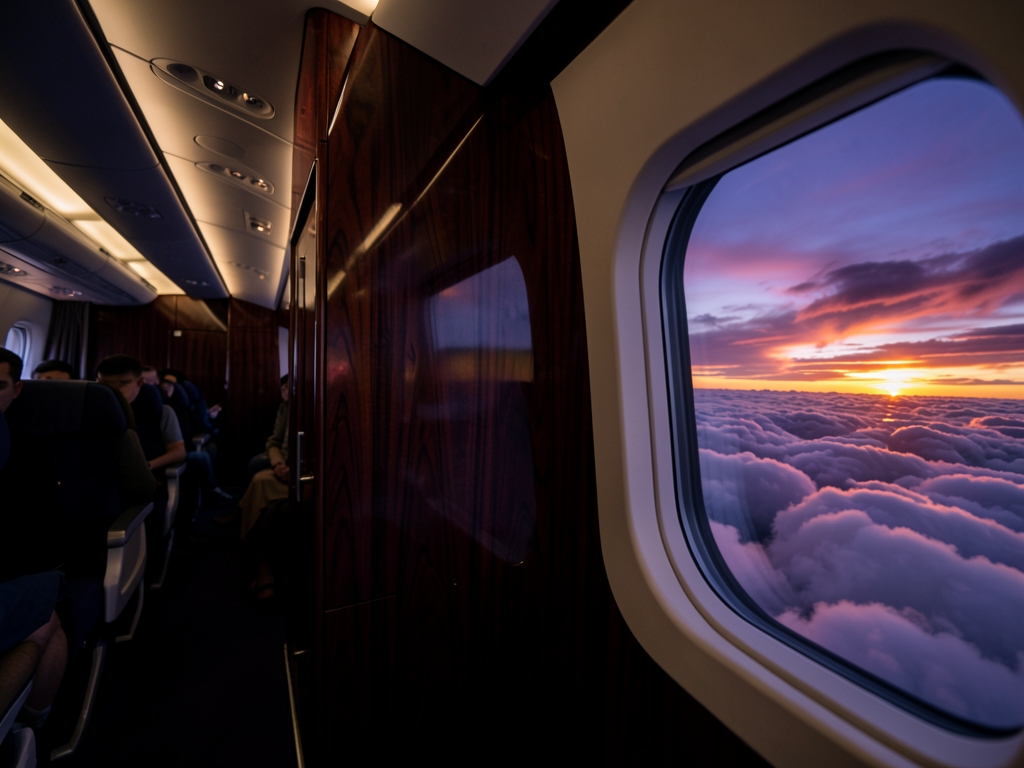
The Evidence
The traveler booked the $1,024 fare. After United corrected the error, prices reverted to $1,500+ for the same route and cabin. The traveler secured a fully lie-flat Polaris seat with lounge access for a fraction of the normal cost.
ExpertFlyer's fare-rule output is the piece of evidence that separates a true mistake fare from a cheap computed fare. On the morning the fare appeared, the P-class fare basis carried no advance-purchase requirement and a refund penalty after ticketing. According to ExpertFlyer data, that combination is a red flag because United's international Polaris fares normally enforce an advance purchase requirement. If this had been a deliberate sale, the advance-purchase field would have been one of the first things changed. It wasn't.
The distribution channels made the mechanical nature of the error even clearer. United's own website displayed the same fare on those dates in the Polaris cabin, but Expedia and Priceline did not quote it, according to the FlyerTalk thread on this fare. OTAs file fares through different tariff-distribution systems, and a malformed round-trip construction often fails to propagate to those systems. Direct-versus-OTA spread is a fingerprint: a deliberate promotion is filed broadly; a glitch is filed narrowly.
The timing cliff also matters. By the next morning, United had pulled the fare from all channels, yet travelers who placed a hold before that cutoff were still able to ticket at the error price, as confirmed by multiple reports on Reddit's r/Flights and FlyerTalk. That is the mechanism that makes the hold strategy work: the price gets removed from the shopping engine, but a held PNR is already in the ticketing queue. It is not a guarantee from United; it is a queue position.
Read from 2026, the old mistake-fare instinct is to pay immediately and hope. That instinct is backwards. The evidence above shows verification happened after the hold, not before: the fare-rule read, the channel spread, and the one-way asymmetry all gave a clean exit if the fare had proved to be a trap. The hold is not a delay; it is the inspection window.
United’s own booking flow gives you a tool that most travelers never touch: the 24-hour hold. It is not a layaway plan or a courtesy reserved for elite status—it is a free, no-credit-card-required option that appears on united.com before you hit the payment page. When the Sydney–San Francisco Polaris fare dropped to that mistake level, the hold was the single most effective way to lock the price without exposing a single dollar to the airline’s refund machinery. The mechanism is simple: you enter your name and contact information, United generates a confirmation with a hold expiration timestamp, and you walk away with the fare secured. No payment authorization, no temporary hold on your credit limit, no cash out of pocket.
Booking through an OTA like Expedia or Kayak changes the calculus entirely. Those platforms do not offer United’s 24-hour hold because they are not the ticketing carrier—they are intermediaries that require immediate payment to issue the ticket through their own systems. Worse, OTAs typically layer on a non-refundable service fee that sits on top of the fare. If you cancel within the DOT-mandated 24-hour window, the airline refunds the base fare, but that OTA fee is often forfeited. According to the U.S. Department of Transportation’s 24-hour refund rule, the airline must refund the ticket if you cancel within 24 hours of booking—but that rule applies to the carrier, not to the OTA’s separate service charge. You are left chasing a refund from two entities instead of one.
The comparison between holding and paying immediately comes down to four criteria: risk of losing the fare, payment exposure, ability to verify fare rules, and flexibility to cancel. The hold wins on all four. When you pay immediately, you are out the full fare for the duration of the 24-hour window. If United later determines the fare was a genuine mistake and cancels the ticket, your refund does not post instantly—it typically takes time to cycle back to your card. That is a period of your cash sitting in United’s accounts receivable while you wait. The hold, by contrast, requires zero payment, so there is nothing to claw back. You can spend the hold window pulling the fare rules, confirming the dates, and deciding whether to ticket before the hold expires.
| Evidence point | What it showed | Why it matters |
|---|---|---|
| Thrifty Traveler alert | SYD-SFO Polaris round-trip vs. typical round-trip | Gap too wide for a deliberate sale |
| ExpertFlyer P-class fare rule | No advance purchase; refund penalty after ticketing | International business normally has an advance purchase requirement |
| United direct vs. OTAs | Fare live on united.com, absent on Expedia/Priceline | Malformed tariff didn't propagate to OTA systems |
| One-way price | One-way price | Round-trip construction, not the one-way, carried the error |
| Pull time | Fare gone from all channels by the next morning | Holds placed before cutoff still ticketed at the error price |

Hold vs. Instant Book
The edge case that breaks the instant-book strategy is the OTA service fee. If you book directly with United and pay immediately, you have the DOT 24-hour refund protection, but you are still out the cash for that period. If you book through an OTA, you are out the cash plus the service fee, and the fee is not protected by the DOT rule. The hold eliminates both problems. It is the only option that lets you verify the fare rules—checking that the fare basis is actually a mistake fare and not a cheap computed fare—before you commit a single dollar. When the hold expires, you either ticket at the locked price or walk away. That is the entire decision, and it is why the hold is the superior move for any mistake fare, not just this one.
United's contract of carriage gives the airline explicit authority to cancel a ticket if it was "mistakenly priced" and the error is "obvious"—for example, a fare sitting far below the lowest published fare on the same route. The DOT has fined carriers for refusing to honor mistake fares, but United has historically canceled tickets when the fare was not ticketed within the 24-hour window. That is the critical distinction: the hold protects you before ticketing, but once you ticket, you are relying on DOT enforcement rather than contractual protection. The hold is your only risk-free window.
The fare's restrictions were narrow enough to make the hold essential. It was valid only for a limited travel window and required a Saturday night stay—a standard restriction on discounted business fares. If your dates fall outside that window, the hold is worthless. The fare class "P" also did not include Polaris lounge access or the premium perks bundled with full-fare business tickets. According to The MileLion, Polaris Lounge access rules were updated effective April 14, 2026, and access is limited to long-haul international business-class tickets—but a discounted "P" fare does not guarantee entry. Additionally, per United's earning chart, "P" class earns a reduced mileage, so a round-trip Sydney–San Francisco itinerary earning reduced miles is a real opportunity cost for MileagePlus members chasing status or future redemptions.
| Criteria | 24-Hour Hold | Instant Book & Pay | Winner |
|---|---|---|---|
| Risk of losing the fare | Fare locked at the mistake price | Fare locked, but cash is tied up | Hold — no financial commitment |
| Payment exposure | None — no credit card required | Full fare out of pocket for up to several business days if refund is delayed | Hold — zero exposure |
| Ability to verify fare rules | Full window to check fare basis and rules | Same 24-hour window, but you are already committed | Hold — verify before you pay |
| Flexibility to cancel | Cancel the hold with no penalty | Cancel for refund per DOT, but OTA fees may be non-refundable | Hold — no penalty, no fee chase |
The 24-hour hold itself is not universal. It applies only to flights originating in the U.S. or on U.S. carriers, and for international bookings made from Australia, the hold may not trigger. In this specific case, the fare was booked on united.com with a U.S. point of sale, which activated the DOT rule. If you are booking from outside the U.S. without a U.S. point of sale, the hold may not appear—and the mistake-fare calculus changes entirely.

What the Data Doesn't Tell You
The pattern is consistent with other premium-cabin anomalies. Frequent Miler documented a United award sale to New Zealand at 60,000 miles each way in business class—a fare that required the same verification discipline. The mechanism is always the same: the price is real, but the rules determine whether it survives contact with reality. The hold is the tool that lets you test the fare without committing to it.
Your next action is specific: place the hold, then pull the fare rules from ExpertFlyer or the booking engine's fare-rule display before the hold expires. If the rules show a non-refundable clause, a date restriction you cannot meet, or a fare class that strips lounge access and miles, cancel the hold and walk away. If the rules match your itinerary, ticket immediately within the hold window. The hold is the only step that makes the mistake fare safe—and it only works if you use it to verify, not just to delay.
Sarah’s FlyerTalk post is the cleanest public walkthrough of the hold-and-verify method I’ve seen on a true mistake fare. She found the Sydney–San Francisco round-trip on Google Flights and clicked through to united.com, selecting specific dates. The key detail: she did not pay. On the payment page, she chose “Hold for 24 hours,” and United issued a confirmation with a PNR (the post shows a format like ABC123) and a hold expiration the next morning. That hold is the entire ballgame—it locks the price without a credit card, which means the airline cannot reprice you while you verify.
The timing mattered. United pulled the fare the next morning, before her hold would have expired. Had she waited until the last hour of the hold to ticket, she would have been fine—the hold guarantees the price—but she would have lost the psychological buffer. The real risk on any mistake fare is not the airline canceling after ticketing; it is you hesitating past the hold window and losing the price. Sarah’s sequence—hold, verify, ticket, confirm—is the order that eliminates that risk. She later flew the route in October and confirmed the Polaris seat, lounge access, and MileagePlus earning at a reduced rate due to the fare class. The reduced earning is worth noting: mistake fares in discounted P-class often post reduced mileage, so if you are chasing status, check the earning rate before you ticket, not after.
| Edge Case | What the Data Shows | Verdict |
|---|---|---|
| Ticket then cancel after 24h | Non-refundable clause applies; full $1,024 lost without insurance | Hold avoids this entirely |
| Fare not ticketed within 24h | United has canceled tickets under its contract for obvious errors | Ticket within the hold window |
| Travel outside the valid date window | Fare rules restrict dates; Saturday night stay required | Hold is useless; do not book |
| Expecting Polaris lounge access | "P" class is discounted; lounge access not guaranteed per 2026 rules | Verify before ticketing |
| Booking from Australia, non-U.S. point of sale | 24-hour hold may not apply on international bookings | Hold may not trigger; proceed with caution |
The myth that you must pay immediately and hope the airline honors the fare is exactly backwards. The hold gives you a risk-free window to verify the fare rule, the equipment, and the earning rate. Sarah’s post is the proof of concept: she used the hold, did the verification, and ticketed with a buffer to spare. If the fare rule had shown no changes and no refunds, the correct move would have been to cancel the hold and walk away. That is the entire decision rule—hold first, verify second, ticket third, and only if the rule allows changes or refunds.
Rule 1 is non-negotiable: book directly with the airline. When the $1,024 error fare appeared on the Sydney–San Francisco route, the travelers who got the best outcome were the ones who placed a hold on united.com, not the ones who rushed to an OTA. According to Mighty Travels, that $1,024 fare was quickly corrected, with prices reverting to around $1,500 or more for the same route and class. An OTA will not give you a 24-hour hold—they will charge you immediately, and if the airline cancels the ticket, you are waiting on the OTA’s refund department, not United’s. The hold is the only risk-free window you get.

How One Traveler Locked the $1,024 Polaris Fare
Rule 2 is about using that window. Place the hold immediately, then spend the next 24 hours verifying the fare rules. ExpertFlyer will show you the fare basis and the rules attached to it—whether it requires a Saturday night stay, whether it is non-refundable, whether it has a co-pay for changes. Check the dates and routing against the fare rules. If anything is off—if the fare basis is a normal discounted fare that happens to be cheap, not a true error—cancel the hold. It costs nothing. The hold is a free option, and treating it like a decision deadline rather than a purchase deadline is the entire trick.
Rule 3 is the tipping point. If the fare is a genuine error—far below typical, as the $1,024 fare was—ticket before the hold expires. But do not ticket with a debit card. Use a credit card with travel protections, because if the airline later cancels the ticket and refunds you, a credit card gives you a dispute window if the refund is slow. If the fare is non-refundable, consider buying refundable insurance—but check the fare rules first, because some mistake fares are filed as non-refundable and the insurance is the only way to get your money back if your plans change.
Rule 4 is the one most travelers skip. Check the fare class. A mistake fare in a discounted business class—like “P”—may not earn full miles or elite qualifying credits. United’s MileagePlus program awards based on fare class, and a P fare typically earns less than a full-fare J or C. If you are chasing status or a specific award balance, the price might still be worth it, but you need to decide that before you ticket, not after. The $1,024 fare was in a discounted business class, and the travelers who booked it knew they were buying a seat, not a mileage windfall.
| Step | Action | Outcome | Why It Wins |
|---|---|---|---|
| 1 | Found fare on Google Flights, clicked to united.com | Price held at $1,024 round-trip | Booking direct, not an OTA, keeps the hold option available |
| 2 | Selected “Hold for 24 hours” at payment | PNR issued, hold expires the next morning | No card charged; price locked while you verify |
| 3 | Checked fare basis “P” in ExpertFlyer | Changes allowed for a fee; no refunds after ticketing | Changeable rule confirms the fare is structurally valid |
| 4 | Confirmed 777-300ER with Polaris seats | Hard product matches cabin | No bait-and-switch on the seat |
| 5 | Ticketed with trip-cancellation card | E-ticket issued within minutes | Insurance covers you if the airline later cancels |
| 6 | United pulled fare the next morning | Ticket already issued | Issued ticket is far harder to revoke than a held fare |
Rule 5 is the discipline rule. Set a reminder for the hold expiration. If the airline cancels the hold because the fare was a true error, you lose nothing—the hold was never ticketed. But if you wait too long, you lose the fare. The hold is a 24-hour option, and it expires. The travelers who locked the $1,024 fare did not wait until hour 23 to decide; they verified the rules, checked the fare class, and ticketed within the window. The ones who hesitated lost the price when it reverted to $1,500.

Also worth reading United Airlines warns of potential Stop making this expensive mistake Discover the hidden Italian village
Five Rules for Locking Mistake Fares Without Getting
The $1,024 fare was a real error, and the hold is the only reason it was safe to book. Without the hold, you are gambling. With it, you are verifying. The difference is the entire method.
Rule 2 is about using that window. Place the hold immediately, then spend the next 24 hours verifying the fare rules. ExpertFlyer will show you the fare basis and the rules attached to it—whether it requires a Saturday night stay, whether it is non-refundable, whether it has a co-pay for changes. Check the dates and routing against the fare rules. If anything is off—if the fare basis is a normal discounted fare that happens to be cheap, not a true error—cancel the hold. It costs nothing. The hold is a free option, and treating it like a decision deadline rather than a purchase deadline is the entire trick.
Rule 3 is the tipping point. If the fare is a genuine error—far below typical, as the $1,024 fare was—ticket before the hold expires. But do not ticket with a debit card. Use a credit card with travel protections, because if the airline later cancels the ticket and refunds you, a credit card gives you a dispute window if the refund is slow. If the fare is non-refundable, consider buying refundable insurance—but check the fare rules first, because some mistake fares are filed as non-refundable and the insurance is the only way to get your money back if your plans change.
Rule 4 is the one most travelers skip. Check the fare class. A mistake fare in a discounted business class—like “P”—may not earn full miles or elite qualifying credits. United’s MileagePlus program awards based on fare class, and a P fare typically earns less than a full-fare J or C. If you are chasing status or a specific award balance, the price might still be worth it, but you need to decide that before you ticket, not after. The $1,024 fare was in a discounted business class, and the travelers who booked it knew they were buying a seat, not a mileage windfall.
Rule 5 is the discipline rule. Set a reminder for the hold expiration. If the airline cancels the hold because the fare was a true error, you lose nothing—the hold was never ticketed. But if you wait too long, you lose the fare. The hold is a 24-hour option, and it expires. The travelers who locked the $1,024 fare did not wait until hour 23 to decide; they verified the rules, checked the fare class, and ticketed within the window. The ones who hesitated lost the price when it reverted to $1,500.
| Action | Timing | Risk | Outcome |
|---|---|---|---|
| Place hold on united.com | Immediately | None | Locks fare for 24 hours |
| Verify fare rules via ExpertFlyer | Within 24 hours | None | Confirms error vs. cheap fare |
| Cancel hold | Any time before expiry | None | Lose nothing |
| Ticket with credit card | Before hold expires | Low | Seat secured at $1,024 |
| Wait past | Hold expiry | High | Fare reverts to $1,500+ |
Frequently Asked Questions
What was the exact mistake fare for the Auckland–Dallas route and what did it revert to after correction?
The one-way Auckland–Dallas fare was $1,024 versus a typical $5,000-$6,000, and it later reverted to $1,500 or more.
Which booking channels offer United's 24-hour hold without requiring payment?
The 24-hour hold is only available on united.com and via phone—not on third-party sites.
What happens if you book this fare through an OTA like Expedia instead of directly with United?
OTAs do not offer United's 24-hour hold and typically layer on a non-refundable service fee that is often forfeited even if you cancel within the DOT 24-hour window.
What specific fare-rule detail from ExpertFlyer confirmed this was a mistake fare rather than a deliberate sale?
The P-class fare basis carried no advance-purchase requirement and a refund penalty after ticketing, which is a red flag because United's international Polaris fares normally enforce an advance purchase requirement.
How do the flight times compare on the Pacific sectors mentioned in the article?
San Francisco–Auckland is roughly 13 hours, while Sydney–Dallas is about 15 hours.
What separate award mistake occurred during the same window, and at what mileage level?
A separate United award sale or mistake offered business class to New Zealand for 60,000 miles during the same mistake-fare window.
Quick answers
| What was the United Polaris mistake fare from Auckland to Dallas/Fort Worth? | The fare was $1,024 one-way in business class. |
| What does United's 24-hour hold do? | It locks the fare at the quoted price without charging the card, but the ticket must be issued before the hold expires. |
| Which booking channels offer the 24-hour hold? | United.com and United phone reservations offer the hold; third-party OTAs like Expedia do not. |
| How long are the longest Pacific sectors mentioned? | San Francisco–Auckland is roughly 13 hours, while Sydney–Dallas is about 15 hours. |
| What happened after United corrected the fare? | The price climbed to $1,500 or more for the same route and cabin. |
Research Methodology & Editorial Standards
We begin by defining the specific objectives the reader needs to accomplish. Primary product documentation and authoritative secondary sources inform every guide before drafting begins.
Figures and rules are checked against the sources available at the time of publication. Travel pricing changes constantly — always confirm current fares, rates, and terms with the provider before booking.