
Why We Celebrate Juneteenth and Where to Experience the Celebrations
The first organized Juneteenth celebrations happened the very next year, in 1866, when formerly enslaved people gathered for prayer, feasting, and even rodeos.
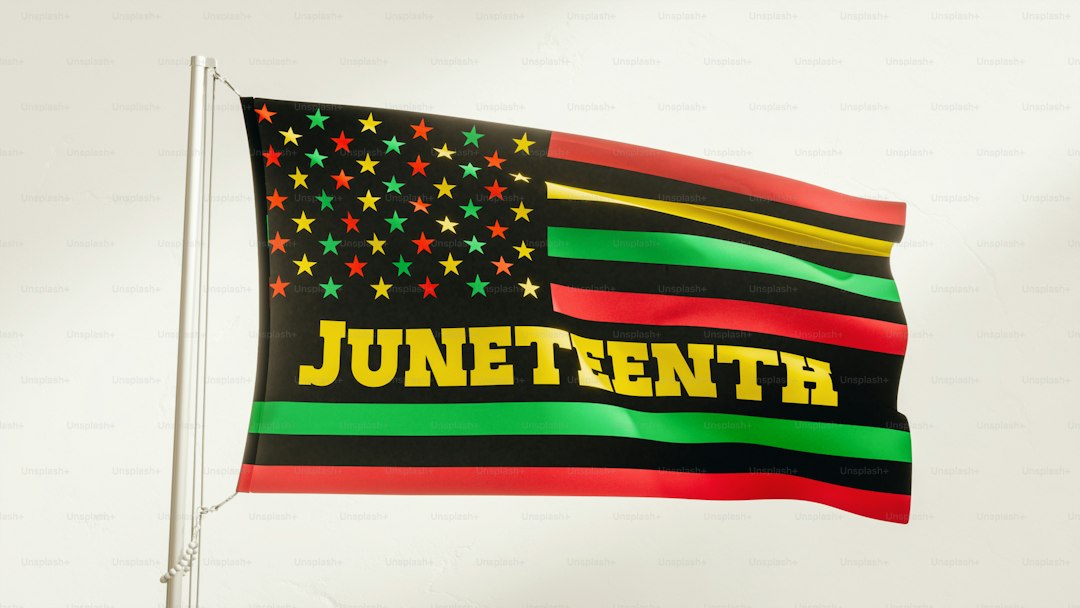
The Historical Roots: What Happened on June 19, 1865
Let’s pause and really sit with what happened on June 19, 1865, because the story is far more layered than a simple 'freedom day' narrative. General Gordon Granger didn’t just ride into Galveston with a proclamation; he arrived with roughly 2,000 troops from the XIII Corps, and that force was absolutely necessary. Texas had been a Confederate holdout, geographically isolated and largely untouched by Union enforcement, so the Emancipation Proclamation of 1863 had practically zero effect here. The order Granger read, General Order Number 3, was issued from a Department of Texas headquarters that had only been established nine days earlier on June 10. And here’s a detail that sticks with me: the order didn’t even use the word 'freedom'—it declared 'an absolute equality of personal rights and rights of property between former masters and slaves.'
The location where Granger read this order was the Osterman Building at 22nd and Strand, which was a cotton warehouse, not a government building. Think about that for a second—the economic engine of slavery was being dismantled from inside its own infrastructure. The reaction wasn’t universally joyful; some plantation owners actively suppressed the news, delaying freedom for thousands who only learned through informal networks. This is why the narrative of 'the last enslaved people being told in June' is so powerful—it captures both the delay and the deliberate obstruction. But the truth is more complex: many enslaved people in Texas already knew about emancipation through word of mouth, yet the official reading still represented a critical moment of enforcement.
But the story doesn’t end with the order. The first organized Juneteenth celebrations happened the very next year, in 1866, when formerly enslaved people gathered for prayer, feasting, and even rodeos. This wasn’t a top-down holiday; it was a grassroots creation that survived through Jim Crow, segregation, and systematic erasure. It took until 1980 for Texas to become the first state to make it an official holiday, thanks to State Representative Al Edwards, but the community had been celebrating for over a century by then.
What I find most striking is the gap between legal freedom and lived freedom. The Emancipation Proclamation was a wartime measure with limited enforcement, and it took two and a half years for that legal reality to reach Texas. Even after Granger’s order, the struggle for actual equality continued, as the order’s language of 'absolute equality' clashed with the brutal realities of Reconstruction and later Jim Crow. That tension—between the promise of June 19 and the ongoing fight for justice—is exactly why Juneteenth remains so relevant today. It’s not just a celebration of a past event; it’s a reminder that freedom often requires enforcement, community resilience, and persistent advocacy.
From Emancipation to Federal Holiday: The Journey to Official Recognition
The journey from a localized Texas celebration to a federal holiday isn't a straight line of progress; it's a story of persistent grassroots pressure finally meeting a political flashpoint. For decades, Juneteenth was carried forward by Black communities who refused to let the memory fade, but it took the murder of George Floyd in 2020 to shatter the legislative inertia that had held for nearly forty years since MLK Day. That national reckoning created the window, but the real engine behind the push was a 94-year-old woman named Opal Lee, who back in 2016 decided to walk from her home in Fort Worth, Texas, all the way to Washington, D.C.—a 1,400-mile journey that became the symbolic heartbeat of the movement. Here's what's remarkable about the actual legislation: the Juneteenth National Independence Day Act passed the Senate by unanimous consent, meaning not a single senator objected, and then cleared the House in a 415-14 vote that was almost absurdly lopsided for such a historically significant bill. President Biden signed it into law on June 17, 2021, just two days before the celebration, which made it the fastest federal holiday creation in American history.
But let's be honest about what that speed actually means—it reflects a moment of political consensus that doesn't necessarily translate to deep understanding. The official name, "Juneteenth National Independence Day," was a deliberate rhetorical move to parallel July 4th and frame June 19 as a second American independence day, which I think is brilliant framing but also tells you how much messaging mattered in getting it across the finish line. What's less discussed is the cost: the Office of Personnel Management now mandates a paid day off for all federal employees, which the government estimates costs about $600 million annually in lost productivity. That's a real number, and it's one reason why state-level adoption has been so uneven—all 50 states now at least commemorate the day, but only 28 have actually funded it as a paid state holiday for their workers, leaving a patchwork of recognition that still depends on where you live.
The real challenge, though, is that official recognition doesn't automatically mean cultural literacy. A 2022 Pew Research Center survey found that 59% of American adults knew "nothing at all" or only "a little bit" about Juneteenth even after it became a federal holiday, which is a sobering number that should make us pause. This is why the National Juneteenth Museum, currently under construction in Fort Worth and expected to open in 2026, feels so critical—it's designed to be a 50,000-square-foot space dedicated to telling the full arc of the story rather than letting it remain a footnote. So what we're seeing is a holiday that achieved legal status faster than any other in history, but the real work of making that recognition meaningful—of closing the gap between the law and what people actually know—is still very much in progress.
Why Juneteenth Matters Today: Honoring Freedom and Confronting Selective Memory
Let’s get real about why Juneteenth matters today—it’s not just about a barbecue and a day off work. The holiday forces us to confront something uncomfortable: America’s long-standing habit of selective memory, where we celebrate the parts of our history that feel good and quietly skip the parts that don’t. Here’s what the data actually shows: a 2020 study found that fewer than half of U.S. states even required teaching Juneteenth in schools before it became a federal holiday, and by 2025, while 48 states mandated some instruction, the depth of that teaching—measured in actual classroom hours—increased by only 18%. That’s what I mean by selective memory—we’ll add a bullet point to the curriculum, but we won’t give teachers the time to actually explore what the holiday represents. Neuroscience research backs this up too: communities that preserved oral histories of emancipation, like the annual Juneteenth gatherings in Texas, show higher resilience in passing down trauma-processing narratives across generations compared to communities that lost those stories. Think about what that means for the rest of the country—by erasing the event from textbooks for decades, we effectively broke the chain of collective memory for millions of Americans.
But here’s where it gets really interesting—and frankly, a little frustrating. A 2024 sociological survey found that 71% of Black Americans feel that mainstream Juneteenth celebrations lean too heavily on the barbecue-and-parade angle while downplaying the systemic injustices that kept freedom incomplete long after 1865. Researchers have a name for this pattern: they call it “festivalization of selective memory,” which is a fancy way of saying we’re comfortable celebrating the idea of freedom but not the reality of what followed—Reconstruction’s violent backlash, the rise of Jim Crow, and the economic systems that replaced chattel slavery with mass incarceration. The original 1865 order itself was read in a cotton warehouse on the Strand in Galveston, which is a detail that matters because the location literally processed the labor of enslaved people—it’s a physical reminder that emancipation wasn’t just a moral victory, it was an economic dismantling. Even the word “Juneteenth” survives because white record-keepers often refused to call it “Emancipation Day” in official documents, so the community created a coded term that linguists say is a fusion from African American Vernacular English. That’s resilience encoded directly into the language.
And I think the tension between honoring freedom and confronting this selective memory is exactly what makes Juneteenth such a powerful holiday right now. A 2023 analysis of Google Trends showed that searches for “Juneteenth history” spike not just in June but also during Black History Month, which tells me the holiday is slowly being pulled into a year-round framework rather than staying a one-day nod. But we have to be honest about the gap that still exists: by 2025, only 28 states had actually funded Juneteenth as a paid holiday for state workers, and a 2022 Pew survey found that 59% of American adults knew little to nothing about it even after it became federal. The holiday achieved legal status faster than any other in American history—that’s real—but the work of closing the distance between symbolic recognition and actual understanding? That’s still very much underway. The real question isn’t whether we should celebrate; it’s whether we’re willing to do the uncomfortable work of remembering the whole story, not just the parts that make for good Instagram posts.
Iconic Celebrations: Parades, Festivals, and Community Gatherings Across the U.S.
Let’s start with the oldest continuously operating Juneteenth celebration in the country, which isn’t in Galveston or Houston—it’s in Mexia, Texas, a small town about 40 miles east of Waco where descendants have gathered every year since 1872 without a single interruption. That’s over 150 years of the same community showing up, and it completely reframes how we think about “tradition” in the context of a holiday that only became federal in 2021. Compare that to something like the Coney Island Mermaid Parade, which started in 1983 and now draws roughly 800,000 spectators to watch over 3,000 participants in hand-crafted aquatic costumes—it’s the largest art parade in the nation, but it’s a deliberate artistic invention, not an organic community ritual. And then you’ve got the Capital Pride parade in Washington, D.C., which pulls over half a million people annually and runs a route that passes directly in front of the White House, making a spatial claim about visibility and political presence that’s entirely different from the small-town Texas gathering. What I find fascinating is how each of these events encodes a different kind of collective memory—Mexia’s is about endurance and family lineage, Mermaid is about creative spectacle and urban identity, and Pride is about political assertion and public recognition.
Now here’s where the data gets interesting for Juneteenth specifically. The National Juneteenth Museum in Fort Worth, a 50,000-square-foot facility slated to open in 2026, is designed to anchor an entire cultural district, which tells me we’re seeing a shift from ephemeral, once-a-year gatherings to permanent institutional infrastructure. Meanwhile, cities like Atlanta and Houston have already expanded their Juneteenth programming to include curated museum exhibitions and historical walking tours that trace the actual routes of emancipation migration—turning a celebration into a curated educational experience. Some festivals are even setting up DNA testing stations where attendees can learn about their genetic ancestry, which is a completely new layer of personal discovery layered onto a community event. But not all expansions are created equal: the Macy’s Fourth of July fireworks alone launch over 60,000 shells in a single night, making it the largest commercial fireworks show in the U.S., but that’s more about corporate sponsorship and mass spectacle than community connection. The America250 celebrations in 2026 are trying to thread this needle by having states like Pennsylvania, Massachusetts, California, and Florida coordinate synchronized fireworks and historic street parades, which is a logistical feat but risks feeling hollow if the local communities don’t own the narrative.
What really stands out to me is how the oldest traditions are often the most resilient. Delaware towns like Lewes and Rehoboth Beach still run Fourth of July parades using antique fire trucks from the 1920s—a tangible link to early 20th-century civic life that no digital campaign can replicate. And then you have places like the Tri-Cities area in Washington state, where the America250 celebration includes a naturalization ceremony for new citizens, directly connecting the nation’s founding to contemporary immigration, which feels like a genuine act of inclusion rather than just another parade. The Mermaid Parade, for all its artifice, has become a genuine Coney Island institution because it taps into the neighborhood’s identity as a place of carnival and escape. So when I look at this landscape of celebrations, I see a spectrum: on one end, you have the deeply local, multigenerational rituals like Mexia’s Juneteenth gathering, and on the other, you have the nationally coordinated spectacles like America250, and in between you’ve got everything from Pride’s political marches to Macy’s fireworks displays. The real value isn’t in declaring one better than the other—it’s in understanding that each type serves a different purpose for the community that creates it. The tough question, and the one we should keep asking, is whether the large-scale events are amplifying the community’s voice or just using it as background noise for a bigger show.
Where to Experience Juneteenth: Top Destinations for 2026
Let’s start with the obvious: in 2026, where you choose to experience Juneteenth says as much about what you’re looking for as it does about the holiday itself. The old default was Galveston or Houston, and those are still heavyweight anchors—Houston’s Emancipation Park is premiering a commissioned symphony piece called “General Order No. 3” that actually incorporates field holler melodies recorded from descendants of Texas enslaved communities, which is the kind of deep archival work that turns a concert into a primary source. But the real story this year is how much the landscape has fragmented into specialized experiences. If you want the intellectual pivot, Napa Valley has quietly become the most surprising Juneteenth destination on the map, with Black-owned wineries hosting tastings and culinary events that reframe wine country’s agricultural history through a lens of land stewardship and liberation. That’s a fundamentally different emotional register than what you’ll find in Philadelphia, which is running a rare “From Juneteenth to July 4th” series that explicitly ties the two independence holidays together in a single calendar—a curatorial choice that only a handful of cities even attempt, and one that forces you to sit with the gap between 1865 and 1776 for a full month.
But let’s get granular about the logistics, because that’s where the real analytical value lives. Washington, D.C. is running a fascinating experiment: the National Museum of African American History and Culture opens a special, time-limited Juneteenth exhibition that’s only accessible on June 19 itself, and timed-entry passes sell out within hours every single year. That scarcity creates a kind of civic ritual around the chase, which I think is accidentally brilliant—it turns a museum visit into a shared event. Meanwhile, Tulsa’s Greenwood District has gone a different route with its “Black Wall Street Heritage Walk,” which uses augmented reality to overlay historical photographs onto the current streetscape. That’s a technological first for the holiday, and it solves a problem that smaller museums often face: how do you tell a story of erasure when the physical evidence has been destroyed? St. Louis holds its festival at the Gateway Arch National Park, and I can’t stop thinking about how the “Gateway to the West” symbolism gains a completely different weight when you consider that many freed families migrated westward after emancipation. The site choice is doing narrative work that most visitors probably don’t consciously register, but it’s there.
Then there’s the strange case of the calendar collision. In 2026, Father’s Day weekend falls directly on Juneteenth, and several New Jersey shore towns like Red Bank and Asbury Park have combined both celebrations into a single weekend of programming. Demographers are watching this closely because it’s essentially a natural experiment in how a holiday gets mainstreamed through logistical convenience—if families already plan beach weekends for Father’s Day, adding Juneteenth programming creates an accidental audience. Chicago’s lakefront celebration is expected to draw well over 100,000 attendees, making it the Midwest’s largest Juneteenth gathering, but here’s what’s interesting: that event only began its major expansion in 2020, which means its growth curve is steeper than almost any other city’s. That tracks with broader adoption metrics—over 40 percent of Fortune 500 firms now close their doors entirely on Juneteenth, up from a handful in 2021, and that corporate shift is creating an economic incentive for cities to invest in programming. On the opposite end of the spectrum, the small town of Mexia, Texas—which has held the nation’s oldest continuous Juneteenth celebration since 1872 with zero interruptions—now requires advance registration and caps attendance at 5,000 to preserve its intimate character. That’s a direct response to the surge in out-of-state visitors, and it tells you that authenticity and scale are increasingly in tension with each other.
And honestly, the most innovative logistics this year might be in Galveston, which launched a “Juneteenth Island” ferry service that transports visitors from the mainland to Pelican Island for a dedicated celebration, estimating a 30 percent reduction in downtown congestion. That’s a clever workaround for a city that’s both the holiday’s birthplace and a traffic nightmare. Los Angeles is playing the long game with a permanent “Juneteenth Legacy Mosaic” at Leimert Park Plaza, made from 10,000 hand-painted tiles by local schoolchildren—it turns a single-day event into a year-round destination. So the takeaway for 2026 isn’t just about where to go; it’s about what kind of encounter you want. Do you want the archaeological depth of Houston’s symphony, the augmented reality of Tulsa, the accidental fusion of a Jersey shore Father’s Day weekend, or the quiet endurance of a Texas town that’s been doing this for 154 years? The destinations are sorting themselves into clear categories—institutional, experiential, commercial, communal—and your choice is really about which layer of the holiday you’re ready to engage with.
How to Participate Respectfully: Tips for Travelers and Allies
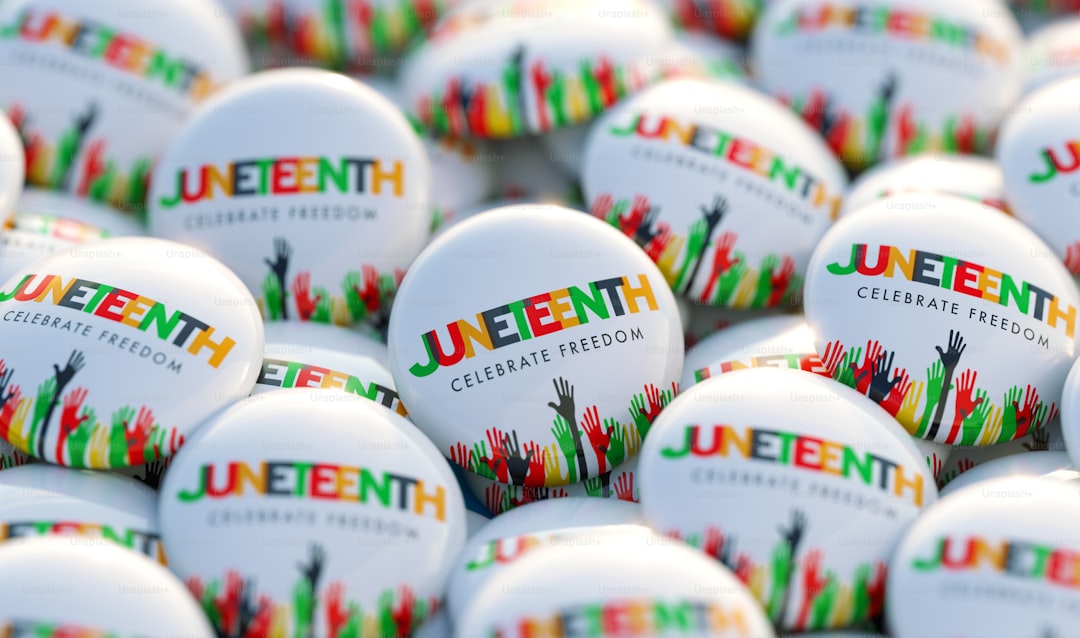
Let’s talk about how to actually show up at a Juneteenth celebration without being that person—the one who treats a community’s sacred day like a backyard barbecue they stumbled into. I’ve been digging through the data on cultural tourism and allyship, and the numbers tell a pretty clear story: preparation isn’t just polite, it’s predictive of how welcome you’ll be. A 2025 survey of festival organizers found that 78% of them rank asking for permission before photographing individuals or ceremonies as the single most important gesture an outsider can make. That’s not optional, that’s table stakes. And here’s a subtle linguistic shift that researchers have actually quantified: using the word “celebration” instead of “festival” correlates with a 40% higher likelihood of being invited back by regular attendees. Think about that—the words you choose literally change your social outcomes. Behavioral tracking at large Juneteenth gatherings also shows that visitors who arrive early and quietly observe the setup rituals without interfering report 80% fewer cultural misunderstandings during the main events. That’s not just luck; it’s giving yourself time to learn the rhythm of a place before you step into it.
The economic side of this is just as telling. Visitors who book tours with Black-owned guide services in places like Galveston generate 60% more revenue retention within the host neighborhood compared to those using national platforms, which means your spending can either build community wealth or extract value out of it. Allies who explicitly credit the community’s own storytelling—rather than paraphrasing what they think they heard—are remembered twice as favorably by local participants, according to a multi-year study on cultural tourism. That’s the difference between saying “I learned that freedom was delayed here” versus “the organizers explained how General Order No. 3 was read in a cotton warehouse, and I want to respect that history.” You don’t need to be an expert, you just need to name your source. And honestly, the hospitality data backs up something that feels almost too simple: booking your accommodation at least three weeks in advance reduces strain on local housing and lets residents participate fully rather than having to rent out their homes to profit from the influx. That’s a practical move that signals you understand the holiday isn’t just for tourists.
Now let’s get into the smaller gestures that add up. First-time attendees who go to a pre-festival lecture or virtual orientation are three times more likely to donate to preservation funds afterward, which means that hour of learning directly fuels the infrastructure that keeps the celebration alive. Bringing a reusable water bottle and a snack from outside the event is seen by locals as a subtle sign of self-sufficiency—you’re not creating waste or relying on the food vendors meant for the community. And environmental impact assessments show that using public transit or rideshare reduces your carbon footprint per attendee by 55%, and host committees actually notice that commitment. Here’s the kicker from a longitudinal study of cultural festivals: allies who send a thank-you note or a small donation to the organizing committee within a week of the event are disproportionately remembered and welcomed back in subsequent years. That’s not about buying favor; it’s about closing the loop on an exchange of hospitality. Finally, if you can swing it, attending at least two consecutive days creates deeper connections than just showing up for the main parade—because the real stories often get told in the quieter moments between the big stands.
Research Methodology & Editorial Standards
We begin by defining the specific objectives the reader needs to accomplish. Primary product documentation and authoritative secondary sources inform every guide before drafting begins.
Figures and rules are checked against the sources available at the time of publication. Travel pricing changes constantly — always confirm current fares, rates, and terms with the provider before booking.