
Why Rio de Janeiro is the must visit destination for your 2026 travel plans
When you travel here, you’re not just a tourist; you’re stepping into an environment where music functions as a primary sociological pillar.
Why Brazil Was Named the 2026 Destination of the Year
You might be wondering why Brazil grabbed the top spot for 2026, especially when there are so many corners of the globe calling our names. I’ve spent a lot of time looking at the data, and honestly, it’s not just about the beaches or the postcard shots we’ve all seen a thousand times. When you look at the raw numbers, you’re talking about a country that holds 20 percent of the planet’s total biodiversity within its borders. It’s the sheer scale of the place—housing the world’s largest tropical rainforest and the vast Pantanal wetlands—that makes it stand out as a legitimate global heavyweight. If you’re looking for a trip that actually changes how you see the world, this is where the math and the magic finally intersect.
Let’s talk about the energy, because Brazil is doing things differently than almost anywhere else. They aren’t just talking about sustainability; they’re actually living it, with over 80 percent of their electricity coming from wind and hydroelectric sources. It’s a massive shift in how a nation powers its future, and it puts them leagues ahead of many other major economies. Plus, there’s the human side that you can’t capture in a spreadsheet, like the incredible way their music evolved from a fusion of African, European, and indigenous traditions into over 60 distinct genres. When you travel here, you’re not just a tourist; you’re stepping into an environment where music functions as a primary sociological pillar.
And if you’re a fan of the off-beat, you have to consider the scale of what they call the Blue Amazon—a maritime territory spanning 4.5 million square kilometers that is absolutely vital for global scientific exploration. You’ve got Iguaçu Falls with its 275 individual drops, which makes the famous Niagara look modest by comparison. It’s also home to 300 distinct indigenous groups and nearly 300 native languages, which tells you just how much depth is hidden beneath the surface of the typical tourist route. I think the real reason they took this title is that Brazil doesn’t just offer a vacation; it offers a look at a country that is physically, culturally, and energetically massive. It’s a place that asks you to slow down, listen, and actually engage with the scale of the world.
Iconic Landmarks: From Christ the Redeemer to Sugarloaf Mountain
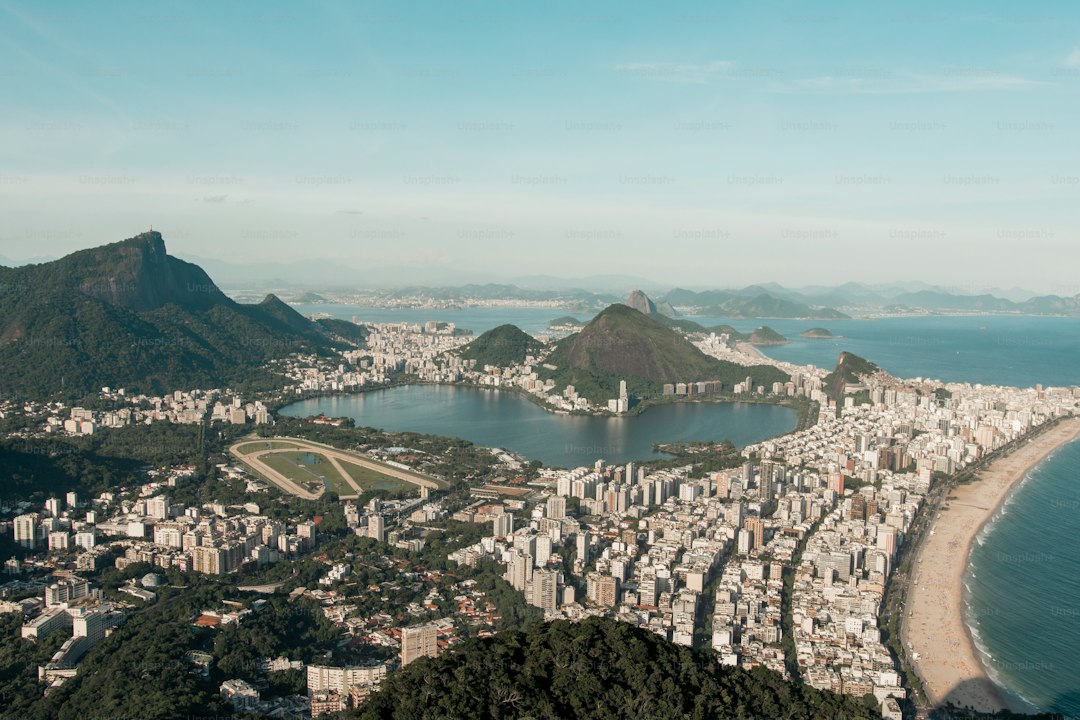
You know, when you stand at the base of these landmarks, it’s easy to just see them as postcard moments, but the engineering reality behind them is honestly kind of wild. Take Christ the Redeemer: it’s not just a statue, but a technical marvel clad in six million individual soapstone tiles, applied by hand to withstand that punishing, humid coastal air. If you think the maintenance is simple, remember that the structure is hollow, housing an internal passage for engineers to reach the electrical systems and frame. It’s also a lightning magnet, struck by bolts three to five times a year, which is why the arms and head are fitted with a specialized rod system to keep the whole thing from being toasted.
Then you have Sugarloaf Mountain, which offers a completely different kind of history lesson. This isn't just a hill; it’s a 600-million-year-old monolithic granite-gneiss formation that dates back to when South America and Africa were still joined in a supercontinent. I find it fascinating that the cable car system we ride today has been running since 1912, making it one of the oldest aerial tramways still hauling people up a peak. The name itself is a nod to 16th-century Portuguese trade, back when refined sugar was shipped in the same conical molds that the mountain’s shape reminded early settlers of.
If you’re planning your trip, think about the sheer contrast between these two sites. While the Christ statue relies on a pedestal reinforced with volcanic rock from Sweden to fight off Atlantic salt corrosion, the summit of Sugarloaf puts you right on a rock formation shaped by ancient glacial activity. The whole Corcovado range sits within the Tijuca National Park, an urban forest that covers nearly 4,000 hectares, acting as a massive green lung for the city. It’s funny, because while we focus on the views, the statue is actually constantly monitored by sensors just to track how it handles the high-velocity winds sweeping off Guanabara Bay. It’s that blend of raw geology and human persistence that makes these spots so much more than just a photo op for your feed.
Exploring 50 Miles of World-Class Beaches
If you think Rio’s coastline is just about finding a prime spot for a caipirinha, let’s look a bit closer at what’s actually happening under your feet. We’re talking about 50 miles of urban frontage that functions more like a high-stakes engineering project than a simple strip of sand. The quartz and feldspar composition here isn't random; those minerals were ground down from the surrounding granite peaks over millions of years, creating that specific light-reflecting quality that makes Ipanema and Copacabana look so different from, say, a typical Florida shore. And that iconic mosaic sidewalk? It’s not just for show. Those black-and-white patterns are made of pedra portuguesa, a limestone chosen specifically for its thermal capacity to absorb and dissipate heat during those brutal summer afternoons.
When you’re sitting there feeling the breeze, you’re experiencing the Vento de Terral, a sea wind that acts as a natural air conditioning unit for the entire city. It’s a fascinating microclimate regulation system, but the real heavy lifting happens underground. The city manages constant coastal erosion with a massive, hidden drainage network designed to hold back Atlantic storm surges without wrecking the natural sand dunes. Without this, the urban landscape would look completely different, and frankly, the beach wouldn’t have the room to exist the way it does now. It’s a delicate, man-made balance that protects the coast while keeping the city from flooding every time the tide shifts.
Beneath the water, the situation is just as active. Because of the way the Serra do Mar mountains were formed by tectonic shifts, the continental shelf drops off with surprising speed, creating that steep bathymetry that gives surfers the powerful, high-energy waves they crave. This drop-off also triggers localized upwellings where colder, nutrient-rich water hits the surface, which is exactly why you’ll see such a thriving marine ecosystem right in the middle of a major metropolis. Agencies are constantly monitoring nitrogen and phosphorus levels to keep these waters healthy, which is a rare level of oversight for a city this size. It’s honestly impressive to see a place where urban life and a complex, wild marine environment don't just coexist, but actually rely on one another to function.
A Deep Dive into Brazil’s Musical and Cultural Roots
When you really stop to listen to Brazil, you start to realize that music isn't just background noise here; it’s the actual operating system of the entire culture. You’re looking at a centuries-old synthesis of African, European, and indigenous traditions that didn’t just blend by accident, but evolved into a sophisticated web of over 60 distinct genres. Think about the Bossa Nova movement that bubbled up in the late 1950s—it was essentially a "new wave" or "new trend" that took the high-energy pulse of samba and cooled it down with jazz harmonies in the apartments of Copacabana. It’s fascinating how that shift functioned as an intellectual pivot, creating a melodic counterpoint to the more thunderous, street-level sounds that define the Carnival era.
If you’re curious about the mechanics behind the sound, the rhythmic foundation of samba relies on a syncopated beat known as partido-alto, which honestly requires a very specific tension in the drum skin to get that signature high-frequency snap. You’ll see this same technical precision in the berimbau, where the hollowed-out gourd acts as a resonator to amplify harmonic overtones that you can feel in your chest. The pandeiro is another great example; it’s a descendant of the European tambourine, but local innovations added those specific metal jingles called pratinhas to create a sharper, more percussive decay. It’s kind of wild to think that the music you’re hearing on a street corner is actually a mathematical representation of community hierarchy, with the deep surdo drum acting as the heartbeat that keeps everyone moving in sync.
And don’t overlook the role of MPB, or Música Popular Brasileira, which became a vital tool for storytelling and even coded political critique throughout the late 20th century. It’s essentially a bridge between the past and the present, where artists use melodic narratives to unpack complex themes of national identity and multiculturalism. Even the regional differences are stark—take the baião rhythm from the northeast, which uses an entirely different time signature than the coastal styles, reflecting the distinct migration patterns of rural populations moving into the cities. When you travel through these regions, you’re hearing the literal echoes of history in the way the brass arrangements mimic the rhythmic cadence of the Portuguese language itself. It’s that deep, layered history that makes every note feel like it’s holding up the entire weight of the culture.
The Ultimate Guide to Rio’s Buzzing Food and Nightlife Scene
If you’re planning your trip, you’ve probably seen the highlight reels of Rio’s food scene, but there’s a mechanical precision to how this city eats and drinks that honestly fascinates me. Take the iconic pão de queijo, for instance; it’s not just a snack, but a feat of food science where native manioc flour—naturally gluten-free—expands into that signature hollow sphere because the starch content reacts perfectly under high-heat baking. It’s a brilliant 18th-century adaptation that turned a local, drought-resistant cassava root into a global sensation. I’m always struck by the logic behind our cravings here too, like the massive surge in açaí consumption which actually provides a functional boost of anthocyanins to help your body handle the intense tropical UV exposure you’ll get on the beach. Even the humble pastéis are a masterclass in thermal management, fried at a precise 180 degrees Celsius to trigger the Maillard reaction, ensuring that perfect blistered crunch without the oiliness you’d find in lesser versions.
And when the sun drops, the nightlife in districts like Lapa isn’t just about the volume of the music; it’s an exercise in urban atmosphere that’s been dialed in over generations. You’re often drinking in venues like those in the port area, which are frequently repurposed 19th-century coffee warehouses where those soaring, high-ceiling designs function as natural acoustic chambers that amplify live percussion better than any modern sound system ever could. It’s no accident that the best spots feel so comfortable; the architecture uses thick, colonial-era walls to hold onto a cooler ambient temperature, while the layouts are intentionally designed to catch the breeze off the Atlantic to fight the humidity. I find it really cool that even the drinks follow this functional logic, like the caipirinha, which relies on the specific chemical interplay between fresh lime acidity and cachaça—a spirit that has to hit that 38 to 48 percent ABV window to be legally authentic.
If you want to understand the soul of these nights, you have to head to Pedra do Sal, which is far more than just a party; it’s the historical cradle of samba, sitting on a site once used for the salt trade that literally shaped the city's port-side development. You’ll notice that everything here, from the electrolyte-heavy coconut water served in its raw, natural state to the small-plate petiscos designed for hours of social endurance, is built to keep you going in the heat. There’s a sophisticated, almost invisible rhythm to how Rio processes over 500 tons of fresh seafood a day, all linked to the nutrient-rich currents hitting the Guanabara Bay. Honestly, once you start looking at the food and the nightlife as a series of clever, lived-in engineering solutions rather than just a tourist itinerary, the whole city starts to make a lot more sense. Next time you’re sitting at a bar in Lapa, take a second to feel that breeze and listen to the acoustics—you’re basically participating in a long-standing tradition of climate-conscious, high-energy urban design.
Why 2026 Marks a Renaissance for Travel to Rio de Janeiro
When you step into Rio de Janeiro this year, you’re not just hitting a travel hotspot; you’re witnessing a city that has finally managed to bridge the gap between historic grandeur and cutting-edge urban engineering. I think what makes 2026 feel like a true renaissance isn’t just the renewed international spotlight, but the way the city has quietly upgraded its internal systems to make your visit smoother and more sustainable than ever. It’s honestly impressive to see how they’ve integrated over 50,000 IoT sensors to manage everything from traffic flow to sewage, essentially turning the city into a living, breathing laboratory that prioritizes your comfort while protecting its fragile environment. You’ll notice the impact of this the moment you walk through the streets, as the iconic black-and-white mosaics are now being studied and utilized as a strategic heat-mitigation map to keep pedestrian zones cooler during those intense summer days.
But it’s not just about the tech; it’s about how they’re actively safeguarding the natural beauty that drew us here in the first place. The completion of a massive reforestation project within the Tijuca Forest—the world’s largest urban forest—means that nearly 12 percent of the city is now essentially a giant, thriving green lung. If you head toward the coast, you’ll find that the city has established a pioneering urban marine protected area near the Cagarras Islands, specifically to preserve green sea turtle habitats. It’s rare to see a global capital maintain this level of endemic biodiversity right in its urban core, but here, it feels like a fundamental part of the city’s identity. When you’re swimming or exploring the shoreline, you’re interacting with a coastal environment that’s being monitored with a level of scientific precision—down to the mineral composition of the sand—that ensures it stays resilient against seasonal erosion.
And we have to talk about the infrastructure, because the quality of your trip depends on the unseen work happening beneath the surface. The new VLT light rail system has been a game changer, cutting localized carbon emissions in the downtown district by 40 percent and making it incredibly easy to navigate between historic sites without the usual traffic stress. They’ve even managed to boost connectivity, providing the highest density of free public high-speed internet in the Southern Hemisphere, which is a massive plus if you’re trying to balance vacation with a bit of remote work. Even the water systems are getting a boost from local botany, using natural coagulation processes from native seeds to keep everything running efficiently. Everything here is being calibrated for a new era of travel where you don't have to choose between a luxury experience and being a responsible, conscious traveler.
Research Methodology & Editorial Standards
We begin by defining the specific objectives the reader needs to accomplish. Primary product documentation and authoritative secondary sources inform every guide before drafting begins.
Figures and rules are checked against the sources available at the time of publication. Travel pricing changes constantly — always confirm current fares, rates, and terms with the provider before booking.