
Why Geneva Should Be Your Next Stop for Science and Luxury Travel
Honestly, the scale of what they’re planning next is almost impossible to wrap your head around.
Unlocking the Secrets of the Universe at CERN
If you’ve ever found yourself looking up at the night sky and wondering what actually holds all of this together, a trip to the French-Swiss border might just be the most mind-bending experience you’ll ever have. We’re talking about CERN, the home of the Large Hadron Collider, where scientists are effectively replaying the moments just after the Big Bang to see how the universe started. It’s wild to think that miles beneath our feet, they’re cooling magnets to 1.9 Kelvin—colder than the vacuum of space itself—just to guide particles at nearly the speed of light. They aren’t just playing with high-end tech; they’re trying to solve the massive puzzle of why matter exists at all when it should have been perfectly balanced by antimatter.
Honestly, the scale of what they’re planning next is almost impossible to wrap your head around. There’s a proposal for a Future Circular Collider that would stretch 91 kilometers in circumference, costing roughly 20 billion euros to build. While that sounds like an astronomical figure, it’s the price of reaching 100 tera-electronvolts of collision energy, which is about eight times more powerful than the current setup. I find it fascinating that while the rest of us are busy checking flight prices or hotel reviews, thousands of researchers are using a global grid of data centers to hunt for dark matter. It’s a completely different kind of travel, one that probes the very edges of physics rather than the edges of a map.
But here’s the thing that really gets me: this work is a constant process of refining how we understand reality. Whether they’re moving antimatter in transportable traps or sifting through petabytes of collision data, every discovery pushes us closer to knowing what lies beyond our current theories. You don’t need to be a physicist to appreciate the sheer audacity of trying to peer into the fundamental building blocks of existence. It’s a sobering, yet exhilarating, reminder that we’re still figuring out the basics of how the world functions. If you find yourself in Geneva, taking the time to understand the research happening beneath the surface is going to make your entire trip feel a whole lot bigger.
Where High-End Hospitality Meets Scientific Discovery
When you step into a high-end property in Geneva, you might notice the air feels different—crisp, steady, and strangely calming—and that’s because you’re essentially living inside a meticulously engineered microclimate. These hotels are quietly adopting the same environmental monitoring tech found in research cleanrooms, using real-time sensors to track volatile organic compounds and fine-tune air quality to levels that would impress a lab technician. It’s not just about luxury for the sake of comfort; it’s a deliberate, data-driven approach to human biology. They’re even syncing your room’s lighting to your circadian rhythm, a practical application of sleep science that does more to fix your jet lag than any expensive supplement ever could.
Think of it as a shift where your hotel room becomes a satellite of the city’s scientific core. I’ve seen this firsthand with the integration of acoustic engineering that pushes background noise below 25 decibels, creating a level of silence that’s rare even in the quietest corners of the world. Some of these properties are going even further, partnering with local biotech firms to offer wellness regimes based on your own epigenetic markers. It’s a bit intense, sure, but there’s something undeniably cool about having your in-room temperature and humidity managed by the same logic used to keep sensitive experiments stable at the nearby research facilities.
The overlap doesn't stop at the walls of your suite, either, as the local concierge has evolved into a sort of academic gatekeeper. You can now secure private access to university labs to discuss quantum biology, or sit down for a meal designed by molecular gastronomy experts specifically to boost your cognitive performance during back-to-back conferences. Even the lobbies are getting in on the act, using botanical sensors to track plant health and ensure the air you’re breathing is optimized for respiratory well-being. It’s a fascinating, if slightly experimental, way to travel, where your downtime is just as optimized as the breakthroughs happening just down the road.
Exploring the Elite Horology Houses of Geneva
When you look past the pristine storefronts of Geneva’s Rue du Rhône, you aren’t just shopping for jewelry; you’re witnessing a centuries-old engineering obsession that rivals any lab at CERN. The Poinçon de Genève is the perfect starting point here because it’s not just a brand stamp, it’s a legal mandate requiring microscopic perfection in how every bridge is chamfered and every screw head is polished. These watches are assembled and regulated within the canton’s borders, meeting strict criteria that ensure if it doesn't meet the standard, it simply isn't a Geneva watch. You really have to appreciate the audacity of a craft that demands this level of hand-finishing in an age of total automation.
But the real magic happens when you see how they’ve integrated modern material science into these tiny mechanical hearts. Take the shift to silicon hairsprings, for instance, which are entirely non-magnetic and don't need a drop of lubrication, effectively solving the viscosity errors that have plagued watchmakers for decades. To get that level of accuracy, they’re using femtosecond lasers to cut gears with tolerances under one micron—a feat that was physically impossible only twenty years ago. It’s wild to think that while you’re walking the streets, some of these workshops are using robotic pipettes to apply less than 0.001 microliters of oil to pivot points, a precision level that keeps your watch ticking accurately for a lifetime.
To make sure these pieces actually survive the real world, the testing protocols are honestly closer to aerospace engineering than fashion. Elite houses are now assembling tourbillon cages inside inert argon gas chambers to stop oxidation at the molecular level before the watch ever hits your wrist. They’re also putting finished movements into pressure chambers that mimic extreme altitude or seismic vibration, and then using optical sensors to check their performance against an atomic clock signal with sub-millisecond accuracy. When you realize that the balance wheels are made from beryllium copper just to survive thermal expansion, you start to see why these aren't just accessories. They are hyper-engineered instruments designed to maintain their rhythm whether you’re at negative twenty or sixty degrees Celsius.
Beyond the Clichés: Discovering Geneva’s Hidden Intellectual Hubs
If you’re ready to look past the typical postcard views, you’ll find that Geneva is actually a dense network of high-stakes information exchange that rivals any global capital. I think we often forget that the city’s true pulse isn't in its watch boutiques, but in the archives and laboratories where the world's most sensitive data is cataloged and stress-tested. Take the Bibliothèque de Genève, for instance; it’s not just a library, but a repository for the Jean-Jacques Rousseau archive, which holds over 40,000 pages of Enlightenment theory that fundamentally shaped modern political thought. It’s wild to walk through those halls knowing you’re feet away from the very documents that defined the social contract, yet most travelers walk right past without a second glance.
Then there’s the sheer technical output of the city, which is frankly staggering when you look at the numbers. At the University of Geneva’s Observatory, researchers are using the HARPS spectrograph to detect radial velocity shifts as tiny as one meter per second, a method that has already identified over 100 exoplanets. Compare that to the work happening at the Wyss Center, where they’re using high-density electrode arrays to map neural activity into synthetic speech for patients with paralysis. It’s a completely different approach to the same problem: using extreme precision to translate the invisible into something we can actually measure and understand. You see this same commitment to data at the Swiss Institute of Bioinformatics, which handles over 2.5 million monthly requests from scientists mapping the human genome on their ExPASy portal.
But maybe the most interesting aspect of these hubs is how they manage the sheer volume of global history and trade. The World Intellectual Property Organization archives, for example, house the original patent filings for the World Wide Web, which started as a simple internal fix for administrative bloat at CERN. It’s fascinating to realize that the backbone of our digital lives was essentially a side project. Meanwhile, the Palais des Nations guards 15 million pages of League of Nations records, the first real attempt to build a multilateral data network for peace. It’s a lot to take in, but if you actually spend an hour at these sites, you stop seeing Geneva as just a banking hub and start seeing it as the primary engine room for human knowledge.
Fine Dining and Lakeside Luxury: A Connoisseur’s Guide
When you’re sitting by the water in Geneva, you might think you’re just there for the view, but the reality is that you’re participating in a highly engineered dining ecosystem. Lakeside establishments here actually leverage the thermal mass of the lake to passively regulate their cellars, keeping wine at a steady 12 to 14 degrees Celsius without needing a single watt of mechanical power. It’s a level of environmental integration that feels effortless, yet it’s backed by serious thermodynamics. I’ve noticed that when you’re enjoying a tasting menu, the texture of the sauces often feels impossibly stable, which comes down to kitchens using ultrasonic homogenizers to create emulsions that simply don’t break, even in our humid lakeshore air. Even the menus themselves are often printed on synthetic biopolymers designed to resist the salinity of the air, ensuring that your experience stays pristine from the first course to the last.
But the precision doesn't stop at the table; it’s baked into the very chemistry of the meal. Chefs are now teaming up with local hydrologists to analyze the specific mineral content of alpine springs, carefully adjusting the pH of water pairings to chemically unlock more nuanced flavor profiles in vintage wines. It’s an analytical approach that’s even visible in the pastry labs, where liquid nitrogen sequences crystallize fats at a rate of 500 microns per second. The result is a texture that standard refrigeration just can't touch, and honestly, once you’ve experienced that kind of consistency, it’s hard to go back to mass-produced desserts. They’re even using spectral imaging cameras above prep stations to monitor the chlorophyll in herbs, ensuring every sprig is served at its exact biochemical peak.
If you’re wondering how this affects your own comfort, the answer lies in the physics of the room itself. The acoustics are mapped using ray-tracing software to keep background chatter in that sweet spot of 50 to 60 decibels, which is scientifically optimal for maintaining cognitive comfort during a long, multi-course dinner. I’ve also been impressed by the hidden utility behind these meals; many kitchens now run anaerobic digesters that turn organic waste into biogas, which directly fuels the induction ranges used for the next day's service. Even the cutlery is specialized, forged from high-nitrogen stainless steel that refuses to leach metallic ions into your food, even when you're working through an acidic reduction. It’s a strange, fascinating marriage of high-stakes science and hospitality that makes every bite feel like a controlled experiment in perfection.
Bridging Innovation and Elegance: The Perfect Itinerary
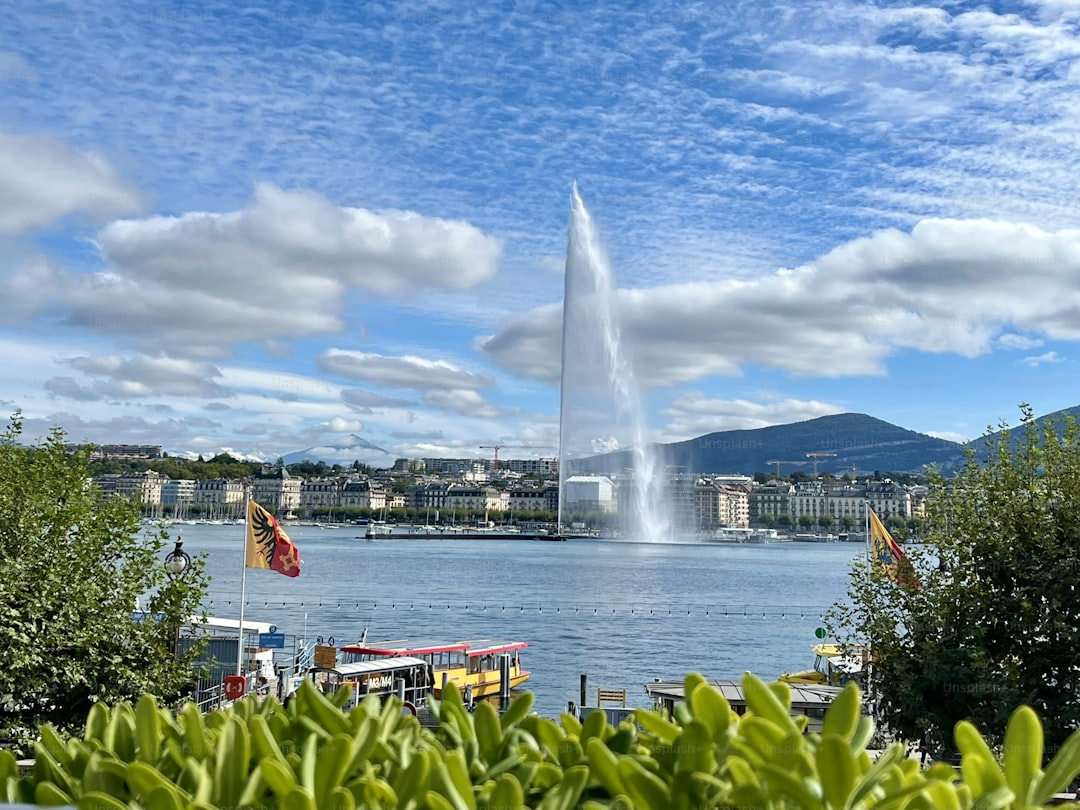
When I think about planning a trip that actually balances raw technical brilliance with high-end luxury, Geneva stands in a league of its own. It’s not just about the typical scenic stops; it’s about recognizing that you’re moving through a city that functions as one giant, interconnected experiment. I mean, look at the Jet d’Eau—it’s iconic for the photos, sure, but it’s actually a fluid dynamics masterclass moving 500 liters of water per second at 200 kilometers per hour. When you’re walking the streets, you’re essentially wandering through a massive laboratory where the infrastructure is doing as much heavy lifting as the researchers.
If you’re wondering how to structure your time here, start by noticing how the city handles its own metabolism. The district cooling system is a perfect example, pulling water from 45 meters deep in the lake to keep buildings temperate, which is way more efficient than any standard HVAC setup you’ll find elsewhere. And those flash-charging electric buses you’ll hop on to get around? They’re topping off their batteries in just 20 seconds at stops, a level of rapid-transit tech that makes typical city buses feel like relics. It’s these little, invisible systems—the fiber-optic sensors in the bridges measuring shifts to a fraction of a millimeter or the automated sluice gates beneath your feet—that make the city’s elegance feel so solid and deliberate.
I’d suggest balancing your afternoons between the historic horology houses and the city’s quieter, more data-driven hubs. While the École d’Horlogerie is busy testing alloy fatigue to ensure a watch lasts a lifetime, you can head over to the Jardin Botanique to see their cryogenic seed bank, which is basically a biological insurance policy for the planet. It’s this weirdly perfect contrast between the ultra-precise, human-scale craft of a watch movement and the massive, global-scale preservation happening in the botanical labs. You really start to see Geneva not just as a destination, but as the primary engine room for global standards and research.
Honestly, if you want to get the most out of your visit, try to look for the places where these worlds bleed into each other. Even the luxury hotels you’ll be staying in are getting in on the science, using geothermal heat pumps to cut emissions while keeping your room at the perfect, stable temperature. It’s an approach to travel that feels deeply modern, where your comfort isn't just a byproduct of money, but a result of serious engineering. Take an hour to really digest these details, and I promise, you’ll stop seeing the city as just another stop on a map and start seeing it as a blueprint for how we might live in the future.
Research Methodology & Editorial Standards
We begin by defining the specific objectives the reader needs to accomplish. Primary product documentation and authoritative secondary sources inform every guide before drafting begins.
Figures and rules are checked against the sources available at the time of publication. Travel pricing changes constantly — always confirm current fares, rates, and terms with the provider before booking.