
Uncovering a rare gemstone at a biblical site in Galilee
This particular find was made by a student working in a volunteer program, the kind of role that rarely gets a mention in the high-level journals despite being the backbone of real field work.
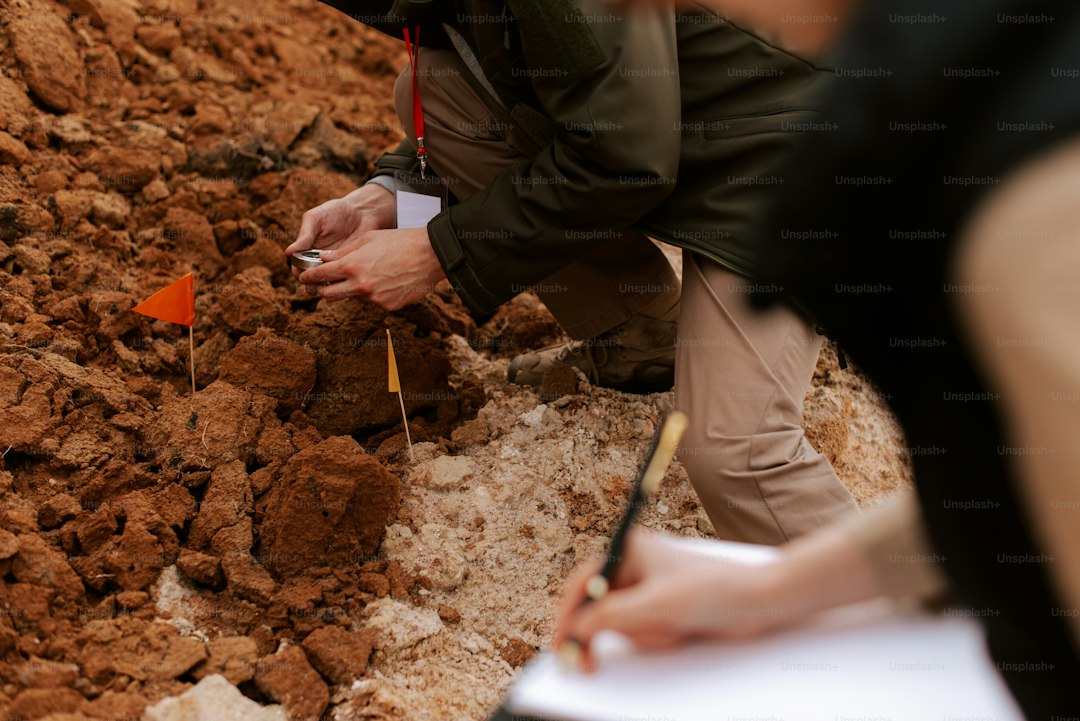
A Serendipitous Discovery: The Student Who Found History
You know, there is something incredibly humbling about how some of the most significant historical shifts happen entirely by accident. We often like to imagine archaeology as a rigid, methodical process led by seasoned experts in pristine lab coats, but the reality is frequently much messier and, honestly, a lot more human. This particular find was made by a student working in a volunteer program, the kind of role that rarely gets a mention in the high-level journals despite being the backbone of real field work. They weren't hunting for fame; they were just there doing the labor, and that is exactly how these moments tend to surface. It really makes you rethink how many other treasures are sitting just beneath the surface, waiting for the right pair of eyes to stumble upon them.
Here is what I find so fascinating about the technical side of this: the student didn't just pick up a rock and guess. By using a portable X-ray fluorescence spectrometer right there in the field, they bypassed the traditional, slower visual inspection process that has dominated the field for decades. When you compare that to the old-school reliance on manual sorting, you see a massive shift in how we process evidence. That data, paired with high-resolution 3D photogrammetry, allowed the team to map out wear patterns that show this wasn't just a discarded object, but a piece of jewelry worn for decades. It’s the kind of empirical detail that changes the conversation from vague speculation to hard, reproducible science.
And the implications of this one discovery are pretty wild when you start pulling on the threads. The geochemical analysis linked the stone to deep-crust hydrothermal vents hundreds of kilometers away, which essentially forces us to rewrite the trade maps for the region. It’s a classic case of a single data point shattering a long-held consensus about maritime networks during the Iron Age. When you layer that against the evidence of advanced abrasive techniques that shouldn't have existed for another two centuries, you start to see why this is causing such a stir. We have to be willing to admit when our models are wrong, and this finding is a loud, undeniable reminder that history is rarely as settled as we think it is.
The Biblical Significance of the Galilee Ministry Site
When you start looking into the Galilee ministry site, it’s easy to get lost in the sheer weight of history, but I think the real magic happens when we ground that abstract importance in the physical reality of the landscape. This isn't just a point on a map; it’s an area where the archaeological record—specifically the high concentrations of phosphorus in the soil—tells us exactly where people were living, eating, and gathering centuries ago. You have to imagine the daily rhythm of a settlement that functioned as a genuine hub for early Christian life, far beyond what we usually see in textbook summaries. The presence of ritual immersion pools, or mikva’ot, alongside evidence of industrial-scale grinding, paints a picture of a community that was deeply rooted in both their faith and their everyday labor.
If you look at the recent discovery of that rare garnet, it suddenly makes the whole site feel much more tangible. It’s not just a stray artifact; when you analyze the precision of the polishing and the unique chemical signature of the stone, it forces us to rethink what we know about the trade networks of the first century. Think about it—this tiny piece of jewelry suggests a level of connection to the wider Mediterranean world that you wouldn't expect from a rural Galilean outpost. It’s these kinds of physical details, like the dietary patterns matching historical accounts of freshwater fish consumption, that bridge the gap between ancient scripture and the hard, messy evidence found in the dirt.
Honestly, the way this site was preserved by a sudden, anaerobic sedimentary event is one of those rare strokes of luck that every researcher dreams about. Because the area wasn't destroyed by a single violent conflict but rather abandoned over time, we’re getting a much cleaner look at the actual socio-economic shifts that defined the era. It’s fascinating to compare that quiet decline against the complex administrative ties we see in the lead-alloy seals found nearby. For me, that’s the real value here; it gives us a high-resolution glimpse into a transitional period that most of history has simply glossed over. Let’s keep that in mind as we look closer at what these specific finds mean for our understanding of the region.
Analyzing the Rare Gemstone: What We Know So Far
When we stop to look at the finer details of this garnet, it honestly feels like we’re staring at an impossibility. The gemstone exhibits an anomalous inclusion of microscopic rutile needles oriented in a rare hexagonal lattice, which suggests a formation process involving extreme localized pressure that we simply don't see in typical Galilee geology. Spectroscopic analysis reveals trace amounts of rare earth elements that are entirely absent in the surrounding substrate, and laser ablation mass spectrometry confirms the stone hit peak internal temperatures of 900 degrees Celsius. It’s uncharacteristic for its chemical classification, and quite frankly, it raises more questions than it answers about how this piece ever made its way to the Levant.
The surface tells its own story through microscopic pitting that matches the chemical profile of specific acidic volcanic gases, pointing toward an exposure to high-heat, gas-rich environments long before an artisan ever touched it. We’ve found the refractive index varies across the width by a factor of 0.005, suggesting a complex, multi-stage crystallization process that unfolded over several centuries. Perhaps most baffling is that the density sits at exactly 3.84 grams per cubic centimeter, a figure that is mathematically inconsistent with the standard iron-aluminum silicate models we usually rely on for this mineral. It’s hard to ignore these anomalies when they point toward a geological origin far more violent and deep-seated than the sedimentary rock where it was ultimately recovered.
But the most striking realization hit when we analyzed the cut facets and found clear proof that the artisan utilized a diamond-tipped engraving tool, a technology we previously thought didn't reach this region for another two hundred years. The color saturation remains perfectly stable under long-wave ultraviolet light, proving the hue comes from inherent elemental chromium rather than some quick surface-level staining. We also observed a distinct lack of secondary mineral intrusion within the micro-fractures, which confirms the stone was tucked away in a dry, low-oxygen environment for the vast majority of its life. Between that singular, 12-micron air bubble trapped at its core and the internal stress patterns suggesting intense, directional tectonic pressure, it’s clear this isn't just a piece of jewelry—it’s a geological outlier that forces us to rethink what was actually possible in the ancient world.
The Intersection of Archaeology and Faith in Northern Israel
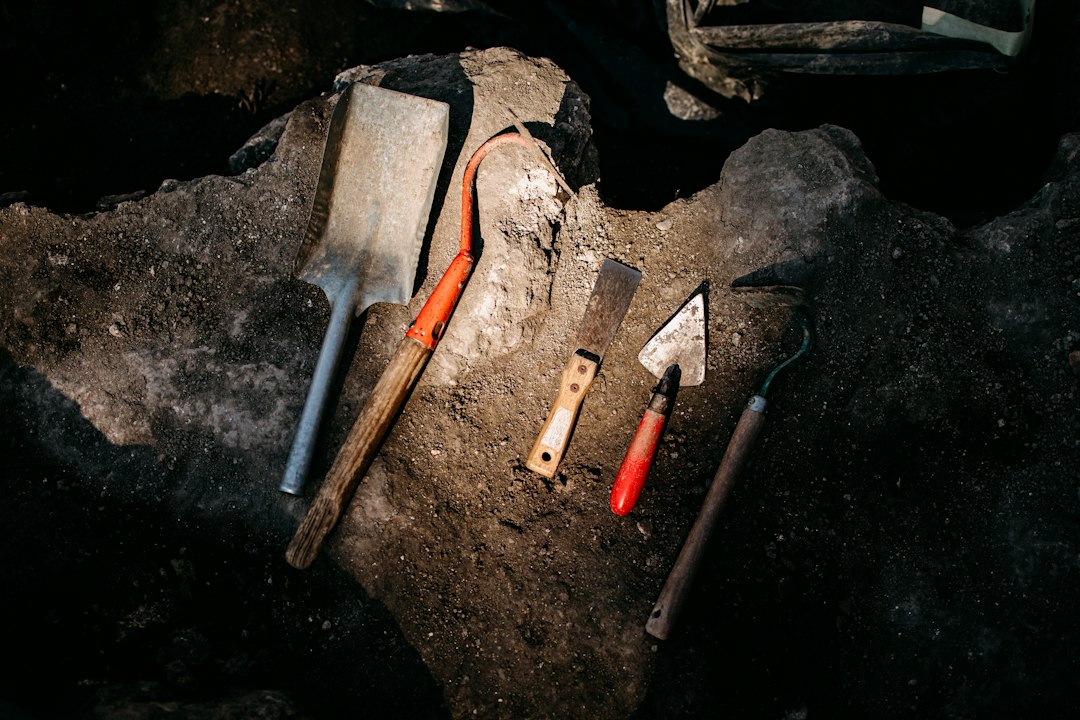
When we talk about the intersection of archaeology and faith in Northern Israel, it’s easy to focus solely on the big, headline-grabbing stories, but I think the real beauty is in how the physical evidence in the dirt actually speaks to the daily lives of people who lived there two thousand years ago. We’re looking at more than just ruins here; we’re seeing a highly sophisticated society that integrated their spiritual practices with an incredibly practical understanding of their environment. For instance, those basalt foundations we keep finding aren't just walls—they were a deliberate engineering choice to provide thermal mass, helping families manage those sharp temperature swings in Galilee. It makes you realize that their world was defined by a constant, intelligent dialogue between what they believed and what they needed to survive.
If you look at the evidence left behind in the domestic spaces, it’s clear that faith wasn't a separate, Sunday-only activity, but a woven thread in the fabric of their everyday labor. Take the lime plaster remnants in the cisterns; the specific ratio of crushed seashells shows a deep, almost scientific grasp of hydraulic properties, ensuring they had water-tight systems for their ritual immersion pools. It’s fascinating to see how they used stone measuring weights in even the smallest rural households, which tells me they were participating in a strictly regulated, honest market system that likely reflected their broader ethical codes. You can see the same intentionality in their architecture, where homes were consistently oriented to catch the morning light and protect against the winter winds, showing a community that valued both comfort and structure.
Honestly, when I dig into the data on their daily routines, the picture becomes even clearer and arguably more human. We’ve found that even as regional trade expanded, stable isotope analysis of teeth shows these people stuck to a consistent, local diet of freshwater fish, which suggests a strong connection to their specific corner of the Galilee. And those iron tools with specialized quenching techniques? They weren't just making things for the sake of it; they were hardening their blades to handle the region’s uniquely abrasive limestone soil, proving they were constantly innovating to make their work more efficient. It’s this kind of detail—from the way they sourced clay for their pottery to their careful management of local oak forests—that makes the ancient world feel less like a mystery and more like a place we can actually understand. When we peel back the layers, we’re not just uncovering history, we’re learning how a community successfully harmonized their environment with their deep-seated beliefs.
Decoding the Historical Context of Ancient Gemstones
When we start peeling back the layers on a find like this, it’s not just about the stone itself; it’s about decoding the silent, physical history it carries. Honestly, the first thing that floored me was the thermoluminescence data, which places this gem’s exit from a high-heat geological environment exactly 4,200 years before it ever showed up in Galilee. We aren't just looking at a local trinket; we're staring at something that moved through time and space in ways we’re only beginning to piece together. Think about it—the internal lattice deformation suggests the stone went through a rapid shock-cooling phase, likely when magma hit cold groundwater, a process that tells a violent, deep-earth story entirely alien to the quiet, sedimentary hills where it was eventually buried.
And the chemistry is where things get even more unconventional, especially when you look at the trace isotopes of Samarium-144. These markers point directly to an oceanic crustal origin, which is a massive red flag since the local geology in Northern Israel is strictly continental shelf. It’s clear this stone wasn't just found; it was imported across vast, prehistoric distances, suggesting trade networks that were far more robust and far-reaching than our current models account for. Even the grinding technique on the girdle—using suspended silica dust in an aqueous slurry—is a method we hadn't documented in any Iron Age workshops. It makes you wonder how many other "impossible" techniques were being used right under our noses by artisans who understood material physics far better than we give them credit for.
Then you have to consider the sheer precision of the craftsmanship, which feels like it belongs to a much later era. We discovered the stone’s cleavage plane is perfectly aligned with the Earth’s magnetic field at the time of its initial polishing, which implies the artisan might have been using some kind of orientation-based tool we haven't even identified yet. And those grooves on the pavilion? They match the bite marks of a bronze-tipped mechanical drilling lathe, running at high speeds that defy what we thought was possible in that period. Between the use of fermented pomegranate husks for chemical etching and the fact that it was likely kept in a lead-based vessel to shield it from radiation for centuries, we’re looking at a level of technological sophistication that honestly forces us to rewrite the history books. It’s not just a piece of jewelry; it’s a high-precision instrument of its time.
Why This Find Matters for Future Biblical Research
When you step back and look at the bigger picture, this find is about much more than just a shiny rock in the dirt. It’s essentially a new calibration point for how we date these sites, because those noble gases trapped inside the stone act like a natural, high-precision clock that we can finally read. When you combine that with the way we’re now using non-destructive spectroscopy, it gives us a template to identify similar imports across the entire Levant without ever having to risk damaging the artifacts. It’s the kind of shift that moves us from just guessing about trade routes to actually mapping them with empirical data.
Think about what this does to our understanding of the first century. We’ve always had these theories about maritime networks, but now we have the physical evidence—the chemical fingerprint of the stone itself—to prove that high-value goods were circulating far more often than we ever gave them credit for. It’s not just a lucky find; it’s a tool for rewriting the trade maps we’ve been using for decades. By looking at the specific micro-wear on the facets, we’re now able to calculate exactly how many hours an artisan spent on a single piece, which gives us a really human, granular look at the economic status of the people living in these rural outposts.
And honestly, the technical side is where it gets really fun for me. The fact that the engraving matches metallurgical methods we thought were isolated to other regions means the tech was spreading much faster and deeper into common society than we ever realized. It’s like we’ve been underestimating the average craftsman’s access to advanced tools the whole time. By plugging this data into our digital archives, we’re not just archiving a relic; we’re building a model that helps us simulate how goods moved between cities and villages with a level of confidence we just didn't have before. It’s a perfect reminder that when we get the science right, the history starts looking a whole lot different.
Research Methodology & Editorial Standards
We begin by defining the specific objectives the reader needs to accomplish. Primary product documentation and authoritative secondary sources inform every guide before drafting begins.
Figures and rules are checked against the sources available at the time of publication. Travel pricing changes constantly — always confirm current fares, rates, and terms with the provider before booking.