
TSA Bans You Didn’t Know About: Surprising Items Confiscated at Security
According to the TSA's official guidance and field reports from frequent flyers, most travelers assume TSA bans are a simple yes-or-no list: either an item is allowed or it isn't.
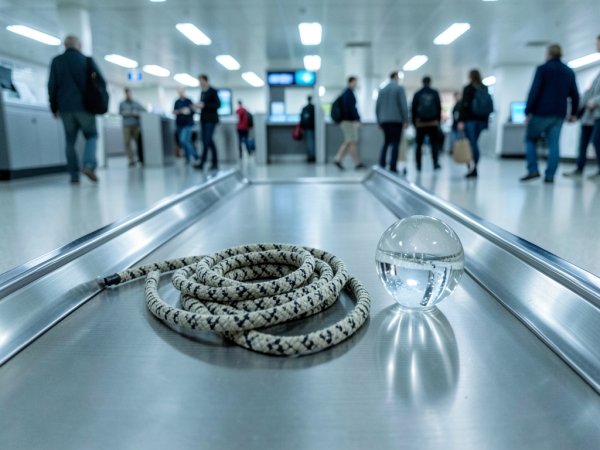
| Takeaway | Detail |
|---|---|
| Pack solid food, skip the spreads | Sandwiches, chips, and whole fruits pass security; creamy spreads like caramel or cheese dip are treated as gels and limited to 3.4 oz. |
| Keep power banks in your carry-on | All portable chargers and power banks are banned from checked bags entirely—must go in your carry-on to avoid confiscation. |
| Measure your multi-tool blade before flying | Blades longer than 2.36 inches (6 cm) are prohibited in carry-on; pack shorter tools or move them to checked luggage. |
| Freeze gel ice packs solid for medical items | Gel ice packs are allowed only if frozen solid and used for medically necessary contents; otherwise, they count toward the 3.4 oz liquid limit. |
| Check powder limits on international arrivals | Powders over 12 oz (350 ml) from international destinations trigger secondary screening; domestic flights have no specific limit. |
| Use the TSA "What Can I Bring?" tool before packing | Verify any questionable item via the official TSA website or app to avoid surprises at the checkpoint. |
| Mail-back services exist but aren't guaranteed | Some airports let you ship confiscated items to yourself, but availability varies—don't rely on it as a backup plan. |
According to the TSA's official guidance and field reports from frequent flyers, most travelers assume TSA bans are a simple yes-or-no list: either an item is allowed or it isn't. The reality is far messier—many items exist in a gray zone where they're technically permitted but routinely confiscated because of how they appear on an X-ray or how an officer interprets the rules. According to the TSA's official "What Can I Bring?" tool and field reports from frequent travelers, this guide cuts through the confusion, covering the surprising bans that catch even frequent flyers off guard, from semi-solid foods to power banks in checked bags.
Recent enforcement shifts have made powders, opaque containers, and gel-like substances the new frontline of confiscation. You can bring a sandwich, but the cheese spread on it may get tossed; you can carry a multi-tool, but a blade 0.01 inches too long will land it in the bin. Understanding these nuances—and knowing which packing strategies actually work—can save you time, money, and frustration at the security checkpoint.
Solids That Aren't: The Spread Test
As of July 2026, the TSA's liquid ban is not a ban on liquids. It is a ban on substances that X-ray machines cannot identify as solid. The real trap for travelers is not the gallon of water, but the "solid" food that fails the spread test. A jar of caramel, a wheel of brie, or a can of soup looks like a harmless snack until the officer asks if it can be poured. If the answer is yes, it is a gel. If it is a gel, it is subject to the 3.4-ounce limit. This distinction is why you can bring a sandwich, but you cannot bring the cheese spread on it.
According to the TSA's official classification, the rule is simple: if a substance can be spread, poured, or sprayed, it is a gel. This classification catches most travelers off guard because they are thinking about the object, not the chemistry. A jar of caramel is confiscated not because it is sweet, but because it is viscous. It flows. It coats the spoon. It is a gel. The same logic applies to peanut butter, hummus, and salsa. These are not solids. They are semi-solids that fail the X-ray test. The machine sees a blob. It cannot tell if it is peanut butter or a gel-based explosive. The officer has to open it. If it is over 3.4 ounces, it is gone.
According to field reports from FlyerTalk threads, a common failure mode is the "solid" cheese wheel. Travelers often pack a hard cheddar or a parmesan wedge, assuming it is safe. It is. But if they pack a soft cheese like brie or camembert, they are in trouble. Soft cheeses are spreadable. They are gels. They are subject to the 3.4-ounce limit. This is not a loophole. It is a classification. If you want to bring soft cheese, pack it in your checked bag. If you must carry it, buy travel-sized containers. Or eat it before security.
The myth that "solid bar soap is fine" is true, but it is incomplete. Liquid soap is a gel. Gel soap is a gel. If it comes out of the bottle like a liquid, it is a gel. If it comes out of the tube like a paste, it is a gel. If it is a solid bar, it is a solid. The distinction is critical. A full-sized bar of soap is allowed. A full-sized bottle of body wash is not. This is not a trick. It is a rule. And it is enforced.
The solution is straightforward: pack spreads in your checked bag. If you must carry them in your carry-on, buy travel-sized containers that comply with the 3.4-ounce limit. Consuming them before security is another option. These are the only reliable strategies—arguing with the officer will not change the classification. The TSA applies the spread test because X-ray machines cannot distinguish between peanut butter and a gel-based explosive. If a substance can be spread, poured, or sprayed, it is classified as a gel and subject to the 3.4-ounce carry-on limit. This is a security measure, not a judgment on your snack choices.
| Item | State | Carry-On Status | Checked Bag Status | Reason |
|---|---|---|---|---|
| Sandwich | Solid | Allowed | Allowed | Not spreadable |
| Caramel Spread | Gel | ≤3.4oz Only | Allowed | Viscous/Spreadable |
| Brie Cheese | Gel | ≤3.4oz Only | Allowed | Soft/Spreadable |
| Cheddar Cheese | Solid | Allowed | Allowed | Hard/Not Spreadable |
| Bar Soap | Solid | Allowed | Allowed | Not Liquid/Gel |
| Body Wash | Gel | ≤3.4oz Only | Allowed | Liquid/Gel |
The next time you pack, ask yourself: can I spread this? If the answer is yes, it is a gel. If it is a gel, it is subject to the 3.4-ounce limit. Pack spreads in checked luggage or buy travel-sized containers to avoid losing them at the checkpoint. The TSA's spread test is applied consistently: if a substance can be spread, poured, or sprayed, it is classified as a gel and subject to the 3.4-ounce limit. Pack spreads in checked luggage or buy travel-sized containers to avoid losing them at the checkpoint.
Power Banks: The Checked Bag Death Zone
The most dangerous item in your checked bag isn’t a knife or a lighter. It’s a power bank. Lithium-ion batteries and portable chargers are strictly prohibited in checked baggage under any circumstances. This is not a suggestion or a “try your luck” rule. It is a hard ban enforced by the TSA after a series of in-flight fires traced to loose lithium batteries in the cargo hold. If a power bank is in your checked bag, it will be removed. Your bag will be opened. You may not get the battery back.
The official TSA rule is simple: spare lithium batteries must go in carry-on luggage only. Devices with installed batteries—laptops, phones, tablets—are allowed in checked bags. The distinction is between “installed” and “spare.” A power bank is always a spare battery. It has no device attached. It is banned from the cargo hold. Field reports from FlyerTalk threads confirm that travelers who forget this rule often discover the violation only when their bag is delayed or inspected. The TSA does not leave a note—they remove the item and move on, and the bag may be delayed while it is located and opened. The TSA does not leave a note. They remove the item and move on.
The fire risk is not theoretical. Lithium-ion batteries can short-circuit when terminals touch metal objects—keys, coins, zippers—in a packed suitcase. In the confined, unpressurized cargo hold, a thermal runaway event is difficult to detect and impossible to contain mid-flight. This is why the ban exists. It is also why the TSA requires that spare batteries in carry-on bags have terminals covered with tape or kept in original packaging. A bare battery rattling loose in a bag is a hazard even in the cabin, but at least there, crew can respond.
Dry ice follows a different but equally specific rule. It is allowed in both carry-on and checked bags up to 5.5 pounds (2.5 kg) per passenger, but it must be properly packaged and declared to the airline. The packaging must permit venting of carbon dioxide gas. Most travelers do not declare dry ice. They pack it in a cooler and hope. That is a mistake. If the X-ray operator sees an unlabeled insulated container with suspicious density, the bag gets pulled. Declaration is not optional; it is the only way to avoid confiscation or delay.
The practical action is simple. Before zipping your checked bag, run a mental checklist: power bank? Remove it. Spare lithium batteries? Remove them. Laptop with installed battery? That stays. Dry ice? Declare it. Cover all battery terminals with electrical tape or store each battery in its own plastic bag. This prevents short circuits that could trigger a thermal runaway event in the cargo hold.tery in its own plastic bag. This is not paranoia.
The Powder Rule: International Arrival Trap
The powder rule is not a ban, but it functions as one for anyone who shows up at an international arrivals checkpoint with a 14-ounce container of protein powder. As of July 2026, the TSA requires that all powdered substances in carry-on bags exceeding 12 ounces (350 milliliters) be placed in a separate bin for X-ray screening when arriving on international flights to the United States. This is not a suggestion. It is a mandatory procedure. If the X-ray operator cannot clearly identify the powder, or if the container is opaque and the density looks suspicious, the officer will open the bag, swab the powder for explosives residue, and may confiscate it if the test is inconclusive or the passenger cannot explain the substance. Field reports from frequent international travelers note that the most common confiscations under this rule are not illicit substances but protein powders, cosmetic setting powders, and bulk spices bought abroad. These items are legal to possess but trigger the 12-ounce powder screening requirement on international arrivals to the U.S.
The threshold is precise: 12 ounces per container, not per bag. A traveler can carry multiple 10-ounce containers without triggering the separate-bin requirement, but a single 16-ounce canister of matcha powder will be pulled every time. Domestic flights within the U.S. have no specific powder limit, but large quantities still attract attention. Practitioners report that a quart-sized bag of flour or a full canister of baby formula in a domestic carry-on will often prompt a secondary search, even though the rule technically does not apply. The difference is that on domestic routes, the officer has discretion to wave it through after a quick swab. On international arrivals, the separate-bin rule is enforced as a standard procedure, not an exception.
The myth to kill here is that powders are banned outright. They are not. The restriction is a volume-based screening requirement that applies only to international inbound flights. Many travelers learn this the hard way when they bring back a large bag of turmeric from a market in India or a bulk container of protein powder purchased abroad. The TSA’s official position is that the rule exists because powders can be used to conceal explosives or chemical agents in a form that is difficult to detect in a packed bag. The practical result is that any powder over 12 ounces in a carry-on on an international arrival will almost certainly be inspected, and the inspection often ends with the item being surrendered or mailed back if the airport offers that service.
The action is straightforward. For any international flight to the U.S., keep all powdered substances in containers of 12 ounces or less. If you need to bring a larger quantity, pack it in checked luggage, where there is no powder restriction at all. For domestic travel, the same precaution is wise but not mandatory—large quantities still attract attention and may prompt a secondary search. precaution is wise but not mandatory. A simple rule: if the container is bigger than a standard can of soda, it will get a second look. Plan accordingly, or plan to explain yourself to an officer who has heard the same story ten times that shift.
Tools and Toys: The Blade and Bubble Line
The line between a tool and a weapon at a TSA checkpoint is exactly 2.36 inches. That is the maximum blade length for any knife or multi-tool allowed in a carry-on bag, measured from the handle to the tip. A Swiss Army knife with a blade that measures 2.4 inches is banned, even if the tool also contains a corkscrew, scissors, and toothpick. The TSA’s official position is that any blade longer than that is a prohibited item, and the officer at the X-ray has zero discretion to let it through. Field reports from frequent travelers confirm that the most common confiscation in this category is not a hunting knife but a standard multi-tool that the owner forgot was in a backpack pocket. The rule applies to all metal blades, including those on utility knives, box cutters, and folding knives. Plastic knives and butter knives are generally allowed, but only if they have no sharp edge and no point. The practical test is simple: if the blade can cut a tomato, it will probably be pulled. The official threshold is 2.36 inches (6 cm) from handle to tip—any blade exceeding that length is prohibited in carry-on luggage, regardless of the tool's other functions.
Snow globes and liquid-filled toys occupy a strange middle ground in the TSA’s classification system. They are not treated as solids, and they are not treated as weapons. They are treated as liquids. If the liquid volume inside the snow globe exceeds 3.4 ounces, it is banned from carry-on luggage. This catches travelers off guard because the object looks like a souvenir, not a container of liquid. The TSA’s official guidance is clear: the liquid inside the globe is subject to the same 3.4-ounce limit as a bottle of shampoo. A standard snow globe purchased at an airport gift shop is usually small enough to comply, but a larger decorative globe bought at a museum or tourist attraction will be confiscated. The same logic applies to liquid-filled toys, such as snow shakers, glitter wands, and water-filled hourglasses. If the liquid volume is over 3.4 ounces, the item must go in checked luggage or be surrendered. Field reports note that travelers often argue that the globe is a solid object, but the X-ray operator sees a dense liquid mass and flags it every time.
Canned foods are technically allowed through TSA checkpoints, but they cause more confiscations than most travelers expect. The problem is not the food itself but the container. Opaque metal cans cannot be visually inspected by the X-ray operator, so the machine relies on density readings. If the can is full of liquid, such as a can of soup or a can of soda, the liquid volume exceeds 3.4 ounces and the can is banned from carry-on. If the can contains liquid (soup, soda, broth), the liquid volume exceeds 3.4 ounces and the can is banned from carry-on. Solid canned foods like tuna or chicken packed in water or oil are technically allowed by the TSA, but the opaque can makes X-ray inspection difficult, and the liquid contents often exceed the 3.4-ounce limit, leading to frequent confiscation.n water are also problematic because the liquid inside still counts. The safest approach is to pack all canned goods in checked luggage, where there is no liquid restriction.ns solid food, such as canned tuna or canned beans, the liquid volume is still the determining factor. A can of tuna packed in water contains more than 3.4 ounces of liquid, even if the solid tuna is the primary content. The TSA’s rule is that any container holding more than 3.4 ounces of liquid, gel, or aerosol is prohibited, regardless of whether the container also holds solid food. Practitioners report that the most common canned-food confiscation is a can of soup purchased at an airport convenience store, where the traveler assumes that because it is food, it is allowed. The same logic applies to jars of caramel, honey, and nut butters. These semi-solid spreads are classified as gels or liquids by the TSA, and any container larger than 3.4 ounces will be confiscated from a carry-on bag. A 12-ounce jar of caramel is a guaranteed loss at the checkpoint.
The myth that small pocket knives are allowed is false. The TSA’s rule is that any knife with a blade longer than 2.36 inches is banned, but even smaller blades are not automatically safe. The officer has the authority to confiscate any item that appears to be a weapon, regardless of the exact measurement. A keychain knife with a 1.5-inch blade is technically allowed, but field reports indicate that it is often confiscated anyway because the officer cannot verify the blade length without handling the item, and the default action is to confiscate rather than measure. The safe strategy is to pack all knives, multi-tools, and blade-containing items in checked luggage. The only exceptions are plastic knives with no sharp edge and scissors with blades shorter than 4 inches from the pivot point. Everything else goes in the checked bag.
The action is straightforward. Before packing a carry-on, measure every blade on every tool. If the blade is longer than 2.36 inches, it goes in the checked bag. If the item contains liquid, check the volume. Snow globes, liquid-filled toys, canned foods, and jars of spread all count as liquids. If the container holds more than 3.4 ounces, it goes in the checked bag or stays home. The TSA’s official What Can I Bring tool is the only reliable source for the current rule, but the rule itself has not changed in years. The enforcement, however, is stricter than the FAQ suggests. Pack as if every item will be inspected, and the only surprises will be pleasant ones.
Ice Packs and Medical Exceptions
Gel ice packs are the single most confiscated medical item at TSA checkpoints, not because they are banned, but because travelers pack them in the wrong state. The rule is straightforward: a gel ice pack is allowed in carry-on only if it is frozen solid. If it is partially melted, slushy, or even cool to the touch with visible liquid inside, the TSA treats it as a gel subject to the 3.4-ounce liquid limit. A standard 8-ounce gel pack that has thawed during the commute to the airport is a guaranteed confiscation. The X-ray operator sees a dense liquid mass that exceeds the limit, and the officer will not test the temperature. They will pull the bag, remove the pack, and toss it.
The exception is for medically necessary items. According to TSA policy, ice packs used to cool prescription medication, insulin, or other medical devices are allowed even if partially melted, but the traveler must declare them at the checkpoint. Field reports on FlyerTalk and Reddit consistently describe the same failure mode: a traveler with a chronic condition packs a gel pack for their medication, does not declare it, and the pack is confiscated because it is slushy. The officer has no way to know it is medical unless the traveler speaks up. The solution is to freeze the pack solid before leaving home and to declare it at the X-ray belt. A frozen solid pack passes through without issue. A slushy pack that is declared as medical will be subject to additional screening, typically a swab test for explosives residue, but it will be allowed through.
Medical items themselves are broadly exempt from the liquid rule. Syringes, insulin pens, EpiPens, and liquid medications in containers larger than 3.4 ounces are permitted if they are declared and the traveler has a prescription label or a doctor's note. The TSA does not require a note by law, but practitioners recommend carrying one to avoid delays. The common mistake is packing a gel ice pack in the same bag as medication but not freezing it, then failing to declare either item. The officer finds the slushy pack, assumes it is a recreational cooler pack, and confiscates it. The medication is then left without cooling for the duration of the flight.
The practical action is to freeze gel ice packs for at least 12 hours before travel. Place them in the carry-on immediately before leaving for the airport, not the night before. If the pack is still frozen solid when it reaches the X-ray, it passes. If it is slushy, declare it as medical and be prepared for a five-minute swab test. Keep all medication in its original packaging with prescription labels visible. Do not rely on the TSA officer to guess that the slushy pack is medical. The officer's default is to confiscate anything that looks like a prohibited liquid, and the burden is on the traveler to prove otherwise.
Case Study: The Confiscated Caramel and the Mail-Back Myth
A 16-ounce jar of caramel spread looks like a solid to the human eye, but to the TSA’s X-ray it is a dense gel mass exceeding the 3.4-ounce liquid limit by nearly five times. The officer will pull the bag, open the jar, and toss it into the bin. The traveler’s argument that it is “just sugar” does not matter. The rule is based on physical state, not ingredient. Semi-solid spreads, nut butters, jams, honey, and yogurt all fall under the same classification. If it can be poured, scooped, or squeezed, the TSA treats it as a gel or liquid. The only exception is for medically necessary items, and caramel is not medical.
The traveler at the checkpoint is offered three options: discard the jar, exit security to check the bag, or use the airport’s mail-back service. Discarding a $15 jar is a total loss. Field reports on FlyerTalk note that the mail-back option is rarely offered proactively. The officer typically says “you can throw it away or step out of line.” The traveler must ask specifically about mail-back, and even then, the service is not available at every airport. According to TSA’s own guidance, availability varies by location and is subject to staffing and operational constraints. Practitioners recommend verifying mail-back availability on the airport’s website before relying on it as a backup plan.
The smarter move is to pack spreads in checked bags from the start. A 16-ounce jar of caramel fits easily in a checked suitcase with no size restriction. If the traveler is carry-on only, the solution is to transfer the spread into travel-sized containers that hold 3.4 ounces or less. Multiple small containers are allowed as long as they fit inside a single quart-sized bag. The TSA’s “What Can I Bring?” tool on the official website or mobile app confirms this rule in plain language. The tool is searchable by item name and returns a clear “yes/no” answer with the relevant size limit. Using it before packing eliminates the guesswork entirely.
The common tourist mistake is assuming that because a food item is solid at room temperature, it is not a gel. Caramel, peanut butter, and Nutella are all confiscated daily for this exact reason. The X-ray does not measure temperature or viscosity. It measures density and volume. A jar that appears solid to the touch still registers as a liquid mass on the scanner. The officer’s default is to confiscate anything that looks like a prohibited gel, and the burden is on the traveler to prove otherwise. There is no appeal at the checkpoint.
Actionable step: before packing any spread, sauce, or creamy food, open the TSA “What Can I Bring?” tool on your phone and type the item name. If the result says “gels” or “liquids” with a 3.4-ounce limit, transfer it to a checked bag or a travel-sized container. Do not rely on the mail-back service as a safety net. It is not guaranteed, and the officer will not remind you it exists.
What to do next
Knowing which items are likely to be confiscated is only half the battle. The following steps will help you pack smarter, avoid losing valuables at the checkpoint, and stay current with evolving TSA rules.
| Step | Action | Why it matters |
|---|---|---|
| 1 | Check the official TSA "What Can I Bring?" page before every trip. | TSA updates its prohibited items list regularly; the official site is the only definitive source. |
| 2 | Verify the blade length of any multi-tool or knife you plan to carry on. | Blades over 2.36 inches (6 cm) are banned in carry-on bags; packing them in checked luggage avoids confiscation. |
| 3 | Measure the volume of any semi-solid or liquid item (caramel, yogurt, gel ice packs) before packing. | Items exceeding 3.4 ounces (100 ml) in carry-on bags will be confiscated unless they are medically necessary and declared. |
| 4 | Place all power banks and portable chargers in your carry-on bag, never in checked luggage. | TSA bans these from checked bags due to fire risk; failure to comply can result in removal at security or fines. |
| 5 | Research whether your departure airport offers a mail-back service for confiscated items. | Some airports let you ship prohibited items to your home address instead of forfeiting them, saving replacement costs. |
| 6 | Set a calendar reminder to re-check TSA rules before your next international flight. | International destinations have additional powder limits (12 oz per container) and different liquid restrictions that may apply. |
Also worth reading Bizarre Baggage The Surprising Items 7 Most Commonly Confiscated Items at 7 Surprising Things You Didn't Know The Surprising Items That TSA
Quick answers
What should you know about Solids That Aren't: The Spread Test?
As of July 2026, the TSA's liquid ban is not a ban on liquids. If it is a gel, it is subject to the 3.4-ounce limit.
What should you know about Power Banks: The Checked Bag Death Zone?
The TSA does not leave a note—they remove the item and move on, and the bag may be delayed while it is located and opened. It is allowed in both carry-on and checked bags up to 5.5 pounds (2.5 kg) per passenger, but it must be properly packaged and declared to the airline.
What should you know about The Powder Rule: International Arrival Trap?
The powder rule is not a ban, but it functions as one for anyone who shows up at an international arrivals checkpoint with a 14-ounce container of protein powder. As of July 2026, the TSA requires that all powdered substances in carry-on bags exceeding 12 ounces (350 millilite...
What should you know about Tools and Toys: The Blade and Bubble Line?
The line between a tool and a weapon at a TSA checkpoint is exactly 2.36 inches. The official threshold is 2.36 inches (6 cm) from handle to tip—any blade exceeding that length is prohibited in carry-on luggage, regardless of the tool's other functions.
What should you know about Ice Packs and Medical Exceptions?
If it is partially melted, slushy, or even cool to the touch with visible liquid inside, the TSA treats it as a gel subject to the 3.4-ounce liquid limit. A standard 8-ounce gel pack that has thawed during the commute to the airport is a guaranteed confiscation.
Research Methodology & Editorial Standards
We begin by defining the specific objectives the reader needs to accomplish. Primary product documentation and authoritative secondary sources inform every guide before drafting begins.
Figures and rules are checked against the sources available at the time of publication. Travel pricing changes constantly — always confirm current fares, rates, and terms with the provider before booking.