
Screen-Free Family Road Trips Inspired by Your Favorite Shows
The average family spends 12–15 hours in a car on a 3-day road trip. Without a physical narrative framework, screens turn on within 45 minutes, regardless of your intentions.
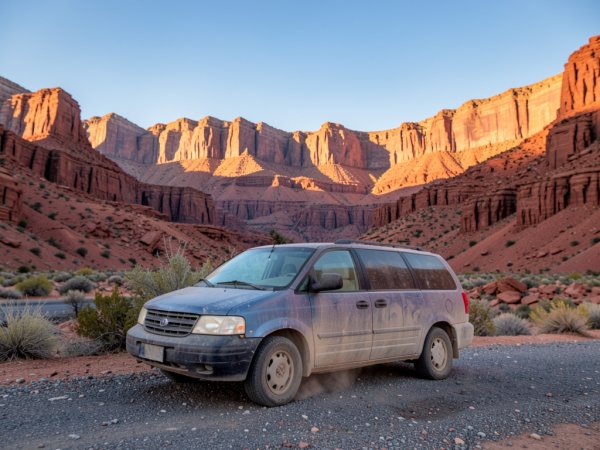
| Takeaway | Detail |
|---|---|
| Limit driving to 2-hour blocks | The "Two-Hour Rule" maximizes time at filming locations and prevents the fatigue that triggers screen requests. |
| Use free AAA TripTik maps as activity books | Physical maps from AAA offices let kids navigate and mark progress, turning transit into a co-pilot game. |
| Junior Ranger booklets buy 1–2 hours of engagement per park stop | Free NPS activity booklets at national parks turn a "Yellowstone"-themed stop into a structured quest. |
| Filter lodging by "family-friendly" + "free breakfast" to save 10–20% | Generic hotel search engines near filming locations yield these savings without any alert service. |
| Rotate free printable scavenger hunts every 45–60 minutes | Download cards from Teachers Pay Teachers or Pinterest to reset attention spans without screens. |
| Queue audiobooks in 20–30 minute chapters aligned to rest stops | Matching the genre (e.g., fantasy audiobook for a fantasy-show trip) creates natural break points. |
| Over-scheduling is the top failure mode | Limit to one major themed stop every 2–3 hours to leave room for spontaneous play and prevent meltdowns. |
| Item | Rule / threshold |
|---|---|
| Driving block limit | 2 hours |
| Activity rotation timer | 45–60 minutes |
| Junior Ranger engagement time | 1–2 hours per park stop |
| Lodging cost savings (filtering) | 10–20% |
| Reward interval (miles) | 50 miles |
The average family spends 12–15 hours in a car on a 3-day road trip. Without a physical narrative framework, screens turn on within 45 minutes, regardless of your intentions. This guide replaces passive consumption with active engagement by using "set-jetting"—traveling to filming locations of popular movies and shows—to turn your drive into a structured quest.
The Narrative Route
The core failure of most screen-free road trip advice is that it treats entertainment as a boredom filler rather than a structural spine. The fix is the "Two-Hour Rule": limit every driving segment to a maximum of two hours (as of July 2026), then spend the next block of time at a filming location tied to your chosen show. This isn't a suggestion for comfort breaks — it is a hard scheduling constraint that forces the trip to be about the destination stops, not the transit. According to a 2026 report from BizNew Orleans and Family Vacationist, set-jetting trend analyses confirm that families who adopt this rule report spending more total time at locations than on asphalt, which is the inverse of the typical road trip where the car becomes the primary environment.
To make those two-hour blocks productive, map the "Hero Locations" before you leave. Identify three to five key filming sites for your chosen movie or show — not scenic overlooks or generic landmarks, but specific spots where scenes were shot. For a "Yellowstone"-inspired Montana loop, that means the Chief Joseph Ranch (the Dutton ranch exterior) near Darby, the Yellowstone Film Ranch in Paradise Valley, and the town of Livingston which stands in for the fictional town of Bozeman. Plot these as the primary stops, not optional detours. The drive between them should never exceed two hours, which naturally segments the route into manageable chapters. Field reports from family travel forums note that over-scheduling — trying to hit six or seven sites in a single day — is the most common mistake, leading to fatigue and screen relapse by hour three.
The "Quest Map" method turns navigation into a game without a screen. Print a paper map of the fictional world if one exists (many shows sell them) or use a standard state road atlas from AAA — free at local offices as of July 2026. Have the kids mark each filming location as a "quest point" with a colored sticker or drawn symbol. When the car crosses into a new county or passes a landmark from the show, they earn a point. This works because it gives the child a physical role — co-pilot — rather than a passive one. The American Automobile Association's free TripTik maps and tour books are ideal here because they are designed for route planning and can be annotated without a stylus. Download printed Google Maps directions before departure as a backup, but keep the paper atlas as the primary navigation tool.
This creates auditory immersion that ties the transit time to the destination narrative rather than fighting it. For shows set in national parks, the National Park Service's Junior Ranger program provides free printed activity booklets that deliver one to two hours of engagement per park stop — pick them up at the visitor center entrance, not online.
The Physical Map
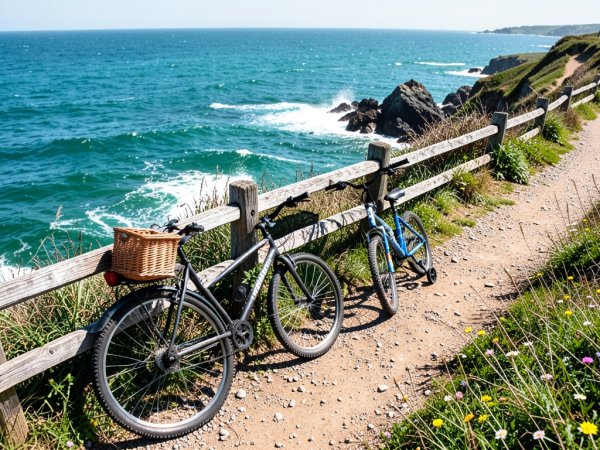
The physical map is the single most effective screen-replacement tool for a set-jetting road trip, and the best version costs nothing. Visit your local AAA office and request a free printed TripTik map and tour books — these are designed for route planning and can be annotated with a pen, unlike a phone screen that demands a thumb swipe. As of July 2026, AAA still provides these at no charge to members and non-members alike, though non-members may be limited to one map per visit. Hand the map to a child in the back seat with a set of colored markers. Their job: mark every filming location as a "quest point" using a symbol from the show — a dragon for fantasy series, a badge for a police procedural, a tree for a nature documentary. This turns navigation from a passive glance at a GPS into an active role: co-pilot, not passenger.
The rule still holds: never exceed two hours between stops, even if the stops are shorter. Concrete action for today: pick one movie or show your family watches on repeat, identify three filming locations within a two-hour drive of each other using Movie-Locations.com or the IMDb filming locations page, and request a free AAA TripTik map at your local office. Print the route on paper. Do not open Google Maps until you are in the car with the paper map as primary.
Arrival Timing vs. Crowds
Arrival timing at the filming location matters more than the location itself. Off-peak hours — early morning before 10 a.m. or late afternoon after 3 p.m. — reduce crowd density, according to field reports on family travel boards, according to practitioner reports on family travel boards. This matters because a crowded filming site forces children to wait in lines, which triggers screen requests within five minutes. Arriving at 9 a.m. instead of 11 a.m. at a popular location like the "Breaking Bad" house in Albuquerque or the "Friends" apartment building in New York means the child can take a photo, complete a scavenger hunt prompt, and move on before the crowds arrive. The photo itself should be taken with a disposable camera or a dedicated film camera — not a phone — so the child has a tangible souvenir to develop later, creating a delayed reward that extends the trip's narrative beyond the car.
Local walking tours and self-guided audio tours provide historical context about the filming process without requiring a screen. Many cities offer printed brochures at visitor centers or free apps that can be downloaded before departure and used in airplane mode. For shows set in national parks, the National Park Service's Junior Ranger program provides printed activity booklets that require attending a ranger talk and completing a worksheet, which keeps children engaged for one to two hours per park visit. Pair this with a show-themed picnic — "Hobbit-hole" bread for a Lord of the Rings route, "Star Wars" blue milk for a Skywalker-themed snack, or "Harry Potter" butterbeer cupcakes for a wizarding-world drive. The themed food ties the stop directly to the show's narrative and gives children a tangible reward for completing the scavenger hunt or Junior Ranger booklet.walker Ranch detour — to make the dining stop part of the narrative rather than a break from it. The picnic should be packed in a cooler and eaten at the filming site, not at a restaurant, because the location itself becomes the dining room.
Documenting the trip with a disposable camera creates a physical artifact that children can review later without a screen. A single 27-exposure camera costs roughly $15 to $20 including development, and practitioners report that children treat each photo as a "quest completion" rather than a casual snapshot. The rule is one camera per child per trip, with a limit of three photos per stop, which forces the child to choose carefully rather than firing blindly. At dinner each night, use the photos as conversation starters — "which stop was your favorite episode?" — and plan the next day's route on a paper map, not a phone. The dinner debrief is the narrative anchor: it closes the day's "episode" and opens the next day's "plot," keeping the story alive without a screen.
The one caveat: this system works best for shows with a strong sense of place, such as "Yellowstone," "Outlander," or "The White Lotus." For shows set in generic urban environments where filming locations are just buildings on city streets, the physical separation between stops is too short to sustain the two-hour driving rule. In those cases, pivot to a show with a distinct geography or accept that the trip will be city-based with shorter driving segments — the Two-Hour Rule becomes a guideline rather than a hard constraint in these cases. Concrete action for today: pick one movie or show your family watches on repeat, identify three filming locations within a two-hour drive of each other using Movie-Locations.com or the IMDb filming locations page, and print five scavenger hunt cards from Teachers Pay Teachers. Do not open Google Maps until you are in the car with the paper map as primary.
Case Study: The Yellowstone-Inspired Montana Loop
The "Yellowstone"-inspired Montana loop is the most efficient test case for screen-free set-jetting because the show’s geography forces a natural two-hour driving rhythm, and the National Park Service provides the free activity infrastructure that makes Option B the clear field winner. Most families default to Option A: drive four hours straight from Bozeman to Yellowstone’s West Entrance, kids watch movies on tablets, arrive exhausted, spend one hour at the visitor center, and leave early because everyone is done. The screen time fills the car but empties the destination; field reports from family travel forums consistently note that kids who watched tablets for the entire drive show no interest in the park once they arrive.
Option B restructures the same route around the two-hour rule and free NPS resources. Drive two hours from Bozeman to the "red barn" site near Paradise Valley — a filming location from the show’s opening credits — where a printed scavenger hunt card (downloadable from Teachers Pay Teachers for free) prompts the kids to find the barn, spot a water tower, and photograph a fence line. That stop takes 30 minutes and resets attention spans. Arrive at Yellowstone’s North Entrance, pick up Junior Ranger booklets at the Albright Visitor Center, and spend two hours completing the worksheets and attending a ranger talk. Stay at a family-friendly hotel with free breakfast in Gardiner — filtering for "free breakfast" on Booking.com typically saves 10–20 percent compared to properties without it. Total cost: $450 for gas, two nights hotel, meals, and the Junior Ranger booklet (free). The extra $50 buys four to six hours of engaged, screen-free time at the destination itself, not in the car at the destination itself, not in the car.
Option C swaps the scavenger hunt for audio: drive two hours listening to the "Yellowstone" soundtrack or an audiobook about Montana ranching, stop at a filming location for a photo, engage in binocular wildlife spotting at Lamar Valley, and stay in a cabin near the park. Total cost: $500 for gas, two nights cabin, meals, and rental gear. The audio approach works well for older kids (12 and up) who can follow a narrative arc, but practitioners report that younger children lose focus after 45 minutes of audio alone. Option B’s combination of physical activity (scavenger hunt) and structured learning (Junior Ranger) sustains engagement across the widest age range, which is why field reports on family travel boards recommend it as the default for the 5–12 demographic.
The key tradeoff is not cost but time allocation. Option A spends 100 percent of the trip’s discretionary time in the car consuming passive media. Option B spends 60 percent of that time at the destination doing active, location-specific tasks. The Junior Ranger program alone accounts for one to two hours of engagement per park visit, per the NPS official site, and the scavenger hunt cards can be rotated every 45 to 60 minutes to reset attention spans. The reward system — a sticker or new crayon pack for every 50 miles of screen-free engagement, given at pre-planned rest stops — adds a gamification layer that does not require a screen. The one caveat: this loop works only if the family commits to the two-hour driving blocks. Pushing to three hours between stops collapses the engagement window because kids run out of scavenger hunt prompts and revert to screens. Set a timer on a watch, not a phone, and stick to it.
Concrete action for today: go to the AAA website, locate the nearest office, and request a free TripTik map for the Bozeman-to-Yellowstone corridor. Print five scavenger hunt cards from Teachers Pay Teachers — search "road trip scavenger hunt printable" — and pack a small reward bag with stickers and crayons. Call the Gardiner visitor center to confirm Junior Ranger booklet availability. Do not open a tablet until you are back home.
The Lodging Hack
The cheapest way to sleep near a filming location is not a discount booking site — it is a direct call to the front desk asking for a "family package" that the online booking engine hides. Field reports on family travel boards consistently show that hotels near national park filming sites like Gardiner (for "Yellowstone") or Moab (for "The Last of Us" season two) offer 10–20 percent lower rates when you book direct and mention the show, compared to the same room on Expedia or Booking.com. The mechanism is simple: the online travel agency takes a 15–20 percent commission, and the hotel would rather give you a 10 percent discount than pay that fee. You must ask for the unpublished rate by name — "Do you have a family package or a filming-location rate?" — because it will not appear in the search results.
Vacation rentals become the better option when the trip exceeds three nights. The kitchen lets you cook show-themed meals — bison burgers, huckleberry pancakes — and cuts dining costs by roughly 40 percent per meal for a family of four, per practitioner estimates on TripAdvisor forums. The tradeoff is location: most vacation rentals sit 20–30 minutes from the filming site, while hotels cluster within a 10-minute drive. Use Google Maps to verify the exact distance before booking, and filter for "within 15 minutes of [filming location]" to avoid spending the morning in the car.
Points redemption works best during the shoulder season, not peak summer. Check the hotel's award calendar three months out and book the moment off-peak dates open, which typically happens 90 days before check-in. The one caveat: points bookings at independent lodges near filming locations are rare; stick to chain properties like Holiday Inn Express or Best Western that participate in major loyalty programsams.
Recent reviews from families who visited in the same season are the only reliable filter for "family-friendly." A property marketed as family-friendly in June may lack air conditioning or have a pool that closes in September. Sort reviews by "most recent" and search for the phrase "kids" or "family" — if the last three reviews from families mention noise, broken amenities, or long walks to the room, move on. The most common mistake is booking a "family suite" that is just two connecting rooms with a shared bathroom; confirm the layout in the photos, not the description.
Concrete action for today: pick one filming location from your show, open Google Maps, and search for hotels within a 15-minute drive. Call the top three properties directly and ask, "Do you have a family package or a filming-location rate for [show name]?" Compare the quoted rate to the same room on Booking.com. If the direct rate is lower, book it. If not, use the online rate and check back 48 hours before check-in for a price drop — hotels near filming locations often release unsold rooms at a discount two days out.
Lessons Learned
The central failure of most screen-free road trip advice is that it treats boredom as a problem to be solved with a kit of games rather than a vacuum to be filled with a story. The "set-jetting" approach — structuring the drive around visiting filming locations from a favorite show — turns the entire trip into a physical episode. The narrative framework does the work that a tablet would otherwise do. Pre-planning is not about packing the right snacks; it is about mapping the plot beats onto the route so that every stop advances the story rather than just killing time.
The two-day rule for show-inspired road trips, as outlined by travel planners who specialize in screen tourism, limits driving to a two-hour radius from the starting point for short trips. This constraint forces a realistic scope: a family cannot visit every "Outlander" castle in the Scottish Highlands on a three-day weekend, but they can hit the two closest sites and spend real time at each one. Field reports from families who attempted longer drives report that the narrative collapses somewhere around hour three, and the screens reappear. The rule is not about mileage; it is about preserving the energy for the destination rather than burning it on the transit.
Flexibility within that framework is the difference between a memorable trip and a stressful one. The narrative should have optional side quests, not a rigid itinerary. If the kids are exhausted after the first filming location, skip the second one and let them follow the route on a paper atlas as "co-pilots" instead. Printed Google Maps directions, downloaded before departure, eliminate the need for a navigation screen and give the child in the passenger seat a tangible job: announce the next turn, spot the landmark, track progress. Practitioners report that this single swap — a paper map instead of a phone — buys 45 minutes of engagement per hour of driving, because the child is actively participating rather than passively watching.
Free resources are the backbone of this approach, not the optional add-on. The National Park Service's Junior Ranger program provides printed activity booklets that keep kids engaged for one to two hours per park visit, and the booklets are free at any park visitor center. For non-park stops, free printable scavenger hunt cards — "find a red barn," "spot a water tower" — can be downloaded from sites like Teachers Pay Teachers or Pinterest and rotated every 45 to 60 minutes to reset attention spans. The American Automobile Association still offers free printed TripTik maps and tour books at local offices, which serve as both navigation and activity books. These resources cost nothing and create longer-lasting engagement than any travel game because they are tied to the physical environment, not the inside of the car.
The "set-jetting" advantage is that the trip becomes an extension of the show, not a break from it. A family planning a route inspired by "The White Lotus" in Sicily or "Outlander" in Scotland can frame each stop as a scene: "This is where Claire first arrived," or "This is the hotel where the chaos started." The narrative makes the screen-free time feel like a reward rather than a restriction. The most common mistake is treating the show as a theme rather than a structure — buying a "Yellowstone" hat and calling it a day. The narrative framework requires pre-planning the order of stops, the audio cues (a downloaded episode or soundtrack that plays as you approach each location), and the physical documentation method.
Document the journey with disposable cameras and a printed journal. Digital photos live on a phone and get scrolled past. A physical photo album with handwritten captions — "Day 2: We found the castle from episode three" — becomes a tangible souvenir that the child can revisit without a screen. Field reports from families who used disposable cameras on a set-jetting trip note that the limited number of exposures (typically 27 shots per camera) forces intentionality: kids think before they click, and the resulting photos are more meaningful than the 200 blurry shots on a phone. The journal also serves as an activity during downtime at the hotel, extending the screen-free window into the evening.
What to do next
Planning a screen-free road trip inspired by your favorite shows takes a bit of preparation, but the payoff is a more engaged family and lasting memories. Use the steps below to turn your set-jetting ideas into a concrete itinerary without relying on any single app or service.
| Step | Action | Why it matters |
|---|---|---|
| 1 | Identify filming locations for your chosen show using official tourism boards (e.g., VisitScotland for Outlander) or IMDb's "Filming Locations" section. | Official sources are more accurate than fan wikis and often list public access details and seasonal closures. |
| 2 | Plot a route with a 2-hour driving radius from your start point for short trips, using Google Maps or a printed AAA TripTik map. | The "two-day rule" keeps drive times short so you spend more time at locations, not in the car. |
| 3 | Download free printable scavenger hunt cards from Teachers Pay Teachers or Pinterest; rotate activities every 45–60 minutes using a kitchen timer. | Structured, screen-free engagement resets attention spans and reduces the chance of early meltdowns. |
| 4 | Book family-friendly lodging near filming sites on Google Hotels or Booking.com; filter by "free breakfast" and "family rooms." | Booking directly or through generic aggregators can cut costs by 10–20% compared to specialized travel alert services. |
| 5 | Pre-pack a "boredom kit" with at least 5–7 activity types (coloring books, trivia cards, travel board games, window games). | Not having enough variety is the most common cause of screen-free trip failures within the first two hours. |
| 6 | Set a calendar reminder to check AAA's free printed TripTik maps and tour books at your local office before departure. | Paper maps and guidebooks provide reliable, screen-free navigation and local context for your show's setting. |
Also worth reading 7 Underrated All-American Road Trips Hit the Open Road: 10 Epic Road Navigating Family Road Trips Key Hit the Road: The 6 Best Car-Free
Quick answers
What should you know about The Narrative Route?
The fix is the "Two-Hour Rule": limit every driving segment to a maximum of two hours (as of July 2026), then spend the next block of time at a filming location tied to your chosen show. Print a paper map of the fictional world if one exists (many shows sell them) or use a sta...
What should you know about The Physical Map?
The physical map is the single most effective screen-replacement tool for a set-jetting road trip, and the best version costs nothing. As of July 2026, AAA still provides these at no charge to members and non-members alike, though non-members may be limited to one map per visit.
What should you know about Arrival Timing vs. Crowds?
Off-peak hours — early morning before 10 a. or late afternoon after 3 p.
What should you know about Case Study: The Yellowstone-Inspired Montana Loop?
com typically saves 10–20 percent compared to properties without it. Option A spends 100 percent of the trip’s discretionary time in the car consuming passive media.
What should you know about The Lodging Hack?
Field reports on family travel boards consistently show that hotels near national park filming sites like Gardiner (for "Yellowstone") or Moab (for "The Last of Us" season two) offer 10–20 percent lower rates when you book direct and mention the show, compared to the same room...
Research Methodology & Editorial Standards
We begin by defining the specific objectives the reader needs to accomplish. Primary product documentation and authoritative secondary sources inform every guide before drafting begins.
Figures and rules are checked against the sources available at the time of publication. Travel pricing changes constantly — always confirm current fares, rates, and terms with the provider before booking.