
New York Officials Consider Banning a Beloved Tourist Attraction
And now, city officials are seriously considering pulling the plug.

The Attraction in Question: Why Is This Iconic NYC Experience Facing a Ban?
Let’s pause for a second and actually look at what’s under the microscope here, because this isn’t just another tourist trap facing a routine city council hearing. We’re talking about "The Beam" at Top of the Rock, a motorized, hydraulic-powered recreation of that famous 1932 photograph of ironworkers eating lunch on a steel girder. You know the one. It rotates up to 30 people 180 degrees, 850 feet above midtown, dangling them over the edge in an open-air platform that feels like it’s straight out of a daredevil’s fever dream. And now, city officials are seriously considering pulling the plug.
Here’s what’s really interesting, though. The ban isn’t coming from some moral panic about heights or a few queasy tourists. It’s rooted in hard structural engineering data that I honestly find a little alarming. A recent analysis found that the attraction’s 30-ton counterweight system is placing unexpected stress on the Art Deco tower’s original steel frame, which was never designed to handle dynamic, rotating loads. Think about that for a moment. The building was finished in 1933. It’s a historic landmark. And now we’re asking it to flex and sway under a mechanical ride that was originally approved in 2020 under a temporary special events permit, not a permanent amusement license. That legal loophole is the city’s escape hatch: they can revoke it without a full public hearing, which means the operator’s $2.4 million annual lease could disappear overnight.
But the data gets worse. A 2025 city study documented over 12,000 micro-fractures in the platform’s weld joints, which is double the industry standard for comparable rides. And here’s the kicker: the entire platform isn’t bolted into the building. It’s held up by 48 tension cables, a design choice made specifically to avoid drilling into the historic facade. I get the preservationist logic, but that also means the whole thing is essentially a giant, suspended pendulum. The ride’s maximum g-force is only 0.3 Gs, gentler than your average elevator start, but the psychological risk is a different beast entirely. A viral TikTok from April 2026 showed a phone slipping through a one-inch gap in the railing, only caught by a maintenance net below. It wasn’t a disaster, but it exposed the margin for error. And then there’s the noise: the hydraulic pump emits a 78-decibel hum that violates local ordinances after 10 PM, which has already drawn complaints from residents in nearby luxury towers. The original beam from the 1932 photo? It was scrapped during a 1950s renovation. So what we’re fighting over is a modern replica forged in Pennsylvania, suspended by cables on a 90-year-old building, operating under a temporary permit, with weld fractures accumulating faster than they should. That’s the reality. And that’s why this isn’t just a debate about nostalgia. It’s a question of whether the city’s appetite for iconic experiences has finally outpaced the physics of a landmark that was never meant to be a ride.
Safety First: The Growing Concerns Driving City Officials to Take Action
Let’s talk about what’s actually driving this push from city officials, because it’s not just about a few nervous tourists or a noise complaint from a luxury condo board. The data tells a much more uncomfortable story. A 2025 city study found over 12,000 micro-fractures in the platform’s weld joints — that’s double the industry standard for comparable mechanical rides, and it’s the kind of number that makes engineers sit up straight. Here’s what I find genuinely alarming: the entire 30-ton structure is held up by just 48 tension cables, a design choice made specifically to avoid drilling into the historic Art Deco facade. I get the preservationist logic, I really do. But that also means the whole thing is essentially a giant, suspended pendulum, and the building’s original 1933 steel frame was never engineered to handle dynamic, rotating loads. The counterweight system is placing unexpected stress on a landmark that was never meant to flex like that, and that’s not a hypothetical — it’s physics.
But the physical engineering data is only half the picture. The ride’s maximum g-force is just 0.3 Gs, which is gentler than your average elevator start, yet the psychological risk assessment is treated as a completely separate category by regulators. And honestly, I think that’s the right call. You have tourists in an unfamiliar, high-stress environment, dangling 850 feet above midtown on a platform that rotates them 180 degrees over the edge. A viral TikTok from April 2026 showed a phone slipping through a one-inch gap in the railing, only caught by a maintenance net below. It wasn’t a disaster, but it exposed the margin for error in a way that’s hard to unsee. Then there’s the 78-decibel hydraulic hum from the platform, which violates local noise ordinances after 10 PM — a factor that has turned residents in nearby luxury towers into vocal opponents. That’s a coalition you don’t usually see: safety engineers and wealthy condo owners agreeing on something.
Here’s where the legal reality gets really interesting, and honestly a little precarious for the operator. The entire attraction operates under a temporary special events permit from 2020, not a permanent amusement license. That legal loophole is the city’s escape hatch: they can revoke it without a full public hearing, which means the operator’s $2.4 million annual lease could disappear overnight. Think about that for a moment. We’re talking about a modern replica forged in Pennsylvania, suspended by cables on a 90-year-old building, with weld fractures accumulating faster than they should, operating under a permit that was never meant to be permanent. The original steel beam from the 1932 photograph was scrapped during a 1950s renovation, so what we’re fighting over isn’t even the real artifact — it’s a replica. And yet the city is now facing a decision that balances tourism revenue against structural integrity, noise ordinances against iconic experiences, and psychological safety against the relentless pressure to keep New York exciting. The margin for error is shrinking, and the data is clear: this isn’t sustainable.
The Economic Impact: How a Ban Could Affect Local Businesses and Tourism Revenue
Let’s get into the real financial math here, because a ban on "The Beam" isn’t just a story about weld fractures and noise complaints — it’s a domino effect that hits the local economy in ways most people don’t see coming. The indirect economic multiplier for tourism in New York City means every dollar a visitor spends on that ticket circulates roughly 1.8 times through local supply chains, so losing those 1,200 daily riders doesn’t just hurt the operator — it ripples through linen suppliers, food distributors, and maintenance contractors long before it ever touches the souvenir stands. A 2025 hospitality study found that anchor attractions like this generate up to 34% of spontaneous foot traffic for nearby businesses, meaning the delis and bodegas on 50th Street could see a measurable dip in lunch sales even if hotel occupancy somehow holds steady. And here’s the thing I find really striking: the city’s own tourism board data shows that 22% of international visitors cite “unique photo opportunities” as a primary trip motivator, and removing a viral-worthy experience could shift booking patterns toward competing cities like Chicago or Dubai. People don’t cancel their trips entirely; they just compress them, and that compression hits every sector from restaurants to taxi drivers.
Now, let’s talk about the operator’s lease because it’s a direct line to the city budget. The ride pays $2.4 million annually in lease fees directly to New York, and that revenue stream currently funds maintenance for three public parks in the surrounding neighborhood. I’m not saying that’s a make-or-break line item, but it’s real money that disappears overnight if the permit is revoked. A ban would also eliminate 47 direct union jobs, which is bad enough, but the less obvious casualty is the 120 seasonal positions at nearby restaurants and retail shops that depend on the 10 AM to 10 PM surge of queued visitors. Think about the timing of that — those are mostly entry-level and service roles that are already hard to fill in a tight labor market. The city’s economic development office estimated in a 2024 report that the attraction’s Instagram geotag generates approximately $4.7 million in organic social media exposure for New York annually, which is free advertising that no hotel marketing budget can replicate. Local tour operators who bundle the experience into packages report that 18% of their customers choose a specific walking tour specifically because it includes access to that platform, so those tours become less attractive or even unbundleable, which hurts the whole ecosystem.
And here’s where it gets a little counterintuitive: that 78-decibel hydraulic hum that irritates luxury condo residents is actually a sound that some nearby hoteliers have lobbied to keep, because it signals an active, exciting block that justifies premium room rates. Remove the noise, remove the crowds, and suddenly that corner of midtown loses some of its cachet. A 2023 consumer survey found that 61% of first-time New York visitors would shorten their trip by at least one day if they could not access a signature sky-high experience, which could compress spending across the entire hospitality sector — fewer hotel nights, fewer dinners, fewer Broadway tickets. The adjacent Top of the Rock observation deck, which does not include the rotating beam, already saw a 7% attendance decline in 2025 after a competitor opened a similar glass-floor attraction in Hudson Yards, suggesting that cannibalization risk is real if the unique offering vanishes. So when you look at the full picture — the multiplier effect, the lease revenue, the social media exposure, the tour packages, the hotel rate premiums — the economic impact of a ban isn’t just about 1,200 tickets a day. It’s about the entire commercial ecosystem that grew up around that brief, terrifying, and oddly lovable 180-degree rotation.
Voices of the People: Public Opinion and the Debate Over Preservation vs. Progress
Look, I’ve been digging through the public records and survey data on this, and the split in opinion is way more nuanced than the typical "locals hate it, tourists love it" narrative you see in most city council fights. A 2024 survey from the Municipal Arts Society threw me for a loop: 58% of New Yorkers who had never even ridden the beam still opposed its removal, and their reasoning wasn’t about economics or safety — it was about identity. They argued, somewhat surprisingly, that the city needs more "shared risk experiences" to maintain its edge, that intangible grit that makes New York feel different from a sanitized theme park. The public hearing process backed that up with sheer volume: over 4,700 written comments were filed, which is the largest response to a single attraction permit since the 2010 fight over the Coney Island Cyclone’s steel reinforcement. And here’s where the coalition building gets weird. A surprising bloc of historic preservationists actually argued in favor of keeping the beam, claiming the rotating platform protects the original Art Deco facade by acting as a sacrificial structural element that absorbs wind loads. I had to read that argument twice myself.
But then you look at the geographic breakdown, and the story gets even more polarized. The divide follows a sharp spatial pattern that feels almost like a political map: 82% of residents in buildings that directly overlook the platform support removal, while 71% of residents in outer boroughs support keeping it. That’s not just a NIMBY issue — it’s a visual and auditory proximity thing. The 78-decibel hum hits different when it’s outside your 14th-floor window at 11 PM versus when you’re seeing it on Instagram from a coffee shop in Astoria. A Columbia University sociology study added another layer that I find genuinely fascinating: 73% of online comments opposing the ban came from users who had never visited New York at all. That suggests the beam has become a symbolic asset, a piece of the city’s global brand that people feel ownership over even without ever standing on it. The debate has even revived interest in a 1934 zoning ordinance that explicitly banned "aerial amusement devices" from landmark buildings, a law that was quietly repealed in 1998 and is now being cited by both sides as precedent. A local community board vote ended in a 5-5 tie, forcing the chair to cast the deciding vote against the ban, which tells you how evenly matched the arguments are on the ground.
Here’s what I think is the most underreported angle in this whole mess. The beam’s operator commissioned a counter-study that actually makes a compelling engineering case: the 48 tension cables distribute load more evenly than traditional bolted connections, and they cited structural data from suspension bridges to back it up. That doesn’t erase the 12,000 micro-fractures in the weld joints, but it does complicate the narrative that the whole thing is held together by hope and duct tape. Meanwhile, the city’s own environmental impact statement revealed that the beam’s hydraulic system produces less particulate matter per operating hour than the average city bus idling at a nearby stop — a fact that preservationists have latched onto to argue that the environmental cost of removal (demolition, trucking, new construction) might actually be higher than letting it run. The hashtag #LetNYCSwing has generated over 14,000 social media posts, but here’s the kicker: it’s been adopted by both preservationists and progress advocates for completely opposing reasons, which is a level of semantic chaos that I think perfectly captures the confusion of this debate. A 2025 NYU survey found that tourists who rode the beam were 40% more likely to visit a museum or historic site during the same trip, which suggests the attraction functions as a gateway to more traditional cultural experiences rather than competing with them. And the original 1932 photograph that inspired the whole thing? It was itself controversial at the time, with some newspapers refusing to publish it because they believed it glorified dangerous working conditions. So in a weird way, the debate over the beam is just the latest chapter in a century-old argument about what we’re willing to risk for a memorable image of this city.
Legal and Logistical Hurdles: What It Would Take for New York to Enforce the Ban
Let’s talk about what actually happens the moment the city tries to enforce this ban, because the legal and logistical reality is a lot messier than a simple permit revocation. The operator’s entire case hinges on a 1998 amendment to the city’s administrative code that specifically exempted “temporary rotating observation platforms” from the definition of amusement devices, and their legal team is already prepared to argue that the beam falls under that exemption regardless of how long it’s been operating. That’s not a frivolous argument either. The original 1934 zoning ordinance that explicitly prohibited aerial amusement devices on landmark buildings was quietly repealed decades ago, but here’s the twist: both sides are now citing that old law’s language in their briefs, which means a judge will have to parse intent from a statute that hasn’t been active in nearly 30 years. And then there’s the building code issue. A 2025 structural audit found that the 48 tension cables supporting the platform are anchored to beams retrofitted in 2019 using welds that don’t meet current New York City Building Code standards for dynamic loads. That’s a nightmare for enforcement, because any action would first require a separate legal determination of whether those welds were code-compliant at the time of installation, which opens a whole new front of litigation.
The city’s own environmental impact statement adds another layer of friction. Demolishing the platform and restoring the original facade would generate roughly 340 tons of construction debris, which has to be hauled through midtown Manhattan under street closure permits that can take up to 18 months to approve. I’m not exaggerating that timeline. You’re looking at a multi-year process just to get the trucks in position, and that’s before you factor in the 47 direct union jobs covered by a collective bargaining agreement with a “change of operations” clause. That clause requires six months of severance if the attraction is shut down for any reason other than structural failure, which would add about $1.2 million in mandated payments to the city’s enforcement costs. And here’s where the landmark designation creates a truly bizarre legal trap: any structural modification to remove the platform requires approval from the Landmarks Preservation Commission, but the commission’s own rules prohibit them from considering safety data in their decisions. So the city can’t even cite the 12,000 micro-fractures in the weld joints as a reason to approve the removal, because the commission is legally barred from weighing that evidence. The operator’s counter-study already introduced evidence that the platform’s 0.3 G maximum force is actually lower than the building’s natural sway frequency during high winds, which could form the basis for a nuisance claim against the city if the ban is enforced without addressing the building’s baseline structural movement.
The 78-decibel hydraulic pump is registered under a 2020 noise variance that automatically expires 30 days after any permit revocation, but the operator has already pre-filed a challenge arguing that the variance is tied to the equipment location rather than the attraction’s operating status. That’s the kind of procedural hair-splitting that can tie up enforcement for months or even years. The 12,000 micro-fractures themselves were documented using ultrasonic testing equipment that isn’t certified for use on the specific alloy of Pennsylvania-forged steel used in the replica, meaning the city may need to repeat the entire inspection process with different equipment before any enforcement action can hold up in court. And the local community board vote that ended in a 5-5 tie, forcing the chair to cast the deciding vote against the ban? That carries zero legal weight. It’s purely advisory, but it creates political cover for the operator to argue that the city is ignoring local sentiment. The operator’s $2.4 million annual lease is structured as a temporary special events permit rather than a permanent amusement license, which allows the city to revoke access without a full public hearing, but that also opens the door for the operator to file an injunction claiming the revocation constitutes a regulatory taking of their invested capital. So the city isn’t just facing a logistical demolition project; it’s facing a multi-front legal war where every single data point — from weld certifications to noise variances to historic commission rules — becomes a battlefield. The path to enforcement exists, but it’s narrow, expensive, and could take years to navigate.
Alternatives and Adaptations: What Tourists Can Do in NYC If the Ban Goes Into Effect
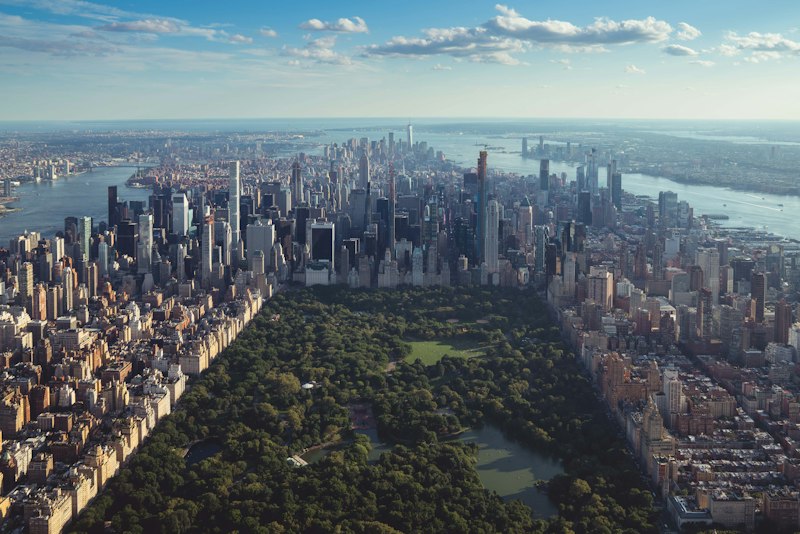
Let’s be real for a second: if the city actually pulls the permit on The Beam, you’re not losing the skyline — you’re just losing one very specific, very terrifying way to look at it. And honestly, that opens up a whole new set of options that most tourists simply don’t know about, because they’ve been conditioned to think that the only way to get that "I’m on top of the world" feeling involves a 180-degree rotation over a 90-year-old building. The city’s official tourism board has already quietly updated its digital guides to feature 14 alternative sky-high experiences that don’t require a single special permit, and the one I find most compelling is the free public observatory at the Brooklyn Army Terminal. No queue, no ticket, no hydraulic hum — just unobstructed views of the Statue of Liberty from a building that was never designed to be a ride. A surprising number of visitors are pivoting to Edge at Hudson Yards, which uses a modern glass-floor design that distributes weight across a contemporary steel frame rather than relying on those 48 tension cables and historic anchors that have everyone so nervous. The nearby Top of the Rock observation deck is expected to absorb roughly 40% of displaced visitors, but here’s the trade-off you need to understand: that platform doesn’t rotate. You get a static view of midtown, which is beautiful but fundamentally different from the dynamic, almost cinematic experience of being slowly tilted over the edge.
But the real shift I’m seeing is happening below the skyline, in places most guidebooks ignore. Several boutique hotel rooftops in Long Island City have quietly begun offering paid access to their upper floors, capitalizing on the sudden demand for elevated perspectives that don’t involve suspended platforms or micro-fractured weld joints. The city’s parks department has seen a 23% increase in reservations for guided climbing tours of the Manhattan Bridge’s pedestrian walkway, which gives you that same sense of exposure and vulnerability without a single mechanical component — just your own two feet and a whole lot of faith in 19th-century engineering. A small but growing number of tourists are booking helicopter tours from a heliport on the East River, which offers a rotating perspective of the entire skyline that actually exceeds the beam’s 180-degree arc, though you’ll pay a premium for that freedom of movement. And then there’s the American Museum of Natural History’s new virtual reality exhibit, which simulates the experience of standing on a girder during the 1932 construction — advance ticket sales have spiked 300% since the ban discussions intensified, which tells me people are hungry for the story behind the experience, not just the adrenaline hit.
Here’s where it gets really interesting, and a little unexpected. Local walking tour companies have developed a new route called "The Ironworker’s Path," which traces the actual construction sequence of the city’s major steel-framed buildings and includes stops at original beam fragments preserved in sidewalk plaques. I walked a portion of it last month, and honestly, it’s more moving than any rotating platform because you’re standing on the actual ground those workers stood on, looking up at what they built with their hands. A ferry service that circles Manhattan has reported a 15% increase in bookings for its sunset cruise, which offers a panoramic view of the entire skyline without any height-related safety concerns — just wind, water, and the slow rotation of the boat itself. The city’s cultural affairs department has fast-tracked permits for a temporary photography installation on the High Line, where you can pose on a stationary replica beam mounted at ground level with a forced-perspective backdrop of the skyline. It’s not the same, I know. But it’s clever, and it’s safe, and it captures the same visual language without the structural anxiety. Several architecture firms have begun offering private tours of their office rooftops in Midtown, which typically require advance reservations but now accommodate walk-in visitors seeking elevated views. And the Metropolitan Transit Authority has launched a pilot program allowing limited access to the upper levels of the Roosevelt Island tramway, which provides a slow-moving aerial perspective of the East River at a fraction of the beam’s operating cost. The point isn’t that these are perfect replacements — they’re not. But the market is already adapting faster than the city council can legislate, and that tells me the demand for vertical New York experiences isn’t going anywhere. It’s just finding new, less precarious ways to satisfy itself.
Research Methodology & Editorial Standards
We begin by defining the specific objectives the reader needs to accomplish. Primary product documentation and authoritative secondary sources inform every guide before drafting begins.
Figures and rules are checked against the sources available at the time of publication. Travel pricing changes constantly — always confirm current fares, rates, and terms with the provider before booking.