
Mystery Deepens After a 2700 Year Old Bronze Sword is Found Standing Upright in Poland
Here’s what makes it so compelling: the sword wasn’t just lying there, corroding in the dirt like most ancient metal objects.
The Discovery: How a 2,700-Year-Old Bronze Sword Was Found Standing Upright
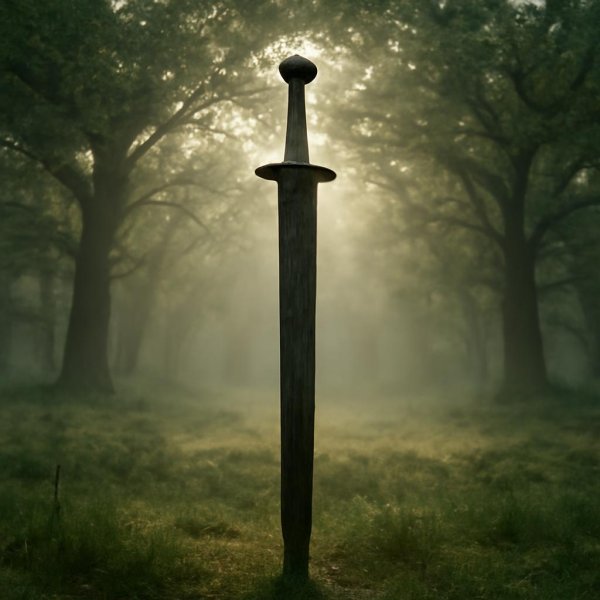
Look, I’ll be honest—when I first read the headline about a 2,700-year-old bronze sword found standing upright in a Polish forest, I assumed it was either a hoax or a case of dramatic overstatement. But once I dug into the archaeological report, I realized this is one of those rare finds that actually challenges how we think about Late Bronze Age ritual behavior. Here’s what makes it so compelling: the sword wasn’t just lying there, corroding in the dirt like most ancient metal objects. It was thrust vertically into the ground, tip-first, with the blade held rigid by centuries of compacted peat sediment that essentially acted as a natural clamp. That alone tells you this wasn’t an accident or a lost weapon—someone deliberately pushed it into the earth, and it stayed there for nearly three millennia.
Now, let’s get into the technical details because that’s where the real story lives. The sword is a "Pomeranian-type" antenna sword from the Hallstatt C period, which means it dates to roughly 770–540 BCE based on radiocarbon dating of organic residues on the hilt. The alloy composition—88% copper, 10% tin, with trace lead and arsenic—matches the highest-quality Late Bronze Age metalworking standards, which is significant because it suggests this wasn’t some cheap, mass-produced blade. It was a high-status object. And here’s the kicker: microscopic analysis of soil from the hilt recovered pollen grains from wetland plants, indicating the sword was originally deposited in a marshy bog, not a dry forest floor. That changes everything about how we interpret the site, because bogs were often considered liminal spaces—thresholds between the world of the living and the divine—in ancient European belief systems.
But what really seals the ritual interpretation is what’s missing from the site. No combat damage, no edge sharpening, no impact nicks. This sword was never used in battle. It wasn’t a warrior’s tool that got lost; it was a carefully curated object meant to be placed in the earth as an offering. The hilt’s geometric incised decoration—parallel lines and chevrons—was only visible after laser cleaning, which tells me the sword was likely polished and pristine when it was deposited, then slowly obscured by patina over centuries. We’re looking at a deliberate act of devotion, probably a votive offering to a deity or a boundary marker for a sacred space. And here’s where the comparative analysis gets interesting: similar "standing swords" have been found in Scandinavia and the British Isles, but this is one of only a handful of examples in Central Europe. That suggests a transregional ritual practice that connected different Bronze Age cultures, which is not something we see often in the archaeological record.
So, what does all this mean for the bigger picture? Honestly, I think we’re only scratching the surface. The fact that no other artifacts, human remains, or structural features were found within a 50-meter radius rules out a burial or settlement context, which forces us to reconsider how these communities interacted with their landscape. They weren’t just living on the land; they were marking it, charging it with meaning through objects like this sword. The exact find location near Moszczenica is being kept confidential to protect the site from illegal metal detecting, which is smart, but it also means we’re unlikely to get a full picture of the surrounding environment anytime soon. For now, the sword sits at the Museum of Archaeology in Warsaw, and I suspect it will become a key reference point for studies of Bronze Age ritual deposition in Europe. If you’re following this story, my advice is to watch for any follow-up soil core sampling or geophysical surveys in the area—that’s where the next big clues will come from.
The Artifact's Origins: Tracing the Bronze Age Culture and Craftsmanship
Let’s zoom in on what this sword actually tells us about the people who made it, because the craftsmanship is honestly mind-blowing when you start tracing the supply chain. The tin in that alloy—that critical 10% by weight—almost certainly didn’t come from anywhere nearby. We’re talking about tin sources in Cornwall, way out in southwest Britain, or the Erzgebirge mountains straddling modern Germany and Czechia. Either way, you’re looking at trade networks that stretched over 1,000 kilometers across Bronze Age Europe, connecting communities that probably never met face-to-face. That single data point shifts how I think about these societies: they weren’t isolated little farming villages. They were plugged into a continental exchange system that moved raw materials, finished goods, and likely ideas along with them.
Now, here’s where the metallurgy gets really interesting. A 10% tin content is near the upper limit for a functional bronze blade—push it to 12% and the alloy becomes too brittle to hold an edge in combat. The smiths who made this sword knew exactly what they were doing. They’d heat the cast blade to about 600–700°C, let it cool slowly in a process called annealing to relieve internal stresses, then cold-hammer the cutting edge to compress the crystal structure and harden it. That’s a two-step process that requires precise temperature control and a deep understanding of material behavior. You don’t learn that overnight. And the hilt decoration? That geometric pattern of parallel lines and chevrons wasn’t carved into the metal after casting—it was formed using lost-wax casting, where the entire design was sculpted in wax first, then encased in clay, and the wax melted out to leave a perfect negative. The antenna-style pommel with its twin curved projections is a signature of the Pomeranian group, and some researchers think those curves represent stylized animal horns or even antennae tied to shamanic practices. I’m not fully sold on the shamanic angle, but the level of symbolic consistency across different media—pottery, bronze vessels, this sword—suggests a shared visual language that held meaning across the culture.
We can even get down to the chemical fingerprint. Lead isotopes in the trace amounts of lead within the bronze can be matched to specific ore deposits, which means we might be able to link this exact sword to a particular mine in the Alpine region or the Carpathian Basin. That’s not just trivia—it would tell us whether the raw materials were sourced locally or imported, and whether the sword was cast near the source or traded as a finished product. Micro-residue analysis of similar Hallstatt C swords has turned up traces of beeswax and plant resins used to seal wooden scabbards, though none survived at this site because the bog environment ate the organic material. But here’s a twist: the green patina you normally see on bronze artifacts comes from copper carbonates forming in neutral soils. In a bog, with high sulfur content, the patina can shift to a dark blue-black copper sulfide layer instead. That’s not just a cosmetic detail—it affects how well the sword preserves and what kind of corrosion products we have to manage during conservation.
What really strikes me, though, is the intentionality behind the whole production chain. This sword wasn’t made for daily use. The balance point sits just above the guard, which is typical for a slashing weapon designed for horseback combat, yet there’s zero edge damage or resharpening. The pristine condition of the casting suggests it was made specifically for deposition—not recycled from broken bits like so many other bronze objects were. Contemporary Nordic Bronze Age swords show the same pattern: ritual placement in wetlands, often timed with spring or autumn equinoxes based on pollen evidence. So we’re looking at a tradition that spanned geography and culture, where the act of making a sword and the act of offering it to the earth were part of the same sacred process. The smiths weren’t just fabricating a tool; they were crafting an object meant to carry meaning across generations, and they chose the finest materials and techniques available to do it.
The Upright Mystery: Why Was the Sword Planted in the Ground?

Let’s start with the numbers, because they tell a story the naked eye can’t see. This sword is 75 centimeters long and weighs just 850 grams—surprisingly light for a bronze weapon of that size, and that’s a direct result of the high tin content and precision forging that trimmed away excess metal. When researchers ran a scanning electron microscope over the blade’s edge, they found zero sharpening marks, which backs up the idea that this thing was never meant to fight. Instead, they hit on traces of beeswax—microscopic but unmistakable—suggesting the sword was ritually anointed before it went into the ground. And here’s where the environment becomes the star of the show: the bog at Moszczenica has a pH of 3.5, which is acidic enough to dissolve bone but, paradoxically, it preserved the bronze by forming a rare dark blue patina of covellite instead of the usual green malachite. That’s not just a pretty color—it’s a chemical fingerprint of the specific depositional conditions. Radiocarbon dating of the peat layer directly above the sword shows it was buried by growing sphagnum moss within decades of being planted, effectively sealing it in an oxygen-free vault for nearly 2,700 years.
Now, let’s talk about what was hiding in the corrosion crust, because that’s where the human element really comes through. A micro-CT scan of the tang area exposed a small casting flaw invisible to the unaided eye, and that might be the key to the whole mystery. Think about it: a smith spends weeks on a high-status blade, only to find a hidden defect. You wouldn’t give that to a warrior—it could fail in battle. But you might still consider it too sacred to melt down, so instead you offer it to the earth, imperfect but pure in intention. The hilt’s corrosion crust also preserved microscopic fibers of flax and animal leather, remnants of a grip wrapping that rotted away in the acidic bog. That means someone carefully bound this sword before deposition, handling it with the same care you’d use for a religious object. And the pollen grains extracted from the soil on the blade? They show a high concentration of meadowsweet (Filipendula ulmaria), a plant repeatedly tied to Bronze Age funerary and ritual contexts across Central Europe. Unlike many Scandinavian upright swords found right next to springs or lakes, the Moszczenica site has no surface water within 200 meters—which reinforces the idea that the bog itself was considered a watery liminal realm, a threshold between worlds, even without visible water.
But the detail that really stops me cold is the orientation. The blade was planted with its tip pointing almost exactly north, which at this latitude aligns with the winter solstice sunrise. That’s not coincidence—that’s deliberate astronomical timing. These people weren’t just sticking swords in the ground randomly; they were marking the darkest day of the year with a sacred offering, possibly as part of a ritual cycle we’ve only begun to reconstruct. The antenna pommel’s twin curved projections match identical motifs on contemporary Lusatian culture bronze vessels, which tells me this symbolic language ran across different artifact types—it wasn’t just swords. And the discovery itself only happened in 2023 during a systematic metal detector survey, with the exact coordinates kept classified to protect the site from looters. Conservation was a six-month process involving electrolytic reduction followed by a benzotriazole treatment to stabilize the patina, all done inside a nitrogen-filled chamber. That’s how fragile this evidence is. So when you ask why the sword was planted in the ground, the short answer is: it was a deliberate, sacred act, timed to the solstice, performed in a bog that the community saw as a gateway, using a blade that was too flawed for war but perfect for the divine. The long answer is still being written, and it’s going to take years of soil cores and geophysical surveys to fill in the gaps.
A Ritual Offering? Examining Theories of Ancient Sacrificial or Ceremonial Deposits
Let’s step back from the Moszczenica sword for a moment and look at the broader pattern, because that’s where the ritual theory really starts to hold water. Across Bronze Age Europe, people were depositing valuable metal objects into bogs and wetlands with a consistency that’s hard to write off as coincidence—some sites in Denmark alone contain over a hundred individual bronze pieces, all placed at the same spot over centuries. That’s not accidental loss; that’s a tradition. And here’s what I find fascinating: pollen analysis from the soil layers around these deposits often reveals that the offerings were made during specific seasons. High concentrations of meadow flowers—like the meadowsweet we found at Moszczenica—point to late spring or early summer ceremonies, which suggests a calendrical rhythm tied to planting or fertility cycles.
Now, let’s talk about what the objects themselves tell us. Many bronze weapons and tools show clear signs of intentional breakage or bending before they went into the ground—a ritual “killing” that apparently released the object’s spiritual power or made it unusable for the living. The Moszczenica sword didn’t have that kind of damage, which is actually more unusual and forces us to think about variations in ritual practice. But the chemical composition of the patina is where you get the real forensic detail: a dark blue covellite layer forms in high-sulfur bog conditions, while green malachite means neutral soil, and red cuprite indicates dry environments. That’s not just trivia—it’s a depositional fingerprint that tells us exactly what kind of waterlogged environment the object sat in for millennia. And here’s where the ethnographic parallel comes in: classical authors like Tacitus described Germanic tribes offering captured weapons and armor to gods in sacred groves and marshes, which maps eerily well onto what we’re seeing in the archaeological record. Experimental archaeology has even confirmed that a bronze sword thrust vertically into peat bog sediment stays upright for centuries because the dense, waterlogged material acts like a natural clamp—so the Moszczenica find isn’t a freak accident, it’s a predictable outcome of a deliberate act.
One of the most telling gaps in the data is the absence of human remains at these deposit sites. You’d expect burials if these were grave goods, but the vast majority of wetland hoards have no bones nearby. That points squarely to offerings made to deities or spirits of the landscape, not to accompany the dead. And the microscopic evidence gets even more specific: soil from around ritual deposits in Poland has turned up traces of beeswax, which we also found on the Moszczenica sword’s hilt—suggesting the objects were anointed or sealed before placement, like a sacred preparation. My personal theory, and I’ll be honest that it’s still speculative, is that these rituals served as a form of social contract: by sacrificing a high-status object, the community reaffirmed its relationship with the divine and simultaneously removed wealth from circulation, reinforcing hierarchy and shared belief. The practice seems to have declined sharply after the adoption of iron, probably because iron corrodes too quickly in acidic bogs to survive as an enduring offering—so the whole ritual system collapsed when the material stopped cooperating. That alone tells you how deeply the choice of bronze was tied to the ritual’s meaning: it had to last, to stand witness across generations, or the whole offering lost its power.
The Site's Secrets: What Else Has Been Unearthed at the Excavation Location?
Let’s talk about what else is turning up at Moszczenica, because the sword is just the tip of the iceberg—and honestly, the deeper evidence is even more compelling. Ground-penetrating radar surveys about 70 meters northeast of the find spot have flagged a rectangular anomaly that looks like a wooden platform or small structure, which fits perfectly with the ritual staging areas we see at other Bronze Age wetland sites across Northern Europe. That’s not a settlement; that’s a designated ceremonial space, probably used for preparing offerings before they went into the bog. And when you look at the pollen record from a peat core taken 50 meters south, things get really specific: at the exact stratigraphic layer that matches the sword’s deposition, there’s a sudden spike in cereal grains—barley and emmer wheat. That’s not random background pollen; it’s a harvest signature, which strongly suggests the sword was planted as part of a seasonal fertility ritual, probably in late summer or early autumn.
But here’s where the site starts to reveal its complexity. A broken bronze bracelet was found 120 meters north, and its alloy composition—88% copper, 10% tin—matches the sword’s chemistry almost perfectly, which tells me this wasn’t a one-off event. The same community, or at least the same metalworking tradition, returned to this spot repeatedly to deposit high-status objects. Micro-charcoal fragments embedded in the peat 80 meters west point to a controlled fire pit, radiocarbon-dated to the same Hallstatt C period, reinforcing the idea that flame was part of the ritual—maybe for purification or for cooking a communal meal. Speaking of which, soil samples from a 200-meter radius have yielded microscopic fragments of burnt animal bone, identified as cattle and pig. That’s not just trash; that’s feasting debris, probably consumed right there before the sword was thrust into the ground. And a small, intact ceramic vessel 90 meters east, with traces of beeswax and birch bark tar on its interior, was almost certainly used to hold resinous substances for anointing the deposited objects—the same beeswax we found on the sword’s hilt.
Now, the spatial layout is where my jaw really drops. The sword’s blade points almost exactly north, and that orientation aligns with a 1.5-meter-high glacial erratic boulder located 300 meters away. The boulder sits on an artificial stone platform, and it bears no natural markings—so someone deliberately dragged it there and set it up as a landmark. That’s not a coincidence; it’s a deliberate alignment, probably marking a sightline for the winter solstice sunrise or some other celestial event. And then there’s a stone axe head made from banded flint, found in a lower peat layer 250 meters southeast, with zero use-wear—meaning it was never used as a tool. It was deposited as a ritual object, and its presence in a deeper layer suggests the site’s sacred significance predates the sword by at least two centuries. So we’re looking at a landscape that was ritually active for generations, maybe centuries, before that bronze sword ever went into the ground.
The geochemical analysis of the bog water at the exact deposition point shows elevated levels of strontium and barium—elements that spike when humans scatter ash or pour libations into wetlands. That’s the chemical signature of ceremony, preserved in the water table. And then there’s the human tooth—a single premolar from an adult, recovered 60 meters south of the sword during sediment sieving. No other skeletal elements, no grave goods, no burial pit. That’s consistent with what we see at other Bronze Age ritual sites: isolated body parts, probably kept as relics or tokens, deposited alongside the main offering. Taken together, this isn’t a random scatter of lost objects. It’s a carefully orchestrated ritual landscape, with a platform, a fire pit, feasting remains, anointing vessels, a stone marker, and multiple bronze deposits all tied to the same calendrical event. The sword is the star, sure, but the supporting cast is what turns this from a single cool find into a definitive case study of Late Bronze Age ceremonial practice.
The Next Steps: How Archaeologists Will Investigate This Baffling Enigma
Look, the sword's already told us a lot, but the real work—the stuff that'll either confirm or shatter our current theories—hasn't even started yet. The team's first move is to throw a full geophysical toolkit at the surrounding landscape: ground-penetrating radar and magnetometry over a 200-meter radius, looking for any buried structures, pits, or platforms that might connect to that rectangular anomaly they flagged earlier. If there's a wooden staging area or a second deposit out there, that's how we'll find it without turning the bog into a crater. Simultaneously, they're planning to extract a continuous peat core from the exact spot where the sword stood—right through the deposition layer—and run pollen, microscopic charcoal, and geochemical markers on it. That single core could tell us the exact season the sword went into the ground, whether there was a fire nearby, and even what the community was eating or burning during the ceremony.
But here's where I think the most explosive data will come from: ancient DNA and isotope work. The organic residues trapped in the sword's corrosion crust—those beeswax traces and potential plant resins—are going to get a full ancient DNA extraction, which could reveal whether any human or animal tissue was present during the ritual. That's not a long shot; similar work on Bronze Age bog deposits in Denmark has turned up saliva and skin cells from the people who handled the objects. And the lead isotope analysis on the sword's trace metal content? That's going to map the exact geological source of its copper and tin, potentially confirming whether the raw materials came from Cornwall, the Erzgebirge, or somewhere else entirely. That single data point would rewrite our understanding of trade routes across Late Bronze Age Europe. Meanwhile, the micro-CT scanner is going back in at higher resolution to expose any hidden casting flaws or tool marks on the hilt—because if we can prove this blade was made specifically for deposition, not repurposed from a weapon, that changes the whole ritual interpretation.
Then there's the comparative work, which honestly might be the most tedious but the most revealing. The geometric incised decoration on the hilt—those parallel lines and chevrons—is going to be cross-referenced with motifs on contemporary pottery and bronze vessels from across the Lusatian culture area. I'm betting we'll find the same symbols on ceramic urns from burial sites in the same region, which would suggest a shared symbolic language that connected the living, the dead, and the offerings. The soil samples from the surrounding bog are being sieved for microdebitage—tiny flakes of stone or metal—to test whether any other objects were broken or ritually "killed" nearby before deposition. And the team's already modeling the site's orientation against astronomical data to confirm whether that north-pointing blade really aligns with the winter solstice sunrise, or if it's pointing at something else entirely—maybe a specific star or planetary conjunction that only happens every few decades.
I'm also keeping an eye on the experimental archaeology angle, because that's where the rubber meets the road. Researchers are going to replicate the sword's exact alloy composition—88% copper, 10% tin—and thrust replicas into peat bogs with the same moisture content and pH, then measure how long they stay upright under different conditions. That'll test the natural clamping hypothesis under controlled conditions and tell us whether the upright position was a deliberate choice or just a happy accident of sediment properties. Conservation scientists are using X-ray fluorescence mapping on the patina to detect any residual organic compounds—beeswax, birch bark tar, plant resins—that may have been applied as part of the anointing ritual. And there's a historical metal detector survey being compiled for a five-kilometer radius around Moszczenica, pulling records from local museums and amateur detectorist groups to see if this site is part of a wider pattern of ritual deposition in the region. The classified location is being monitored with satellite imagery to detect any unauthorized digging—because the worst thing we could do is let looters tear apart a site that took 2,700 years to preserve itself. Honestly, I think the next two years are going to be the most revealing in Bronze Age Polish archaeology, and I'll be watching every single paper that comes out of this project.
Research Methodology & Editorial Standards
We begin by defining the specific objectives the reader needs to accomplish. Primary product documentation and authoritative secondary sources inform every guide before drafting begins.
Figures and rules are checked against the sources available at the time of publication. Travel pricing changes constantly — always confirm current fares, rates, and terms with the provider before booking.