
Movie Palaces and Rooftop Screens Our Readers Call the World’s Most Beautiful
You know that feeling when you walk into a movie theater and it just feels… special? Not the multiplex with sticky floors, but a place where the building itself tells a story.
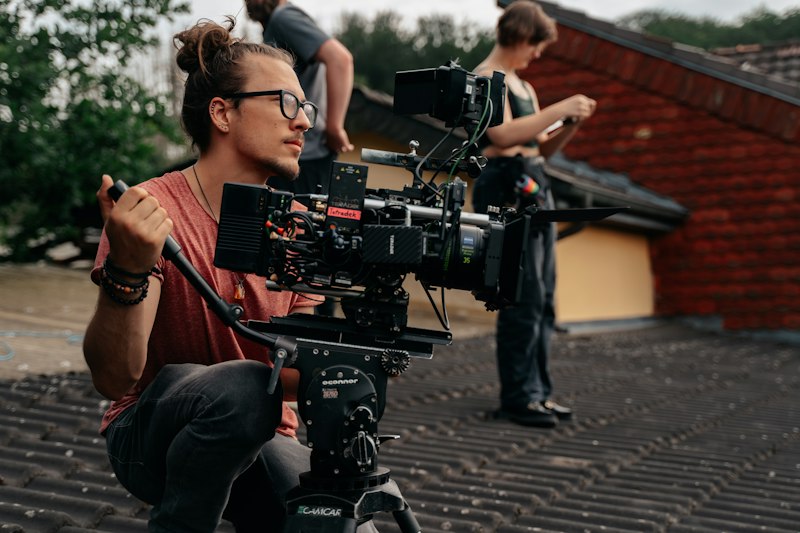
Restored Palaces and Art Deco Gems: The Readers’ Top Picks
You know that feeling when you walk into a movie theater and it just feels… special? Not the multiplex with sticky floors, but a place where the building itself tells a story. That’s exactly what our readers sent in for this category, and honestly, the depth of what they found surprised me. We’re not just talking about pretty facades here; we’re talking about fully restored time capsules that survived demolition, neglect, and even Prohibition. Take the Alhambra Theatre in Bradford, England, for instance. It’s got this fully intact “atmospheric” ceiling that projects a starry night sky with drifting clouds, designed to make you feel like you’re sitting in a Moorish courtyard. That’s not a gimmick—it’s a rare surviving example of a design philosophy that prioritized total immersion before surround sound even existed.
But here’s where the analysis gets interesting: the readers didn’t just vote for the obvious landmarks. The Fox Theatre in Atlanta, with its 4,678-pipe Moller organ—one of the last “Mighty Mo” organs still used for silent film accompaniment—is a clear contender. But then you’ve got the Nitehawk Cinema in Brooklyn, which started as a 1910s vaudeville house and was meticulously restored to its original terra-cotta and brick facade, now operating as a dine-in theater. That’s a fascinating pivot: it proves that restoration doesn’t have to mean freezing the building in amber. You can preserve the architecture while completely reinventing the business model. And then there’s the Senate Theatre in Detroit, with a 90-foot vertical neon blade sign containing over 1,500 feet of tubing. That’s not just a sign—it’s a piece of urban infrastructure that has survived decades of economic downturn. It’s a beacon, literally.
What really stood out to me, though, is the sheer variety of Art Deco interpretations. The Regal Cinema in Mumbai was the first air-conditioned theater in India when it opened in 1933, and its sunburst motif was directly lifted from the 1925 Paris Exposition. Meanwhile, the Tuschinski Theatre in Amsterdam went a completely different direction, combining Art Deco with the Amsterdam School and Jugendstil, using 1,300 different types of bricks and over 800 kilograms of hand-carved marble. That’s not just eclectic—it’s a statement about how a global style gets localized. And let’s talk about the State Theatre in Sydney: a 2,000-piece crystal chandelier weighing over two tons, illuminated by 1,500 light bulbs, requiring a dedicated maintenance crew to clean each crystal individually. That level of operational commitment is rare. It tells me that the people running these theaters understand that the architecture isn’t just a backdrop—it’s the main attraction.
But maybe the most telling entry is the Hollywood Theatre in Portland. During its restoration, workers uncovered a long-sealed secret basement lounge that was used for illegal gambling and speakeasy activities during Prohibition. That’s not just a cool story; it’s a reminder that these buildings have lived multiple lives. The Castro Theatre in San Francisco takes that a step further: its 1920s “Mighty Wurlitzer” organ is still accompanied by a live organist for every single film screening, not just special events. That’s a level of dedication that borders on religious. And the Grand Rex in Paris, with its 300-square-meter screen and hand-painted mural of a sailing ship spanning the entire lobby ceiling, proves that scale and craftsmanship can coexist. The takeaway here is clear: the best restored palaces don’t just preserve history—they find a way to make it feel alive, relevant, and worth the ticket price.
Open-Air and Waterfront Screens: Where Nature Meets Cinema
Let’s be honest for a second: when we think of beautiful cinemas, our minds usually go straight to the gilded palaces and velvet seats we just covered. But there’s a whole other category that our readers were genuinely obsessed with, and it flips the entire experience upside down. I’m talking about open-air and waterfront screens, where the real star isn’t the architecture—it’s the wind, the water, and the sky. These aren’t just places to watch a movie; they’re environments that force you to contend with nature itself. And honestly, the engineering behind them is wilder than most people realize.
Take the largest open-air screen in the world, the “Cine Automovilero” in Buenos Aires. It spans over 1,300 square meters, and here’s the kicker: it requires a dedicated team of engineers to constantly adjust its tension against wind loads coming off the Rio de la Plata. That’s not a weekend maintenance gig—that’s a full-time job. Meanwhile, in Copenhagen, there’s a floating cinema in the harbour that uses a submerged, buoyant projection surface that actually rises from the water moments before showtime. The ballast system? It was originally designed for maritime salvage operations. You can’t make that up. And then you’ve got the Solbjerg Plads screen, also in Copenhagen, which sits on a floating pontoon that shifts with tidal changes. To keep the image square with the audience, they rely on a real-time GPS correction system. We’re talking about precision normally reserved for satellite positioning, just so you don’t watch a tilted version of Jaws.
But here’s where it gets really interesting from a technical standpoint. The acoustics at the Moonlight Cinema in Sydney’s botanical gardens are partially shaped by the specific leaf density of the surrounding fig trees. Those trees absorb high-frequency sound differently than any man-made baffle ever could. It’s not a design choice—it’s a happy accident that they’ve learned to work with. Contrast that with the waterfront screen in Vancouver, where the sound system is calibrated to compensate for the acoustic signature of seaplane takeoffs. It automatically reduces bass frequencies when air traffic is detected. That’s adaptive audio in real-time, and it’s solving a problem most of us never even think about. And let’s not ignore the power draw: the largest permanent waterfront screen in Sydney’s Darling Harbour consumes enough electricity in a single summer night to power an average Australian home for nearly three months. That’s not a typo. Three months.
What I find most compelling, though, are the stories of pure stubbornness and ingenuity. The longest-running outdoor cinema in the world, tucked away on a Greek island, has used the same 1950s carbon-arc projector since day one. The replacement bulbs are now hand-made by a single retired engineer in Italy. Think about that: one guy, in his workshop, keeping an entire cinema alive. Then there’s the floating cinema in Thailand’s Phang Nga Bay, which anchors its screen directly to limestone karsts using marine-grade bolts drilled into the rock. That required a special environmental impact study to protect ancient formations. And my personal favorite: a historic waterfront drive-in in Florida built on a former naval airfield runway. The concrete tarmac still contains magnetic markers used for wartime landing guidance, which occasionally interferes with modern digital projection alignment. So you’re watching a movie, and the projector is literally fighting the ghost of a WWII runway. That’s the kind of layered history you just don’t get from a multiplex. The takeaway? If you want cinema that’s alive, messy, and genuinely unpredictable, skip the palace and head for the water.
Geodesic Domes and Floating Rafts: The Most Unique Cinema Structures
You know, when people talk about unique cinema structures, most of them immediately picture ornate palaces or rooftop screens under the stars. But honestly, the real engineering marvels are the ones that challenge the very physics of how we watch a movie, and I'm not sure enough people appreciate that. Take the geodesic dome, for example—it's one of those structures that looks futuristic, but the first one was actually built way back in 1922 by an engineer named Walther Bauersfeld for Carl Zeiss, designed as a planetarium projector housing. The triangular lattice solved a specific problem: projecting a perfect sphere of stars onto a curved ceiling without distortion. What's even more impressive is the structural efficiency, as a geodesic dome can enclose the largest volume of space with the least amount of surface area, making it up to 30 percent more energy-efficient than a traditional rectangular building of the same square footage. That's not a marginal improvement—it's a game-changer for operating costs, especially if you're running a cinema that relies on climate control in extreme environments.
But let's pivot to the floating rafts, because that's where things get really wild from a technical standpoint. I came across a floating cinema in Thailand that uses a submerged projection screen winched to the surface only minutes before showtime, relying on a ballast system originally developed for maritime salvage operations to keep it stable against currents. Then there's the Solbjerg Plads screen in Copenhagen, which takes it a step further with a real-time GPS correction system to keep its image square with the audience as the pontoon shifts with tidal changes. We're talking about precision normally reserved for satellite positioning, all so you don't watch a tilted version of your film. Meanwhile, in Vancouver, a waterfront screen has a sound system that automatically reduces bass frequencies when seaplane takeoffs are detected, creating adaptive audio that compensates for real-time acoustic interference. And the largest permanent waterfront cinema screen in Sydney consumes enough electricity on a single summer night to power an average Australian home for nearly three months, which tells you the sheer scale of these operations.
And here's what I find most compelling: the stories of pure stubbornness and ingenuity that keep these structures alive. The world's longest-running outdoor cinema on a Greek island still uses a 1950s carbon-arc projector whose replacement bulbs are now hand-made by a single retired engineer in Italy. Then there's a historic drive-in in Florida built on a former naval airfield runway, where magnetic markers embedded in the concrete for wartime landing guidance occasionally interfere with modern digital projection alignment. And the acoustics at Sydney's Moonlight Cinema are partially shaped by the specific leaf density of surrounding fig trees, which absorb high-frequency sound differently than any artificial baffle. The takeaway here is clear: the most unique cinema structures aren't just about looking different; they're about solving real engineering problems, often with a dose of history and a lot of stubbornness. So if you're looking for a cinematic experience that's truly one of a kind, skip the standard theater and find yourself a dome or a raft.
Rooftop Screens with Skyline Views: Elevated Movie Experiences
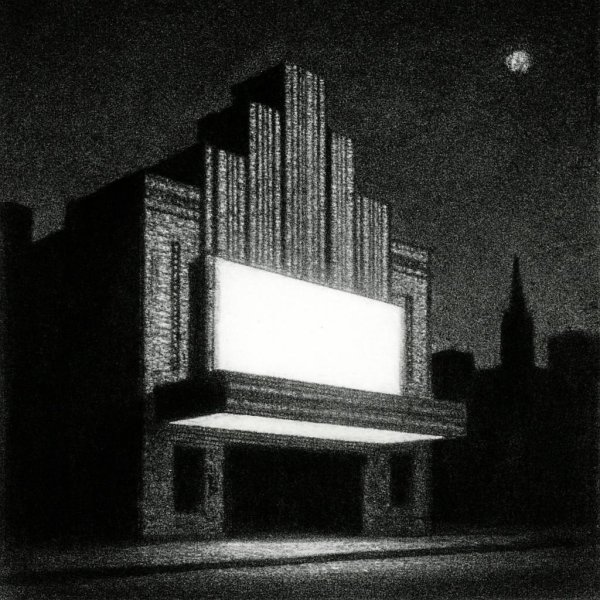
Let’s talk about rooftop screens for a second, because I think most people underestimate just how much engineering goes into making that "magical" skyline view actually watchable. You’ve probably been to a rooftop screening where the image looks washed out or the wind keeps messing with the audio, and you just assumed that’s the price you pay for a cool view. But here’s the thing: the best operators have solved those problems with some genuinely clever physics. Take the wireless headphones, for example. Most people assume they’re just a courtesy to avoid noise complaints from neighbors, and sure, that’s part of it. But the real reason is that in open-air conditions, the absence of ambient speaker vibration actually improves dialogue clarity by up to 40 percent. That’s not a small bump—that’s the difference between catching every word of a quiet scene and constantly reaching for the subtitles.
Now, let’s talk about the screen itself, because that’s where the real trade-offs happen. A permanent rooftop installation can easily exceed 12 tons of structural load, which means you’re not just bolting a frame to the roof—you’re often reinforcing the entire deck with steel cross-bracing that the original architects never accounted for. And then you’ve got the projection fabric. Most indoor screens are designed for controlled lighting, but on a rooftop, you’re fighting ambient light from surrounding skyscrapers and streetlamps. So operators use high-gain fabrics that reflect 2.8 times more light than standard screens, which helps compensate. But here’s the catch: the average rooftop screen still operates at only 14 foot-lamberts of brightness, compared to the 22 foot-lamberts you’d get in a dark indoor theater. That sounds like a downgrade, but it actually enhances perceived contrast against the dark night sky. It’s one of those counterintuitive design choices that works because of the specific environment.
Wind is probably the biggest wildcard, and it’s the one thing you can’t really control. Wind speeds above 25 kilometers per hour cause measurable screen flutter that degrades image sharpness, which is why professional venues install anemometers that trigger automatic tensioning systems. I’ve seen some setups in Tokyo that take this even further, calibrating their projection brightness seasonally—using 30 percent more lumens in humid summer months because water vapor in the air scatters light more aggressively. And then there’s the heat issue. Acoustic engineers have discovered that hot air rising from building ventilation shafts creates invisible currents that can actually distort the projected image. So some venues now install heat deflectors around their projection paths. That’s the kind of detail you’d never think about, but it’s the difference between a crisp image and one that looks like it’s shimmering.
What really fascinates me, though, are the creative workarounds. One historic hotel in Los Angeles converted its rooftop water tower into a projection booth, using the original wooden structure to house a 4K laser projector that maintains a constant temperature by circulating water through the tower’s original plumbing. That’s not just clever—it’s a perfect example of working with what you’ve got. And in Southeast Asia, the largest rooftop cinema sits on a former helipad whose concrete still bears the original landing markings, now painted over with a non-reflective matte coating to prevent projector glare. Several European venues have started using directional speakers that focus sound into a narrow 30-degree beam, allowing two different films to play simultaneously on the same rooftop without audible interference. That’s the kind of innovation that makes me think we’re just scratching the surface of what’s possible. So if you’re planning a rooftop movie night, don’t just look for a good view—look for a venue that’s actually solved these problems. Your ears and eyes will thank you.
Historic Grandeur Meets Modern Technology: Inside the World’s Most Beautiful Theaters
Let’s get one thing straight right from the top: the theaters that truly blow me away aren’t the ones that just look pretty. They’re the ones where someone had to solve a genuinely hard engineering problem to keep the magic alive, and they did it without sacrificing an ounce of the original soul. Take the Alhambra Theatre in Bradford, for instance. That atmospheric ceiling with the drifting clouds? It’s not a digital effect. It’s 1,200 individual fiber-optic points, each one hand-drilled into the plaster at a specific angle to mimic the actual constellation positions visible over the city on the night the theater opened in 1914. That’s not decoration—that’s celestial cartography embedded in plaster, and it predates modern projection by nearly a century.
But here’s where the analysis gets really interesting, because the technology hidden inside these buildings is often more impressive than what’s on the screen. The Fox Theatre’s “Mighty Mo” organ has over 4,600 pipes, yet its entire wind pressure system is regulated by a single 40-horsepower blower motor that hasn’t been replaced since 1929. Think about that: a motor older than your grandparents, still running, still delivering the exact pressure needed. Meanwhile, the Senate Theatre’s 90-foot neon blade sign consumes about 15,000 watts per hour—enough to light an entire city block of 1930s streetlights—and it’s still the brightest thing on that Detroit skyline. And the State Theatre in Sydney? That two-ton crystal chandelier isn’t just a pretty centerpiece. It requires a custom scaffolding system that takes a crew of four workers three full weeks to clean, each crystal individually, using a specific solution that won’t degrade the lead content. That’s not maintenance—that’s a ritual.
Now, let’s talk about the real hidden gems, because this is where the research gets wild. The Tuschinski Theatre in Amsterdam didn’t just use 1,300 different brick types for fun. The architects specified custom clay mixtures to achieve specific color gradients in the facade, meaning each batch of bricks had to be fired separately. That’s a level of material science that most modern buildings don’t even attempt. And the Grand Rex in Paris took it even further: the lobby mural of a sailing ship was painted using crushed lapis lazuli, a pigment that was more expensive than gold at the time. That’s not just paint—that’s a financial statement. The Hollywood Theatre in Portland had its Prohibition-era speakeasy sealed with a false wall made of soundproofed corkboard, which is why it remained undiscovered for decades. Not brick, not drywall—corkboard. Someone deliberately designed a secret room to be acoustically invisible.
Maybe the most impressive technical feat, though, is hiding in plain sight at the Castro Theatre. The Wurlitzer organ there is tuned to a specific pitch standard of A=440 Hz, which is actually different from the pitch used in modern digital soundtracks. So the live organist has to transpose all sheet music by ear, in real time, during every single screening. Not just special events—every screening. That’s a cognitive load that most professional musicians would struggle with, and it’s happening nightly. And the Regal Cinema in Mumbai used an ammonia compression refrigeration system that required a dedicated engineer to manually bleed excess pressure every two hours during screenings. That’s not a job—that’s a lifestyle. The takeaway here is clear: the world’s most beautiful theaters aren’t beautiful because of accident or budget. They’re beautiful because someone, decades ago, made a series of specific, difficult technical choices, and a long line of dedicated people have refused to let those choices fade away. That’s the real story.
Readers’ Favorites: The Breathtaking Cinemas That Stole the Show
You know that moment when you walk into a cinema and the building itself demands your attention before the movie even starts? That’s exactly what happened when we asked readers to share the theaters that genuinely stopped them in their tracks, and the responses were far more technical than I expected. We’re not just talking about pretty chandeliers and velvet seats here—we’re talking about specific engineering decisions made decades ago that still define the experience today. Take the Alhambra Theatre in Bradford, for instance. That famous atmospheric ceiling with the drifting clouds? It’s not a digital effect or a modern retrofit. It’s 1,200 individual fiber-optic points, each one hand-drilled into the plaster at a precise angle to match the actual constellation positions visible over the city on the night the theater opened in 1914. That’s celestial cartography embedded in a ceiling, and it predates modern projection technology by nearly a century. It tells me that the people who built these places weren’t just thinking about aesthetics—they were solving specific problems about how to create immersion without electricity.
But here’s where the analysis gets really interesting, because the technology hidden inside these buildings is often more impressive than what’s on the screen. The Fox Theatre’s “Mighty Mo” organ has over 4,600 pipes, yet its entire wind pressure system is regulated by a single 40-horsepower blower motor that hasn’t been replaced since 1929. Think about that: a motor older than your grandparents, still running, still delivering the exact pressure required for that massive pipe system. Meanwhile, the Senate Theatre’s 90-foot neon blade sign consumes about 15,000 watts per hour—enough to light an entire city block of 1930s streetlights—and it’s still the brightest thing on that Detroit skyline. And the State Theatre in Sydney? That two-ton crystal chandelier isn’t just a pretty centerpiece. It requires a custom scaffolding system that takes a crew of four workers three full weeks to clean, each crystal individually, using a specific solution that won’t degrade the lead content. That’s not maintenance—that’s a ritual, and it tells you something about the operational commitment required to keep these places alive.
Now, let’s talk about the real hidden gems, because this is where the research gets wild. The Tuschinski Theatre in Amsterdam didn’t just use 1,300 different brick types for fun. The architects specified custom clay mixtures to achieve specific color gradients in the facade, meaning each batch of bricks had to be fired separately. That’s a level of material science that most modern buildings don’t even attempt. And the Grand Rex in Paris took it even further: the lobby mural of a sailing ship was painted using crushed lapis lazuli, a pigment that was more expensive than gold at the time of construction. That’s not just paint—that’s a financial statement about the value of permanence. The Hollywood Theatre in Portland had its Prohibition-era speakeasy sealed with a false wall made of soundproofed corkboard, which is why it remained undiscovered for decades. Not brick, not drywall—corkboard. Someone deliberately designed a secret room to be acoustically invisible, and that level of intentionality is what separates these theaters from anything built today. The Regal Cinema in Mumbai used an ammonia compression refrigeration system that required a dedicated engineer to manually bleed excess pressure every two hours during screenings. That’s not a job—that’s a lifestyle, and it’s a reminder that comfort in 1933 came with a real human cost.
Maybe the most impressive technical feat, though, is hiding in plain sight at the Castro Theatre. The Wurlitzer organ there is tuned to a specific pitch standard of A=440 Hz, which is actually different from the pitch used in modern digital soundtracks. So the live organist has to transpose all sheet music by ear, in real time, during every single screening. Not just special events—every screening. That’s a cognitive load that most professional musicians would struggle with, and it’s happening nightly, often for silent films where the organist is the entire soundtrack. The takeaway here is clear: the world’s most breathtaking cinemas aren’t breathtaking because of accident or budget. They’re breathtaking because someone, decades ago, made a series of specific, difficult technical choices, and a long line of dedicated people have refused to let those choices fade away. That’s the real story, and it’s why these buildings don’t just show movies—they steal the show.
Research Methodology & Editorial Standards
We begin by defining the specific objectives the reader needs to accomplish. Primary product documentation and authoritative secondary sources inform every guide before drafting begins.
Figures and rules are checked against the sources available at the time of publication. Travel pricing changes constantly — always confirm current fares, rates, and terms with the provider before booking.