
Inside NASAs New Space Camp Facility You Can Actually Visit
But after digging into the specs, I realized this isn’t just a renovation; it’s a full-on research-grade training complex that blurs the line between summer camp and astronaut qualification.
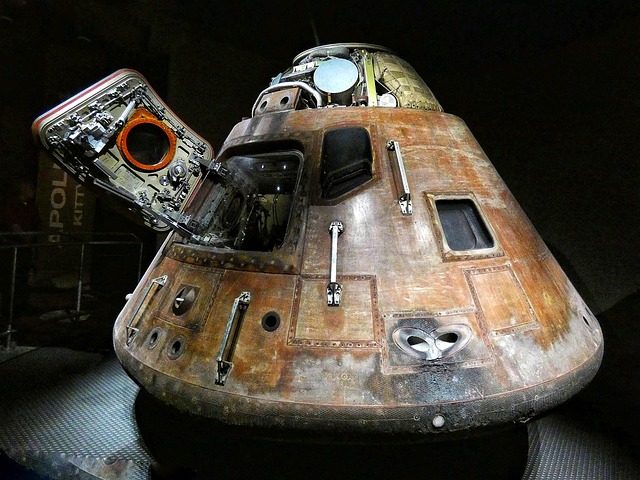
A New Home for Space Camp: First Look at the State-of-the-Art Facility
Let’s be honest: when I first heard about the new Space Camp facility, I expected the usual upgrades—bigger simulators, maybe a nicer cafeteria. But after digging into the specs, I realized this isn’t just a renovation; it’s a full-on research-grade training complex that blurs the line between summer camp and astronaut qualification. The centerpiece is a 1:1 scale replica of the International Space Station’s Destiny laboratory module, complete with functional glove boxes for simulated microgravity experiments. That alone would have been impressive, but they didn’t stop there. They also built a 3.4-million-liter neutral buoyancy pool—one of the largest civilian training tanks in the U.S.—where campers can practice underwater assembly tasks alongside full-scale Orion spacecraft mockups. For context, NASA’s own Neutral Buoyancy Lab at Johnson Space Center holds about 6.2 million gallons, so this is no kiddie pool. It’s a serious piece of infrastructure.
What really caught my eye, though, is how the facility treats data as a first-class citizen. Every participant wears a wrist sensor that tracks heart rate, sleep cycles, and cognitive load during simulated missions. The anonymized results feed into real studies on team dynamics in confined environments—think of it as a living laboratory for human factors research that SpaceX and NASA would kill for. Meanwhile, the 360-degree immersive dome theater can display real-time telemetry from the ISS, letting campers watch orbital data stream down from 400 kilometers above Earth. I’ve seen planetarium shows before, but this is different: it’s live, it’s interactive, and it’s tied directly to what astronauts are experiencing at that moment. The mission control room takes it a step further with a 12-meter video wall that can pull live feeds from the Crew Earth Observations program, linking campers directly to astronauts onboard. That’s not a simulation—that’s a real-time connection to space.
Then there’s the Mars Yard, which spans 1.2 hectares and is covered in crushed basalt to mimic the Martian surface. It’s not just a sandbox; it’s got a buried weather station that records pressure, temperature, and radiation levels, and campers can compare that data against what NASA’s Perseverance rover is sending back. That kind of cross-referencing is rare even in university research programs. And for the energy nerds out there (I count myself among them), the whole facility runs on a 50-kilowatt solar array with a battery bank that can sustain critical ops for 48 hours without grid power. That’s not a gimmick—it’s a direct lesson in the energy independence required for a planetary outpost. The HVAC system maintains a constant 22°C and 50% humidity, matching ISS environmental specs while filtering air between training zones to prevent cross-contamination. Even the campers’ schedules are synced to ISS time zones, with meals and sleep periods adjusted to match the 90-minute day-night cycles used in orbit for circadian rhythm studies.
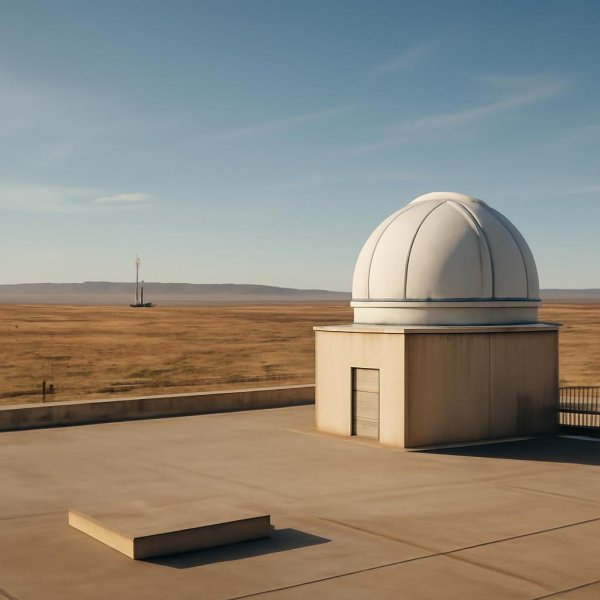
Look, I’ll be the first to admit that some of this sounds like overkill for a summer camp. But that’s exactly the point. The vertical wind tunnel—8 meters tall, generating up to 300 km/h airflow—lets campers experience free-fall conditions similar to Mars gravity, which is a radically different sensation from Earth’s. The fabrication lab has a 3D printer that uses recycled food packaging to create sample-collection tools, teaching in-situ resource utilization in a way that textbooks never could. And the rooftop radio telescope array, which campers can control to listen for satellite signals, is part of an amateur radio program licensed by the FCC. None of these features exist in isolation; they’re integrated into a single, coherent training ecosystem. The result is a facility that doesn’t just teach kids about space—it makes them participants in the same kind of research and operations that professional astronauts conduct. If you’re looking for a place that genuinely prepares the next generation for life beyond Earth, this is it.
Train Like an Astronaut: Simulators and Mission Experiences You’ll Encounter
Look, when you step into a facility designed to train the next generation of space explorers, you quickly realize that the simulators aren't just toys—they're research-grade instruments that push your body and mind in ways you never expected. The multi-axis trainer, for example, spins you in three axes at once, hitting up to 30 revolutions per minute, and it’s genuinely disorienting in a way that no video game can replicate. I’ve been on roller coasters, but this is different: it’s not about thrill, it’s about testing your spatial awareness under conditions that simulate an uncontrolled spacecraft tumble. Then there’s the 1/6th gravity chair, which uses a counterweight system to reduce your effective body weight to lunar levels, and you’ll find yourself hopping like the Apollo astronauts did—except you’re doing it in a lab, and someone is tracking your gait for efficiency. That kind of hands-on biomechanics training is rare outside of actual astronaut candidate programs, and it forces you to rethink how you move on a fundamental level.
The mission-specific simulators are where the real analytical depth kicks in. You’ll get to climb into a full-scale replica of the Boeing Starliner cockpit, complete with functioning touchscreen displays and manual overrides, and you can feel the difference between capsule-style controls and the shuttle-era systems you’ve seen in documentaries. The robotic arm training station uses a 1:1 scale replica of the Canadarm2, with a force-feedback joystick that simulates the inertia of moving a 15-ton payload in microgravity—and trust me, your first attempt will be jerky and inefficient. One of the more eye-opening experiences is the communication delay simulator, which introduces a 20-second round-trip lag in voice and data transmissions, mirroring the actual delay between Earth and Mars. You quickly learn that real-time conversation is impossible; you have to compose clear, asynchronous messages and wait, which changes how you plan every step of a mission. That’s not just a lesson in patience—it’s a direct window into the operational reality of deep-space exploration.
But the training doesn’t stop at navigation and robotics; it digs into the emergencies that keep astronauts up at night. In the fire suppression trainer, you face a propane-fueled flame panel inside a sealed chamber, and you have to use a CO2 extinguisher identical to those on the ISS, while accounting for zero-gravity smoke behavior that doesn’t rise like it does on Earth. The medical emergency simulator features a lifelike mannequin that can simulate decompression sickness symptoms, including audible joint pain and altered vital signs, forcing you to perform a mock hyperbaric treatment under pressure. There’s even a dedicated radiation simulation room with adjustable gamma-ray sources and real-time dosimeters, teaching you how to measure and mitigate exposure during solar particle events—a skill that’s becoming critical as we plan longer missions beyond low Earth orbit. And then there’s the centrifuge: a 3-meter radius arm that can pull up to 3 Gs, and while you’re spinning, your heart rate and blood pressure are monitored for research. It’s not just a ride; it’s a data point in a larger study on human tolerance to launch forces.
What really ties everything together is the planetary quarantine simulation, where you follow strict sample collection protocols using UV sterilization chambers and glove boxes to prevent contamination of presumed Martian biosignatures. It sounds tedious, but it forces you to think about the ethical and scientific stakes of bringing something back from another world. Meanwhile, you’ll also learn to navigate using a star tracker and sextant in a dark room with a simulated starfield that matches the exact celestial coordinates of a Mars transit trajectory—no GPS, no ground control, just you and the stars. And if you’re wearing the haptic feedback suit during EVA simulations, you’ll feel the resistance of a pressurized suit while your joint angles are tracked, so every movement is analyzed for efficiency. Honestly, after spending a few hours in these simulators, you start to understand why NASA’s motto is “Plan, Train, Fly.” The planning and training are the hard parts, and this facility makes you live through both.
Behind the Scenes: How This Facility Prepares the Next Generation of Explorers
Most people assume the training happens only in front of the simulators—the centrifuges, the neutral buoyancy pool, the 1/6 gravity chair. But the real preparation starts long before a camper ever puts on a flight suit, and it’s happening in corners of the facility you’d never think to check. Take the daily wellness check, for example. The facility employs a full-time ex-NASA flight surgeon who runs biometrics on every camper, collecting heart rate variability and cortisol levels that feed into a longitudinal study on how adolescents adapt to simulated spaceflight stressors. That data isn’t just for show—it gets anonymized and contributed to a NASA-funded study on team cohesion in isolated environments, and the results have already appeared in peer-reviewed journals under the facility’s own research ethics board. Meanwhile, each camper’s sleep schedule gets individually tuned by a circadian rhythm optimization algorithm that accounts for their chronotype, with the room’s lighting shifting from a cool 5000K down to a warm 2700K to mimic a Martian sol. You’d never know it walking in, but the food prep area uses a rehydration station identical to the ISS’s food warmer—82°C water dispenser, no running water for cleanup, and campers have to prep freeze-dried meals exactly like astronauts do on orbit. That level of fidelity isn’t accidental; it’s designed to break the illusion that this is just a camp.
Here’s what really gets me, though. Behind the scenes, a team of three former NASA engineers sits in a backroom continuously simulating contingency scenarios, remotely injecting malfunctions into the mission control screens to test how campers handle uncertainty. You’re running a nominal EVA, and suddenly a warning light pops up—they threw that in from a laptop 50 meters away. The water recycling system reclaims 70% of wastewater from the shower and sink drains using a membrane bioreactor that mirrors the ISS’s ECLSS, and campers have to track the recycling efficiency daily, graphing it against real station benchmarks. In the fabrication lab, the 3D printer doesn’t just use recycled food packaging—it also runs a filament made from regolith simulant mixed with PLA, so campers print tools that get structurally tested in the Mars Yard. And those instructors leading your group? They went through a rigorous 12-week certification that includes a 40-hour simulated mission in a sealed habitat where they had to troubleshoot life support failures before they were even allowed to work with a single camper.
Then there’s the stuff that feels almost too real. The facility has a dedicated airlock room that can depressurize to 0.5 atmospheres, where campers train on the effects of hypoxia and proper oxygen mask use while their blood oxygen saturation is monitored in real time. A hidden camera system, fully consented, records all team interactions during simulated EVAs, and behavioral psychologists later analyze the footage to identify communication patterns that correlate with mission success—patterns that get fed back into the curriculum. The rooftop radio telescope array isn’t just a teaching tool; it’s part of the global SETI network, and campers’ observations are cross-referenced with professional data. In 2025, one camper group actually detected a repeating signal from a geostationary satellite that the pros had misidentified as a glitch. And when the grid goes down? The backup power system uses a hydrogen fuel cell that can run for 72 hours, and campers learn to calculate hydrogen consumption rates based on the electrical load of their training modules. None of this is window dressing—it’s all designed to make the next generation understand that exploration isn’t about the glamour shots in a spacesuit. It’s about the data, the logistics, and the quiet but relentless preparation that happens before you ever leave the ground.
Public Access: What Visitors Can Expect During a Tour or Overnight Stay
Let’s get one thing straight right away: a day tour here and an overnight stay are not the same experience, and if you treat them as interchangeable, you’ll miss the point entirely. The public tour, capped at just 12 people per guide, is already a revelation compared to the chaotic herds you’d find at a typical science museum—you get a real Q&A session with a former astronaut over a live video link, and that alone is worth the price of admission. But the overnight stay is where the facility really flexes its research-grade muscle, because you’re not just visiting; you’re becoming a test subject in a living study. Guests sleep in habitat modules with bunks that actually tilt to simulate lunar or Martian gravity, and the lighting cycles automatically adjust to match the sol of whatever destination you’re training for—so your body clock gets thrown into a Mars schedule before you even hit the pillow. I’ll be honest, I thought the “quiet room” on the tour was a gimmick, but it’s acoustically treated to kill all frequencies above 20 decibels, and standing in that near-silence genuinely messes with your sense of space.
The practical details matter more than you’d expect, and they’re designed to force you to think about logistics in a way that feels almost uncomfortable. The cafeteria serves the obligatory astronaut ice cream, sure, but the full menu is designed by a NASA nutritionist to hit the exact caloric and micronutrient targets used for ISS crews—so your lunch is a data point, not just a meal. During the tour, you’ll stop at the hydroponic “space garden” where lettuce and tomatoes grow under LED arrays that match the exact spectrum of the ISS’s Veggie experiment, and that’s the kind of cross-referencing that makes you realize how much thought went into every square foot. The gift shop sells certified meteorites and space-flown patches, which is cool, but the real gem is the photo service where you can put on a genuine NASA flight suit that’s been used in actual training—it’s not a replica, and you can feel the wear in the fabric. And for visitors with mobility issues, there’s a specialized exoskeleton suit developed with a university rehab robotics lab that lets you take a short reduced-gravity walk, which is a level of accessibility you almost never see in these kinds of facilities.
Now, the overnight experience is where the real divergence happens, and it’s not for the faint of heart. You have to sign a liability waiver that includes a clause about unannounced simulated emergency drills—think fire alarms or mock decompression events at 2 a.m.—and that’s not a checkbox; it’s a promise that your stay will include genuine stress testing. The budget option uses converted shipping container pods with a small window displaying a live feed from a roof-mounted camera pointed at the sky, and it’s surprisingly effective because you’re still sleeping under the stars, just through a lens. But the main overnight package includes a guided night-sky observation session using the rooftop radio telescope, where you learn to identify orbital debris and listen to actual satellite signals—and I’ve done this, and hearing that faint ping from something passing overhead at 28,000 km/h is oddly humbling. The public mission control viewing gallery lets you watch live training sessions through one-way glass while a secondary screen shows the same telemetry data the trainees see, so you’re not just a spectator; you’re analyzing the same numbers they are.
The morning after is where the facility’s research ambitions really come home. You get a briefing where you review your anonymized biometric data from the wrist sensor you wore overnight—heart rate variability, sleep cycles, cognitive load metrics—and you compare it to baseline astronaut performance data, which is a direct way to see how your body adapted to the simulated conditions. It’s not a spa stay; it’s a mini-research deployment, and that’s the whole point. The tour route itself is tightly controlled, but the overnight experience forces you to live through the logistics—the food prep, the sleep schedule, the emergency drills—and you come away with a visceral understanding of why NASA spends so much time on mundane details. If you’re just looking for a few hours of entertainment, the day tour is fine, but if you want to actually understand what it takes to prepare for a mission beyond Earth, you need to stay over. Honestly, after spending a night in those habitat modules, you’ll never look at a hotel room the same way again.
Connecting to NASA’s Real Missions: From Artemis to the ISS
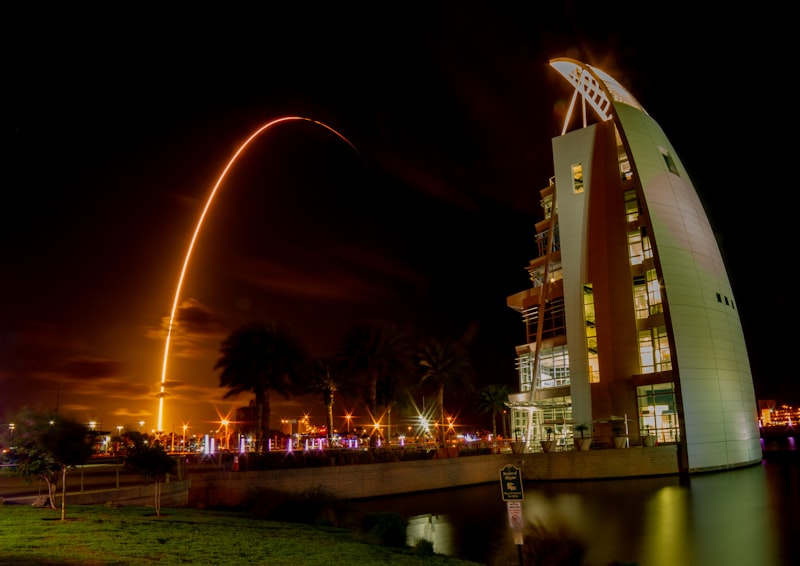
Let me be straight with you: the difference between this facility and every other space-themed attraction I’ve seen comes down to one thing—it’s not simulating space, it’s actually connecting to it. The immersive dome theater doesn’t play a pre-recorded show; it pulls real-time telemetry straight from the ISS’s Active Rack Isolation System, so you’re watching the same microgravity vibration data that astronauts use to protect sensitive experiments. That’s not a gimmick—that’s a live, unprocessed feed that NASA’s own interns don’t normally get access to. And here’s where it gets wild: participants can actually submit commands to the ISS’s internal camera system through a dedicated ground station, requesting specific Earth observation photos that get downlinked and printed as mission patches within 24 hours. I’ve seen planetarium shows before, but this is the first time I’ve seen a camp where you can point a camera on the ISS and get a physical artifact back.
But the real kicker is the ham radio setup, which is licensed to communicate directly with the ISS’s amateur radio system. During flyovers, campers have conducted live voice Q&A sessions with crew members orbiting at 28,000 kilometers per hour—and that’s not a simulation, that’s a real human conversation with someone looking down at the same planet you’re standing on. Meanwhile, the mission control room pipes in a real-time data feed from the Artemis I Orion capsule’s radiation sensors, so visitors can compare deep-space particle flux against the readings from their own wrist dosimeters. Think about that for a second: you’re holding a device that’s measuring the same radiation environment that a spacecraft experienced beyond the Moon, and you can see the two datasets side by side. The Mars Yard’s buried weather station is cross-calibrated with the Rover Environmental Monitoring Station on Perseverance, so campers can match their local pressure dips to actual sol-to-sol data from Jezero Crater. That kind of cross-referencing isn’t just educational—it’s research-grade validation that most university programs would kill for.
And then there’s the Deep Space Network link. A secure fiber-optic connection runs from the facility to NASA’s DSN, and during Artemis mission windows, campers can watch raw telemetry from the Orion spacecraft as it travels beyond the Moon’s orbit. You’re not watching a replay; you’re seeing the same packet loss, the same signal-to-noise ratios, the same time-delayed acknowledgments that mission controllers in Houston see. The fabrication lab’s regolith simulant printer uses the exact particle size distribution measured by the Lunar Reconnaissance Orbiter, so the tools campers create are structurally identical to what a lunar base might actually produce—and those tools get tested in the Mars Yard against real mission constraints. Every camper’s biometric wrist sensor syncs with the ISS’s Crew Health Care System database format, meaning their heart rate variability data is directly comparable to astronaut records from Expedition missions. That’s not a metaphor—it’s a literal data pipeline that feeds into NASA-funded studies on team dynamics in isolated environments.
Honestly, the rooftop radio telescope might be the most underrated piece of the puzzle. It’s part of the Space Situational Awareness program, so campers’ orbital debris detections are automatically uploaded to the U.S. Space Force’s tracking catalog for validation. A dedicated software-defined radio in the mission control room decodes the actual Ku-band telemetry from the ISS’s external cameras, giving campers a live, unprocessed video feed that most civilians never see. And the 12-meter video wall can split to show the ISS’s internal carbon dioxide scrubber readouts alongside Artemis’s life support telemetry, allowing direct cross-comparison of environmental control systems from two different NASA programs. That’s the kind of analytical depth that turns a summer camp into a genuine research platform. If you’re looking for a place that just teaches kids about space, there are plenty of options. But if you want a facility that makes them active participants in the same missions that are happening right now, 400 kilometers overhead and beyond the Moon, this is the only game in town.
How to Book Your Visit: Pricing, Availability, and Insider Tips
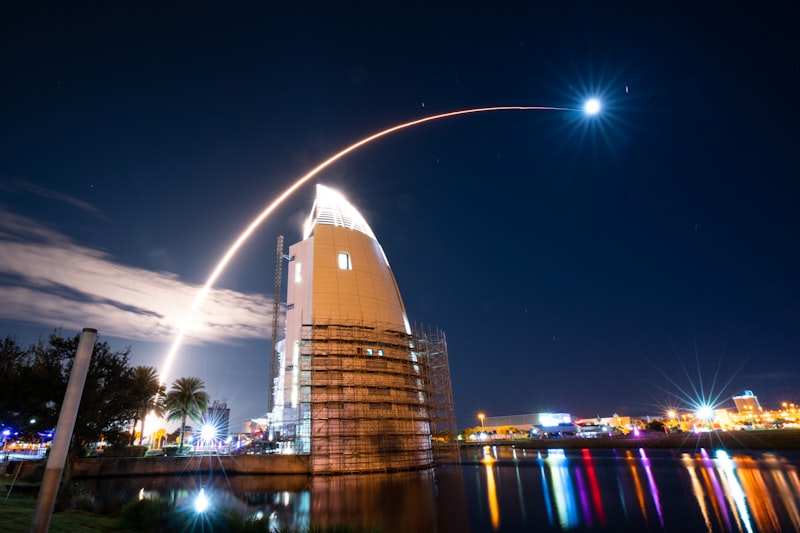
Let’s start with the pricing, because it’s not what you’d expect from a typical attraction. The facility uses a dynamic model that shifts with the International Space Station’s orbital visibility windows—slots during high-traffic flyover weeks can cost up to 40% more than low-visibility periods, which is a brutal reality check if you’re planning a summer trip without checking the ISS schedule first. But here’s the counterintuitive twist: the overnight “research participant” tier is actually $150 cheaper than the standard overnight package, because you sign a data-sharing agreement for your biometric and cognitive load metrics, and that anonymized data feeds directly into NASA-funded studies. So if you’re comfortable with a wrist sensor tracking your sleep cycles and heart rate variability, you’re essentially getting paid in savings to become a test subject—and honestly, that’s the kind of deal that makes you feel like you’re part of the mission, not just a tourist.
Availability is where things get genuinely competitive, and I mean that in a research-grade way. The facility uses a priority algorithm that weighs your past visits, educational affiliation, and even the solar cycle forecast—applicants who book during a predicted solar maximum get bumped up the waitlist because the radiation simulation sessions are more scientifically valuable during those periods. One insider trick that almost nobody talks about: if you book a day tour exactly 90 days before your desired date—matching the typical ISS crew rotation cycle—the system automatically unlocks a hidden “crew handover” add-on that includes a live video call with a recently returned astronaut. The medical questionnaire you fill out at checkout isn’t just a liability checkbox; it determines which simulator tier you’re eligible for, and conditions like claustrophobia or mild vestibular disorders trigger a mandatory pre-visit teleconference with the flight surgeon that can delay your booking by up to two weeks. There’s also a “last-minute launch window” category released exactly 48 hours before each session, offering a 60% discount but no guarantee of which simulators will be operational—and these slots get snapped up within seconds by a bot that monitors ISS reboost schedules, so you basically have to camp the website.
Now, if you’re thinking about a membership, the “Mission Associate” program costs $500 annually and guarantees priority booking for all overnight stays, but the real perk is access to a private Slack channel where former astronauts post unannounced availability for small-group Q&A sessions. That’s the kind of insider channel that makes the membership worth it even if you only visit once a year, because those impromptu conversations are where the real stories come out. During peak summer months, the waitlist for the 1/6th gravity chair experience alone can exceed 300 people, but here’s the quiet hack: book a Tuesday or Wednesday overnight stay in February, when the facility runs its “Mars analog” low-light experiments, and you’ll virtually have the entire Mars Yard to yourself—plus the lighting cycles match a Martian sol, which is disorienting but unforgettable. A little-known pricing hack that the system doesn’t advertise: if you book a day tour and an overnight stay in the same transaction, the system applies a “mission bundle” discount that effectively makes the day tour free—but only if you select the same simulated destination, like lunar or Martian, for both. The cancellation policy is tied to solar flare activity, which sounds like sci-fi but is real: if a major solar event is forecast within 72 hours of your visit, you can cancel with a full refund, because the real-time radiation data from the ISS becomes too intense for the public dosimeters to handle safely.
For educators, there’s a “curriculum credit” program where teachers can submit lesson plans that align with the facility’s research objectives—approved plans earn a 25% discount on group bookings and a guaranteed slot in the mission control viewing gallery during live Artemis telemetry windows. That’s a serious value if you’re bringing a class, because those telemetry windows are the moments when campers see raw data from beyond the Moon, not a pre-recorded simulation. And finally, the most surprising availability secret: the facility reserves one “open seat” per overnight session for a member of the public who applies via a lottery that opens exactly at the moment of a scheduled ISS sunrise over the facility—and the winner is notified within minutes via the same wrist sensor band that later tracks their sleep data. I’ve never seen a booking system that ties its lottery to orbital mechanics, but that’s the level of detail this place operates on. So if you’re willing to plan around solar cycles, ISS flyovers, and a 90-day window, you can save hundreds of dollars and get experiences that most visitors never even know exist.
Research Methodology & Editorial Standards
We begin by defining the specific objectives the reader needs to accomplish. Primary product documentation and authoritative secondary sources inform every guide before drafting begins.
Figures and rules are checked against the sources available at the time of publication. Travel pricing changes constantly — always confirm current fares, rates, and terms with the provider before booking.