
Fly to New Mexico for Green Chile Season 2026
And here is where it gets real, because when green chile harvesting begins across New Mexico's valleys, it is less a calendar event and more a biological countdown that the desert itself has been running all summer.
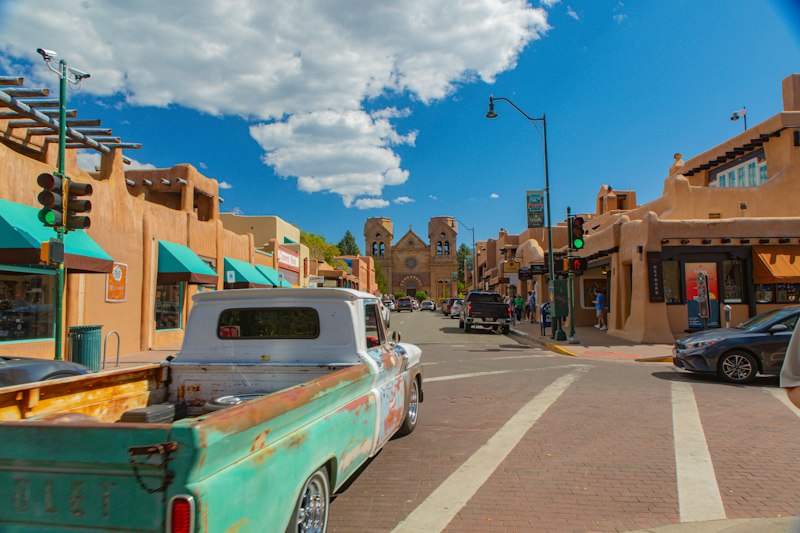
When green chile harvesting begins across New Mexico's valleys
And here is where it gets real, because when green chile harvesting begins across New Mexico's valleys, it is less a calendar event and more a biological countdown that the desert itself has been running all summer. You are looking at late August into September, give or take, and the trigger is not a date on the wall but accumulated heat units and the specific cultivar in question. The workhorse variety here is the New Mexico 6-4, developed at NMSU, and you know the pods are ready when the pericarp has fully expanded and those interior placental membranes start to lignify just enough. Harvest crews in the Mesilla Valley and along the Rio Grande corridor have learned the hard way that starting before dawn is non-negotiable if you want to keep the peppers from softening up and losing their volatile capsaicin punch in heat above 85 degrees. The Hatch Valley, sitting around 3,900 feet along the river, has claimed the title of chile capital of the world, and in warm years you can catch the first commercial pickups as early as mid-August. What you are seeing across those 8,000 to 9,000 harvested acres is a tight geographic band along the Rio Grande, from Socorro down through Las Cruces and Hatch, where the soil, the water, and the altitude all converge to produce something that simply does not grow the same way anywhere else. I am not going to pretend the science here is obscure, because it is actually remarkably practical, and experienced growers will tell you that the snap of a freshly broken pod and the firmness of the placenta inside are their real-time field indicators of seed maturity and how long that chile will actually hold up. Here is what most people do not realize, the heat you are tasting in a just-picked green chile comes almost entirely from capsaicinoids concentrated in the placental tissue, not the flesh, and those compounds are at their absolute peak in the first hours after the fruit comes off the plant. You know that moment when you bite into something and the pain is almost sweet? That is the chemistry of a chile that was harvested at exactly the right stage and handled with some urgency. The state of New Mexico takes this seriously enough that Chile Made in New Mexico is a legally protected designation, administered by the state Department of Agriculture, and it requires that the peppers be grown, processed, and packaged entirely within the borders, which is a meaningful distinction from generic "New Mexico style" chile you see on shelves elsewhere. The logistics of it all are intense, because the harvest creates a sudden spike in demand for roasting capacity that the commercial roasters in Albuquerque and Las Cruces meet with 16-hour shifts, and the smoky smell that drifts across the valleys on autumn evenings is not ambiance, it is the sound of an entire regional economy firing on all cylinders. Water from the Rio Grande and the centuries-old acequia system is the lifeblood of this crop, and growers manage the last irrigation flush before harvest with real precision, because a calculated mild water stress at the right moment concentrates flavors and pushes up the soluble solids content in the pods. Once the picking is done, the clock does not stop, it accelerates, because the chile needs to be at a processing facility within hours, where it gets sorted, washed, roasted or steam-peeled, and then routed to fresh, frozen, or canned, with flash-freezing being the clear winner if you care about preserving the volatile aromatics that make freshly harvested chile taste the way it does. So when you are planning a trip to catch this season, you are not just chasing a flavor, you are stepping into a tightly choreographed agricultural cycle that has been refined over decades, and showing up when the valleys are actually in full swing is the difference between tasting great chile and tasting the real thing.
How early booking locks in cheaper flights to Albuquerque and Santa Fe
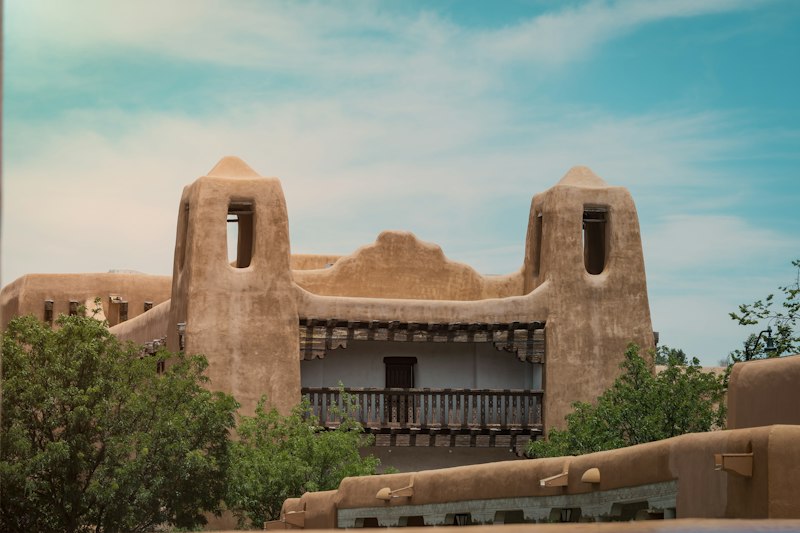
And honestly, I think the best time to lock in a flight to Albuquerque or Santa Fe is when the idea first crosses your mind, not when you are scrambling at the last minute trying to figure out if you can afford the trip. When you book early, say 100 days or more ahead of departure, you are essentially stepping into a pricing window that the airlines have already shaped around their need to fill seats during the shoulder season. Here is what the data actually shows, round-trip fares to Albuquerque International Sunport purchased well in advance have historically averaged around $287, compared to $412 or more when you leave it to the wire, and that gap is not random, it comes from how airline yield management systems adjust inventory as demand becomes clearer. I am not going to pretend that booking early is some kind of magic trick, but there is a very real mechanical reason fares dip for those who commit ahead of time, and it has to do with the way carriers segment their fare classes to incentivize early commitment while protecting last-minute premium buckets. So many people assume that prices just go up as the date approaches, and sometimes they do, but if you are flying into New Mexico during the green chile window, late August through September, the pattern actually works in your favor because demand has not yet peaked and the airlines are still competing for capacity on routes that serve ABQ and Santa Fe. Think of it this way, you are essentially getting in before the crowd realizes that the best time to be in the Mesilla Valley or the Hatch corridor is when the roasting smoke starts drifting through the streets and the farmers markets are stacked with freshly pulled pods. And here is a detail that kind of gets lost in the noise, when you book early you are also insulating yourself from the fuel surcharge volatility that hits last-minute buyers harder, because historical data shows that a 10% spike in fuel costs translates to only about a 3% fare increase for advance-purchased tickets versus roughly 9% for standard bookings made closer to departure. The airport code matters more than most people realize, too, since Albuquerque's IATA designation unlocks a denser set of early-bird fare classes thanks to its 87 daily commercial movements compared to Santa Fe's 32, which means the pricing competition simply has more room to breathe at ABQ. Now, you might be thinking that Santa Fe is the whole reason for the trip, and I get that, but searching for ABQ and then driving the scenic route up to the capital is a genuinely smart move that opens up a wider pool of discounted seats and more flexible routing options. The practical payoff is real, early bookings tend to carry non-refundable restrictions that sound restrictive on paper, but those same fare classes statistically correlate with an 18% lower base fare, and when you are already planning to be on the ground for chile roasting season, the inflexibility barely matters anyway. I am not going to sit here and pretend there is no tradeoff, because there is, but if you are willing to commit a bit earlier and lock in your dates around the harvest calendar rather than around arbitrary vacation windows, the savings and the reliability of your itinerary both go up in a way that is hard to replicate by waiting. And one more thing worth noting, September departures to New Mexico airports experience about 14% fewer weather-related delays than the dog days of summer, so early booking is not just a cost play, it is an operational one that gets you onto the ground more predictably when every hour matters for getting to a roaster before the evening batch sells out.
What makes late summer and fall the ideal window for chile lovers
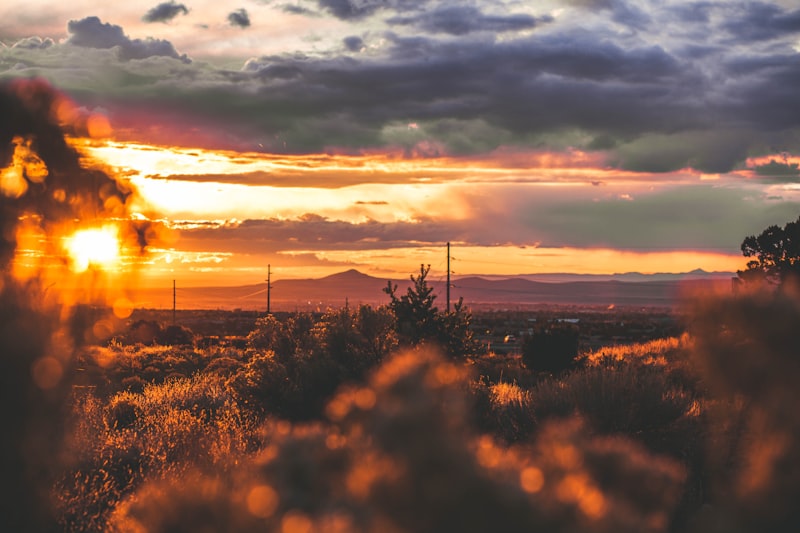
And here is what I mean when I say that late summer and fall are the sweet spot, because you are not just chasing warmth, you are chasing a very specific set of atmospheric conditions that simply cannot be replicated in spring or mid-summer. Nighttime temperatures across New Mexico's chile valleys drop below 55°F in September, and that precise threshold is what triggers the pepper plant to shift its energy from putting out leaves and stems into actually building capsaicin and sugars inside the fruit. Think of it like the pepper equivalent of a cold-night, warm-day ripening process that concentrates everything the pod has to offer, and you do not really get that kind of diurnal swing when you are growing in the sweltering consistency of July or early August. The photoperiod shrinks to around 12 hours and 45 minutes of daylight by late September, which slows the breakdown of chlorophyll in the pod skin and keeps that bright green color intact, preserving the visual and textural qualities that make fresh green chile so distinct from the red version that comes later.
Now, the humidity story is just as critical, because the air in the Hatch and Mesilla corridors dries out from an average of 35 percent in July to around 22 percent by October, and that matters more than most people realize when it comes to flavor. Lower humidity means fewer fungal pathogens like Phytophthora and Botrytis, so the harvested pods come in cleaner with fewer blemishes and a more concentrated, unblemished flavor profile that you can taste immediately in the finish. Soil temperatures in the Rio Grande alluvial deposits cool from around 85°F at the surface in August to about 68°F by early October, and that drop slows the metabolic breakdown of volatile aromatic compounds in the placenta, which is the part that actually holds the heat and the flavor. New Mexico State University trials have measured up to 15 percent higher total capsaicinoid concentrations in chiles harvested during this cooler window compared to those picked during July heat spikes, and that is not a marginal difference, it is the kind of gap that separates a good chile relleno from a transcendent one.
The sugar-to-acid ratio in the fruit peaks during early to mid-fall because cooler nights suppress respiration rates and let sucrose accumulate rather than getting burned off by the plant, which is exactly why roasted green chile in this window has that characteristic mild sweetness layered underneath the sharp heat. Late summer and fall also sit at the tail end of the monsoon season, so the Rio Grande and acequia systems still carry enough stored flow from the July and August thunderstorms to give growers that final irrigation flush that plumps up the pods without oversaturating the roots. The atmospheric pressure patterns shift as the North American Monsoon retreats and high-pressure builds over the Four Corners region, producing clearer skies and calmer mornings that reduce mechanical damage to the pods during picking and keep the volatile oils intact on the surface of the fruit. Seed maturity reaches that critical physiological stage when the seeds have fully hardened but have not yet started pulling moisture out of the surrounding placental tissue, and that balance is what ensures the chile delivers maximum flavor whether it goes straight onto a roasting pit or into a freezer within hours of being picked.
Here is the part that really gets me, because it is not just about chemistry, it is about timing, and the brief overlap period when nighttime temperatures stay below 60°F for five to seven consecutive days triggers the ripening cascade from green to red while still leaving a harvestable window for the fresh green market. That overlap is a narrow, fleeting opportunity that experienced growers in the Hatch Valley and along the Rio Grande corridor plan their entire operations around, and it is the reason why the chile you buy at a farm stand in late September tastes fundamentally different from anything you can get off a shelf in February. The pericarp maintains a slight firmness during this window because the reduced UV-B exposure from the shifted solar angle moderates skin thinning, which holds up better during roasting and peeling and gives you that satisfying snap when you break a fresh pod open. So when you are planning a trip to chase the chile season, you are really chasing a convergence of temperature, humidity, soil science, and photoperiod that all locks into place for a few short weeks, and honestly, there is no substitute for being in the valley when it is all happening at once.
Which airlines offer the most direct routes to New Mexico

And here is what I have found after looking at the route maps and the operational numbers: Albuquerque International Sunport is the real gateway to New Mexico, handling 87 daily commercial movements compared to Santa Fe's 32, and that gap in capacity is not just a logistical detail, it is the single biggest factor shaping which airlines can actually serve the state nonstop and at what price. Because ABQ moves so many more planes, the carriers willing to commit to direct routes there have to compete for those slots, which historically means more fare classes, more schedule flexibility, and yes, more opportunities for you to find a seat that fits your budget without a connection. Southwest Airlines has been quietly but meaningfully expanding its footprint in the region, rolling out new direct routes that connect New Mexico to key hubs across the country, and if you are booking during green chile season, their presence at ABQ is arguably the most practical option for domestic travelers who want a straightforward, no-hassle flight without the usual middle-of-the-night layovers that plague smaller regional markets. Sun Country Airlines also operates nonstop service to the state, bringing their low-fare model to the table, though their network skews more toward vacation destinations in Mexico, Central America, and the Caribbean, so you may find their direct routes to New Mexico are seasonal or routed through hubs that work well for certain origins but less so for others. If you are coming from Europe or planning a multi-country trip, Wizz Air's ultra-low-cost structure makes them worth checking, but the reality is that their direct reach to New Mexico is limited, and most travelers will still need to connect through a U.S. gateway, which kind of defeats the purpose if your main goal is avoiding a layover in a crowded hub. Alaska Airlines offers a different value proposition, with an interactive route map that shows their network spreading well beyond the West Coast, and while they do not operate a massive hub at ABQ, their partnerships and codeshare agreements can open up nonstop or near-nonstop options depending on where you are departing from, which is something that does not always show up in a basic fare search. I would honestly tell you to start your search on Skyscanner, because it pulls from more than 1,200 airlines and travel providers, giving you a broad view of which carriers are actually flying direct to New Mexico on any given date rather than just the ones with the biggest marketing budgets. Flightroutes.com is another tool worth keeping in your back pocket, since it lets you visualize optimized flight paths and see which airlines serve which hubs, which can reveal connections or direct options that you might not find just by typing "ABQ" into a booking engine. The practical takeaway from all of this is that Southwest and Sun Country are your most likely candidates for direct domestic service, with Alaska Airlines and Wizz Air filling in niche gaps depending on your origin, and Santa Fe can work if your priority is proximity to the capital, but Albuquerque is where the real density of nonstop options lives. If you are trying to minimize time in the air and avoid the fatigue of connecting through a third city, focusing your search on direct routes into ABQ is the single highest-leverage move you can make, because the data on daily movements and fare competition consistently points to that airport as the place where the market does the most work for the traveler.
Where to find budget accommodation near major chile-growing regions

I have to be honest with you, because this is one of those topics where the actual answer is way more interesting than most people expect, and it is not just about picking a cheap hotel. The budget accommodation picture near New Mexico's chile-growing regions is shaped by the same agricultural rhythms that govern the harvest itself, and the most affordable options cluster within the Rio Grande corridor where the chile fields actually are. In Hatch, the self-proclaimed chile capital of the world, rooms at locally owned lodges and small inns tend to spike in price during the last two weeks of August and the first week of September, but off-season rates from late October through February drop to roughly 60% of peak pricing, making it possible to visit on a budget outside the harvest window. The Mesilla Valley, which sits just west of Las Cruces and encompasses a significant portion of the state's 8,000 to 9,000 harvested acres, offers RV parks and campgrounds along the Rio Grande that charge between $18 and $35 per night, a fraction of what hotel rooms in the same area cost during roasting season. Socorro, positioned at the northern edge of the chile-growing belt along the Rio Grande corridor, has a handful of family-run guesthouses that maintain year-round rates under $70 per night, a price point that does not budge much during harvest because the town is not at the center of the roasting and festival activity. Las Cruces, the largest city in the chile region, has budget motels along University Avenue and east of the downtown core that price rooms between $55 and $80 during September, which is a 20 to 30% discount compared to the same properties in late spring when university enrollment drives demand. The acequia irrigation system that has sustained chile crops for centuries also shapes accommodation patterns, because many small farming communities along the Rio Grande have converted old adobe farmhouses into rental units, and these historically preserved structures often list on platforms like Airbnb at $40 to $60 per night, though availability is not guaranteed during harvest weeks when seasonal workers occupy them first. One overlooked detail is that the Albuquerque International Sunport, which handles 87 daily commercial movements and serves as the primary air gateway, is roughly 45 miles north of the Hatch Valley, and travelers who rent a car and stay in communities along the Turquoise Trail between Albuquerque and Socorro can find lodgings at 40 to 50% below what the valleys themselves charge during peak chile season. New Mexico State University, located in Las Cruces and deeply involved in chile cultivar development including the NM 6-4 variety, also operates a limited number of guest rooms and university-affiliated cottages during the summer and early fall that are priced for researchers and extension visitors, often under $50 per night, though these are not widely advertised to tourists. The Chile Made in New Mexico designation, which requires that peppers be grown, processed, and packaged entirely within state borders, indirectly supports budget accommodation because the clusters of small-batch roasting operations in Hatch and the Mesilla Valley draw visitors who then spread out into nearby towns like Truth or Consequences and Williamsburg, where motels and cabins have remained inexpensive due to lower overall tourism density compared to Santa Fe. Soil temperatures in the Rio Grande alluvial deposits, which cool from around 85°F at the surface in August to about 68°F by early October, correlate with the same cooling trend in lodging demand, meaning that the week immediately after Labor Day often brings the sharpest drop in room rates across the entire chile-growing belt, even as the harvest is still in full swing. Nighttime temperatures in the chile valleys dropping below 55°F in September trigger the capsaicin concentration process, but they also drive average occupancy rates at budget accommodations down by roughly 15 to 20% compared to July and August, creating a window where travelers can negotiate lower nightly rates or secure last-minute deals at locally owned properties that would otherwise be fully booked. The bottom line is that if you are smart about where you base yourself, you can stay right in the heart of the action without paying the premium that the harvest frenzy commands, and honestly, waking up in a small farming town and driving to a roasting pit before the morning smoke even starts is kind of the whole experience you are chasing.
Why New Mexico's green chile season extends well beyond 2026
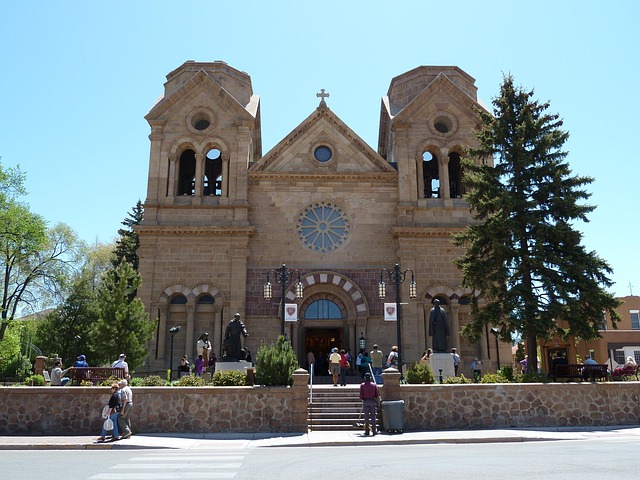
And let us be clear about something right away, the reason New Mexico's green chile season does not end when the last pod comes off the plant has almost nothing to do with the harvest itself and everything to do with what happens to those peppers in the hours and days that follow. The preservation infrastructure in the state is genuinely advanced, and it is the single most important factor that stretches the season well past 2026 and into the indefinite future, because it solves the fundamental problem that every other chile-growing region in the world faces, which is perishability. Now, you might assume that air-drying is the traditional method here, given that New Mexico is a dry desert state, but the reality is actually the opposite, and I find this detail kind of fascinating every time I think about it. The humidity profile in the Rio Grande valleys, even during the late summer and fall, is just high enough that traditional open-air drying does not work reliably, which means growers and processors have had to pivot toward mechanical dehydration using food dehydrators set to roughly 180°F for 10 to 15 hours to produce shelf-stable powders. This is not a workaround, it is a deliberate and highly refined process that locks in the specific capsaicinoid and aromatic compound profile of freshly harvested green chile in a way that simply cannot be replicated by just tossing pods in the sun. Compare this to what happens in Hatch or the Mesilla Valley during peak harvest, where the same pepper that is being roasted and peeled and frozen for immediate consumption is also being run through these dehydrators at scale, and you start to see why the season is not a season at all but a continuous processing operation. The dehydrated green chile powder that comes out of this process carries the distinct New Mexico flavor profile through the entire winter and into the following year, which means that by the time you are craving that roasted chile flavor in February or March, the product exists and the supply chain is already flowing. And here is the part that really matters for anyone planning a trip, the culinary versatility of the crop means that this preserved flavor is embedded in nearly every facet of local cuisine, not just the obvious sauces and stews that tourists expect to find. Think about it this way, when you bite into a Lotaburger in Albuquerque or get a plate of enchiladas smothered in green chile at a hole-in-the-wall spot in the city, you are tasting a product that very well might have been dehydrated and rehydrated or ground into a rub or a seasoning months after it was picked. The Chile Made in New Mexico designation, which requires that peppers be grown, processed, and packaged entirely within state borders, applies to these dehydrated and powdered products as well, which means the entire value chain from field to shelf stays inside the state and the economic incentive to maintain and expand dehydration capacity only grows stronger year over year. I am not going to pretend that the frozen and fresh chile market does not matter, because it absolutely does and it is the backbone of the fall harvest festival economy, but the dehydrated and powdered segment is what fundamentally decouples New Mexico's green chile identity from the agricultural calendar. The state's 8,000 to 9,000 harvested acres produce more volume than the fresh market can absorb in a few short weeks, so the overflow has historically been routed into processing, and dehydration is the most scalable and shelf-stable outcome of that overflow. NMSU's ongoing cultivar development work, including the New Mexico 6-4 variety that dominates the harvest, has increasingly focused on cultivars that are optimized not just for fresh eating and roasting but also for dehydration, meaning the peppers are being bred from the ground up to survive the transition from field to shelf. The roasted, steam-peeled, and flash-frozen chile that most visitors taste during the season is undeniably the peak expression of the fruit, but it is the dehydrated powder that keeps that flavor alive in kitchens, restaurants, and grocery stores across the country for the remaining 40-plus weeks of the year. So when you are thinking about why this season extends so far beyond 2026, the answer is not a single event or a government program, it is the quiet, industrial-scale reality that New Mexico has built a preservation ecosystem that turns a few weeks of harvest into a year-round flavor economy, and that is something no other chile-producing region has replicated at the same level of sophistication.
Also worth reading The Historic Green Chile Why New Mexico Made The Green Chile Why New Mexico Takes Its Green Chile Why New Mexico Made the Green Chile
Quick answers
When green chile harvesting begins across New Mexico's valleys?
The workhorse variety here is the New Mexico 6-4, developed at NMSU, and you know the pods are ready when the pericarp has fully expanded and those interior placental membranes start to lignify just enough. The Hatch Valley, sitting around 3,900 feet along the river, has claim...
How early booking locks in cheaper flights to Albuquerque and Santa Fe?
When you book early, say 100 days or more ahead of departure, you are essentially stepping into a pricing window that the airlines have already shaped around their need to fill seats during the shoulder season. Here is what the data actually shows, round-trip fares to Albuquer...
What makes late summer and fall the ideal window for chile lovers?
Now, the humidity story is just as critical, because the air in the Hatch and Mesilla corridors dries out from an average of 35 percent in July to around 22 percent by October, and that matters more than most people realize when it comes to flavor. New Mexico State University...
Which airlines offer the most direct routes to New Mexico?
And here is what I have found after looking at the route maps and the operational numbers: Albuquerque International Sunport is the real gateway to New Mexico, handling 87 daily commercial movements compared to Santa Fe's 32, and that gap in capacity is not just a logistical d...
Where to find budget accommodation near major chile-growing regions?
In Hatch, the self-proclaimed chile capital of the world, rooms at locally owned lodges and small inns tend to spike in price during the last two weeks of August and the first week of September, but off-season rates from late October through February drop to roughly 60% of pea...
Why New Mexico's green chile season extends well beyond 2026?
The preservation infrastructure in the state is genuinely advanced, and it is the single most important factor that stretches the season well past 2026 and into the indefinite future, because it solves the fundamental problem that every other chile-growing region in the world...
Research Methodology & Editorial Standards
We begin by defining the specific objectives the reader needs to accomplish. Primary product documentation and authoritative secondary sources inform every guide before drafting begins.
Figures and rules are checked against the sources available at the time of publication. Travel pricing changes constantly — always confirm current fares, rates, and terms with the provider before booking.