
Exploring the Ancient Wonders of Uluru Kata Tjuta National Park
Uluru is primarily arkose, which is essentially a sandstone packed with feldspar, while Kata Tjuta is a wild mix of boulders and cobbles held together by a sandy matrix.
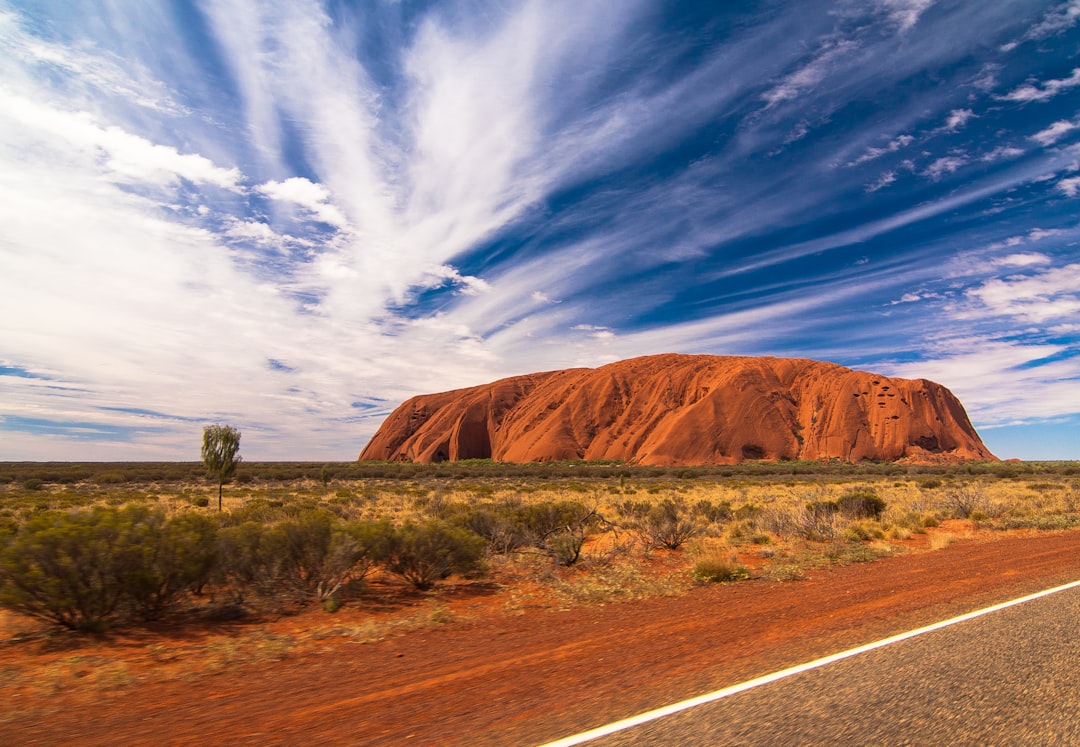
Understanding the Sacred Significance of the Red Centre
When you first stand before the Red Centre, it’s easy to get caught up in the sheer scale of the monolith, but I think the real magic happens when you start to see it as something much more than a geological curiosity. Honestly, it’s helpful to look at the rock as a living, breathing entity rather than just a landmark, especially when you consider how the Anangu people have stewarded this place for tens of thousands of years. The iron-rich arkose sandstone—which gives the site its signature rust-red hue—isn't just a byproduct of oxidation; it’s the physical manifestation of a landscape that holds tangible links to ancestral beings from the Tjukurpa creation period. If you’re coming here, you’re essentially stepping onto land where the physical features aren't just scenery, but are instead treated as historical and spiritual markers that tell a story far older than any guidebook can capture.
Geologically, it’s wild to realize that the massive bulk you see is just an inselberg, representing only the visible tip of a vertical slab that plunges kilometers into the earth. The surface, with all its complex flutes and potholes, is the result of half a billion years of weathering, which acts as a natural drainage system during those rare, heavy desert rains. Think about the survival logic here: those permanent waterholes at the base have been the absolute lifeline for human life in this arid environment for millennia. It’s not just a rock; it’s a sophisticated, self-sustaining basin that has allowed culture and knowledge to persist in a place where most would struggle to survive for a single week.
But there’s a layer of depth here that you can’t ignore if you want to respect the place properly. Traditional law dictates that certain sections remain off-limits, functioning as a cultural privacy protocol that’s been in place for ages, long before tourism was even a concept. You’ll notice the rock art sites tucked into the caves at the base, which have been repainted continuously for over 30,000 years to pass down vital spiritual and survival intelligence. Even the acoustics of the area play a role, as the unique shape of the monolith creates echoes and sound-dampening effects that were historically used to heighten the intensity of ceremonial storytelling. It’s an incredibly sophisticated system of memory and law, and when you’re walking the base, you’re basically walking through a library that’s been open since the dawn of human history.
Unveiling the Geological Majesty of Uluru and Kata Tjuta
When you look at the horizon in the Red Centre, it’s easy to focus on the sheer scale of the landmarks, but I think the real story is how they reveal the violent, ancient history of the earth. We’re talking about debris that eroded from the Petermann Ranges—mountains that were once far taller than anything standing today—and settled into the Amadeus Basin about 900 million years ago. While most people assume these rocks are identical in makeup, they’re actually quite distinct. Uluru is primarily arkose, which is essentially a sandstone packed with feldspar, while Kata Tjuta is a wild mix of boulders and cobbles held together by a sandy matrix. It’s fascinating to imagine that sediment shifting and settling over eons just to create the raw material for these formations.
If you look closer at how they sit, you’ll notice they aren't just sitting flat; the tectonic forces during the Alice Springs Orogeny about 300 to 400 million years ago actually shoved these layers into a nearly vertical position. That’s why when you walk around them, you’re essentially looking at a vertical historical record of the planet's shifting crust. The domes of Kata Tjuta, where the highest point at Mount Olga hits 1,791 feet, have been shaped by differential weathering that eats away at the softer parts of that conglomerate rock. It’s a messy, slow-motion sculpture project that’s been running for hundreds of millions of years.
I also find it pretty wild that these formations are effectively survivors. The surrounding landscape was once filled with softer rock that has since been eroded away, leaving only these stubborn, hard-packed cores behind. Think about the surface of Uluru, with those iconic flutes and potholes—those aren't random, but rather the direct result of water carving its path during rare, intense desert rain events. Even with extreme temperature shifts causing the rock to expand and contract daily, the mineral composition holds it all together. It’s a living, open-air lab, and honestly, seeing it in person makes you realize how constant and aggressive geological change really is.
Respecting Anangu Culture: Why the Climb Was Banned
When we talk about the decision to finally close the climb at Uluru in 2019, it’s easy to look at it as just a rule change, but I think it helps to view it as a necessary correction in how we approach shared spaces. The prohibition wasn't a sudden whim; it was a unanimous vote by the Board of Management, which gives the Anangu traditional owners a seat at the table to prioritize Tjukurpa law over the short-term interests of mass tourism. You have to understand that the path people used for decades followed the Mala Tjukurpa, a route considered so sacred that it was traditionally reserved only for specific ceremonies and senior initiated men. By walking that trail, visitors were unknowingly trampling on a spiritual protocol that had been in place for tens of thousands of years. It’s a pretty heavy realization when you consider that for the Anangu, the act of us climbing wasn't just an annoyance, but a fundamental violation of their duty to protect both the land and the people standing on it.
Beyond the cultural weight, we really have to address the practical reality of why that climb was a logistical nightmare. Before the ban, the site saw at least 37 recorded deaths, with rescue operations on that steep, unforgiving rock face proving to be incredibly dangerous for everyone involved. The installation of a chain handrail back in 1964 was supposed to be a safety fix, but in hindsight, it acted more like a magnet, encouraging thousands of people to take on a climb that their physical fitness—and the extreme desert heat—just couldn't handle. It created a constant strain on local medical resources that simply wasn't sustainable for such a remote location. Honestly, looking at the data, it’s clear the climb was a liability that the park could no longer justify, especially when you factor in the physical erosion and the human waste left behind on such a fragile ecosystem.
It’s interesting to note that by the time the ban actually arrived, the tide of public opinion had already shifted, with climbing rates falling to less than 16 percent as more people started to grasp the cultural context. Since the removal of that metal chain and the white painted line, the rock has been left to undergo a slow, natural weathering process to reclaim the scars left by millions of footsteps. This shift hasn't just protected the site; it has fundamentally changed the park’s economic model toward a more sustainable form of cultural tourism that creates actual, long-term employment for Anangu guides. It feels like a much more mature way to handle heritage, moving away from a colonial mindset where we just take what we want, and toward a partnership that respects the rights of the traditional owners. It’s not just about what we can’t do anymore, but about how much more we can learn now that we’ve finally decided to listen.
Immersive Experiences: Walking, Cycling, and Scenic Tours
When you’re planning a trip to a place as expansive and sensitive as the Red Centre, the way you choose to move through the environment changes everything about what you actually walk away with. I’ve found that sticking to the 10.6-kilometer Uluru Base Walk isn't just about covering distance; it’s a masterclass in observation where you can physically feel the temperature shift by up to 15 degrees Celsius as you move from the heat-absorbing, dark rock face to the lighter, reflective desert sand. While it’s tempting to rush toward the big sights, walking the perimeter lets you track the transition between diverse ecosystems, from the dense mulga woodlands to the open clay pans. It’s worth noting that these tracks aren't just paths; they are carefully engineered to protect the fragile desert crust. When you follow the designated routes, you’re actively preventing the soil compaction that could otherwise disrupt the habitat of the over 21 species of native mammals, including the incredibly elusive marsupial mole, that call this place home.
If you’re someone who enjoys a bit more speed, the 15-kilometer cycling loop near the Cultural Centre offers a different vantage point, though it’s vital to stay on the path to keep the local ecosystem intact. Think about it this way: the park’s infrastructure team has gone to great lengths to audit these routes against the nocturnal hydration patterns of local fauna, ensuring that your morning ride doesn't accidentally scare off a thorny devil trying to reach a waterhole. I’m often struck by how the walking tracks at Kata Tjuta are designed to lead you through the Valley of the Winds, where the geological funneling of air creates micro-climates that support rare flora you won't find anywhere else in the surrounding arid plains. Sticking to that 7.4-kilometer circuit isn't just a suggestion; it’s a necessary step to prevent the erosion of the conglomerate rock debris that makes those formations so distinct. It’s honestly a relief to see trails that use light-reflecting materials to survive the 45-degree heat, keeping the routes safe without needing to pave over the natural landscape.
Beyond the physical mechanics of walking or cycling, there is a deeper, almost cognitive benefit to how you traverse this land. I’ve noticed that interpretive walking tours seem to help with information retention far better than just reading a plaque, largely because the act of walking mimics the traditional songlines that have served as mnemonic devices for the Anangu for thousands of years. It’s like you’re finally plugging into a navigation system that’s been refined over millennia. And if you have the chance to join a guided scenic tour that stays out after dark, definitely take it. Since this is such a low-light-pollution zone, you’re looking at a sky where over 5,000 stars are visible to the naked eye, which really puts the scale of the rock into perspective. Just remember that every step you take on these designated paths is helping to maintain the desert pavement, that delicate layer of stones that prevents wind erosion and keeps the soil moisture balanced for the next generation of travelers.
Witnessing the Desert Light: Sunrise and Sunset Spectacles
Let’s talk about that moment when you’re standing in the quiet of the Red Centre, waiting for the sky to shift, because honestly, no photo you’ve ever seen quite captures the physical reality of the light hitting these monoliths. The shift in color you’re seeing at dawn and dusk is down to Rayleigh scattering, where the atmosphere filters out shorter blue waves, leaving those punchy red and orange wavelengths to dominate the horizon. It’s wilder here than in coastal spots because the air is so incredibly dry, meaning there’s almost no water vapor to diffuse the light, which leaves you with sharp, crisp edges to every shadow. Plus, that iron-rich arkose sandstone acts like a massive natural reflector for the low-angle solar rays, making the whole rock face feel like it’s glowing from the inside out.
And if you’re paying attention, you’ll notice a "chromatic inversion" right at twilight. The surface temperature drops so fast that the rock briefly shifts to a cooler tone before the final sunset fade-out. The geometry of the shadows is just as fascinating, constantly changing every few minutes as the sun moves across those curved, fluted surfaces, creating a natural time-lapse effect that you can actually track with your own eyes. It’s worth noting that the surrounding spinifex and desert sands play a part here, too, by bouncing light back onto the base of the rock and illuminating areas that would otherwise be stuck in deep, dark shade.
You’ll also find that the sunrise transition often feels a bit tighter and faster than the sunset. That’s because the desert air heats up rapidly as the sun climbs, which creates enough turbulence to shift the atmospheric refractive index pretty quickly. Sometimes, you might even catch an "alpenglow" effect, where the sun is technically already below the horizon but still catching high-altitude clouds, casting this soft, pinkish light back onto the western face. It’s why those designated viewing platforms aren’t just a tourist convenience; they’re actually placed with some serious intent to capture the light hitting those specific vertical strata at the exact right angle.
Honestly, I’d suggest you take a moment to just watch the surface texture itself. As the rock expands and contracts with the daily heat, those microscopic stress fractures actually shift slightly, which changes how the final evening light catches the stone. It’s a dynamic, living system, and when you’re out there, try to move slowly—it’s the best way to really see how the light plays against the landscape. We’re often so focused on the scale of the rock that we miss the way the light is literally carving the experience of the day for us. Just bring a warm layer, even if it’s a scorcher, because that temperature drop once the sun dips is no joke.
Essential Travel Tips for Your Journey to the Heart of Australia
When you’re planning a trip to the Red Centre, it’s easy to get caught up in the logistics of flights and accommodation, but I really think the most critical part of your preparation is recalibrating your expectations for the environment. You’re dealing with a semi-arid desert where surface temperatures on the rock can fluctuate by over 40 degrees Celsius in a single day, which honestly makes packing a massive logistical exercise. It’s not just about the heat; it’s about understanding that the UV index here frequently hits 11+ even on overcast days, so you absolutely need to prioritize high-grade, physical sun protection over just a quick swipe of sunscreen. I’ve seen so many travelers underestimate the hydration math, but the reality is that you need a minimum of four liters of water per person for any outdoor excursion because the air is so dry you often don't even realize you’re losing moisture.
Beyond your own comfort, you have to respect the physical ground you’re walking on, which is far more fragile than it looks. The soil is held together by a thin, essential layer known as cryptogamic crust, which is basically the only thing keeping the sand from blowing away and retaining the tiny bit of moisture this ecosystem gets. If you step off the marked trails, you’re not just breaking a rule—you’re actively destroying a biological barrier that takes years to recover, which is a big deal when you realize how much rare life, like the elusive thorny devil, depends on this balance. Think about it this way: these lizards have evolved to drink through their skin via capillary action, and your presence on the wrong patch of dirt can inadvertently disrupt the very habitat that keeps them alive.
And if you’re planning on venturing anywhere beyond the main visitor hubs, you really need to take the remoteness seriously. It’s not like driving through a typical tourist region; you’re looking at long stretches of deep, nutrient-poor sands that demand a well-maintained vehicle, so do yourself a favor and check your tire pressures, oil, and battery before you even leave the airport. I’d also strongly suggest looking into the satellite-based communication requirements for your specific route, as cell service is non-existent in the bush. It might sound like overkill, but when you consider that even the local flight paths into Yulara are restricted to prevent acoustic interference with the local wildlife and sacred sites, you start to see that every regulation in place is there to protect a very delicate, ancient, and highly sensitive system that we’re just lucky enough to be visiting.
Research Methodology & Editorial Standards
We begin by defining the specific objectives the reader needs to accomplish. Primary product documentation and authoritative secondary sources inform every guide before drafting begins.
Figures and rules are checked against the sources available at the time of publication. Travel pricing changes constantly — always confirm current fares, rates, and terms with the provider before booking.