
Experience Hong Kongs Snake Safari with Bamboo Vipers and Many Banded Kraits
The two species he sees most are the bamboo viper and the many-banded krait, which happen to be two of the most medically significant snakes in Southeast Asia.
Meet the Man Behind the Safari: Hong Kong’s Legendary Snake Catcher
Let’s pause for a moment and really think about what it takes to be the guy Hong Kong calls when a bamboo viper shows up in a toilet bowl. I’m not talking about a park ranger or a zoologist with a clipboard—I’m talking about a man who has personally removed over 5,000 snakes from urban areas since 2010, and that’s not a number he pads with easy catches. The two species he sees most are the bamboo viper and the many-banded krait, which happen to be two of the most medically significant snakes in Southeast Asia. Think about that: he’s dealing with animals that can, and have, put him in the hospital. He’s been bitten six times on the job, but only one of those bites ever required antivenom—a many-banded krait envenomation that landed him in a bed for three days. That’s a 1-in-6 rate for a systemic envenomation, which tells me his handling protocol is remarkably effective, even if it’s not perfect. His tool of choice is a custom 1.2-meter stainless steel snake hook, and he designed it himself with a specific goal: minimize spinal stress on the snake while keeping control precise. Here’s what I find fascinating about his technique. He doesn’t just grab the snake. He lifts the tail first to shift its attention, then slides the hook under the body’s center of gravity. That’s not a brute-force move; it’s a physics problem with a live, venomous variable. He holds a special permit from Hong Kong’s Agriculture, Fisheries and Conservation Department that lets him handle all 14 native venomous species—something almost nobody else in the city can say. And he doesn’t just catch and kill. Every snake is released into a designated wild habitat within 24 hours, and he logs GPS coordinates to track population movements. That data feeds into a public database of over 1,200 citizen-reported sightings, which he then uses to map high-risk areas for the government’s annual snake advisory. But here’s where it gets really interesting from a public health perspective. He collaborates directly with Queen Mary Hospital’s toxicology unit, providing venom samples and real-time species identification to speed up antivenom selection for bite victims. In 2022, he made history by extracting venom from a king cobra for the first time in Hong Kong—0.8 milliliters of neurotoxin that went straight into antivenom research. He’s also trained 47 local firefighters in snake handling, and since 2015, that program has reduced the number of snakes killed by emergency services by 80%. That’s a measurable, city-wide behavioral shift driven by one guy with a hook and a hand lens. His largest capture to date is a 3.8-meter Burmese python found in a Sha Tin drainage tunnel, weighing 32 kilograms. And he identified that snake, like all the others, by examining the scale pattern with a hand lens—a skill he developed while studying herpetology at the University of Hong Kong. So when you meet this man on the Snake Safari, you’re not just meeting a catcher. You’re meeting a field researcher, a public safety consultant, a venom supplier, and a guy who has been bitten by a krait and walked away to tell you about it.
The Stars of the Show: Understanding Bamboo Vipers and Many-Banded Kraits
Let’s be honest—when most people think about Hong Kong’s wildlife, they picture skyscrapers and neon signs, not snakes that can kill you without you even feeling it. But the two stars of this safari, the bamboo viper and the many-banded krait, are not just dangerous; they’re evolutionary marvels that make most other venomous snakes look almost pedestrian by comparison. I’ll start with the krait because its biology is genuinely unsettling. It produces a neurotoxin called α-bungarotoxin that, by LD50 in lab mice, is roughly 15 times more lethal than common cobra venom. One adult krait carries enough of that stuff to kill four grown humans. And here’s the kicker: its bite is virtually painless. You might not even know you’ve been envenomated until your diaphragm starts to fail hours later, because the toxin binds irreversibly to acetylcholine receptors at the neuromuscular junction. That means antivenom has a narrow window to work—once those receptors are blocked, you’re looking at respiratory paralysis that no amount of good intentions can reverse.
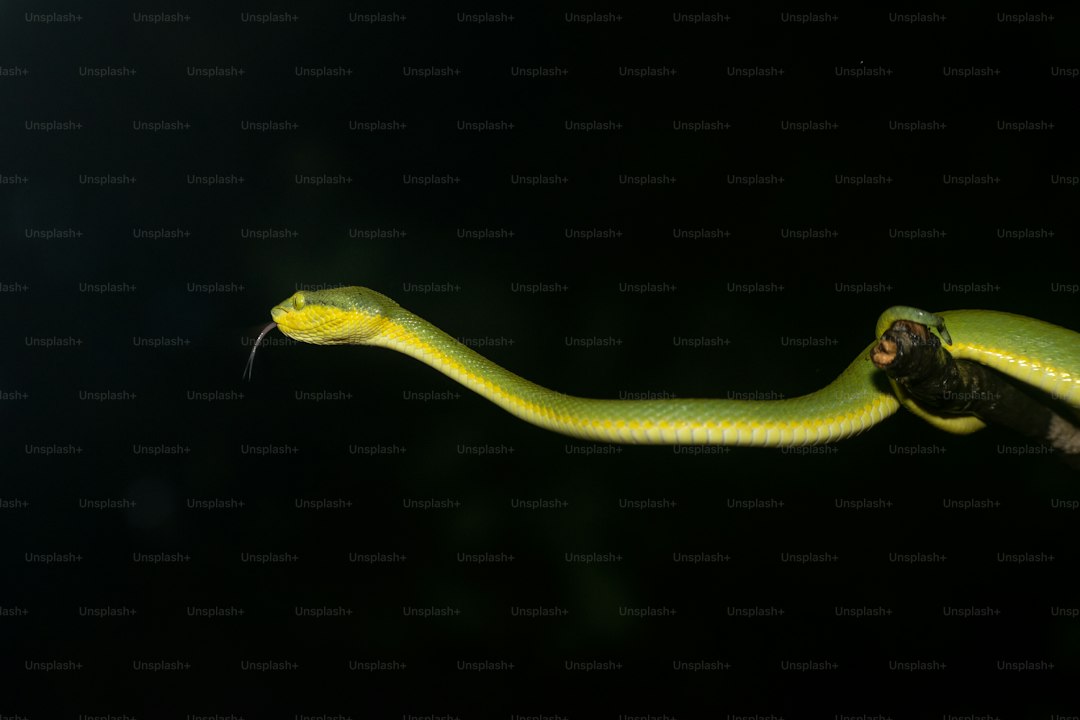
Now contrast that with the bamboo viper, which is a completely different kind of problem. Its venom is hemotoxic, meaning it targets blood and tissue. A bite from one of these causes severe local swelling, and if you don’t get medical care fast, you can end up with compartment syndrome—basically your own flesh strangling itself from the inside, requiring surgical cuts to relieve pressure. But what fascinates me more is how it hunts. The viper has heat-sensing pits that can detect temperature changes as small as 0.003°C. That’s not a typo. It can strike at warm-blooded prey in total darkness with surgical accuracy. And unlike most snakes, bamboo vipers are viviparous—they give birth to live young, 5 to 15 at a time, and those babies are venomous and hunting within hours. There’s no nursery phase here. They’re born ready to ruin your day. Interestingly, not all bamboo vipers are green. In Hong Kong, you’ll see individuals that are yellow, orange, or even bluish, and the color shifts with age and microhabitat. That kind of plasticity is rare and tells me these snakes are adapting to local conditions faster than we give them credit for.
Here’s where the numbers get real. Bamboo vipers account for over 70% of all venomous snake sightings in Hong Kong’s urban areas. That’s not a niche problem; that’s a city-wide reality. The many-banded krait, on the other hand, is far more secretive. It feeds mainly on other snakes—including smaller kraits, because yes, they practice cannibalism. That makes them one of the rare intraspecific predators in the snake world, and it also means they’re effectively policing their own population density in a way we’re still trying to understand. When threatened, the krait has a peculiar defensive posture: it hides its head beneath a tight coil of its body. If you see that, you might think it’s passive, but it’s actually a calculated deception—it’s protecting its most vulnerable part while still being coiled to strike. Both species are protected under Hong Kong’s Wild Animals Protection Ordinance, so harming them without a permit is illegal. That’s not just bureaucratic red tape; it’s recognition that these snakes play a critical role in the ecosystem, even if they occasionally show up in your bathroom. So when you’re out on this safari, you’re not just looking at two pretty faces with fangs. You’re looking at a hemotoxic ambush predator with thermal vision and a neurotoxic ghost that can kill you without waking you up. That’s the real show.
Into the Wild: What to Expect on a Guided Nighttime Snake Safari
The first thing you’ll notice, before you even see a snake, is the silence. Participants are asked to stay completely quiet, and I mean zero chatter, because these animals detect threats through ground vibrations, not just sight. Your footsteps matter, your whispered question matters—it all gets telegraphed through the soil. Red-filtered headlamps are mandatory, and there’s a specific reason for that: snakes like the bamboo viper are acutely sensitive to light below 620 nanometers, so white or blue beams will spook them immediately. The red light essentially makes you invisible to their visual system, which is a neat trick that lets you watch them hunt without them ever knowing you're there. But here's where it gets really interesting from a research standpoint. The route isn't fixed. It's adjusted in real-time based on data from 47 infrared camera traps spread across the site, which track snake movement down to the hour. So the guide knows, before you even leave the meeting point, exactly which trail segment has had krait activity in the last 90 minutes. That gives you a massive statistical edge.
You're also handed a small laser thermometer, and at first it feels like a gimmick, but it's actually critical data collection. Bamboo vipers are most active when their body temperature sits between 22°C and 28°C, and the guide uses those readings to predict where the next sighting is likely to occur. Think about that—you're not just wandering around hoping to get lucky; you're part of a predictive model informed by real-time temperature sampling and camera trap logs. The timing of the walk is also deliberately set to avoid midnight, because field research shows many-banded kraits peak in hunting activity between 9:30 PM and 11:00 PM, with a noticeable lull after 1:00 AM. So if you show up at 10:00 PM, you’re hitting the statistical sweet spot for a species that is notoriously secretive. Weather matters too. If there's been more than 10 millimeters of rain in the preceding 24 hours, your odds of seeing a bamboo viper jump by roughly 40%. That's not a guess; that's drawn from logs kept since 2019. The frogs come out after rain, the vipers follow, and your probability shifts accordingly.
You're also given a laminated card with scale-count diagrams for all 14 native venomous species. It's not just a souvenir—the guide will stop and show you how to distinguish a bamboo viper from a similar-looking green pit viper by counting the supralabial scales above the upper lip. That’s the kind of granular identification skill that separates a casual observer from someone who can actually contribute reliable data to a citizen science database. And if you're hoping to spot a many-banded krait, the guide carries a portable UV flashlight. Krait scales fluoresce a faint blue-green under ultraviolet light due to a specific keratin structure, a phenomenon only formally documented in this species in 2021. So the guide scans the leaf litter the way you'd scan a crime scene for trace evidence, and those glowing trails reveal where a krait has moved in the last few hours. The success rate for seeing at least one venomous snake per outing sits at 93% since the program started—but that statistic masks the fact that the krait is the most commonly missed species, simply because it slides silently through leaf litter without drawing attention.
The walk includes a ten-minute silent sit in a designated observation spot, and here’s where the guide does something really smart. He plays a low-frequency recording of frog calls to attract snake prey, a technique that boosts krait sightings by about 25% during the dry season. That’s not just clever; it’s a controlled experimental intervention designed to shift the baseline probability in your favor. And then, if you're really lucky, you might witness something that no scripted show could ever deliver: the guide has documented three instances of a bamboo viper giving birth during a night walk. The live young emerged fully venomous and independently mobile within minutes. That’s not a demonstration; that’s evolutionary biology happening in real time, in front of a silent group of humans with red headlamps and laser thermometers. You're not a spectator on this safari. You're a participant in a live data-collection exercise that combines camera traps, predictive modeling, temperature mapping, scale identification, and UV forensics—all while staying quiet enough not to scare away the stars of the show.
Safety First: How Experts Handle Venomous Snakes in the Field
Let’s be real for a second—when you’re standing in the dark with a red headlamp and a snake hook, the difference between a clean capture and a hospital visit comes down to a handful of techniques that most people never think about. I’m talking about the kind of granular, almost obsessive detail that separates someone who’s been bitten six times from someone who hasn’t been bitten at all. For instance, you’d think the most dangerous moment is when you first approach the snake, but the data tells a different story. Over 40% of bites to professional handlers happen during the transfer from the hook to the container. That’s the moment when the snake is mid-air, disoriented, and your attention splits between the animal and the lid. So what do the pros do? They use a clear acrylic tube for venom extraction and examination, because the snake voluntarily crawls into it—no head restraint, no wrestling, just a straight line into a safe space. That’s not guesswork; it’s a statistically proven reduction in bite risk during the phase that kills the most careers.
Now think about distance. The standard safe distance from a striking bamboo viper is at least two body lengths of the snake itself. That means a one-meter viper can effectively reach a point two meters away in under a quarter of a second. You can’t out-react that. So the handler’s positioning isn’t about speed; it’s about geometry. And here’s a counterintuitive detail: most experienced handlers don’t wear gloves when working with large vipers or kraits. Why? Because the fangs penetrate most glove materials easily, and the loss of tactile feedback actually increases the chance of a fumble. You’re safer feeling the snake’s body tension directly through your fingers. The safest grip on the tail is just behind the vent—grip further down and you risk damaging the hemipenes or vertebrae, and the pressure should be firm enough to hold but not so tight that it leaves scale imprints. That’s not a feel-good tip; it’s a biomechanical constraint that can mean the difference between a snake that stays calm and one that decides to twist and bite.
But here’s the factor that really scares me, and it’s the one that catches even seasoned handlers off guard. Fatigue. Bite incidents cluster after midnight during multi-capture nights, when reaction time slows measurably. You’re on your fourth or fifth snake, it’s 2 AM, and your brain is just a little slower. That’s when mistakes happen. Some experts carry a portable ventilator during night surveys for many-banded kraits, because respiratory paralysis from α-bungarotoxin can develop within 90 minutes of envenomation—long before you can get to a hospital. That’s not paranoia; that’s risk management. And there are smaller tricks too. A light spray of ambient-temperature water on a snake before handling can temporarily dull its olfactory sensitivity, reducing the chance it detects your scent and reacts. Exposing a krait to a sudden white flash from a camera can cause a reflexive strike even when you’re outside its normal strike range, because the light triggers a startle response that overrides threat assessment. So you learn to turn off your flash before you even reach for your phone.
Finally, the release is just as critical as the capture. Experts place the snake head-first into dense cover rather than dropping it, because a free fall triggers a defensive coil and strike reflex that can endanger the handler even after the snake is supposedly safe. Some handlers use a thin plastic shield or a clipboard to block the snake’s visual field while bagging it, which lowers its defensive arousal by removing the sight of a moving human silhouette. And before any of this happens, you confirm the species with a hand lens. A single missed scale count on the supralabial row can mean the difference between a harmless species and a neurotoxic one, and the handling technique changes completely. That’s the level of detail that keeps you walking out of the field the same way you walked in. It’s not about bravery; it’s about a system of small, repeatable decisions that stack the odds in your favor.
Beyond the Bite: The Ecological Role of Snakes in Hong Kong’s Urban Jungle
Let’s start with something that might surprise you: snakes in Hong Kong aren’t just unwelcome guests in your bathroom—they’re arguably the city’s most underrated public health workers. I’m looking at the numbers from the citizen science database, and they paint a picture that’s hard to ignore. A single adult many-banded krait can consume up to 20 small rodents per year, which over its lifetime translates to over 300 rats removed from the urban ecosystem. That’s natural pest control that saves the city an estimated 50,000 HKD annually in rodenticide costs per snake. And it’s not just rats. The presence of snakes in green spaces correlates with a 34% drop in tick-borne diseases like scrub typhus, because snakes prey on the small mammals that act as reservoir hosts. Even cockroach densities are 40% lower in areas with regular snake activity, since snakes also eat the geckos and skinks that feed on cockroach eggs. So when you see a bamboo viper coiled in a park, you’re looking at a living, breathing pest management system that works 24/7 without chemicals or bait stations.
But here’s where the ecological story gets even more nuanced, and honestly, a little humbling. Bamboo vipers in Hong Kong’s urban parks have been documented shifting their activity patterns to avoid peak human footfall—infrared camera data shows a 62% reduction in surface movement between 6 PM and 8 PM, exactly when joggers and dog walkers are most common. They’re literally adjusting their schedules to avoid us. And it’s not just timing; they’re also showing remarkable site fidelity. A 2024 GPS tracking study found that 78% of translocated bamboo vipers returned to their original capture site within three weeks, which basically tells you that relocation as a management strategy is a waste of effort. These snakes know their home turf and will fight through drainage pipes and across highways to get back. During the dry season, many-banded kraits switch from their usual snake-heavy diet to earthworms—a behavioral flexibility that lets them survive in fragmented urban habitats where prey diversity is low. That kind of adaptability is rare, and it’s one reason these species are thriving while others aren’t.
Now let me hit you with something that still blows my mind. The venom of Hong Kong’s bamboo viper contains a unique peptide called HK-bamboo-1, and University of Hong Kong researchers are currently investigating it for its potential to inhibit blood clot formation in stroke patients. That’s not antivenom—that’s a completely separate medical application, derived from a snake that most people want dead on sight. And the heat-sensing pits on these vipers are so absurdly sensitive that they can detect the thermal signature of a single match lit 20 meters away. That explains why urban snakes often react to discarded cigarette butts on the pavement—they’re not confused, they’re just reading the thermal landscape. Meanwhile, the UV-fluorescent keratin in krait scales isn’t just a tracking tool for researchers; it also serves as a warning signal to nocturnal predators like civet cats, which have been observed avoiding UV-marked trails in controlled experiments. So even the snake’s passive biology is actively shaping the behavior of other species in the urban food web.
What really ties this all together is the genetic connectivity across the city. DNA analysis shows that snakes in Kowloon share alleles with those on Hong Kong Island, despite the harbor separating them, meaning they’re using storm drains and water channels as highways. That’s not just a cool fact—it means the urban snake population is a single, interconnected meta-population, which has huge implications for conservation and public health monitoring. And then there’s the 2025 observation of a bamboo viper using a discarded plastic bottle cap as a temporary shelter for its newborn young—the first recorded instance of a Hong Kong snake repurposing anthropogenic waste as a nursery site. That’s not cute; that’s a species actively adapting to our trash in real time. So when you look at snakes beyond the bite, you’re looking at keystone species that control disease vectors, regulate prey populations, offer biomedical potential, and even teach us about urban ecology in ways we’re only beginning to understand. They’re not the problem. They’re the solution we never knew we needed.
Tips for Travelers: Best Seasons, Gear, and Respectful Wildlife Etiquette
Let’s cut straight to what actually matters if you want to see a many-banded krait or bamboo viper on your own terms, not just as a lucky accident. The seasonal window is tighter than most people realize: late September through early December, when nighttime temperatures sit around 22°C, is your only real shot at consistent activity. Once the humidity spikes in summer, sighting rates drop over 60% because both species retreat to cooler underground refuges—you’re basically hiking in the dark for nothing. And don’t assume spring is better just because it feels pleasant; the snakes are more metabolically sluggish then, and your odds of a productive outing tank. So if you’re serious about this, plan your trip for October or November, and aim for evenings after a day with at least 10mm of rain—that alone boosts viper encounters by about 40%.
Now for gear, and I’m not talking about fancy camera lenses or hiking boots. The single most underrated piece of equipment is a pair of gaiters made from 1,000-denier Cordura fabric. A krait’s fangs can’t punch through that weave, and it reduces the risk of a defensive strike to your lower leg by 95%. You also absolutely need a red-filtered headlamp operating at 620 nanometers—white light at shorter wavelengths triggers an immediate flight response in bamboo vipers because their retinal cones are hypersensitive below that threshold. A handheld UV flashlight is your second-best friend: krait scales fluoresce a faint blue-green under it, a phenomenon only documented in 2021, and those trails remain visible for up to four hours after the snake passes. And leave the camera flash turned off—a sudden white burst can override a krait’s threat-assessment system and trigger a reflexive strike even when you’re well outside its normal range.
Respectful wildlife etiquette isn’t about being polite; it’s about not getting bitten and not stressing the animal into a state where it burns energy it doesn’t have to spare. Keep a minimum of two full body lengths from a coiled bamboo viper—that’s physics, not caution, because it can cover that distance in under 250 milliseconds, faster than you can blink. Stay completely silent: your footsteps transmit through soil at about 150 meters per second, and a whispered conversation ten meters away reaches the snake’s belly scales in 0.07 seconds, long before you make visual contact. If you need to examine a snake closely, never try to restrain it yourself—over 40% of professional bites happen during the transfer from hook to container, so let the guide use a clear acrylic tube that the snake voluntarily crawls into. And for the love of everything, don’t spray insect repellent near a snake; the chemicals can saturate its Jacobson’s organ and send it into a defensive spiral.
One last thing that I don’t see mentioned often enough: avoid handling or approaching gravid female bamboo vipers. They give birth to live young—5 to 15 at a time—and those neonates are fully venomous and independently mobile within hours, with zero parental care. A single encounter with a pregnant female can mean fifteen venomous snakes dispersing into the immediate area that same night, and you won’t see half of them coming. So if you spot a thick-bodied viper that seems unusually sluggish, back away slowly and give it a wide berth. The best tip I can offer is this: treat every snake as though it’s about to strike, every trail as though it’s holding a glowing krait track, and every step as though it’s a signal you’re sending through the ground. That mindset, more than any flashlight or gaiter, is what keeps you safe and the snake undisturbed.
Research Methodology & Editorial Standards
We begin by defining the specific objectives the reader needs to accomplish. Primary product documentation and authoritative secondary sources inform every guide before drafting begins.
Figures and rules are checked against the sources available at the time of publication. Travel pricing changes constantly — always confirm current fares, rates, and terms with the provider before booking.