
Cruise Deals That Convert Even the Biggest Skeptics
This guide debunks the "balcony tax" myth and shows how repositioning cruises, guarantee cabins, and Wave Season deals can make a cruise cheaper per day than a land-based hotel-and-car rental.
| Takeaway | Detail |
|---|---|
| Repositioning cruises cut per-day costs by 50–70% | One-way sailings in April–May and September–November offer the steepest discounts because demand is low and itineraries are heavy on sea days. |
| Guarantee cabin bookings save 10–20% and can yield free upgrades | Let the cruise line assign your room later; you often end up in a higher category than you paid for. |
| Inside cabins on post-2018 ships beat balconies on older ships for value | Newer ships have premium public spaces, making the cabin just a bed; the per-day cost is $100–$200 per person. |
| Wave Season deals (January–March) offer 30–50% off brochure rates | Book during this window for the widest selection of discounted sailings across major lines. |
| Drinks packages break even at 5–7 alcoholic drinks per day | If you drink less, paying per-drink is cheaper; calculate your daily consumption before buying. |
| Price drop guarantees let you renegotiate up to 48–72 hours before sailing | Call the cruise line directly after a fare drop—field reports say this works better than online forms. |
| CruiseCompete reveals price differences of 5–15% for the same sailing | Submit one itinerary request to get competing quotes from multiple agencies, then book the lowest. |
| Booking 6–12 months ahead locks in best cabin selection and early-bird discounts | Last-minute deals (within 60 days) can be steep but have limited availability and fewer cabin choices. |
| Item | Rule / threshold |
|---|---|
| Repositioning cruise per-day savings | 50–70% below standard itineraries |
| Wave Season discount range | 30–50% off brochure rates |
| Guarantee cabin savings | 10–20% versus choosing a specific cabin |
| Drinks package break-even point | 5–7 alcoholic beverages per day |
| Inside cabin per-day cost (mainstream lines) | $100–$200 per person |
This guide debunks the "balcony tax" myth and shows how repositioning cruises, guarantee cabins, and Wave Season deals can make a cruise cheaper per day than a land-based hotel-and-car rental. You will learn the exact booking windows, renegotiation workflows, and ship criteria that convert even the biggest skeptics.
Repositioning cruises offer per-day rates 50–70% below standard itineraries
These sailings cluster in April–May and September–November each year, when lines like Celebrity and Princess shift fleets between the Caribbean, Alaska, and Europe. The lower demand stems from the one-way routing and multiple sea days, which is precisely why they work for skeptics: you get the ship experience without a packed port schedule.
Wave season, running January through March, is the other major discount window. But the real field trick is combining wave season pricing with a refundable deposit option. Practitioners report booking two or three wave-season sailings with refundable deposits, then dropping all but the one that still fits after schedules firm up.
One caveat: repositioning cruises have more sea days than port days. A transatlantic crossing from Miami to Barcelona might have six sea days out of ten. That is a feature for skeptics who want to test the ship experience without the pressure of a port every morning. The failure mode is booking a repositioning cruise expecting a port-intensive itinerary — check the sea-day count before buying. The concrete action today: open Cruise Critic, filter by "repositioning" for April–May 2027, and compare the per-day rate against a standard seven-day Caribbean sailing on the same line. The difference will be the number that converts the skeptic.
Guarantee cabins save 10–20% and can yield free upgrades
The most effective tool for finding a cruise deal that converts a skeptic isn't a single website — it's a bidding war between travel agents. CruiseCompete lets you submit one itinerary request and receive competing quotes from multiple agencies. That delta often covers the cost of gratuities for a week, which is the hidden fee that first-time cruisers resent most. The mechanism is simple: different agencies have different group allotments and commission rebate policies. One agent might have a block of cabins at a lower base rate that they need to unload before final payment. Another might be willing to rebate part of their commission to win your business. The key is to submit the request at least 90 days before sailing, when agencies are most motivated to move unsold inventory.
Once you book, the work isn't over. Most major lines — Royal Caribbean, Carnival, Norwegian — offer a price drop guarantee that allows you to request a refund of the difference if the fare drops after booking. The window typically extends up to 48–72 hours before sailing. This is where the forum threads diverge from the official FAQ. The official policy says you can request the adjustment once. Practitioners report calling back multiple times, especially after wave season pricing ends and the line releases new promotions. The failure mode is assuming the system auto-adjusts. It does not. You must call or submit an online form, and you need your original booking number and the current lower fare visible on the line's website. Set a calendar reminder to check the fare every two weeks until final payment date.
The concrete action today is to open CruiseCompete, search for a seven-day Caribbean inside cabin on a ship launched after 2018 for September 2026, and submit the itinerary to three agencies. Compare the lowest quote against a hotel-and-car rental package for the same week. The difference will be the number that changes the mind.
Drinks packages break even at 5–7 drinks per day
The drinks package is the single most effective lever for converting a cruise skeptic, and the official marketing gets the math exactly backwards. Cruise lines sell these packages as a convenience play, but the real break-even point is 5–7 alcoholic beverages per day on most mainstream lines. Drink fewer than five, and paying per-drink is cheaper. Drink more than seven, and the package becomes a discount. The trap is the middle zone: the person who has two glasses of wine with dinner and a cocktail by the pool lands at three or four drinks, pays the daily package rate, and loses money every single day. The mechanism is the prepayment psychology: once the package is bought, the traveler feels compelled to "get their money's worth," which leads to drinking more than they normally would, which then justifies the package they already bought. That is a self-licking ice cream cone, not a deal.
The smarter play is to skip the package entirely on the first day, pay per-drink for the first 24 hours, and tally the actual tab. Most cruise lines allow you to purchase the drinks package through the first two days of the sailing, so there is no penalty for waiting. Royal Caribbean and Norwegian both permit this; Carnival does not, so check the line's policy before boarding. If the first-day tab comes to $60 and the daily package rate is $70, you skip the package and save $10 per day. If the tab hits $90, you buy the package on day two and break even by day three. The failure mode is buying the package before the cruise as part of a "bundled" promotion that includes other perks like shore excursion credits or Wi-Fi minutes. Those bundles often obscure the true cost of the drinks component. Pull the line's published daily rate for the package alone, multiply by the number of sailing days, and compare that against the bundle price minus the standalone cost of the other perks. Practitioners report that the bundle almost always inflates the drinks portion by 15–20% above the standalone rate.
The drinks package math still applies, but the lower base fare means the total trip cost is low enough that even a full-price drinks package does not wreck the budget. A seven-night repositioning from Vancouver to Los Angeles on a ship launched after 2018 can run $400–$600 per person for an inside cabin, including taxes and port fees. Add a drinks package at $70 per day, and the all-in total is $890–$1,090. Compare that to a land-based week in Southern California: hotel at $200 per night, rental car at $60 per day, meals at $80 per day, total $2,380 before flights. The cruise wins by more than half, even with the drinks package.
The concrete action today is to open the website of any mainstream line — Royal Caribbean, Carnival, Norwegian — search for a seven-night Caribbean sailing in September 2026, and price out three scenarios: an inside cabin with no drinks package, an inside cabin with the package added on day two if needed, and a guarantee inside cabin with no package. Compare the lowest total against a hotel-and-car rental package for the same week. The number that changes the mind is the difference between those two totals, not the brochure rate.
Guarantee cabins assign you a room at the line's discretion 48–72 hours before sailing, and the tradeoff is that you might end up with an obstructed view or a noisy location near the elevator bank. For the skeptic trying to minimize financial risk, that is an acceptable trade. The concrete action today is to open the website of any mainstream line — Royal Caribbean, Carnival, Norwegian — search for a seven-night Caribbean sailing in September 2026, and price out three scenarios: an inside cabin with no drinks package, an inside cabin with the package added on day two if needed, and a guarantee inside cabin with no package. Compare the lowest total against a hotel-and-car rental package for the same week. The number that changes the mind is the difference between those two totals, not the brochure rate.Inside cabins on post-2018 ships offer better value than balconies on older ships
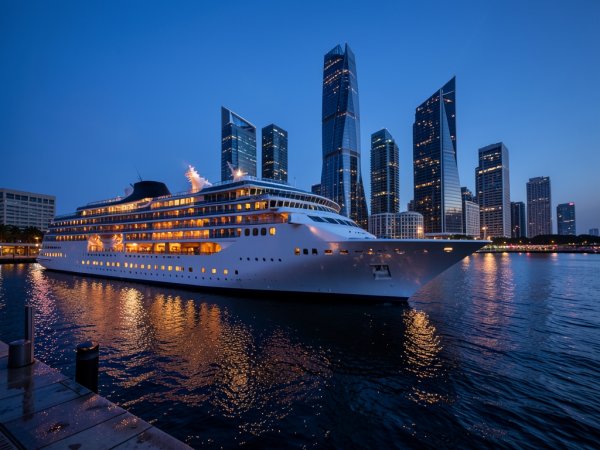
For first-time cruisers, an inside cabin on a newer ship often provides a better value than a balcony on an older ship. The public spaces on ships launched after 2018 are so premium that your cabin is just a bed.
, due to better amenities, dining, and entertainment. The per-day cost of a cruise for an inside cabin on a mainstream line like Carnival or Royal Caribbean typically ranges from $100–$200 per person for Caribbean sailings, including taxes, port fees, and gratuities. That is often less than a mid-range hotel room alone, before you factor in meals and transportation.Cruise lines often include "free" perks like Wi-Fi, gratuities, or shore excursion credits in promotional deals. That sounds generous until you run the math: a "free" Wi-Fi package on a mainstream line is often capped at 150 minutes or throttled to messaging-only speeds. The gratuities credit covers the standard daily charge, but you still tip extra for bar service and room stewards. The shore excursion credit is usually $50 per port, which covers a basic walking tour but not a snorkeling trip or helicopter ride. The real value is in the base fare discount, not the bundled perks.
Transferable points from Chase Ultimate Rewards and Amex Membership Rewards can be transferred to cruise line partners at a 1:1 ratio. The per-point value is often lower than using them for flights or hotels, typically 0.5–1 cent per point. The better play is to use points for the flight to the embarkation port and pay cash for the cruise fare, or to book the cruise through the travel portal where points are worth a flat 1 cent each. Do not transfer points to a cruise line unless you have a specific high-value sailing in mind and have verified the cash price is at least 1.5 cents per point.
The concrete action today is to open the website of any mainstream line, search for a seven-night Caribbean sailing in September 2026, and price out an inside cabin with no drinks package. Then call the line's reservation number and ask if any price drops have been applied to that sailing since you started looking. Compare the total against a hotel-and-car rental package for the same week. The number that changes the mind is the difference between those two totals, not the brochure rate.
The Repositioning Arbitrage
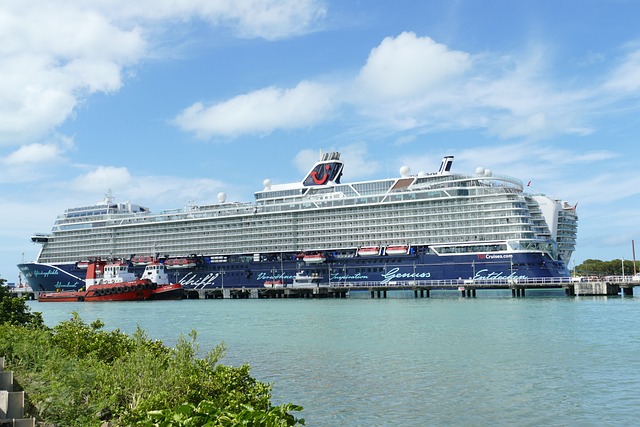
Most articles tell you to look for these one-way sailings in April–May and September–November, which is correct, but they skip the booking mechanism that actually delivers the savings. The trick is to use CruiseCompete to submit a single itinerary request for a specific repositioning sailing — say, a Royal Caribbean ship moving from Florida to Alaska in May 2027 — and let competing agencies bid on the exact same cabin category. The trade-off is real: repositioning cruises are longer, with more sea days and fewer ports, but that is exactly what converts a skeptic. The savings are not just in the fare; they are in the psychological shift from "vacation cost" to "transportation cost." You are paying for the hotel and the meals, but the "attraction" is free. This is the arbitrage: you are buying the infrastructure of the vacation, not the destination. If you can accept the sea days as part of the product, the math is undeniable. The skeptic who hates the idea of a packed port schedule will find that the repositioning cruise offers the same ship experience, the same food, and the same entertainment, but at half the price. The key is to book early, use a refundable deposit, and monitor the price drop guarantee. The concrete action today is to open CruiseCompete, search for a repositioning sailing in April–May 2027, and compare the per-day rate against a standard seven-day Caribbean sailing on the same line. The difference will be the number that converts the skeptic.
The Guarantee Cabin Gamble
The guarantee cabin is the ultimate lever for the budget-conscious skeptic, but it requires a specific mindset. When you book a "Guarantee" cabin, you are not choosing a specific room number; you are choosing a category (e.g., Inside, Oceanview, Balcony) and letting the cruise line assign the exact location later. The risk is that you might end up with an obstructed view, a noisy location near the elevator bank, or a cabin far from the elevators. For the skeptic who is trying to minimize financial risk, this is an acceptable trade. The mechanism is simple: cruise lines overbook certain categories to ensure full occupancy, and they use guarantee bookings to fill the gaps. If you book a guarantee inside cabin, you are guaranteed an inside cabin, but you might be upgraded to an oceanview or balcony if inventory allows. The key is to book early, as the best upgrades are often assigned to those who book earliest. The failure mode is expecting a specific location. If you need a cabin near the elevators or on a specific deck, do not book a guarantee. The concrete action today is to open the website of any mainstream line, search for a seven-night Caribbean sailing in September 2026, and price out a guarantee inside cabin. Compare the total against a specific inside cabin. The difference will be the number that changes the mind. If the savings are significant, take the gamble. If the savings are minimal, choose a specific cabin. The gamble is only worth it if the potential reward outweighs the risk.
The Ship Age vs. Cabin Type Matrix
What to do next
The evidence shows that the best cruise deals require a mix of timing, flexibility, and direct comparison shopping. Use the steps below to verify the strategies covered in this guide and lock in a fare that even a skeptic would accept.
| Step | Action | Why it matters |
|---|---|---|
| 1 | Check Cruise Critic’s last-minute deals page and set a Google Flights price alert for your departure city to the cruise port. | Mistake fares and last-minute inventory are time-sensitive; alerts catch drops before they vanish. |
| 2 | Submit your exact sailing date and cabin type to CruiseCompete to receive 3–5 competing quotes from different travel agencies. | Price differences of 5–15% for the same cabin category are common across agencies. |
| 3 | Search for repositioning cruises on Celebrity Cruises or Royal Caribbean’s website for April–May and September–November departures. | Per-day rates on one-way repositioning sailings can be 50–70% lower than standard round-trip itineraries. |
| 4 | Compare the per-day cost of an inside cabin (including taxes, port fees, and gratuities) on Carnival or Royal Caribbean against a hotel-and-car trip for the same dates. | Cruises often include accommodation, transport between ports, and most meals, making the all-in per-day cost competitive. |
| 5 | If you book a guarantee cabin, set a calendar reminder to check the cruise line’s “best price guarantee” policy 48–72 hours before sailing. | You can request a refund of the fare difference if the price drops after booking; calling the line directly improves success rates. |
| 6 | Calculate your daily drink consumption honestly; if it’s fewer than 5–7 alcoholic beverages, opt for pay-per-drink instead of a package. | The break-even point for most drink packages is 5–7 drinks per day; paying per-drink saves money for lighter drinkers. |
Also worth reading Better Safe Than Sorry: Why You Why Expedition Cruises Win Over Even Your Complete Guide to Finding Cruise Calamity: Why You Should
Quick answers
What should you know about Repositioning cruises offer per-day rates 50–70% below standard iti?
These sailings cluster in April–May and September–November each year, when lines like Celebrity and Princess shift fleets between the Caribbean, Alaska, and Europe. The concrete action today: open Cruise Critic, filter by "repositioning" for April–May 2027, and compare the per...
What should you know about Guarantee cabins save 10–20% and can yield free upgrades?
The most effective tool for finding a cruise deal that converts a skeptic isn't a single website — it's a bidding war between travel agents. The window typically extends up to 48–72 hours before sailing.
What should you know about Drinks packages break even at 5–7 drinks per day?
Cruise lines sell these packages as a convenience play, but the real break-even point is 5–7 alcoholic beverages per day on most mainstream lines. The mechanism is the prepayment psychology: once the package is bought, the traveler feels compelled to "get their money'...
What should you know about Inside cabins on post-2018 ships offer better value than balconies?
The per-day cost of a cruise for an inside cabin on a mainstream line like Carnival or Royal Caribbean typically ranges from $100–$200 per person for Caribbean sailings, including taxes, port fees, and gratuities. The shore excursion credit is usually $50 per port, which cover...
What should you know about The Repositioning Arbitrage?
The trick is to use CruiseCompete to submit a single itinerary request for a specific repositioning sailing — say, a Royal Caribbean ship moving from Florida to Alaska in May 2027 — and let competing agencies bid on the exact same cabin category. The concrete action today is t...
Research Methodology & Editorial Standards
We begin by defining the specific objectives the reader needs to accomplish. Primary product documentation and authoritative secondary sources inform every guide before drafting begins.
Figures and rules are checked against the sources available at the time of publication. Travel pricing changes constantly — always confirm current fares, rates, and terms with the provider before booking.