
Chinatown on a Budget: Best Cheap Eats & Hidden Gems
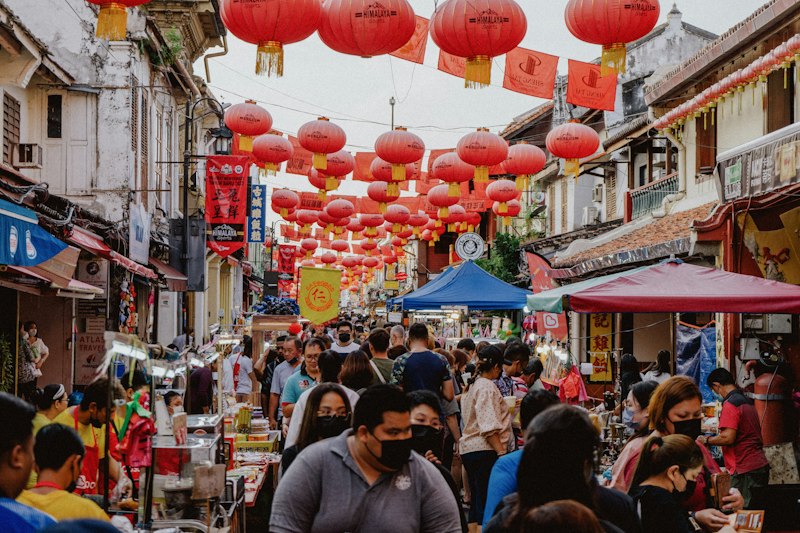
Manhattan’s Chinatown is the largest Chinatown in the United States, and it remains one of the best places for budget travelers to eat well without overspending.
| Takeaway | Detail |
|---|---|
| $40 covers a 6-stop food crawl | A single $40 budget can fund a full Chinatown crawl including rice rolls, dumplings, luosifen, egg tarts, and ice cream in NYC. |
| Individual items cost $2–$3 | Pork buns at spots like Mei Lah Wah run about $2 each, making it easy to sample multiple dishes for under $20. |
| Wah Fung Fast Food offers $5–$7 roast meat platters | This NYC cash-only staple serves chicken, pork, or duck with rice for under $10 per plate. |
| London’s Cafe TPT has Cantonese dishes under £10 | Street-food-style “hawker” plates in London’s Chinatown stay affordable, with most mains below £10. |
| Splitting group meals keeps per-person costs under $15 | Ordering 3–4 dishes for 2–3 people at Cantonese-style eateries can hold each person’s tab to $15 or less. |
| Avoid English-only menu spots to save 20–30% | Restaurants with visible English-only menus and photo displays often charge a premium over nearby cash-only hidden gems. |
| Chinese New Year brings limited-time bakery deals | During January–February, many Chinatown bakeries and stalls offer discounts on pastries and dumplings. |
| Item | Rule / threshold |
|---|---|
| NYC food crawl budget | $40 covers 6 stops (rice rolls, dumplings, luosifen, egg tarts, ice cream) |
| Individual item price range | $2–$3 per pork bun (e.g., Mei Lah Wah) |
| Wah Fung Fast Food platter | $5–$7 for roast meat with rice |
Manhattan’s Chinatown is the largest Chinatown in the United States, and it remains one of the best places for budget travelers to eat well without overspending. The density of food options here is unmatched in the Western Hemisphere, allowing for a granular approach to budgeting where you can pay for individual components of a meal rather than a full entree. This guide focuses on the mechanics of finding value: how to identify pricing structures, navigate language barriers, and time your visits to maximize freshness and minimize cost.
London’s Cafe TPT offers Cantonese “hawker” dishes for under £10, proving that budget-friendly Chinatown eats are a global constant. Whether in New York, San Francisco, or London, the operational model for cheap eats remains consistent: small spaces, high turnover, and a focus on staple carbohydrates like rice and noodles.
How to Spot a $5 Meal That Locals Actually Eat
In Manhattan’s Chinatown, the largest Chinatown in the United States, Wah Fung Fast Food on Chrystie Street fits this pattern exactly. The operation has no seating, no frills, and a single itemized menu board. Locals queue for takeout containers, not ambiance. The key to identifying these spots is to look for the absence of marketing. If a restaurant has a host standing outside with a menu and a smile, that is a marketing expense, not a value indicator. The cost of that host is built into the price of your meal.
To find similar spots in any Chinatown, use Google Maps with the filter set to “Chinese” language reviews. A restaurant with 80 percent or more reviews written in Chinese characters is almost certainly a local staple, not a tourist trap. Compare that to Howlin’ Ray’s, which has a 4.7-star rating from over 8,300 Yelp reviews but serves Nashville hot chicken, not Cantonese fare; its popularity is driven by hype, not local Chinese dining habits. The real targets are the spots with modest scores and low review counts, where the price-to-quality ratio is highest because the landlord has not yet raised rent on a viral hit.
The mechanism works because rent and turnover in Chinatown are high. That means high turnover of fresh food, not frozen inventory. Look for steam tables with visible condensation and meat hanging in the window — both signs that the kitchen is cooking continuously, not reheating. In London’s Chinatown, Cafe TPT offers Cantonese “hawker” dishes under £10 using the same model: small space, fast service, no reservations. The visual cues are universal: if you see a line of customers that moves quickly and no one is holding a menu outside, that is a strong signal.
A common mistake is confusing “cheap” with “empty.” A restaurant with no customers at 1 p.m. on a Saturday is not a hidden gem; it is a place that cannot attract the local lunch crowd. Conversely, a line that moves quickly — Wah Fung’s line typically clears in under 10 minutes — is a positive signal. To test this method today, pick one Chinatown near you, open Google Maps, search for “roast meat” or “rice platter,” and sort by distance. Walk to the first result that has fewer than 200 reviews and a storefront with no English signage. Order the cheapest protein-and-rice combo on the menu.
What Are the Best Cheap Eats Under $10 in Major Chinatowns?
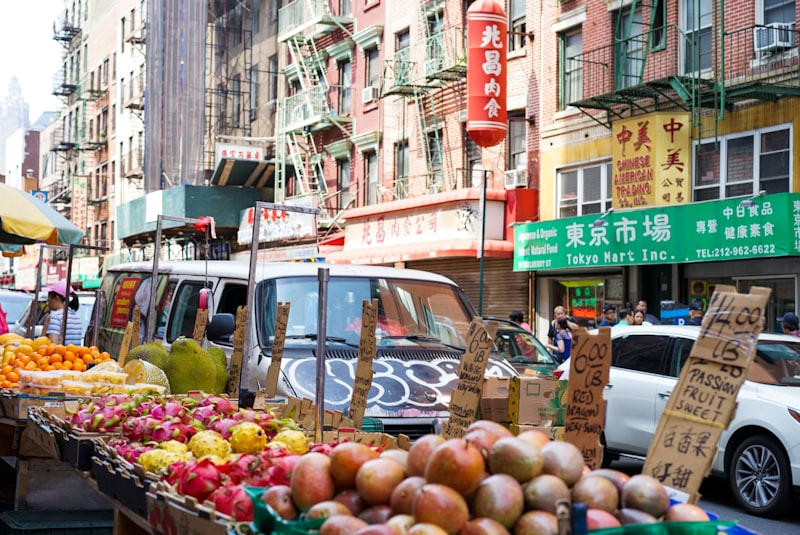
Variations exist by city and dish type. The most efficient approach is to map four to six cheap-eat stops within a one-mile radius using Google Maps, checking walking distance and hours before heading out. A self-guided crawl works best when you alternate between savory and sweet stops — start with dumplings or rice rolls, then hit a bakery for egg tarts, then finish with a noodle soup or luosifen. This prevents palate fatigue and allows you to sample a wider variety of items within a fixed budget.
In San Francisco, Rice Roll Express serves shrimp or beef rice rolls (chang fen) for under $10. In Los Angeles, Tian’s Dim Sum & Fast Food offers dim sum items for under $10, with a 3.8-star rating from 344 reviews. A 3.8-star rating often reflects a no-frills environment rather than poor food quality. The best indicator is a storefront with no English signage and a line of Chinese-speaking customers that moves quickly.
A common mistake is ordering multiple dishes at a single restaurant. Stick to one item per stop. Another mistake is visiting during peak lunch hours (12:30 p.m. to 1:30 p.m.) when lines at popular windows like Wah Fung can stretch to 15 minutes. Go at 11 a.m. or 2 p.m. for shorter waits. Avoid any restaurant that has a host standing outside with a menu — that marketing cost is built into the prices. To test this method today, open Google Maps, search for “dumplings” or “rice rolls” in your nearest Chinatown, and filter by distance. Walk to the first result with fewer than 200 reviews and a storefront that lists prices in Chinese characters only. Order the cheapest single item on the menu.
How to Use Google Maps and Yelp Filters to Find Hidden Gems

To find hidden gems in any Chinatown, use Google Maps and Yelp filters to bypass the tourist traps and surface the storefronts that locals actually visit. The most effective method is to search for a specific dish — “rice rolls,” “hand-pulled noodles,” “roast duck” — rather than a generic term like “Chinese food,” then apply the “Open Now” and “Distance” filters to narrow results to a one-mile radius. On Yelp, set the sort order to “Rating” and then manually scan the results with 3.5 to 4.0 stars and fewer than 200 reviews; these are often no-frills operations with high turnover and low marketing budgets.
An edge case worth noting: some hidden gems have no Yelp presence at all. In those cases, use Google Maps Street View to scan storefronts for handwritten price boards in Chinese characters. If you see a line of customers that moves quickly and no one is holding a menu outside, that is a strong signal. Another variation is to use the Google Maps “Explore” tab and set the category to “Restaurants,” then scroll past the top 10 sponsored results to the unranked listings below. In London’s Chinatown, Cafe TPT operates this way — no English signage, Cantonese hawker dishes under £10, and a steady stream of local diners.
A common mistake is relying solely on star ratings. A 4.7-star rating from over 8,300 reviews, like Howlin’ Ray’s in Los Angeles Chinatown, is a known quantity — excellent but not a hidden gem, and likely to have a long line. The real targets are the spots with modest scores and low review counts, where the price-to-quality ratio is highest because the landlord has not yet raised rent on a viral hit. To test this method today, open Google Maps, search for “rice rolls” in your nearest Chinatown, filter by distance to one mile, and walk to the first result with fewer than 200 reviews and a storefront that lists prices in Chinese characters only.
When to Visit Bakeries and Markets for the Freshest Food at the Lowest Price
The best time to visit Chinatown bakeries and markets for the freshest food at the lowest price is between 9 a.m. and 11 a.m. on weekdays, when morning batches of baked goods and dim sum are just out of the oven and before the lunch crowd drives up demand. Most Chinatown bakeries, such as those on Mott Street in Manhattan or along Wentworth Avenue in Chicago, operate on a production cycle that peaks twice daily: a morning bake starting around 7 a.m. and an afternoon bake around 1 p.m. By 11:30 a.m., the same items may still be available but the selection narrows as popular varieties sell out.
The mechanism behind this timing is simple: Chinatown bakeries and markets operate on thin margins and high volume. They bake in small batches throughout the day to minimize waste, so the first batch of the day is always the largest and freshest. For markets like the New York Chinatown’s multiple fish and produce stalls along Grand Street, the freshest seafood and vegetables arrive between 6 a.m. and 8 a.m., when wholesale deliveries are sorted. By 10 a.m., the best cuts and rarest greens are often gone, and by noon, prices on remaining stock may drop slightly, but quality has already declined. A practical variation is to visit these markets on Wednesday or Thursday morning, when wholesale deliveries are consistent and foot traffic is lower than on weekends.
Saturday and Sunday mornings see the highest crowds and the fastest sellout of popular items, especially at stalls selling fresh rice rolls or hand-pulled noodles. In London’s Chinatown, Cafe TPT operates on a similar schedule — its Cantonese hawker dishes under £10 are best ordered before 11:30 a.m., when the kitchen is still preparing the day’s first batch of char siu and roast duck. To test this method today, pick a Chinatown bakery near you, check its Google Maps listing for the “Popular Times” graph, and plan your visit for the hour before the steepest rise in foot traffic — that is when the freshest batch is still on the counter and the price is at its lowest.
How to Plan a Self-Guided Food Crawl for Under $40
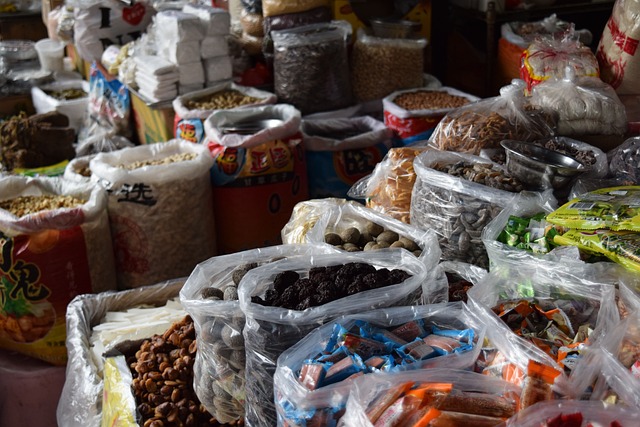
A common mistake is trying to visit too many stalls without checking their hours. Many bakeries and noodle shops close by 6 p.m., and some are closed on Mondays or Tuesdays. Use Google Maps to filter by “open now” and check the “Popular Times” graph to avoid peak lunch crowds around 12:30 p.m., when lines at popular spots like Wah Fung Fast Food can stretch 20 minutes. Also, bring cash — many of the best-value stalls in Manhattan’s Chinatown do not accept cards.
To execute a $40 crawl, start with a $2–$3 item like a pork bun from Mei Lah Wah. Move to a $5–$7 roast meat platter from Wah Fung Fast Food. Add a $3 egg tart from a nearby bakery. Finish with a $10 bowl of luosifen or a $5 rice roll. This sequence ensures you hit the major flavor profiles — savory, sweet, spicy, and starchy — while staying well under budget. The key is to map these stops within a 1-mile radius to minimize walking time and maximize eating time. A self-guided food crawl is most effective when you treat each stop as a distinct event, rather than a continuous grazing session, to ensure you have the appetite for each subsequent item.
Which Dishes Offer the Best Value When Splitting with a Group?
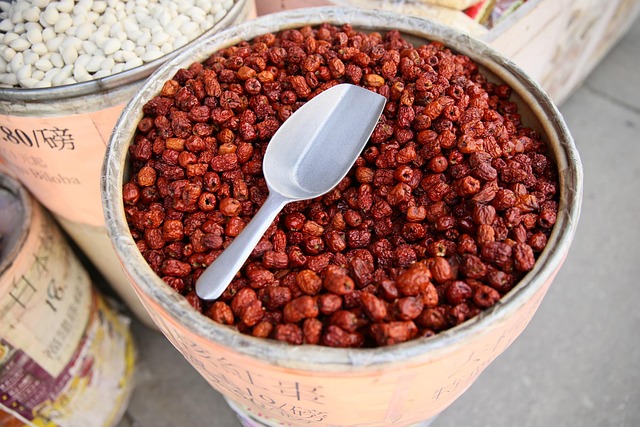
Ordering three to four dishes for a group of two to three people at a Cantonese-style restaurant in Manhattan’s Chinatown typically keeps the per-person cost under $15. That figure holds at sit-down spots where the menu is designed for sharing, such as dim sum houses or roast meat specialists. The mechanism is straightforward: Cantonese family-style portions are generous, and the dishes are priced to encourage ordering multiple plates rather than one entree per person. The key is to avoid ordering one dish per person, which inflates the bill, and instead pick two starch-based dishes and one protein-heavy plate. For a group of four, ordering five dishes — two proteins, two vegetables or noodles, and one soup — keeps the per-person cost near $13 to $15, depending on the restaurant.
This pattern works best at Cantonese eateries that serve large platters, as opposed to stalls selling individual buns or dumplings, where splitting is less practical. A common mistake is ordering too many protein dishes, which are the most expensive items on the menu. In London’s Chinatown, Cafe TPT offers Cantonese hawker dishes under £10, and a group of three can share two noodle plates and one meat dish for roughly £25 total, or about £8 per person. To test this method today, pick a Cantonese restaurant in your target Chinatown, check its menu on Google Maps for platter-style dishes, and plan to order one fewer dish than the number of people in your group.
What Common Mistakes Make Budget Travelers Overpay in Chinatown?
A second mistake is arriving without cash. Many of the best-value eateries in Manhattan’s Chinatown do not accept credit cards, and some may not have English menus. Ordering by pointing at what other diners have or using a translation app is a practical method. The MTA’s Away guide notes that the Canal Street subway station (served by the N, Q, R, W, 6, J, and Z lines) provides direct access, with a fare of $2.90 per ride. This is a critical logistical detail: if you are budgeting for food, you must also budget for transit, and the subway is the most efficient way to navigate the dense grid of Chinatown.
A third mistake is eating at restaurants with visible English-only menus. These spots often charge a premium over nearby cash-only hidden gems. The markup can be 20–30 percent, which adds up quickly on a budget crawl. To avoid this, look for signs in Chinese characters. If the menu is entirely in English, assume the prices are inflated for tourists. A fourth mistake is ignoring the “popular times” data on Google Maps. Visiting a popular spot during its peak hour can result in a 30-minute wait for a $5 meal, which is a poor return on time. Instead, aim for the “shoulder hours” — 11 a.m. or 2 p.m. — when the food is fresh but the lines are short.
What to do next
This guide has mapped out the most reliable cheap eats and hidden corners across major Chinatowns. To make the most of your visit, take a few concrete steps to verify current prices, plan your route, and avoid disappointment from closed stalls or long lines.
| Step | Action | Why it matters |
|---|---|---|
| 1 | Check Google Maps for each listed restaurant’s current hours and temporary closures. | Many small Chinatown eateries adjust hours seasonally or close without notice; verifying avoids wasted trips. |
| 2 | Compare menu prices on Yelp or Google Reviews photos from the last 30 days. | Prices for items like roast meat platters or dim sum can shift; recent photos give the most accurate current cost. |
| 3 | Set a calendar reminder for 10:30 AM on a weekday to visit Wah Fung Fast Food (NYC) or Rice Roll Express (SF). | These spots often sell out of popular items by early afternoon; arriving before the lunch rush secures the best selection. |
| 4 | Map a 4–6 stop food crawl within a 1-mile radius using Google Maps walking directions. | Chinatown blocks are dense; a planned route prevents backtracking and keeps the total walk under 20 minutes between stops. |
| 5 | Bring cash in small denominations ($5, $10, $20) for stalls that do not accept cards. | Many of the cheapest hidden gems operate cash-only; having exact change speeds up service and avoids ATM fees. |
| 6 | Verify the specific Chinatown location (e.g., Manhattan vs. Flushing, or SF vs. Oakland) before heading out. | Multiple Chinatowns exist in the same metro area; a wrong address can mean a 45-minute detour. |
Also worth reading Uncover San Francisco's Best Kept Cheap Eats in London: Six Best Sawtelle Budget Eats: Best Cheap A Travelers Guide to Exploring
Quick answers
How to Spot a $5 Meal That Locals Actually Eat?
A restaurant with 80 percent or more reviews written in Chinese characters is almost certainly a local staple, not a tourist trap. Conversely, a line that moves quickly — Wah Fung’s line typically clears in under 10 minutes — is a positive signal.
What Are the Best Cheap Eats Under $10 in Major Chinatowns?
In San Francisco, Rice Roll Express serves shrimp or beef rice rolls (chang fen) for under $10. In Los Angeles, Tian’s Dim Sum & Fast Food offers dim sum items for under $10, with a 3.8-star rating from 344 reviews.
How to Use Google Maps and Yelp Filters to Find Hidden Gems?
On Yelp, set the sort order to “Rating” and then manually scan the results with 3.5 to 4.0 stars and fewer than 200 reviews; these are often no-frills operations with high turnover and low marketing budgets. Another variation is to use the Google Maps “Explore” tab and set the...
When to Visit Bakeries and Markets for the Freshest Food at the Lowest Price?
Most Chinatown bakeries, such as those on Mott Street in Manhattan or along Wentworth Avenue in Chicago, operate on a production cycle that peaks twice daily: a morning bake starting around 7 a. and an afternoon bake around 1 p.
How to Plan a Self-Guided Food Crawl for Under $40?
Many bakeries and noodle shops close by 6 p. Use Google Maps to filter by “open now” and check the “Popular Times” graph to avoid peak lunch crowds around 12:30 p.
Which Dishes Offer the Best Value When Splitting with a Group?
Ordering three to four dishes for a group of two to three people at a Cantonese-style restaurant in Manhattan’s Chinatown typically keeps the per-person cost under $15. For a group of four, ordering five dishes — two proteins, two vegetables or noodles, and one soup — keeps th...
Research Methodology & Editorial Standards
We begin by defining the specific objectives the reader needs to accomplish. Primary product documentation and authoritative secondary sources inform every guide before drafting begins.
Figures and rules are checked against the sources available at the time of publication. Travel pricing changes constantly — always confirm current fares, rates, and terms with the provider before booking.