
Avoid These Costly Customs Mistakes Before You Travel
It’s tempting to just breeze through customs, especially if you're only carrying a few things and think you’re well under any thresholds.

The Danger of Declaring Nothing: Why Honesty Is Your Only Policy at Customs
Look, I get it. You're excited to get home, you're tired, and the last thing you want is to dig through your bags or fill out more forms. It’s tempting to just breeze through customs, especially if you're only carrying a few things and think you’re well under any thresholds. But here’s the thing, and I really mean this: the "nothing to declare" option isn't just a button, it's a statement, and declaring nothing when you absolutely should have can land you in a world of hurt. In the United States, for instance, the penalties for a false declaration can be brutal – think up to the full value of your merchandise or a flat $10,000, whichever’s higher, and intentional fraud? That can mean up to twenty years behind bars. It’s not just about avoiding duty; even if an item is under the $800 U.S. duty-free exemption, failing to declare it and getting caught can still lead to seizure, which is just a polite word for losing your stuff.
And it’s not just the U.S. playing this game. Across the pond in the European Union, while there's a €430 allowance for air travelers, you still have to declare items over €150, even if you figure they're personal gifts. Australia? They’re arguably even stricter, with on-the-spot fines of AUD $2,664 for failing to declare high-risk items like meat or seeds, and if it goes to court, you're looking at fines up to AUD $555,000 or even a decade in prison. The UK demands you declare cash of £10,000 or more when moving between Great Britain and non-UK countries; fail to do so, and that cash can be seized, with a potential five-year jail term. It’s a global effort, too. Customs agencies are increasingly sharing information through initiatives like the World Customs Organization’s Globally Networked Customs, meaning a slip-up in one country can create problems in another.
Think about it: with non-intrusive tech like backscatter X-rays, they can spot organic materials, even currency, hidden in your luggage. While physical searches might only happen to about 1.2% of international air passengers according to a 2023 GAO study, those caught lying face penalties ten times greater than simply paying the duty. And here’s a crucial point many travelers miss: you're legally responsible for everything you carry, even if it's for someone else. That classic "I was just holding it for a friend" excuse? It's not a defense in customs law, and in Singapore, for example, first-timers can face fines up to SGD $20,000 and up to a year in jail, with goods almost always forfeited. The expectation is that you’ve done your homework; ignorance of the law simply isn't an excuse.
Honestly, the best approach, the one that truly keeps you out of trouble, is a straightforward, transparent declaration. If you're unsure, ask. If you have something that might be questionable, declare it. In the U.S., their prior disclosure program even offers a way out: if you voluntarily report an error before they find it, the penalty can be reduced dramatically to just 10% of the duty owed, a stark contrast to the potential 100% if you're caught. It really boils down to this: honesty isn't just the best policy; at customs, it’s your only policy that reliably keeps your travels smooth and your wallet intact.
Prohibited vs. Restricted Items: The Crucial Difference That Could Cost You Thousands

Look, we need to talk about the difference between prohibited and restricted items because this is where most people get tripped up and lose a ton of money. I've seen it happen too often: someone thinks "restricted" just means "hard to get in," but in the eyes of customs, there's a massive legal canyon between the two. Think of prohibited items as a hard "no"—they're strictly forbidden by law, period. No matter how much paperwork you have or who you know, they aren't coming across the border. If you're caught with something prohibited, you're not just looking at a fine; you're looking at immediate seizure and potentially criminal charges.
Restricted items are a different beast entirely; they're more of a "yes, but." You can bring them in, but only if you've jumped through the right hoops, like securing specific permits or licenses. For example, if you're carrying exotic skins or certain corals, you'll need CITES permits to prove they weren't poached. It's the same with medications; something that's a standard prescription in your home country might be restricted elsewhere, meaning you need a legalized physician's note or you're suddenly being flagged as an illegal drug importer. And here is the annoying part: some things shift categories. A fruit might be restricted from one country but totally prohibited from another, or it could move from restricted to prohibited overnight during a sanitary emergency, like an avian flu outbreak.
The real headache starts with the technical side, like the Harmonized System (HS) codes they use to classify every single object on earth. If you have a restricted item but forgot the "Prior Notice" filing—which has to be done before you even land—you're in trouble. You might end up with an "administrative seizure," where you're stuck paying daily storage fees just to get your own stuff back after you've already paid the fine. It's a total racket. Some restricted items are even tied to national quotas, so your item might be legal on Tuesday but illegal on Wednesday because the country hit its import ceiling for the year.
Honestly, the risk is that in many places, possessing a prohibited item is a strict liability offense. That's a fancy way of saying "I didn't know" isn't a legal defense. You're responsible for the item regardless of your intent. This is why professional customs brokers charge such a premium; they aren't just filling out forms, they're navigating a minefield of permits to keep you out of a cell. My advice? If you're not 100% sure if your item is restricted or prohibited, assume it's the latter and find the permit requirements now. It's way cheaper than paying a lawyer in a foreign airport.
Agricultural Products and Food: Why That Apple or Sandwich Is a Major Fine Risk

Let's be real for a second: it feels completely absurd that a half-eaten ham sandwich or a single Granny Smith apple could lead to a legal nightmare. You're probably thinking, it's just food, right? But from a customs agent's perspective, you aren't carrying a snack; you're carrying a potential biological weapon. I'm talking about things like Pantoea agglomerans—a bacterium naturally found on apple surfaces—which, while maybe harmless to you, can be a disaster for a country's domestic crops. Think about it this way: one apple can harbor around 100 million bacterial cells, and that's exactly why the USDA and other global agencies treat fresh produce like a high-security risk.
Here's where it gets expensive. If you're landing in Australia and you "forget" to mention that apple or a bit of deli meat in your bag, you're not just getting a slap on the wrist. You're looking at on-the-spot fines that can hit AUD $2,664. It sounds steep because it is. These agencies aren't just being bureaucrats; they're protecting a trillion-dollar industry. In the U.S. alone, the food and beverage sector makes up about 5% of the GDP, so the government views a foreign pest as a direct threat to national economic security.
Now, you might wonder why your processed granola bar breezes through while your fresh sandwich triggers a red flag. It comes down to the level of processing. Unprocessed or minimally processed foods—think raw meats or whole fruits—are high-risk because they can carry live pathogens or insects. Highly processed goods have usually been heat-treated or chemically preserved, which kills off the "hitchhikers." Customs officials use a ridiculously detailed system called HS codes to classify every single ingredient, so even a complex sandwich is broken down into its riskiest components during an inspection.
The really tricky part? The rules can shift while you're in the air. Some countries use national quotas for agricultural imports, meaning a specific product could be totally legal on Tuesday but prohibited by Wednesday because the country hit its import limit. It's a bit of a minefield, honestly. My best advice is to just assume that if it grew from the ground or walked on it, it's a risk. Toss the snacks before you hit the terminal; it's a lot cheaper than paying a four-figure fine for a piece of fruit.
The Cash Trap: Failing to Declare Currency Over $10,000

Now, let's talk about the big one: the cash trap. You might be thinking that as long as your money was earned legally, you've got nothing to worry about, but here's the thing—customs doesn't care where the money came from initially; they care that you didn't tell them it existed. In the U.S., the magic number is $10,000, and it's not just about a stack of hundreds in your carry-on. We're talking about "monetary instruments," which is a broad term that includes traveler's checks, money orders, and even endorsed checks. And look, this isn't just for when you're landing; it's bidirectional. Whether you're entering or leaving the country, if you're over that limit, you've got to report it.
Here is where it gets really scary. If you "forget" to check that box or try to hide the funds, you're not just risking a slap on the wrist. You could face the immediate seizure and forfeiture of every single cent you're carrying. But it doesn't stop there. In the U.S., the government can hit you with fines up to $500,000. Think about that for a second—you could lose your travel funds and then owe the government half a million dollars just for a paperwork error. In Canada, it's even more direct; failing to declare over $10,000 is a criminal offense under the PCMLTFA. I've seen cases, like a recent one in Brampton, where people have pled guilty after trying to breeze through the border with hundreds of thousands of dollars undeclared.
I think people often confuse reporting with taxing, but they're completely different things. Declaring your cash doesn't cost you a dime in taxes or fees; it's purely a reporting requirement to help agencies fight money laundering and terrorism. When you don't declare, you're essentially waving a red flag that says "I'm hiding something," which can trigger a full-blown criminal investigation. Once the money is seized, the burden of proof shifts to you. You're the one who has to prove the money is legal, which is a legal nightmare you really don't want to navigate while sitting in an airport holding cell.
Honestly, just fill out the form. It takes two minutes and costs you nothing. If you have $20,000 or $2 million, just be transparent about it. The agents aren't looking to steal your money; they're just checking a box for their records. The risk-to-reward ratio of trying to sneak cash across a border is just terrible. Save yourself the stress, the legal fees, and the potential prison time—just declare it and get on with your trip.
Commercial Goods and Gifts: The Fine Line Between a Souvenir and a Taxable Import
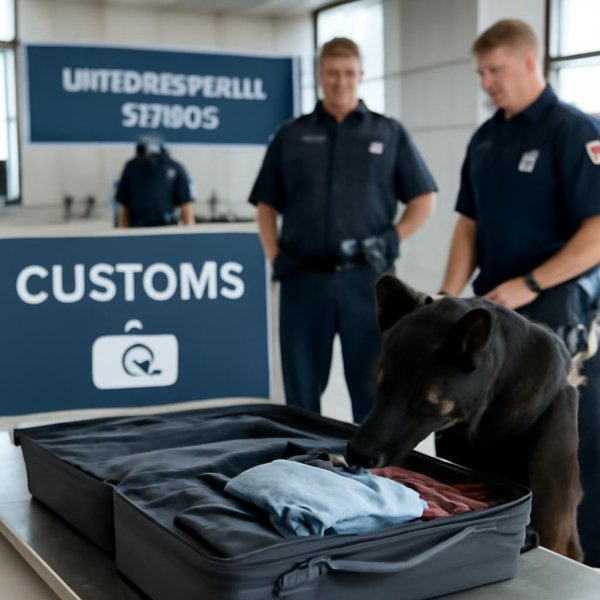
Here is where things get really tricky, and honestly, it's where a lot of well-meaning travelers accidentally walk into a tax trap. We've all been there—you find a beautiful piece of art or a bulk set of high-end skincare in a foreign market, and you think, "This is a great gift for the family," but to a customs officer, that's not a gift; it's a commercial shipment. The reality is that the line between a souvenir and a taxable import isn't about your intentions, it's about the "commercial nature" of the goods. If you're carrying ten of the same luxury watch, it doesn't matter if they're for ten different cousins; you're now an importer in the eyes of the law.
Think about the math for a second, because this is where the costs spiral. In the UK, for example, VAT isn't just slapped onto the price of the item; it's calculated on the cost of the goods plus the shipping and the UK Duty. You're effectively paying tax on the entire cost of getting that item into circulation. It's a compounding effect. In Australia, the GST applies to almost all taxable importations, and it doesn't matter if you're a private individual or a massive corporation—if it's a taxable import, you're paying up.
I've noticed that people often assume there's a "gift" loophole, but look at the UAE: they have very specific VAT declaration requirements depending on whether the goods are for domestic use or just passing through for re-export. Even if you're a startup trying to bring in a few samples, you're generally on the hook for customs duties and GST unless you can prove a specific exemption. It all comes down to the customs value—the empirical baseline the government uses to decide how much of your money they get to keep.
So, how do you actually handle this without losing your mind? My take is to stop thinking about "gifts" and start thinking about "units." If you have multiples of the same high-value item, you're entering the commercial zone. Check the specific VAT and GST thresholds for your destination before you buy. It's much better to leave a few items behind or ship them via a licensed broker who can handle the input tax recovery—which, by the way, is only an option if you're a registered business. For the rest of us, the simplest move is to keep your receipts and be realistic about the volume of what you're carrying.
Prescription Medications and Controlled Substances: The Documentation You Must Carry

Look, I've seen people get into some really scary situations because they thought their pharmacy bottle was "enough" proof. We've all been there—you're packing in a rush and think, why would I need a formal letter for something my doctor has had me on for years? But here's the reality: when you're crossing a border, you aren't just a patient; you're a transporter of chemicals. If those chemicals happen to be controlled substances—think opioids, benzodiazepines, or ADHD meds—you're moving from a medical conversation to a legal one. In places like Indonesia, especially if you're heading to Bali, the drug laws are incredibly rigid. They don't care that you've had a prescription since college; if the paperwork isn't exact, you're risking severe legal penalties.
Here is what I think is the safest play: keep everything in the original pharmacy-labeled packaging. Seriously, don't move your pills into a generic weekly organizer to save space. When you strip away the label, you're basically handing a customs agent a bag of unidentified white powder, and that's a one-way ticket to a secondary screening room. And for the heavy hitters—the Schedule 4 or 8 meds, like testosterone in Australia—a standard prescription often isn't enough. You need a formal doctor's letter that explicitly confirms the medical necessity and the exact dosage. Think of it as a "clinical passport" for your meds.
Now, let's pause and reflect on a detail that trips up a lot of people: the "refill" or "repeat" logic. You might have a prescription that says you have five refills left, but foreign customs agents don't recognize your pharmacy's refill policy. They only care about the quantity you have on you right now and whether your current documentation covers that specific amount. I've also noticed that for specialized meds, including weight-based dosing statements can be a lifesaver. It proves to an agent that your dose is clinically appropriate for your body, rather than looking like you're carrying an excessive, "dealable" amount.
My honest advice? Build a dedicated "medical folder" that you keep in your carry-on, not your checked luggage. Toss in the original prescriptions, the doctor's letter, and maybe even a translated version if you're heading somewhere where English isn't the primary language. Some countries even require these documents to be legalized by an embassy to be valid. It feels like overkill until you're the one standing there trying to explain your health history to someone who only cares about the law. Just get the paperwork sorted now so you can actually enjoy your trip instead of arguing with a border agent about your meds.
Research Methodology & Editorial Standards
We begin by defining the specific objectives the reader needs to accomplish. Primary product documentation and authoritative secondary sources inform every guide before drafting begins.
Figures and rules are checked against the sources available at the time of publication. Travel pricing changes constantly — always confirm current fares, rates, and terms with the provider before booking.